Renewable Energy Systems and Property Value: Solar Panels and Heat Pumps
By Housey · Last reviewed 30th of May 2026
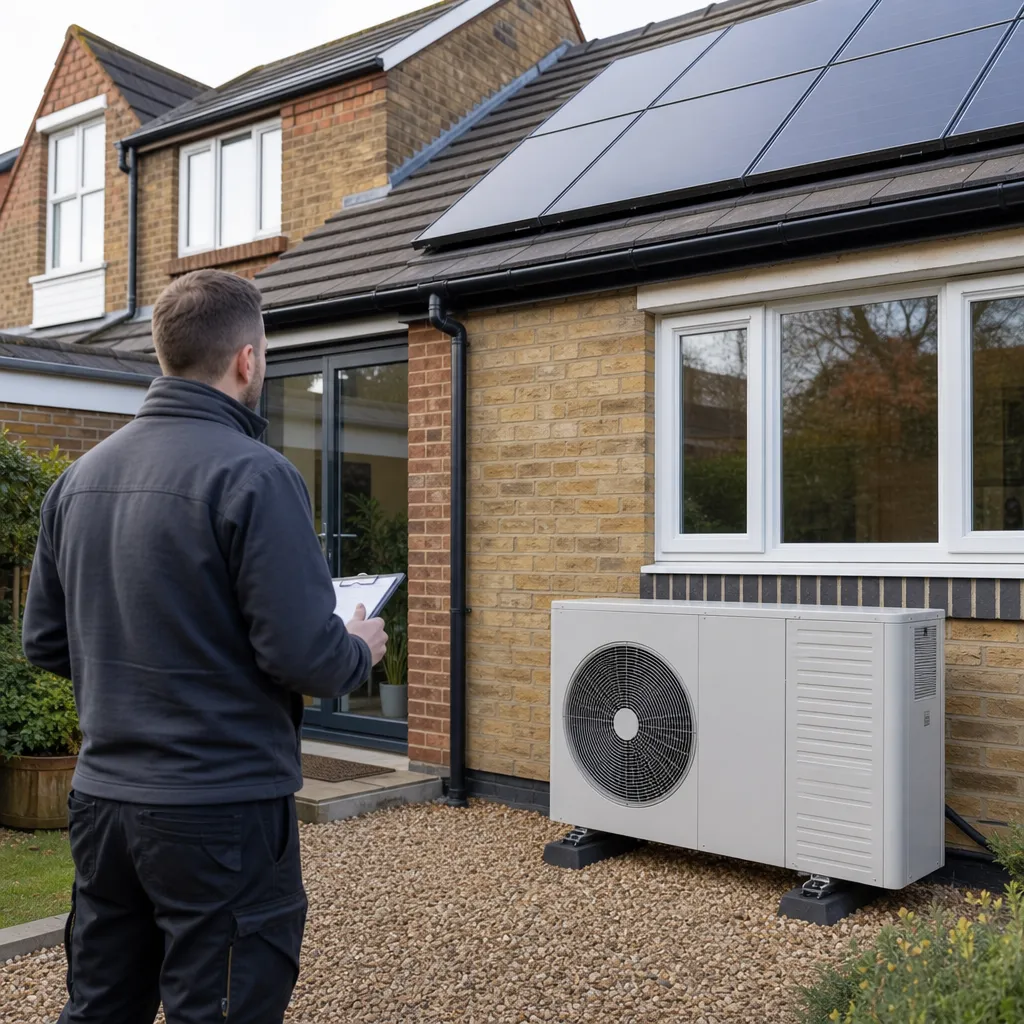
Renewable Energy Systems and Property Value: Solar Panels and Heat Pumps
Homeowners investing in solar photovoltaic panels or an air source heat pump increasingly want to understand not just the running cost and grant picture, but how these systems affect the value of their home at the point of sale. The evidence base is growing but nuanced — and what matters to a buyer, a mortgage lender, and a conveyancer can differ considerably from what matters to the installer.
Key points
- UK research suggests solar PV can add a 1–4% premium to property values in favourable market conditions, particularly where the system improves the EPC rating.
- Heat pumps have a less consistent impact on sale price than solar panels; buyer familiarity is growing but remains lower, and the quality of installation and documentation matters significantly.
- The Boiler Upgrade Scheme (BUS) provides £7,500 grants for eligible heat pump installations in England and Wales; MCS accreditation of the installer is required and provides an important reassurance for prospective buyers.
- Solar PV installation has been subject to 0% VAT since April 2022, reducing the net cost of a system relative to the pre-2022 position.
- Leased solar panels can complicate conveyancing and mortgage applications; panels owned outright by the seller are significantly simpler and less risky to transfer.
Do solar panels add value to UK homes?
UK and international evidence consistently suggests that solar PV can add value in many — but not all — market conditions. Buyer awareness of solar technology has increased substantially since the early 2010s, and growing concern about energy bills means more buyers are looking at running cost indicators alongside headline asking prices.
The key variables that influence whether and how much solar panels add value:
- EPC rating improvement: A solar system that helps push a property from EPC Band D to Band C or above is increasingly valuable as buyer awareness of energy running costs grows and as minimum EPC standards for rental properties approach implementation.
- System age and condition: A system installed within the last five years, with a valid MCS installation certificate and a roof warranty still in force, is a positive feature. A 15-year-old system nearing inverter replacement may be neutral in value terms and will require disclosure to buyers.
- Ownership structure: Panels owned outright by the vendor with no associated finance or lease are straightforward to convey. A rent-a-roof or solar lease arrangement requires the buyer's solicitor to review the agreement — some mortgage lenders will not lend on leased-panel properties, which can restrict the eligible buyer pool.
Do heat pumps affect house prices?
The picture for heat pumps is more mixed than for solar. A significant proportion of UK buyers remain unfamiliar with how heat pumps operate, what they cost to run, and whether they require changes to the radiator system or insulation levels. This uncertainty can neutralise the positive impact of the investment, particularly in markets where most comparable homes have gas central heating.
Factors that support a positive value impact from a heat pump:
- Visible running cost evidence: Actual energy bills demonstrating lower running costs are more persuasive to buyers than theoretical projections from the installer.
- EPC rating: A heat pump replacing gas heating in a well-insulated home can improve the EPC from Band D to Band B in some cases — a meaningful signal as buyers and mortgage lenders increasingly price in energy performance.
- Documentation: An MCS certificate, building control completion certificate, and a manufacturer warranty still in force all reduce buyer uncertainty and support the solicitor's pre-contract replies.
- Home fabric quality: A heat pump installed in a poorly insulated property may not have performed efficiently; buyers may factor the cost of insulation works into any offer.
Solar PV vs heat pump: property value comparison
Factor | Solar PV | Air source heat pump (ASHP) |
|---|---|---|
Typical value impact | Modest uplift (1–4% in favourable conditions) | Variable; depends on home condition and buyer awareness |
Buyer familiarity | High and growing | Growing but still lower than solar |
Conveyancing complexity | Low if owned outright; potentially high if leased | Low — standard ownership |
Key documents for buyers | MCS certificate, SEG contract, roof and panel warranty | MCS certificate, building control cert, service records |
Grant availability | No direct grant; 0% VAT applies | £7,500 via Boiler Upgrade Scheme (England and Wales) |
Export income | Smart Export Guarantee (SEG) — rates vary by supplier | None |
Typical installation cost (2026) | £6,000–£10,000 (4 kWp system) | £10,000–£16,000 before BUS grant |
Indicative UK costs, last reviewed 2026-05-30. Costs vary by location, property type, and contractor. Always obtain at least three quotes.
Worked UK property scenario
1960s semi-detached in the East Midlands, currently EPC Band D
The owners install a 4 kWp solar PV system for approximately £7,500 (0% VAT) and add loft and cavity wall insulation, moving the property to EPC Band C. They sell two years later.
- The estate agent notes the EPC Band C rating and solar installation in the listing; the property attracts buyers specifically comparing running costs between similar properties.
- The solar system is owned outright with no lease. The MCS certificate and Smart Export Guarantee contract are included in the property information pack; the buyer's solicitor raises no additional enquiries about the system.
- The owners provide two years of energy bills showing Smart Export Guarantee income at approximately 5.5p/kWh and reduced import bills.
- Estimated on-site running cost saving from solar: around 350 kWh/year consumed at 24p/kWh, approximately £84/year, plus approximately £60/year in SEG export income.
This scenario illustrates that the combined effect of a genuine EPC improvement, clean documentation, and demonstrable energy savings is more compelling to buyers — and simpler for solicitors — than a high-specification installation with incomplete paperwork.
What buyers and solicitors will ask
Prepare the following documentation before listing a property with solar panels or a heat pump:
- MCS installation certificate — the primary quality assurance document for any renewable energy installation, confirms accredited installer and system specification
- Building control completion certificate — required for heat pumps in most cases under Building Regulations Parts L and P
- Service and maintenance records for the heat pump (annual servicing is manufacturer-recommended and preserves warranty cover)
- Smart Export Guarantee contract — confirm whether it is transferable to a new owner and on what terms
- Roof warranty and panel manufacturer warranty — note the remaining term for both
- Details of any finance or lease agreement attached to the solar system
When to get professional help
Consider professional input before installation or before listing the property if:
- You are sizing a heat pump for any property older than the 1990s — incorrect sizing is the most common cause of heat pump underperformance and buyer concern at resale. Use an MCS-accredited assessor to conduct a full heat loss survey.
- Your property is listed or in a conservation area — check with your local planning authority before installing solar panels or an external heat pump unit, as permitted development rights may be restricted or removed.
- You are selling and the buyer's solicitor raises concerns about a leased solar system — involve your conveyancer early in the process to avoid delays at exchange.
- Your solar PV system is approaching 15 years of age — ask a qualified PV installer to assess inverter condition and output performance before buyers raise questions during pre-contract enquiries.
How Housey can help
Housey connects homeowners with qualified renewable energy professionals. A solar survey can confirm your roof's suitability, estimated annual yield, and the likely EPC impact before you commit to installation costs. If you are considering low-carbon heating, a heat pump survey from an MCS-aware assessor will establish whether your home's fabric and heating distribution system can support efficient, cost-effective operation — and what documentation you will need when the time comes to sell.
Frequently asked questions
Do solar panels increase house value in the UK?
Evidence suggests solar panels can add a modest premium — often cited as 1–4% — in UK property sales, particularly where they improve the EPC rating and are owned outright. The effect is not universal and depends on buyer profile, local market conditions, and system age and condition. Panels subject to a lease or rent-a-roof arrangement may complicate conveyancing and restrict the eligible buyer pool.
What documentation do I need when selling a home with a heat pump?
Key documents include the MCS installation certificate, building control completion certificate, service and maintenance records, and manufacturer warranty details. Your conveyancer will need these to respond to standard pre-contract enquiries from the buyer's solicitor. Missing documentation can delay exchange of contracts, so it is worth assembling the full pack before going to market.
Is there a grant available for solar panels in the UK?
There is no direct government grant for solar PV installation in England, Scotland, or Wales as of May 2026. However, installation is subject to 0% VAT since April 2022, and homeowners can receive export payments under the Smart Export Guarantee. Some local authority and ECO-linked schemes may include solar PV as part of a wider retrofit package for eligible lower-income households.
Will a heat pump improve my property's EPC rating?
A heat pump replacing a gas boiler can improve a property's EPC rating, particularly when combined with good insulation. The scale of improvement depends on the heat pump's Seasonal Coefficient of Performance (SCOP), the home's heat loss, and the SAP methodology used by the assessor. In a poorly insulated property, a heat pump alone may not deliver a significant rating improvement — fabric works are usually needed first.
Sources and further reading
- Boiler Upgrade Scheme — GOV.UK
- Smart Export Guarantee (SEG) — Ofgem
- VAT on energy-saving materials and heating equipment — GOV.UK / HMRC
- MCS certified installers — MCS
- Solar panels: costs, savings and benefits — Energy Saving Trust
- Heat pumps — Energy Saving Trust
Useful next reads
 Energy & Retrofit
Do Solar Panels Increase Property Value?
Solar panels generally add value to UK properties, with research suggesting an uplift of 0.
 Energy & Retrofit
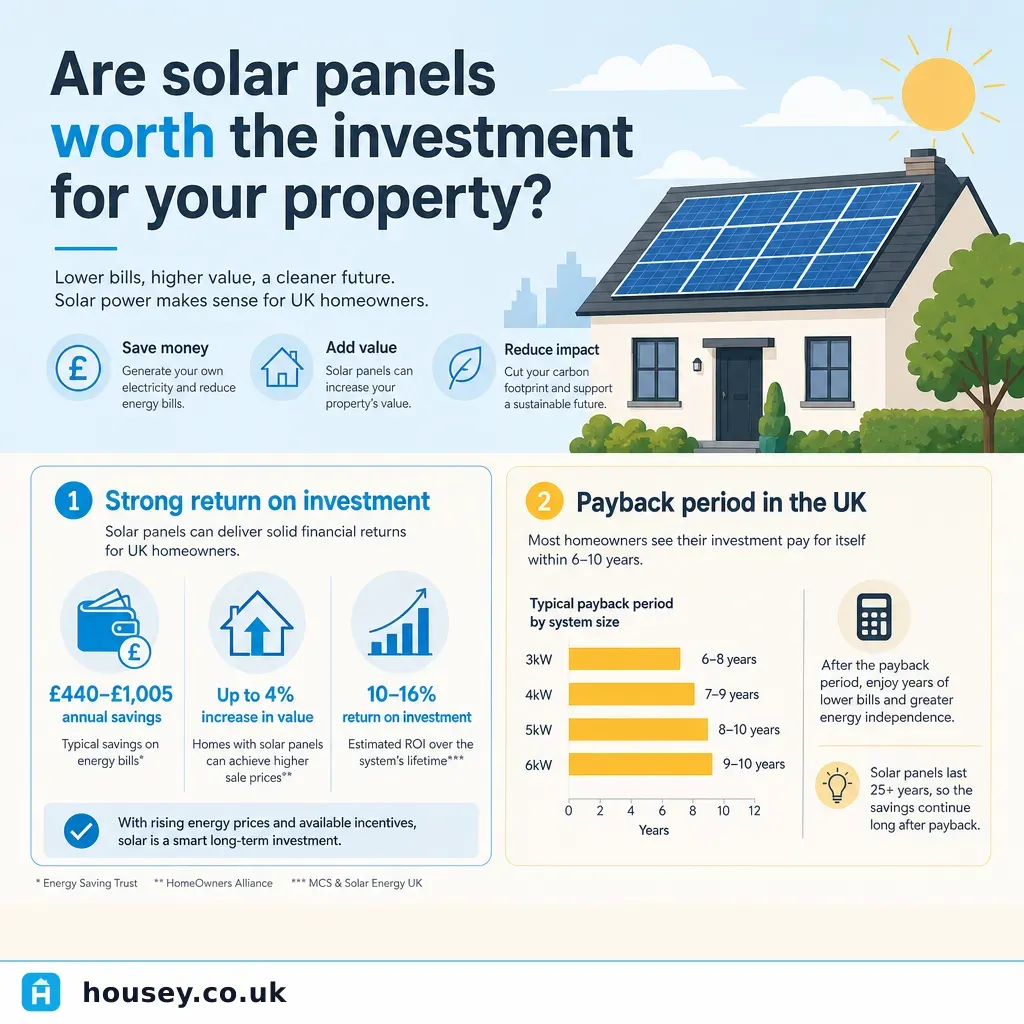
Are solar panels worth the investment for your property?
Solar panels can be a worthwhile investment for many UK homeowners, with typical payback periods of 10–15 years and ongoing income from the Smart Export Guarantee.
 Energy & Retrofit
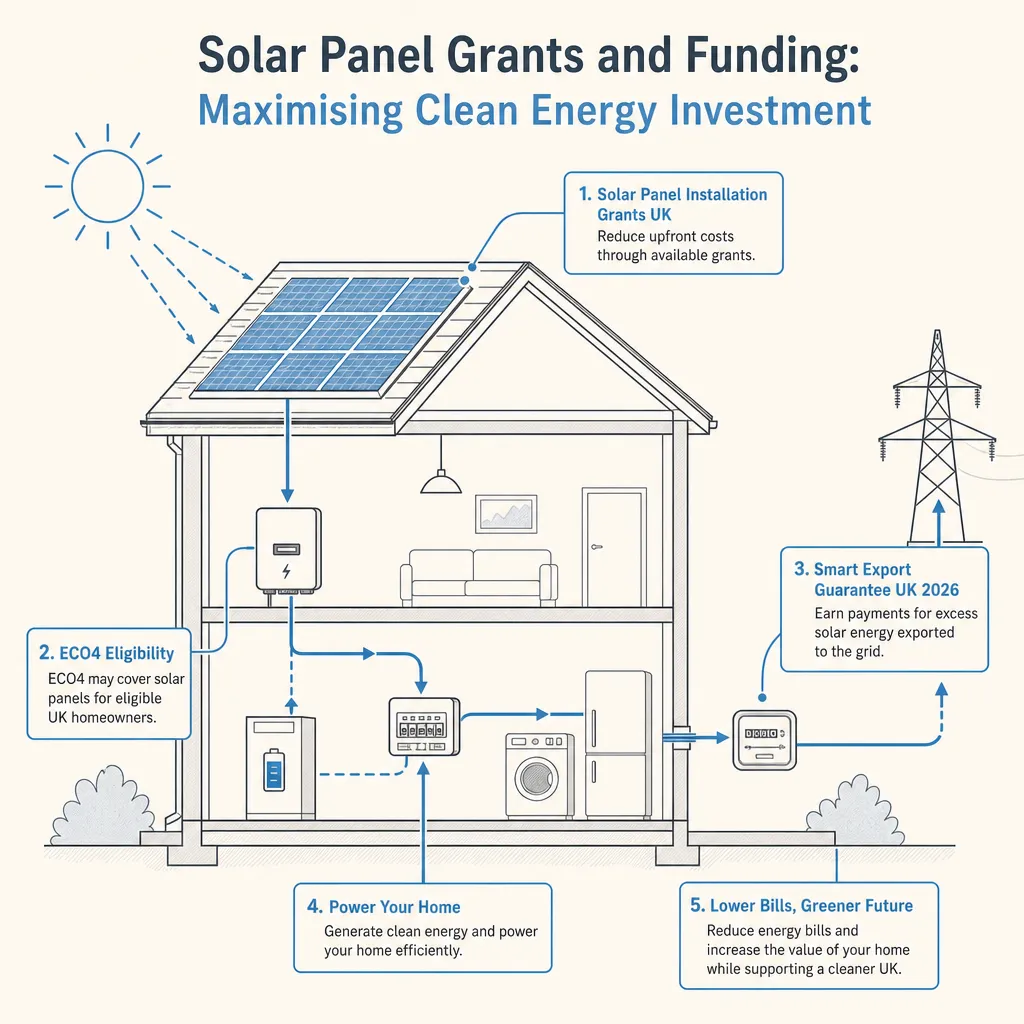
Solar Panel Grants and Funding: Maximising Clean Energy Investment
Several UK solar funding schemes are currently open: the Smart Export Guarantee pays homeowners for surplus electricity exported to the grid, ECO4 can fund free or subsidised panels for eligible low-income households, and 0% VAT on installation applies until at least March 2027.
 Energy & Retrofit
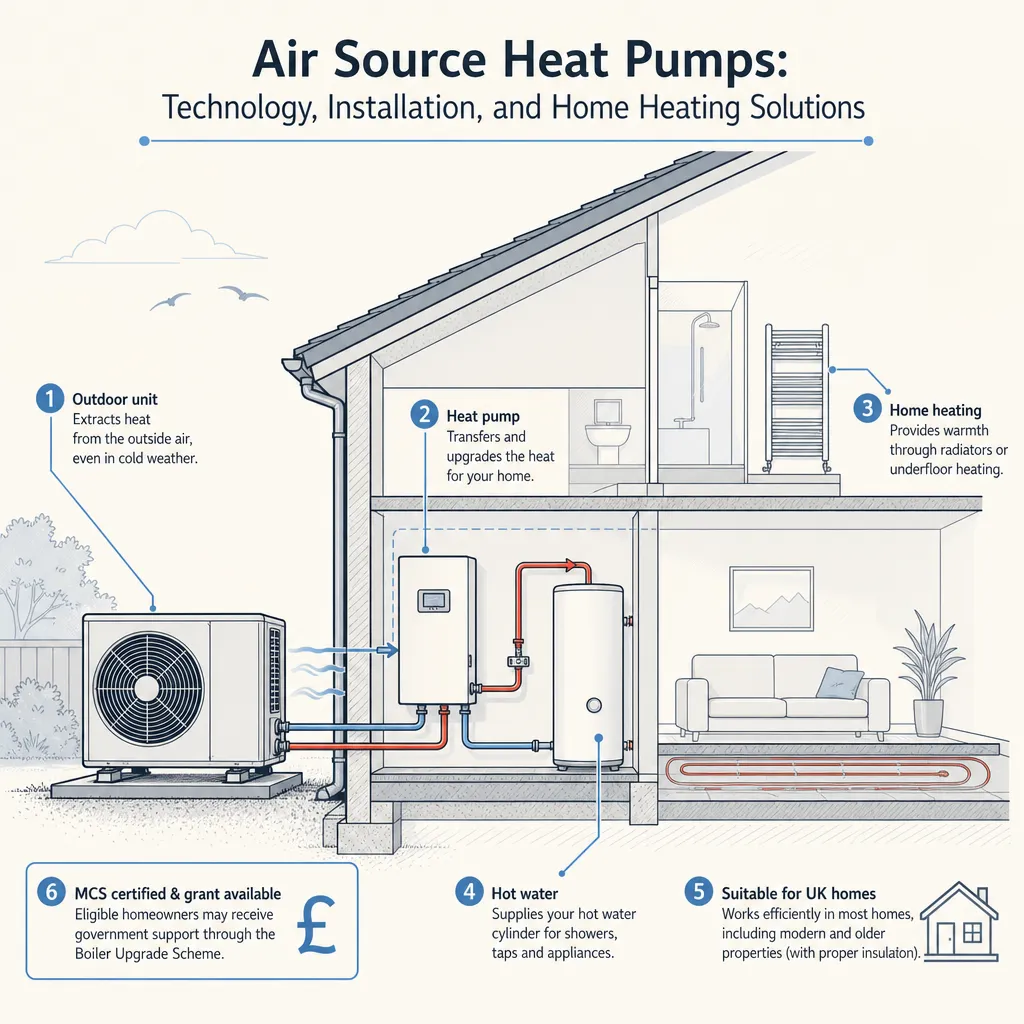
Air Source Heat Pumps: Technology, Installation, and Home Heating Solutions
An air source heat pump extracts heat from outdoor air and transfers it indoors via a refrigerant cycle, typically delivering 2.
 Energy & Retrofit
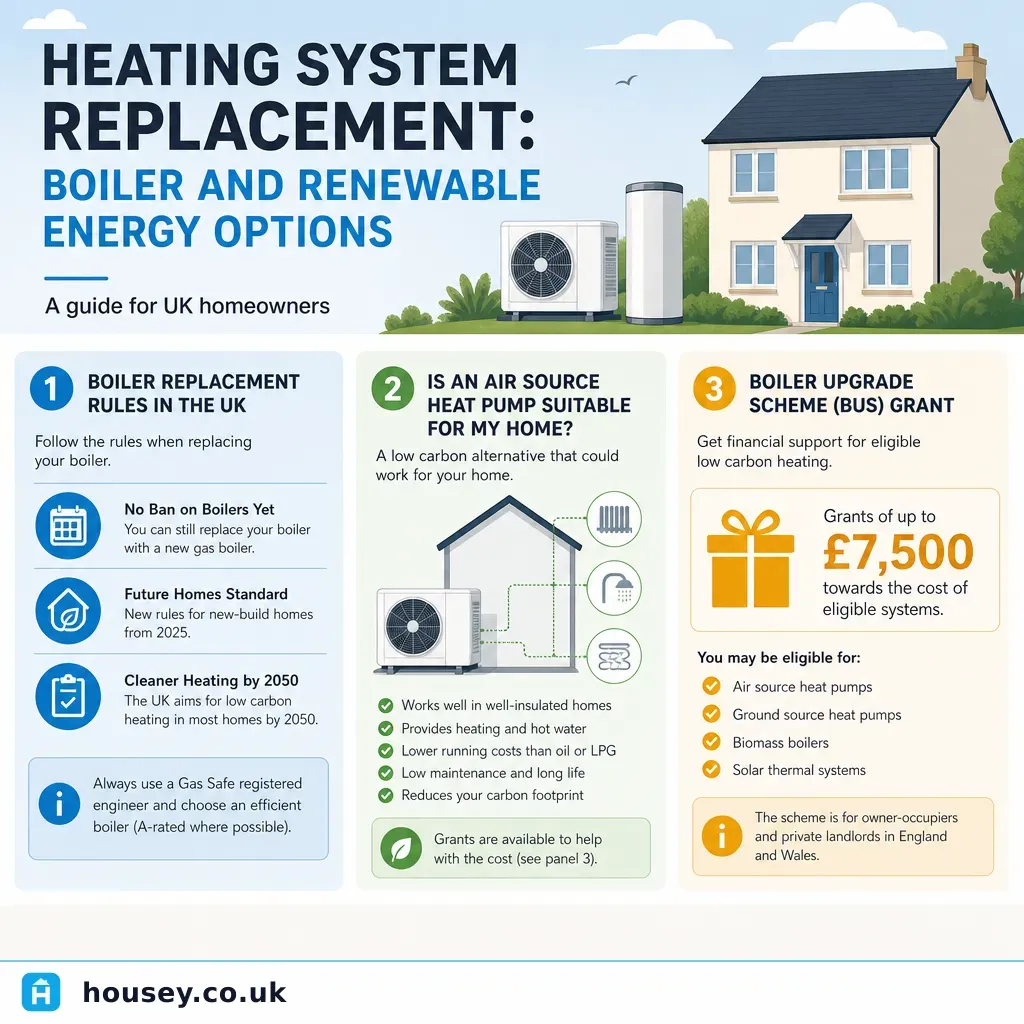
Heating System Replacement: Boiler and Renewable Energy Options
When replacing a heating system in the UK, a new gas boiler must comply with Boiler Plus (Part L) and be fitted by a Gas Safe registered engineer.