Switching From Gas Heating to Heat Pump Technology: Installation Guide
By Housey · Last reviewed 18th of May 2026
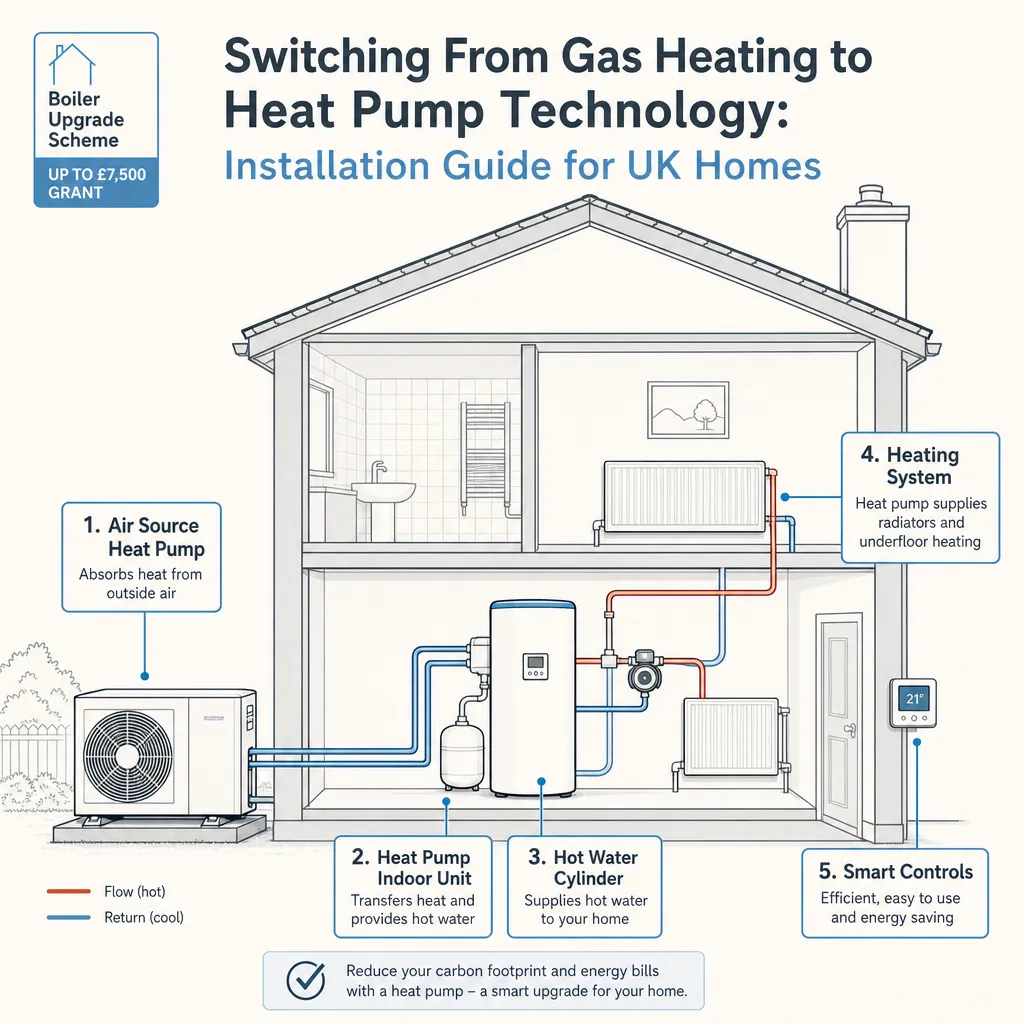
Switching From Gas Heating to Heat Pump Technology: Installation Guide
With new gas boilers banned in new-build homes from 2025 and government grant funding available for heat pump installations, many UK homeowners are weighing up whether — and when — to make the switch. The decision involves your home's insulation levels, heating distribution system, outdoor space, electrical supply, and budget, all of which interact in ways that make upfront professional assessment essential before any installer sets foot on the property.
Key points
- The Boiler Upgrade Scheme (BUS) provides a £7,500 grant toward a qualifying air source heat pump (ASHP) or ground source heat pump (GSHP) installation in England and Wales; the installer must hold MCS accreditation.
- Heat pumps are most efficient at flow temperatures of 35–45°C — significantly lower than a typical gas boiler's 60–80°C — which means existing radiators may be undersized and require upgrading or replacement.
- A heat loss calculation to BS EN 12831 is required to correctly size the heat pump; an oversized unit will short-cycle, reducing efficiency and increasing component wear.
- PAS 2035 sets the quality standard for retrofit works in the UK; a Retrofit Coordinator and Retrofit Assessor are required for publicly funded projects.
- Planning permission is not normally required for an ASHP under permitted development in England, provided it meets conditions including a minimum 1-metre setback from the property boundary and is not on a listed building.
Is your home suitable for a heat pump?
Heat pumps are not suitable for all homes without prior improvement work. Use this decision guide to assess readiness before instructing any installer.
- Install a heat pump now if your home has loft and floor insulation, filled cavity walls (or externally or internally insulated solid walls), and double or triple glazing throughout — a heat loss survey is likely to confirm a suitably sized unit will work efficiently.
- Improve insulation first, then install if your EPC rating is D or below and the property has uninsulated solid walls or significant draughts — installing before addressing fabric heat loss typically results in high running costs.
- Commission a heat loss survey first if you are unsure of your insulation status, have an older or unusual property (pre-1919 solid-wall, converted barn, listed building), or have received conflicting advice from different installers.
- Consider a hybrid system (ASHP paired with a retained gas boiler) if your property has physical constraints that prevent full electrification, or if the economics of full replacement do not stack up at current tariffs.
- Do not proceed without professional assessment if the property is listed, in a conservation area, or if outdoor space for the external unit or ground loop is severely limited.
Types of heat pump: ASHP vs GSHP
Feature | Air Source Heat Pump (ASHP) | Ground Source Heat Pump (GSHP) |
|---|---|---|
Heat source | Outdoor air | Ground or water |
Typical installed cost | £8,000–£15,000 | £15,000–£35,000 |
Space needed | External wall or ground-level mounting, approx. 1 m² footprint | Large garden for horizontal ground loop or borehole |
Typical CoP | 2.5–3.5 | 3.5–4.5 |
Planning (England) | Permitted development in most cases | PD for ground loops; boreholes may require additional consents |
BUS grant eligible | Yes (£7,500) | Yes (£7,500) |
Best for | Most UK homes with adequate external space | Larger properties with grounds; highest efficiency priority |
Less suited to | Properties with no clear external wall or ground space | Smaller plots; cost-sensitive projects |
Indicative UK costs, last reviewed 2026-05-18. Costs vary by property size, installer, specification, and whether radiator upgrades or electrical works are included.
The Boiler Upgrade Scheme and other financial support
The Boiler Upgrade Scheme (BUS) is administered by Ofgem and provides a £7,500 voucher toward qualifying ASHP or GSHP installations in England and Wales. Key eligibility requirements:
- The installer must be MCS-accredited and apply for the voucher on your behalf before installation begins.
- Your property must have a valid EPC with no outstanding recommendation for loft or cavity wall insulation.
- The voucher is redeemed directly with the installer, reducing your upfront cost.
In Scotland, the Home Energy Scotland Heat Pump Loan provides additional support. In Wales, the Warm Homes programme may offer grant or loan options depending on household income. The Energy Company Obligation (ECO4) focuses on lower-income households and may fund heat pump installation alongside insulation measures.
The installation process: what to expect
A full gas-to-heat-pump transition typically involves these stages:
- Heat loss survey: A qualified installer or Retrofit Assessor carries out a room-by-room heat loss calculation to BS EN 12831 to determine the required heat pump output and radiator sizing.
- System design: Specifying heat pump output, radiator sizes, pipework layout, hot water cylinder (typically unvented, 180–300 litres), controls, and any buffer vessel required.
- Pre-installation checks: Confirming electrical supply capacity (usually 32–63-amp single-phase), planning status, and any required notification to the Distribution Network Operator (DNO) for higher-output units.
- Decommissioning the gas system: A Gas Safe-registered engineer disconnects and decommissions the existing boiler. The gas supply may be capped or permanently disconnected.
- Heat pump installation: The external unit is mounted on a suitable base or wall bracket; internal components are connected to the heating circuit.
- Commissioning: The system is filled, pressurised, and commissioned by the MCS-accredited installer. Data is submitted to the MCS database.
- MCS certificate and BUS claim: The installer provides an MCS Commissioning Certificate and submits the BUS voucher claim on your behalf.
A worked UK property scenario
Consider a 1970s four-bedroom detached house in the East Midlands:
- Before: Gas combi boiler, standard 600 × 400 mm radiators throughout, no hot water cylinder, 150 mm loft insulation, unfilled cavity walls.
- Fabric works first: Cavity wall insulation installed under ECO4; loft insulation topped up to 270 mm.
- Heat loss calculation result: 8 kW required at design conditions (−3°C external temperature).
- Heat pump specified: 8.5 kW ASHP.
- Radiator upgrades: Six radiators replaced with larger low-temperature models to deliver adequate output at 45°C flow temperature.
- Hot water cylinder: 200-litre unvented cylinder installed in the airing cupboard.
- BUS grant applied: £7,500 deducted from installer invoice.
- Net cost to homeowner: Approximately £5,000–£8,000 after grant (indicative; varies by installer, radiator specification, and whether electrical upgrade is required).
- Estimated outcome: Annual heating bills reduced by 20–35% compared with the previous gas system, subject to electricity and gas tariff fluctuations at the time.
Important limitations
This guide provides general information about switching from gas to heat pump heating in UK residential properties. It does not constitute engineering, energy, legal, or financial advice. Heat pump suitability, sizing, system design, grant eligibility, and projected running costs all depend on individual property characteristics, occupancy patterns, local climate, and prevailing energy tariffs — all of which vary significantly. Always have a qualified Retrofit Assessor and MCS-accredited installer assess your specific property before committing to any installation.
Grant values, scheme eligibility rules, and tariff structures change regularly. Verify current BUS grant amounts and scheme availability directly with Ofgem's BUS guidance before proceeding.
When this becomes urgent
Stop relying on general guidance and contact a qualified professional without delay if:
- Your existing boiler has broken down and you are considering direct replacement with a heat pump — do not commit to installation without a heat loss survey, even under time pressure; an incorrectly sized unit is an expensive and difficult mistake to correct.
- An installer quotes a heat pump sized on your old boiler's output rating rather than on a calculated heat loss figure — this is a warning sign of poor practice.
- You notice persistent damp, condensation, or mould in the property — installing a heat pump before resolving ventilation or moisture issues can worsen them significantly.
- Work has already been quoted or started without confirmation of planning status and the property is listed or in a conservation area.
What to ask a qualified professional
Before instructing an MCS-accredited heat pump installer or Retrofit Assessor:
- Have you carried out, or will you carry out, a room-by-room heat loss calculation to BS EN 12831 for this property?
- Is the proposed heat pump correctly sized for the calculated heat loss — not simply matched to the existing boiler output?
- Will existing radiators deliver adequate output at the proposed flow temperature, or do any need replacing?
- What size hot water cylinder is specified, and is it an unvented system?
- What electrical supply upgrade, if any, is required — and who manages the DNO application and any associated costs?
- Are you MCS-accredited, and will you submit the BUS voucher on my behalf before installation begins?
- What commissioning documentation will I receive, and will the installation be registered on the MCS database?
- What is excluded from this quote — for example, radiator upgrades, electrical work, gas decommissioning, or internal making-good?
- Is VAT included in the quoted price, and at what rate?
- What aftercare and maintenance arrangement do you offer, and does the manufacturer warranty require annual servicing to remain valid?
When to get professional help
Do not proceed with a heat pump installation without a full heat loss survey from a suitably qualified professional. Engage a Retrofit Assessor (PAS 2035-qualified) or energy-efficiency consultant before making any purchasing decisions if:
- Your property has an EPC rating of D or below or has visible insulation deficiencies.
- Installers have quoted without visiting the property or without carrying out a heat loss calculation.
- You have persistent damp, condensation, or ventilation issues in the property.
- The property is listed or in a conservation area and planning status has not been confirmed in writing.
How Housey can help
Housey connects homeowners with qualified professionals at every stage of the heat pump journey — from an independent heat pump survey and retrofit assessment to full installation by an MCS-accredited installer. An energy-efficiency consultant can help you assess whether your home is ready and what preparatory works, if any, are needed before you commit to a system.
Frequently asked questions
Do I need planning permission for an air source heat pump?
In England, an ASHP is usually permitted development provided it meets conditions: it must be the first heat pump on the property, be at least 1 metre from the property boundary, not be sited on a wall or roof facing a highway, and not be on a listed building or in certain designated areas. Check current GOV.UK permitted development guidance and your local planning authority before installation.
How long does a heat pump installation take?
A typical domestic ASHP installation takes 2–5 days, including decommissioning the existing boiler and installing the hot water cylinder. If radiator upgrades are required, add 1–2 days. Ground source systems with horizontal ground loops take longer depending on the groundworks involved — typically one to two weeks for a standard garden installation.
Can I keep my gas boiler as a backup?
Yes — a hybrid heat pump system pairs an ASHP with a retained gas boiler. The heat pump handles most of the heating load; the boiler provides top-up on the coldest days. This can reduce the required heat pump size, lower installation costs, and retain the gas supply as a fallback, though you will continue to pay gas standing charges.
What maintenance does a heat pump need?
ASHPs require relatively little maintenance: annual filter checks manageable by the homeowner and a full service by a qualified engineer every 2–3 years. Any refrigerant work must be carried out by an F-Gas registered engineer. Most manufacturer warranties require annual servicing to remain valid — check the terms before installation.
Sources and further reading
- Boiler Upgrade Scheme guidance — GOV.UK
- Boiler Upgrade Scheme for homeowners — Ofgem
- MCS: Microgeneration Certification Scheme — MCS
- Heat pumps explained — Energy Saving Trust
- PAS 2035: Retrofitting dwellings for improved energy efficiency — BSI
Useful next reads
 Energy & Retrofit
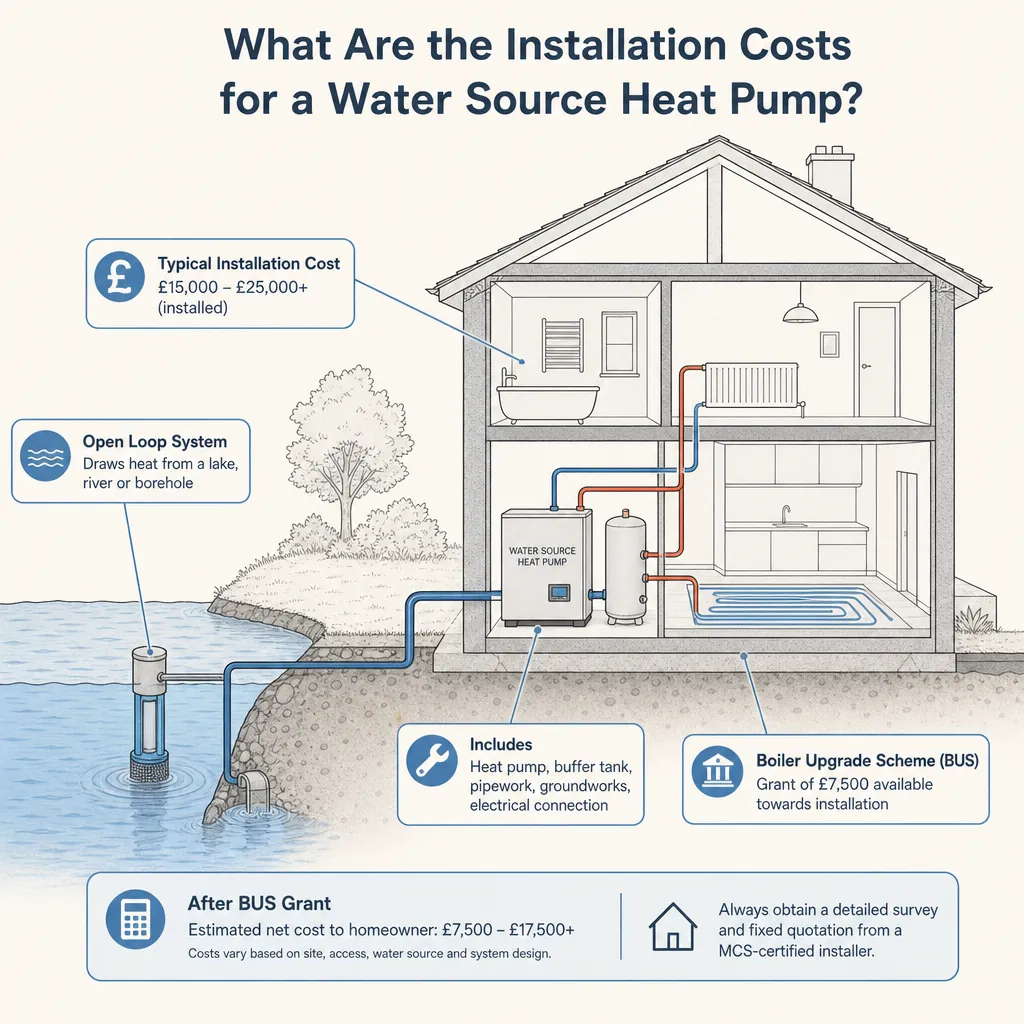
What Are the Installation Costs for a Water Source Heat Pump?
Water source heat pump installation in the UK typically costs £15,000–£45,000, depending on system type (open-loop or closed-loop), required heat output, and site complexity.
 Energy & Retrofit
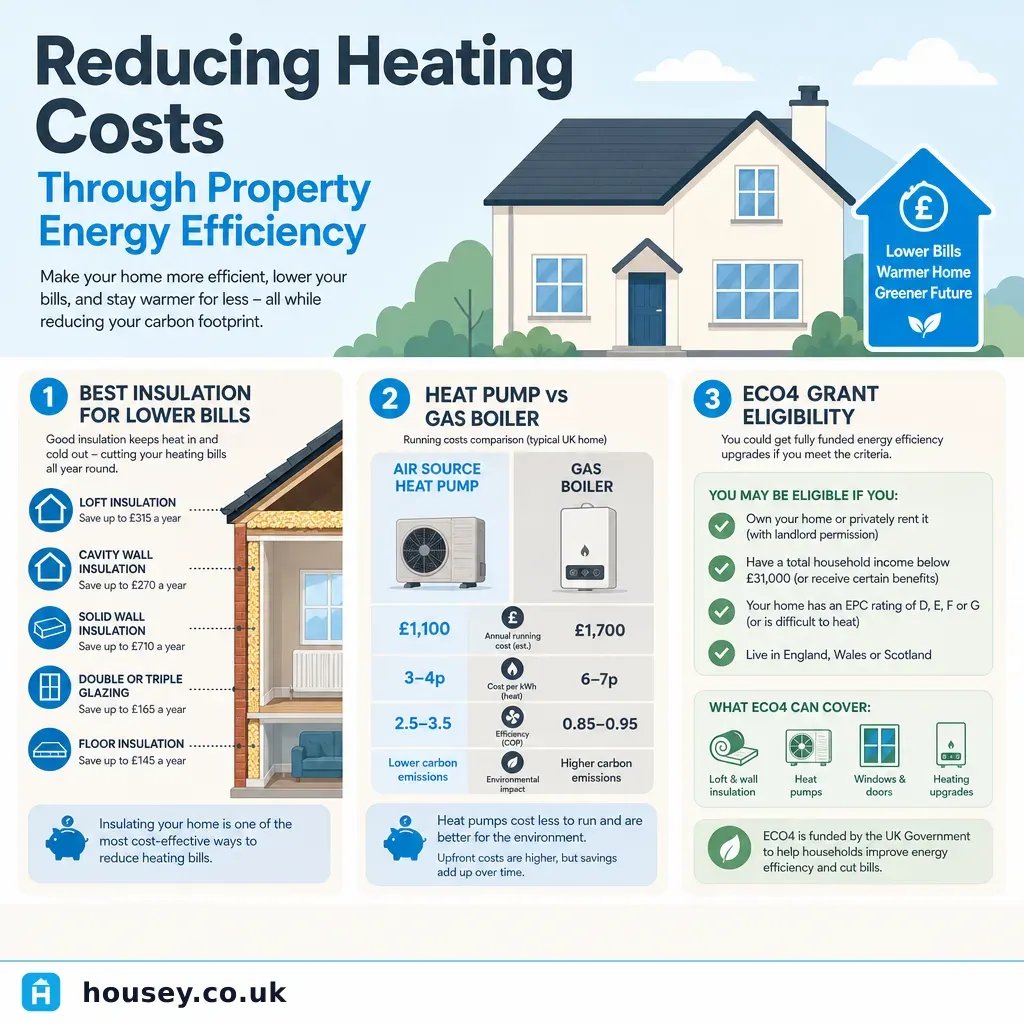
Reducing Heating Costs Through Property Energy Efficiency
Reducing heating costs starts with identifying where heat is lost — typically walls (30–35%), roof (20–25%), and windows.
 Energy & Retrofit
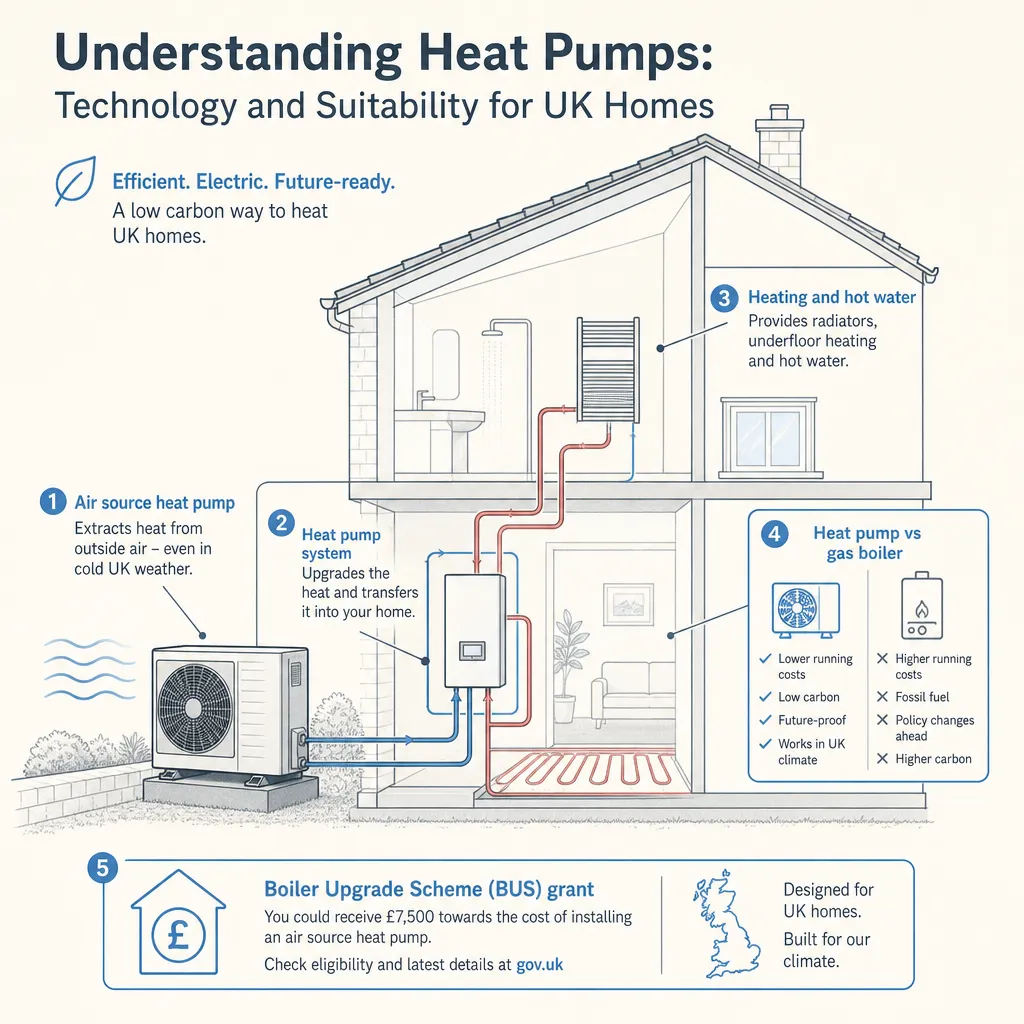
Understanding Heat Pumps: Technology and Suitability for UK Homes
Heat pumps extract heat from the air or ground and transfer it indoors, typically achieving efficiencies of 250–400% compared to a conventional boiler's near 100%.
 Energy & Retrofit
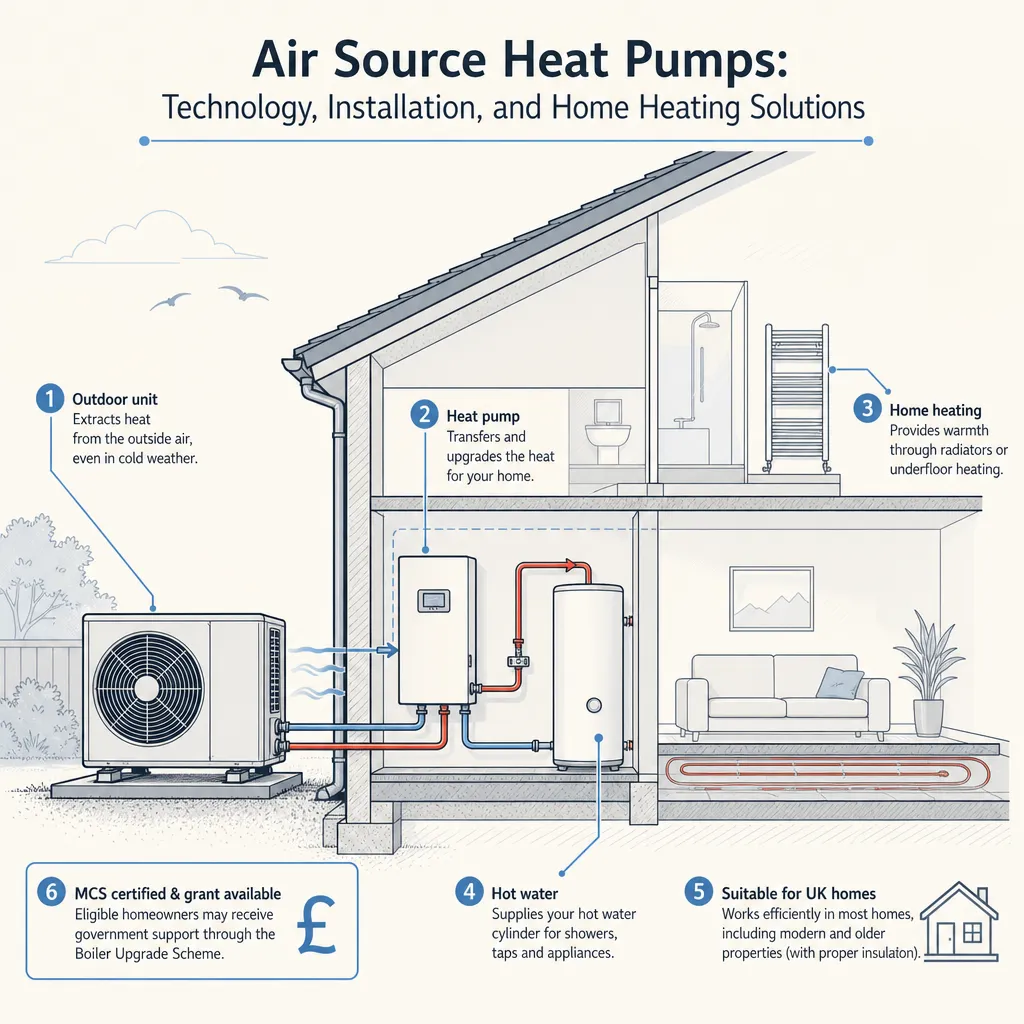
Air Source Heat Pumps: Technology, Installation, and Home Heating Solutions
An air source heat pump extracts heat from outdoor air and transfers it indoors via a refrigerant cycle, typically delivering 2.
 Energy & Retrofit
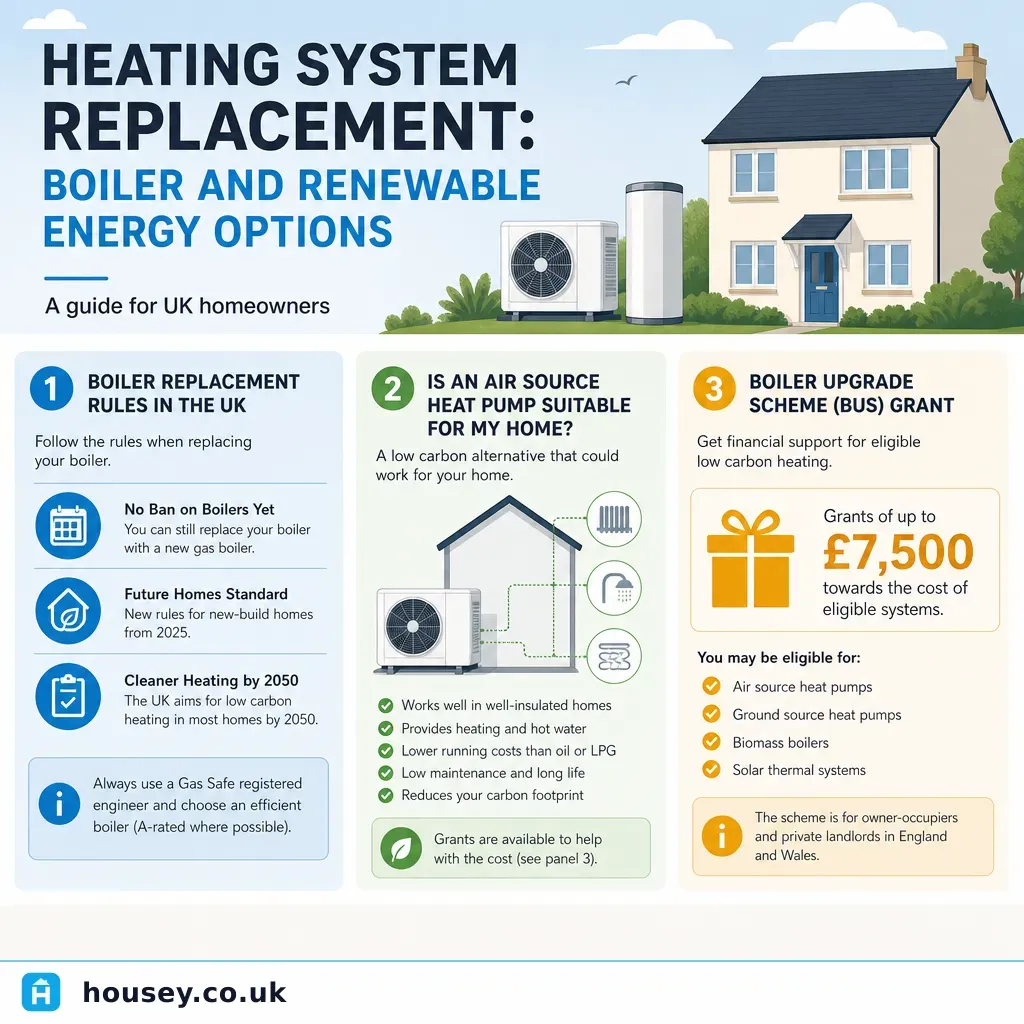
Heating System Replacement: Boiler and Renewable Energy Options
When replacing a heating system in the UK, a new gas boiler must comply with Boiler Plus (Part L) and be fitted by a Gas Safe registered engineer.