Heat Pump and Boiler Hybrid Systems: Optimising Efficiency in UK Homes
By Housey · Last reviewed 11th of May 2026
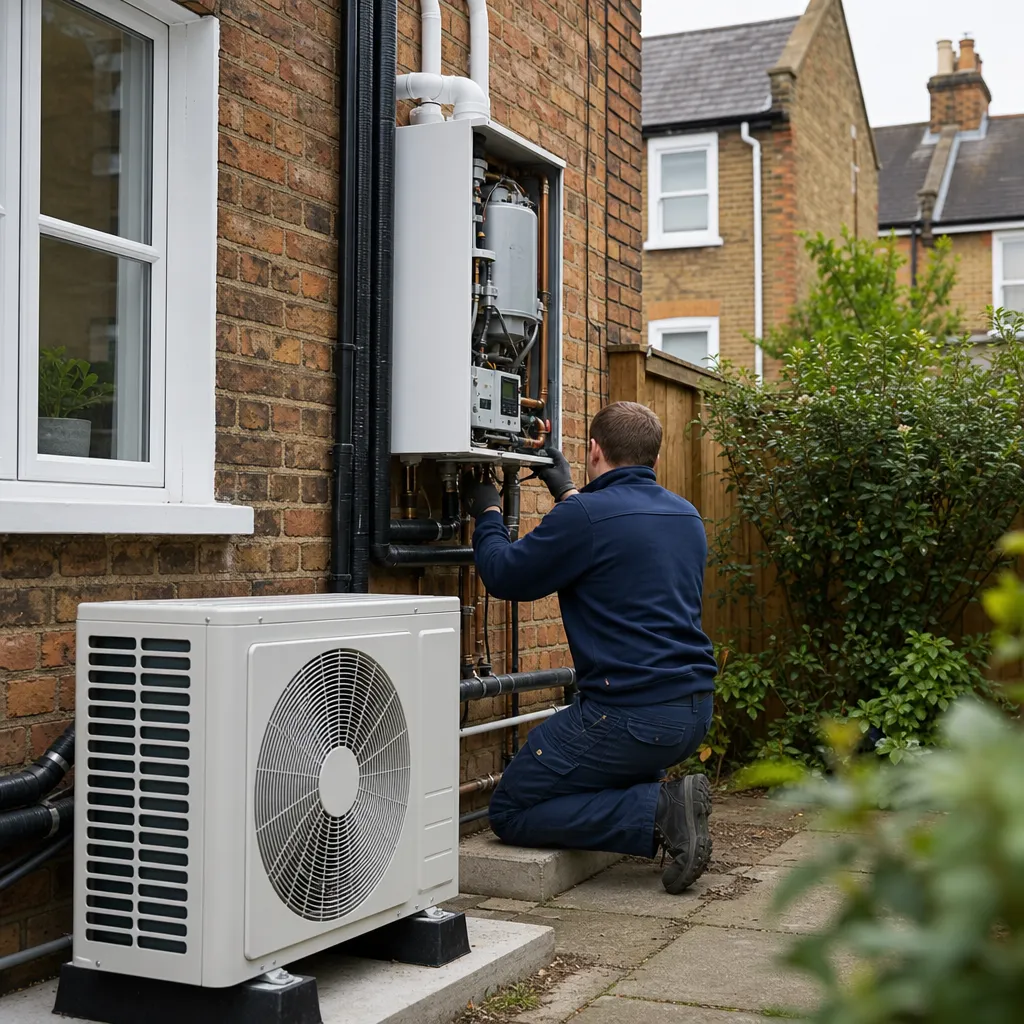
Heat Pump and Boiler Hybrid Systems: Optimising Efficiency in UK Homes
Hybrid heat pump systems have moved from a niche retrofit option to a mainstream consideration for UK homeowners who want to reduce gas consumption without committing to a full electrification of their heating. The question of whether to pair an air source heat pump with an existing gas boiler most often arises when a boiler is nearing the end of its serviceable life, after an energy efficiency assessment has identified the home as difficult to retrofit fully, or when a homeowner is exploring the Boiler Upgrade Scheme and weighing up what is genuinely feasible given their property's fabric and budget.
Key points
- A hybrid system combines an air source heat pump (ASHP) with a gas or LPG boiler; the heat pump handles most heating loads while the boiler provides top-up or full output when outdoor temperatures fall below the system's balance point temperature (typically between -3°C and +5°C depending on system design and energy tariffs).
- The Boiler Upgrade Scheme (BUS) provides grants of £7,500 towards qualifying heat pump installations in England and Wales; hybrid systems may be eligible but must meet current scheme criteria — check GOV.UK for the latest position.
- All heat pump installations must be designed and installed by an MCS-certified installer for the BUS grant to be paid and for compliance with Building Regulations Part L.
- A heat loss calculation to BS EN 12831 is required to correctly size the heat pump element; an undersized unit forces the boiler on too frequently, reducing savings; an oversized unit short-cycles and loses efficiency.
- Heat pumps deliver hot water most efficiently at flow temperatures of 45–55°C rather than the 70–80°C typical of traditional gas boilers, so some radiators may need upsizing in poorly insulated rooms.
How a hybrid heat pump system works
A hybrid system (also referred to as a dual-fuel system) uses intelligent controls to select the most cost-efficient heat source at any given moment. In mild UK weather — typically above 5–7°C — the heat pump produces heat at a Coefficient of Performance (COP) of 2.5 to 4.0, meaning 2.5 to 4 units of heat for every unit of electricity consumed. As outdoor temperature falls, the COP decreases. At the balance point, the gas boiler becomes more cost-effective (depending on prevailing electricity and gas tariffs) and takes over automatically.
Modern hybrid controllers — found in products such as the Daikin Altherma Hybrid, Worcester Bosch Greenstar Hybrid, and Vaillant aroTHERM hybrid — switch between heat sources seamlessly based on outdoor temperature, occupancy signals, and energy tariff data. The homeowner typically sets a minimum indoor temperature and a preferred comfort schedule; the system manages the rest.
Is a hybrid system right for your home?
Decision tree: full heat pump or hybrid?
- Choose a full heat pump if the property has solid wall or cavity wall insulation already installed, loft insulation to current standards, an EPC rating of C or above, underfloor heating or recently upsized radiators, and a heat loss below roughly 6 kW for a typical three-bedroom home. Fabric quality is the biggest lever on running costs.
- Choose a hybrid system if the property is a Victorian terrace, 1930s semi, or other hard-to-insulate home with a heat loss above 8–10 kW; the existing radiator and pipework circuit is difficult or costly to replace; or a backup heat source is needed for resilience during very cold spells.
- Prioritise insulation before any heat pump if the EPC is E or below, cavity walls are uninsulated, or loft insulation is absent or inadequate — fabric improvements typically deliver better cost-per-unit-of-savings than adding a heat pump to a leaky building.
- Ask a qualified MCS-certified heat pump engineer if you are unsure about heat loss, the hot water cylinder is not compatible with a heat pump, or the electrical supply to the property may need upgrading to support the outdoor unit.
Comparison: full ASHP versus hybrid heat pump system
Factor | Full air source heat pump | Hybrid heat pump + gas boiler |
|---|---|---|
Upfront cost | Higher — replaces the boiler entirely | Lower — existing boiler is retained |
BUS grant eligibility | £7,500 (check GOV.UK for current criteria) | May be eligible; check current BUS rules |
Likely gas saving | Near-complete removal of gas for space heating | 30–50% reduction in gas use in suitable homes |
Radiator changes | Often needed for older homes with high heat loss | Fewer changes needed; boiler covers peak demand |
Mains gas connection | Can be removed once system is commissioned | Retained |
Best for | Post-2000 homes, EPC B/C, well-insulated fabric | Pre-1980 homes, EPC D/E, limited budget or disruption tolerance |
Indicative comparison, last reviewed 2026-05-11. Running costs depend on energy tariffs, fabric quality, and occupancy.
Sizing and system design
Correct sizing is the most technically critical element of a hybrid installation. The design process should include:
- Heat loss calculation to BS EN 12831 — a room-by-room assessment of fabric heat loss through walls, roof, floor, windows, and ventilation. This is the essential starting point; do not accept a quote that omits it.
- Balance point determination — the outdoor temperature at which the boiler becomes more cost-effective than the heat pump, based on current electricity and gas tariff ratios and the heat pump model's COP curve at low temperatures.
- Radiator and emitter assessment — identifying rooms where low-temperature flow (45–55°C) may be insufficient and calculating whether upsizing radiators is cost-effective or whether the boiler can compensate on the coldest days.
- Hot water cylinder specification — a vented or unvented cylinder of at least 180–250 litres is typically needed; the heat pump handles most domestic hot water production, with the boiler providing top-up.
- Electrical supply check — a single-phase 100 A supply is usually adequate for a 5–14 kW heat pump unit, but the installer should confirm the existing supply is sufficient and identify any consumer unit work needed.
What happens during installation
A typical hybrid installation by an MCS-certified company takes two to four days on site. The process usually involves:
- Installing the external heat pump unit on a suitable base (most domestic air source heat pump units are permitted development under Part 14, Class A of the GPDO — confirm with your installer)
- Connecting the heat pump to the existing heating circuit and hot water cylinder
- Installing or configuring the hybrid controller and any room thermostats
- Commissioning and testing the full system, which is a mandatory step for the BUS grant
- Providing the MCS Operational Certificate on completion — keep this document safely as it is required for the grant and may be relevant to future property sales
Important limitations
This article provides general information about hybrid heat pump systems in the UK as of May 2026. Performance savings, grant amounts, eligibility criteria, and technical requirements may change. Actual energy savings depend on your property's specific heat loss, insulation level, hot water usage, occupancy patterns, and energy tariffs — generalised figures cannot substitute for a property-specific heat loss assessment.
Hybrid heat pump design and installation must be carried out by a qualified MCS-certified installer. Building Regulations compliance (Part L in England, Section 6 in Scotland, Part L in Wales) is the installer's legal responsibility; ensure you receive all commissioning certificates and documentation on completion.
When this becomes urgent
Seek professional advice without delay if:
- Your current boiler has broken down and you face an immediate replacement decision — a temporary hire boiler may allow time for a proper heat loss assessment rather than forcing a rushed choice.
- Your rental property is approaching Minimum Energy Efficiency Standards (MEES) obligations and you need to understand which heating upgrades count towards compliance.
- Your existing heat pump is short-cycling — switching on and off very frequently — which indicates incorrect sizing and may cause premature compressor failure if not corrected.
- The outdoor unit is icing over in conditions above -5°C, or you notice a significant and sustained drop in heating output — these may indicate a refrigerant fault requiring an F-Gas-registered engineer.
What to ask a qualified professional
Before instructing an MCS-certified installer, ask:
- Are you MCS-certified, and will you provide the MCS Operational Certificate on completion?
- Will you carry out a full room-by-room heat loss calculation to BS EN 12831, and can I see the output before you finalise the specification?
- At what balance point temperature have you designed the system, and how does that reflect current electricity and gas tariff ratios?
- Which radiators are you recommending for replacement or upsizing, and what is the cost if I choose not to replace them?
- Is my existing electrical supply adequate, and does anything need upgrading before installation?
- What hot water cylinder capacity are you recommending, and does my current cylinder need replacing?
- Will you handle the Boiler Upgrade Scheme application and paperwork, or is that my responsibility?
- What annual maintenance does the system require, and what is a typical service cost?
When to get professional help
A heat loss survey is the essential first step — do not accept a quote that does not include one. Additional red flags that warrant extra scrutiny include: a quote that makes no mention of heat loss calculations or balance point design; a recommendation to install a heat pump significantly larger than 12–14 kW in a typical three-bedroom home (oversizing is a common error); an installer who cannot provide MCS certification credentials; or a scope that omits commissioning, system handover documentation, or the MCS certificate.
A heat pump survey from a qualified assessor is the right starting point before committing to any installation.
How Housey can help
Housey connects you with MCS-certified specialists who can carry out a heat pump survey and provide a properly scoped hybrid installation quote. Compare quotes from local engineers who are accredited to design and install hybrid systems and who can manage the Boiler Upgrade Scheme application on your behalf.
Frequently asked questions
Can I get a government grant for a hybrid heat pump in the UK?
The Boiler Upgrade Scheme (BUS) provides grants of £7,500 towards qualifying heat pump installations in England and Wales. Hybrid systems may be eligible but must meet current scheme criteria, which change periodically. Check the latest position on GOV.UK and confirm eligibility with your MCS-certified installer before committing to a system design or purchase.
What is the balance point temperature for a hybrid heat pump?
The balance point is the outdoor temperature below which the gas boiler is more cost-effective than the heat pump, based on prevailing electricity and gas tariffs. For most UK hybrid systems this falls between -3°C and +5°C, but the correct figure depends on the heat pump model's COP curve, the property's specific heat loss, and current energy prices. An MCS-certified engineer should calculate this during design.
Do I need to replace my radiators with a hybrid heat pump?
Not always. Because the gas boiler handles peak demand on the coldest days, the heat pump can be sized to operate at lower flow temperatures during milder weather without needing to heat every room at maximum output. Some radiators in poorly insulated rooms may benefit from upsizing, but this is generally less disruptive than a full heat pump retrofit where the boiler is removed entirely.
How long does a hybrid heat pump installation take?
Most hybrid installations take two to four days for a qualified MCS-certified team. The timeline can extend if the hot water cylinder needs replacing, if electrical supply upgrades are required, or if the external unit needs a new concrete base or bespoke mounting arrangement. Commissioning and the MCS certificate handover should be included in the installation scope.
Is a hybrid heat pump suitable for a Victorian terraced house?
Victorian terraces with solid walls often have high heat losses that make a full heat pump retrofit challenging, since the system must produce high flow temperatures to compensate. A hybrid system can be a practical intermediate step: the boiler handles the coldest days while the heat pump reduces gas consumption across the eight or nine months of milder UK weather, deferring the need for full fabric improvements.
Sources and further reading
- Boiler Upgrade Scheme: apply for a grant — GOV.UK
- MCS: find a certified heat pump installer — Microgeneration Certification Scheme
- Approved Document L: conservation of fuel and power — GOV.UK
- Heat pumps: what you need to know — Energy Saving Trust
- CIBSE guidance on heat pump system design — Chartered Institution of Building Services Engineers
Useful next reads
 Energy & Retrofit
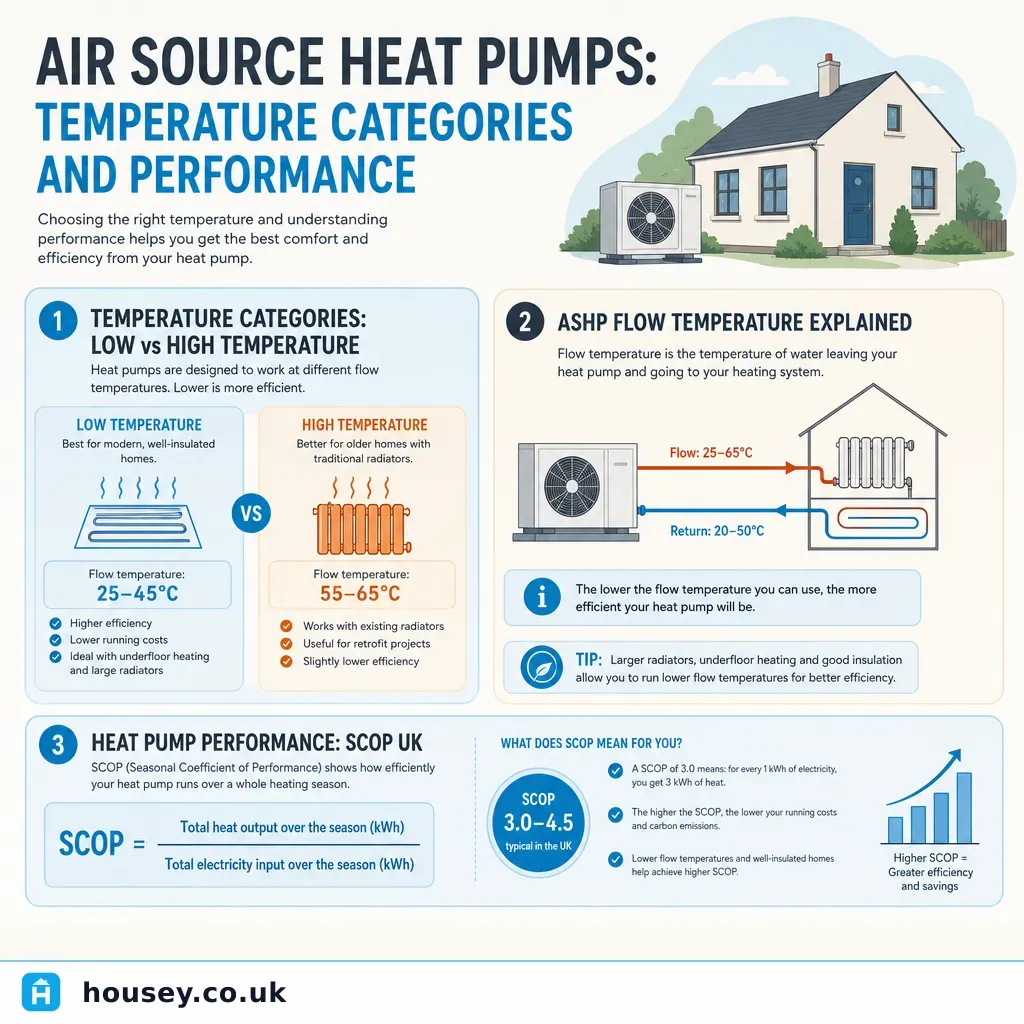
Air Source Heat Pumps: Temperature Categories and Performance
Air source heat pumps are typically classified as low temperature (flow temperatures of 35–55°C) or high temperature (up to 65–80°C).
 Energy & Retrofit
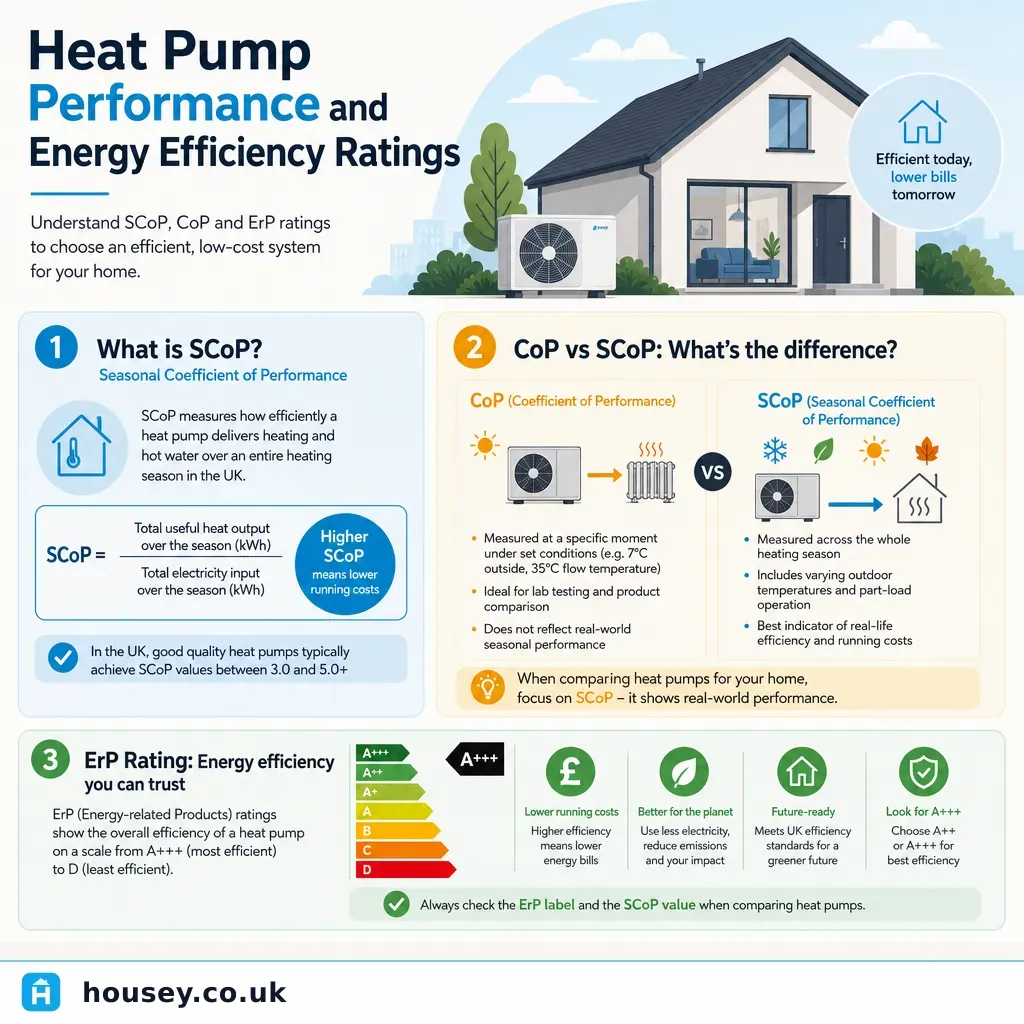
Heat Pump Performance and Energy Efficiency Ratings
Heat pump efficiency is measured by the Seasonal Coefficient of Performance (SCoP) — the annual ratio of heat delivered for every unit of electricity consumed.
 Energy & Retrofit
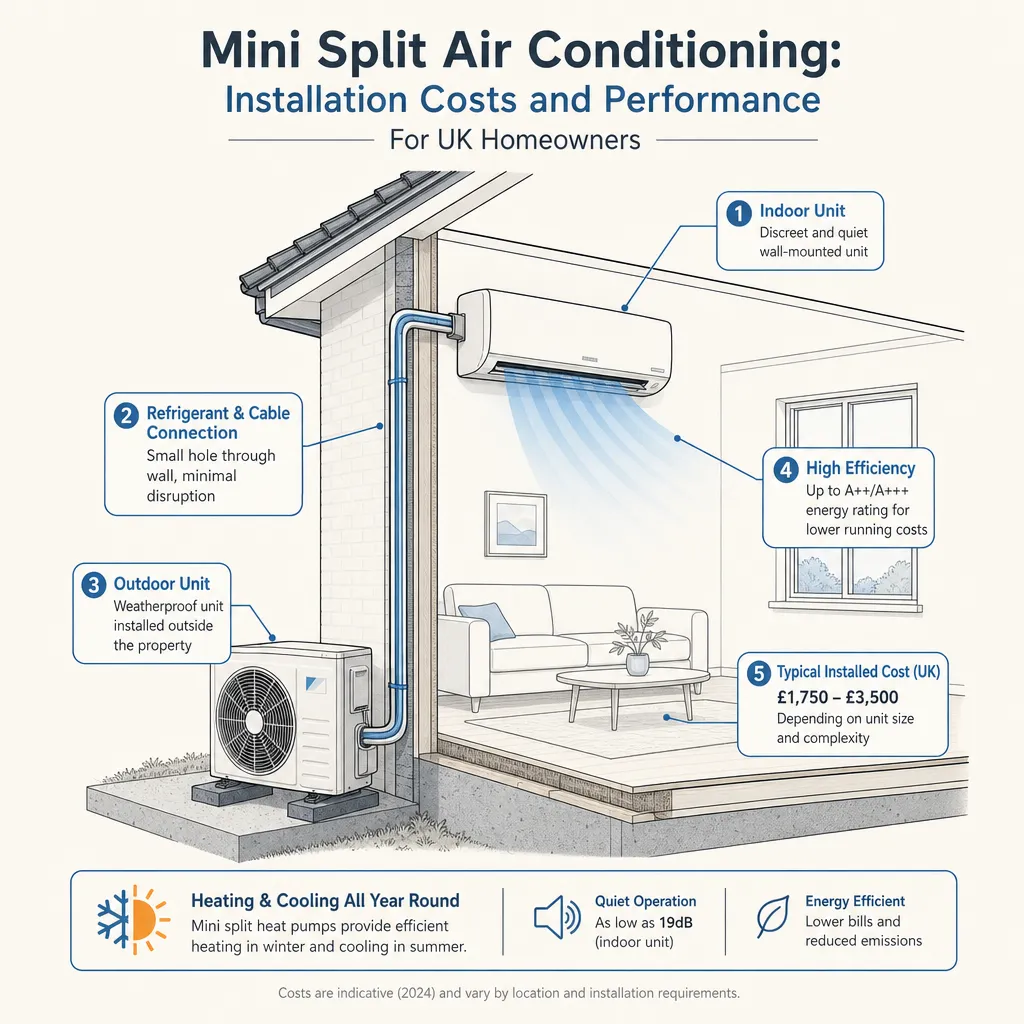
Mini Split Air Conditioning: Installation Costs and Performance
A mini-split (ductless) air conditioning unit costs roughly £1,500–£4,000 installed for a single room in the UK.
 Energy & Retrofit
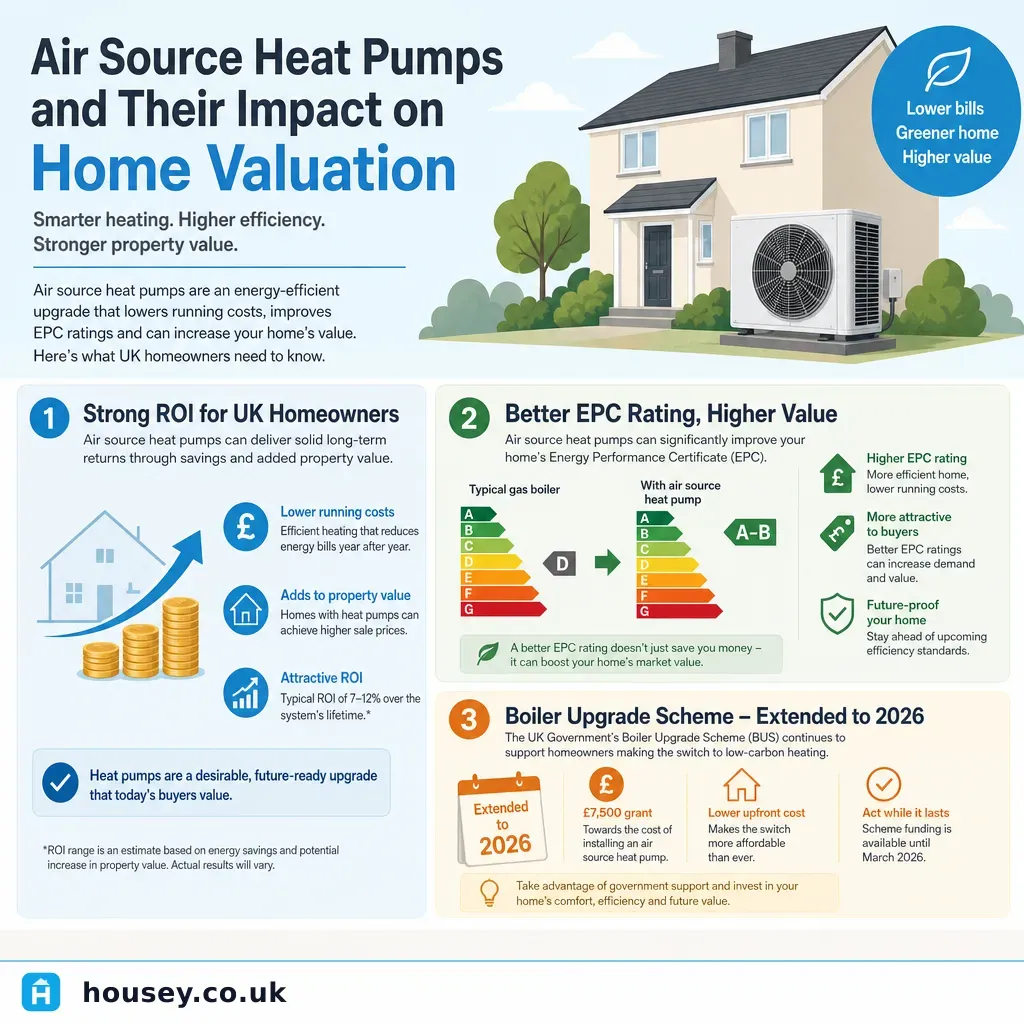
Air Source Heat Pumps and Their Impact on Home Valuation
An air source heat pump can improve your home's EPC rating, which may positively influence its market value — particularly as mortgage lenders and buyers increasingly factor in energy performance.
 Energy & Retrofit
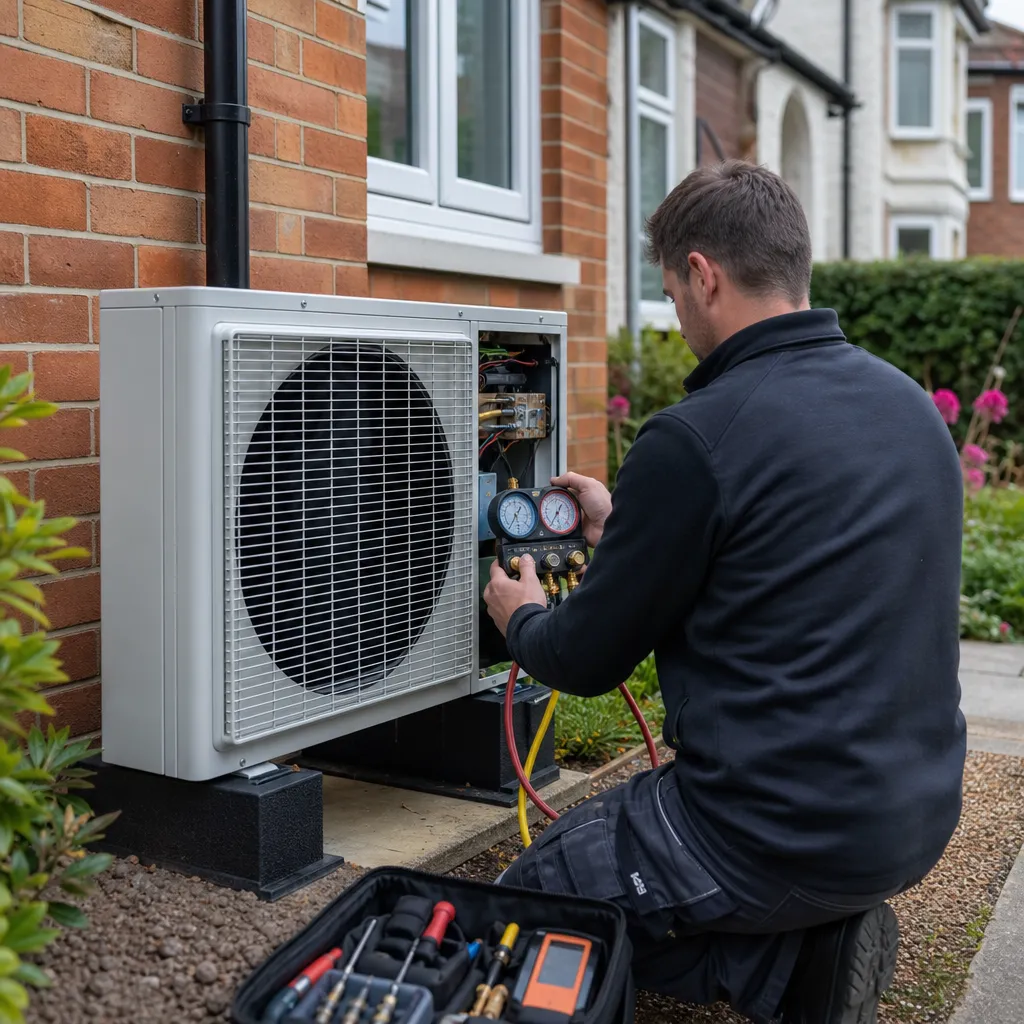
Diagnosing Heat Pump Performance Issues: Why Cooling Fails
Heat pump cooling failure is usually caused by refrigerant loss, a dirty air filter, a blocked outdoor unit, incorrect controller settings, or an undersized system.