Airey House Structural Repair and Remediation
By Housey · Last reviewed 4th of May 2026
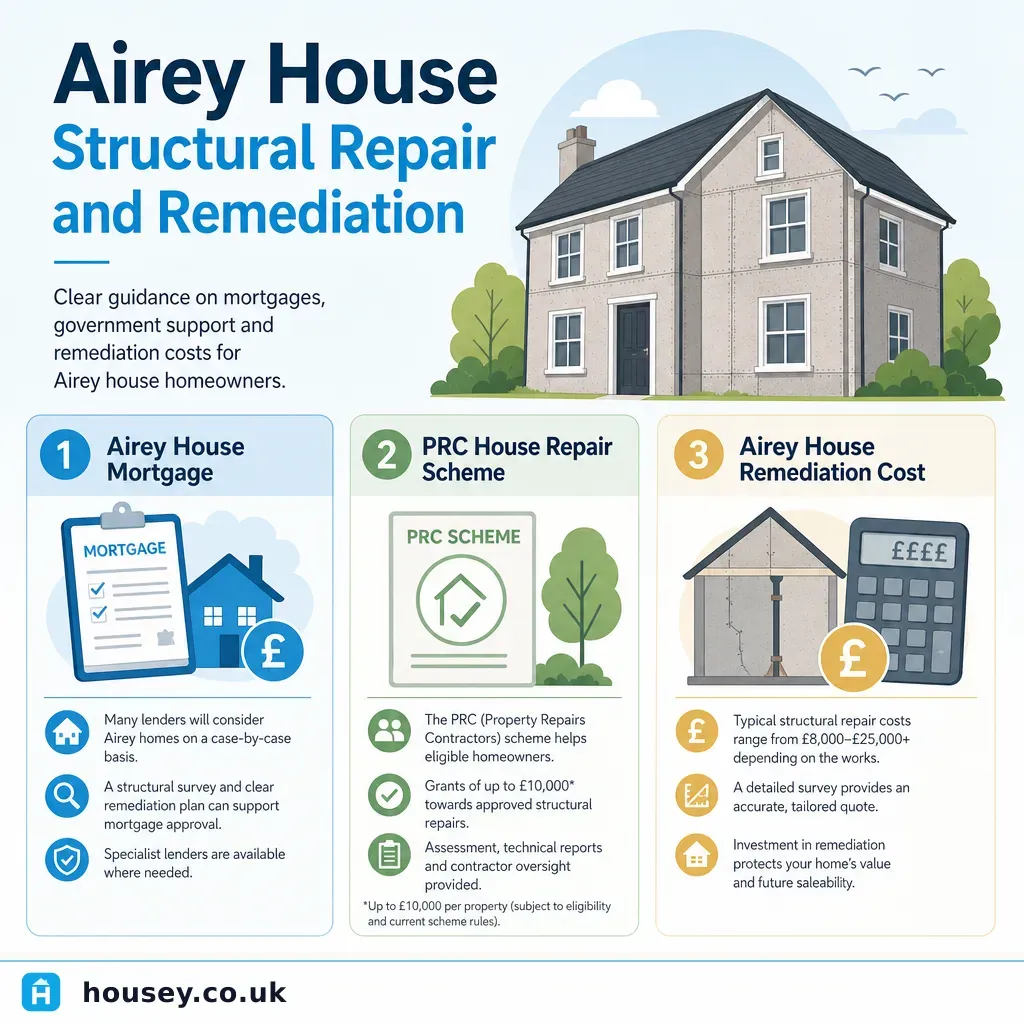
Airey House Structural Repair and Remediation
Airey houses represent one of the more complex categories of UK residential property: post-war prefabricated concrete homes officially designated as defective, yet still occupied by thousands of families across England and Wales. Whether you have inherited one, are considering purchasing one, or need to address repairs on a property you already own, understanding the structural picture — and the regulated route to remediation — is essential before spending money or making significant decisions.
Key points
- Airey houses were designated as defective under the Housing Defects Act 1984 due to risk of deterioration in their prefabricated reinforced concrete (PRC) structure.
- Without approved PRC remediation, Airey houses are generally unmortgageable with mainstream lenders and difficult to sell to buyers needing finance.
- Only contractors licensed under a PRC Homes repair scheme can carry out remediation that results in a PRC Certificate — the document lenders require.
- Remediation typically involves encasing the original concrete post-and-panel structure with a new brick-and-block outer skin or an approved proprietary system.
- A structural engineer should assess the existing frame condition before any remediation quote is accepted.
What is an Airey house?
Airey houses were designed by Sir Edwin Airey and built primarily between 1945 and 1955 as part of the post-war emergency housing programme. The construction uses precast concrete columns set into the ground, with concrete panels slotted between them to form the walls. A light timber roof structure sits on top.
The concrete columns are the critical weakness. Over decades, the steel reinforcement within them can corrode — particularly where the columns are in contact with the ground — causing the concrete to crack and spall. This process is not always visible from outside, which is why a basic visual inspection cannot confirm structural soundness.
The Housing Defects Act 1984 (later consolidated into Part XVI of the Housing Act 1985) designated Airey houses as defective, entitling qualifying owners at the time to government assistance. That assistance period has long since closed, but the designation remains significant because it shapes how lenders and surveyors treat these properties today.
Why remediation is necessary for mortgageability
Most mainstream mortgage lenders will not lend on an unremediated Airey house. The rationale is straightforward: the property is a known defective type, the concrete structure may be deteriorating in ways that are not visible, and long-term value is uncertain.
To restore mortgageability, the property must be remediated under a licensed PRC Homes repair scheme and a PRC Certificate issued. This certificate is the document lenders require. Without it, any sale will typically need to be a cash transaction, which significantly limits the buyer market and reduces achievable price.
PRC Homes Ltd administers the licensing scheme in England and Wales. Only contractors licensed under this scheme can issue a PRC Certificate on completion. Using an unlicensed contractor — however experienced in general building work — will not produce a certifiable outcome.
How Airey house remediation works
Remediation does not typically demolish the Airey frame. The approved approach involves encasing the existing structure so the new outer envelope becomes the load-bearing element and the original concrete frame is no longer relied upon structurally. Common systems include:
- Brick-and-block outer skin: A new cavity wall is built around the existing structure, tied back appropriately, with insulation installed in the cavity. The concrete columns and panels are left in situ but are no longer structural.
- Proprietary cladding systems: Some licensed schemes use specific proprietary panels or render systems. These must be applied by a licensed contractor to be certifiable.
In both cases, the finished property looks externally similar to a conventional house, often with a brick or rendered finish that gives no outward sign of the underlying construction type.
Indicative remediation costs
Indicative UK costs, last reviewed 2026-05-04. Costs vary significantly by property size, system chosen, site access, and regional labour rates.
Scope | Indicative range |
|---|---|
Full PRC remediation (2–3 bed Airey house) | £30,000–£60,000+ |
Structural engineer assessment (pre-remediation) | £500–£1,500 |
Building regulations application | £800–£1,500 |
PRC Certificate | Included in licensed contractor's scheme cost |
Always obtain at least three quotes from licensed PRC contractors before committing.
Decision tree: which route applies to you?
- Selling an Airey house: Commission a structural engineer assessment first. Obtain quotes from licensed PRC contractors. Remediate before marketing if you want the widest buyer pool and best price. If selling to a cash buyer, disclose the defective designation in full.
- Buying an Airey house: Do not proceed without a RICS Level 3 Building Survey with specific PRC advice. Confirm whether a PRC Certificate exists. If not, factor remediation cost into your offer — or walk away.
- Staying long term: Structural assessment remains advisable to understand current frame condition. Remediation also improves thermal performance and long-term value as well as mortgageability.
- Remortgaging: Contact your current lender first. Some lenders who originally lent on the property may continue; new lenders generally will not without a PRC Certificate.
- Unsure of construction type: If you are uncertain whether a property is an Airey house, a RICS Level 3 surveyor with PRC experience can confirm the construction type and advise on condition.
What not to assume about Airey house condition
- Do not assume that because the house looks sound externally, the concrete columns are structurally intact — reinforcement corrosion is often not visible from the surface.
- Do not assume that rendering, cladding, or painting applied over the panels constitutes structural remediation or makes the property mortgageable.
- Do not assume a RICS Level 2 Home Survey will identify PRC structural issues in sufficient detail — a Level 3 Building Survey with explicit PRC scope is the more appropriate survey type for these properties.
- Do not assume all PRC repair contractors are equivalent — only those licensed under the PRC Homes scheme can issue a PRC Certificate acceptable to mainstream lenders.
- Do not assume remediation costs are fixed — the condition of the existing frame, the chosen system, and regional labour rates all affect the final figure significantly.
Red flags that need immediate professional attention
The following signs suggest the concrete frame may be deteriorating and should prompt a structural engineer inspection without delay:
- Cracking in external wall panels, particularly horizontal or diagonal cracks near column positions.
- Visible rust staining on or near the concrete columns or panels.
- Spalling concrete — where the surface is breaking away — at ground level or on exposed panels.
- Internal wall cracking that tracks the column positions.
- Doors or windows sticking or distorting in ways that have developed over a short period.
- Damp penetration through walls at the junction of panels and columns.
If you observe any of these signs, do not commission decorative or cosmetic work until a structural engineer has inspected the frame and confirmed it is safe to do so.
Important limitations
This article provides general information about Airey house construction and the remediation landscape as at 2026. It is not a structural assessment, a legal opinion, or advice specific to any individual property.
The condition of any given Airey house depends on its age, construction quality, exposure, maintenance history, and local ground conditions. Only a qualified structural engineer who has physically inspected the property can advise on current structural condition. PRC scheme requirements and licensed contractor lists may change; check PRC Homes Ltd and your local building control authority for current information.
Nothing in this article should be taken as confirmation that remediation will restore full mortgageability or market value in every case. Lender criteria vary and should be checked directly before committing to any course of action.
What to ask a qualified professional
Before instructing a structural engineer or PRC licensed contractor, ask:
- Are you experienced specifically with PRC housing and Airey house construction?
- Can you confirm whether the concrete columns show visible signs of corrosion or deterioration?
- Which licensed PRC remediation scheme do you work under, and can you provide evidence of current licensing?
- What system will you use, and will it result in a PRC Certificate acceptable to mainstream mortgage lenders?
- What does the quote include — structural works, insulation, building regulations inspection, and certification?
- What could cause the price or timeline to change once work is underway?
- Can you provide references for completed Airey house schemes with PRC Certificates issued?
- Will you liaise with my mortgage lender or their valuer during the remediation process?
When to get professional help
Instruct a qualified structural engineer before any other work if the house shows any of the red-flag signs listed above, if you are buying or selling the property, if you are applying for a remortgage, or if you have any doubt about the current condition of the concrete frame.
Do not commission a general builder to assess the structure — Airey house evaluation requires specific knowledge of PRC construction. A structural engineer with PRC experience, or a RICS-accredited building surveyor familiar with defective housing types, is the appropriate starting point.
How Housey can help
Housey connects homeowners with qualified structural engineers experienced in PRC and Airey house assessment. Use our structural engineering service to request quotes from accredited professionals who can assess your property and advise on the most appropriate remediation route.
Frequently asked questions
Can I get a mortgage on an Airey house?
Most mainstream lenders will not offer a mortgage on an unremediated Airey house. To restore mortgageability, the property must be remediated by a PRC Homes licensed contractor and a PRC Certificate issued. Some specialist lenders may consider unremediated properties, but usually at less favourable terms. Confirm lender criteria directly before purchase or before instructing remediation works.
How long does Airey house remediation take?
A typical full remediation of a two or three-bedroom Airey house takes between six and twelve weeks, depending on the system used, site conditions, and contractor workload. Building regulations inspections during the process can affect the timeline. Agree a realistic programme with your contractor in writing before work starts.
Do I need planning permission to remediate an Airey house?
In most cases, Airey house remediation falls within permitted development rights because the footprint, height, and overall appearance remain broadly similar. However, if the property is in a conservation area, an Article 4 direction area, or is a listed building, you may need planning permission or listed building consent. Check with your local planning authority before work begins.
Will remediating an Airey house improve its energy efficiency?
Yes. Remediation typically involves adding insulation within the new cavity wall construction, significantly improving the thermal envelope compared to the original concrete panel construction. Many remediated Airey houses achieve considerably better EPC ratings than before. The specific improvement depends on the system used and any associated upgrades to windows, doors, and heating controls.
Is there any government funding available for Airey house remediation?
The government assistance available under the Housing Defects Act 1984 is no longer open. Some local councils operate grant schemes for energy-efficiency improvements that could apply to works carried out alongside remediation — check with your local authority. The ECO4 scheme may be relevant for qualifying households where insulation improvements form part of the works. Contact the Energy Saving Trust for current scheme details.
Sources and further reading
- Housing Act 1985, Part XVI — Defective Dwellings — legislation.gov.uk
- GOV.UK: planning permission in England and Wales — GOV.UK
- RICS: home surveys — RICS
- Energy Saving Trust: home insulation — Energy Saving Trust
- PRC Homes Ltd: licensed repair schemes — PRC Homes Ltd
Useful next reads
 Planning & Pre-Build
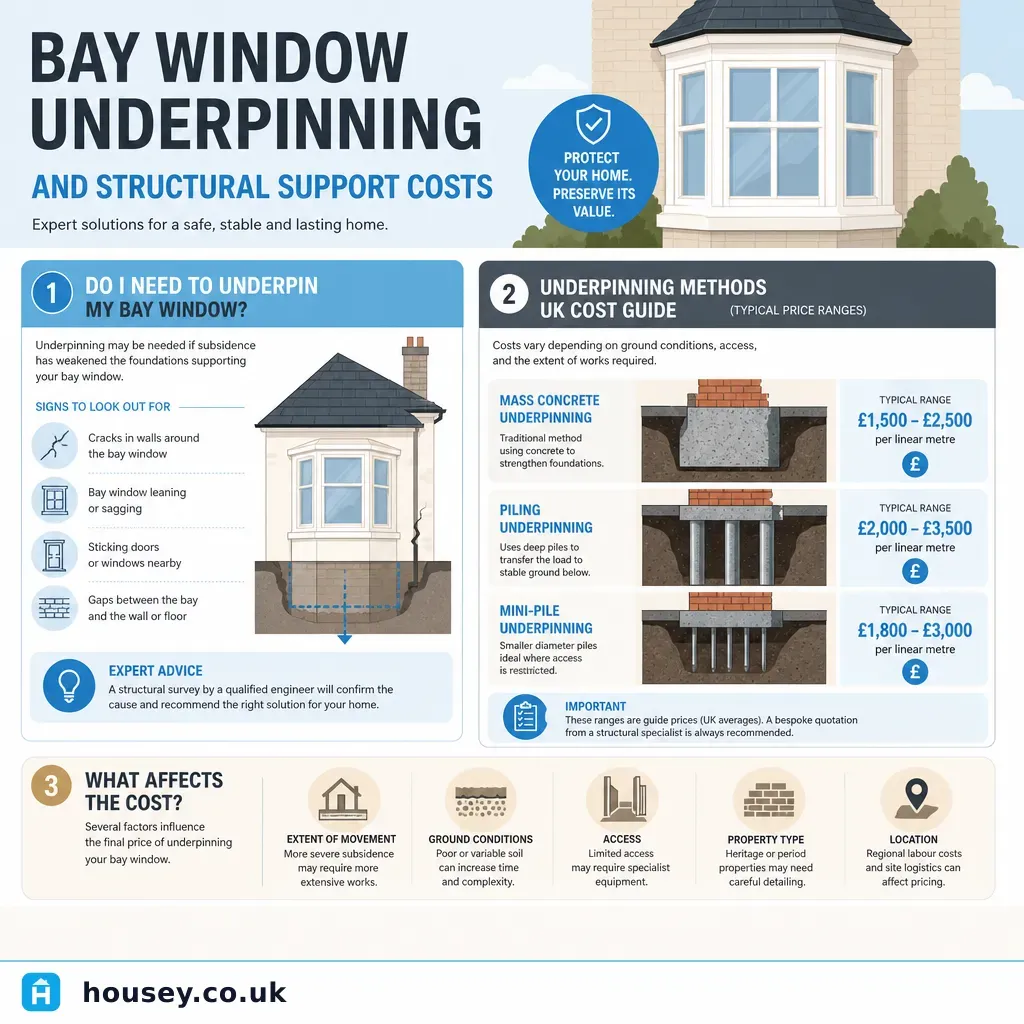
Bay Window Underpinning and Structural Support Costs
Bay window underpinning in the UK typically costs £3,000–£10,000 per bay for traditional mass concrete methods, with resin injection and mini-piling in a similar range depending on depth and site conditions.
 Planning & Pre-Build
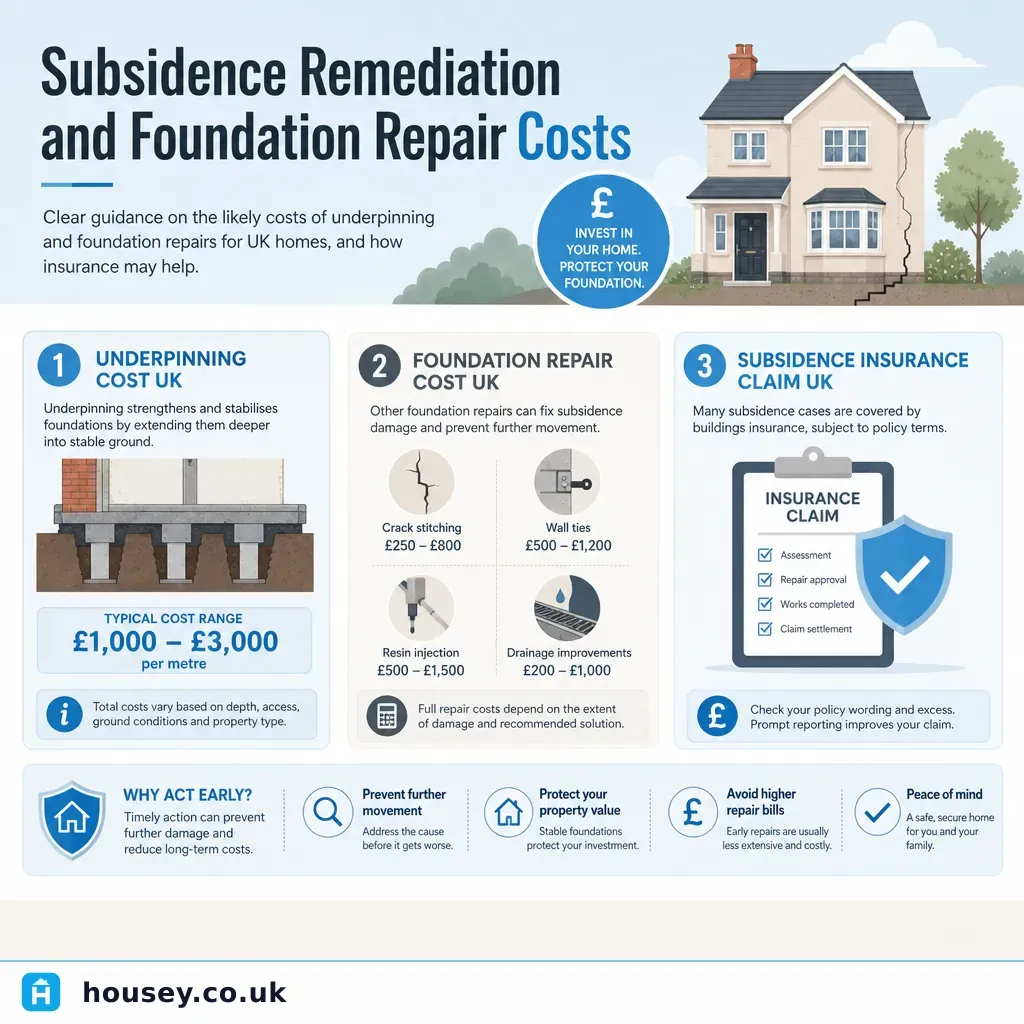
Subsidence Remediation and Foundation Repair Costs
Subsidence remediation in the UK typically costs £5,000–£50,000+ depending on cause and method.
 Planning & Pre-Build
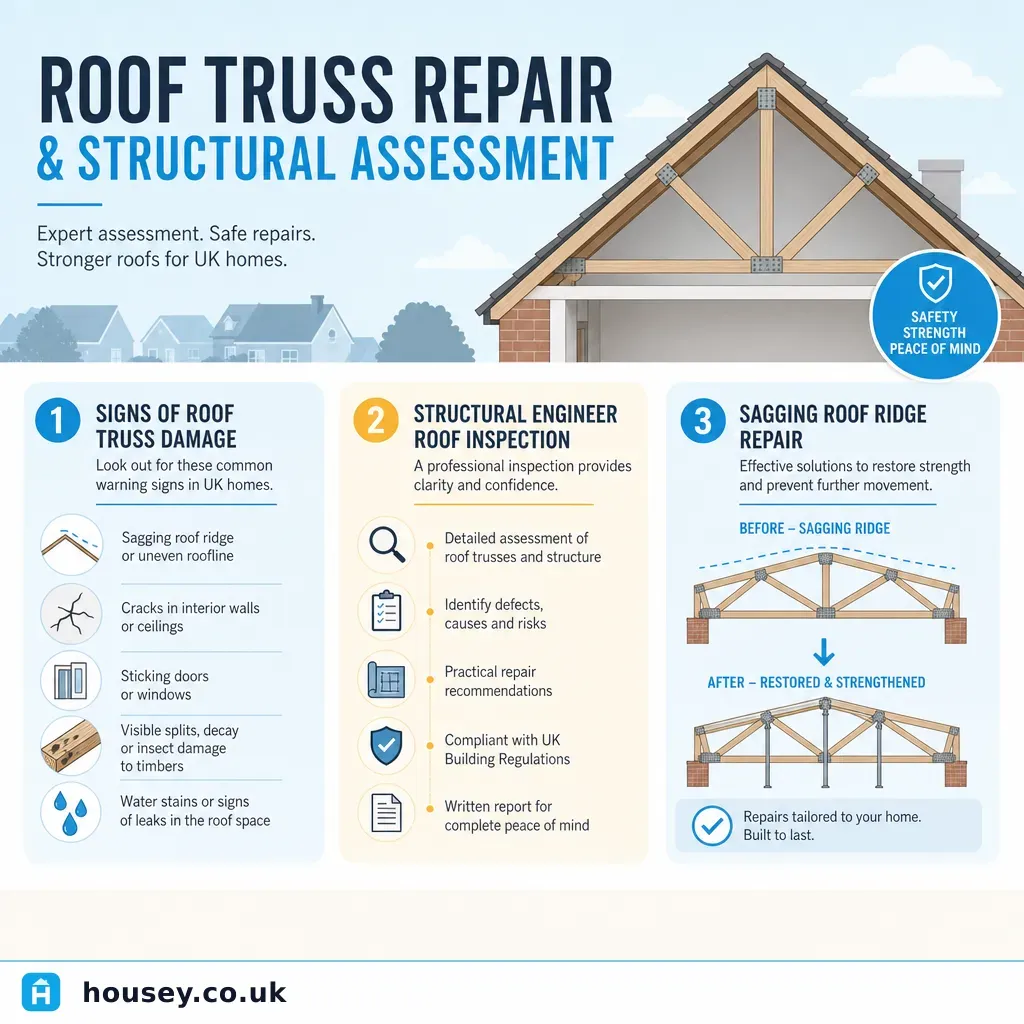
Roof Truss Repair and Structural Assessment
Roof truss damage — from rot, woodworm, overloading, or accidental cutting — requires a structural engineer's assessment before any repair work begins.
 Planning & Pre-Build
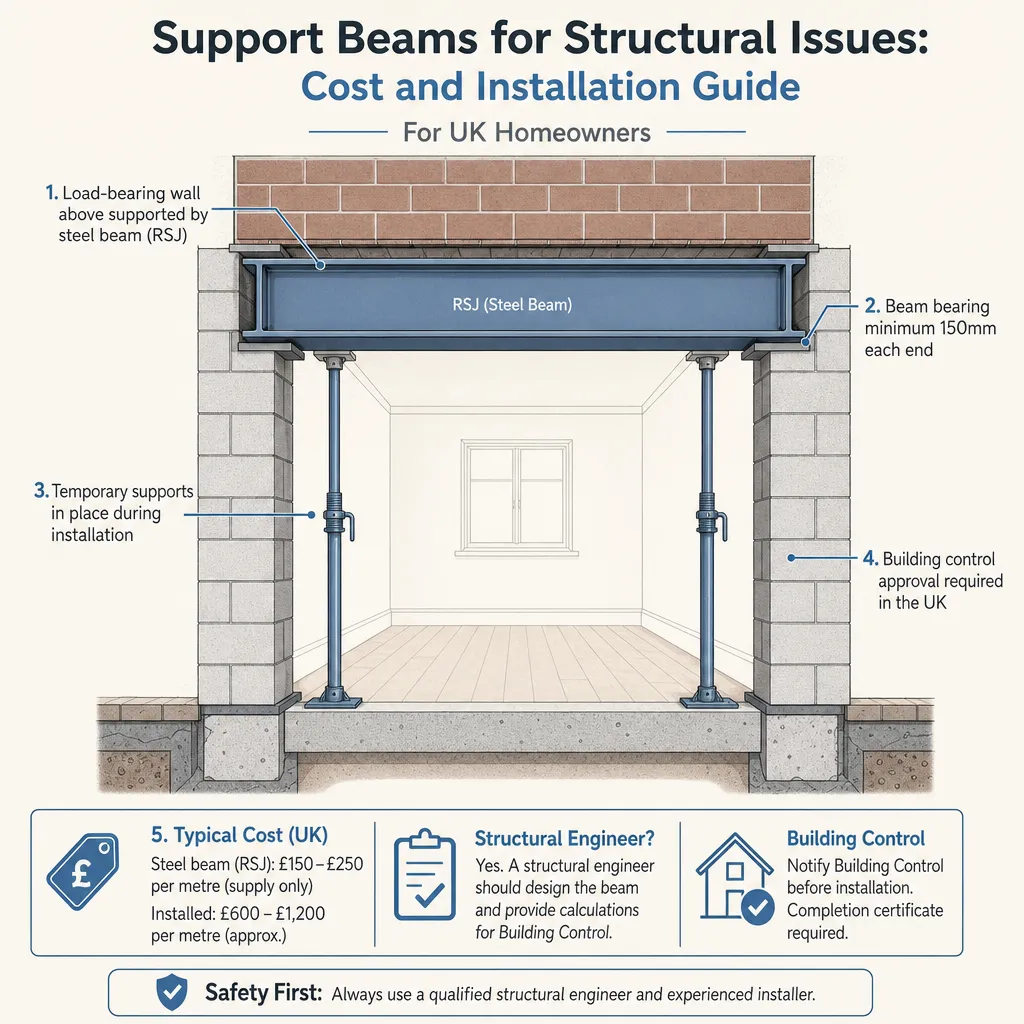
Support Beams for Structural Issues: Cost and Installation Guide
Installing a structural support beam in a UK property typically involves a structural engineer's calculations, temporary propping, and building control sign-off.
 Planning & Pre-Build
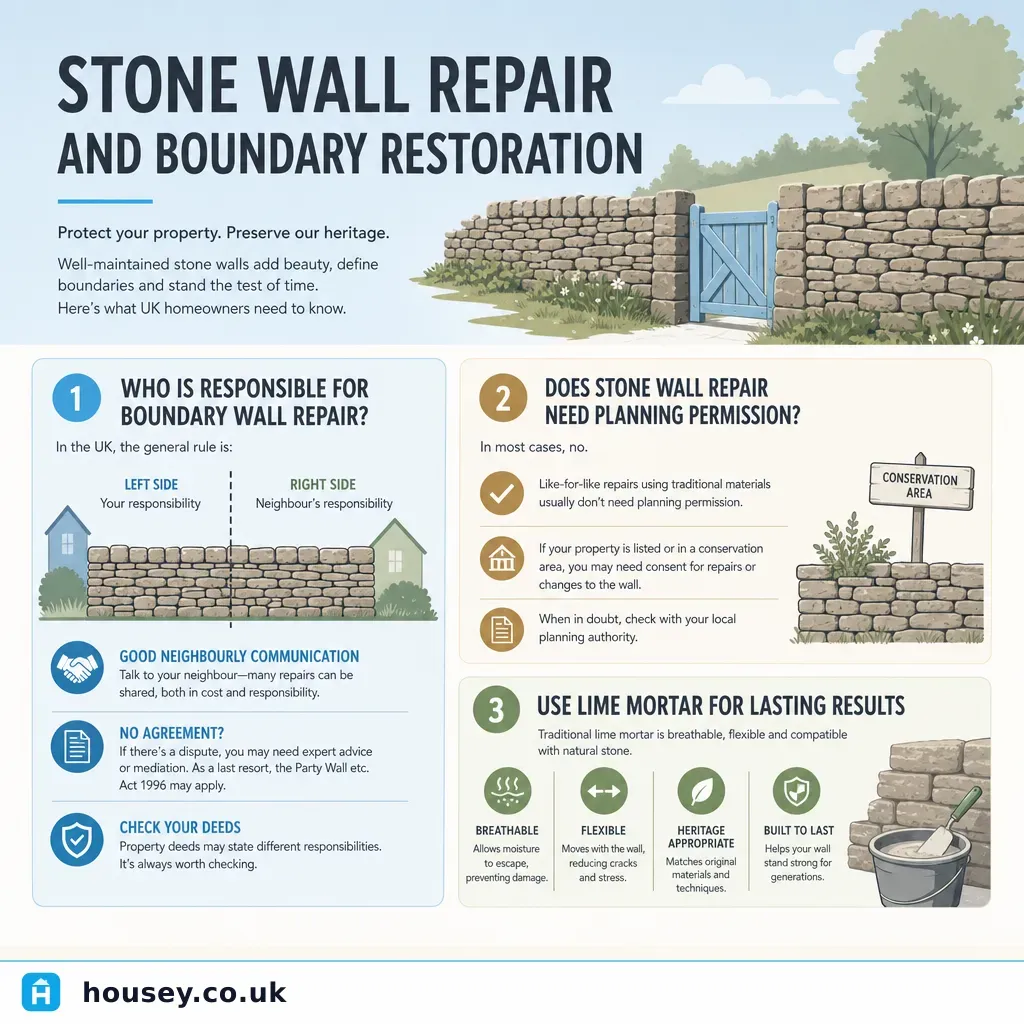
Stone Wall Repair And Boundary Restoration
Stone boundary walls fail due to ground movement, root intrusion, cement mortar contamination, or neglect.