Bay Window Underpinning and Structural Support Costs
By Housey · Last reviewed 7th of May 2026
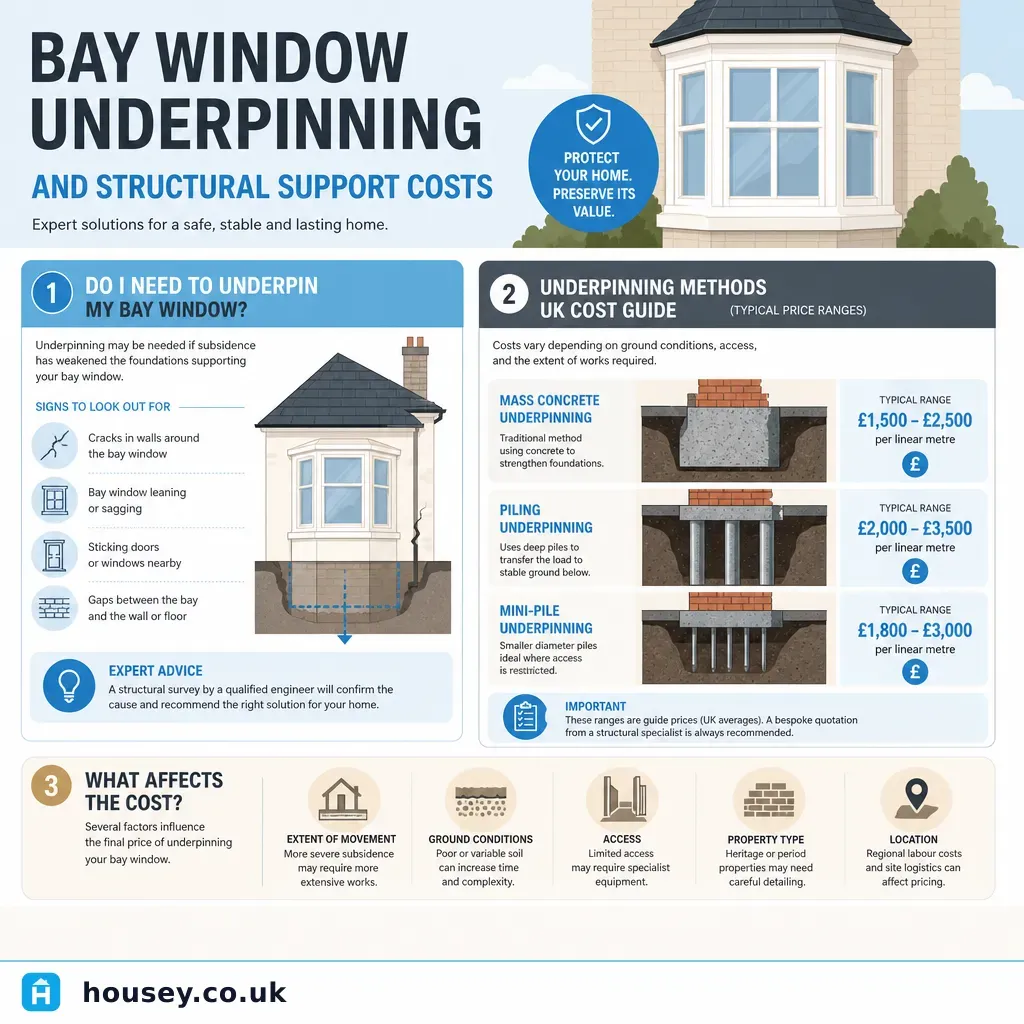
Bay Window Underpinning and Structural Support Costs
Bay windows are among the most commonly affected structural elements in Victorian and Edwardian UK terraces, with their shallow foundations and exposed brick piers making them susceptible to settlement and subsidence over time. Questions about underpinning typically arise after a RICS Level 3 Building Survey flags cracking or differential movement, or when a homeowner notices stepped cracks at the junction of the bay and the main front wall. Professional assessment before committing to remediation is essential — underpinning is not always the correct solution, and the wrong intervention can be costly.
Key points
- Bay window underpinning in the UK typically costs £3,000–£10,000 per bay for traditional mass concrete underpinning; resin injection and mini-piling fall in a comparable range depending on depth and site conditions (Indicative UK costs, last reviewed 2026-05-07).
- All underpinning requires building regulations approval under Part A (Structure) of the Building Regulations 2010 before work begins.
- A structural engineer's assessment and ground investigation (trial pit or borehole) are required before any underpinning method can be correctly specified.
- Victorian and Edwardian bay windows are typically founded at only 450–600mm depth — shallower than the main house wall — which is why they often move independently and generate cracking at the junction.
- Home insurance policies typically require a professional structural report before a subsidence claim can progress — notify your insurer at the first sign of structural movement.
Why bay windows are prone to settlement
Victorian and Edwardian bay windows were built on shallow strip foundations well below modern Building Regulations requirements. In areas with shrinkable clay — widespread across London, the Midlands, and southern England — seasonal shrink-swell movement causes progressive settlement at these shallow foundations.
Common causes include:
- Shrinkable clay soils: Clay shrinks during dry summers and swells when wet, causing cyclic movement. Prolonged drought, as experienced across England in 2022, can accelerate this significantly.
- Tree root activity: Roots within 5–15 metres extract moisture from clay, causing localised subsidence. Removing a mature tree can cause heave as clay re-hydrates over subsequent years.
- Differential settlement: The bay's shallower foundation settles at a different rate from the main wall, cracking the junction between the two elements.
- Drain leaks: Leaking underground drainage near the bay can wash out fine material beneath the foundations, progressively reducing bearing capacity.
Underpinning methods and costs
Method | How it works | Best for | Indicative cost per bay |
|---|---|---|---|
Traditional mass concrete (pit underpinning) | Foundation excavated in alternating bays and filled with concrete | Stable clay, shallow foundations, good access | £3,000 – £7,000 |
Resin injection (geopolymer) | Expanding resin injected beneath foundation to consolidate soil | Smaller settlements, limited access, minimal disruption | £2,500 – £8,000 |
Mini-piling | Piles driven or drilled to a deeper stable stratum | Deep or unstable soils, confined access | £5,000 – £12,000 |
Beam-and-base | Concrete beam transfers load to two new bases at either end | Continuous runs needing support at two points | £4,000 – £9,000 |
Indicative UK costs, last reviewed 2026-05-07. Exclude structural engineer fees, ground investigation, building control fees, and masonry repair. Costs vary significantly by region and site conditions.
A worked UK property scenario
A homeowner in a 1904 end-of-terrace in Birmingham noticed stepped cracking at the junction of the bay and main front wall. A RICS Level 3 Building Survey classified the damage as Category 3 under BRE Digest 251 and recommended a structural engineer's report. A trial pit revealed the bay's strip foundation at 480mm depth on stiff clay, compared to 700mm for the main wall. No live tree root activity was found. The engineer specified traditional mass concrete pit underpinning on three sides to 900mm depth. Works took four days on site. Total cost including engineer fees, underpinning, building control, and brickwork repair: approximately £7,500.
Red flags: signs that warrant immediate professional attention
Seek a structural engineer's assessment before any repair work if you observe:
- Stepped or diagonal cracking in brickwork at the bay-to-main-wall junction wider than 1–2mm.
- Cracks wider at the top than the bottom (indicating settlement) or wider at the bottom (suggesting heave).
- Windows or doors in or near the bay that have recently become difficult to open or close.
- A large tree removed within 15 metres of the bay in the past three years.
- Visible tilt or rocking of the bay floor relative to the main floor level.
Do not fill, paint over, or repoint cracks before a structural assessment — doing so obscures the pattern and progression of movement from any professional who later inspects the property.
Important limitations
This article provides general guidance for England and Wales. Foundation depths, soil conditions, underpinning methods, costs, and regulatory requirements vary considerably between properties. Nothing here constitutes structural engineering advice. A site-specific assessment by a chartered structural engineer is essential before any remediation is commissioned. If a subsidence insurance claim is involved, consult your insurer before instructing contractors.
What to ask a qualified professional
- What ground investigation do you recommend for this site, and will you carry it out or subcontract it?
- Are these cracks indicative of live movement or historical settlement, and how do you distinguish between the two?
- Do you recommend a monitoring period before deciding whether to underpin?
- What underpinning method suits the soil conditions found here, and why?
- Will the works require a Party Wall Act notice, and if so, who serves it?
- Does my insurer need to approve the remediation method before work starts?
- What building regulations documentation will be issued on completion?
When to get professional help
Seek a structural engineer's assessment without delay if cracks are actively widening or have appeared suddenly, if stepped cracking exceeds Category 3 under BRE Digest 251, if windows or doors near the bay are sticking or distorting, or if your insurer has requested a structural report. Do not commission decorative repair or repointing without professional assessment — masking symptoms without addressing the underlying cause can worsen the problem and complicate future insurance claims or property sale.
How Housey can help
If a survey or visible cracking has raised concerns about your bay window, Housey can help you request quotes from structural survey professionals who can assess the extent of movement, recommend appropriate remediation, and produce the documentation needed for insurance and conveyancing.
Frequently asked questions
How do I know if my bay window needs underpinning?
Key signs include stepped or diagonal cracking in brickwork at the bay-to-main-wall junction (particularly wider than 1–2mm), windows or doors in or near the bay that have recently started sticking, and visible tilt or separation from the main structure. A structural engineer should assess whether movement is live or historical — underpinning is not always necessary, and other interventions may be sufficient.
Does bay window underpinning need planning permission?
Underpinning is subsurface structural work and generally does not require planning permission in England. However, building regulations approval under Part A (Structure) is required, and a Party Wall etc. Act 1996 notice may be needed if work is within 3–6 metres of an adjoining property's foundations. If the property is listed, listed building consent may also be necessary. Always check with your local planning authority and structural engineer.
How long does bay window underpinning take?
Traditional mass concrete underpinning of a typical Victorian bay usually takes three to seven working days on site, excluding the structural engineer's assessment, ground investigation, building control process, and any monitoring period — which can add several weeks. Resin injection is often quicker on site but requires the same professional preparation and building control approval.
Will bay window underpinning affect my home insurance?
Yes — underpinning must be declared to your insurer before and after works. If the matter is subsidence-related, notify your insurer before instructing contractors, as they often have preferred assessors and may require a structural report before approving works. After completion, premiums may increase and some insurers apply subsidence exclusions or require specialist cover.
Can I sell a house with underpinned bay windows?
Yes, provided the underpinning was completed with proper building regulations approval and full documentation — structural engineer's report, ground investigation results, and completion certificate — is available. Most lenders and solicitors accept properly documented underpinning. Missing paperwork is the most common obstacle, which is why building control sign-off matters from the outset.
Sources and further reading
- Building Regulations Approved Document A: Structure — GOV.UK
- Party Wall etc. Act 1996 — explanatory booklet — GOV.UK
- RICS guidance on subsidence in residential properties — RICS
- BRE Digest 251: Assessment of damage in low-rise buildings — Building Research Establishment
Useful next reads
 Planning & Pre-Build
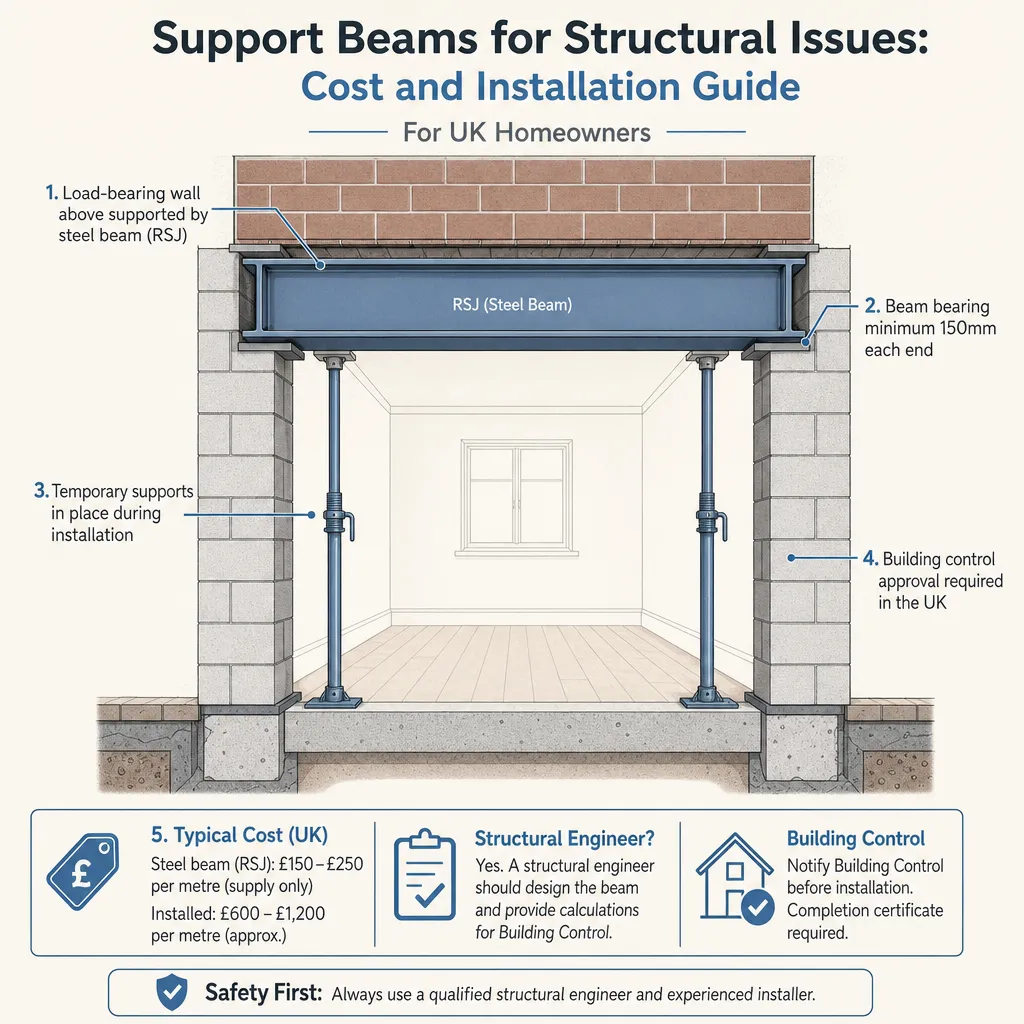
Support Beams for Structural Issues: Cost and Installation Guide
Installing a structural support beam in a UK property typically involves a structural engineer's calculations, temporary propping, and building control sign-off.
 Planning & Pre-Build
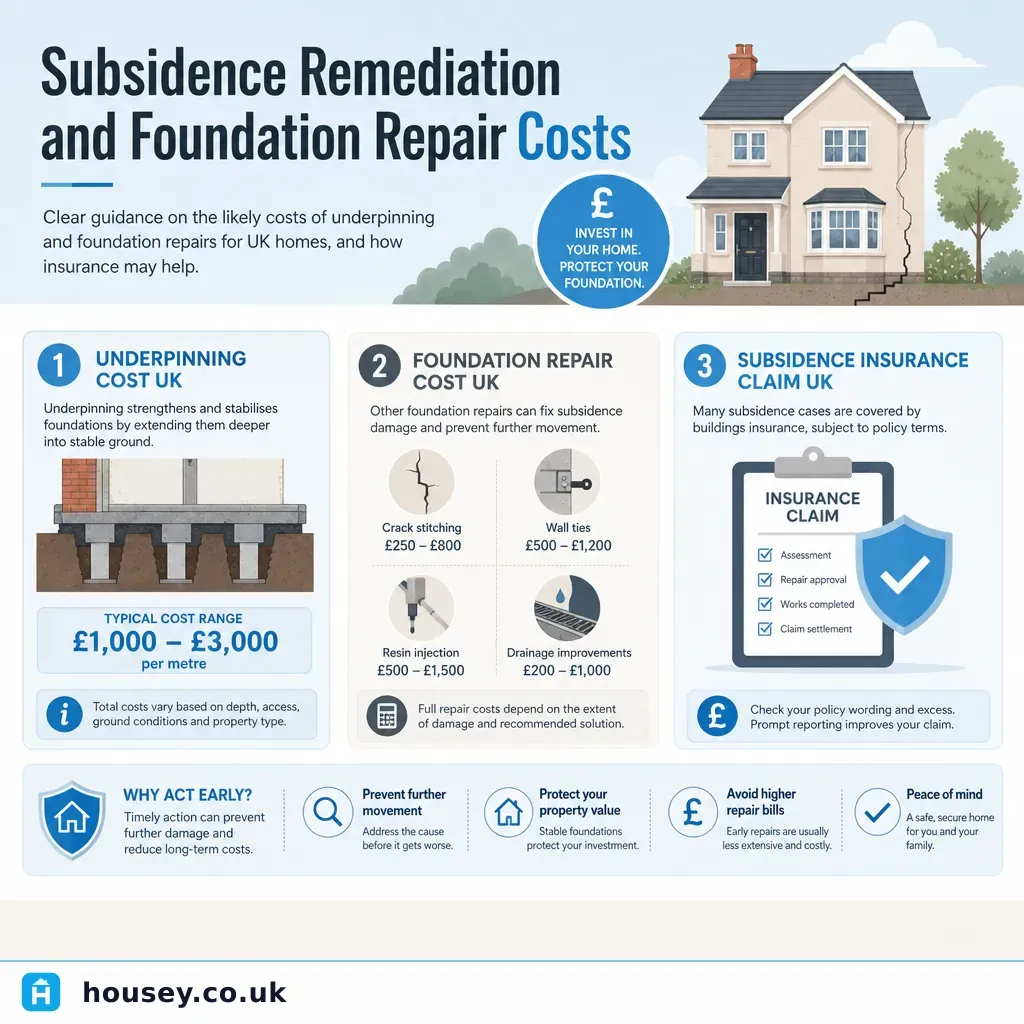
Subsidence Remediation and Foundation Repair Costs
Subsidence remediation in the UK typically costs £5,000–£50,000+ depending on cause and method.
 Planning & Pre-Build
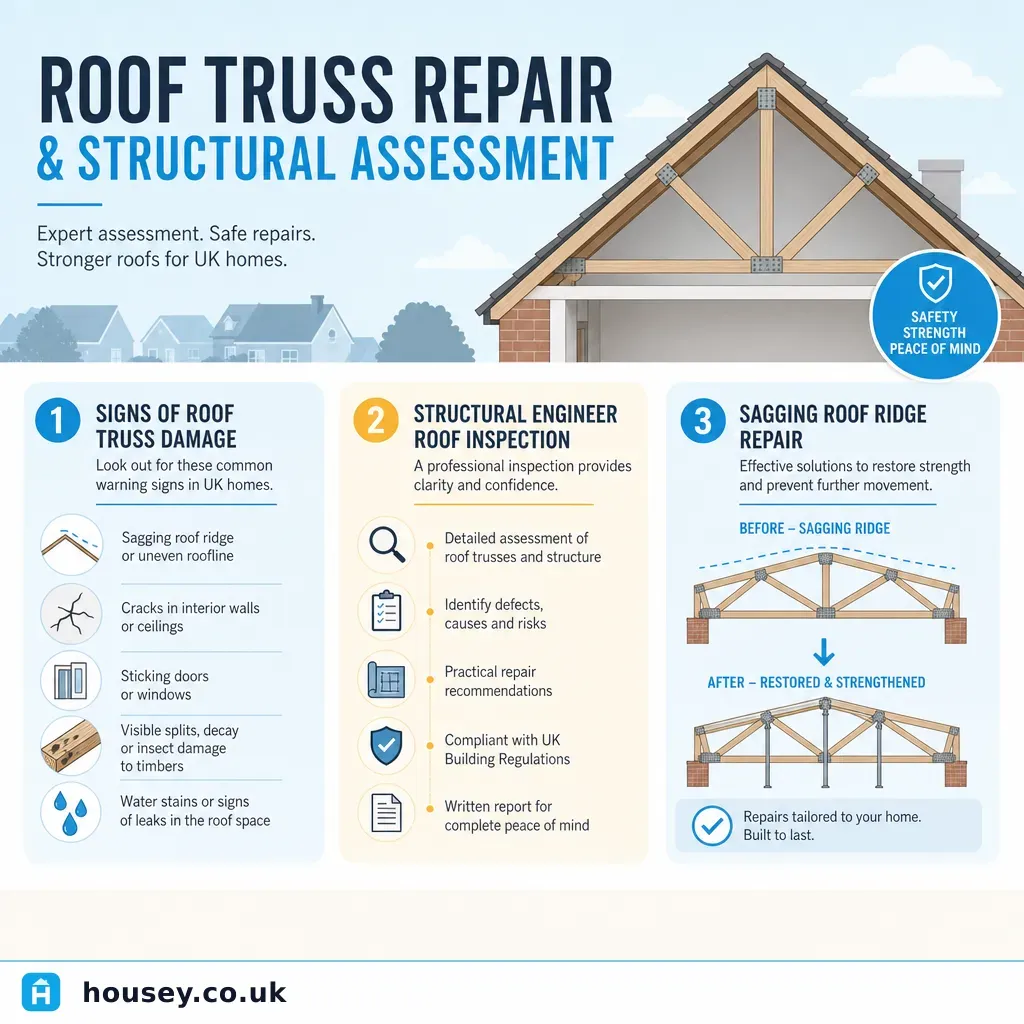
Roof Truss Repair and Structural Assessment
Roof truss damage — from rot, woodworm, overloading, or accidental cutting — requires a structural engineer's assessment before any repair work begins.
 Planning & Pre-Build
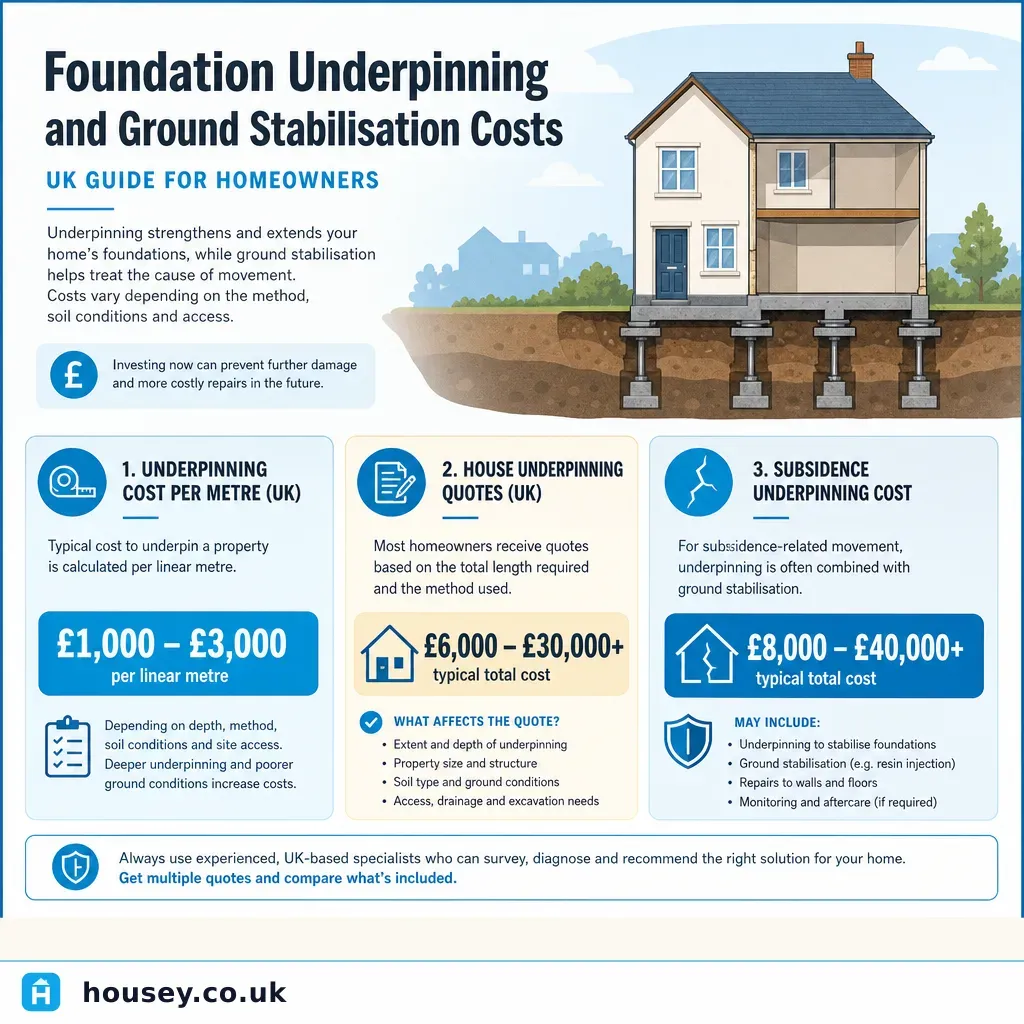
Foundation Underpinning and Ground Stabilisation Costs
Foundation underpinning in the UK typically costs £10,000–£50,000 or more for a whole property, with partial wall-section treatment running £5,000–£15,000.
 Planning & Pre-Build
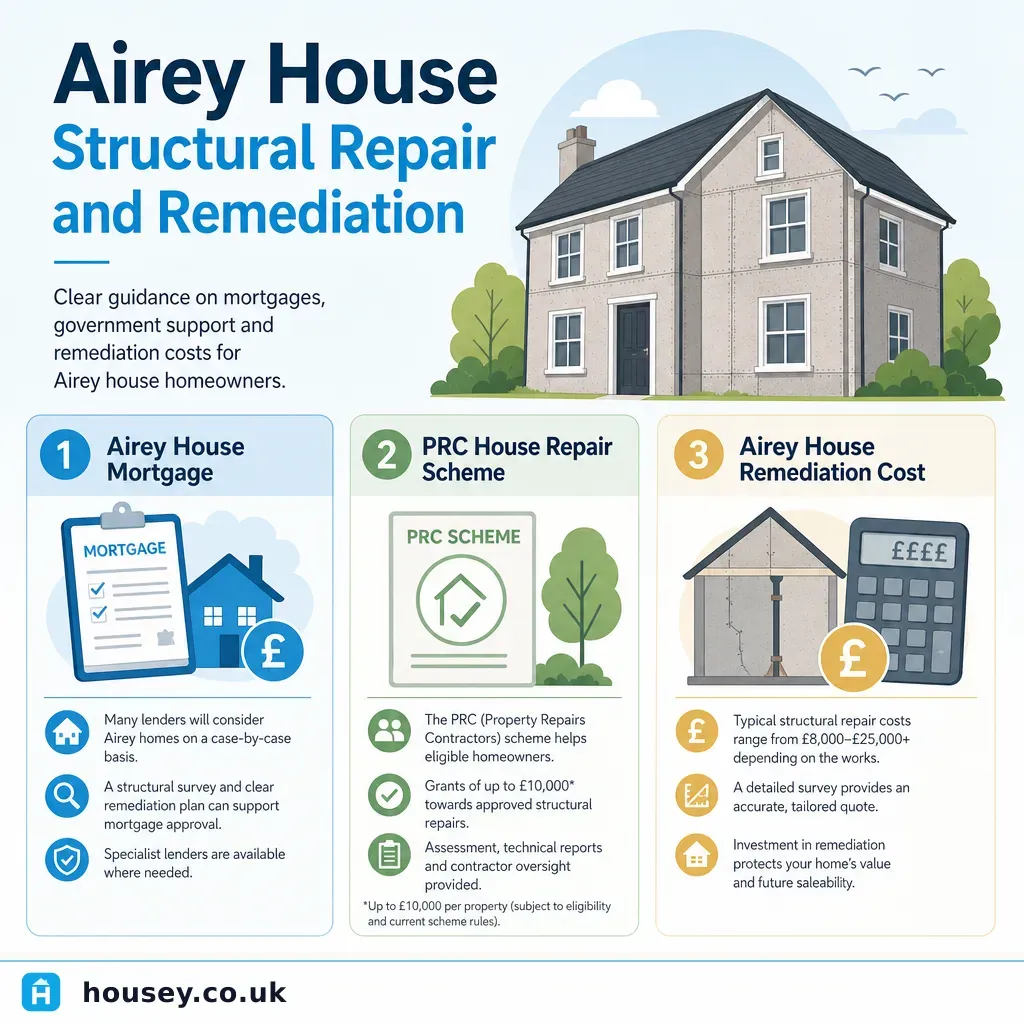
Airey House Structural Repair and Remediation
Unremediated Airey houses are generally unmortgageable.