Support Beams for Structural Issues: Cost and Installation Guide
By Housey · Last reviewed 26th of May 2026
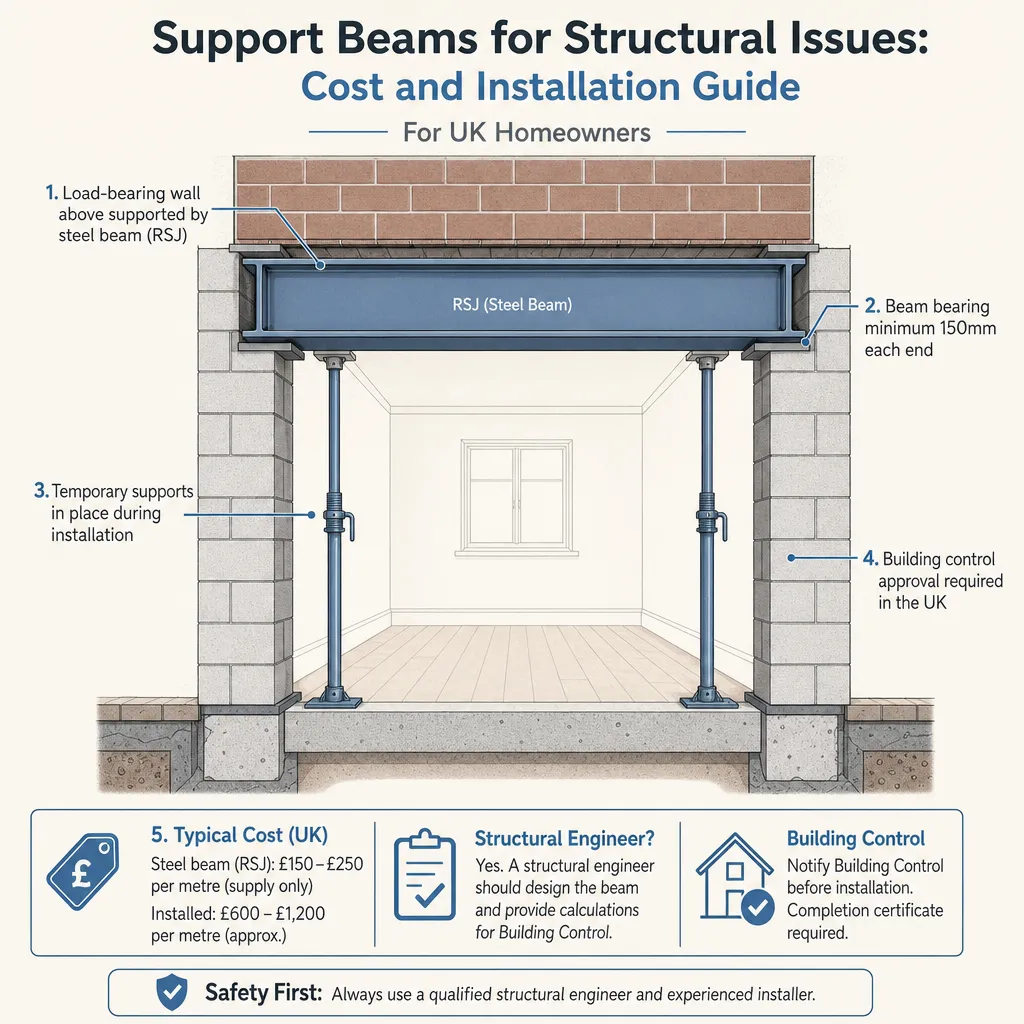
Support Beams for Structural Issues: Cost and Installation Guide
Structural beam installation most commonly arises when a homeowner wants to remove or alter a load-bearing wall — opening up a Victorian terrace's ground floor, creating a kitchen-diner, or widening a doorway between a 1930s semi's reception rooms. It also comes up when subsidence, rot, or decay has compromised an existing structural member. The work is governed by Building Regulations Part A (Structure) and almost always requires input from a structural engineer before a single brick is moved.
Key points
- Building Regulations Part A requires that structural alterations — including beam installation — are submitted to a local authority building control body or an Approved Inspector before work begins.
- A structural engineer must calculate the beam specification: span, load path, bearing lengths, and padstone requirements. Undersized beams are a common and serious defect.
- Temporary works (typically Acrow props and needles) must support the structure above before any load-bearing element is removed; this is a separate cost from the beam itself.
- Steel RSJ (rolled steel joist) beams are the most common solution in UK residential work; engineered timber (glulam or LVL) and concrete lintels are used in specific circumstances.
- Building control Completion Certificates are required for the work to be insurable, mortgageable, and legally documented — without one, future buyers' solicitors will flag the alteration.
What a structural beam does
A structural beam transfers load — from the floor, roof, or wall above — to the columns, piers, or walls on either side of an opening. When a load-bearing wall is removed, the beam replaces the continuous wall as the load path. If the beam is undersized, undersupported, or improperly installed, the consequences can range from cracking and deflection to partial collapse.
In UK residential property, the most common scenarios requiring a new beam are:
- Wall removal for open-plan living (kitchens, ground-floor reception rooms)
- Loft conversions where a structural ridge beam or purlin replacement is needed
- Subsidence or rot repairs where an existing beam, joist, or lintel has deteriorated
- Extensions where a new opening into the existing house is formed
Types of structural beam used in UK homes
Beam type | Best for | Not ideal for | Typical professional |
|---|---|---|---|
Steel RSJ (universal beam) | Most residential openings, long spans, heavy loads | Thermally sensitive details where cold bridging is a concern | Structural engineer and steelwork fabricator |
Glulam (glued laminated timber) | Extensions with exposed beam aesthetic, medium spans | High moisture environments; fire-rated assemblies without treatment | Structural engineer and timber specialist |
LVL (laminated veneer lumber) | Tight floor-to-ceiling spaces, medium spans | Very long spans or heavy loads | Structural engineer |
Concrete padstone/lintel | Short spans, blockwork construction | Long openings, heavy loads above | Structural engineer or competent builder under engineer supervision |
The installation process: step by step
1. Structural engineer's assessment
Before any work starts, engage a chartered structural engineer (MIStructE or CEng). They assess the load path, specify the beam size, bearing lengths, and padstone requirements, and produce calculations and a drawing for Building Regulations submission.
2. Building Regulations application
Submit a Full Plans or Building Notice application to your local authority building control (LABC) or an Approved Inspector. For most beam installations, a Building Notice is acceptable, but Full Plans gives written confirmation before works begin.
3. Temporary works
Your contractor props the structure above using Acrow props and needles (horizontal timbers) to safely transfer load before the existing wall or lintel is removed. Temporary works failures are a significant cause of structural incidents — this stage must be done correctly.
4. Installation
The beam is installed, padstones or spreader plates placed under each bearing point, and the structure re-supported. Steel beams may need fire protection (intumescent paint) depending on the assembly and fire-rating requirements.
5. Building control inspection and sign-off
The building control surveyor inspects the work and, once satisfied, issues a Completion Certificate. This document must be disclosed on a TA6 property information form when you sell.
Worked UK scenario: kitchen-diner opening in a 1930s semi
A homeowner in Birmingham wants to open up the wall between the kitchen and dining room of their 1930s semi-detached house. The wall is load-bearing, supporting the first floor and roof load above.
Process and indicative costs:
- Structural engineer engaged: produces calculations and beam specification (150×75 mm steel RSJ, 4 m span, padstones specified). Fee: approximately £450.
- Building Notice submitted to LABC. Fee: approximately £200 (varies by authority).
- Builder installs temporary props, removes wall, fits beam. Labour and materials including props hire, padstones, plasterwork, and decoration: approximately £3,200.
- Building control inspection passed; Completion Certificate issued.
- Total indicative cost: approximately £3,850.
Indicative UK costs, last reviewed 2026-05-26. Costs vary significantly by location, span, access, and contractor.
How much does structural beam installation cost in the UK?
Element | Indicative cost range (UK, 2026) |
|---|---|
Structural engineer's calculations and drawings | £300–£800 |
Building Regulations application (Building Notice) | £150–£400 (varies by LABC) |
Beam supply and fabrication (steel RSJ, typical residential) | £300–£1,500 |
Contractor labour (installation, propping, making good) | £1,200–£4,000+ |
Fire protection (intumescent paint, if required) | £150–£500 |
All-in typical range | £1,800–£6,000+ |
Indicative UK costs, last reviewed 2026-05-26. Long spans, basement work, or complex load paths can significantly exceed these figures. Always obtain at least three quotes.
Red flags: when to pause and get professional advice
Stop work and seek professional assessment immediately if you notice:
- Cracks appearing after temporary propping, or before any work has started
- An existing beam that is visibly deflecting, cracking, or showing rust staining through plasterwork
- A contractor offering to remove a load-bearing wall without structural engineer involvement or Building Regulations notification
- Walls that were not expected to be load-bearing but contain rafter feet, joist hangers, or chimney breast ties
- Properties built before 1900, where load paths may follow non-standard historical arrangements
- Any suspected subsidence or ground movement (distinct settlement pattern, stepped cracks in masonry)
Important limitations
This article is general guidance only. Structural requirements vary significantly between properties, construction types, foundation conditions, and local ground conditions. Nothing here constitutes structural advice for any specific property. A chartered structural engineer must assess your property and load path before any structural work is commissioned or undertaken. If in doubt, stop work and seek professional advice before proceeding.
What to ask a qualified professional
Before instructing a structural engineer or contractor, ask:
- Are you a chartered structural engineer (MIStructE or CEng), or working under direct supervision of one?
- Will you produce Building Regulations-compliant calculations and drawings?
- Who is responsible for the temporary works design and installation?
- Will building control inspection be arranged, and will a Completion Certificate be issued?
- What is your experience with this property type and construction era?
- Are there any access, ground condition, or load-path factors that could affect cost or specification?
- What happens if additional structural issues are uncovered once work begins?
When to get professional help
Structural beam installation is not a DIY task. Engage a structural engineer before any load-bearing wall removal, and ensure building control is notified before work starts. Contact a professional immediately if you see:
- New or widening cracks in walls, ceilings, or around door and window frames
- Floors or ceilings that appear to be deflecting or sagging
- Doors or windows that have suddenly become difficult to open or close
- Any sign of structural movement in an older or previously altered property
How Housey can help
Housey connects you with vetted structural engineering professionals and building control consultants who can assess your property, produce the necessary calculations, and guide you through the Building Regulations process. Submit a request to receive quotes from qualified local professionals.
Frequently asked questions
Do I always need a structural engineer for beam installation?
In almost all cases involving load-bearing walls, yes. The structural engineer specifies the correct beam size, bearing lengths, and padstone requirements. A builder alone cannot certify that the structural design is adequate. Building control inspectors will want to see engineer's calculations for any structural alteration.
Can I install a structural beam without Building Regulations?
No. Installing a beam in a load-bearing wall is notifiable work under Building Regulations Part A. Carrying out the work without notification is a criminal offence and will be flagged during conveyancing. You may be required to retrospectively obtain a regularisation certificate, which can be costly and time-consuming.
How long does a beam installation take?
The installation itself typically takes one to three days for a standard residential opening. However, the full process — engineer's calculations, Building Regulations application, and contractor availability — can take four to twelve weeks from instruction to completion certificate.
What is a padstone and why does it matter?
A padstone is a block of dense concrete or engineering brick placed at each end of a beam to spread the concentrated load into the wall below. Without adequately specified padstones, point loads can cause localised crushing or cracking in the masonry, potentially compromising structural integrity.
Sources and further reading
- Approved Document A: Structure — GOV.UK
- Find a structural engineer — Institution of Structural Engineers
- Building regulations approval — GOV.UK
- Structural safety in construction — Health and Safety Executive
Useful next reads
 Planning & Pre-Build
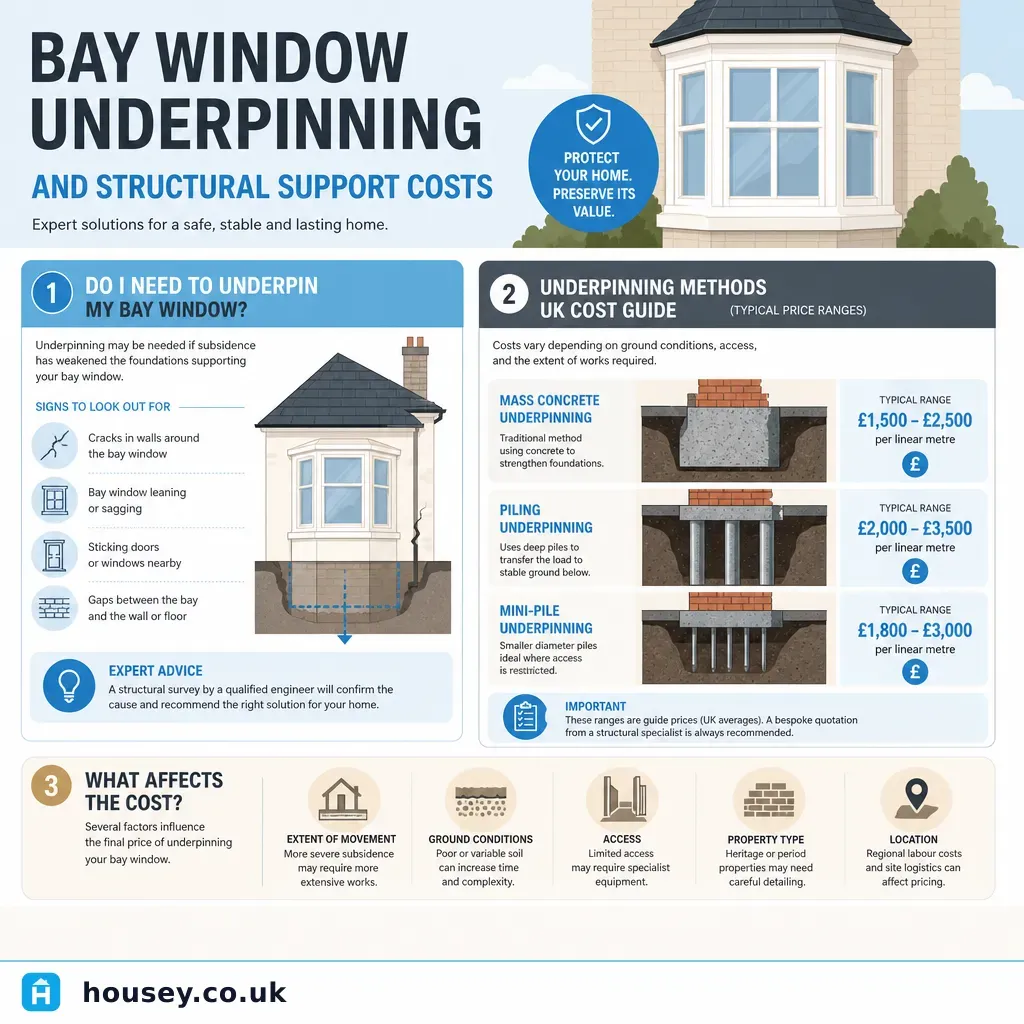
Bay Window Underpinning and Structural Support Costs
Bay window underpinning in the UK typically costs £3,000–£10,000 per bay for traditional mass concrete methods, with resin injection and mini-piling in a similar range depending on depth and site conditions.
 Planning & Pre-Build
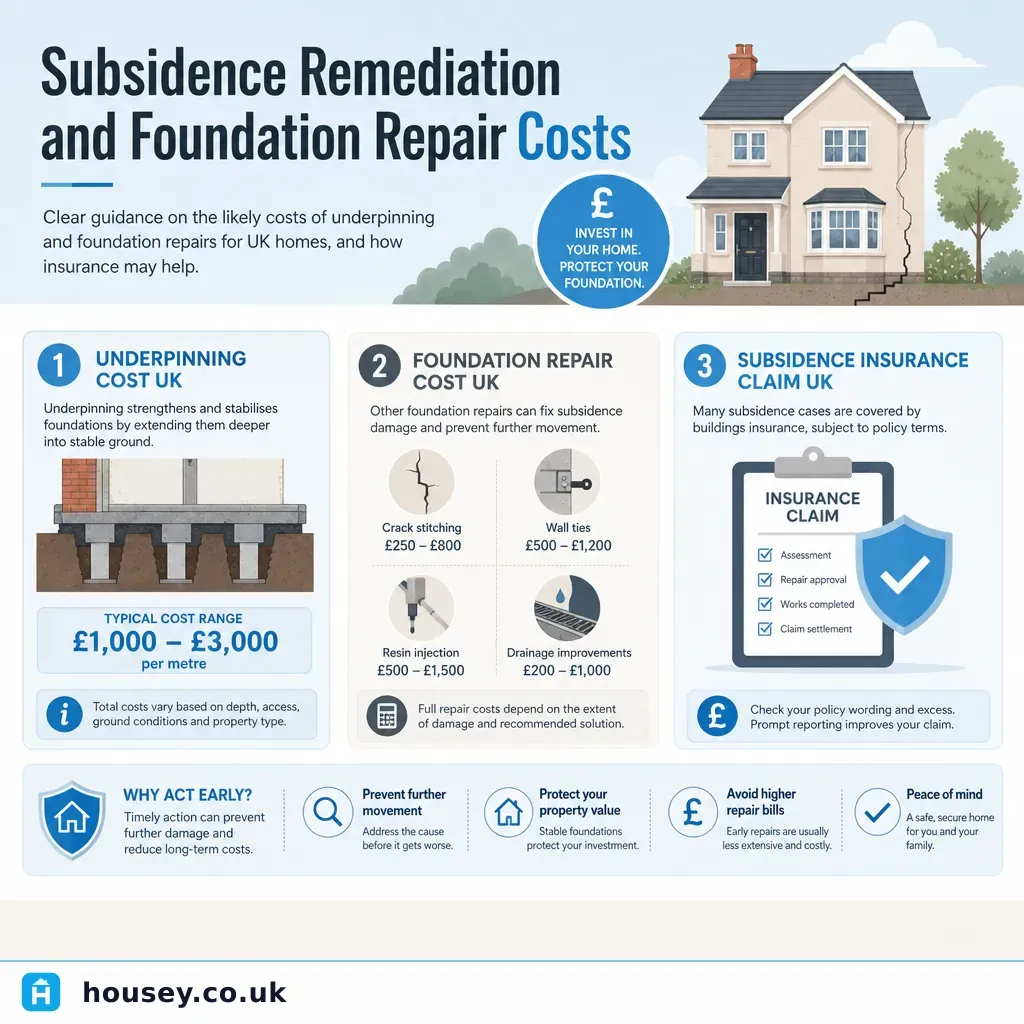
Subsidence Remediation and Foundation Repair Costs
Subsidence remediation in the UK typically costs £5,000–£50,000+ depending on cause and method.
 Planning & Pre-Build
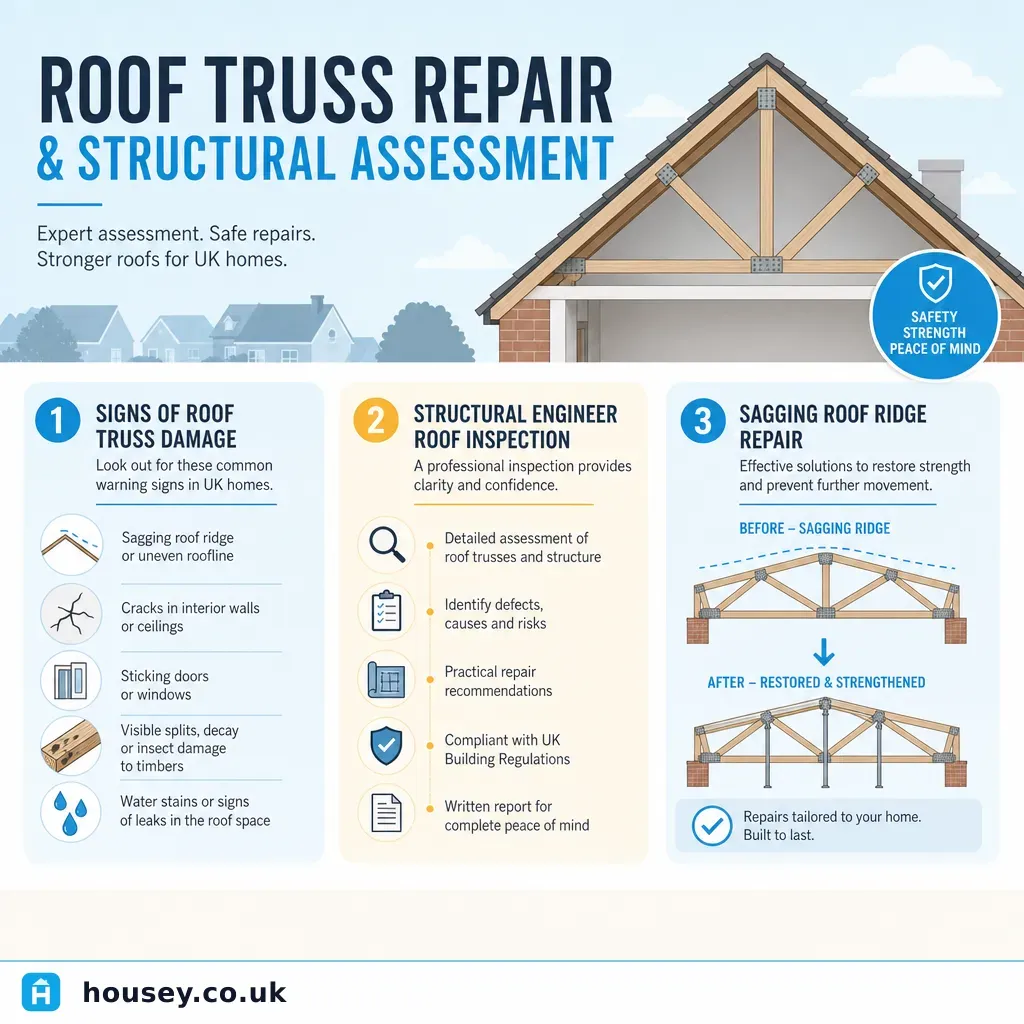
Roof Truss Repair and Structural Assessment
Roof truss damage — from rot, woodworm, overloading, or accidental cutting — requires a structural engineer's assessment before any repair work begins.
 Planning & Pre-Build
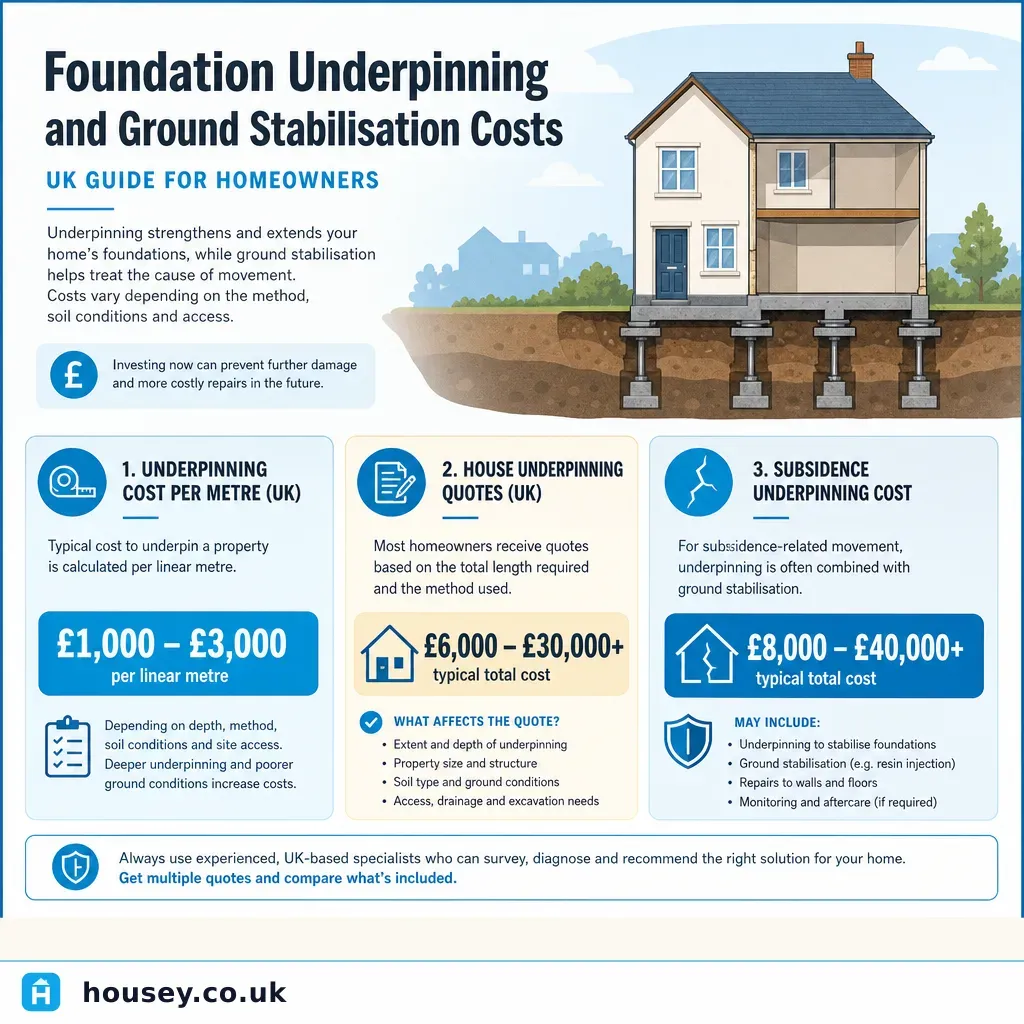
Foundation Underpinning and Ground Stabilisation Costs
Foundation underpinning in the UK typically costs £10,000–£50,000 or more for a whole property, with partial wall-section treatment running £5,000–£15,000.
 Planning & Pre-Build
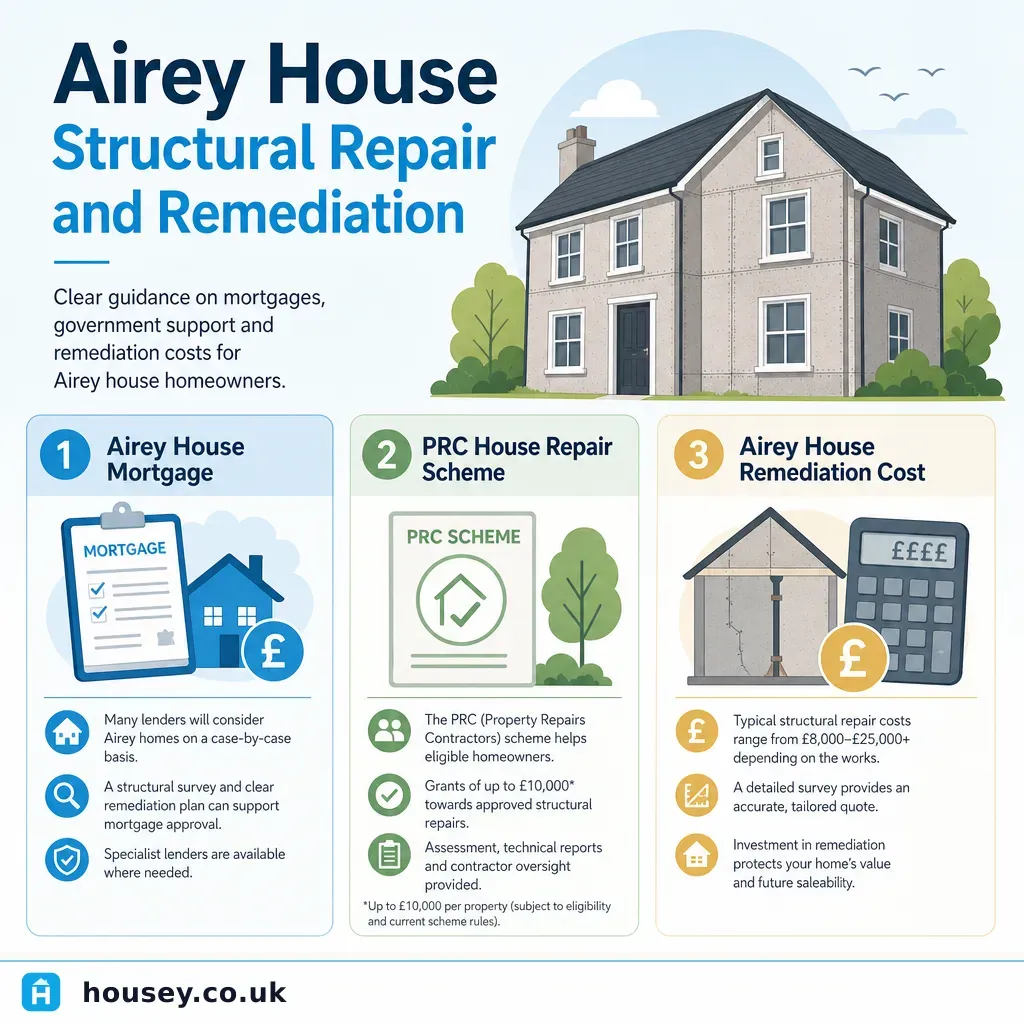
Airey House Structural Repair and Remediation
Unremediated Airey houses are generally unmortgageable.