Roof Truss Repair and Structural Assessment
By Housey · Last reviewed 31st of May 2026
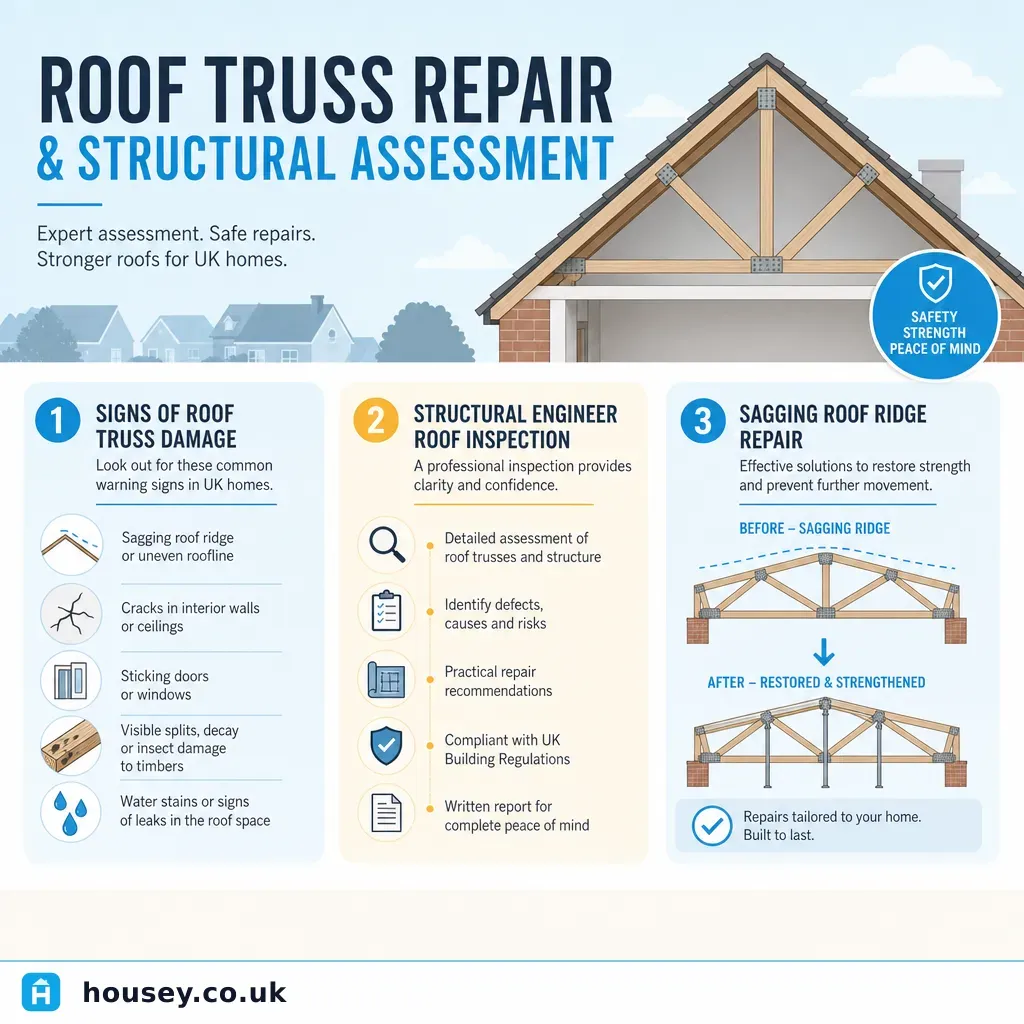
Roof Truss Repair and Structural Assessment
Roof trusses are the engineered timber framework that bears the weight of the roof covering and transfers structural loads down to the walls of a home. When they fail — through rot, woodworm, overloading, storm damage, or unauthorised cutting — the consequences range from a gradual roof sag to a serious structural risk requiring urgent intervention. UK homeowners most commonly encounter truss problems during a pre-purchase survey, after noticing a sagging roofline, or when damage is discovered following a loft conversion or storage installation.
Key points
- The majority of UK homes built after approximately 1965 have prefabricated gang-nail trusses — engineered to precise load specifications and designed as an integrated system; they must not be cut, notched, or drilled without structural engineering sign-off.
- Building Regulations Part A (Structure) governs structural alterations to roof elements; any repair that modifies the structural arrangement requires building control notification and, in most cases, a structural engineer's design calculations.
- A chartered structural engineer (MIStructE or CEng via IStructE) or a RICS-qualified chartered building surveyor should carry out or commission any structural assessment of damaged trusses.
- Common causes of truss failure in UK homes include wet rot at the eaves where ventilation is poor, woodworm infestation (particularly in pre-1960s cut-rafter roofs), storm damage, overloading from heavy roof coverings, and damage caused by unauthorised loft storage platforms.
- Repair methods include sister-rafter reinforcement, structural splice plates, resin-injection consolidation for localised rot, and full truss replacement — the right method depends on the extent and nature of the damage and must be specified by a qualified professional.
Important limitations
This article provides general information for UK homeowners and is not a substitute for a structural assessment by a qualified professional. Roof truss conditions vary significantly depending on a property's age, construction method, roof covering, and history of alterations. Building Regulations requirements may vary based on the scope and nature of any proposed works. A chartered structural engineer or RICS-qualified chartered building surveyor must assess your specific situation before any repair or reinforcement is carried out.
Identifying truss damage: what to look for
Early identification of truss problems can prevent minor issues from becoming major structural repairs. The following signs indicate that a professional inspection should be arranged without delay.
Red flags: signs you need a structural assessment
- Sagging or undulating ridge line visible from outside the property — often the first indicator of truss failure or progressive settlement
- Visible cracks or fractures in timber members visible from the loft space
- Corroded, bent, or partially detached gang-nail connector plates at truss joints
- Active or historic woodworm (flight holes, frass) in roof timbers, particularly if widespread across multiple members
- Wet rot or soft, spongy timber at the eaves, around roof windows, or adjacent to lead flashings
- Water staining on timbers indicating prolonged or recurring leaks that have compromised the wood
- Previously cut, notched, or drilled trusses — a common legacy of unauthorised loft storage platforms, plumbing routes, or loft hatch installations
- Cracking at the wall plate where trusses bear onto the external walls
If you observe any of these signs, do not proceed with cosmetic repairs, storage installation, or any other loft works until a structural assessment has been completed.
Repair vs replacement: understanding your options
The appropriate remediation method depends on the cause, extent, and location of the damage, as well as the age and construction type of the roof. This table summarises the most common scenarios.
Scenario | Likely approach | Typical professional required | Building control needed? |
|---|---|---|---|
Isolated split or fracture in one truss member | Sister-rafter or structural splice repair | Structural engineer design + competent roofer | Usually yes |
Localised rot at the eaves (limited spread) | Resin repair or timber splice to engineer's specification | Timber specialist with structural sign-off | Depends on scope |
Widespread rot or woodworm across multiple trusses | Partial or full truss replacement | Structural engineer + specialist roofer | Yes |
Previously cut or notched trusses | Repair scheme designed to structural calculations | Chartered structural engineer | Yes |
Sagging ridge line with signs of wall spread | Engineering investigation first, then agreed remediation | Structural engineer (MIStructE or CEng) | Yes |
What building regulations and planning rules apply?
Any structural repair to roof trusses falls under Building Regulations Part A (Structure). Works that affect the structural arrangement must be carried out to an approved structural engineer's design and notified to your local building control authority. This applies regardless of whether the works are visible from outside the property.
Planning permission is not normally required for like-for-like structural repairs within the existing roof envelope, as these are generally permitted development. However, if the property is listed or in a conservation area, alterations to the roof — including internal structural work — may require listed building consent or conservation area consent. Check with your local planning authority before instructing any works.
On semi-detached or terraced properties, significant roof truss works at or near the party wall may trigger obligations under the Party Wall etc. Act 1996. Seek advice from a party wall surveyor if works are close to or involve the shared structure.
What to ask a qualified professional
Before instructing a structural engineer or specialist roofer to carry out truss repairs, ask the following:
- Are you a chartered structural engineer (MIStructE or CEng via IStructE) or a chartered building surveyor (MRICS), and can I verify this?
- Will you provide a written structural assessment report and a repair specification or calculations suitable for building control submission?
- Does your inspection cover the full roof structure, or only the area I have described?
- Who is responsible for making the building control application — you or me?
- What are the likely timescales from assessment through to completion of remedial works?
- If the repair reveals further damage not apparent at initial inspection, how will this be communicated and priced?
- Do you have experience with this construction type — gang-nail truss, cut-rafter, attic truss?
- Is access scaffolding or a platform required, and is this included in the estimate?
The assessment process: what to expect
A structural assessment of roof trusses typically involves the following stages:
- Loft inspection — visual examination of all accessible timbers, connector plates, and bearing points by the engineer or surveyor.
- Moisture content testing using a calibrated meter to identify wet timber that may not yet show visible rot.
- Probe testing of suspect areas to check for soft or punky timber below the surface.
- Review of previous works — any loft conversions, hatch installations, storage platforms, or plumbing routes that may have affected the structural system.
- Written assessment report identifying affected members, cause of damage, and recommended remediation approach.
- Structural calculations or repair specification prepared for building control submission if repair or reinforcement works are confirmed.
Indicative UK costs, last reviewed 2026-05-31: a focused structural engineer's loft inspection report typically costs between £300 and £800 depending on property size and access; cases requiring full structural calculations will cost more. Obtain at least two quotes and confirm exactly what deliverables — report, calculations, building control submission — are included in each.
When to get professional help
Do not delay arranging a professional assessment if you observe a sagging ridge line, if trusses have been cut or altered without engineering approval, or if you find widespread rot or active woodworm across multiple roof members. These are not cosmetic issues. A chartered structural engineer should inspect the roof structure before any loft conversion commences, before sale or purchase of the property, and before any further works are carried out in the roof space.
How Housey can help
Housey connects homeowners with qualified structural engineering professionals who can carry out loft and roof truss assessments and produce specification-grade reports for building control. Once repairs are confirmed and specified, you can also find experienced qualified roofers through Housey who are familiar with structural repair requirements and can work to an engineer's design.
Frequently asked questions
Can roof trusses be repaired rather than replaced?
In many cases, yes. Isolated damage — a single fractured truss member, localised rot, or a cut truss from a loft hatch — can often be repaired using a structural engineer's splice or sister-rafter design without replacing the whole roof structure. Widespread damage affecting multiple trusses, or where structural collapse risk is present, may require more extensive intervention. Only a structural engineer's assessment can determine the appropriate remediation.
Do I need building regulations approval for roof truss repairs?
Yes, in most cases where the structural arrangement is being modified or repaired. Any work that changes or reinstates structural elements of a roof must comply with Part A of the Building Regulations and should be notified to your local building control authority. A structural engineer will typically produce the calculations and repair specification needed for the building control submission.
How do I tell if my roof has prefabricated trusses or traditional cut rafters?
Access your loft and look at the construction method. Prefabricated gang-nail trusses, common in UK homes built after approximately 1965, have triangulated timber webs joined with toothed metal connector plates. Traditional cut-rafter roofs use larger individual rafters, purlins, and ridge boards without metal plates. Both require professional assessment if damaged, but gang-nail trusses must never be cut or altered without engineering sign-off.
Will my home insurance cover roof truss damage?
It depends on the cause. Sudden accidental damage — a storm or falling tree — is generally covered under buildings insurance, subject to policy terms. Damage from gradual deterioration, rot, or woodworm is typically excluded as a maintenance issue. Contact your insurer before carrying out emergency repairs, document damage with photographs, and check your policy wording or speak to a broker if uncertain.
Sources and further reading
Useful next reads
 Planning & Pre-Build
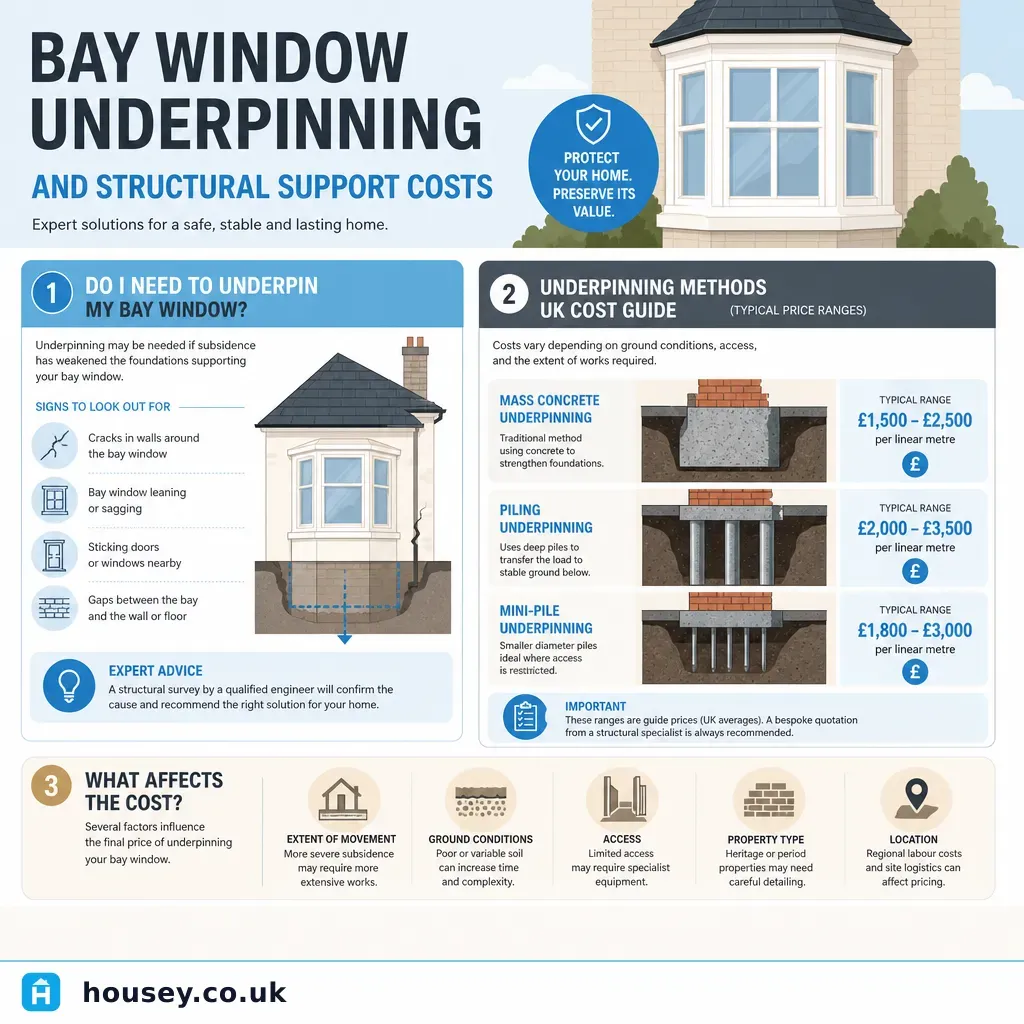
Bay Window Underpinning and Structural Support Costs
Bay window underpinning in the UK typically costs £3,000–£10,000 per bay for traditional mass concrete methods, with resin injection and mini-piling in a similar range depending on depth and site conditions.
 Planning & Pre-Build
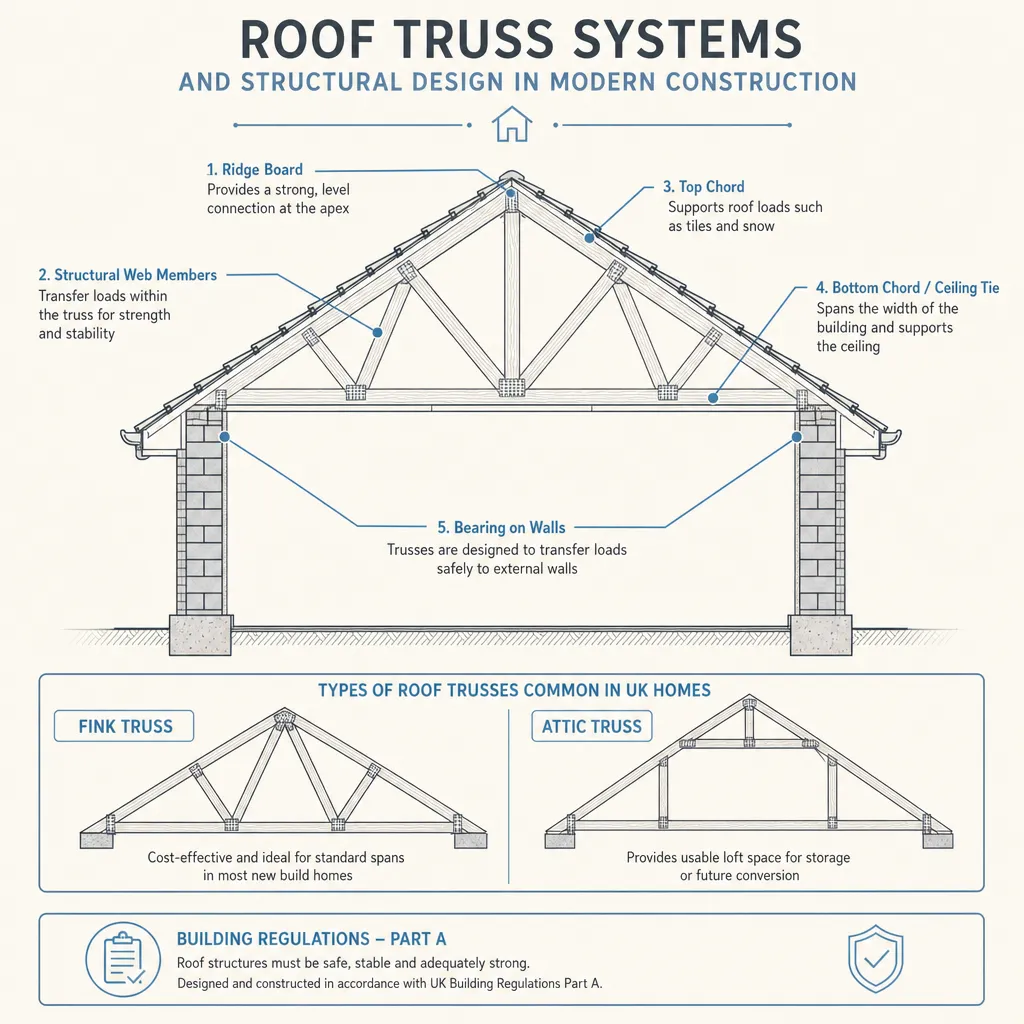
Roof Truss Systems and Structural Design in Modern Construction
Roof trusses are factory-engineered frames that carry roof loads to load-bearing walls.
 Planning & Pre-Build
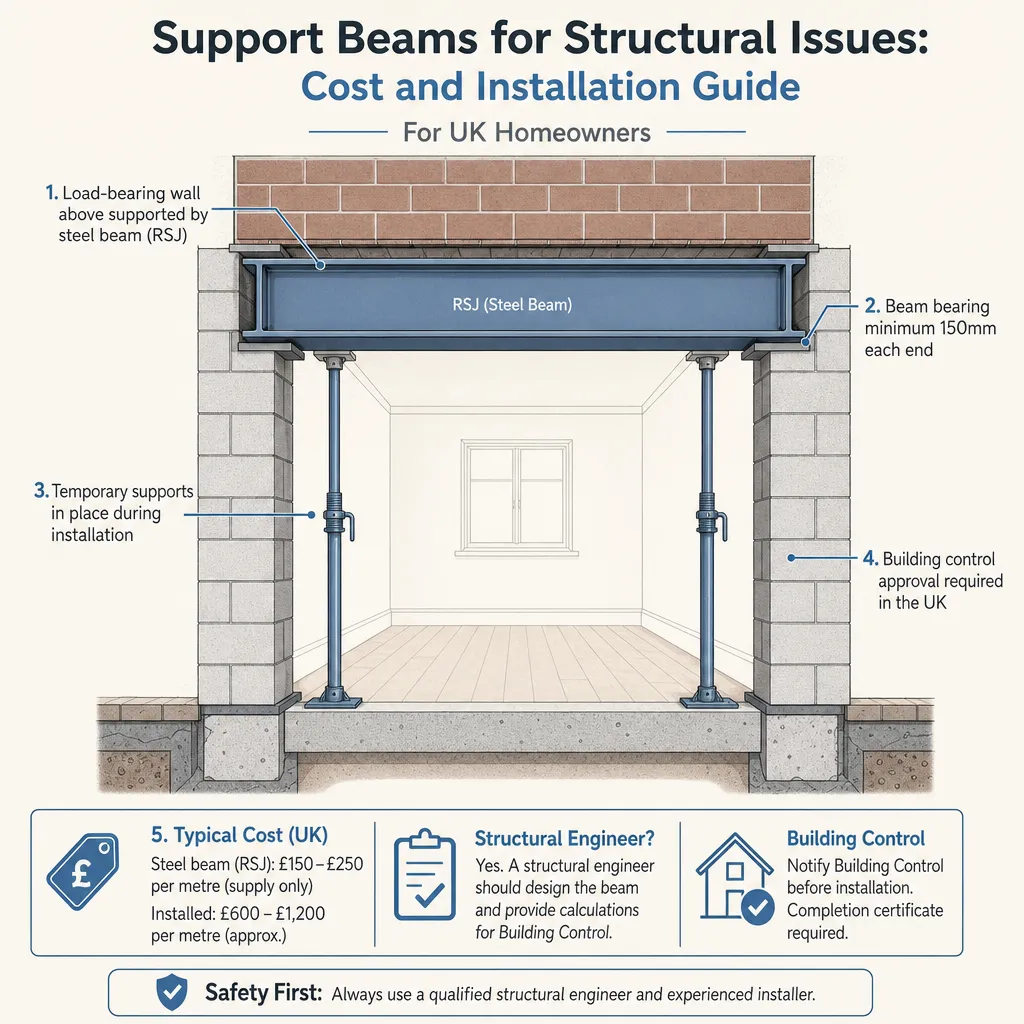
Support Beams for Structural Issues: Cost and Installation Guide
Installing a structural support beam in a UK property typically involves a structural engineer's calculations, temporary propping, and building control sign-off.
 Planning & Pre-Build
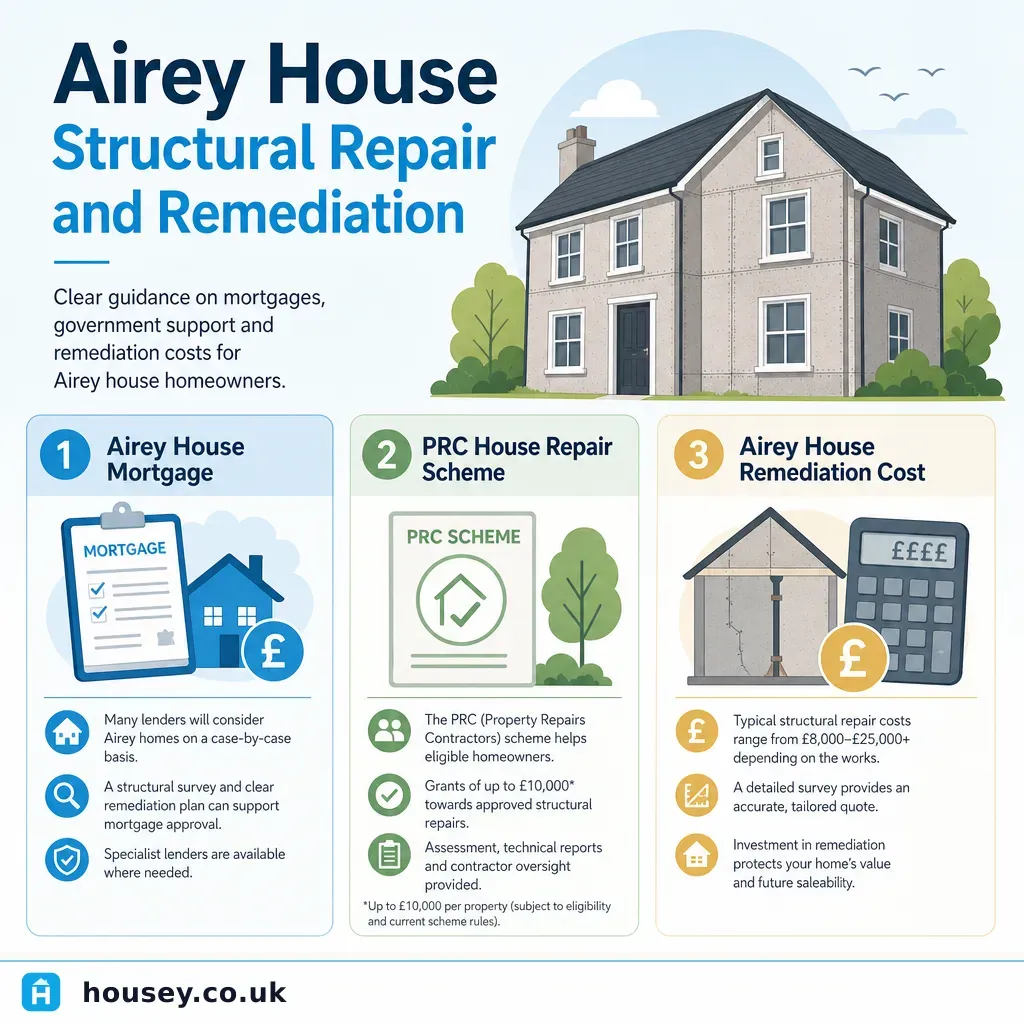
Airey House Structural Repair and Remediation
Unremediated Airey houses are generally unmortgageable.
 Planning & Pre-Build
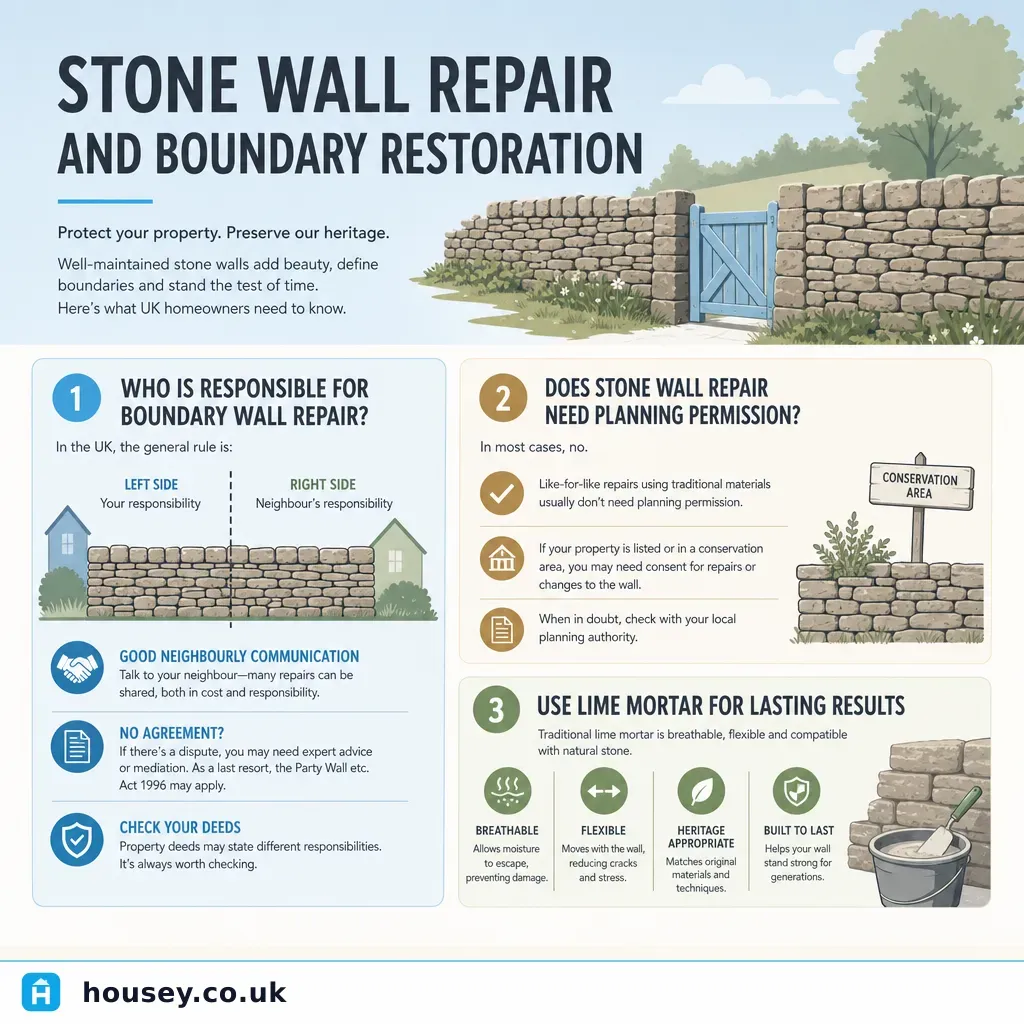
Stone Wall Repair And Boundary Restoration
Stone boundary walls fail due to ground movement, root intrusion, cement mortar contamination, or neglect.