Alternative Insulation Materials: Comparing Natural and Modern Options
By Housey · Last reviewed 10th of May 2026
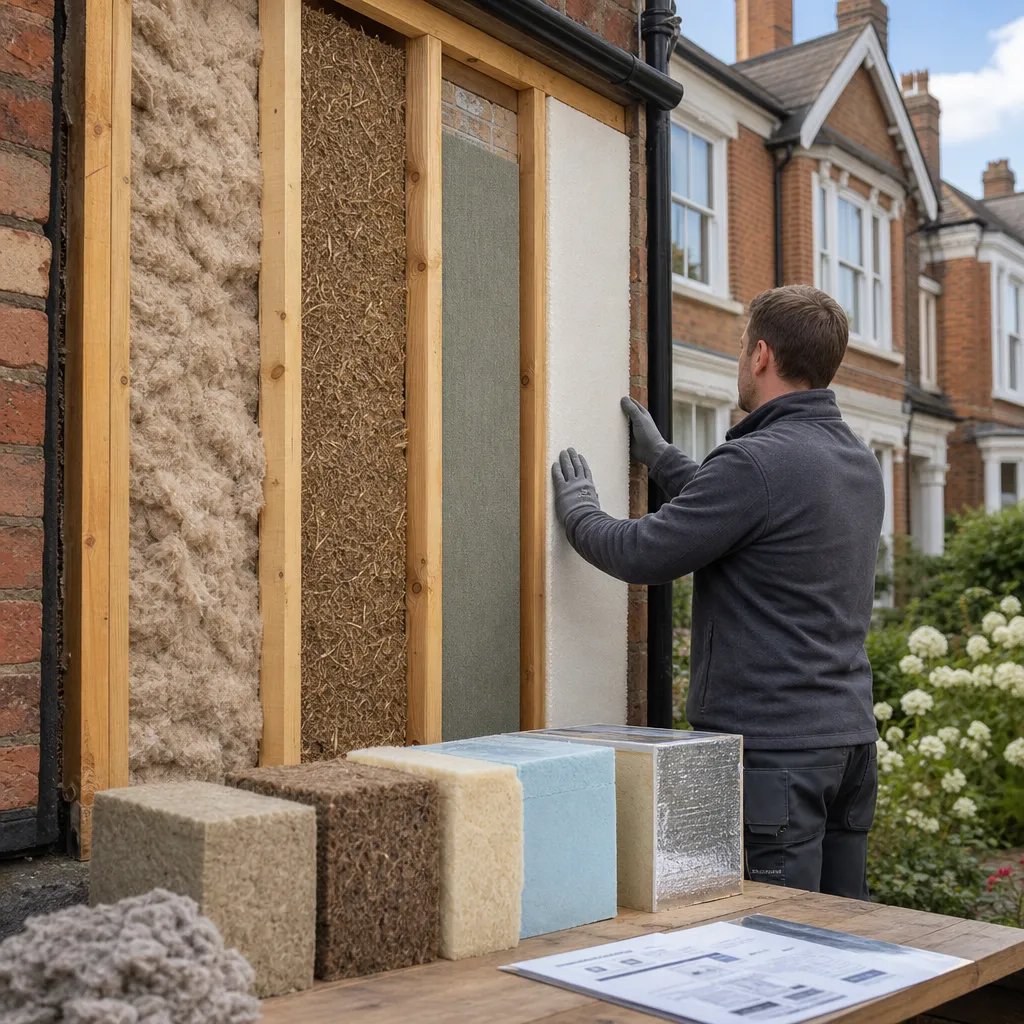
Alternative Insulation Materials: Comparing Natural and Modern Options
Choosing an insulation material is rarely as simple as picking the one with the lowest U-value. UK homeowners undertaking loft insulation, internal wall insulation, or a full retrofit are increasingly asking whether natural, bio-based, or high-performance modern materials offer advantages over standard mineral wool — in thermal performance, vapour management, environmental impact, or suitability for older buildings. The right answer depends on the property type, the installation position, and your priorities.
Key points
- Thermal conductivity (λ, lambda) is the key performance measure: lower λ means better insulation per unit thickness. Mineral wool typically sits at 0.033–0.044 W/mK; aerogel panels can achieve 0.013–0.015 W/mK.
- PAS 2030:2023 and PAS 2035:2019 govern retrofit insulation design and installation in England, Wales, and Scotland; all ECO4-funded work must comply with both standards.
- Vapour permeability matters as much as thermal performance in traditional solid-wall buildings — breathable materials such as sheep's wool and hemp reduce interstitial condensation risk.
- Building Regulations Approved Document L sets minimum U-value targets for renovation work; the required U-value for insulated external walls in existing dwellings is typically 0.30 W/m²K or better.
- Retrofit Coordinators — a defined PAS 2035 role — must be involved in medium and deep retrofits receiving government grant funding; material selection should form part of a whole-house design.
What makes insulation materials different from each other
Insulation materials vary across four key dimensions that affect how well they suit a particular application:
- Thermal performance (λ value): How efficiently the material resists heat flow per unit of thickness. A lower lambda value means you need less thickness to achieve the same U-value target.
- Vapour permeability: Whether the material allows water vapour to pass through. In pre-1919 solid-wall properties, trapping moisture behind impermeable insulation can cause serious condensation and timber joist-end rot — breathable materials allow the building fabric to manage moisture naturally.
- Embodied carbon and sustainability: How much carbon was emitted to manufacture the material, and whether it is renewable, recycled, or fossil-derived.
- Practical installation factors: Fire resistance, cost, workability, compatibility with the existing structure, and whether specialist installation is required.
Comparison table: natural and modern insulation materials
Material | Typical λ (W/mK) | Vapour permeable? | Typical applications | Relative cost | Environmental notes |
|---|---|---|---|---|---|
Mineral wool (glass or rock) | 0.033–0.044 | Moderate | Loft, cavity wall, stud wall | Low | Partly recycled content; not bio-based |
Sheep's wool | 0.035–0.040 | High | Loft, stud wall, timber frame | Medium | Renewable; buffers moisture naturally |
Hemp or flax batts | 0.038–0.042 | High | Stud wall, internal wall, loft | Medium | Bio-based; sequesters carbon during growth |
Cellulose (recycled paper, blown) | 0.035–0.040 | High | Blown loft, cavity fill, stud | Low–medium | High recycled content; good acoustic performance |
Expanded cork | 0.036–0.045 | High | Internal wall, floor | Medium–high | Renewable; also provides acoustic damping |
Rigid PIR or PUR boards | 0.022–0.023 | Low (vapour check) | Flat roof, solid floor, internal wall | Medium | Fossil-derived; high performance per mm |
Phenolic foam boards | 0.018–0.022 | Very low | Internal wall, shallow roof | High | Fossil-derived; very high performance per mm |
Aerogel blanket or boards | 0.013–0.015 | Variable | Listed buildings, narrow voids | Very high | High manufacture energy; exceptional thin-profile performance |
EPS or XPS (expanded polystyrene) | 0.030–0.038 | Low | External wall, floor, cavity | Low–medium | Plastic-based; durable long service life |
Wood fibre boards or batts | 0.038–0.052 | High | External wall, sarking, internal wall | Medium–high | Bio-based; provides summer overheating buffering |
Indicative λ values from manufacturer and BRE data; actual performance depends on density, installation quality, and manufacturer specification. Indicative UK costs, last reviewed 2026-05-10.
Natural and bio-based materials: where they work well
Sheep's wool, hemp, wood fibre, and cellulose are most effective in:
- Pre-1919 solid-wall homes where trapping moisture behind impermeable insulation can cause condensation and joist-end rot. Breathable materials allow the building fabric to manage moisture without the need for a separate vapour control layer in all situations.
- Timber-frame and oak-frame buildings where flexibility, vapour management, and compatibility with traditional construction matter.
- Loft insulation where breathability is less critical but homeowners prefer lower-embodied-carbon or non-synthetic products.
- Properties with a low-carbon specification — bio-based materials can achieve negative embodied carbon on a lifecycle basis when carbon sequestration during plant or fibre growth is included in the calculation.
Limitation: Natural materials generally have slightly higher λ values than PIR or phenolic foam, meaning more thickness is needed for the same U-value. In tight spaces — such as solid walls requiring internal insulation — this thickness trade-off may matter significantly.
High-performance modern materials: where they are most useful
PIR boards, phenolic foam, and aerogel are best suited to:
- Internal wall insulation of solid brick or stone walls where every millimetre of lost internal floor space matters.
- Flat roofs and floor insulations where structural depth is limited by existing construction.
- Listed buildings and conservation area properties where external insulation is not permitted and internal space is at a premium.
- Shallow roof pitch renovations where there is limited rafter depth between the insulation layer and the roofline.
These materials are generally fossil-derived and carry higher embodied carbon — a relevant consideration for net-zero or low-carbon retrofit projects.
Which insulation should you choose?
- Choose breathable bio-based insulation (sheep's wool, hemp, wood fibre) if your property is pre-1919 solid-wall construction, has a history of damp, or uses a traditional lime render or plaster system — and if you have sufficient depth for a somewhat thicker installation.
- Choose mineral wool if you are insulating a post-1945 cavity-wall property with adequate installation depth and cost-efficiency is your priority.
- Choose rigid PIR or phenolic foam boards if space is highly constrained — for example, internal wall insulation on a solid-brick Victorian terrace or a solid concrete floor in a kitchen extension.
- Choose aerogel if you are working in a listed building or a very narrow cavity where no other product achieves the required U-value within the allowable thickness.
- Choose cellulose (blown) for loft top-ups, blown cavity fills, and projects where cost-efficiency and high recycled content are both priorities.
- Ask a Retrofit Coordinator or energy assessor if your property is complex, if you are claiming ECO4 or Great British Insulation Scheme funding, or if you are concerned about moisture risk or interstitial condensation in your specific construction.
Moisture risk and vapour control: what not to assume
A common misunderstanding is that higher-performing insulation is always the better choice. In solid-wall, rubble-core, or traditionally constructed buildings, installing a vapour-impermeable board directly against the inner face of a wall without a proper interstitial condensation analysis can cause:
- Moisture accumulation at the interface between the cold and warm zones of the wall
- Timber joist-end rot where floor joists are built into the external wall
- Deterioration of historic fabric — particularly lime plaster and traditional mortar joints
PAS 2035:2019 requires a hygrothermal assessment as part of whole-house retrofit design involving wall insulation. If you are in doubt, commission an energy assessor or Retrofit Coordinator before specifying a material — do not assume that a higher λ-value product is automatically the right answer for an older property.
When to get professional help
Always involve a qualified professional when:
- Your property is listed or in a conservation area, where material choice may affect planning compliance
- You are claiming government grant funding through ECO4 or the Great British Insulation Scheme — PAS 2030 and PAS 2035 compliance is required
- The property has existing damp, mould, poor ventilation, or a history of condensation
- You are considering internal wall insulation on a solid-wall property, where interstitial condensation risk must be formally assessed
- You are unsure which product achieves the required U-value for Building Regulations compliance in your specific application
How Housey can help
Housey can connect you with vetted insulation installers, insulation assessors, and energy-efficiency consultants who can advise on material selection, assess your property, and carry out installation that meets current Building Regulations and grant scheme requirements. For a whole-house approach, a retrofit assessment is the recommended starting point — it ensures material choice is made in the context of your entire home's energy and moisture performance.
Frequently asked questions
Is sheep's wool insulation as effective as mineral wool?
Sheep's wool typically has a λ value of 0.035–0.040 W/mK, similar to standard mineral wool. It performs comparably per unit of thickness and adds the benefit of vapour permeability and natural moisture-buffering. It costs more per square metre but is often preferred in older properties and low-carbon projects where breathability matters.
Does insulation material affect planning permission?
For most insulation work, no planning permission is required. However, external wall insulation on properties in conservation areas, or work affecting the external appearance of a listed building, may need consent. Internal insulation on listed buildings should be discussed with your local planning authority or conservation officer before work begins.
What is the lowest embodied-carbon insulation?
Bio-based materials — particularly hemp, sheep's wool, and wood fibre — have the lowest embodied carbon on a lifecycle basis. Some carry negative embodied carbon figures when CO2 sequestered during plant or fibre growth is credited. Aerogel and fossil-derived foam boards tend to carry comparatively high embodied carbon despite their excellent thermal performance per unit of thickness.
Do I need a specific insulation type to qualify for ECO4 funding?
ECO4 does not specify a particular insulation material, but all work must comply with PAS 2030:2023 and PAS 2035:2019. In practice, installation must be carried out by a TrustMark-registered, PAS 2030-certified installer using products that meet the specified thermal performance requirements for the funded measure.
Sources and further reading
- Building Regulations Approved Document L: Conservation of fuel and power — GOV.UK
- PAS 2035:2019 Retrofitting dwellings for improved energy efficiency — BSI Group
- ECO4 scheme guidance — Ofgem
- Energy Saving Trust: Insulation guidance — Energy Saving Trust
- Historic England: Energy efficiency and historic buildings — Historic England
Useful next reads
 Energy & Retrofit
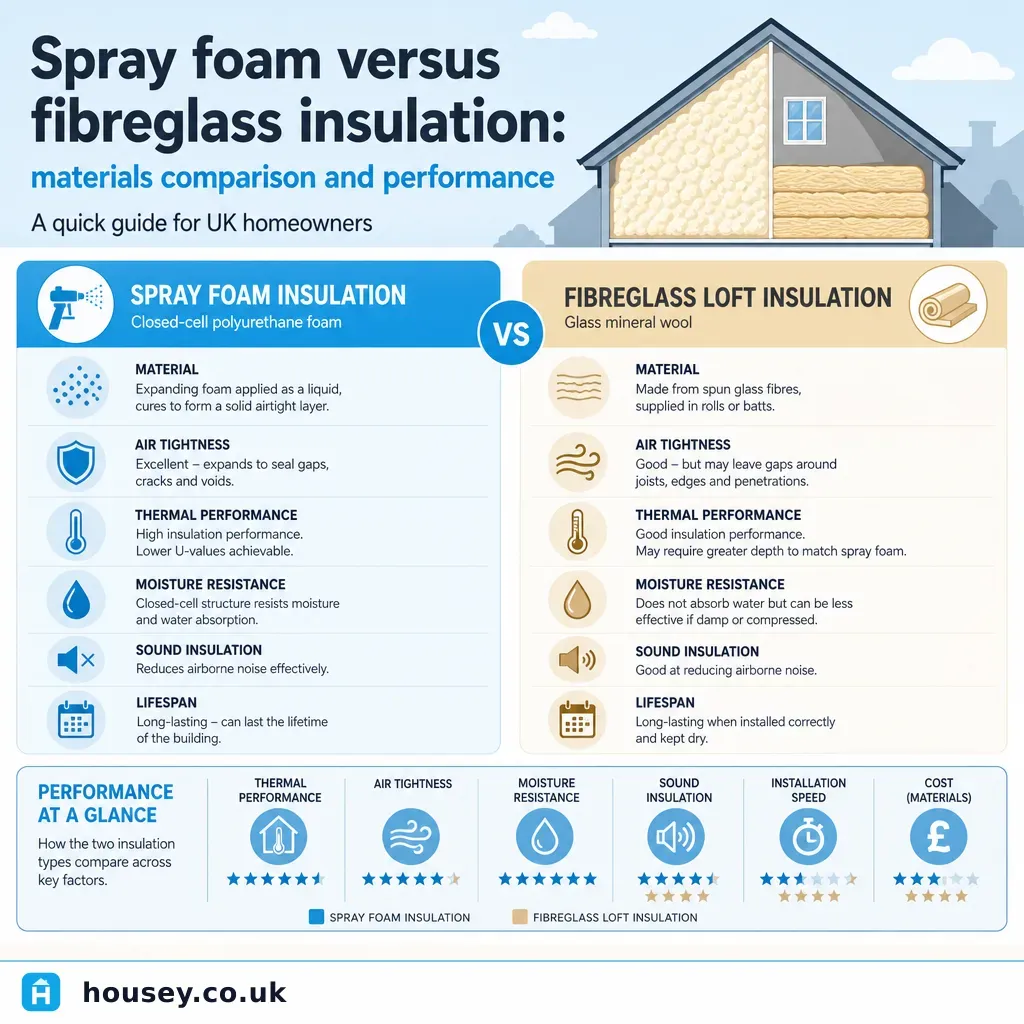
Spray foam versus fibreglass insulation: materials comparison and performance
Spray foam insulation offers higher thermal performance per centimetre than fibreglass, but in UK homes it carries significant mortgage and resale risks when applied to roof timbers.
 Energy & Retrofit
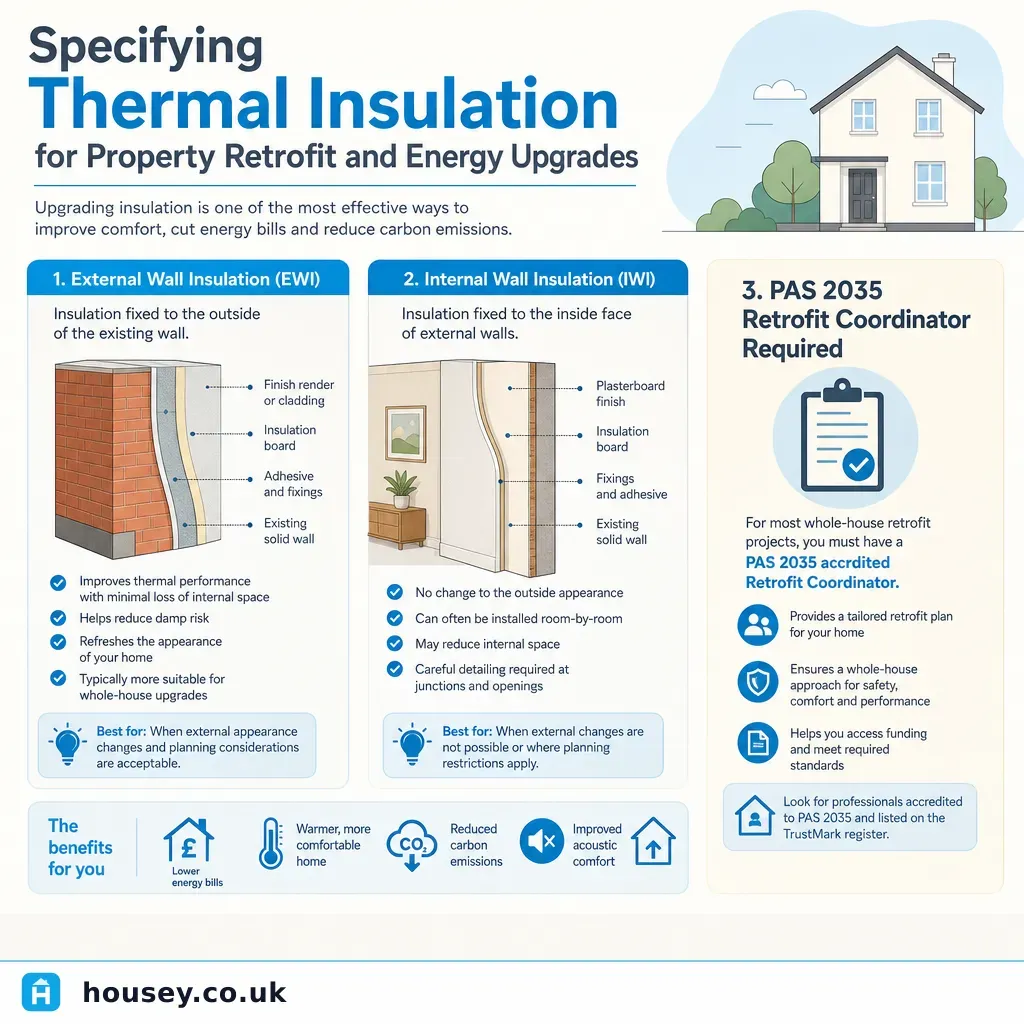
Specifying Thermal Insulation for Property Retrofit and Energy Upgrades
Specifying thermal insulation for UK retrofit requires matching the product to your property's construction, moisture conditions, and heating system.
 Energy & Retrofit
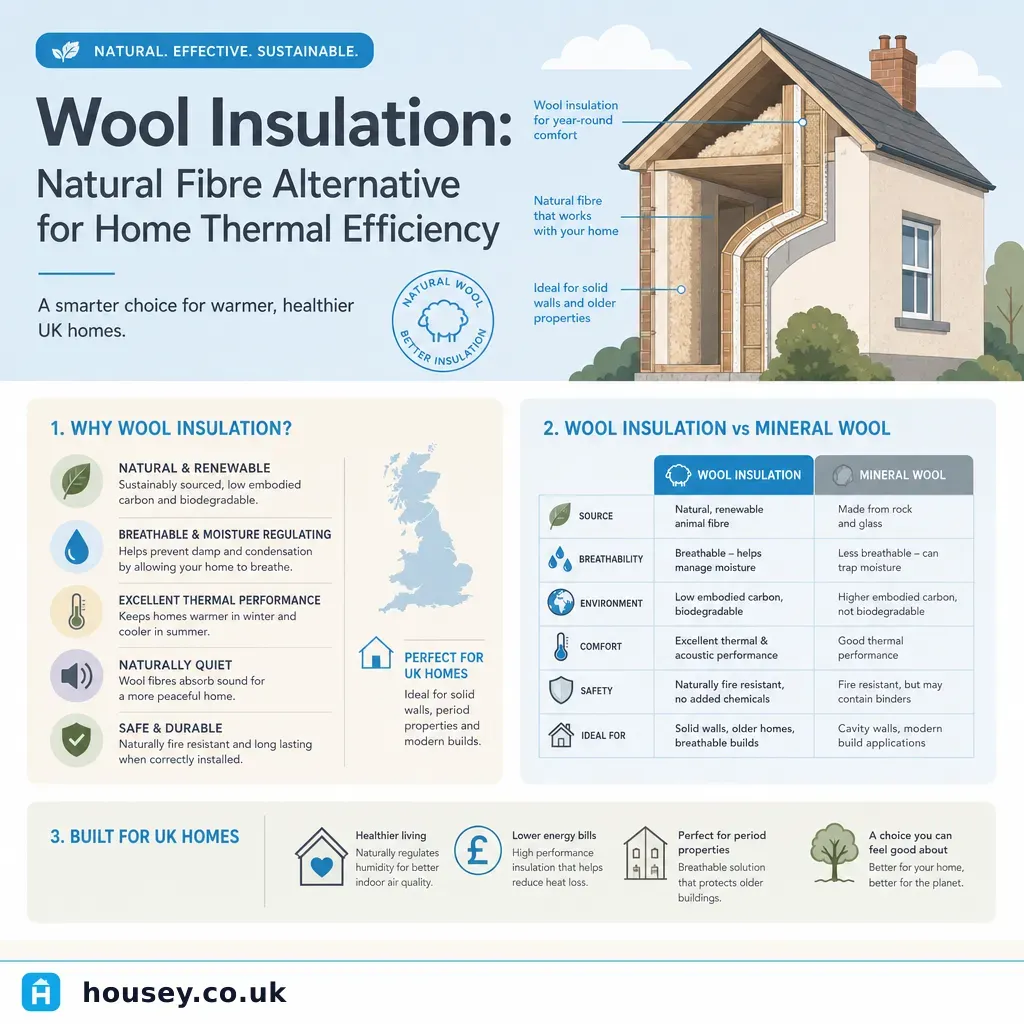
Wool Insulation: Natural Fibre Alternative for Home Thermal Efficiency
Sheep wool insulation achieves a thermal conductivity of 0.
 Energy & Retrofit
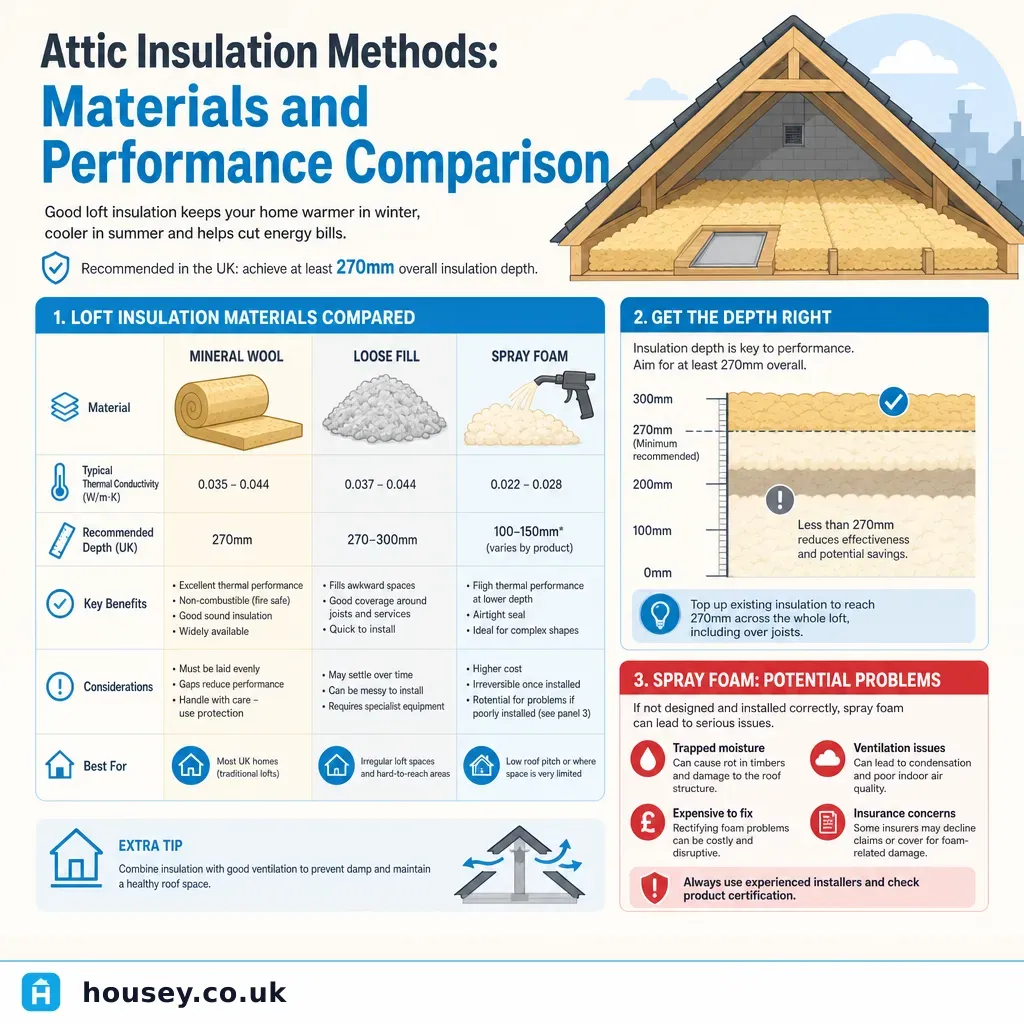
Attic Insulation Methods: Materials and Performance Comparison
UK loft insulation options include mineral wool rolls (most common and grant-funded), blown loose-fill for irregular lofts, and rigid PIR board for warm roof conversions.
 Energy & Retrofit
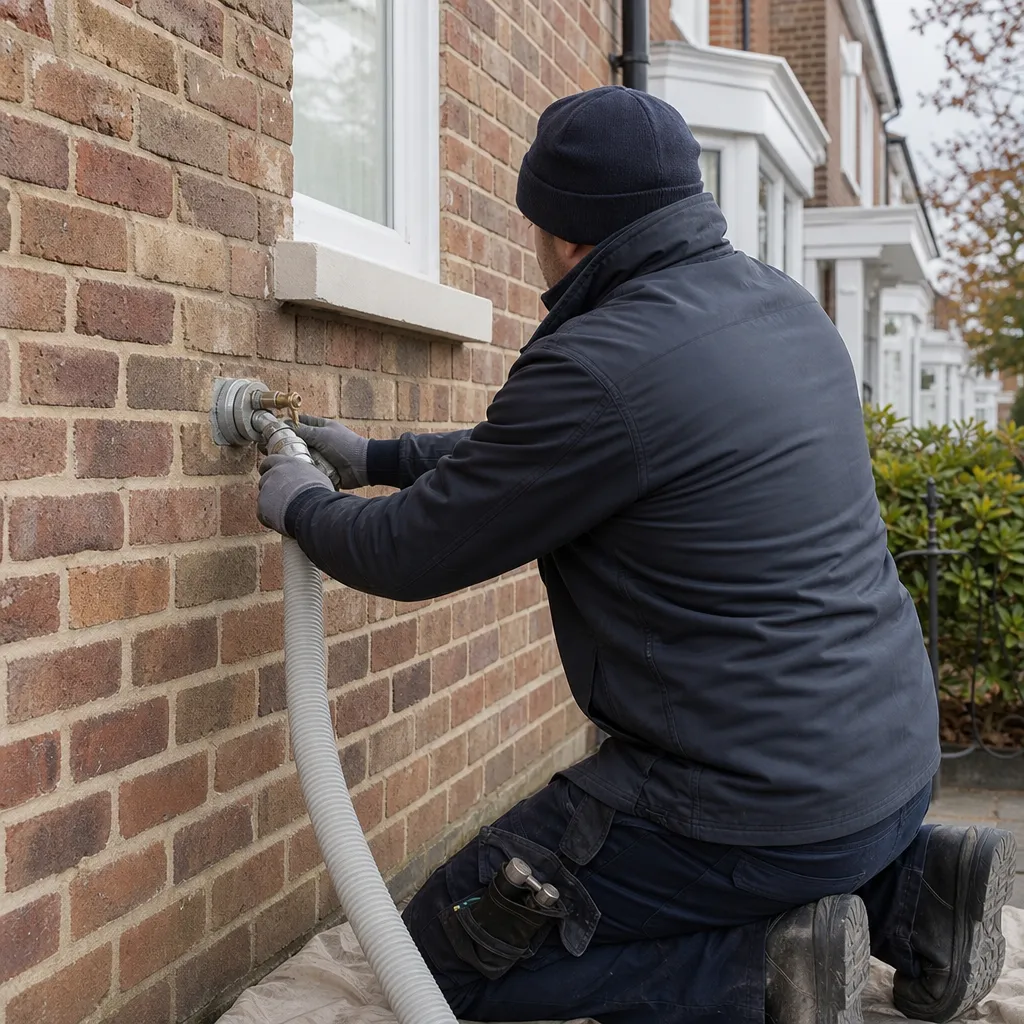
Cavity Wall Insulation: Benefits, Types and Considerations
Cavity wall insulation fills the gap between a property's inner and outer masonry leaves with material such as mineral wool, EPS beads, or injected foam, reducing heat loss through walls by up to 35% and improving EPC ratings.