Wool Insulation: Natural Fibre Alternative for Home Thermal Efficiency
By Housey · Last reviewed 10th of May 2026
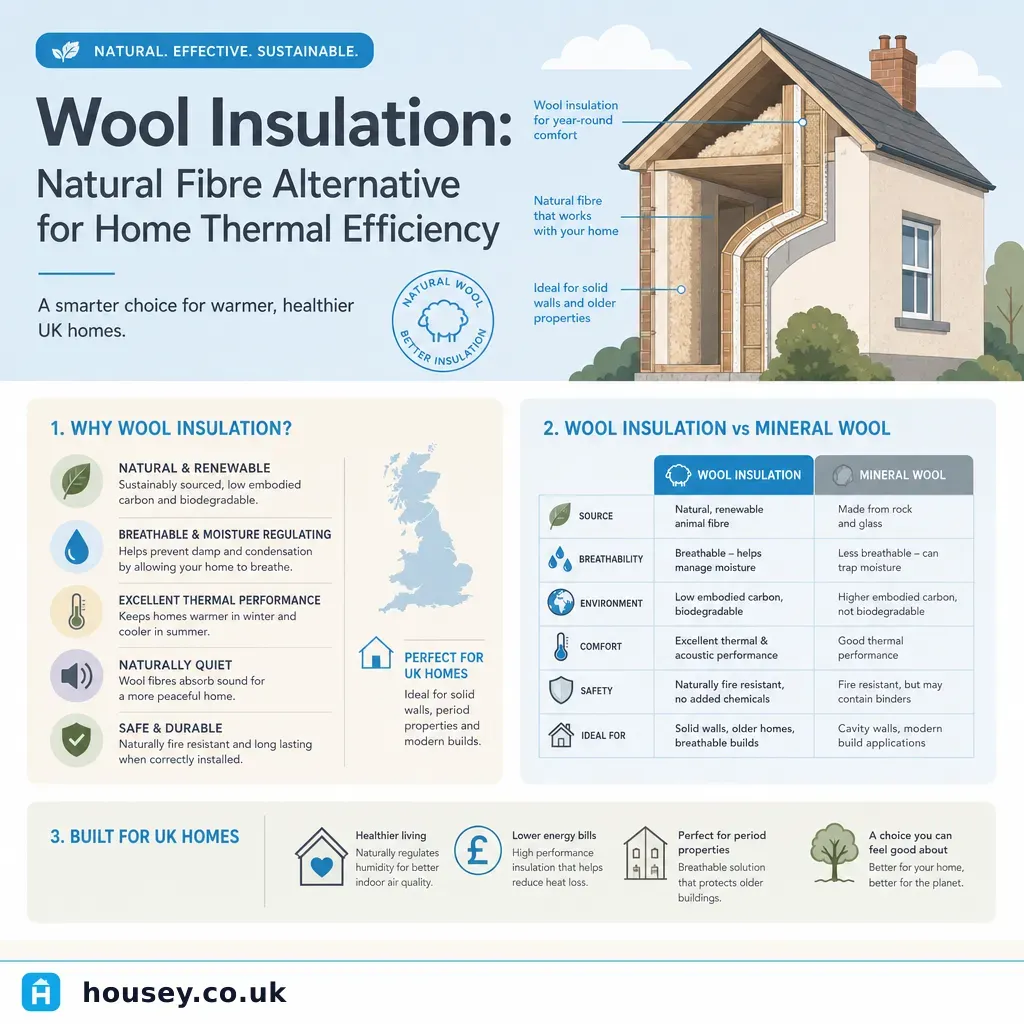
Wool Insulation: Natural Fibre Alternative for Home Thermal Efficiency
Sheep wool insulation has been used in UK buildings for decades, but it has attracted renewed interest as homeowners look for alternatives to mineral wool and synthetic foam products during retrofit projects. It sits within a growing category of natural-fibre insulation materials — alongside hemp, flax, and wood fibre — and is particularly common in discussions around breathable construction and improving older, solid-wall properties. Understanding how wool insulation compares to mainstream options in terms of thermal performance, moisture behaviour, cost, and installation requirements helps homeowners make better decisions before instructing an installer.
Key points
- Sheep wool insulation typically achieves a thermal conductivity (lambda value) of 0.035–0.040 W/mK — comparable to mineral wool, though notably above the best-performing rigid PIR boards (around 0.022 W/mK).
- Wool insulation is vapour-permeable (breathable) — it can absorb and release moisture without losing significant thermal performance, making it well-suited to pre-1919 solid-wall UK properties built with lime-based mortars.
- Most UK sheep wool insulation products are treated with borax or a borate compound to provide pest resistance and improve fire performance — always check the product datasheet before specifying.
- PAS 2035:2023, the UK retrofit standard, requires a Retrofit Coordinator to specify insulation products and systems for most publicly funded retrofit schemes — wool may be specified where breathability is a design requirement.
- Sheep wool insulation is not currently on the list of measures eligible for ECO4 grant funding, which focuses on mineral wool, rigid boards, and spray foam — confirm current scheme eligibility if grant funding is a consideration.
How does wool insulation compare to alternatives?
Insulation type | Typical lambda (W/mK) | Breathable? | Best application | Approximate installed cost (per m²) |
|---|---|---|---|---|
Sheep wool batts | 0.035–0.040 | Yes | Timber frame, rafters, stud walls, loft | £15–£35 |
Mineral wool (glass/rock) | 0.032–0.044 | Partially | Cavity walls, lofts, stud walls | £10–£25 |
Rigid PIR board | 0.020–0.025 | No | Flat roofs, solid walls, floors | £25–£55 |
Wood fibre board | 0.038–0.050 | Yes | Breathable walls, sarking, solid walls | £25–£60 |
Hemp batts | 0.038–0.042 | Yes | Timber frame, loft, stud walls | £15–£35 |
Spray foam (closed cell) | 0.025–0.040 | No | Irregular surfaces, voids | £30–£60 |
Indicative UK costs, last reviewed 2026-05-10. Costs vary significantly by project, installer, region, and accessibility. Obtain multiple quotes before committing.
Where is sheep wool insulation most suited?
Sheep wool insulation performs best in applications where its breathability and acoustic qualities are as relevant as its thermal performance.
Loft and roof spaces: Sheep wool batts can be laid between and over rafters or between ceiling joists in a loft, functioning similarly to mineral wool in this application. The breathability is less critical in a vented loft but remains beneficial.
Timber-frame walls (new build and renovation): Wool batts fit between studs in a timber-frame wall construction and are widely used in self-build and eco-build projects. The breathable assembly is compatible with vapour-open membranes and boarding systems.
Solid-wall properties (pre-1919 construction): This is arguably the most important application context for UK homeowners. Solid-wall Victorian and Edwardian properties were built with lime-based mortars and renders that rely on moisture passing through the fabric rather than being blocked. Introducing a non-breathable insulation internally — such as closed-cell spray foam or PIR with a foil facing — can trap moisture within the wall, leading to interstitial condensation, timber decay, and spalling masonry. Sheep wool and wood fibre insulations, used within an appropriate breathable system, are more compatible with the moisture management requirements of these buildings. Historic England guidance on energy efficiency in traditional buildings reinforces the importance of breathable approaches for pre-1919 properties.
Acoustic applications: Wool's dense fibre structure gives it good sound absorption characteristics — it is often specified in partition walls, home offices, and media rooms where thermal and acoustic performance are both needed.
What are the limitations of sheep wool insulation?
Wool insulation is not the right choice for every situation:
- Lower performance per mm than rigid boards: Where space is limited — for example, internal wall insulation in a small room — PIR or phenolic boards achieve a given U-value in a thinner profile. Wool requires greater depth to achieve equivalent thermal resistance.
- Higher installed cost than mineral wool: Sheep wool typically costs more per square metre than glass or rock mineral wool, though the gap has narrowed as demand has grown.
- Product quality varies: Quality, treatment, and declared thermal values differ between manufacturers. Look for products with CE or UKCA marking and a published lambda value tested to BS EN 12667 or BS EN ISO 10456.
- Moisture risk if misspecified: Breathable insulation does not mean moisture-proof. An incorrectly specified assembly — for instance, combining wool with an airtight vapour barrier on the wrong side — can still cause condensation problems. Specification should follow BS 5250 (management of moisture in buildings) and, for funded schemes, PAS 2035.
- Not eligible for most grant funding: ECO4 and the Great British Insulation Scheme (GBIS) currently fund mineral wool and other mainstream products. Confirm current eligibility with an approved installer or the Energy Saving Trust before selecting wool on cost grounds.
A homeowner checklist for wool insulation projects
Before instructing an installer:
When to get professional help
Most loft insulation using wool batts can be installed by a competent installer without specialist involvement. However, professional guidance is important when:
- The property is a pre-1919 solid-wall building — moisture management in these properties is complex enough that an insulation assessment or advice from an energy-efficiency consultant is advisable before specifying the insulation type and system.
- The property is listed or in a conservation area — any alteration to external or internal wall fabric may require Listed Building Consent.
- The project is part of a publicly funded scheme (ECO4, GBIS, SHDF) — PAS 2035 compliance is mandatory, requiring a qualified Retrofit Coordinator.
- You are considering spray foam removal and replacement — this is a specialist area with implications for mortgage valuation and building fabric condition.
- The loft has existing damage, signs of damp, or inadequate ventilation — these should be addressed before new insulation is installed.
How Housey can help
If you are considering wool insulation as part of a broader retrofit or renovation, a professional assessment is the best starting point. Our insulation installers can advise on product suitability for your property type. For solid-wall properties or more complex moisture situations, an insulation assessment will help you make the right specification decision. For whole-home energy planning, our energy-efficiency consultants can develop a retrofit strategy that prioritises measures in the right order.
Frequently asked questions
Is sheep wool insulation fire safe?
Most commercially available sheep wool insulation products in the UK are treated with borax or borate compounds, which improve fire resistance. Products should meet the fire classification requirements of Building Regulations Approved Document B. Always check the product's Euroclass fire classification on the manufacturer's datasheet before specifying — not all wool insulation products carry the same treatment or rating.
Does wool insulation smell or attract pests?
Treated sheep wool insulation — which the majority of commercially available products are — uses borate treatments that deter moths and other insects. A faint natural smell may be noticeable on installation but typically dissipates once the product is enclosed. Untreated wool is not recommended for building insulation purposes.
How does wool insulation affect an EPC rating?
An EPC rating is calculated using SAP (Standard Assessment Procedure) methodology, which recognises the U-value improvement achieved by insulation rather than the specific material used. Sheep wool insulation will improve an EPC rating by the same amount as mineral wool achieving an equivalent U-value and depth. The choice of insulation material does not itself affect the SAP calculation.
Can wool insulation be used with underfloor heating?
Yes, with appropriate specification. When installing wool insulation below an underfloor heating system — for example, between floor joists beneath a screed — ensure the lambda value and depth provide sufficient downward thermal resistance below the heat source. A heating engineer or energy consultant should confirm the design achieves the correct balance between upward heat delivery and downward loss prevention.
Sources and further reading
- PAS 2035:2023 — Retrofitting dwellings for improved energy efficiency — BSI
- Energy Saving Trust — insulation guidance — Energy Saving Trust
- GOV.UK — Great British Insulation Scheme — GOV.UK
- Building Regulations Approved Document L — Conservation of fuel and power — GOV.UK
- BS 5250:2021 — Management of moisture in buildings — BSI
- Historic England — energy efficiency and traditional buildings — Historic England
Useful next reads
 Energy & Retrofit
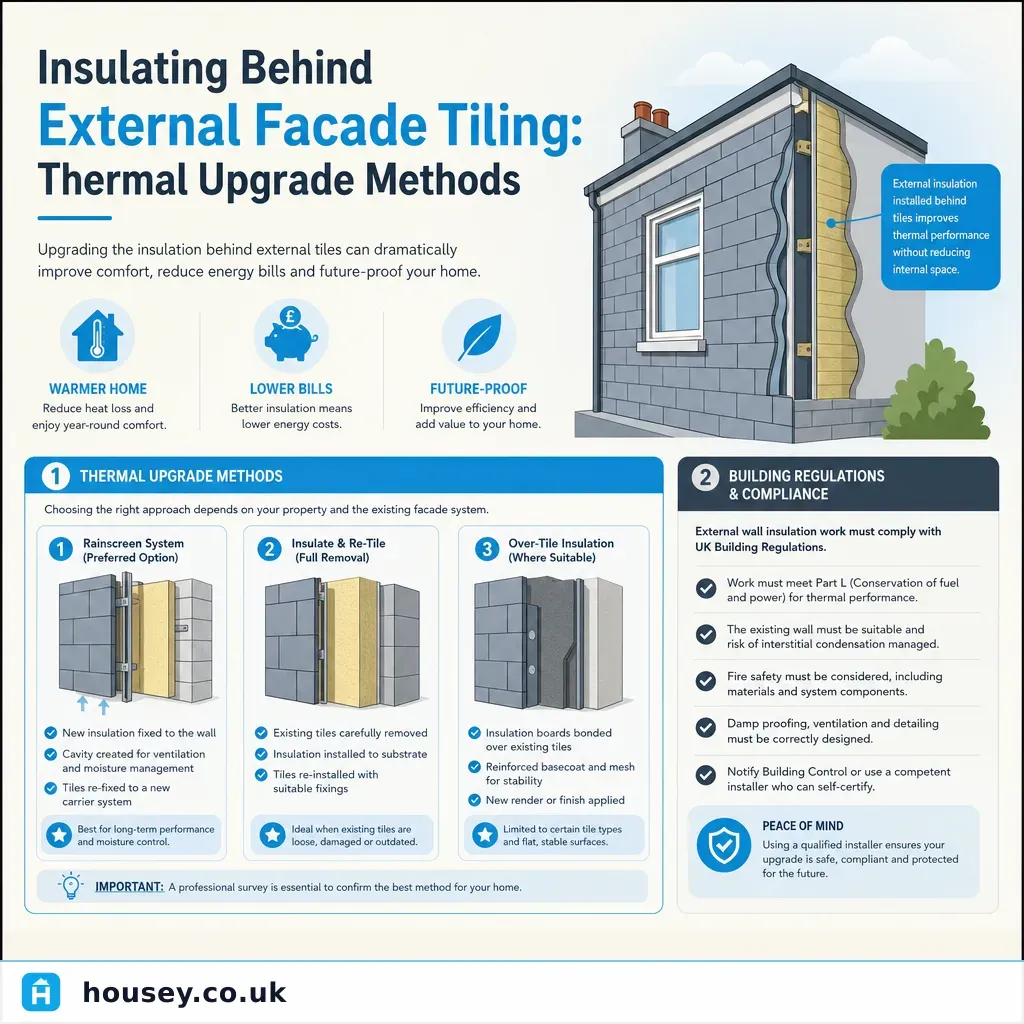
Insulating Behind External Facade Tiling: Thermal Upgrade Methods
Insulating behind external facade tiling is technically complex — the insulation layer must be compatible with tile fixings, manage moisture correctly, and comply with Building Regulations Part L.
 Energy & Retrofit
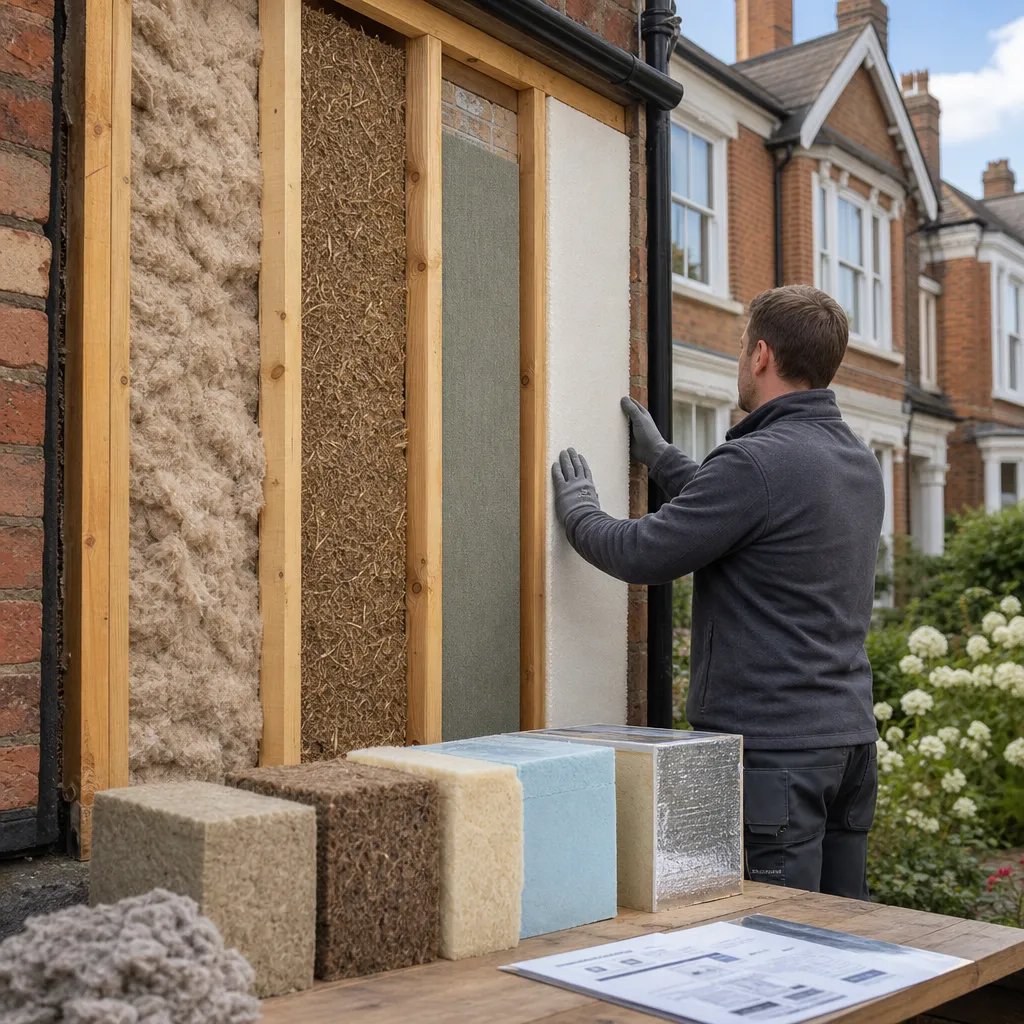
Alternative Insulation Materials: Comparing Natural and Modern Options
The best insulation for a UK home depends on property type, available thickness, and moisture risk.
 Energy & Retrofit
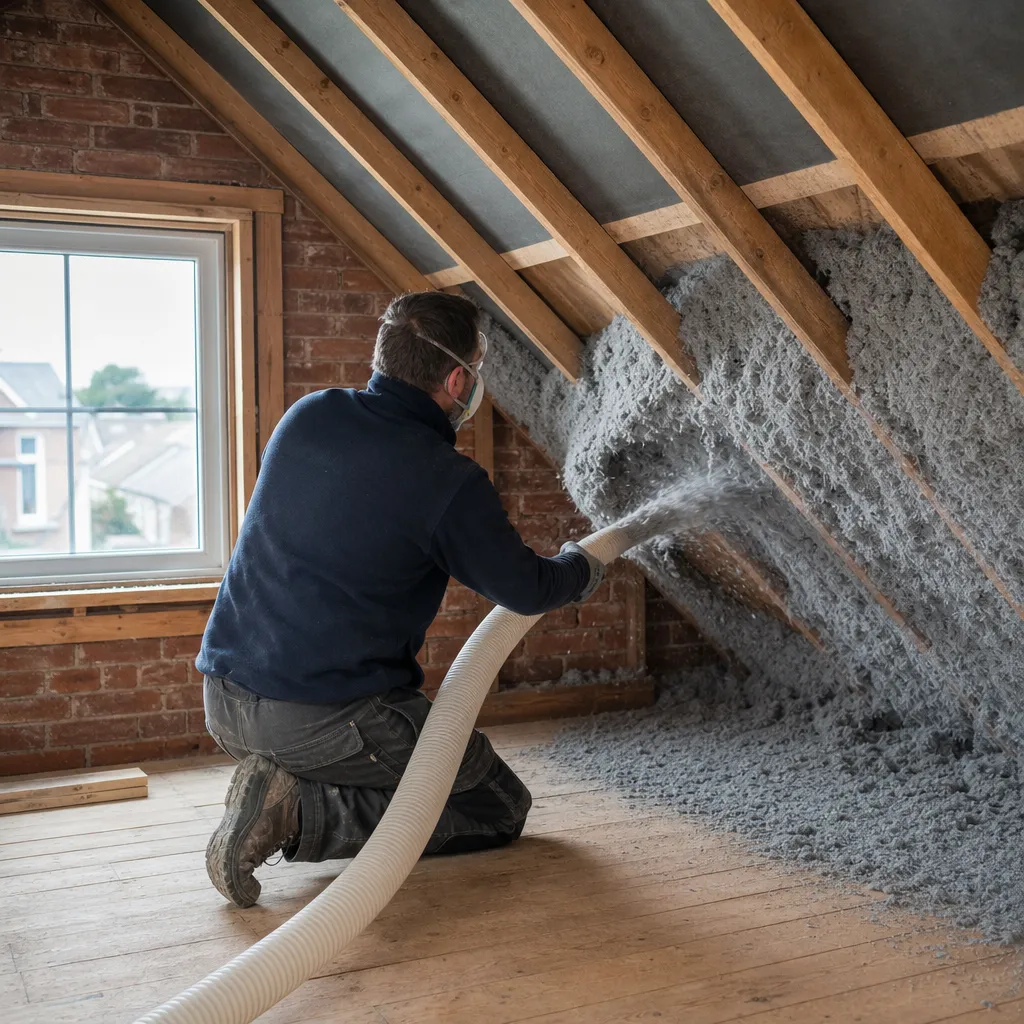
Cellulose Insulation: Advantages and Disadvantages for Your Home
Cellulose insulation is a recycled, low-embodied-carbon option achieving 0.
 Energy & Retrofit
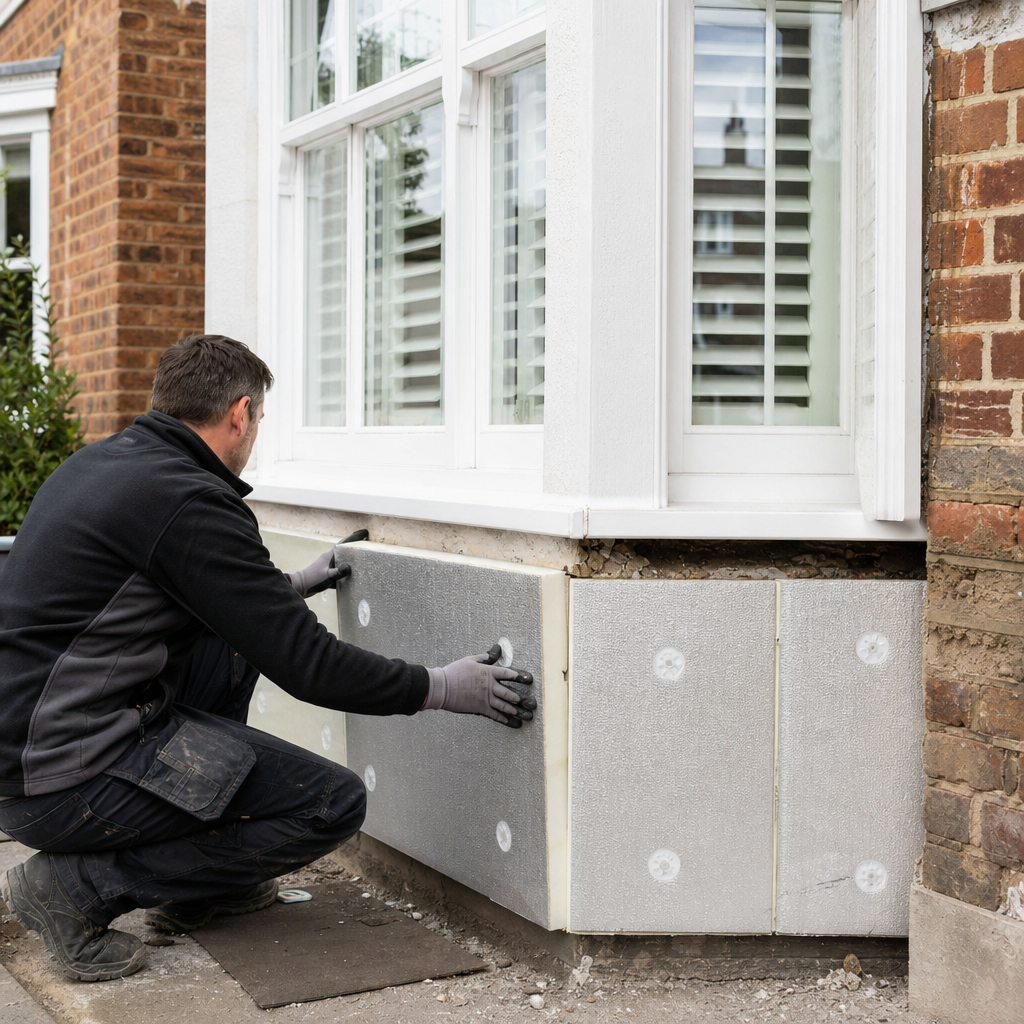
Insulating Solid Masonry Walls Under Bay Windows: Technical Guidance
Insulating solid masonry walls under bay windows requires specialist detailing at angled wall faces, window reveals, and the bay floor and ceiling junctions.
 Energy & Retrofit
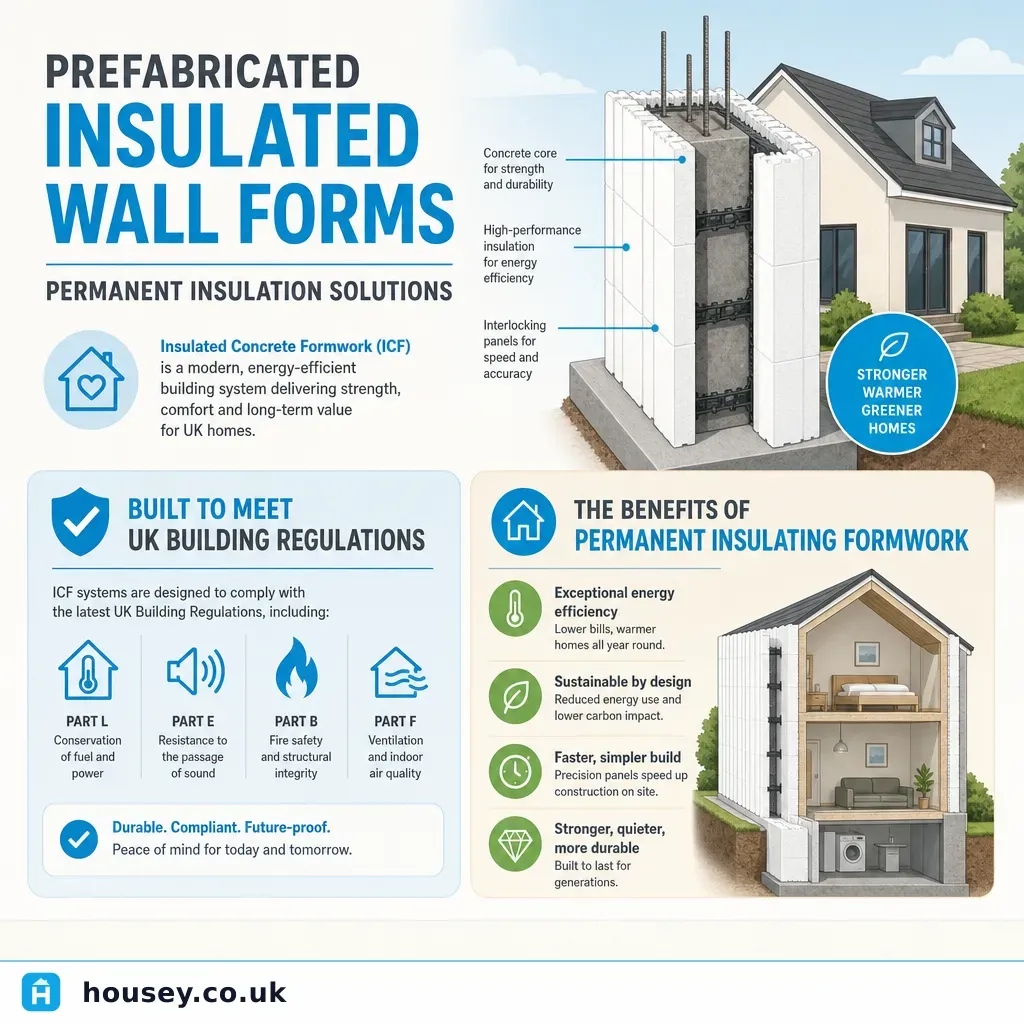
Prefabricated Insulated Wall Forms: Permanent Insulation Solutions
Prefabricated insulated wall forms — including ICF and SIPs systems — deliver high thermal performance by combining permanent insulation with structural concrete or timber in a single wall assembly.