Specifying Thermal Insulation for Property Retrofit and Energy Upgrades
By Housey · Last reviewed 31st of May 2026
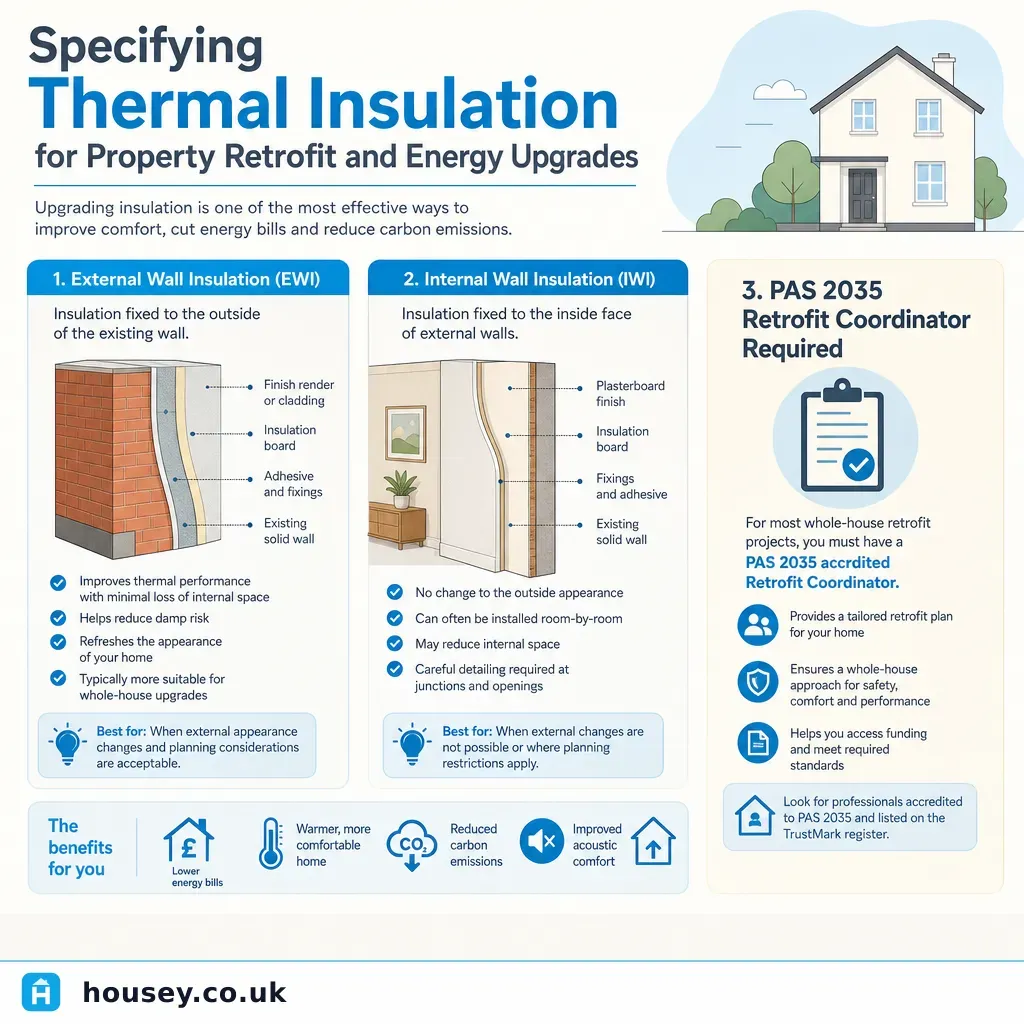
Specifying Thermal Insulation for Property Retrofit and Energy Upgrades
Choosing the right insulation for a UK home involves more than picking the cheapest product. The construction era of your property, the type of wall, roof, and floor, the existing moisture conditions, and the planned heating system all affect which insulation is appropriate — and which combinations could cause lasting damage. This is particularly relevant for the large proportion of UK housing stock built before 1920 with solid walls and lime-based construction, where moisture management is as important as thermal performance.
Key points
- Building Regulations Part L (Conservation of Fuel and Power) sets minimum U-values for new insulation work: 0.18 W/m²K for walls, 0.13 W/m²K for pitched roofs (insulation between and above rafters), and 0.22 W/m²K for floors in England.
- PAS 2035:2023 requires a qualified Retrofit Coordinator to oversee medium- and high-risk measures, including all forms of solid wall insulation.
- Internal wall insulation (IWI) reduces usable floor area and must be detailed carefully at floor and ceiling junctions to avoid cold bridges and interstitial condensation.
- External wall insulation (EWI) carries lower moisture risk than IWI for solid-wall properties but requires planning permission for listed buildings and in some conservation areas.
- The Great British Insulation Scheme (GBIS) and ECO4 offer grant-funded insulation for eligible households in England, Scotland, and Wales — check current GOV.UK guidance for eligibility criteria, as scheme rules change.
Why insulation specification matters for UK retrofit
UK housing stock is among the oldest in Europe. Around 8 million homes have solid walls, typical of pre-1920 construction, which are significantly harder and riskier to insulate than cavity walls. Standard cavity wall insulation — the most straightforward and cost-effective retrofit measure — is simply unavailable for solid-wall properties.
Misspecified insulation in solid-wall or historic buildings can trap moisture, cause interstitial condensation, accelerate timber decay, and lead to persistent mould that is expensive to remediate. Getting the specification right from the outset is far less costly than addressing problems after installation.
Types of insulation and where they are used
Insulation type | Typical application | U-value achievable | Moisture risk | Key considerations |
|---|---|---|---|---|
Loft (mineral wool rolls or blown fibre) | Uninsulated pitched roofs | 0.09–0.16 W/m²K | Low | Most cost-effective measure; check cold roof vs warm roof designation |
Cavity wall insulation (CWI) | Post-1920 cavity wall construction | 0.26–0.32 W/m²K | Low–moderate | Only suitable where an appropriate unfilled cavity exists; survey required |
External wall insulation (EWI) | Solid walls, system-built housing | 0.18–0.30 W/m²K | Lower risk than IWI | Alters building appearance; planning consent may be required |
Internal wall insulation (IWI) | Solid walls where EWI is not viable | 0.18–0.30 W/m²K | Higher — requires careful detailing | Reduces room dimensions; cold bridge risk at floor and ceiling junctions |
Floor insulation (rigid boards or blown) | Suspended timber or solid concrete floors | 0.15–0.25 W/m²K | Moderate | Suspended timber floors require sub-floor ventilation to be maintained |
Warm roof or roof room insulation | Rooms in roof, flat roofs | 0.13–0.16 W/m²K | Moderate | Flat roofs need a vapour control layer; specialist detailing required |
U-value targets and Building Regulations Part L
Part L of the Building Regulations (Approved Document L in England) sets minimum thermal performance standards for insulation installed as part of new works and renovation of existing dwellings. As of 2026, the threshold U-values for works to existing homes in England are:
- Walls: 0.18 W/m²K
- Pitched roof (insulation at ceiling level): 0.16 W/m²K
- Pitched roof (insulation between and above rafters): 0.13 W/m²K
- Flat roof: 0.15 W/m²K
- Floors: 0.22 W/m²K
Where achieving the target U-value is not technically feasible — for example, a shallow cavity or thin solid wall with limited reveal — Approved Document L sets out a backstop value. Always verify current thresholds against the edition of Approved Document L in force at the time of your project, as these are subject to revision.
PAS 2035 and when a Retrofit Coordinator is required
PAS 2035:2023, published by the British Standards Institution (BSI), is the nationally recognised specification for domestic energy efficiency retrofit. It defines two key roles:
- A Retrofit Assessor surveys the property and produces a whole-house plan identifying suitable measures and their sequencing.
- A Retrofit Coordinator (qualified to Level 5, typically via the Retrofit Academy or an approved training provider) oversees the project, co-ordinates trades, and ensures measures are correctly specified and installed.
PAS 2035 classifies insulation measures by risk level. Solid wall insulation — both EWI and IWI — is a medium or high risk measure requiring Retrofit Coordinator oversight. Loft insulation in most accessible dry roof spaces is lower risk and may not require coordinator oversight, though the whole-house assessment outcome determines this.
Any work funded through ECO4, GBIS, the Home Upgrade Grant, or the Boiler Upgrade Scheme (where combined with fabric measures) is generally required to comply with PAS 2035. TrustMark registration is required for installers working under these schemes.
Grant funding: ECO4 and Great British Insulation Scheme
ECO4 (Energy Company Obligation, Phase 4) funds insulation and heating upgrades for low-income and fuel-poor households. Eligible households may receive fully funded or substantially subsidised insulation measures. Eligibility is linked to income, benefits received, and EPC rating (typically EPC D or below).
Great British Insulation Scheme (GBIS) targets households with an EPC rating of D to G regardless of income, with a priority group for low-income households. GBIS funds a single insulation measure per property.
Both schemes are administered through energy suppliers and registered installers. Check current GOV.UK guidance on ECO4 and GBIS for up-to-date eligibility criteria, as scheme rules and funding levels change periodically.
Moisture risk and interstitial condensation
The most significant risk in solid-wall retrofit is interstitial condensation — moisture vapour diffusing through the wall assembly and condensing within the insulation layer or at the wall interface. This can:
- Cause mould growth within the wall structure, invisible until significant damage has occurred.
- Accelerate decay of structural timber elements such as floor joists and wall plates.
- Reduce the effective thermal performance of the insulation over time.
- Require expensive remediation, including removal of the insulation system.
For IWI installations, the specification should be supported by hygrothermal analysis, particularly in properties with known damp or lime-based construction. Vapour control layers must be correctly specified and installed without gaps at junctions.
Historic buildings with pre-1919 solid walls or lime mortar are particularly vulnerable. Breathable insulation materials — wood fibre, hemp, or cork — are often specified in preference to impermeable rigid foam systems for these properties, in line with guidance published by Historic England. Specification must be made by a professional with relevant experience in historic construction.
Important limitations
This article is general information only. Insulation specification for UK retrofit involves property-specific variables — construction type, existing moisture conditions, heating system, ventilation strategy, and local climate — that cannot be assessed without an on-site survey. Incorrectly specified insulation can cause structural damage, persistent mould, and significant remediation cost. Always have a qualified Retrofit Assessor or Retrofit Coordinator assess your property before specifying or installing solid wall insulation or any medium- to high-risk measure.
When this becomes urgent
Seek professional assessment without delay if:
- You notice new or worsening damp, condensation, or mould following any insulation installation.
- Insulation has been installed without a prior whole-house assessment and moisture problems have since appeared.
- Your property has signs of existing damp, rising damp, or penetrating damp — these must be investigated and remediated before any insulation is added.
- A surveyor has identified timber decay in floor joists or wall plates in a property where wall insulation is planned.
- You are being offered grant-funded solid wall insulation without any mention of a whole-house assessment or Retrofit Coordinator.
What to ask a qualified professional
Before commissioning an insulation assessment or installation, ask:
- Are you a qualified Retrofit Assessor or Retrofit Coordinator to the standards required by PAS 2035:2023?
- Are you TrustMark registered? (Required for most grant-funded work.)
- Will you carry out a whole-house assessment, or are you specifying a single measure in isolation?
- Has the property been assessed for existing damp, timber decay, or ventilation deficiencies?
- For solid wall insulation: will hygrothermal modelling be carried out to assess condensation risk?
- What vapour control and cold-bridge detailing is included in the specification?
- Which funding scheme will be used, and what are my obligations as the homeowner?
- What warranty is provided, and who backs it if the installer ceases trading?
When to get professional help
Loft insulation in accessible, dry, unoccupied roof spaces is low risk and suitable for straightforward management. For cavity wall insulation, floor insulation, or any form of solid wall insulation, always commission an independent assessment before proceeding. Engage a qualified professional if:
- Your property was built before 1920 with solid walls.
- You have had damp surveys identifying moisture ingress.
- You are applying for ECO4 or GBIS funding.
- You plan to install a heat pump alongside insulation measures — the interaction between building fabric performance and heat pump sizing is significant and must be assessed together.
How Housey can help
Housey connects you with qualified local professionals for every stage of an insulation retrofit project. Find vetted insulation installers working to PAS 2035, commission an independent insulation assessment before any work starts, or request a full retrofit assessment to produce a whole-house plan. For wider energy upgrade planning, energy-efficiency consultants can advise on the optimal sequence of measures for your property type and heating system.
Frequently asked questions
Does my property need a Retrofit Coordinator for loft insulation?
Loft insulation in most unoccupied cold roof spaces is classified as a lower-risk measure under PAS 2035 and typically does not require Retrofit Coordinator oversight. However, if installed as part of ECO4 or GBIS, all work must still comply with PAS 2035. If your loft has moisture issues or contains a habitable room, seek professional advice before proceeding.
What is the difference between EPS, mineral wool, and wood fibre insulation?
EPS and PIR rigid boards are vapour-impermeable and offer high thermal performance per millimetre. Mineral wool is semi-permeable and widely used in lofts and cavity walls. Wood fibre and hemp are vapour-open materials better suited to historic solid-wall construction where moisture vapour must be able to move through the building fabric. The right choice depends on construction type and moisture conditions.
Can I insulate a solid wall home under ECO4?
Yes, solid wall insulation is an eligible measure under ECO4 for qualifying households. Your energy supplier or a registered ECO4 installer can assess eligibility. Work must comply with PAS 2035 and be carried out by a TrustMark-registered, appropriately accredited installer. Check current GOV.UK guidance for up-to-date eligibility criteria, as scheme rules and funding levels may change.
Will external wall insulation need planning permission?
External wall insulation is usually classed as permitted development for most houses in England, but this does not apply to listed buildings, conservation area properties, or those subject to an Article 4 Direction. Rules differ in Scotland and Wales. Always check with your local planning authority before proceeding, as enforcement action can require removal at your cost.
Sources and further reading
- Approved Document L — Conservation of Fuel and Power — GOV.UK
- PAS 2035:2023 — Retrofitting dwellings for improved energy efficiency — BSI
- Great British Insulation Scheme — GOV.UK
- Energy Company Obligation (ECO4) — Ofgem
- Energy Efficiency and Historic Buildings — Historic England
- Insulation advice — Energy Saving Trust
Useful next reads
 Energy & Retrofit
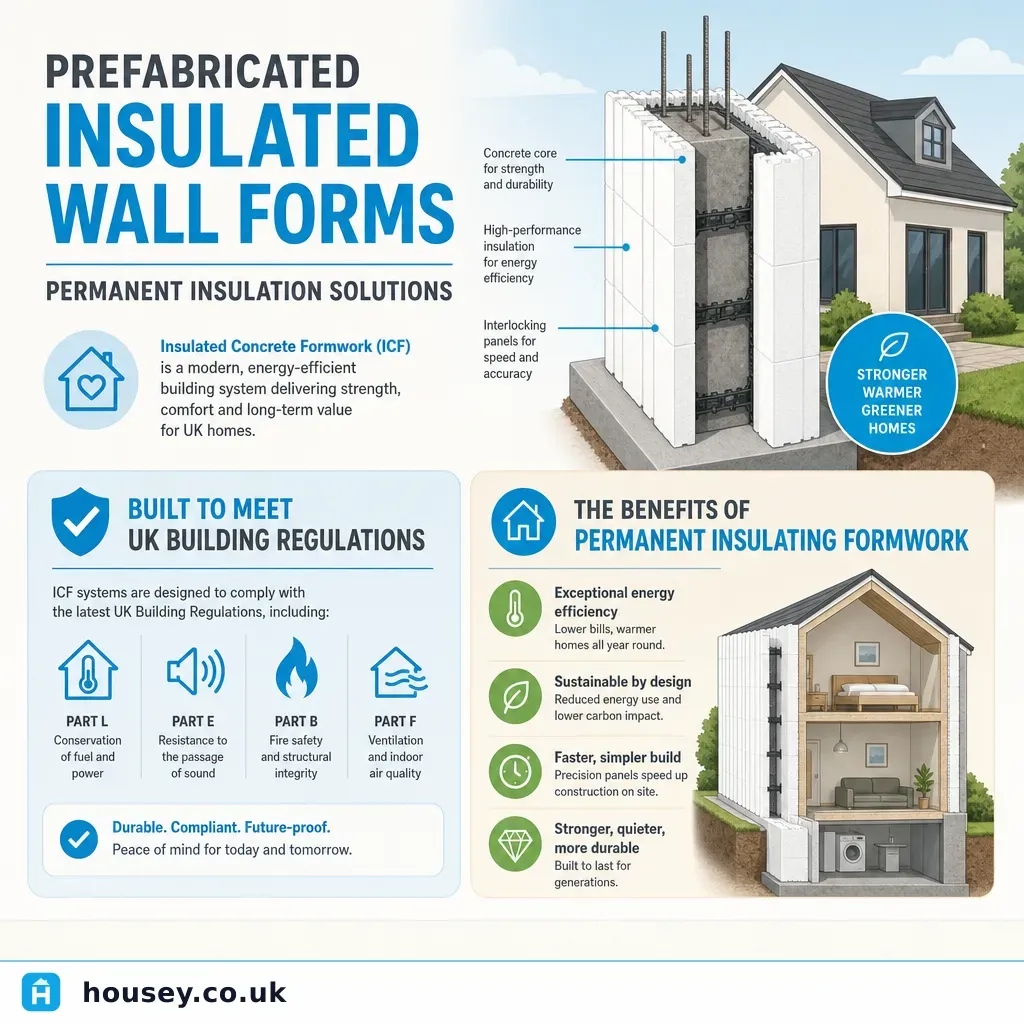
Prefabricated Insulated Wall Forms: Permanent Insulation Solutions
Prefabricated insulated wall forms — including ICF and SIPs systems — deliver high thermal performance by combining permanent insulation with structural concrete or timber in a single wall assembly.
 Energy & Retrofit
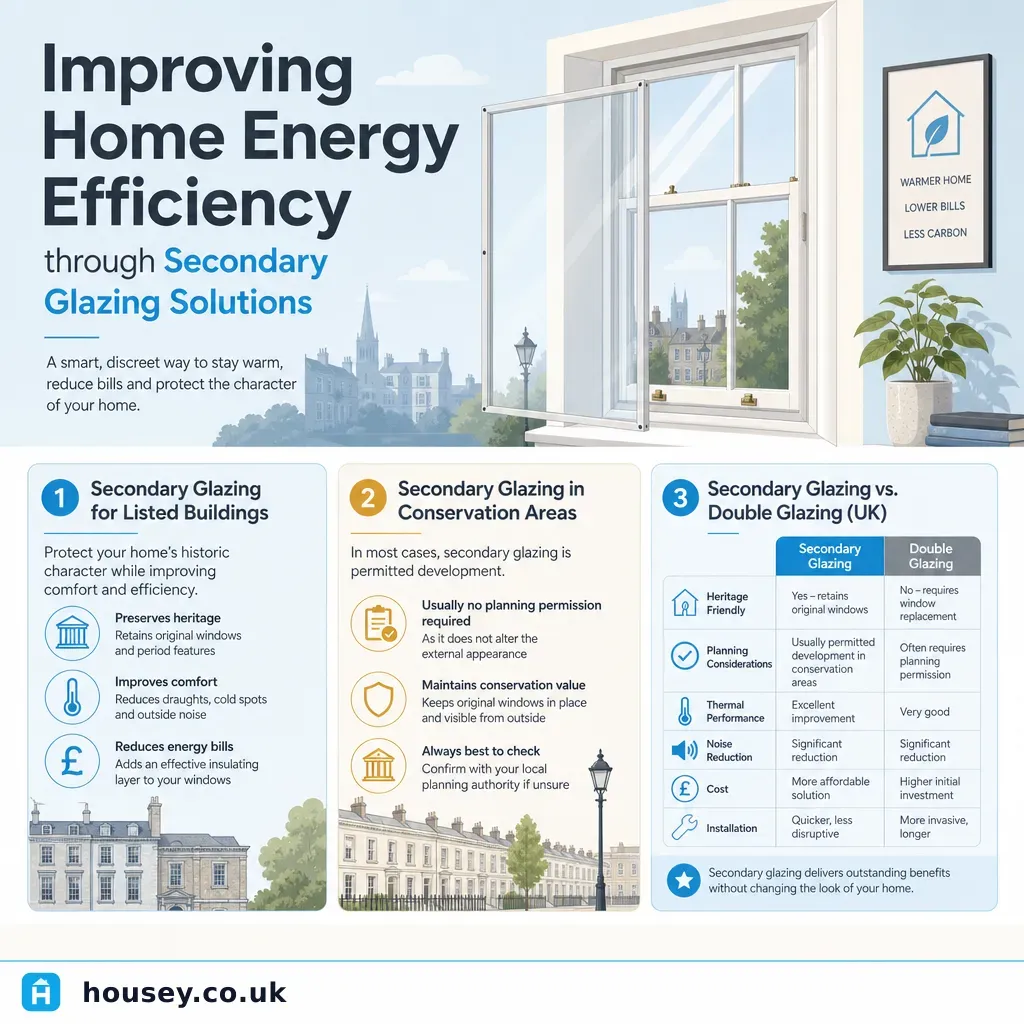
Improving Home Energy Efficiency through Secondary Glazing Solutions
Secondary glazing fits an additional pane inside your existing window reveal, reducing heat loss and noise without replacing the original frame.
 Energy & Retrofit
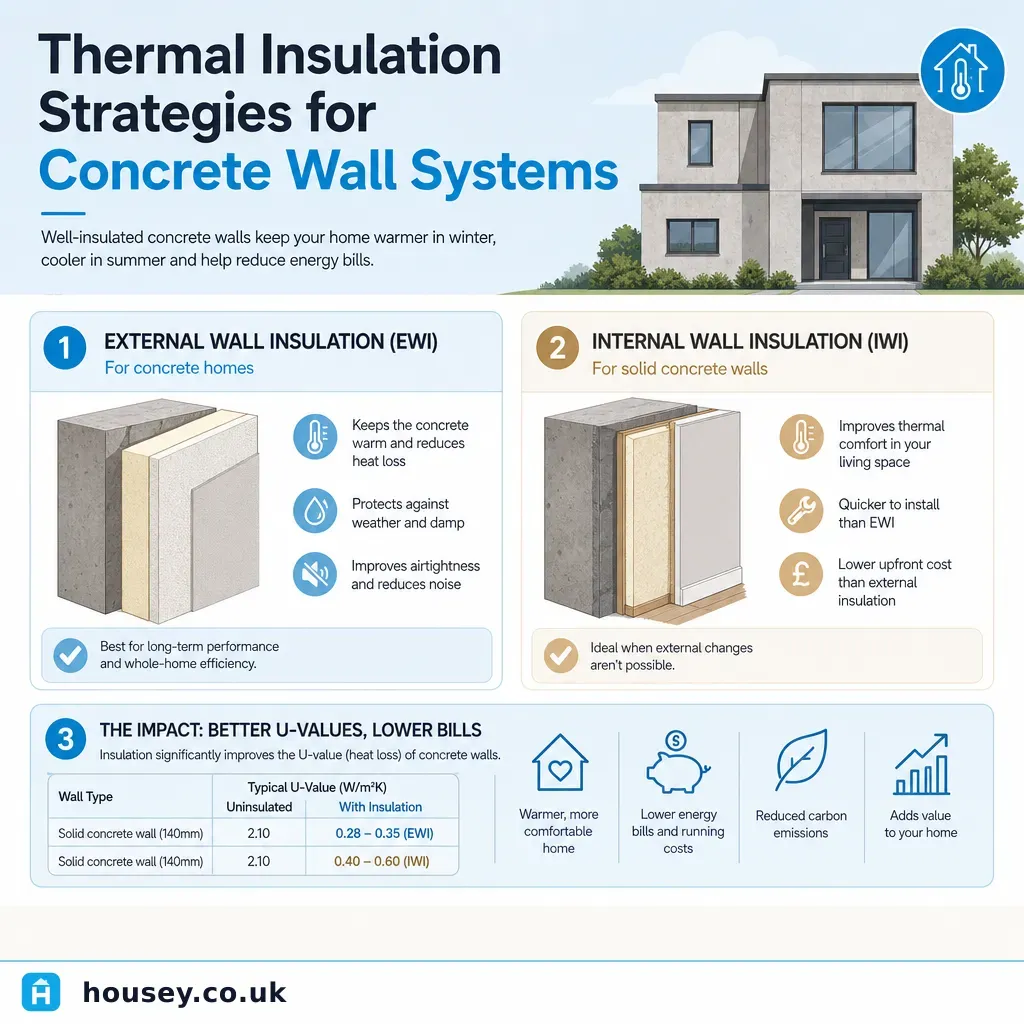
Thermal Insulation Strategies for Concrete Wall Systems
Concrete walls can be insulated using three main approaches: external wall insulation (EWI), internal wall insulation (IWI), or — where a cavity exists — cavity fill.
 Energy & Retrofit
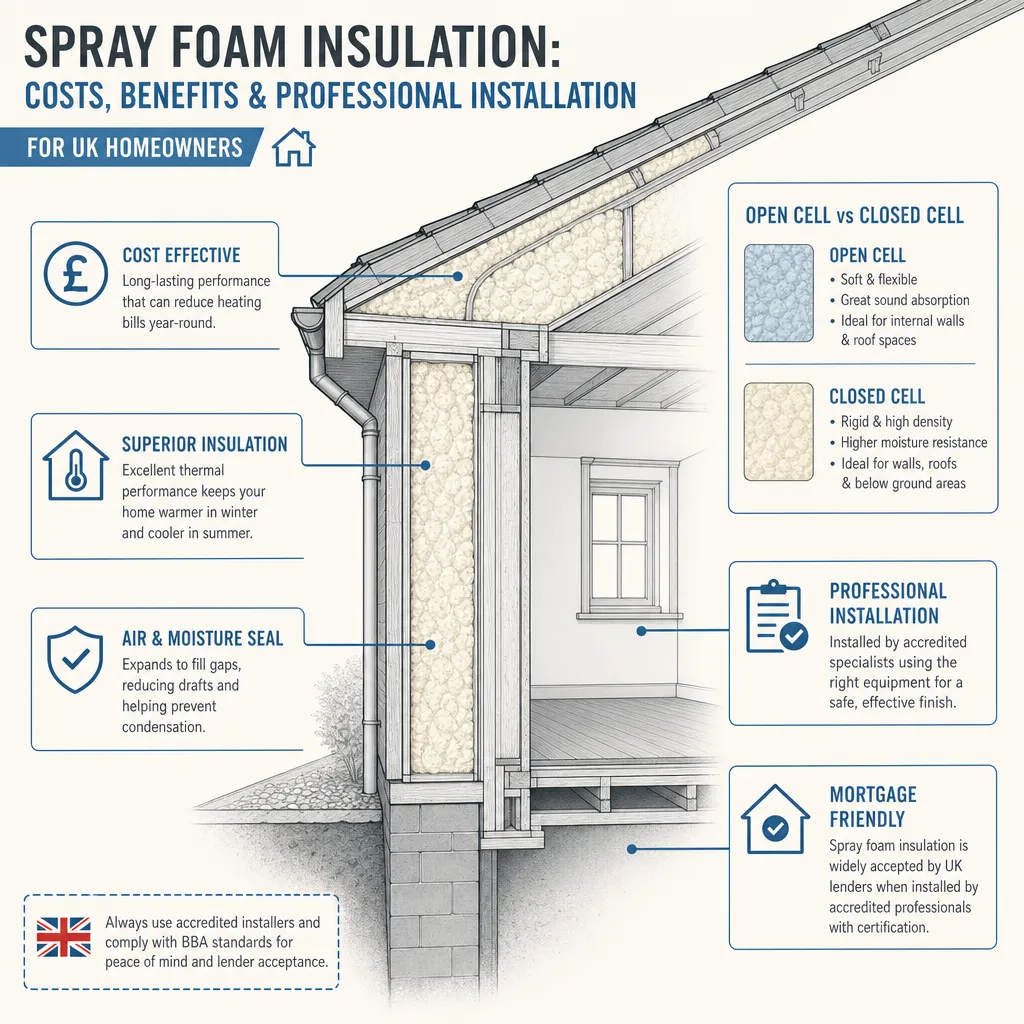
Spray foam insulation: costs, benefits and professional installation
Spray foam insulation costs between £15 and £60 per square metre installed in the UK, depending on whether open-cell or closed-cell foam is used.
 Energy & Retrofit
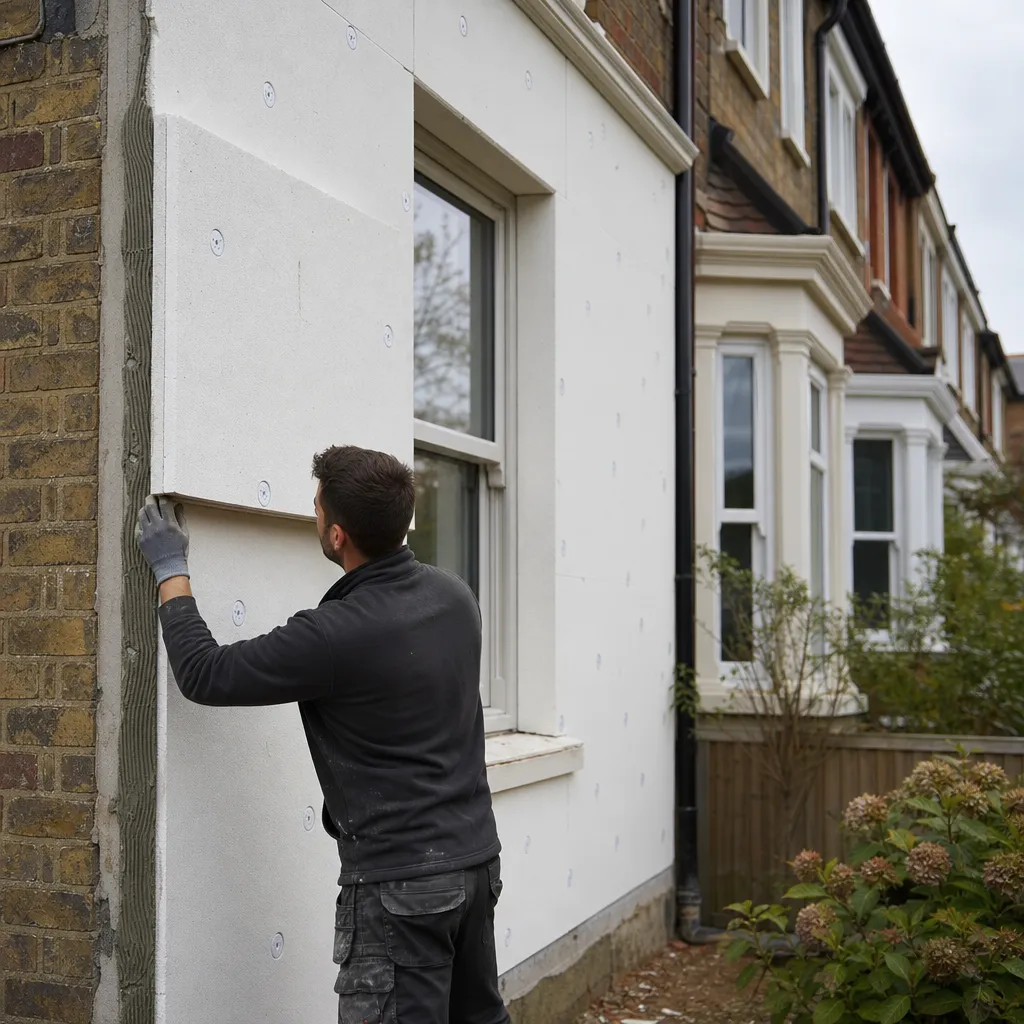
High-Performance Wall Insulation Systems for UK Homes
UK homes use three main wall insulation systems: external wall insulation (EWI), internal wall insulation (IWI), and cavity wall insulation (CWI).