Attic Insulation Methods: Materials and Performance Comparison
By Housey · Last reviewed 26th of May 2026
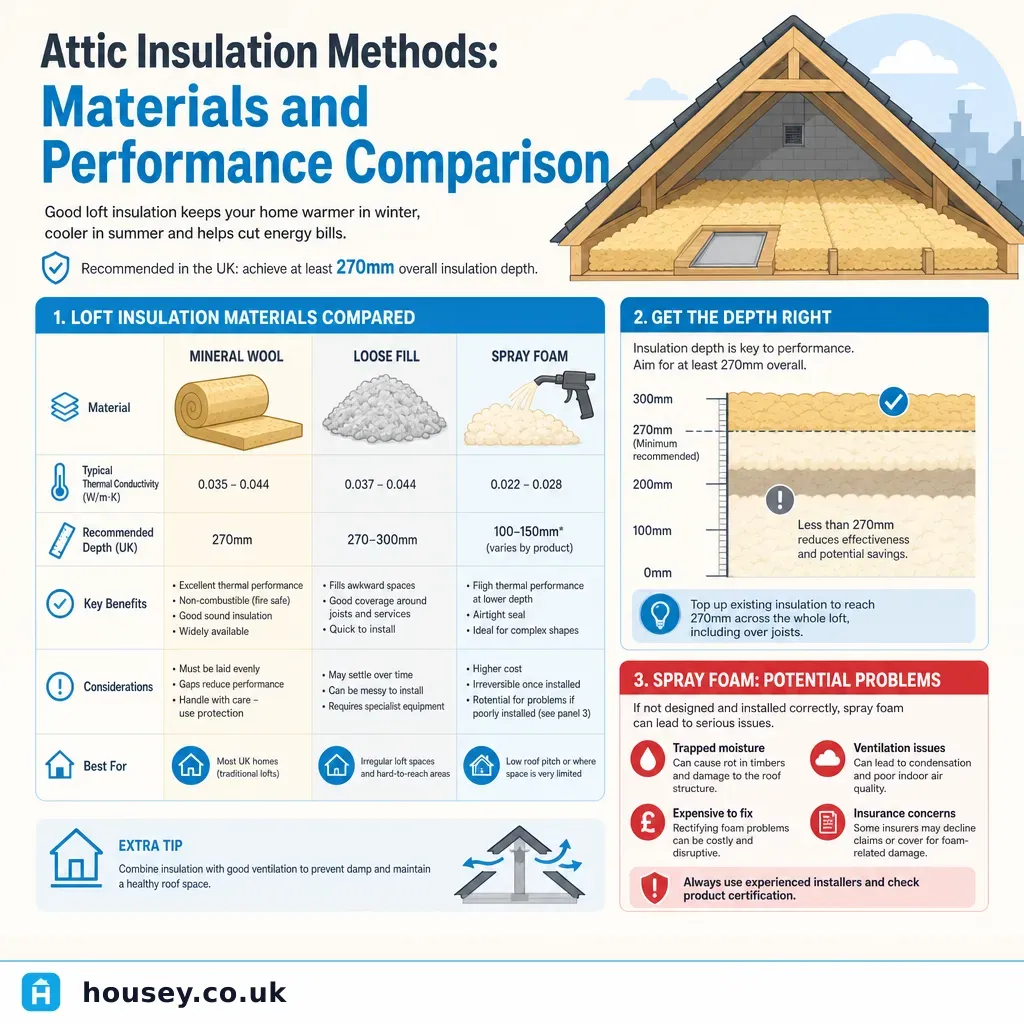
Attic Insulation Methods: Materials and Performance Comparison
Loft insulation is among the most cost-effective energy-saving measures available to UK homeowners, reducing heat loss through the roof plane and cutting heating bills year-round. Whether you're insulating an uninhabited cold loft for the first time, topping up shallow existing material, or selecting products for a loft conversion's warm roof build-up, the choice of material affects thermal performance, installation complexity, cost, and — for spray foam in particular — mortgage and resale implications.
Key points
- Building Regulations Approved Document L recommends a U-value of 0.16 W/m²K for the insulated ceiling or loft floor in existing dwellings when adding insulation.
- Energy Saving Trust recommends 270mm of mineral wool in a cold loft to reach the recommended thermal performance standard for most UK homes.
- Spray polyurethane foam (SPF) applied to roof rafters can make a property difficult or impossible to mortgage or remortgage — RICS and the Building Societies Association (BSA) have both flagged this risk formally.
- Loose-fill blown insulation suits irregular or obstructed joist layouts better than roll-out mineral wool; cellulose loose-fill also carries lower embodied carbon than virgin mineral wool products.
- ECO4 and the Great British Insulation Scheme (GBIS) may fund loft insulation at no cost for eligible households — verify current eligibility on GOV.UK before committing to a paid installation.
Cold roof vs warm roof: the key distinction
Before comparing materials, the construction approach determines which products are appropriate:
- Cold roof (uninhabited loft): Insulation is laid at joist or ceiling level, keeping the roof structure cold and uninsulated above. Roof void ventilation is essential to manage condensation risk. Mineral wool rolls, loose-fill, and some rigid boards suit this approach.
- Warm roof (loft conversion or habitable roof space): Insulation is placed at rafter level, keeping the roof structure warm and within the thermal envelope. Rigid PIR or phenolic boards are typically used here. Different ventilation and vapour control requirements apply compared to cold roof construction.
Most UK homes with uninhabited lofts use cold roof construction. Loft conversions require a warm roof build-up, which is more complex and should be specified by a qualified professional.
Insulation material comparison
Material | Typical conductivity (W/mK) | Cold roof U-value achievable | Best for | Not ideal for | Key flag |
|---|---|---|---|---|---|
Mineral wool (glass or rock wool) | 0.038–0.044 | 0.16 at 270mm | Cold loft, standard joist spacings, grant-funded installs | Very irregular joists, very low headroom | Most common; widely eligible for ECO4 and GBIS funding |
Loose-fill blown (mineral wool or cellulose) | 0.038–0.042 | 0.16 at ~300mm | Irregular layouts, difficult access, obstructed lofts | Draughty lofts without draught barriers (displacement risk) | Cellulose has lower embodied carbon than virgin mineral wool |
Rigid PIR board (e.g. Kingspan, Celotex) | 0.022–0.023 | 0.16–0.18 at 120–140mm | Warm roof rafter insulation, low headroom profiles | Cold loft joist level if budget is constrained | Requires careful junction detailing to avoid cold bridging |
Phenolic foam board | 0.018–0.021 | Better per mm than PIR | Very restricted headroom warm roof build-ups | Cost-sensitive projects | Thinner profile than PIR for same U-value |
Spray polyurethane foam (SPF) | Variable | Variable | Specialist applications only | Almost all residential properties being sold or remortgaged | Avoid — serious mortgage, maintenance, and condensation risks |
Indicative UK performance data, last reviewed 2026-05-26. Verify current product datasheets and Building Regulations compliance with your installer.
Mineral wool: the standard UK choice
Mineral wool — glass wool (such as Isover or Knauf Earthwool) or rock wool (such as Rockwool) — is the most widely installed loft insulation in UK homes. It is:
- Available as rolls or slabs fitting standard 400mm and 600mm joist spacings.
- Non-combustible (Class A1 reaction to fire for most products).
- Breathable, allowing moisture vapour movement without material degradation.
- Eligible for ECO4 and GBIS grant funding for qualifying households.
The standard two-layer approach uses 100mm between the joists, then a second 170mm layer laid perpendicularly across the top. This cross-layer method eliminates thermal bridging through the timber joists and reaches the recommended 0.16 W/m²K target at 270mm total depth.
Loose-fill blown insulation
Loose-fill is machine-blown into the loft rather than laid by hand, making it particularly suited to:
- Irregular or non-standard joist spacings where roll-out mineral wool cannot lie flat.
- Lofts with obstructions — pipes, wiring, bracing timbers — where cutting and fitting rolls is impractical.
- Properties where loft hatch access is limited and a hose feed through the hatch is more practical than carrying rolls up a ladder.
Blown mineral wool and cellulose (recycled paper fibre) are the most common loose-fill materials in the UK. Both must be installed by a competent installer to ensure consistent depth across the whole loft floor area, and draught barriers at eaves should be checked before installation.
Rigid insulation board (PIR and phenolic)
For loft conversions and warm roof build-ups, rigid boards offer much higher thermal resistance per millimetre than mineral wool. PIR boards typically achieve around 0.022–0.023 W/mK thermal conductivity, versus 0.038–0.044 W/mK for mineral wool — roughly half the thickness for the same U-value.
Used between and above rafters in a warm roof build-up, PIR allows thinner overall profiles while meeting Building Regulations Part L targets — important where finished ceiling height after conversion is constrained. The build-up must be correctly specified to manage interstitial condensation risk; a qualified professional or experienced installer should confirm the full specification before work starts.
Spray polyurethane foam: a significant caution
Spray foam applied to the underside of roof tiles and rafters has been marketed as an insulation and roof stabilisation product. However, it creates serious problems for UK residential properties:
- Mortgage and remortgage risk: Many UK lenders decline to lend on properties with spray foam in the roof, following guidance from the BSA and RICS. Selling or remortgaging can be blocked until foam is professionally removed, at significant cost.
- Roof maintenance: Spray foam bonds to tiles, making routine repairs difficult and tile replacement potentially destructive to the surrounding structure.
- Condensation and timber decay: Poorly applied SPF can block required roof ventilation, increasing condensation risk and the potential for timber decay within the roof structure.
If a property you are buying has spray foam insulation, instruct a RICS Level 3 Building Survey surveyor to assess its condition and implications before exchange of contracts.
Grants and funding
Two government-backed schemes may fund loft insulation for eligible households (as at May 2026):
- ECO4 (Energy Company Obligation 4): Available via energy suppliers for households receiving qualifying benefits or on low incomes. Can cover the full cost of a loft insulation installation.
- Great British Insulation Scheme (GBIS): Broader eligibility covering properties in lower EPC bands. Administered by Ofgem.
Verify current eligibility on GOV.UK before arranging a paid installation — scheme terms and availability change, and you may qualify for fully funded work.
Homeowner checklist before installing loft insulation
Before booking an installer, confirm:
When to get professional help
Loft insulation is one of the more accessible retrofit measures, but seek professional advice if:
- You suspect asbestos-containing materials in the loft — do not disturb them. Arrange an asbestos survey before any work begins.
- You are planning a loft conversion rather than cold loft insulation — warm roof build-ups must be designed by a qualified professional to manage condensation risk and comply with Building Regulations Part L.
- A surveyor has flagged damp, condensation, or timber decay in the roof space — these must be resolved before insulation is installed, or the insulation will trap rather than prevent moisture damage.
- A property you are buying has spray foam insulation — commission a specialist assessment before exchange of contracts.
How Housey can help
Housey connects you with TrustMark-registered insulation installers and insulation assessments professionals who can survey your loft, advise on the right material, and confirm grant eligibility. For a whole-property view of energy performance, energy-efficiency consultants can identify where insulation will deliver the most benefit.
Frequently asked questions
How deep should loft insulation be in a UK home?
Energy Saving Trust recommends 270mm of mineral wool for a cold loft: 100mm between the joists and 170mm across them in a perpendicular second layer. If existing insulation is below 100mm, topping up is almost always cost-effective. New installations below 270mm will not meet current recommended performance standards and may not satisfy Building Regulations Part L where it applies.
Does loft insulation need Building Regulations approval?
Adding or topping up insulation in an existing uninhabited cold loft does not generally require a Building Regulations application. However, if the work forms part of a loft conversion or materially changes the thermal envelope of the dwelling, Part L applies. Check with your local building control body or a qualified installer if you are unsure before starting work.
Will spray foam insulation affect my ability to sell or remortgage?
Yes, in many cases. UK lenders — following BSA and RICS guidance — have flagged spray foam in roof spaces as a lending risk, and many decline to lend on affected properties. If you are buying a property with spray foam, obtain a specialist survey before proceeding. If you own one, seek professional advice on removal options before listing for sale.
Can I install loft insulation myself?
Roll-out mineral wool in an accessible cold loft is one of the few insulation tasks a competent homeowner can tackle. Wear protective clothing, gloves, and a well-fitted mask when handling mineral wool, and confirm that no asbestos-containing materials are present before disturbing anything. For blown loose-fill, rafter insulation, or warm roof build-ups, use a qualified TrustMark-registered installer.
Sources and further reading
- Energy Saving Trust: Loft insulation guidance — Energy Saving Trust
- GOV.UK: Great British Insulation Scheme — GOV.UK
- GOV.UK: ECO4 Energy Company Obligation — GOV.UK
- Building Regulations Approved Document L (existing dwellings) — GOV.UK / DLUHC
- RICS: Spray-applied polyurethane foam roof insulation — RICS
Useful next reads
 Energy & Retrofit
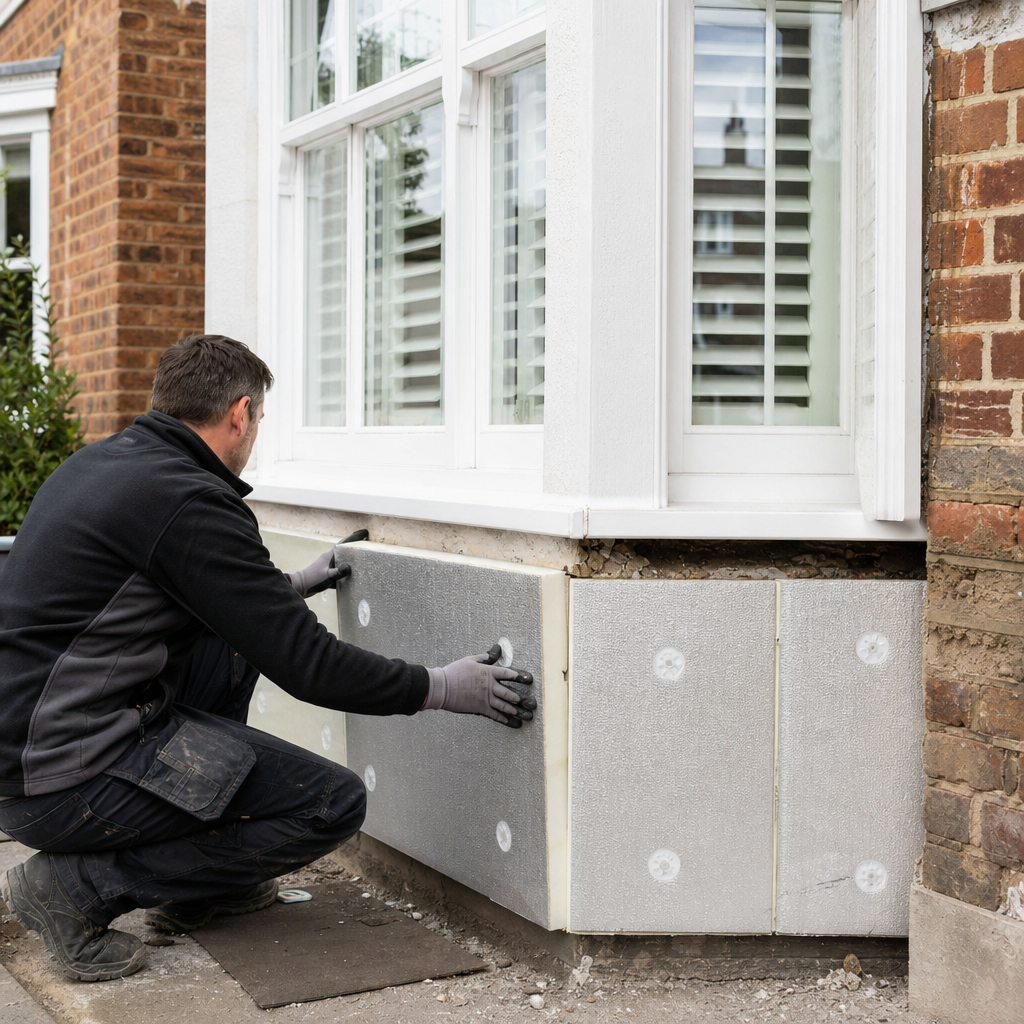
Insulating Solid Masonry Walls Under Bay Windows: Technical Guidance
Insulating solid masonry walls under bay windows requires specialist detailing at angled wall faces, window reveals, and the bay floor and ceiling junctions.
 Energy & Retrofit
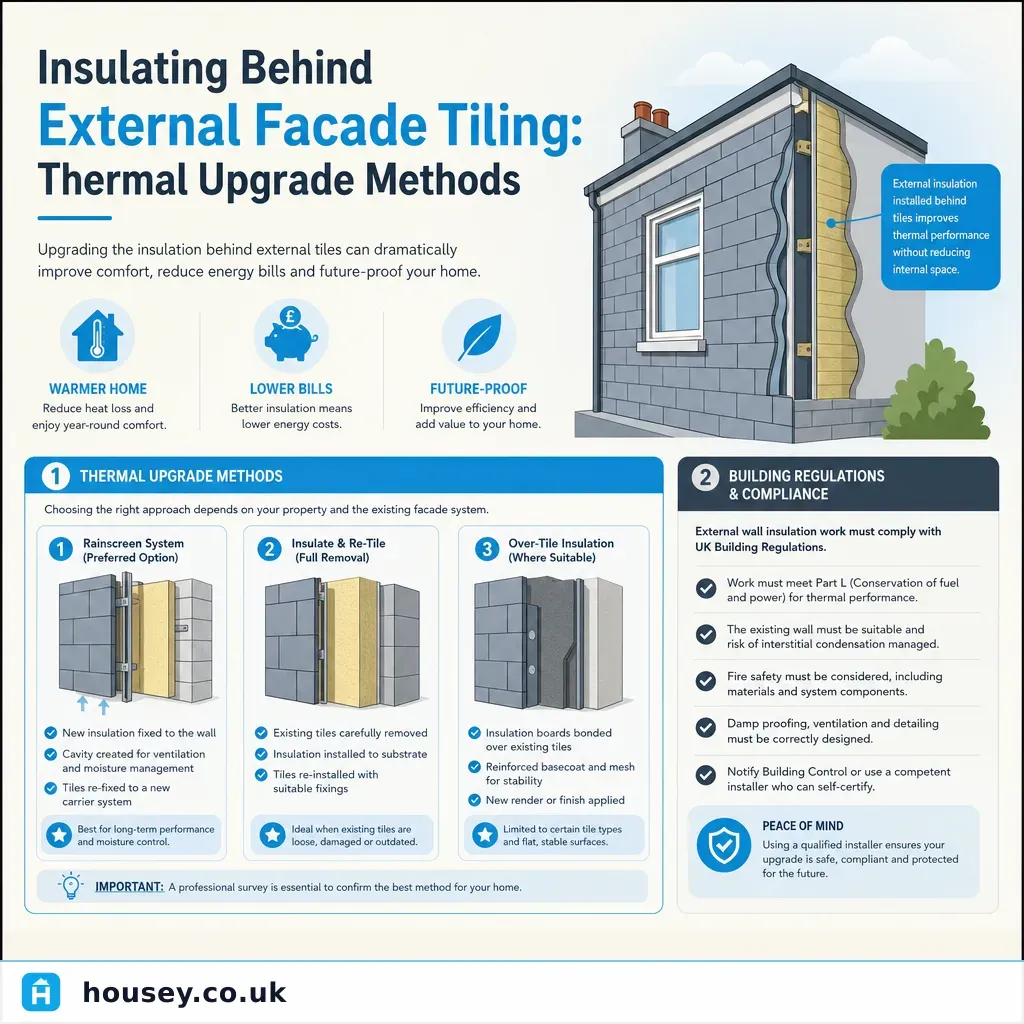
Insulating Behind External Facade Tiling: Thermal Upgrade Methods
Insulating behind external facade tiling is technically complex — the insulation layer must be compatible with tile fixings, manage moisture correctly, and comply with Building Regulations Part L.
 Energy & Retrofit
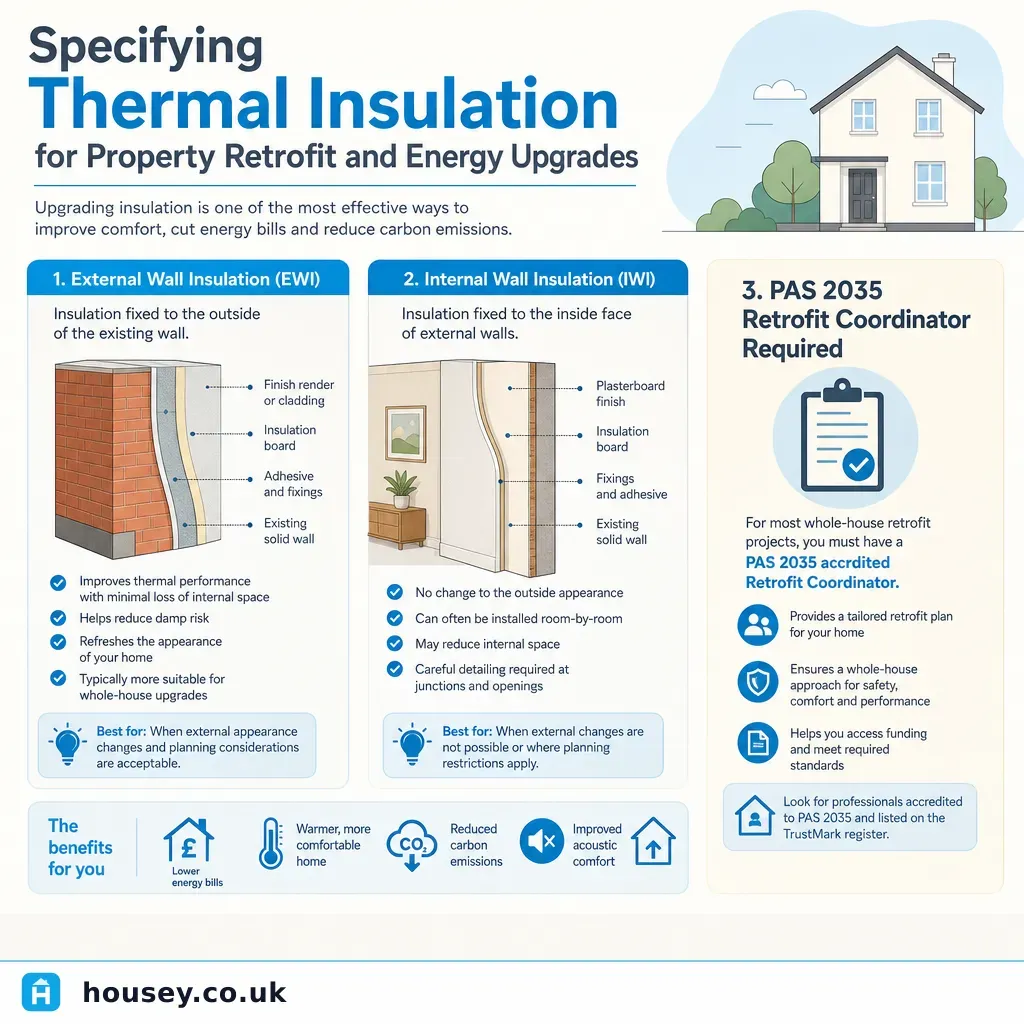
Specifying Thermal Insulation for Property Retrofit and Energy Upgrades
Specifying thermal insulation for UK retrofit requires matching the product to your property's construction, moisture conditions, and heating system.
 Energy & Retrofit
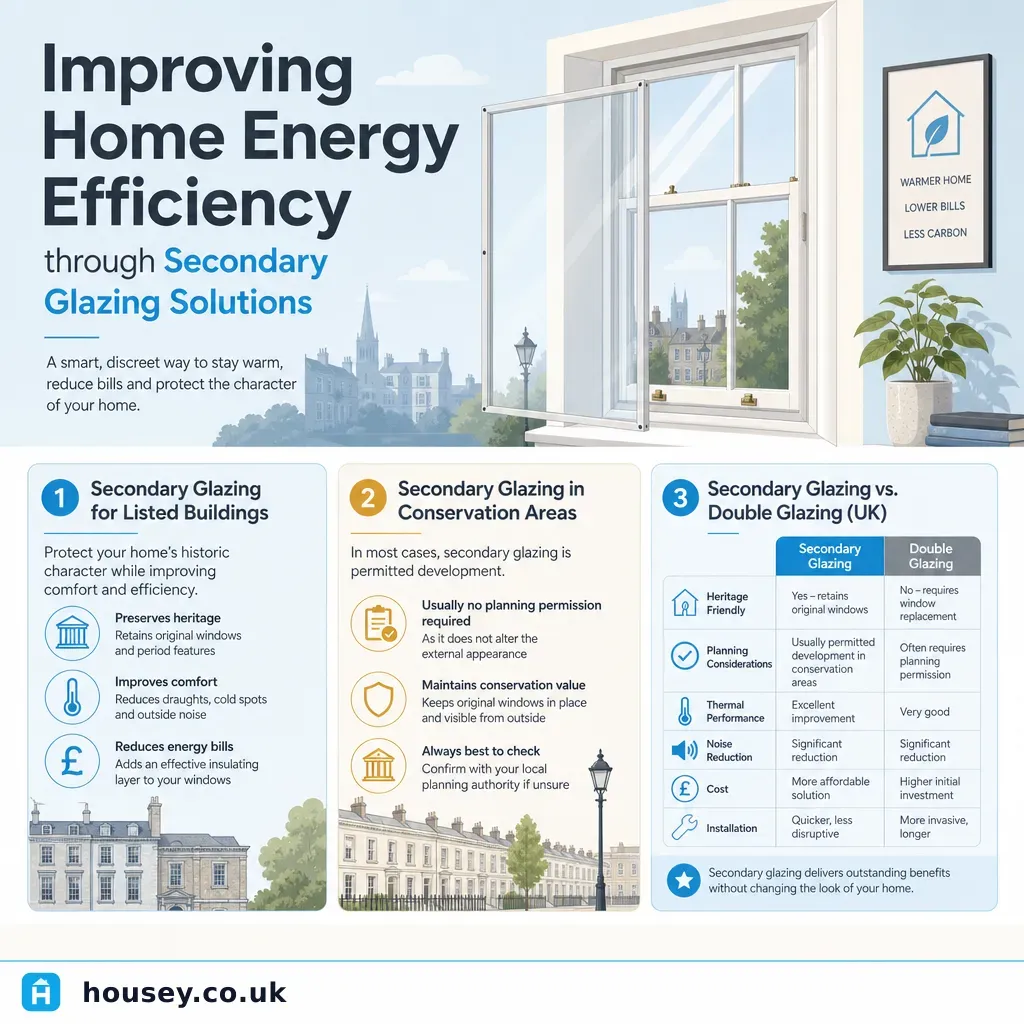
Improving Home Energy Efficiency through Secondary Glazing Solutions
Secondary glazing fits an additional pane inside your existing window reveal, reducing heat loss and noise without replacing the original frame.
 Energy & Retrofit
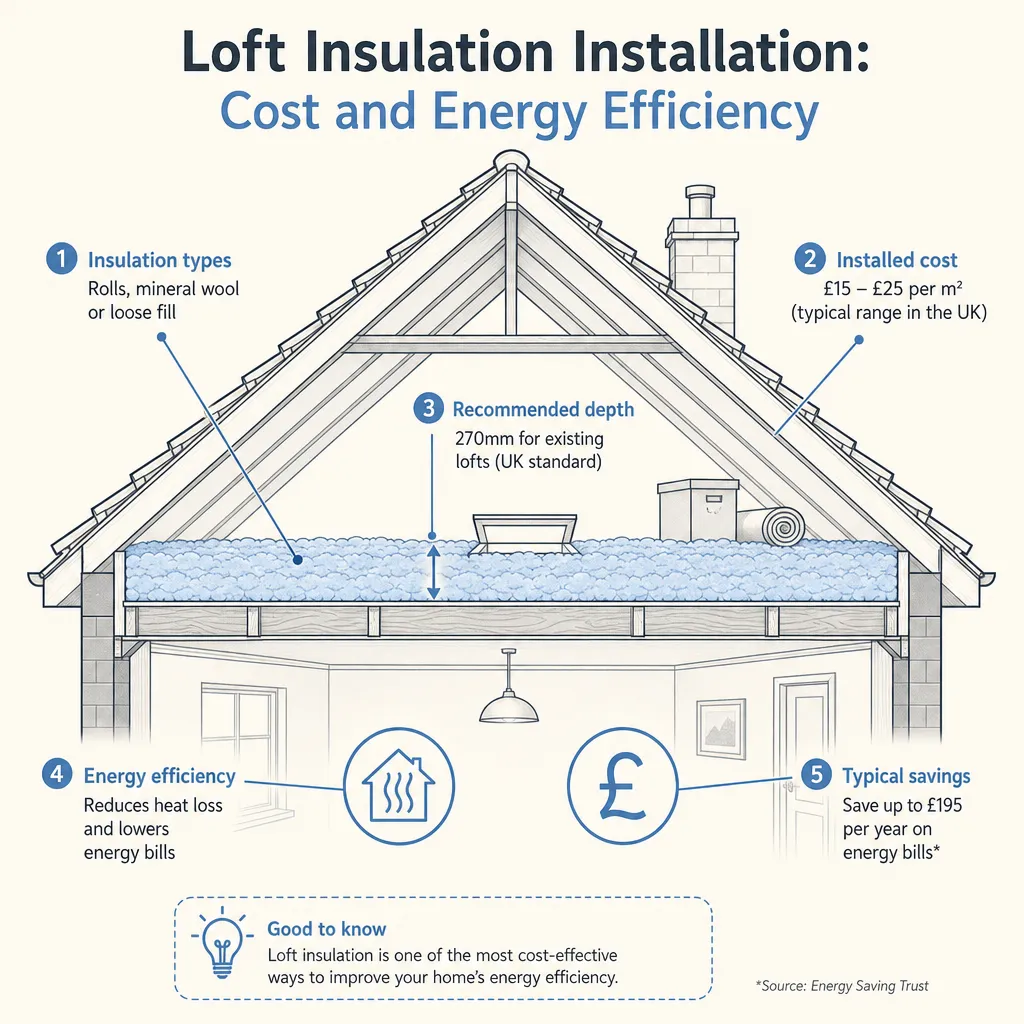
Loft Insulation Installation: Cost and Energy Efficiency
Loft insulation typically costs £300–£700 installed for a standard three-bedroom semi-detached using mineral wool.