Cavity Wall Insulation: Benefits, Types and Considerations
By Housey · Last reviewed 11th of May 2026
Cavity Wall Insulation: Benefits, Types and Considerations
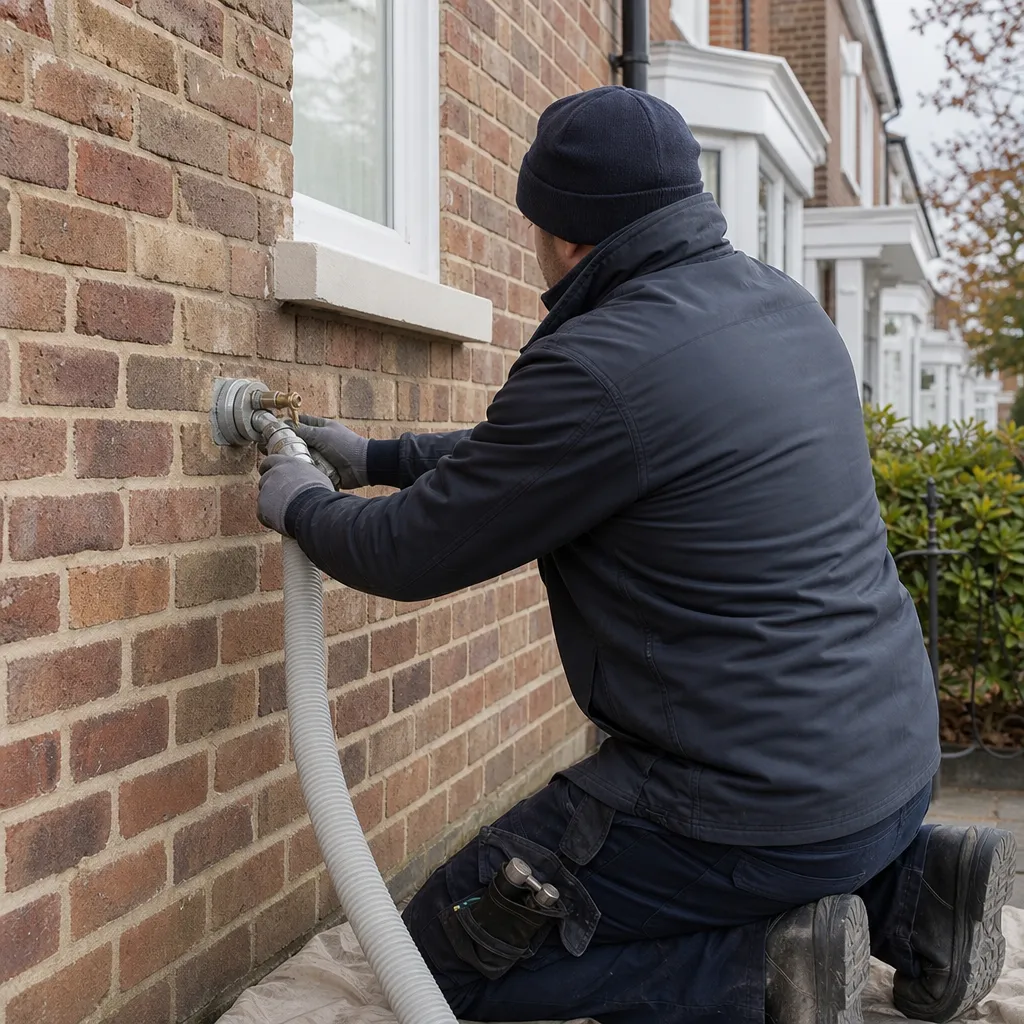
Cavity walls — two parallel masonry leaves with a gap between them — became the standard construction method for UK homes from around the 1920s onwards, and the majority of properties built before the 1990s were left with that cavity unfilled. For many households, cavity wall insulation is one of the most cost-effective single energy upgrades available, but choosing the wrong product or proceeding with an unsuitable wall can introduce moisture problems that are expensive to reverse. Understanding the key variables before installation can save both money and disruption.
Key points
- Cavity wall insulation is suitable only where the cavity is at least 50 mm wide, the masonry is in good condition, and the property is not in a severely exposed location to wind-driven rain (classified by BRE Digest 236).
- The three main insulation materials are mineral (glass or rock) wool, expanded polystyrene (EPS) beads, and injected polyurethane foam — each has different moisture-handling properties and very different remediation complexity if problems arise.
- Energy Saving Trust estimates suggest cavity wall insulation can save a detached house approximately £400–£600 per year in heating costs (indicative UK costs, last reviewed 2026-05-11; savings vary by property size, heating fuel, and baseline insulation level).
- Cavity wall insulation must be installed by a PAS 2030-certified installer; for publicly-funded schemes the installer must also be TrustMark-registered, and the product must hold BBA (British Board of Agrément) or equivalent certification.
- The Great British Insulation Scheme (GBIS) and ECO4 obligation may fund installation at no or reduced cost for eligible households — check current eligibility on GOV.UK or with your energy supplier.
How cavity wall insulation works
An uninsulated cavity wall allows heat to transfer through the outer leaf, across the air gap, and through the inner leaf by a combination of conduction, convection, and radiation. A typical 250 mm uninsulated cavity wall has a U-value of around 1.6 W/m²K. Filling the cavity with a material of low thermal conductivity — mineral wool or EPS beads — can reduce that to approximately 0.45 W/m²K, significantly cutting heat loss through the wall.
Building Regulations Part L sets a target U-value of 0.18–0.26 W/m²K for new-build walls; cavity fill alone does not reach that target, but it represents a substantial improvement in existing homes where wall U-values were never addressed during original construction.
Types of cavity wall insulation
Material | How installed | Best suited to | Moisture behaviour | Removal if problems arise |
|---|---|---|---|---|
Mineral wool (glass or rock fibre) | Blown dry through drilled holes in mortar joints | Most UK cavity-wall properties in moderate exposure zones | Hydrophilic — absorbs moisture but drains and dries; BBA-certified products are tested for this | Moderate — can be extracted by a specialist contractor |
EPS (polystyrene) beads | Blown with adhesive through drilled holes | Moderate exposure zones; suits irregular cavities well | Hydrophobic — repels water; low risk of saturating inner leaf | Moderate — vacuum extraction is possible |
Injected polyurethane foam | Injected under pressure through drilled holes | Narrow cavities; sometimes specified for non-traditional construction | Seals cavity completely; high risk of moisture bridging if improperly specified | Very difficult — mechanical removal or full cavity wall works required; significant remediation cost |
Foam insulation has been associated with a disproportionate number of complaints under now-closed government schemes. If a property has had foam installed previously, check whether it was certified and seek an independent assessment before buying or planning further works.
Is your wall suitable? A decision tree
- Choose a blown mineral wool or EPS bead product if the home was built between the 1920s and early 1990s, has a cavity of at least 50 mm, sits in a moderate exposure zone, and the masonry is in sound condition.
- Commission an insulation assessment before proceeding if the property is in an exposed location — coastal, upland, or west-facing in Wales, Northern England, or Scotland.
- Do not proceed without professional advice if existing masonry shows cracks, defective pointing, or any existing signs of moisture ingress — these must be rectified first.
- Consider internal wall insulation or external wall insulation instead if the cavity is narrower than 50 mm, or if the building is solid-walled (typically pre-1920s construction).
- Check with your local planning authority if the property is listed or within a conservation area — drilling external masonry may require consent.
Benefits of cavity wall insulation
When correctly installed in a suitable property:
- Lower energy bills — Reduced heat loss through walls means less fuel used to maintain internal temperature across a typical UK heating season.
- Improved EPC rating — Cavity wall insulation is one of the most impactful single measures for improving an EPC band, which is increasingly relevant for both saleability and rental compliance under Minimum Energy Efficiency Standards (MEES).
- Improved thermal comfort — Cold internal wall surfaces contribute to discomfort and condensation on walls; insulating the cavity raises the inner leaf temperature.
- Reduced carbon emissions — Less fuel burned means lower CO2 output, relevant for households working towards net-zero targets.
Homeowner checklist before proceeding
Important limitations
This article provides general guidance on cavity wall insulation suitability, materials, and installation considerations. The suitability of a specific property can only be determined by a qualified professional inspecting the actual building. Incorrect installation in unsuitable walls can cause significant and costly moisture damage. This guide does not constitute a survey, specification, or professional recommendation. Government funding scheme rules change regularly — always verify current eligibility and terms on GOV.UK.
What to ask a qualified professional
Before instructing an installer or assessor:
- Is the installer PAS 2030-certified and TrustMark-registered? May I see current accreditation?
- Which BRE exposure zone does this property fall in, and how does that affect suitability?
- Has the cavity been inspected by borescope camera to check for debris, existing moisture, or unusual construction?
- What is the projected U-value after installation, and what is the current baseline?
- Is a CIGA 25-year guarantee provided, and is it transferable to future owners?
- What remediation would be required if problems arise, and is any of that cost covered under the installer's warranty?
- Is there any technical reason why foam should not be used here, and if foam is recommended, what is the justification?
When to get professional help
An insulation assessment is advisable before any installation, and is mandatory under publicly-funded schemes. Seek professional advice without delay if:
- Moisture patches, staining, or mould appear on internal walls after cavity wall insulation has been installed
- A surveyor flags damp on an internal wall of a cavity-wall property that already has insulation in place
- You are buying a property where previous cavity wall insulation is mentioned — request the installation certificate and CIGA guarantee
- You are planning a retrofit package combining insulation with a heat pump or mechanical ventilation — the interaction between measures must be assessed under PAS 2035
How Housey can help
Housey connects homeowners with vetted professionals for an insulation assessment and with PAS 2030-certified insulation installers. Get matched with accredited specialists who will assess your property's suitability before any installation begins.
Frequently asked questions
How do I know if my home has cavity walls?
The most practical check is to measure the total wall thickness at a door or window reveal. A cavity-wall property typically has a total wall thickness of 260–300 mm — two 102.5 mm brick skins, a 50–75 mm cavity, and a plaster finish. Solid brick walls are typically 220–230 mm thick. Your property's build date is also a strong indicator: most UK homes built between the 1920s and early 1990s have cavity walls.
Is cavity wall insulation covered by government grants?
The Great British Insulation Scheme (GBIS) and the Energy Company Obligation (ECO4) may fund cavity wall insulation at no cost for eligible households. Eligibility criteria include receipt of means-tested benefits, EPC rating, and property type. Funding is limited and criteria change — check current eligibility on GOV.UK or contact your energy supplier. The Energy Saving Trust also provides up-to-date funding guidance.
Can cavity wall insulation cause damp?
It can, particularly if installed in a wall that was already wet, in a severely exposed location, or with the wrong material for the conditions. Injected foam in exposed properties has been associated with significant moisture problems. A proper pre-installation survey, use of a BBA-certified product, and installation by a PAS 2030 contractor significantly reduces this risk, but exposure zone assessment remains essential before proceeding.
How long does cavity wall insulation last?
Blown mineral wool and EPS bead products have a design life of 25 years or more in suitable conditions, and many installations last considerably longer. Most are covered by a CIGA guarantee of 25 years. Polyurethane foam has a longer material life, but remediation is significantly harder if problems arise, making exposure zone suitability especially important when foam is specified.
Sources and further reading
- Great British Insulation Scheme: apply or check eligibility — GOV.UK / DESNZ
- Cavity wall insulation advice — Energy Saving Trust
- BRE Digest 236: cavity wall insulation exposure classification — Building Research Establishment (BRE)
- Cavity Insulation Guarantee Agency (CIGA) — CIGA
- PAS 2030: installer certification standard — BSI
- Energy Company Obligation (ECO4) scheme guidance — Ofgem / DESNZ
Useful next reads
 Energy & Retrofit
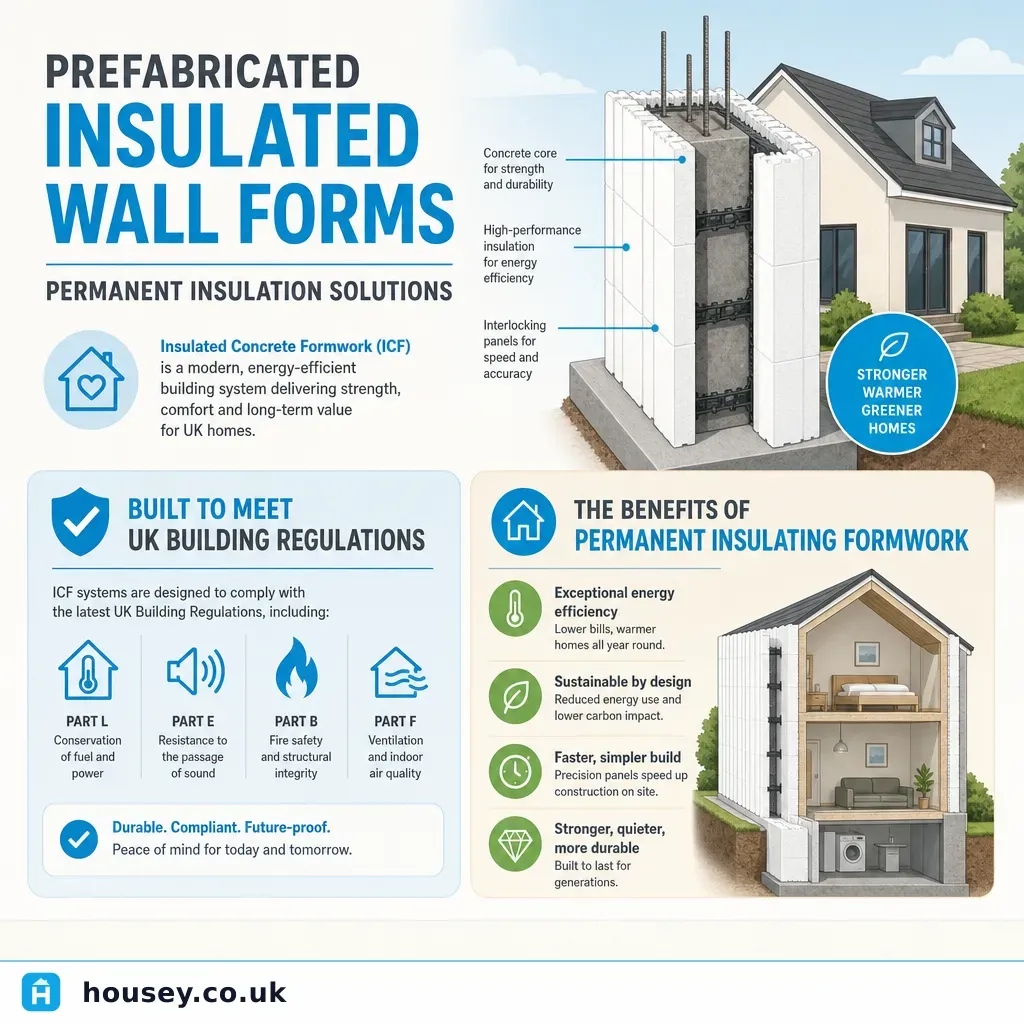
Prefabricated Insulated Wall Forms: Permanent Insulation Solutions
Prefabricated insulated wall forms — including ICF and SIPs systems — deliver high thermal performance by combining permanent insulation with structural concrete or timber in a single wall assembly.
 Energy & Retrofit
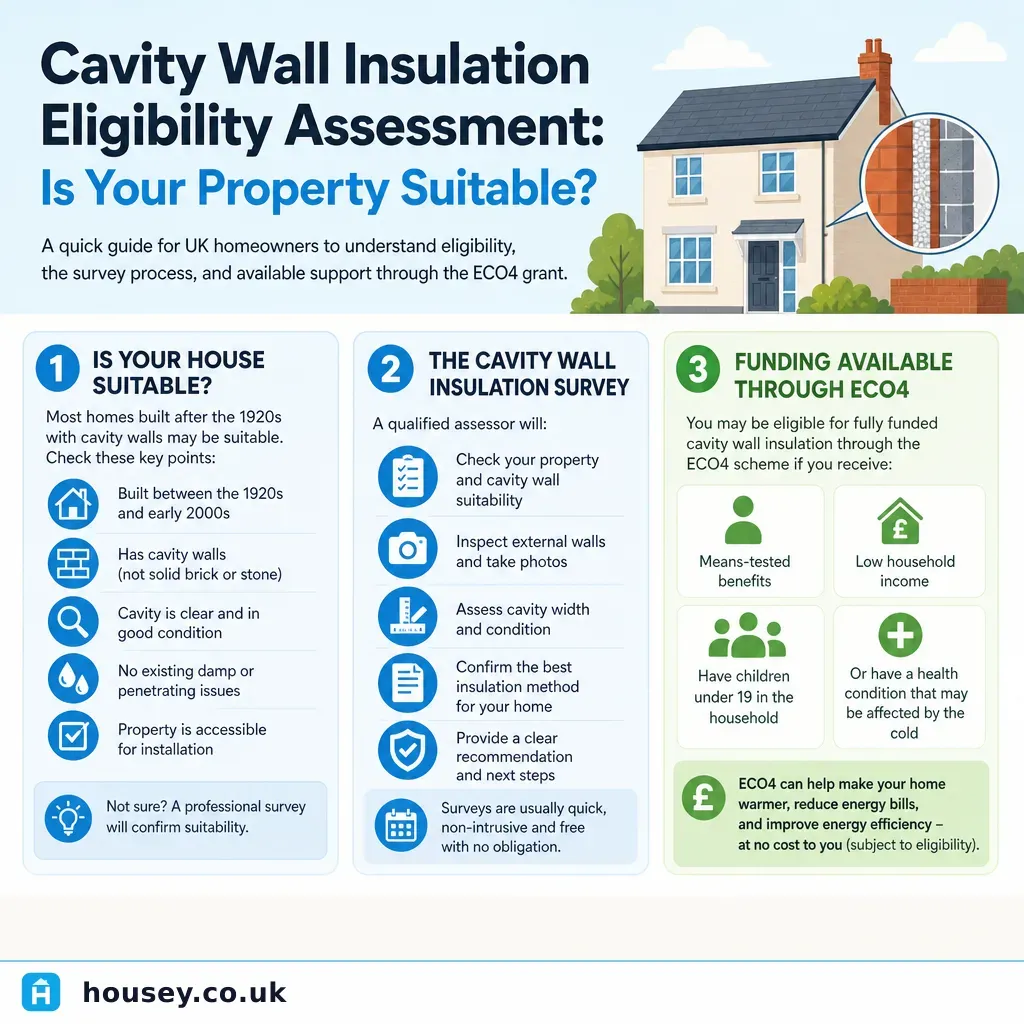
Cavity Wall Insulation Eligibility Assessment: Is Your Property Suitable?
Cavity wall insulation suits most UK homes built from around 1920 onwards with unfilled cavities at least 50mm wide in sheltered or moderately exposed locations.
 Energy & Retrofit
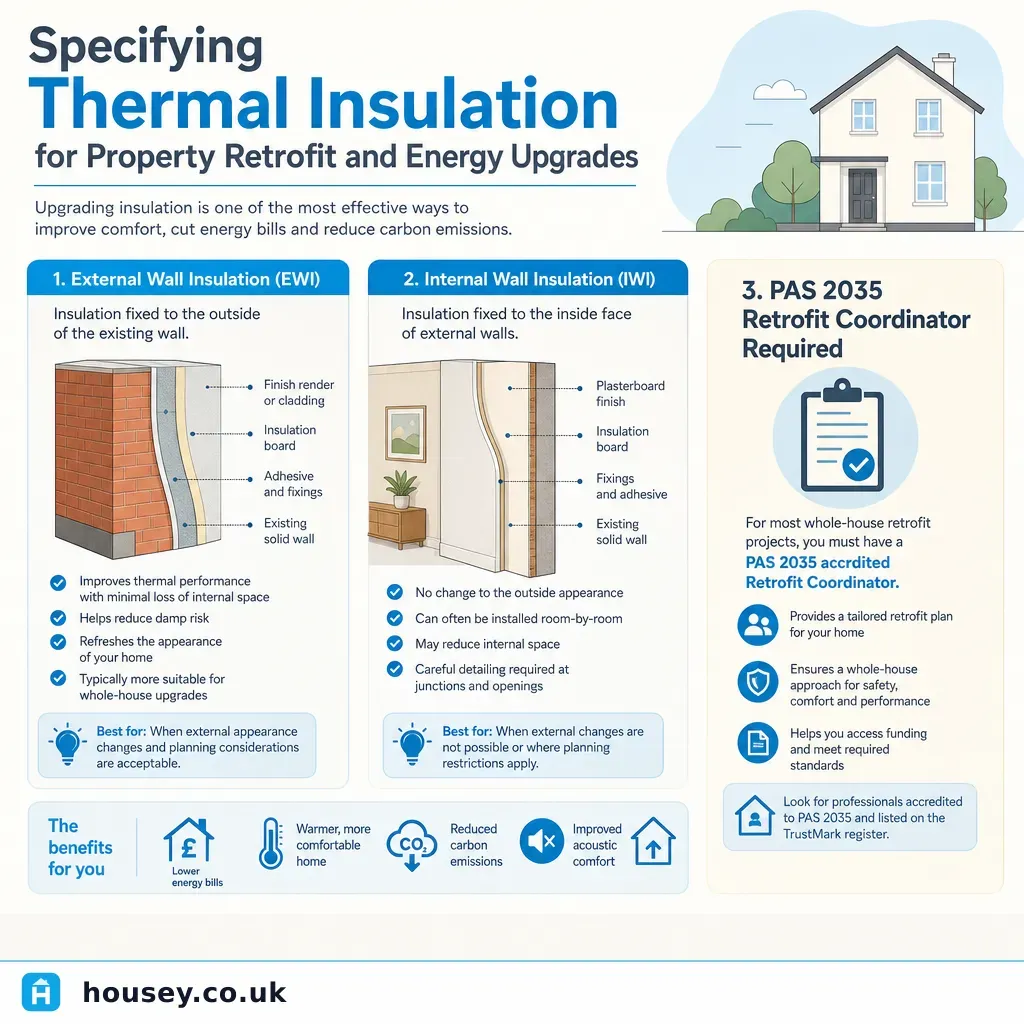
Specifying Thermal Insulation for Property Retrofit and Energy Upgrades
Specifying thermal insulation for UK retrofit requires matching the product to your property's construction, moisture conditions, and heating system.
 Energy & Retrofit
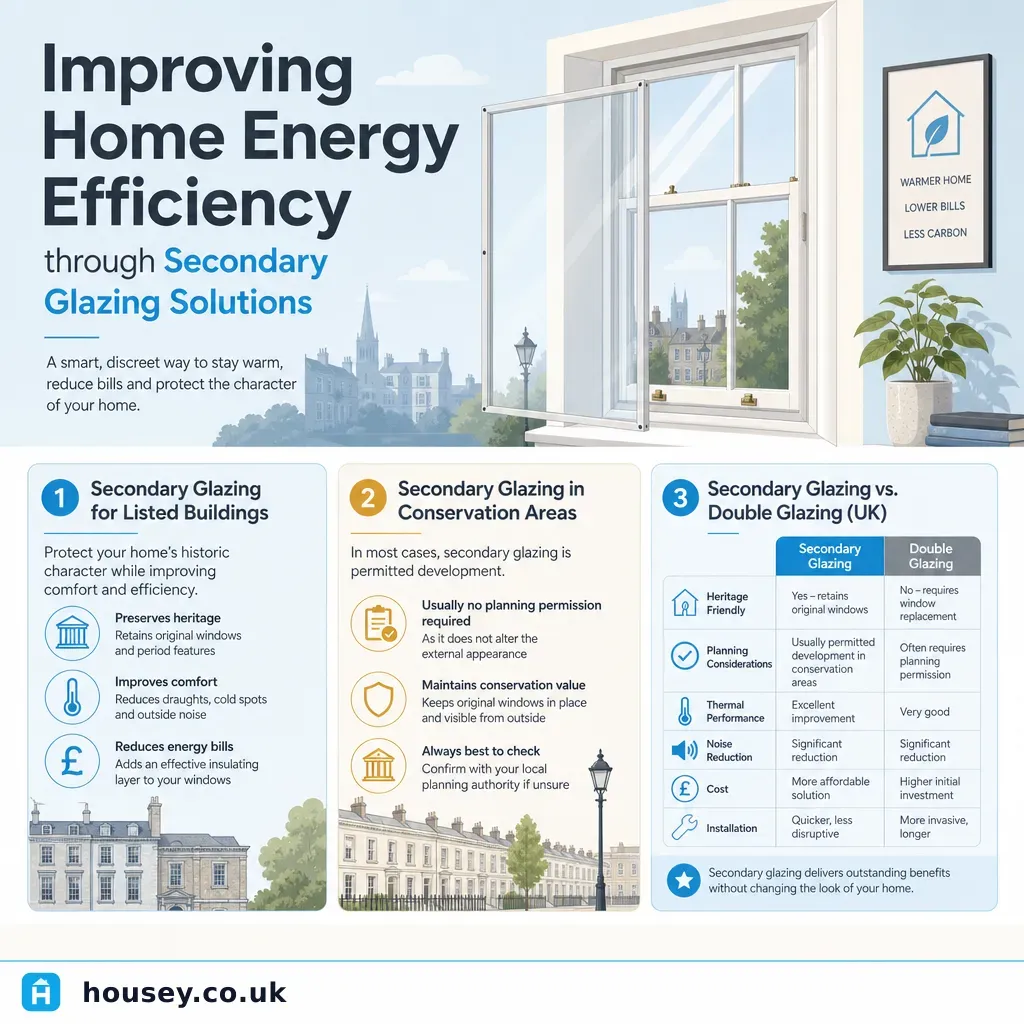
Improving Home Energy Efficiency through Secondary Glazing Solutions
Secondary glazing fits an additional pane inside your existing window reveal, reducing heat loss and noise without replacing the original frame.
 Energy & Retrofit
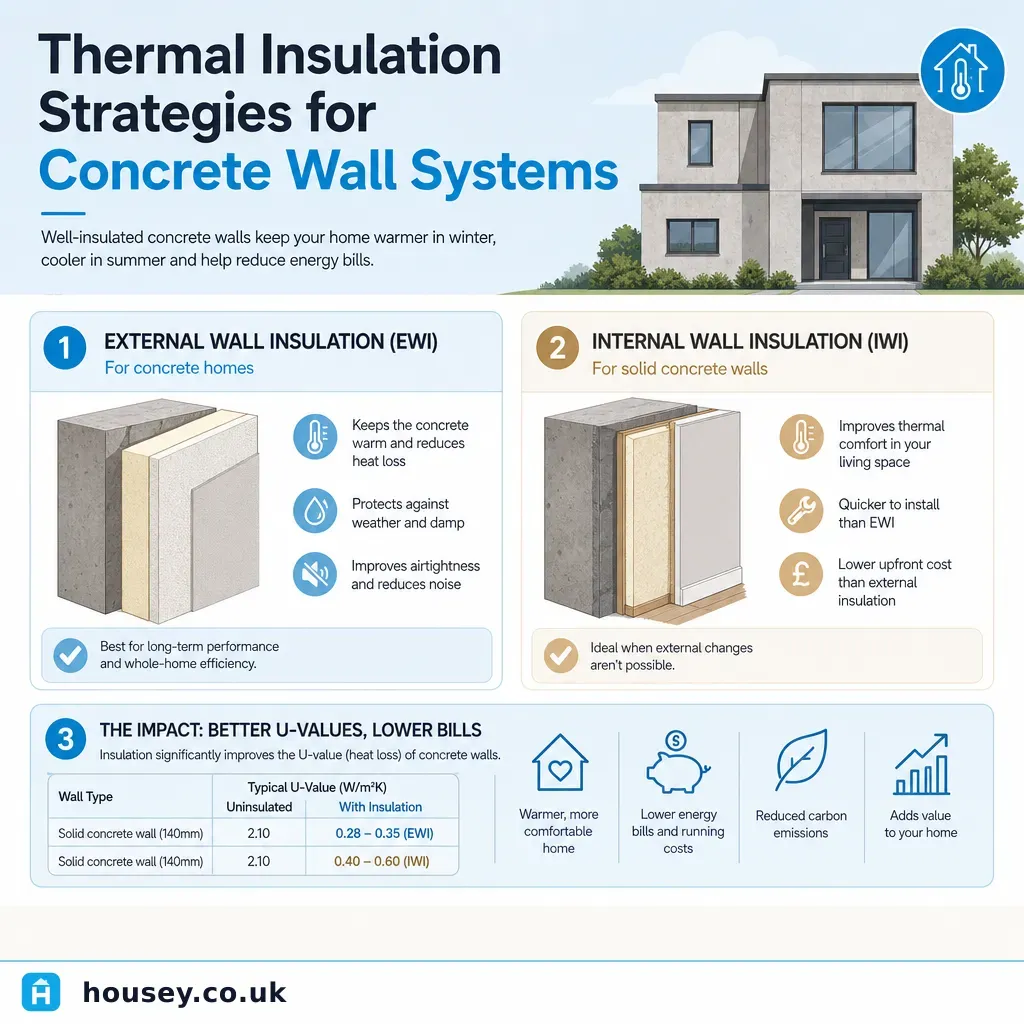
Thermal Insulation Strategies for Concrete Wall Systems
Concrete walls can be insulated using three main approaches: external wall insulation (EWI), internal wall insulation (IWI), or — where a cavity exists — cavity fill.