Alternatives to Velux Windows for Roof Lights and Loft Access
By Housey · Last reviewed 12th of May 2026
Alternatives to Velux Windows for Roof Lights and Loft Access
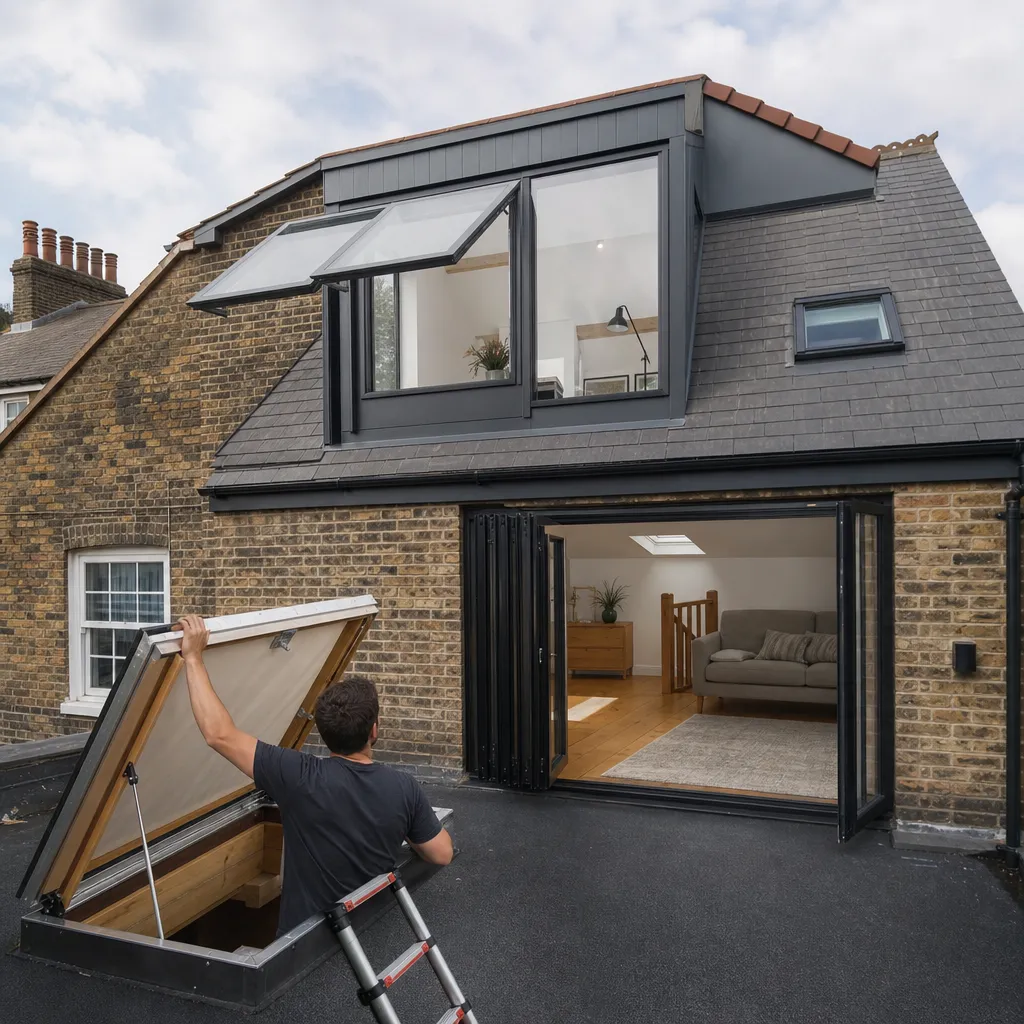
Velux is a brand name so dominant in UK roofing that it has become a generic term — much like Hoover for vacuum cleaners — but a range of alternatives exist for pitched and flat roofs, rooms without direct roof access, and loft conversions. The question of which product or system to choose most often arises when planning a loft conversion, replacing a worn-out unit, or trying to bring daylight into a space that a standard opening window cannot serve.
Key points
- "Velux" is a brand name, not a product category — the generic terms are "roof window" (pitched roof) and "rooflight" or "skylight" (flat or low-pitch roof).
- Fakro, Roto, and Keylite are the principal like-for-like alternatives to Velux pitched roof windows available in the UK.
- Part L of the Building Regulations sets a maximum whole-window U-value (Uw) of 1.6 W/m²K for replacement roof windows in existing dwellings in England.
- Most roof windows on existing houses fall within permitted development in England, provided they do not protrude more than 150mm above the roof plane and are not on a principal elevation facing a highway.
- Sun tunnels (tubular daylighting devices) can deliver natural light to internal rooms with no direct roof access and typically require no planning permission.
What "Velux alternative" usually means
When homeowners search for Velux alternatives, they usually have one of three requirements: a comparable pitched-roof window at a lower price; a different type of glazing suited to a flat or low-pitch roof; or a light-delivery solution for an internal room that cannot use a standard opening unit. These are distinct needs, and choosing the right product depends on identifying which category applies before requesting quotes.
Pitched roof window alternatives
For conventional tiled or slated pitched roofs, the main UK-available alternatives to Velux are:
Brand | Origin | Typical price tier (supply only, ex VAT) | Notable feature |
|---|---|---|---|
Velux | Denmark | £££ (premium) | Largest spare-parts network; widest installer familiarity in UK |
Fakro | Poland | ££ (mid) | Strong thermal performance; competitive pricing; growing UK stock |
Roto | Germany/Austria | ££–£££ (mid–premium) | Tilt-and-turn operation; frequently specified by architects |
Keylite | Ireland | ££ (mid) | Popular with UK builders; thermal collar included as standard |
RoofLITE+ | Denmark | £–££ (budget–mid) | Entry-level option; some models use Velux-compatible flashings |
Indicative UK costs, last reviewed 2026-05-12. Prices vary by size, glazing specification, and supplier.
All products must comply with Part L U-value requirements. Look for a clearly stated whole-window U-value (Uw) on the product data sheet before specifying.
What to check before choosing a pitched roof window
- Roof pitch compatibility: most windows specify a minimum pitch of 15–20°; specialist flashings extend some models to 5°.
- Flashing compatibility: Velux flashings are not universally interchangeable with Fakro or Roto units if you are replacing into an existing kerb — confirm before ordering.
- Opening type: centre-pivot (standard, rotates for cleaning), top-hung (unobstructed lower view), and electric or solar-powered variants are available across most brands.
- Glazing specification: laminated inner pane is strongly recommended for any overhead glazing; toughened-only glass is acceptable under building regulations but carries a higher shard-drop risk if broken.
Flat roof and low-pitch alternatives
Standard pitched roof windows cannot be used on flat or near-flat roofs. The main options are:
Roof lanterns: traditional multi-paned raised structures, widely used on kitchen and single-storey rear extensions. They add height and visual interest and are available in uPVC, aluminium, and timber. Structural opening sizes and kerb details vary by manufacturer.
Frameless glass rooflights (walk-on or non-walk-on): flush-fitted units with slim aluminium frames, common on contemporary flat-roof extensions. Walk-on variants use laminated safety glass and can be incorporated into terraces above habitable rooms. The structural opening requires accurate calculations.
Fixed rooflights: non-opening units for flat or pitched applications where ventilation is met by other means. Lower in cost than opening equivalents and suitable where Building Regulations ventilation requirements are satisfied elsewhere in the room.
Sun tunnels and tubular daylighting devices
A sun tunnel (also called a solar tube or tubular skylight) channels natural light from a small rooftop dome down a highly reflective tube to a ceiling diffuser. They are particularly useful for:
- Bathrooms, landings, and internal hallways with no direct roof access.
- Situations where planning or permitted development restrictions make a full roof window difficult to justify.
- Loft conversions where a small light source is needed in an en-suite or landing without opening the roof further.
Sun tunnels are generally not treated as windows for planning or building control purposes. If the property is listed or in a conservation area, confirm with your local planning authority before installation. They provide no ventilation and no emergency egress route.
Which option should you choose?
- Choose a Fakro or Keylite pitched roof window if you want a cost-effective like-for-like Velux swap on a conventional tiled or slated roof and value good parts availability.
- Choose a roof lantern if you have a flat-roof extension and want a traditional raised aesthetic with generous ceiling height.
- Choose a frameless structural rooflight if you have a flat-roof extension and want a flush, contemporary appearance.
- Choose a sun tunnel if you need daylight in an internal room, have no direct roof access, or want minimal disturbance to the existing roof structure.
- Ask a loft conversion specialist or structural engineer if you are considering enlarging an existing opening or removing part of a rafter to accommodate a bigger glazed unit.
- Check with your local planning authority before starting work if the property is listed, in a conservation area, or subject to an Article 4 direction removing permitted development rights.
Planning and building regulations considerations
Most roof windows installed on existing dwellings fall within permitted development under Class A of Schedule 2 to the Town and Country Planning (General Permitted Development) (England) Order 2015, provided they do not protrude more than 150mm above the existing roof plane and are not on a principal elevation that faces a highway. In Scotland, Wales, and Northern Ireland, equivalent permitted development provisions exist but thresholds differ — verify with your local planning authority.
All roof glazing installed as part of a building project must comply with Part L (energy efficiency) and Part N (safe breakage of glazing) of the Building Regulations. Replacement units in existing buildings must achieve a whole-window U-value of 1.6 W/m²K or better.
When to get professional help
Most roof window installations — regardless of brand — should be carried out by a professional due to the combination of working at height, structural opening, weatherproofing, and compliance requirements.
Red flags that mean you need a professional before proceeding:
- You are considering enlarging an existing roof opening, which will involve rafter alteration and structural input.
- Your roof covering is natural slate, stone flag, or handmade clay tile requiring specialist care to lift without breakage.
- The property is listed or in a conservation area — materials, dimensions, and projection limits may be tightly controlled.
- You are unsure whether the existing flashing and underlay are in serviceable condition.
- The installation point is above 2 metres from ground level — the Working at Height Regulations 2005 apply.
How Housey can help
Whether you are comparing roof window brands or planning a full loft conversion with new glazing, window and door installers on Housey can provide quotes for supply and installation across a range of manufacturers. For a wider project involving structural changes or a new loft space, loft conversion companies can advise on the right glazing strategy from the outset.
Frequently asked questions
Is Fakro as good as Velux for a UK home?
Fakro windows are widely used by UK builders and generally perform comparably to Velux on thermal and weather resistance. Velux has a larger spare-parts network and greater installer familiarity, which can matter for future maintenance. Fakro is typically 15–25% cheaper at the point of purchase, making it a competitive mid-market option.
Do I need planning permission for a roof window in England?
Most roof windows on existing houses fall under permitted development in England, provided they do not protrude more than 150mm above the roof plane and are not on a principal elevation facing a highway. Listed buildings, conservation areas, and properties with Article 4 directions removing permitted development rights are exceptions — always check with your local planning authority first.
Can a sun tunnel replace a Velux window?
Sun tunnels provide useful daylight but cannot replicate all the functions of a roof window. They offer no ventilation, no emergency egress, and no view. They cannot substitute where Building Regulations require an openable window for habitable-room ventilation or where the window forms part of a fire escape route.
What U-value should a replacement roof window achieve?
Under Part L of the Building Regulations in England, replacement windows — including roof windows — in existing dwellings must achieve a whole-window U-value (Uw) of 1.6 W/m²K or better. Equivalent standards apply in Wales, Scotland, and Northern Ireland; check with your local building control body if unsure.
Sources and further reading
- Approved Document L — Conservation of fuel and power — GOV.UK
- Permitted development rights for householders: technical guidance — GOV.UK
- The Town and Country Planning (General Permitted Development) (England) Order 2015 — legislation.gov.uk
- Glazing guidance — Energy Saving Trust
Useful next reads
 Improvement & Build
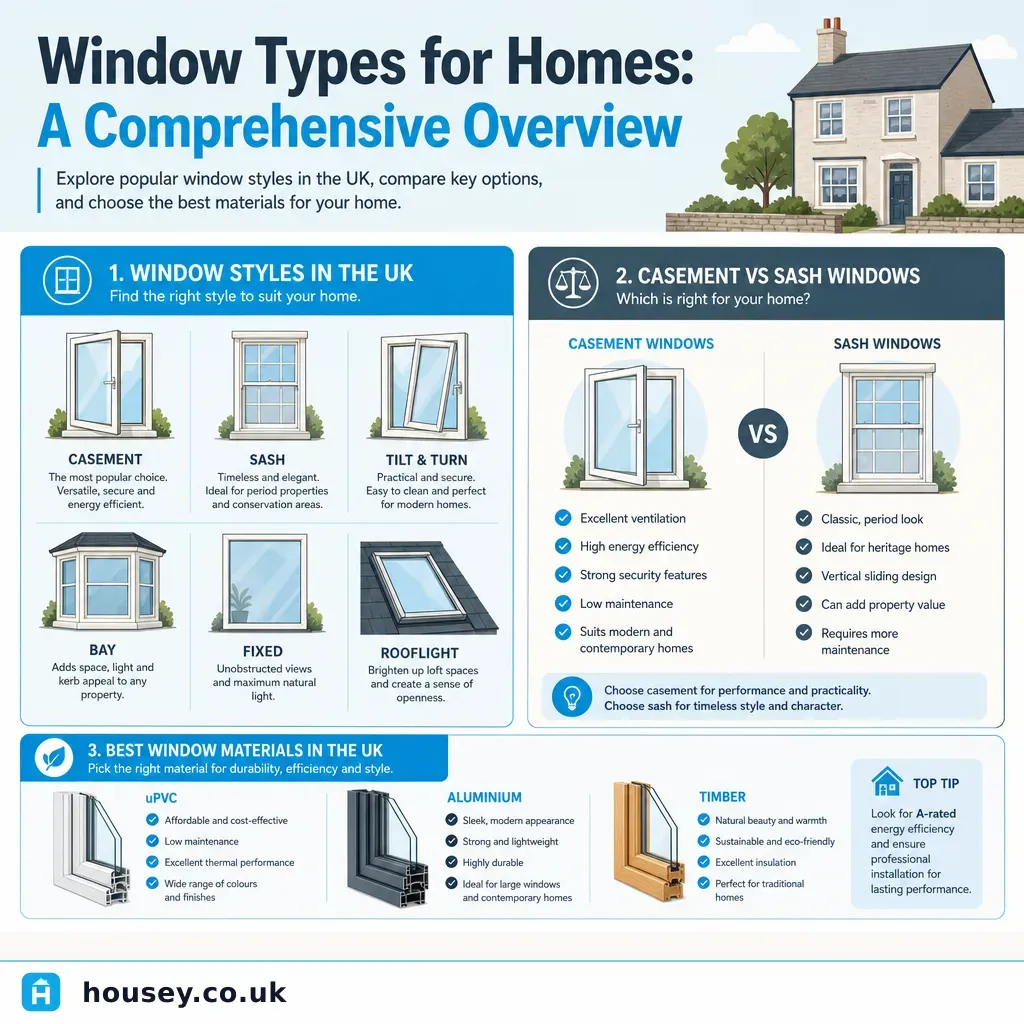
Window Types for Homes: A Comprehensive Overview
UK homes use several main window styles: casement (outward-swinging), sash (vertically sliding), tilt-and-turn, fixed light, and bay or bow.
 Improvement & Build
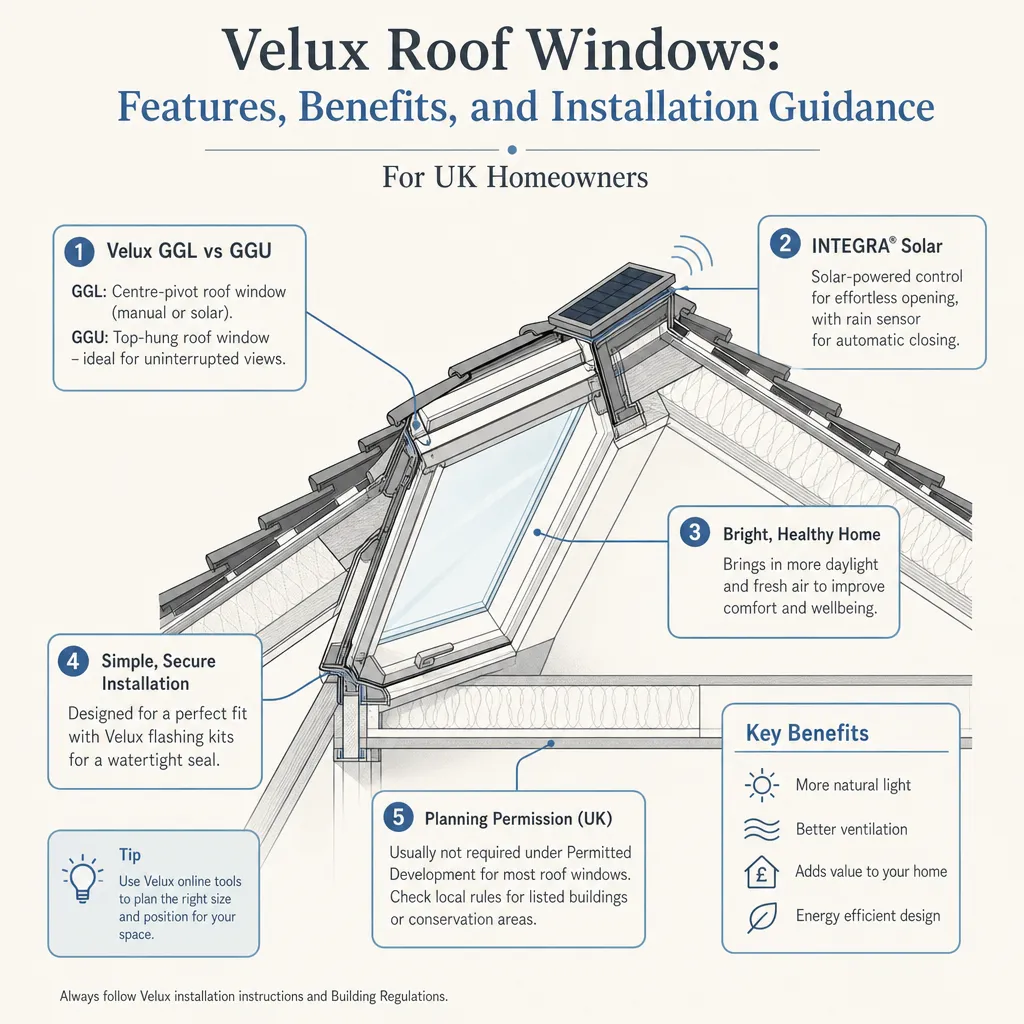
Velux Roof Windows: Features, Benefits, and Installation Guidance
Velux roof windows are the most widely specified brand for UK loft conversions and attic rooms.
 Improvement & Build
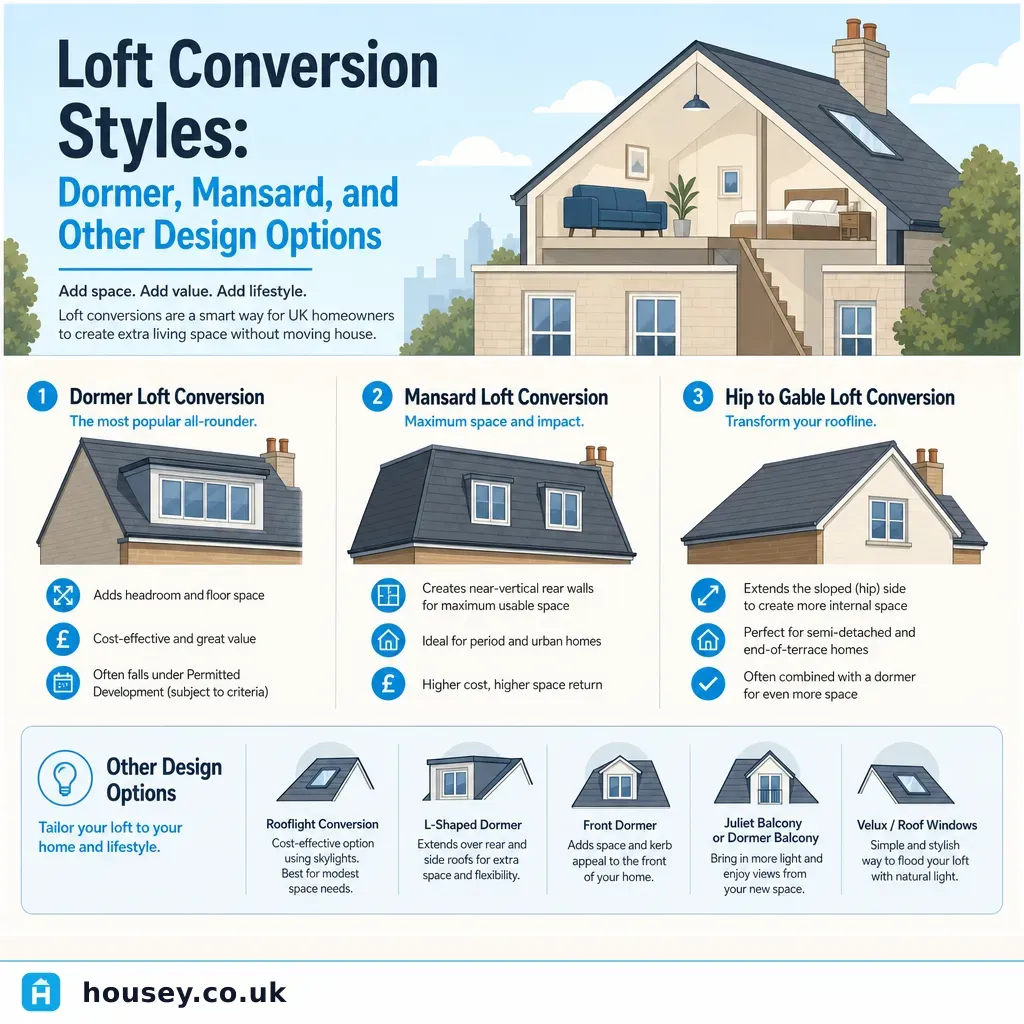
Loft Conversion Styles: Dormer, Mansard, and Other Design Options
The main loft conversion types in the UK are rooflight, dormer, hip-to-gable, and mansard.
 Improvement & Build
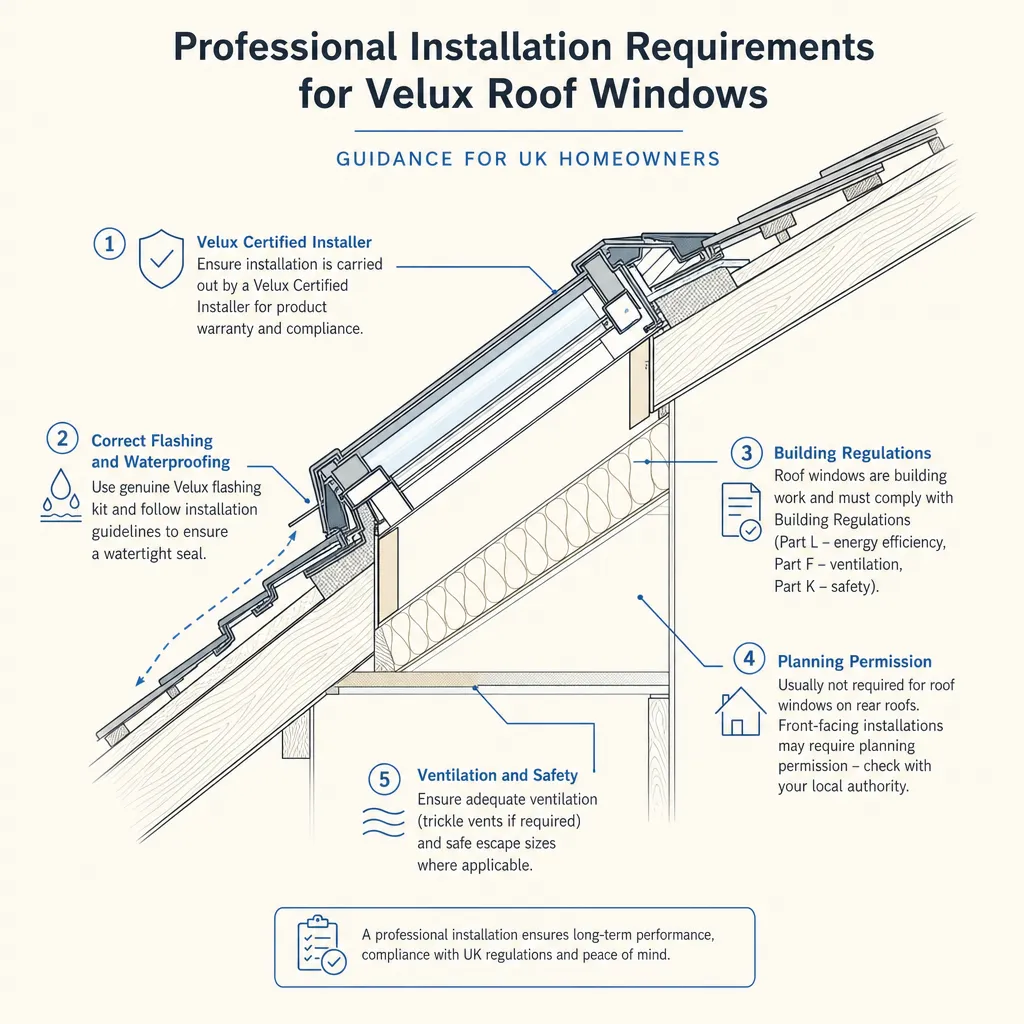
Professional Installation Requirements for Velux Roof Windows
Velux roof windows installed as replacements in the same opening usually fall under permitted development, but new openings or changes on listed buildings or in conservation areas require planning permission.
 Improvement & Build
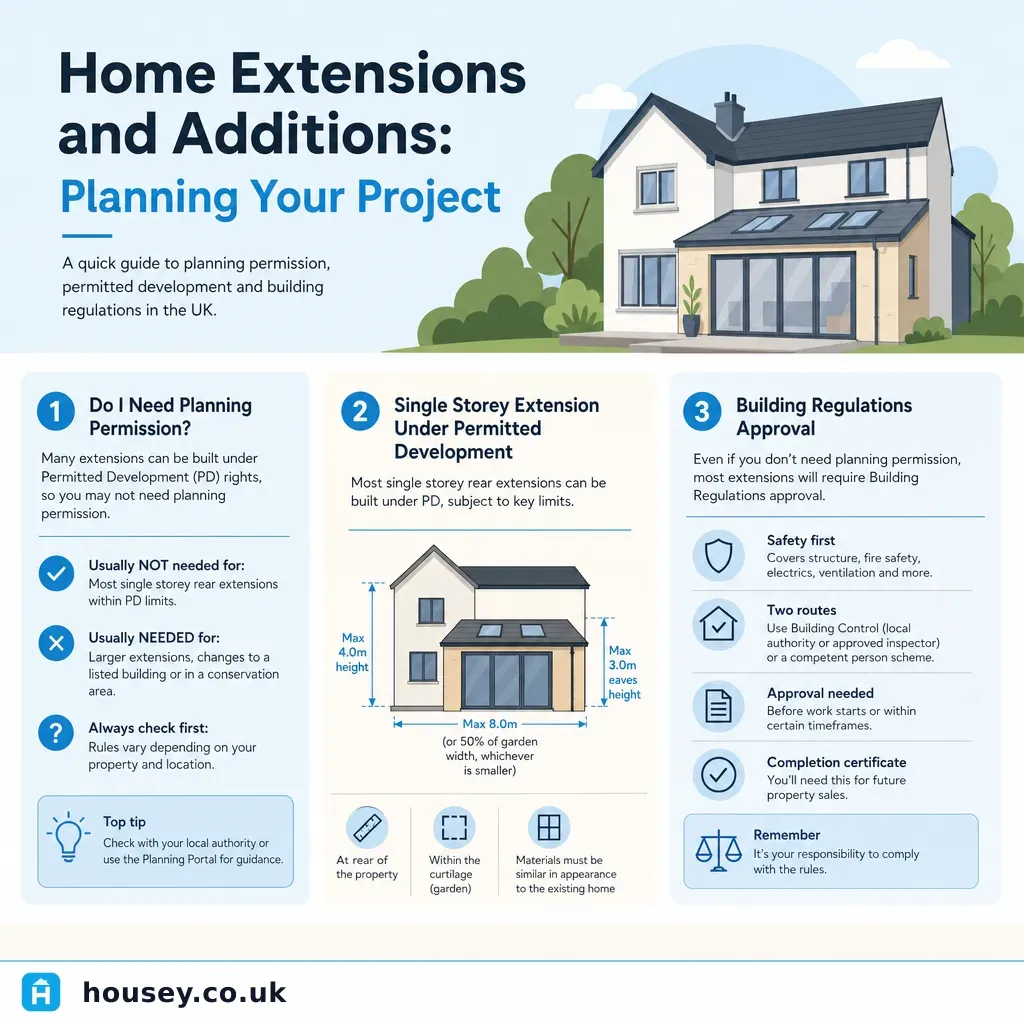
Home Extensions and Additions: Planning Your Project
Most single-storey rear extensions can be built under permitted development without a full planning application, provided they stay within depth limits of 4 m for detached or 3 m for semi-detached and terraced properties.