Window Types for Homes: A Comprehensive Overview
By Housey · Last reviewed 11th of May 2026
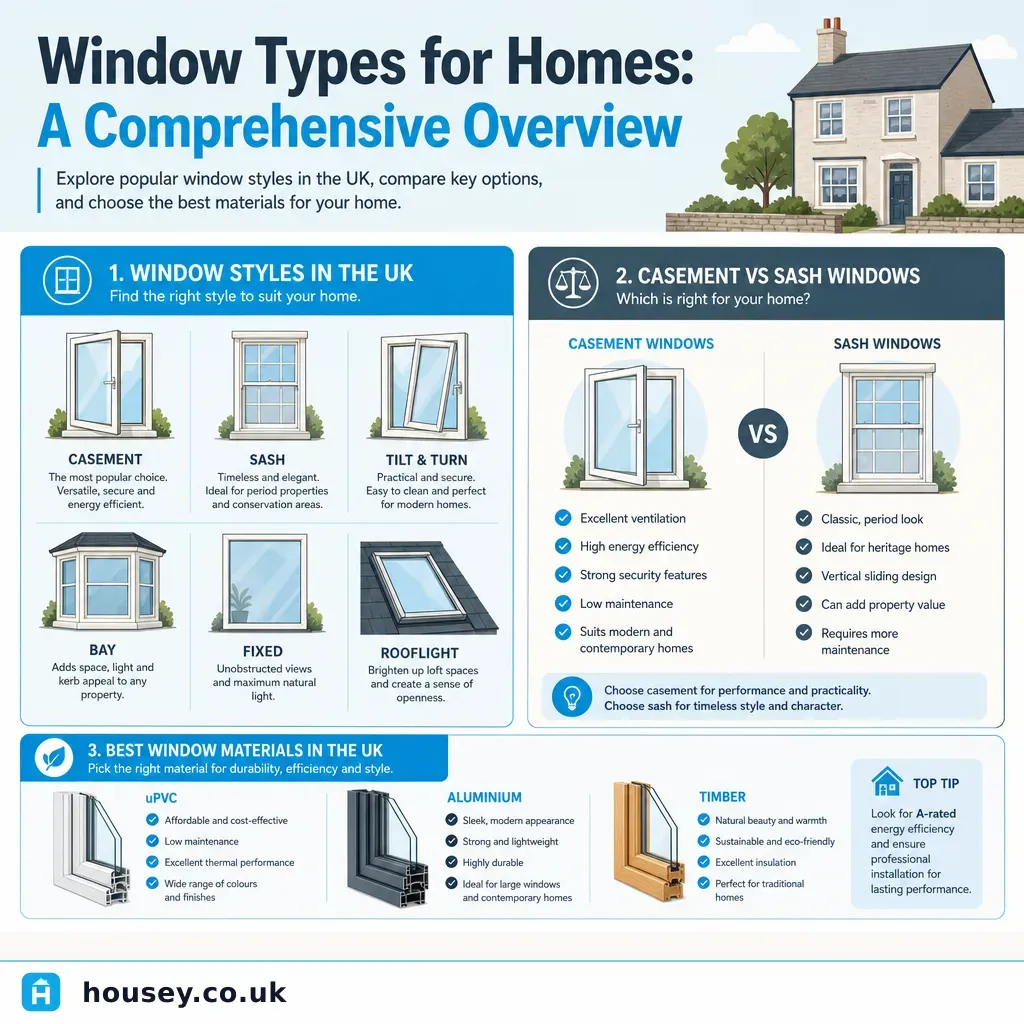
Window Types for Homes: A Comprehensive Overview
Choosing a window style is a decision most UK homeowners face at some point — whether replacing single-glazed units in a Victorian terrace, extending a 1930s semi, or specifying glazing for a new build. The right choice affects appearance, ventilation, security, energy performance, and planning compliance, and getting it wrong can mean costly remediation or an enforcement notice.
Key points
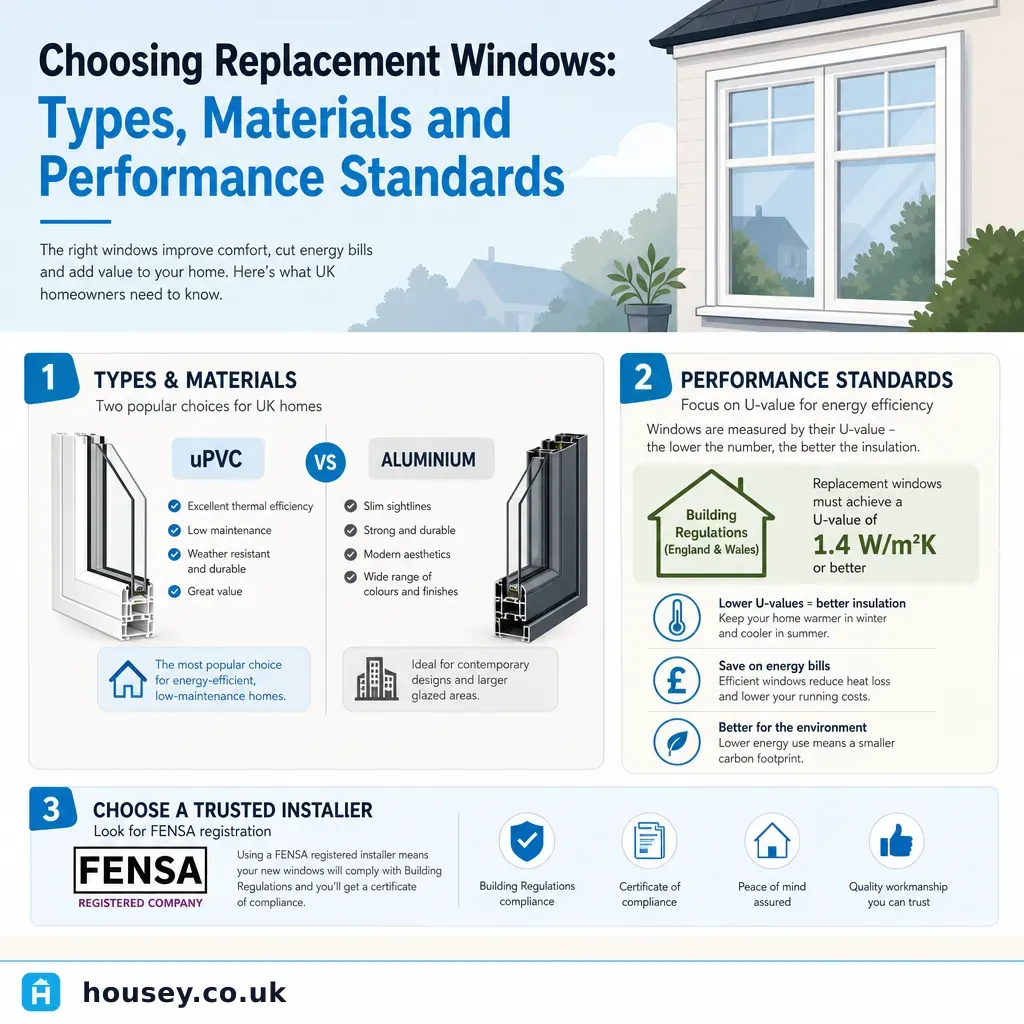
- Replacement windows must comply with Building Regulations Part L (conservation of fuel and power); the minimum acceptable whole-window U-value in England is 1.6 W/m²K, though most modern double-glazed units achieve 1.2–1.4 W/m²K (Approved Document L, 2021 edition).
- Installers registered with FENSA or Certass can self-certify compliance with Building Regulations without a separate local authority building control application.
- Windows in conservation areas, listed buildings, or areas covered by an Article 4 direction may require planning permission even for like-for-like replacement; always check with your local planning authority before ordering.
- uPVC frames typically last 25–35 years; well-maintained timber frames can last 60 years or more.
- Secondary glazing can reduce heat loss through existing single-glazed windows by up to 60% and is often the only approved option for listed buildings (Energy Saving Trust).
Common UK window styles
A window style describes how it opens, how the glazing is held, and how it sits within the building envelope. Each style suits different property types, positions, and ventilation needs.
Casement windows are the most widely fitted type in the UK. The sash hinges on the vertical side of the frame and swings outward. They seal tightly, are straightforward to clean, and are available in uPVC, aluminium, and timber. They suit most post-war housing and are the default choice for 1990s estate houses and new builds.
Sash windows — both traditional double-hung box sash and the more modern tilt-and-slide type — are the defining feature of many Victorian and Edwardian terraces. Authentic timber box sash windows are often required in conservation areas and listed buildings; uPVC sash windows are acceptable in most non-designated properties.
Tilt-and-turn windows open inward, either by tilting the top for ventilation or swinging fully on a vertical hinge for cleaning access. They are popular in flats and upper-floor rooms where outward-opening casements are impractical or a safety concern.
Fixed lights are non-opening glazed panels used where ventilation is provided by other means. They offer good thermal performance because there is no frame-to-sash joint gap, and are common in stairwells, above doors, and in composite window arrangements.
Bay and bow windows project outward from the external wall. Bay windows use angled frames (typically 30°, 45°, or 90°); bow windows are gently curved. Both require structural consideration and are common in Victorian terraces and 1930s semis.
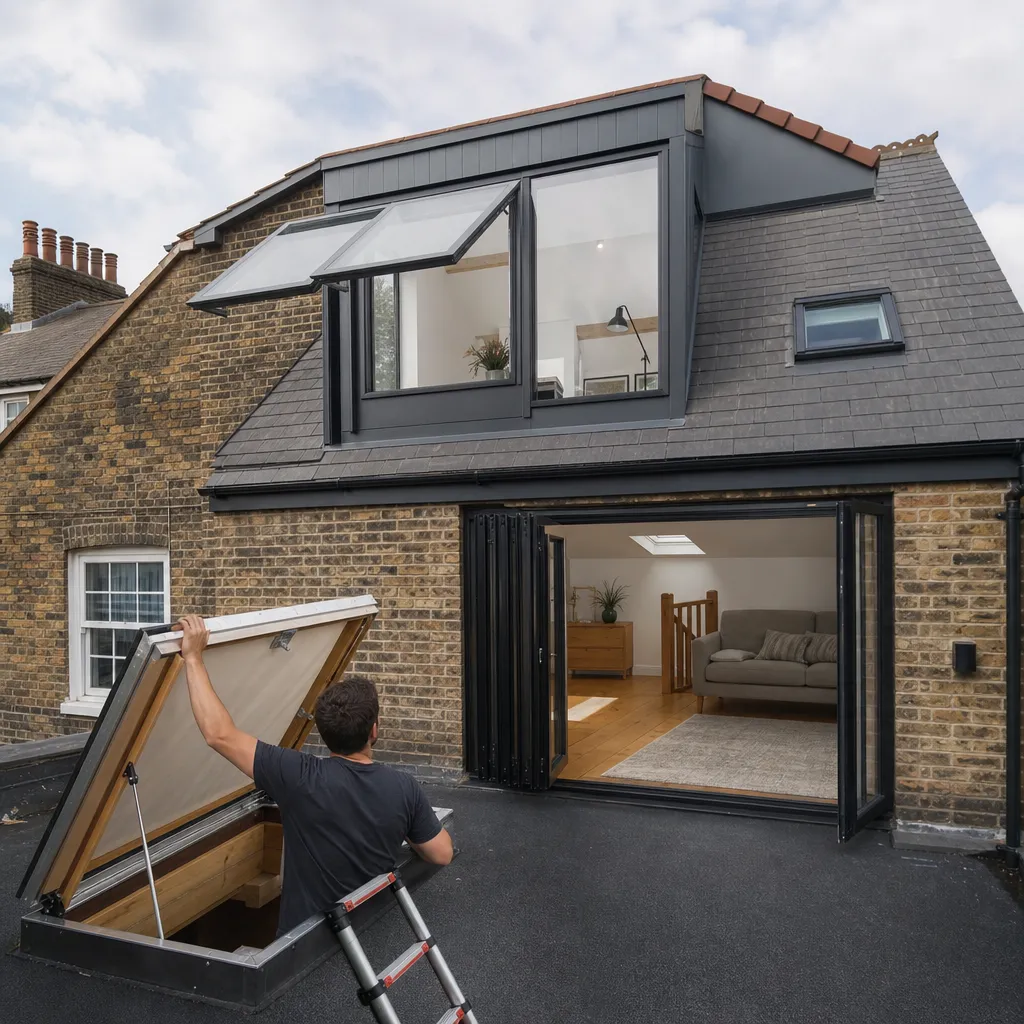
Roof windows and skylights serve loft conversions and extensions. They are subject to the same Part L U-value requirements as any other window and must be specified accordingly.
Window materials compared
Material | Typical lifespan | Maintenance | Achievable U-value | Suited to | Relative cost (supply only) |
|---|---|---|---|---|---|
uPVC | 25–35 years | Low — wipe clean, no painting | ≤1.4 W/m²K (multi-chamber profiles) | Most modern and post-war homes | £ |
Timber | 60+ years if maintained | High — repaint or restain every 3–7 years | Good when well sealed | Period properties, listed buildings, conservation areas | ££–£££ |
Aluminium | 45+ years | Low | ≤1.4 W/m²K (thermally broken profiles) | Contemporary extensions, large-span glazing | ££–£££ |
Composite (timber-aluminium) | 50+ years | Low externally, moderate internally | Excellent | Period homes wanting timber aesthetics with low upkeep | £££ |
Indicative UK costs, last reviewed 2026-05-11. Supply-only costs vary significantly by size, specification, and manufacturer. Obtain at least three quotes before committing.
Which window type should you choose?
Use this decision guide before speaking to an installer:
- Choose casement windows if your property is a 1960s-onwards house and you want the most widely available, cost-effective option that meets current energy standards.
- Choose sliding sash or box sash windows if your property is Victorian or Edwardian and you want to match the original character, or if the local planning authority or conservation officer requires it.
- Choose tilt-and-turn windows if the opening is above ground level, faces a public walkway, or you need easy internal cleaning access.
- Choose fixed lights where ventilation is provided by other means and you want to maximise glazed area and thermal performance.
- Choose bay or bow windows if you are extending or remodelling a Victorian, Edwardian, or 1930s house and want more floor space and light — but commission a structural assessment first.
- Ask a conservation officer if your property is in a conservation area, is locally listed, or has an Article 4 direction that limits permitted development rights.
- Apply to building control (or use a FENSA- or Certass-registered installer) if the work involves structural alterations such as enlarging an opening.
Energy performance and Building Regulations
Replacement glazing in England must comply with Approved Document L (2021). The minimum whole-window U-value is 1.6 W/m²K, though most quality double-glazed units achieve 1.2–1.4 W/m²K, and triple glazing can reach 0.6–0.8 W/m²K.
The British Fenestration Rating Council (BFRC) operates the Window Energy Rating (WER) scheme, grading products from A++ (most efficient) to G (least efficient). An A-rated window is the typical baseline for reputable UK suppliers.
If your property is a solid-wall pre-1920 building, window replacement alone will have limited impact on overall heat loss — wall, floor, and roof insulation improvements usually offer a greater return. The Energy Saving Trust provides impartial advice on prioritising retrofit measures.
Planning permission and listed buildings
Replacing like-for-like windows in most houses is permitted development and does not require planning permission. Exceptions include:
- Conservation areas: Replacing traditional timber sashes with uPVC casements may require planning permission. Always check with your local planning authority before ordering or installing.
- Listed buildings: Listed building consent is almost always required for any window change, regardless of listing grade. Contact Historic England (England), Cadw (Wales), or Historic Environment Scotland for guidance.
- Article 4 directions: These remove permitted development rights for specific properties or streets, even outside formal conservation areas. Check the Planning Portal or your local authority's planning register.
- Flats: Permitted development rights generally do not apply to flats. Most window replacements in a flat require planning permission.
When to get professional help
A competent FENSA- or Certass-registered installer can handle most standard replacement glazing. Seek additional professional input if:
- The property is listed or within a conservation area.
- You want to enlarge an opening or create a new one — a structural engineer's calculations are required.
- You are replacing a complex bay window that may incorporate a structural beam.
- There is evidence of damp, rot, or condensation within the window reveals — this needs diagnosis before new frames are fitted.
- You are unsure whether planning permission applies — consult your local planning authority or a planning consultant.
How Housey can help
Housey connects UK homeowners with vetted window and door installers who are FENSA-registered and can advise on style, specification, and compliance before providing comparable quotes. Compare up to four local installers in one place.
Frequently asked questions
Do I need planning permission to replace windows in my home?
In most cases, replacing windows in a house is permitted development and does not require planning permission. However, if your property is in a conservation area, is listed, or is a flat rather than a house, check with your local planning authority before ordering. Article 4 directions can also remove permitted development rights in specific areas.
What is FENSA and do I need a FENSA certificate?
FENSA (Fenestration Self-Assessment Scheme) is a government-authorised scheme allowing registered installers to self-certify that replacement windows comply with Building Regulations without a separate local authority application. You should receive a FENSA certificate within 30 days of installation. Solicitors commonly request this certificate when you sell the property.
What is the most energy-efficient window frame material?
Overall U-value depends more on the glazing specification — double versus triple glazing, gas fill, and low-emissivity coating — than on frame material alone. Timber and composite frames generally perform well thermally. Multi-chamber uPVC profiles can be equally effective. Triple-glazed units can reach 0.6–0.8 W/m²K but cost more to supply and install.
Can I replace single-glazed windows in a listed building?
Changes to windows in listed buildings almost always require listed building consent, and replacement with double glazing is not always approved. Secondary glazing — fitted inside the existing window — is commonly approved because it preserves the original fabric. Contact Historic England (England), Cadw (Wales), or Historic Environment Scotland for guidance specific to your property.
Sources and further reading
- Building Regulations Approved Document L (2021) — GOV.UK
- FENSA glazing compliance and certification — FENSA
- Window Energy Ratings — British Fenestration Rating Council
- Energy efficiency and historic buildings — Historic England
- Energy efficiency advice for homeowners — Energy Saving Trust
- Planning permission: windows and doors — Planning Portal
Useful next reads
 Improvement & Build
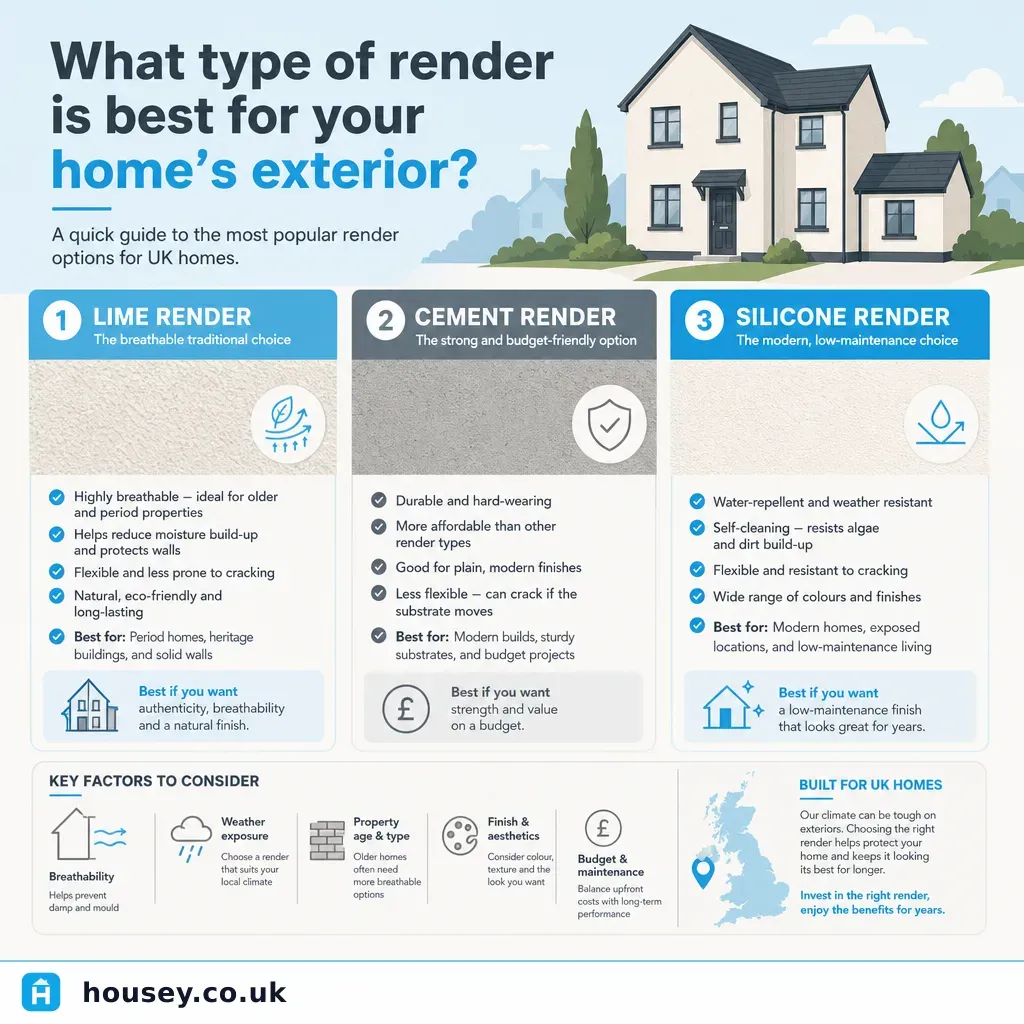
What type of render is best for your home's exterior?
The right render depends on your wall type and property age.
 Improvement & Build
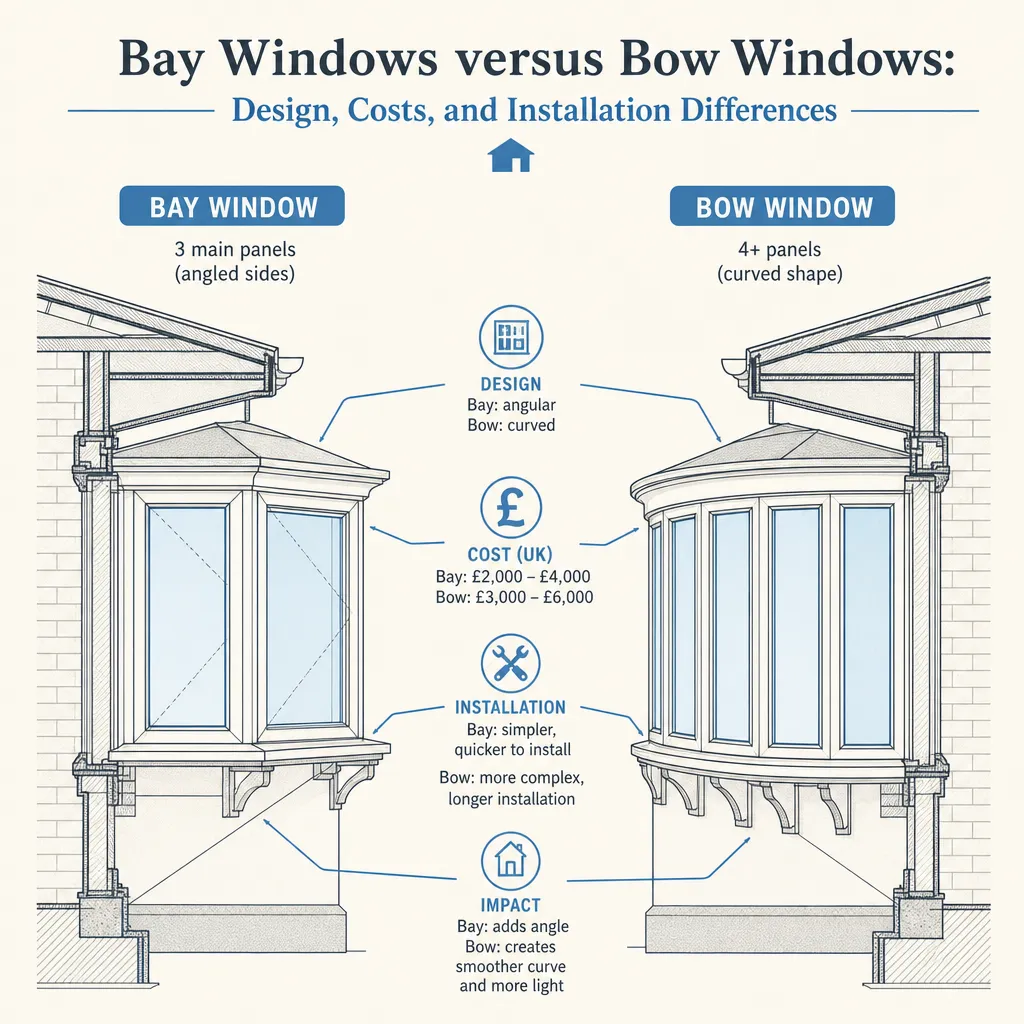
Bay Windows versus Bow Windows: Design, Costs, and Installation Differences
Bay windows project outward at angles — usually three panels at 90° or 135° — creating more floor space inside.
 Improvement & Build
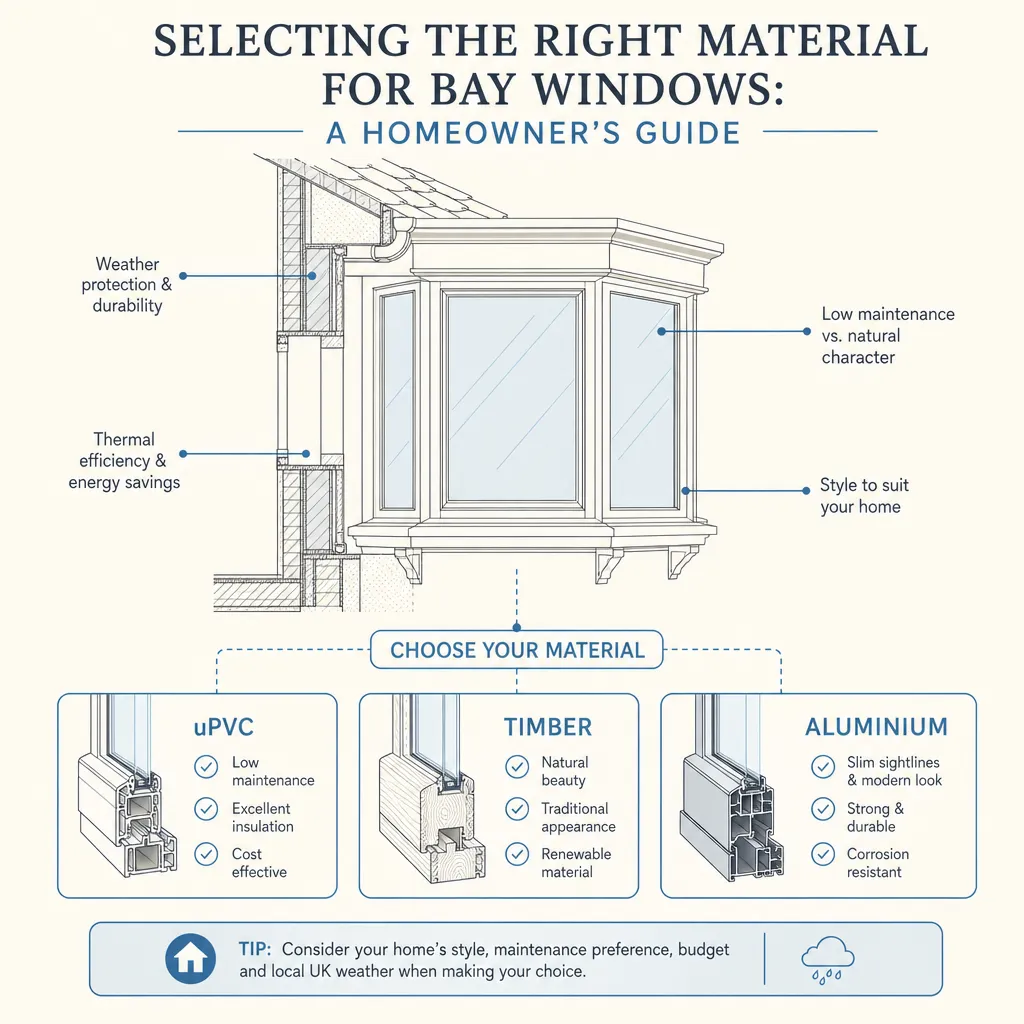
Selecting the right material for bay windows: a homeowner's guide
The main bay window materials in the UK are uPVC, timber, and aluminium.
 Improvement & Build
Alternatives to Velux Windows for Roof Lights and Loft Access
Velux is a brand name — direct alternatives for pitched roofs include Fakro, Roto, and Keylite.
 Improvement & Build
Choosing Replacement Windows: Types, Materials and Performance Standards
Replacement windows in the UK must meet a whole-window U-value of 1.