Loft Conversion Styles: Dormer, Mansard, and Other Design Options
By Housey · Last reviewed 11th of May 2026
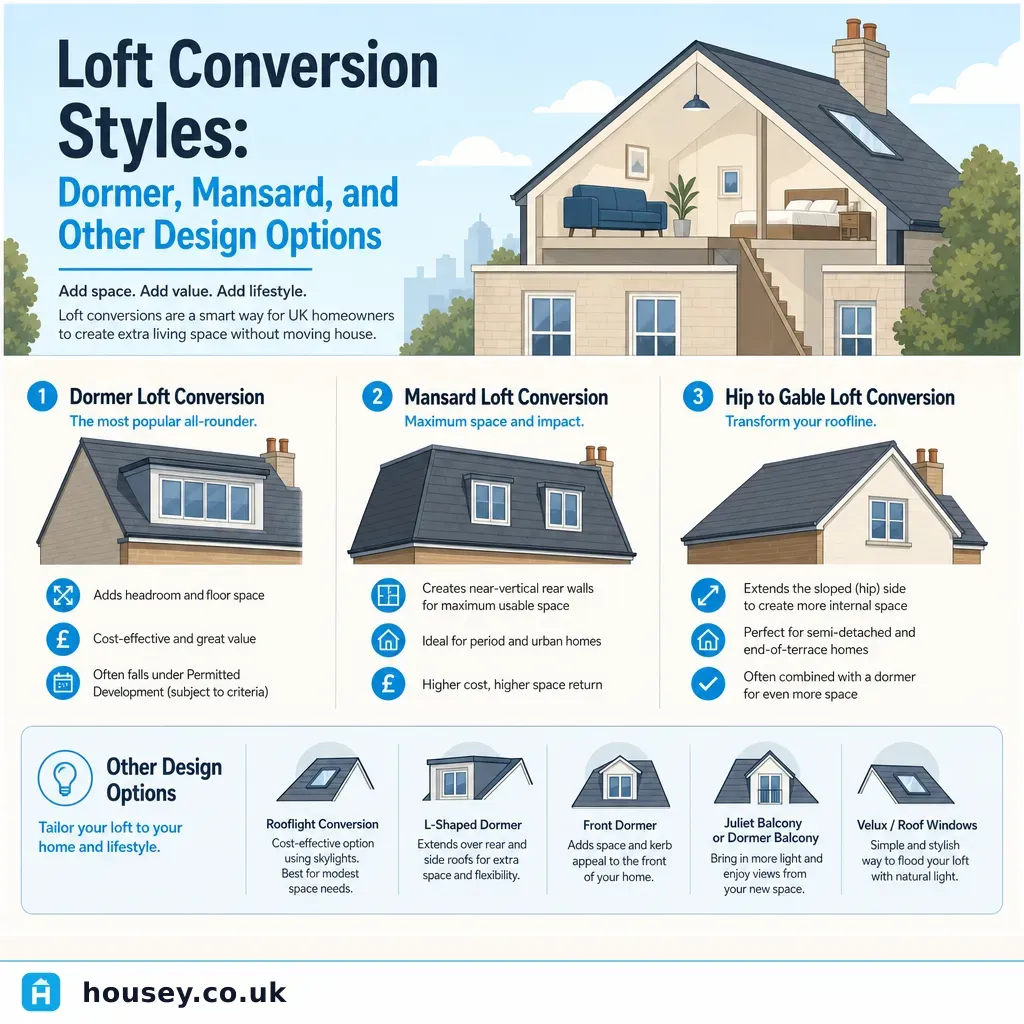
Loft Conversion Styles: Dormer, Mansard, and Other Design Options
Deciding to convert a loft is one of the most significant home improvement decisions a UK homeowner can make — not just for the living space it creates, but for the planning implications and structural considerations it triggers. The conversion type you choose will determine whether you need planning permission, how much headroom you gain, what the work costs, and whether the result suits your roof geometry and your street's character. Understanding the differences before instructing a contractor can prevent costly redesigns and planning refusals.
Key points
- Rooflight (Velux-style) loft conversions are permitted development in England provided the roof alteration does not exceed 40m³ above the existing roof space for terraced houses, or 50m³ for detached and semi-detached houses, and no part of the extension sits higher than the existing roof ridge.
- Dormer conversions projecting from a rear slope generally fall within permitted development if they remain within the volume thresholds and are not visible from a highway; front dormers almost always require a full planning application.
- Mansard conversions — with a near-vertical rear slope of 72° or steeper — almost always require planning permission because they materially alter the roofline.
- Hip-to-gable conversions are only suitable for detached or semi-detached homes where a pitched hip roof can be squared off to create a new gable end, substantially increasing usable floor area.
- Building Regulations approval under Approved Documents A (structure), B (fire safety), F (ventilation), and L (thermal performance) is required for all loft conversions regardless of planning status.
The four main loft conversion types
Rooflight (Velux) conversion
A rooflight conversion is the simplest and least intrusive option. The existing roof structure is retained; roof windows — commonly Velux-brand units — are installed flush with the slope to admit light and provide ventilation. Because no new structures project from the roofline, this type is most likely to fall within permitted development rights in England, though rules differ in Wales, Scotland, and Northern Ireland. Permitted development rights are also sometimes removed by Article 4 Directions in conservation areas or by conditions attached to new-build estates.
Best suited to: Properties with adequate existing head height (typically 2.2 m minimum to the ridge), where the aim is a study, occasional bedroom, or storage room rather than a full living space.
Limitations: If the ridge height is low or the roof pitch shallow, headroom may be insufficient even with this approach. A structural engineer should confirm the existing floor can carry the new live loads before work begins.
Dormer conversion
A dormer is a box-like structure that projects vertically from the existing slope, creating a flat- or low-pitched roof extension that adds both floor area and headroom. The most common form is the flat-roof rear dormer, which runs the full width of the rear slope on a terraced or semi-detached home.
Dormers are popular because they offer the most usable floor space per pound spent. According to the Planning Portal, a rear dormer that meets the volume thresholds and other criteria is generally permitted development in England, but front dormers — those visible from a highway — are not.
Key checks before proceeding:
- Is the property in a conservation area, AONB, or National Park? If so, permitted development rights for dormers are restricted or removed entirely.
- Does the property's planning history include a condition removing permitted development rights?
- Does the Party Wall etc. Act 1996 apply? On a terraced or semi-detached home, the work will likely require you to serve notice on neighbours whose party walls are affected.
Hip-to-gable conversion
On a detached or end-of-terrace home with a hipped roof (where all four sides slope), the hip can be replaced with a new vertical gable wall, squaring off the roof and substantially increasing floor area. Hip-to-gable conversions are frequently combined with a rear dormer to maximise usable space.
The structural implications are significant: removing a hip introduces new loads on the existing structure, so a structural engineer's input is essential at design stage. Planning permission is not always required if permitted development criteria are met, but the work materially alters the roof profile and some local planning authorities treat it differently. Always check with your LPA before starting work.
Mansard conversion
A mansard conversion replaces the entire rear slope of the roof with a near-vertical wall (typically 72°+) topped by a shallow pitched section, creating a large box-shaped room at roof level. Mansards are common in London Victorian terraces and are sometimes accepted in conservation areas where a dormer would not be approved.
Because a mansard changes the roof shape so significantly, it almost always requires a full planning application. It is also the most expensive conversion type, typically requiring specialist contractors, significant structural work, and high-quality materials to satisfy planning requirements.
Best suited to: Victorian or Edwardian terraces where maximum space is needed and the budget allows for the full planning process, specialist design, and a higher build cost.
Comparison table: loft conversion types at a glance
Type | Typical space added | Permitted development? | Planning required? | Relative cost | Best property type |
|---|---|---|---|---|---|
Rooflight | Low | Usually yes (England) | Only if PD removed | £ | Any with adequate ridge height |
Rear dormer | Medium–high | Usually yes, rear only | If PD removed or front | ££ | Terraced, semi-detached |
Hip-to-gable | High | Possibly — check LPA | Often required | £££ | Detached, end-of-terrace |
Mansard | Very high | Rarely | Almost always | ££££ | Victorian/Edwardian terraces |
Indicative relative cost guidance only. Actual costs vary by specification, contractor, and location. Obtain at least three detailed quotes before committing.
Which loft conversion should you choose?
- Choose a rooflight conversion if your existing head height is sufficient and you want minimal disruption, cost, and planning risk.
- Choose a rear dormer if you need more headroom than a rooflight provides and your property has a suitable rear slope — particularly common on 1930s semis and Edwardian terraces.
- Choose a hip-to-gable (possibly combined with a rear dormer) if you have a detached or end-of-terrace home with a hipped roof and want to maximise floor area.
- Choose a mansard if you need the maximum possible space, have a Victorian or Edwardian terrace, and are prepared for the full planning process and higher build cost.
- Check with your LPA first if the property is in a conservation area, AONB, National Park, or World Heritage Site — permitted development rights may not apply.
- Consult a structural engineer before committing if the roof structure is unusual, the property pre-dates 1919, or a hip-to-gable conversion is planned.
Building Regulations: required for all conversions
All loft conversions must comply with Building Regulations regardless of whether planning permission is needed. The key Approved Documents are:
- Part A (Structure): Floor, wall, and roof loads must be assessed; strengthening may be required.
- Part B (Fire safety): A protected escape route from the new storey to ground floor is required — typically a new fire door at the loft stair head and upgraded doors on floors below.
- Part F (Ventilation): Adequate ventilation must be provided to all new habitable rooms.
- Part L (Conservation of fuel and power): Roof windows and any new walls must meet current U-value standards.
A building control body or approved inspector must inspect the work and issue a completion certificate before the space is occupied as a habitable room.
When to get professional help
A competent loft conversion contractor will manage planning and Building Regulations as part of the project, but independent architectural or structural advice is warranted before proceeding if:
- You are unsure whether your roof has adequate height for conversion.
- The property is listed or in a conservation area.
- You have received conflicting advice about permitted development eligibility.
- Neighbours have raised concerns or the Party Wall etc. Act 1996 is engaged.
- The existing roof uses prefabricated trussed rafters (common from the 1960s onwards) rather than traditional cut rafters — these require engineered solutions and cannot simply be cut back or removed.
How Housey can help
Finding a reputable contractor with experience of your property type and local planning authority is critical to a successful loft conversion. Housey connects homeowners with vetted loft conversion companies who can assess your roof, advise on the most appropriate conversion type, and manage the full process from design through to Building Regulations sign-off.
Frequently asked questions
Do I always need planning permission for a loft conversion?
Not always. In England, many loft conversions — particularly rear dormers and rooflights — fall under permitted development rights, provided they stay within volume thresholds (40m³ for terraced homes, 50m³ for others) and meet other criteria. These rights do not apply in conservation areas, national parks, AONBs, or where removed by an Article 4 Direction or planning condition. Wales, Scotland, and Northern Ireland have separate rules.
How much headroom do I need for a loft conversion?
A minimum of 2.2 m from floor to ridge is a commonly cited rule of thumb. Below this, a dormer or mansard may still be viable, but usable floor area will be limited. A loft conversion specialist can measure your specific roof geometry and advise on what each conversion type can realistically achieve.
Will a loft conversion add value to my property?
Loft conversions generally add value, particularly where extra bedroom space commands a premium. Value uplift depends on finish quality, the existing bedroom count, and local market conditions. No specific figure can be guaranteed — a RICS-registered valuer can advise on the likely impact for your particular property and local market.
Does a loft conversion need Building Regulations approval even if it is permitted development?
Yes. Planning permission status and Building Regulations approval are entirely separate processes under UK law. All loft conversions require sign-off covering Approved Documents A (structure), B (fire safety), F (ventilation), and L (thermal performance). Work must be inspected and signed off by a building control body or approved inspector before the conversion can be used as a habitable room.
Sources and further reading
- Permitted development rights for householders: technical guidance — GOV.UK
- Loft conversions: planning permission — Planning Portal
- Building regulations: loft conversions — Planning Portal
- Fire Safety: Approved Document B — GOV.UK
Useful next reads
 Improvement & Build
Guide to Replacing Timber Sash Windows with Authentic Restoration
Restoring a timber sash window typically costs £150–£400 per window; full replacement costs £800–£2,500.
 Improvement & Build
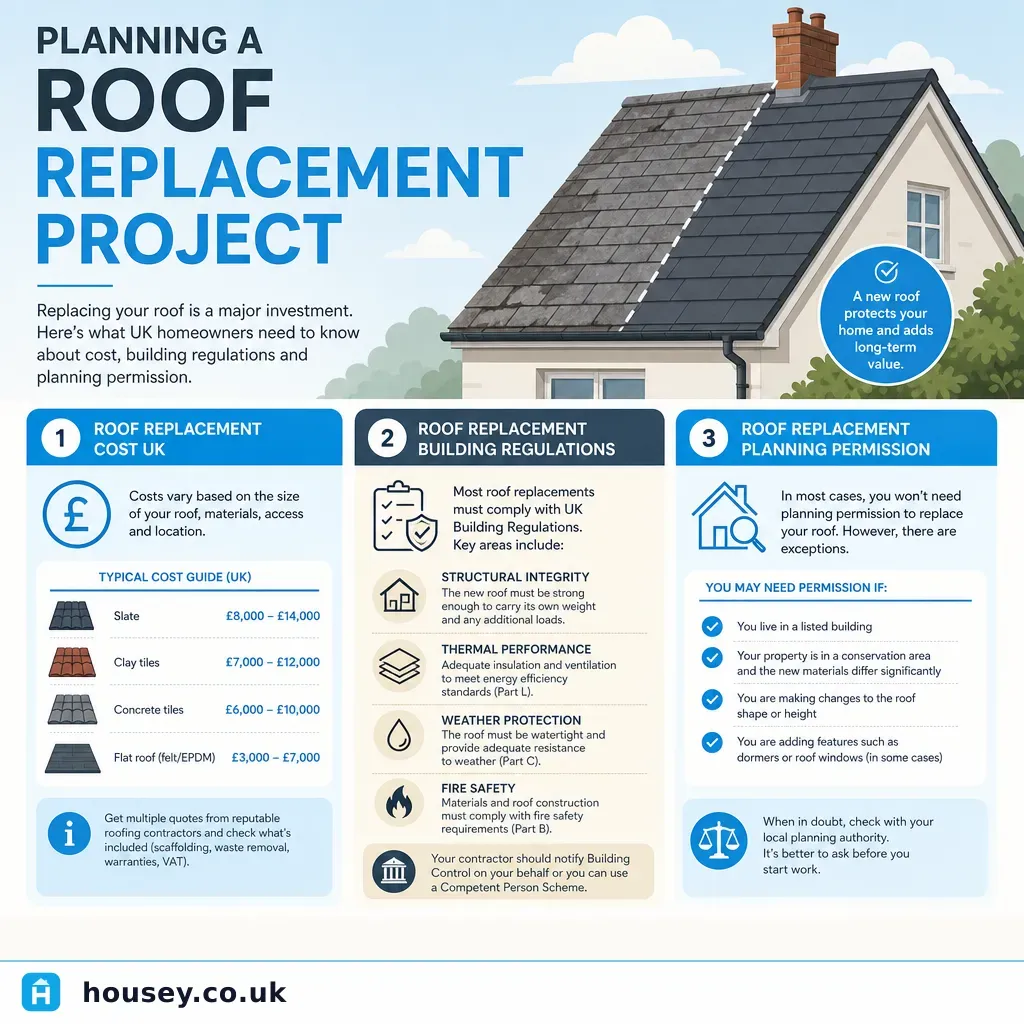
Planning a Roof Replacement Project
A roof replacement project involves stripping the existing covering, renewing the sarking felt and battens, and laying new tiles, slates, or a flat-roof membrane.
 Improvement & Build
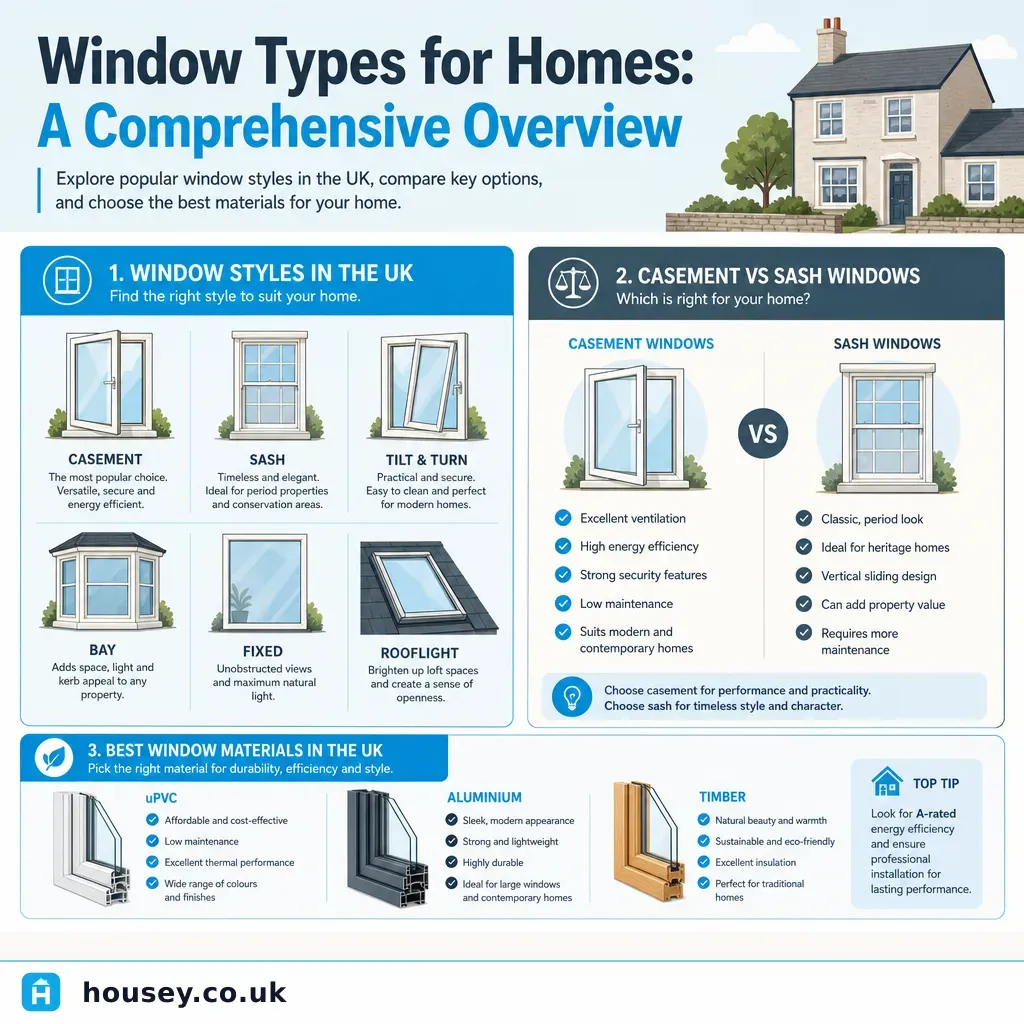
Window Types for Homes: A Comprehensive Overview
UK homes use several main window styles: casement (outward-swinging), sash (vertically sliding), tilt-and-turn, fixed light, and bay or bow.
 Improvement & Build
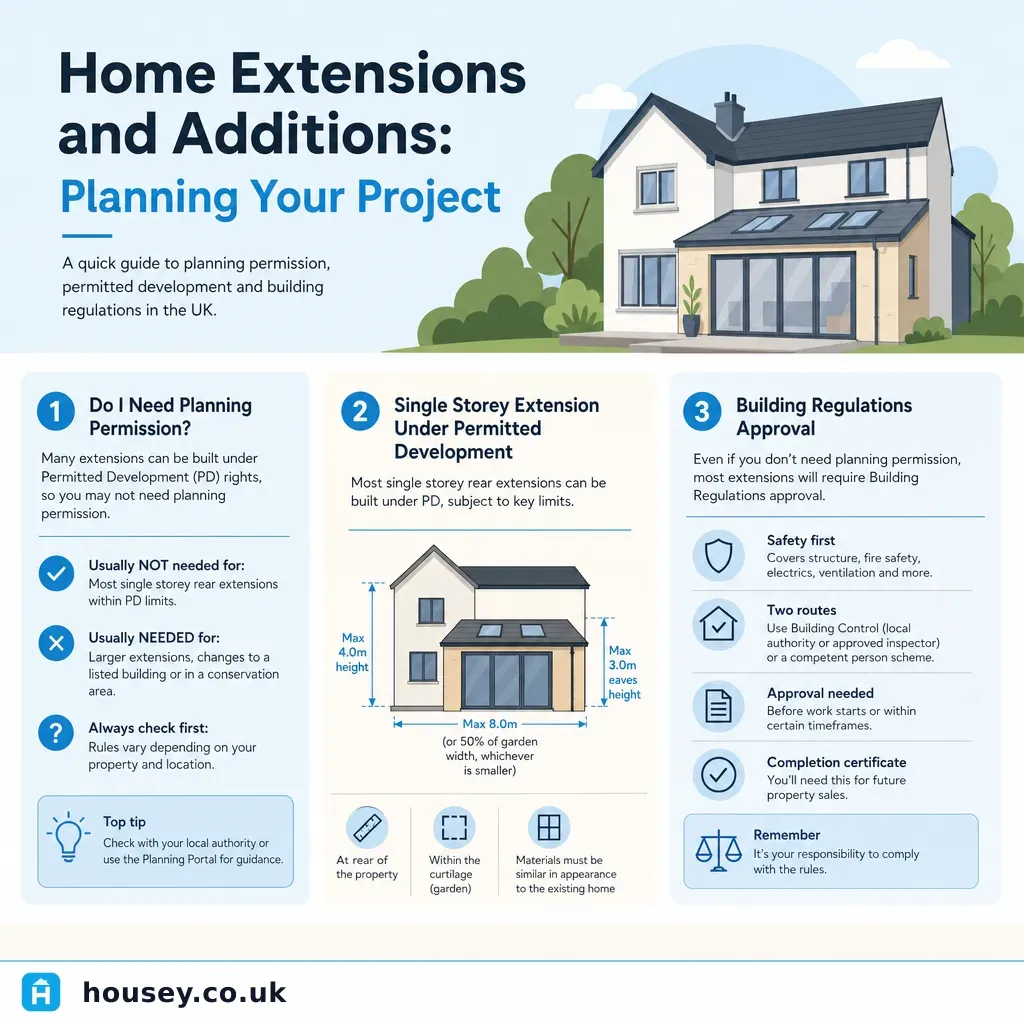
Home Extensions and Additions: Planning Your Project
Most single-storey rear extensions can be built under permitted development without a full planning application, provided they stay within depth limits of 4 m for detached or 3 m for semi-detached and terraced properties.
 Improvement & Build
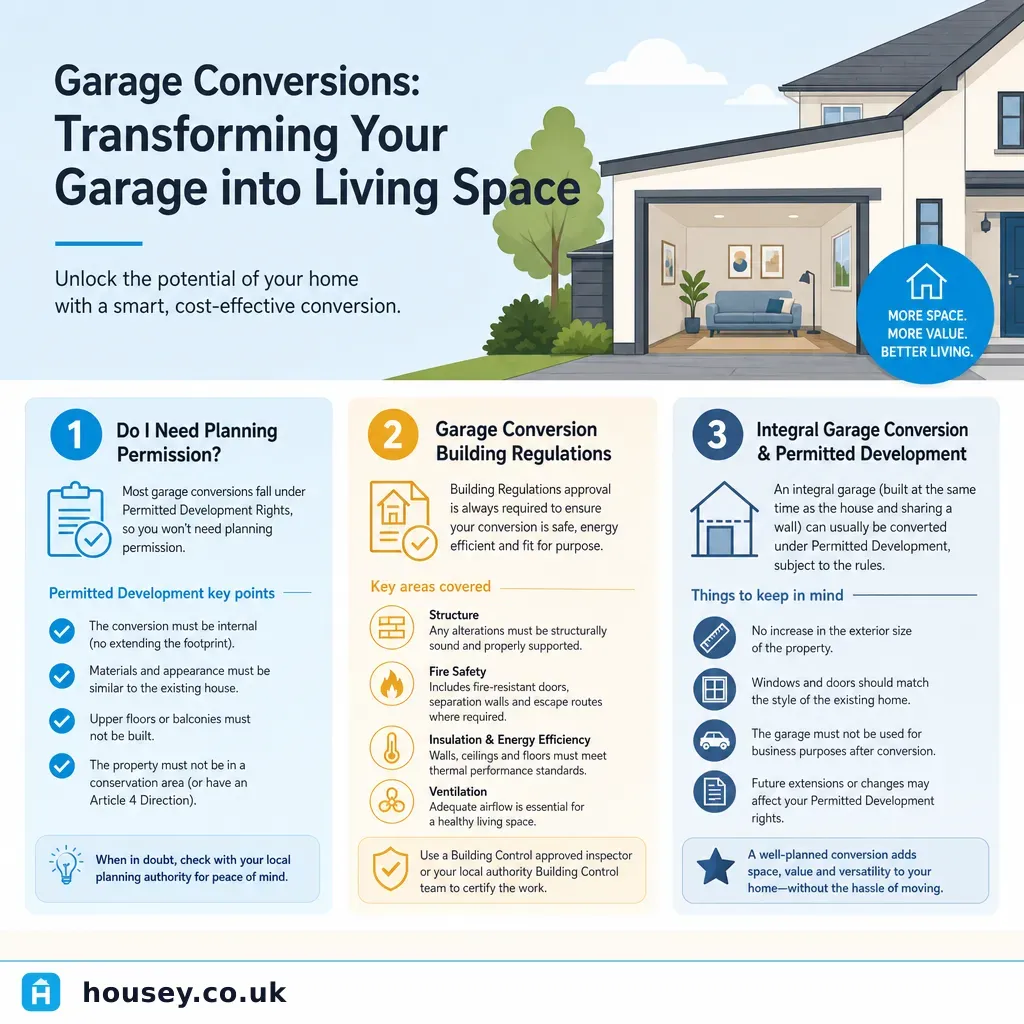
Garage Conversions: Transforming Your Garage into Living Space
Most integral garage conversions in England fall within permitted development and do not require a planning application, but Building Regulations approval is required in virtually all cases.