Velux Roof Windows: Features, Benefits, and Installation Guidance
By Housey · Last reviewed 12th of May 2026
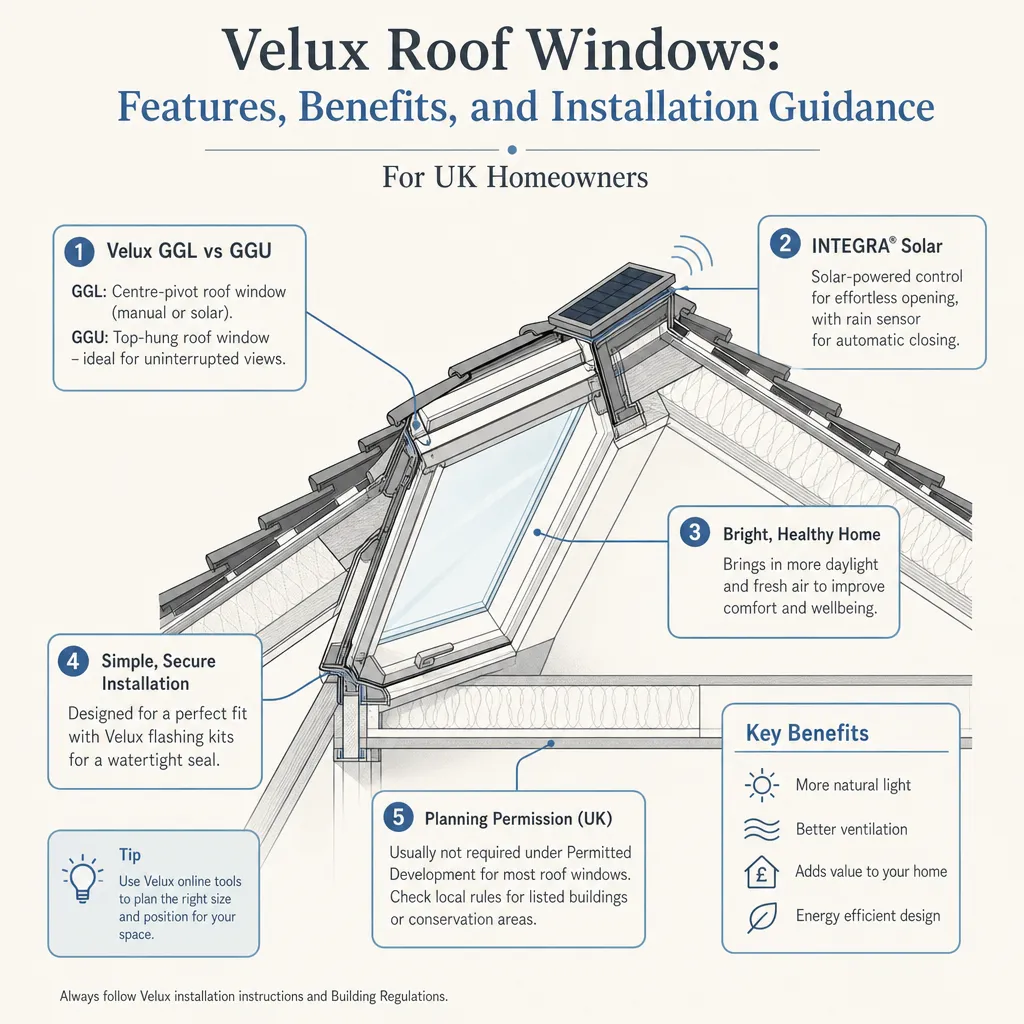
Velux Roof Windows: Features, Benefits, and Installation Guidance
Adding a roof window to a loft conversion or existing roof slope can transform a dark, underused space into a room that is comfortable and well lit throughout the year. The Velux brand is the most widely recognised in the UK market, but understanding the product range — and the installation requirements that come with it — is essential before committing to a specification. Whether you are planning a loft conversion, replacing an ageing window, or trying to make sense of a contractor's quote, getting the specification right from the outset avoids costly changes once work has begun.
Key points
- Velux roof windows are openable units designed for use in habitable rooms at normal standing height; they are distinct from fixed rooflights and have different Building Regulations requirements and installation details.
- The GGL (centre-pivot, timber frame) and GGU (top-hung, polyurethane-coated) are the two most commonly specified Velux models in UK residential construction; GGU is preferred for bathrooms due to its moisture-resistant coating.
- Velux INTEGRA solar-powered models can be opened and closed remotely without mains wiring; the integrated solar cell on the outer frame powers both the motor and compatible electric blind.
- Building Regulations Part L requires replacement roof windows in existing dwellings in England to achieve a whole-window U-value of 1.4 W/m²K or better; a FENSA or CERTASS registered installer can self-certify compliance.
- In England, fitting a roof window to a dwellinghouse is usually permitted development provided the window does not protrude more than 150mm above the existing roof plane and the property is not listed or in a conservation area.
The main Velux product ranges
Centre-pivot — GGL series
The GGL is the standard residential roof window: a timber-framed, double-glazed unit that pivots 180° to allow cleaning of the outer pane from inside the room. It is the most widely stocked model in UK builders' merchants, has the broadest range of accessories and blinds, and suits most residential loft conversion and attic room applications. The inner pane uses laminated safety glass as standard.
Top-hung — GGU series
Top-hung windows open from the bottom edge outward rather than pivoting. The GGU is coated in polyurethane (available in grey or white), making it highly resistant to moisture and suitable for bathrooms, shower rooms, and other high-humidity spaces. It provides unobstructed head clearance when open and is often preferred where users will be standing close to the window plane.
Conservation roof windows — GPL series
The GPL is designed to have a lower profile above the roof plane, using a smaller frame section and a flatter flashing detail that more closely resembles a traditional rooflight. It is often specified for conservation area properties where planning or design guidance requires a more discreet appearance. Being a conservation-style product does not automatically mean planning permission is not needed — always check with your local planning authority.
INTEGRA — solar and electric operation
Velux INTEGRA models are remotely operated. The solar version uses an integrated solar cell on the outer frame to power the opening motor and a compatible electric blind; no mains wiring is required, making it practical to retrofit into an existing room. The electric version is wired to mains power and requires a Part P registered electrician in England and Wales. Both versions are controlled via a wall-mounted keypad, remote, or smartphone app. Solar models may be less effective on heavily shaded north-facing slopes.
Flat roof modules — CVP and CFP series
For roof pitches below approximately 15°, a dedicated flat-roof module is required. The CVP and CFP use a thermally broken frame and higher-rise flashing to achieve weathertightness on low pitches. These are a separate product category from standard roof windows and have their own structural and installation requirements.
Comparing Velux product lines
Product | Best for | Not ideal for | Opening type | Moisture resistance |
|---|---|---|---|---|
GGL (timber, centre-pivot) | Living rooms, bedrooms, loft conversions | Bathrooms (uncoated timber) | Centre-pivot 180° | Standard — needs periodic maintenance |
GGU (polyurethane, top-hung) | Bathrooms, wet rooms, kitchens | Where head clearance when open is critical | Top-hung outward | High — polyurethane coating |
GPL (conservation) | Conservation areas, low-profile installations | Where maximum opening area is needed | Centre-pivot | Standard |
INTEGRA solar | Rooms where manual operation is impractical | Heavily shaded north-facing roof slopes | Motor-driven | Same as base model |
CVP/CFP (flat roof) | Roof pitches below 15° | Standard pitched roofs above 15° | Fixed or hinged | Designed for low pitch |
What is involved in installation
Structural preparation
Installing a new roof window requires cutting through the roof covering, the sarking felt or breather membrane, and typically one or more rafters. Any cut rafter must be supported with structural trimmer timbers. This is notifiable structural work and must be reported to building control in England, Scotland, and Wales. For larger spans or complex roof structures, input from a structural engineer is advisable before cutting begins.
Flashing selection
The flashing kit weatherproofs the junction between the window frame and the roof covering. Velux produces different kits depending on covering type:
- BDX / BDW: standard replacement kit for plain tiles and small-profile slates (replaces the older EDW and EDN kits)
- EDL / EDP: for profiled and interlocking tiles
- EKW: for metal standing seam roofs (copper or zinc)
- EWS: for flat roof and low-pitch applications
Specifying the wrong flashing kit is one of the most common installation errors and typically results in water ingress. The roofer or installer should confirm the correct kit against the actual roof covering before ordering.
Energy performance and Building Regulations compliance
Replacement windows must comply with Part L of the Building Regulations. In England, the current requirement for a replacement roof window is a whole-window U-value of 1.4 W/m²K or better. FENSA and CERTASS are the two main competent persons schemes; a registered installer can issue a compliance certificate without a separate building control application. This certificate is a required document when selling the property.
Which professional do you need?
Task | Qualified professional | Why |
|---|---|---|
Cutting rafters and fitting structural trimmer | Structural engineer (design) + experienced carpenter or builder | Structural work — building control notification required |
Flashing installation | Roofer with roof window experience | Weathertightness of the junction between frame and roof covering |
Window fitting and glazing compliance | FENSA or CERTASS registered window installer | Building Regulations compliance certificate |
INTEGRA electric version wiring | Part P registered electrician (England and Wales) | Notifiable electrical work |
Planning and permitted development queries | Local planning authority | Rules vary by property history, location, and any prior alterations |
The benefits in practice
Natural light: roof windows are widely recognised to admit substantially more natural light per unit area than a vertical wall window of equivalent declared size, due to the higher angle of incidence from the sky. This is particularly significant in north-facing loft rooms where a wall window would receive limited direct light for much of the year.
Ventilation: openable roof windows provide effective stack-effect and cross-ventilation. Approved Document F requires habitable rooms to have rapid ventilation with an openable area of at least 1/20th of the floor area; a single appropriately sized roof window can often satisfy this requirement for a standard loft bedroom.
Property value: a useable loft room with natural light and adequate headroom typically adds value to a property, though the amount varies by location, property type, and the quality of the conversion overall.
When to get professional help
Fitting a roof window involves work at height, structural alterations, weatherproofing, and Building Regulations compliance — all of which require qualified professionals for most homeowners. In particular:
- Rafter cutting must be reported to building control; a structural engineer's input is advisable for spans over 3.5m or complex roof configurations
- Flashing installation should be carried out by a roofer — incorrect flashing is the leading cause of roof window leaks
- Mains-connected INTEGRA models require a Part P registered electrician for the wiring connection in England and Wales
- Any work on a listed building or in a conservation area should be preceded by a conversation with your local planning authority
How Housey can help
Housey connects homeowners with vetted window and door installers and loft conversion companies experienced with Velux and other roof window brands. Submit your project details once and receive quotes from up to four specialists covering supply, installation, flashing, and building control sign-off where required.
Frequently asked questions
Do Velux windows need planning permission?
In England, installing a roof window on a dwellinghouse is usually permitted development provided the window does not protrude more than 150mm above the existing roof slope and the property is not listed or in a conservation area. Scotland, Wales, and Northern Ireland have their own rules. Always confirm with your local planning authority before ordering if you are uncertain about your specific property.
What is the difference between a roof window and a rooflight?
A roof window is an openable unit designed for use in a habitable room at normal standing height — it pivots or opens outward for ventilation and cleaning. A rooflight is typically a fixed or non-opening glazed unit mounted at roof level, often in a flat or low-pitch roof. The two categories have different Building Regulations requirements and installation details. Velux manufactures both.
How long does a Velux window installation take?
A like-for-like replacement into an existing opening typically takes a skilled installer a few hours per window. A new installation requiring rafter cutting, structural trimmer work, and flashing into a previously unaltered roof generally takes one to two days per window, depending on access and the roof covering. A full loft conversion involving multiple windows will take longer as part of the wider programme.
What U-value do Velux windows achieve?
Current Velux ENERGY and THERMO glazing packages achieve whole-window U-values typically in the range of 1.0 to 1.4 W/m²K, meeting the Part L requirement for replacement windows in England. Triple-glazed options achieve U-values below 1.0 W/m²K. Performance varies by product line and glazing package; always check the published specification for the specific model you are ordering.
Sources and further reading
- GOV.UK — permitted development for householders: technical guidance — GOV.UK
- Building Regulations Approved Document L — conservation of fuel and power — GOV.UK
- Building Regulations Approved Document F — means of ventilation — GOV.UK
- FENSA — competent persons scheme for windows and doors — FENSA
- Velux UK — product and installation information — Velux
Useful next reads
 Improvement & Build
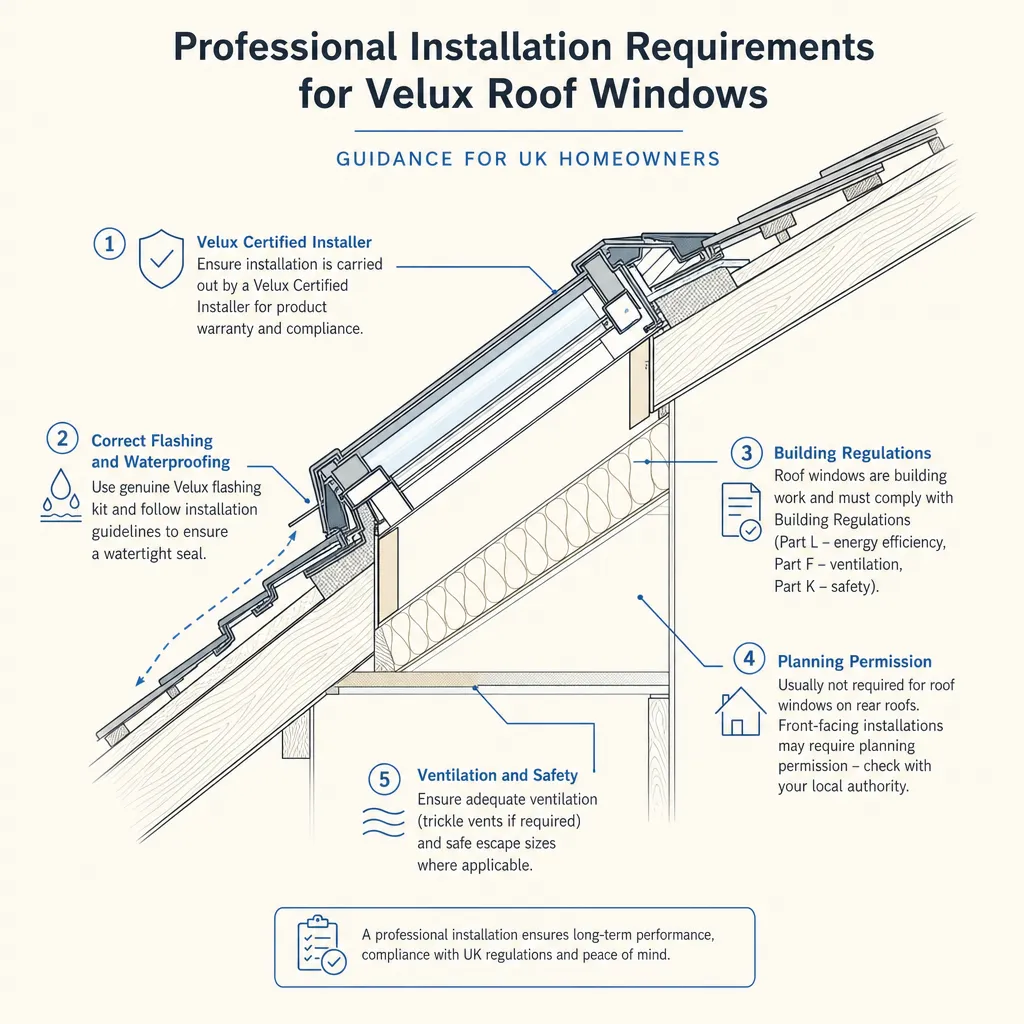
Professional Installation Requirements for Velux Roof Windows
Velux roof windows installed as replacements in the same opening usually fall under permitted development, but new openings or changes on listed buildings or in conservation areas require planning permission.
 Improvement & Build
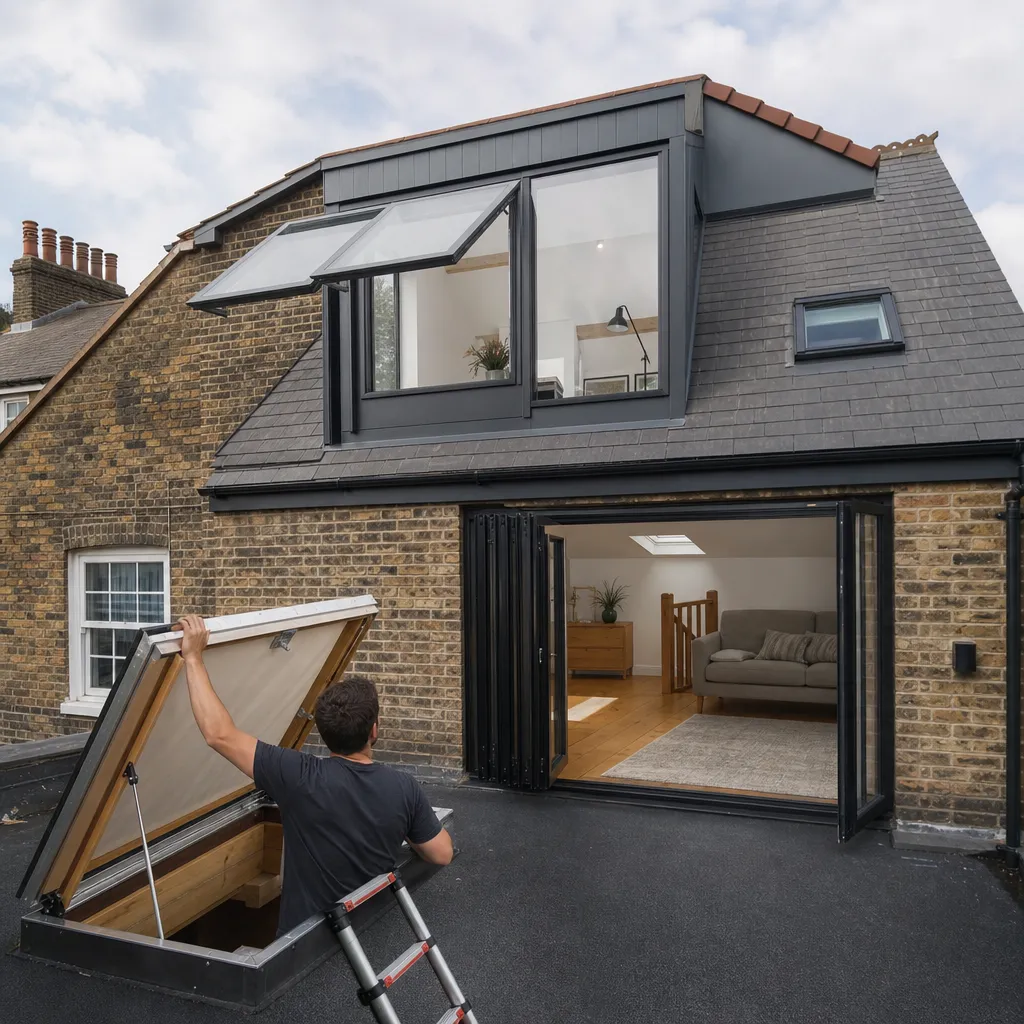
Alternatives to Velux Windows for Roof Lights and Loft Access
Velux is a brand name — direct alternatives for pitched roofs include Fakro, Roto, and Keylite.
 Improvement & Build
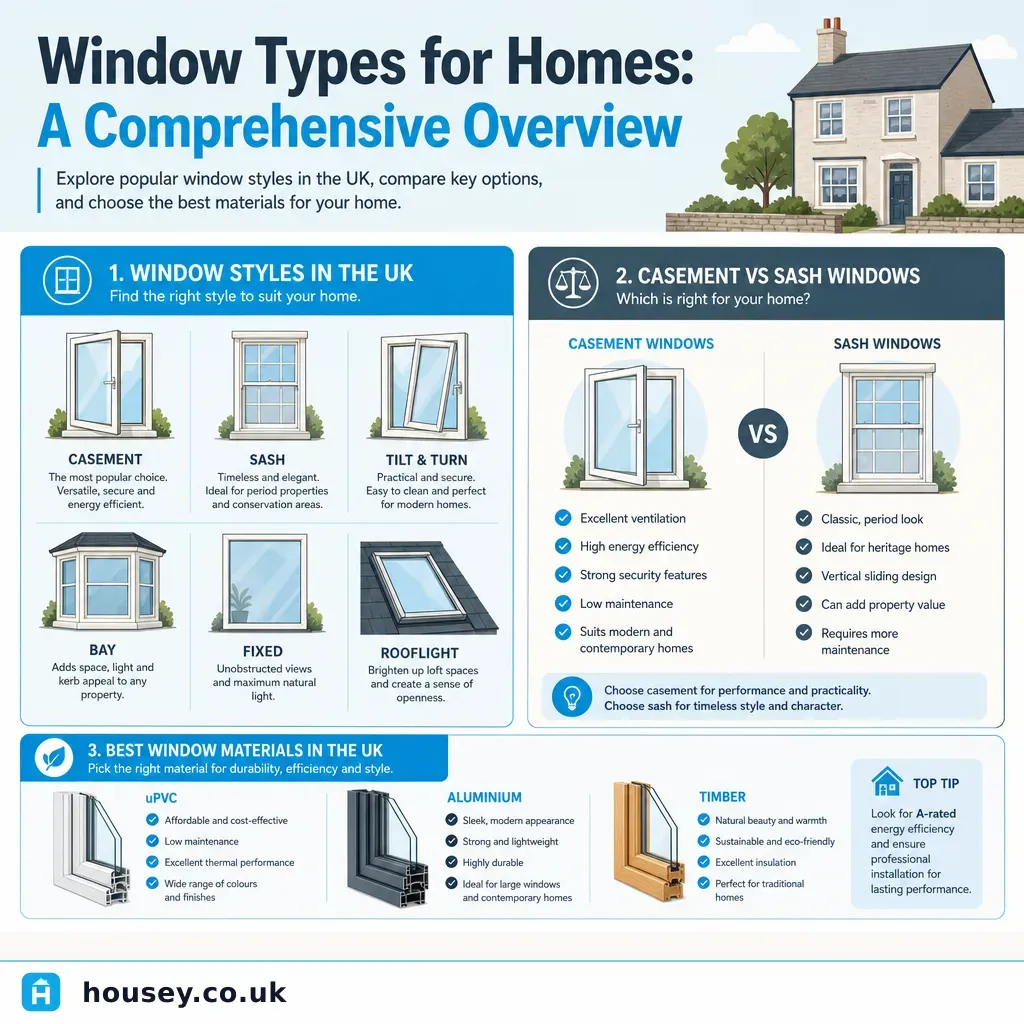
Window Types for Homes: A Comprehensive Overview
UK homes use several main window styles: casement (outward-swinging), sash (vertically sliding), tilt-and-turn, fixed light, and bay or bow.
 Improvement & Build
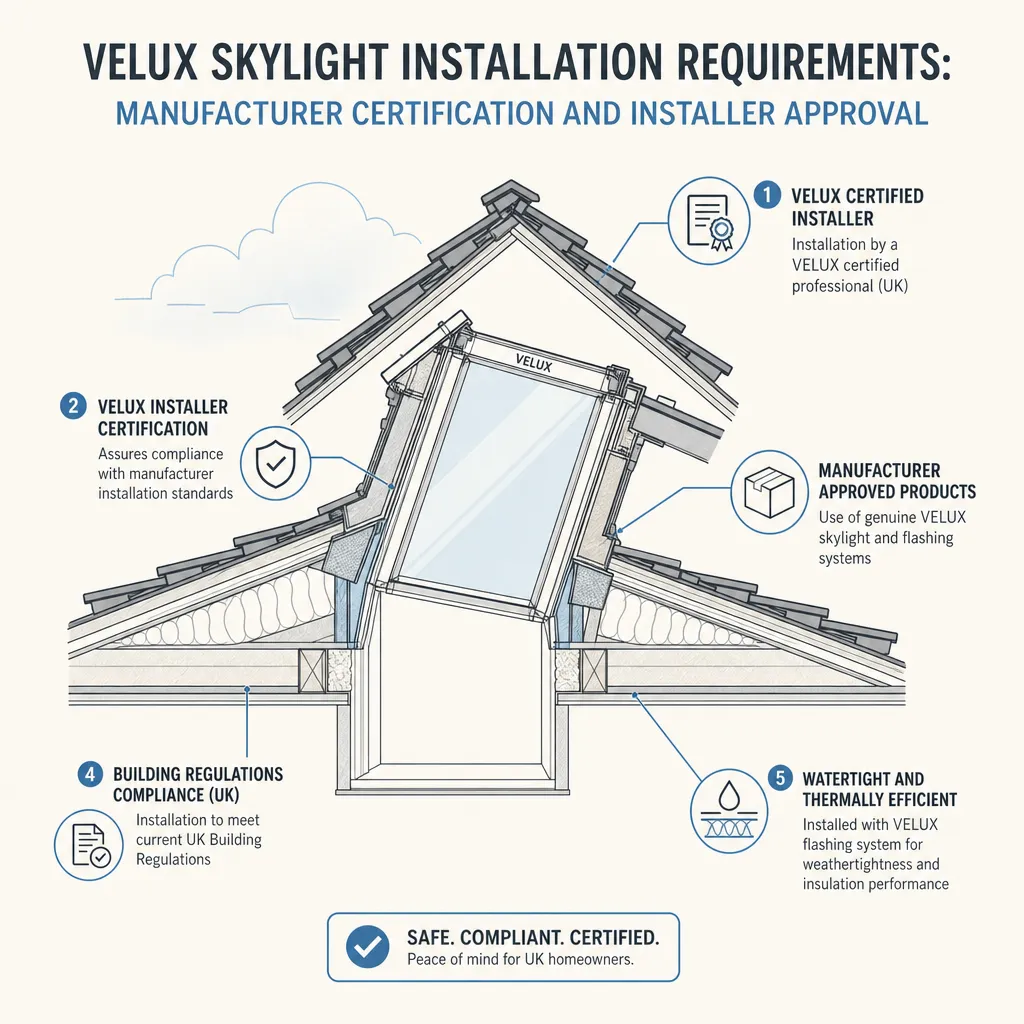
Velux Skylight Installation Requirements: Manufacturer Certification and Installer Approval
Velux recommends using their registered installer network to protect warranty coverage and ensure compliance with building regulations.
 Improvement & Build
Common Velux Window Issues and How to Resolve Them
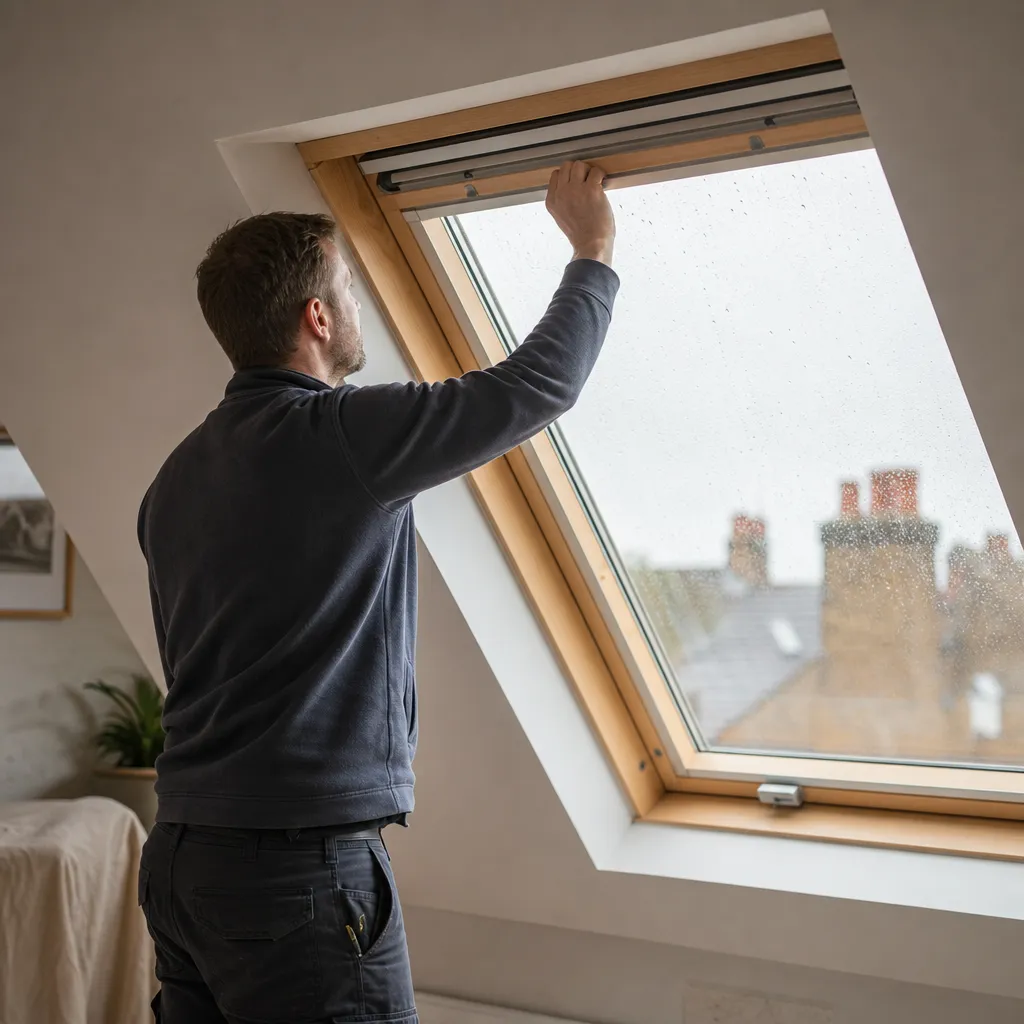
Most Velux roof window problems — leaks, misted panes, stiff handles, and draughts — have a specific cause.