Aluminium Sliding Door Systems: Cost and Installation Guide
By Housey · Last reviewed 4th of May 2026
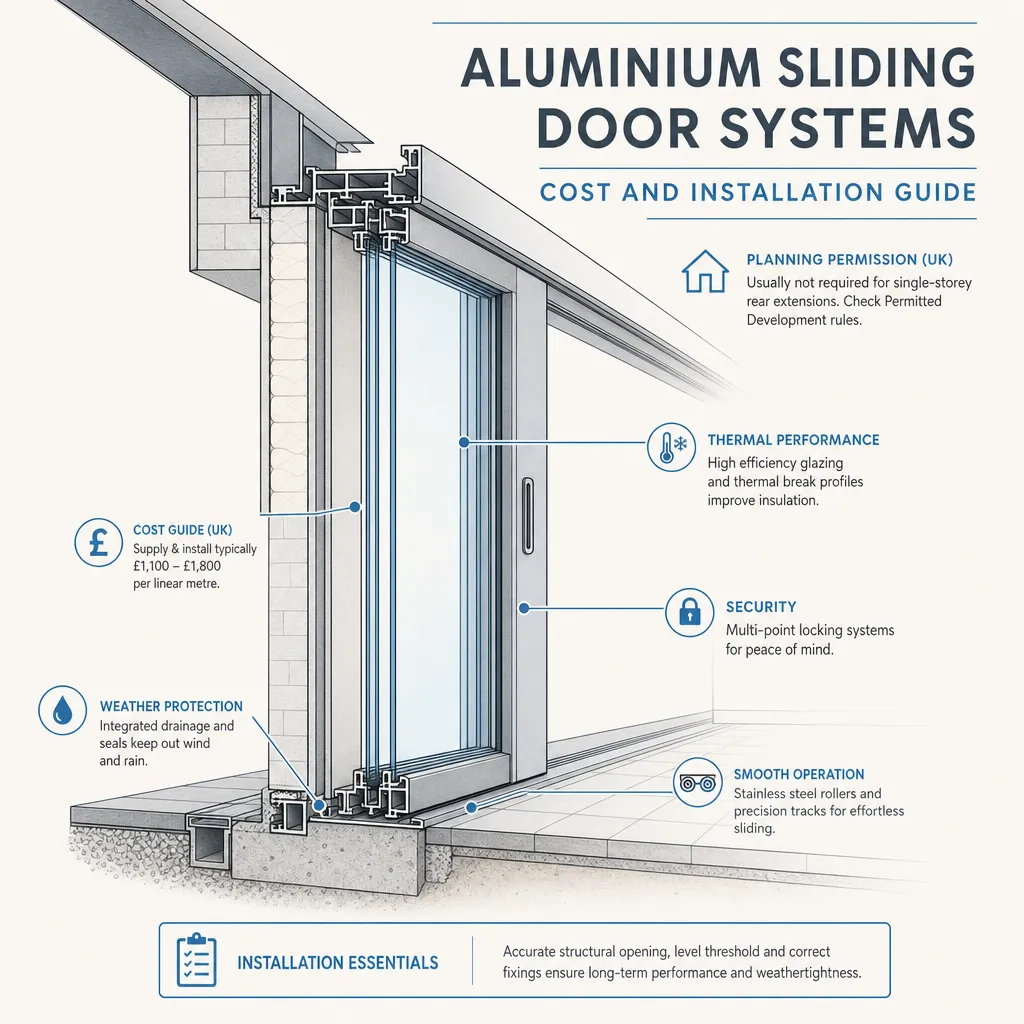
Aluminium Sliding Door Systems: Cost and Installation Guide
Replacing or fitting a new set of aluminium sliding doors is one of the more impactful improvements a homeowner can make: it changes how a room connects to the garden, brings in light, and updates the rear elevation in a way that affects both everyday living and resale appeal. The decision involves practical questions about costs, building regulations, planning requirements, and installer qualifications that are worth working through carefully before committing.
Key points
- Aluminium sliding doors typically cost £2,500–£7,000 supply and fitted for a standard opening; large or bespoke systems can exceed £10,000 (indicative UK costs, last reviewed 2026-05-04).
- Building Regulations Part L applies to all replacement or new glazed doors in England; the glazed unit must achieve a U-value of no more than 1.6 W/m²K.
- Installers must be registered with a competent person scheme — FENSA or CERTASS — or a building regulations application must be submitted to local authority building control.
- Most rear sliding door installations fall under permitted development and do not need planning permission, but conservation areas, listed buildings, and Article 4 directions are exceptions.
- Modern aluminium frames use thermally broken construction to reduce heat loss through the frame — confirm this feature with any supplier before agreeing a specification.
How much do aluminium sliding doors cost in the UK?
Cost depends on the width of the opening, number of panels, glass specification, hardware finish, and the installer's location. Indicative UK costs, last reviewed 2026-05-04:
System type | Typical opening width | Indicative supply-and-fit cost |
|---|---|---|
2-panel sliding (standard patio) | 1.8m–2.4m | £2,500–£4,500 |
3-panel sliding | 2.4m–3.6m | £4,000–£6,500 |
4-panel or large-span system | 3.6m–6.0m | £6,000–£12,000+ |
Lift-and-slide system | Any | £1,500–£3,000 premium over equivalent sliding |
These figures are indicative. Regional labour rates, glass upgrades, powder-coat colour choices, and hardware finish all affect the final price. Always obtain at least three comparable quotes.
Key cost drivers to understand
- Glass specification: Double glazing is standard; triple glazing improves thermal and acoustic performance but adds cost.
- Panel width: Wider single panels require thicker, heavier frames and more robust tracking hardware.
- Powder-coat colour: Standard colours are cheaper; RAL or bespoke colour finishes add to the frame cost.
- Structural opening works: If creating a new opening in a load-bearing wall, a structural engineer must specify the lintel — budget this separately from the door installation cost.
- Internal finishing: Plastering, decoration, and floor threshold finishing after installation are typically excluded from an installer's quote.
Planning permission: do you need it?
Use this decision tree before instructing an installer:
- Proceed without planning permission if: the installation is at the rear of the property, the property is not listed, there is no conservation area designation, and no Article 4 direction has removed permitted development rights.
- Check with your local planning authority if: the property is in a conservation area, you are unsure whether permitted development applies, or the installation involves creating a new opening that might constitute a material alteration to the external appearance.
- Apply for listed building consent if: the property is listed — any alteration to external glazing or doors on a listed building requires consent regardless of which elevation is affected.
- Confirm whether an Article 4 direction applies if: you are in an area where the local authority has removed standard permitted development rights — your local planning authority can confirm this.
The Planning Portal's interactive permitted development guidance is a useful starting reference for properties in England.
Building regulations and certification
Regardless of planning permission, replacing or installing new glazed doors triggers Building Regulations Part L (conservation of fuel and power). The key requirements in England include:
- The whole glazed unit must achieve a U-value of no more than 1.6 W/m²K, assessed as a complete unit including frame, not just the glass pane.
- Aluminium frames must be thermally broken — a non-conductive barrier sits between the inner and outer sections of the frame — to meet this requirement in most configurations.
- Work must be certified either through a FENSA or CERTASS registered installer (competent person self-certification) or via a full building regulations application to your local authority.
When using a FENSA or CERTASS registered installer, they notify building control on your behalf and you receive a certificate at completion. Solicitors will request this certificate when you come to sell the property — keep it with your property documents.
Aluminium sliding doors compared with other glazed door systems
Door type | Thermal performance | Frame maintenance | Sightline | Indicative cost vs aluminium sliding |
|---|---|---|---|---|
Aluminium sliding (thermally broken) | Good | Very low | Slim | Baseline |
uPVC sliding | Good | Low | Wider frames | 15–30% cheaper |
Timber sliding | Moderate–good | Higher (painting/oiling) | Varies by system | 10–40% more |
Aluminium bifold | Good | Very low | Slim | Similar or slightly more |
Aluminium lift-and-slide | Excellent (larger panels possible) | Very low | Slim | 20–40% more |
Aluminium sliding suits most situations where a contemporary, low-maintenance look is needed for openings between approximately 1.8m and 5m wide. Lift-and-slide is worth considering for very large openings or where superior airtightness is a priority.
Homeowner checklist before you accept a quote
Use this checklist when reviewing installer quotes and comparing proposals:
When to get professional help
For a straightforward replacement in an existing opening, a FENSA or CERTASS registered installer can manage the complete process including building regulations self-certification. Seek additional professional input if:
- You are creating a new opening in a load-bearing wall — a structural engineer must specify the lintel before any opening-up work begins.
- The property is listed or in a conservation area — speak to your local planning authority or a planning consultant before instructing an installer.
- You have any doubt about the condition of the existing lintel or surrounding wall structure — a building surveyor can advise before work starts.
- The installation involves significant changes to a threshold, raised deck, or garden level where drainage or structural implications may arise.
How Housey can help
Whether you need a registered installer for a standard sliding door replacement or professional guidance on a more involved project, Housey can connect you with vetted window and door installers across the UK. Compare quotes from qualified local professionals and find the right fit for your project.
Frequently asked questions
Do I need a structural engineer for aluminium sliding door installation?
For a like-for-like replacement in an existing opening, a structural engineer is not usually required. If you are widening an existing opening or creating a new one — particularly in a load-bearing wall — a structural engineer must assess the wall and specify an appropriate lintel before any opening-up work begins. Never alter a load-bearing wall without structural advice.
How long does aluminium sliding door installation take?
A standard two or three-panel sliding door installation typically takes one to two days, including removal of the existing door, fitting of the new frame and panels, and basic threshold finishing. Larger or bespoke systems may take two to three days. Structural works to widen an opening are separate and will add additional time.
Can aluminium sliding doors be fitted in a flat or leasehold property?
In a leasehold flat, you will likely need the freeholder's or managing agent's written consent before making any alterations to external doors or glazing. Check your lease carefully and contact the freeholder before instructing an installer. Some leases prohibit changes to the external appearance of the building without prior written approval.
What is the difference between standard sliding and lift-and-slide doors?
Standard sliding doors run in a continuous fixed track. Lift-and-slide doors use a mechanism that raises the panel slightly off the track when the handle is turned, allowing very large, heavy panels to slide with minimal effort and providing a tighter seal when closed. Lift-and-slide is generally specified for openings wider than approximately 3–4m or where enhanced airtightness and thermal performance are priorities.
How long do aluminium sliding doors last?
Aluminium frames with a quality powder-coat finish are highly durable — 30 to 40 years or more is realistic with minimal maintenance. Sealed glass units typically carry a 10–15 year manufacturer warranty against misting or seal failure. Hardware — rollers, locks, handles — is generally the component most likely to need attention over the door's lifetime.
Sources and further reading
- Approved Document L: Conservation of Fuel and Power — GOV.UK
- FENSA: competent person scheme for glazing installers — FENSA
- Planning Portal: permitted development for householders — Planning Portal
- Energy Saving Trust: glazing advice — Energy Saving Trust
- CERTASS: competent person scheme — CERTASS
Useful next reads
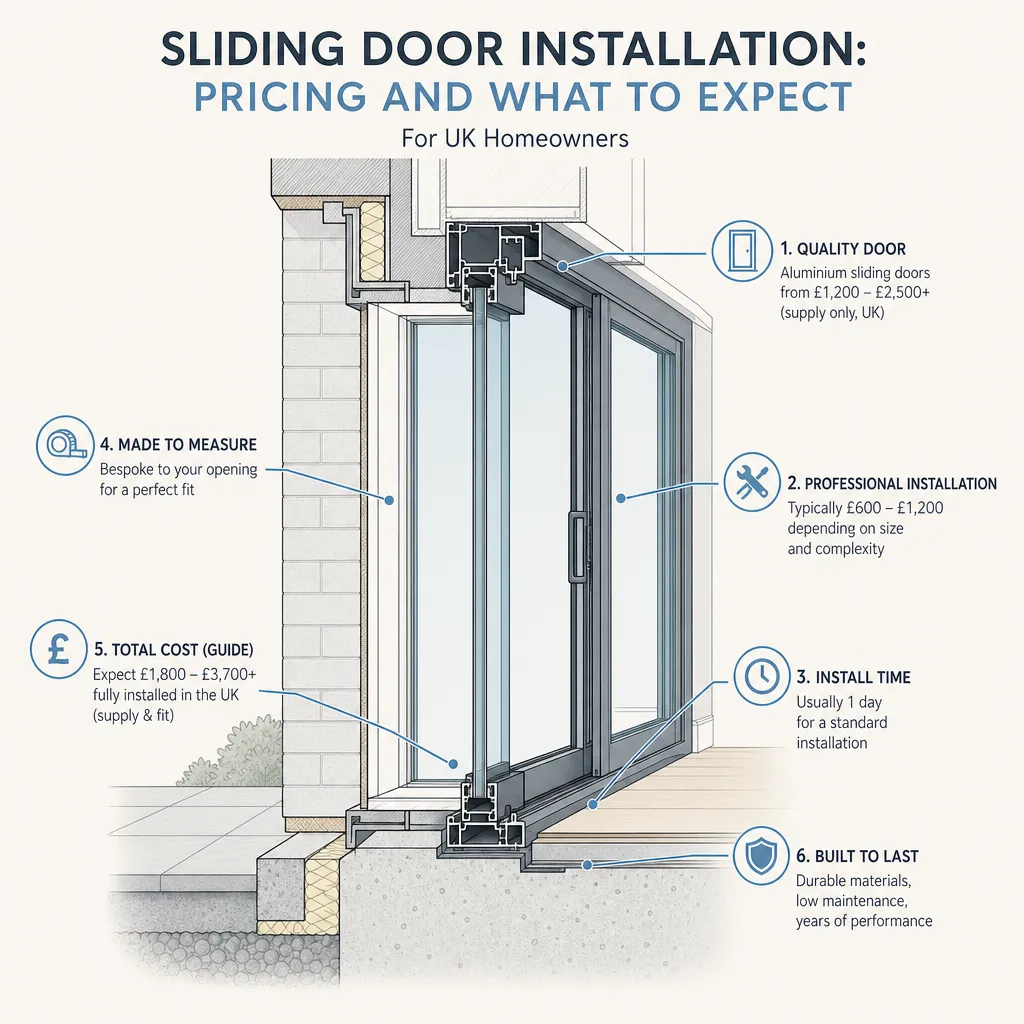 Improvement & Build
Sliding door installation: pricing and what to expect
A new sliding patio door in the UK typically costs £800–£3,000 fully installed, depending on size, material, and glazing specification.
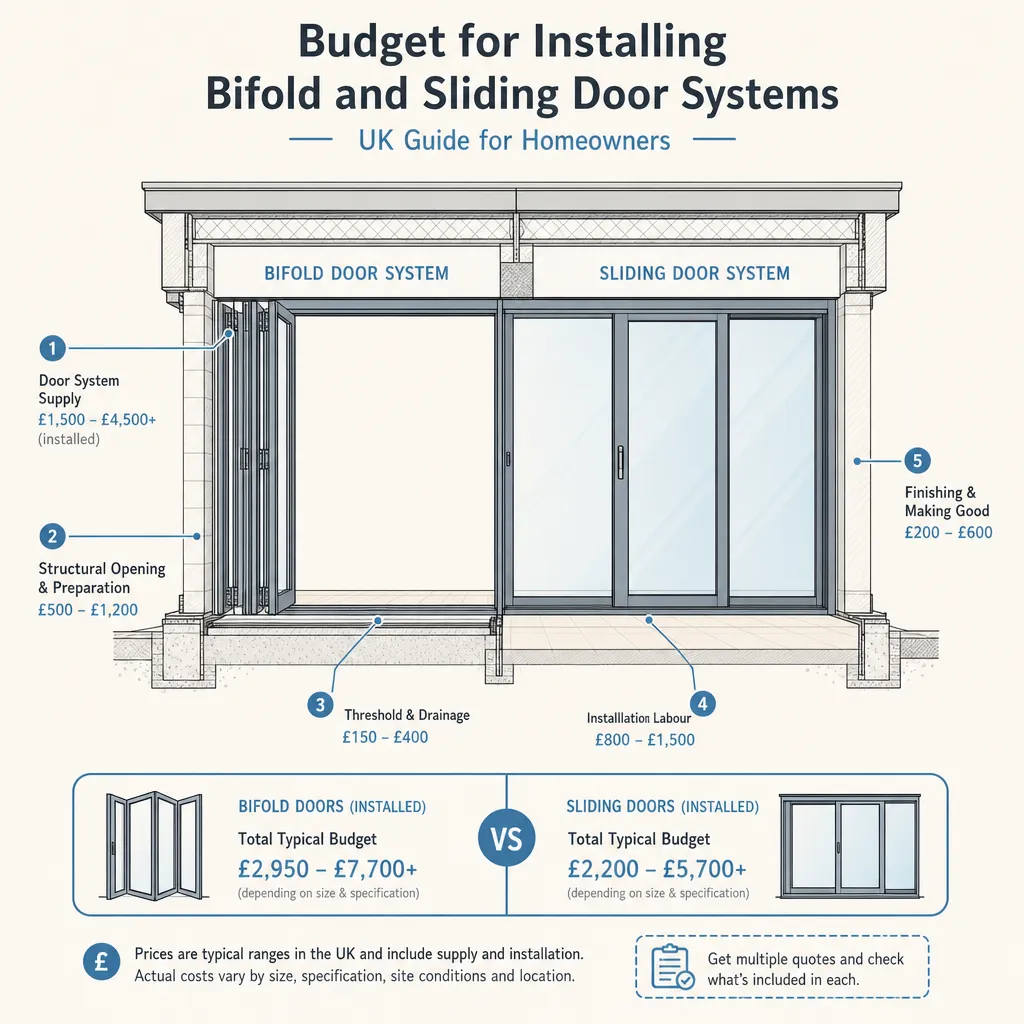 Improvement & Build
Budget for Installing Bifold and Sliding Door Systems
Aluminium bifold doors typically cost £4,000–£12,000 supplied and installed; uPVC bifolds run £2,500–£6,000.
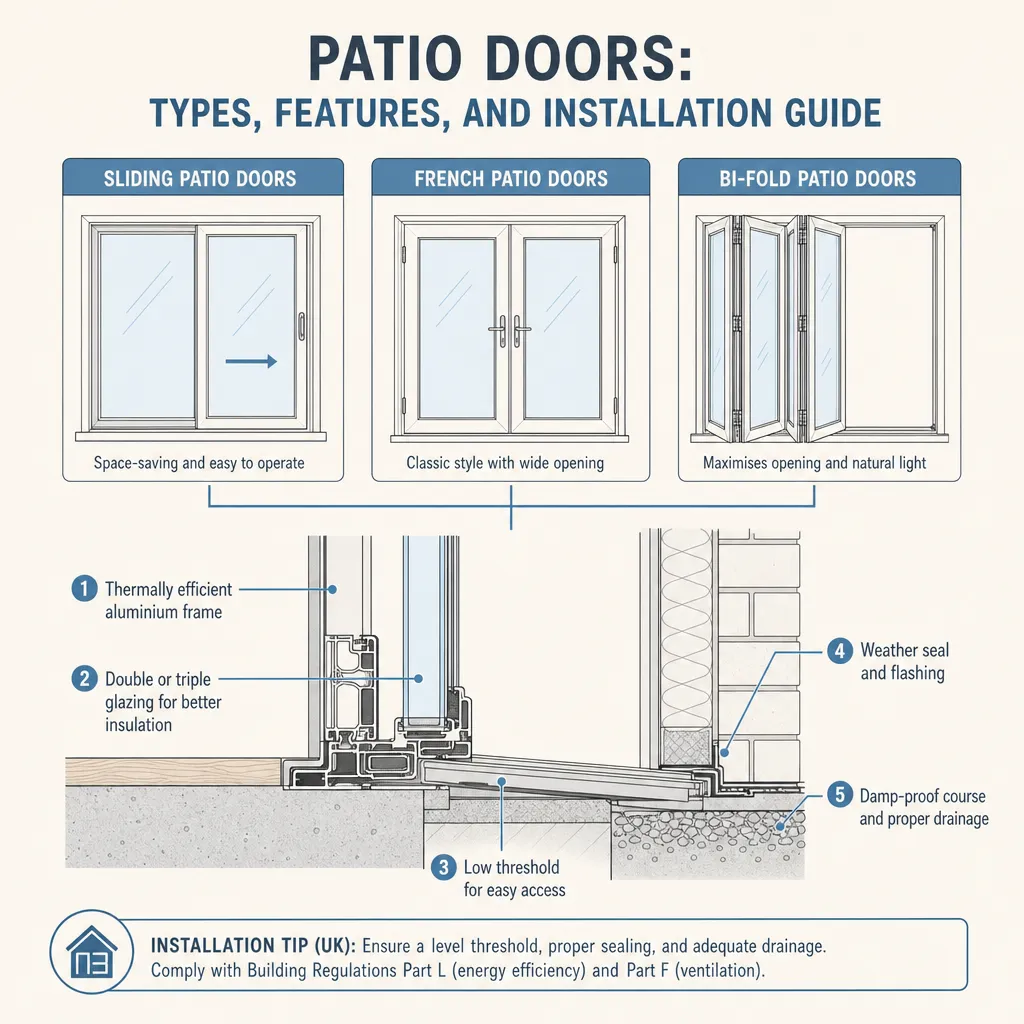 Improvement & Build
Patio Doors: Types, Features, and Installation Guide
UK patio doors come as sliding, French, or bifold systems.
 Improvement & Build
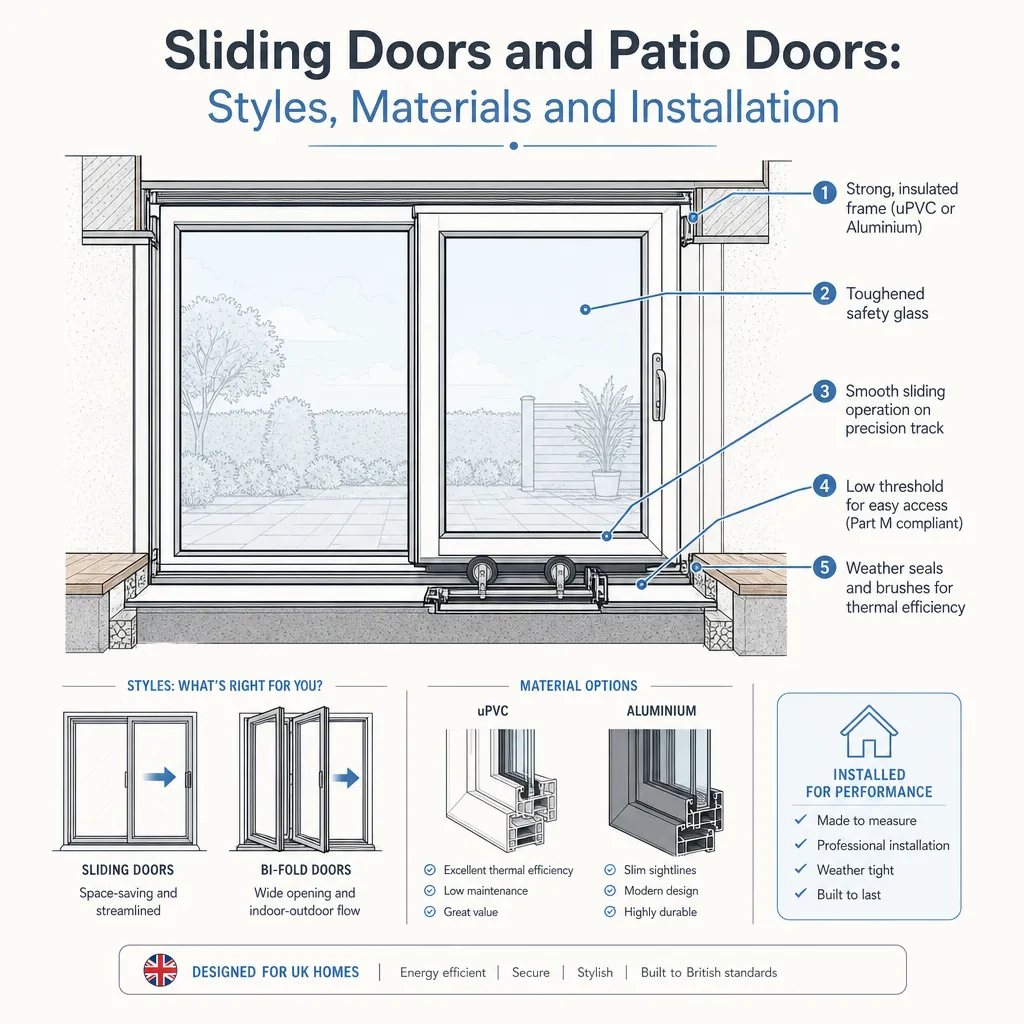
Sliding Doors and Patio Doors: Styles, Materials and Installation
Sliding patio doors move horizontally on a track, keeping outside space clear compared to a swinging door.
 Improvement & Build
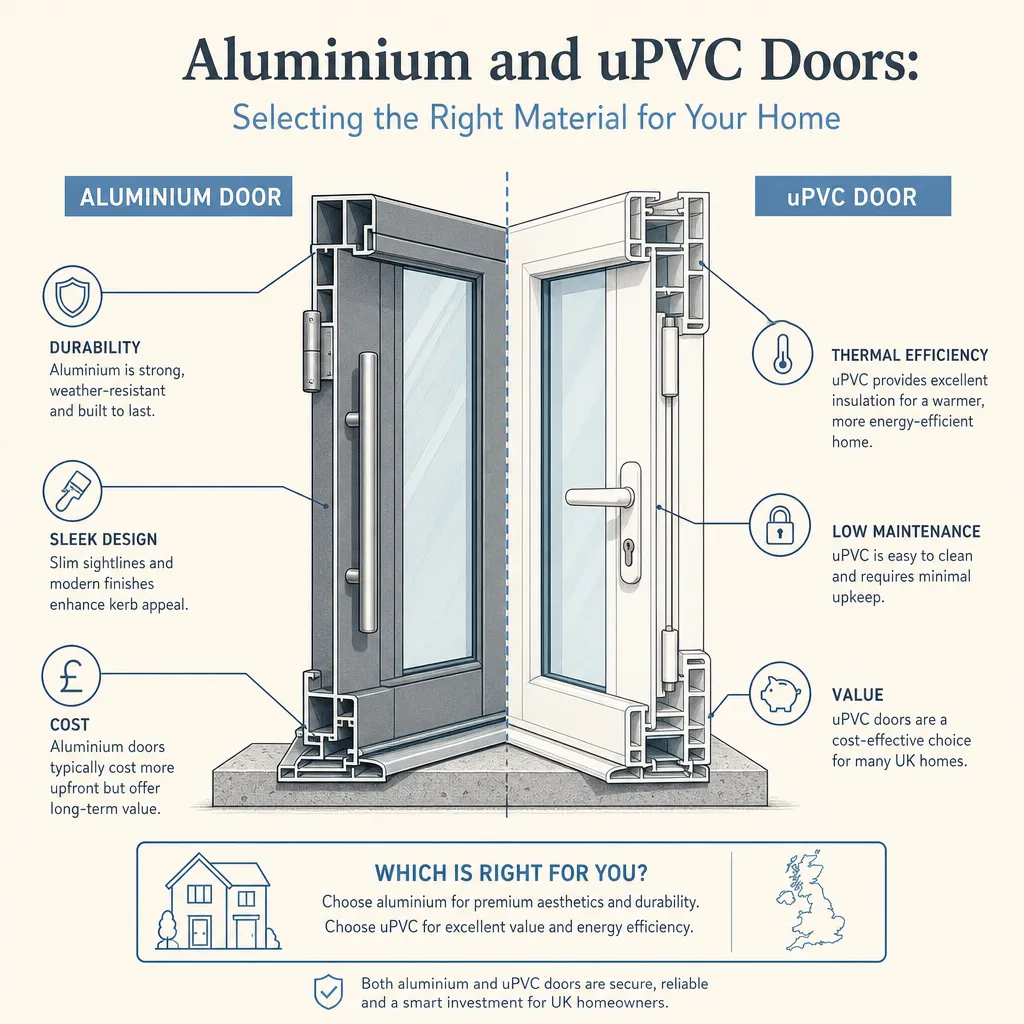
Aluminium and uPVC Doors: Selecting the Right Material for Your Home
uPVC doors are lower-cost and low-maintenance, making them a practical choice for most UK homes.