Patio Doors: Types, Features, and Installation Guide
By Housey · Last reviewed 11th of May 2026
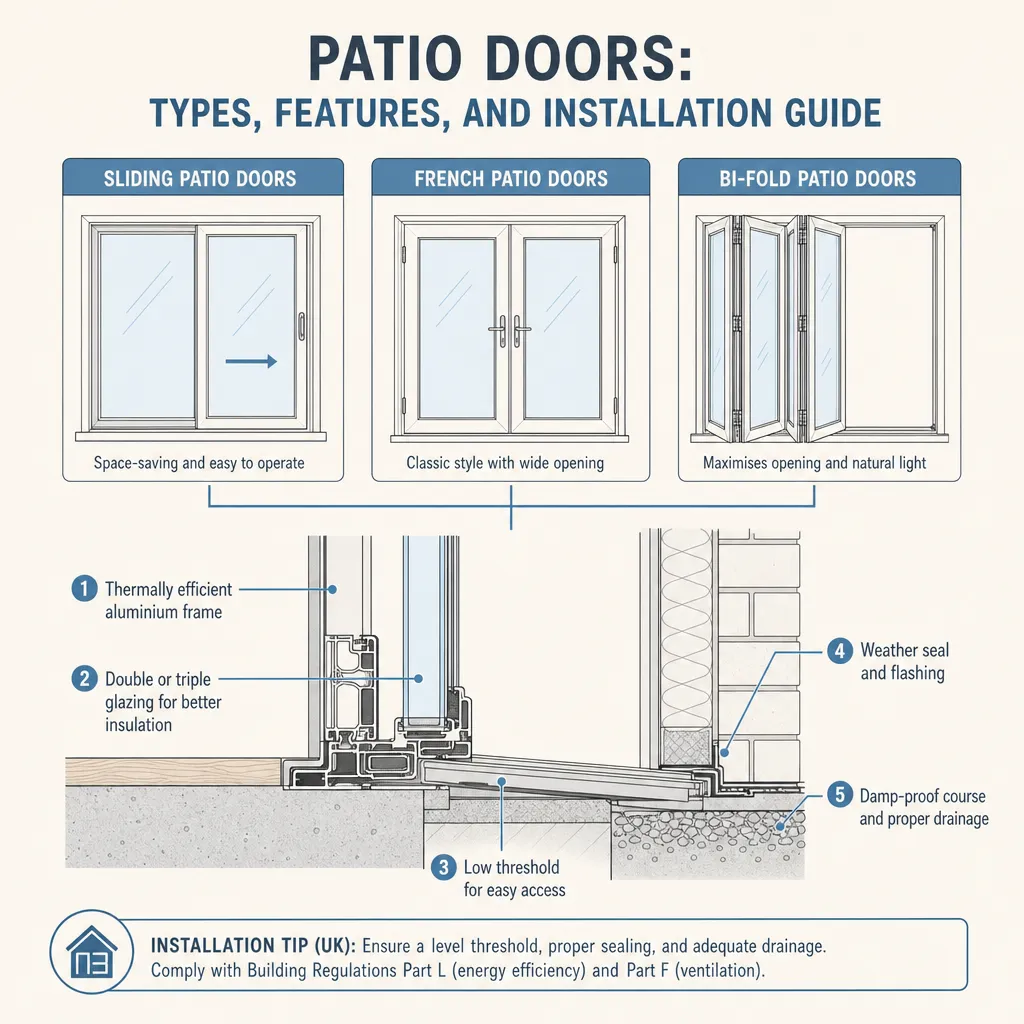
Patio Doors: Types, Features, and Installation Guide
Choosing patio doors affects both the day-to-day feel of a home and its long-term performance — thermal efficiency, security, and the relationship between interior space and garden. In the UK, patio doors are commonly fitted during rear extensions, kitchen renovations, and open-plan remodelling projects. With several system types, glazing standards, security requirements, and Building Regulations obligations to navigate, it is worth understanding the options before requesting quotes or committing to a frame material.
Key points
- Replacement patio doors are notifiable under Part L (energy performance) and Part Q (security) of the Building Regulations; most installations require a FENSA or CERTASS certificate or building control sign-off.
- Sliding, French, and bifold doors are the three most common domestic systems in the UK; each has different width, structural, and floor clearance requirements.
- The minimum U-value for replacement glazed doors is 1.4 W/m²K under the current Part L Approved Document (England, 2022 edition).
- Part Q requires doors in new dwellings and extensions to meet PAS 24:2022 attack resistance; ask your installer to confirm product certification.
- Bifold doors spanning over around 2,400 mm typically require an engineered steel or timber beam (RSJ or LVL) above the opening; structural sizing must be confirmed before installation begins.
Which patio door type suits your home?
Sliding patio doors
The classic sliding patio door uses two or more panels, with one or more sliding behind the other on a bottom track. No floor clearance is needed for opening, making them practical for tight spaces or where furniture sits close to the door. Standard widths run from approximately 1,500 mm to 3,600 mm in a two-panel format, with wider configurations available as multi-panel systems. The principal limitation is that only half — or less — of the total opening width is accessible at any one time.
French doors
French doors are hinged double doors that open inward or outward. They suit openings of roughly 1,500–2,400 mm and are well matched to period properties — Victorian terraces, Edwardian semis, and cottage-style homes — where a traditional aesthetic is preferred. Outward-opening French doors are better suited to smaller rooms as they do not encroach on interior space; inward-opening versions are often easier to weather-seal. A narrow central mullion is typically present between the two leaves.
Bifold doors
Bifold systems fold back on themselves, stacking flat to one or both sides to open most or all of the aperture. They are popular on wider openings (2,400 mm and above) and create a seamless indoor-outdoor connection difficult to achieve with other systems. However, they require a deep structural lintel or beam above the opening, a clear stack zone at the side, and a low-threshold detail to maintain level access. They tend to cost more than sliding or French door systems of equivalent width.
Comparison table: patio door types
Type | Typical opening width | Clear opening (approx.) | Period suitability | Structural note | Indicative supply-and-fit cost |
|---|---|---|---|---|---|
Sliding | 1,500–4,000 mm | 45–50% of width | Contemporary, modern | Standard lintel usually sufficient | £1,200–£4,000 |
French doors | 1,500–2,400 mm | 90–95% of width | Traditional, period, cottage | Standard lintel usually sufficient | £1,000–£3,500 |
Bifold (3–5 panels) | 2,400–6,000 mm | 85–95% of width | Contemporary, open-plan | Engineered beam often required | £3,000–£10,000+ |
Indicative UK supply-and-fit costs, last reviewed 2026-05-11. Costs vary with material choice, glazing specification, and any structural works required.
Frame materials
uPVC is the most widely installed material in the UK — low maintenance, good thermal performance, and the most cost-effective option. Modern uPVC profiles can achieve whole-unit U-values well below 1.4 W/m²K. The main limitation is aesthetic: uPVC suits contemporary and modern homes better than period properties, and colour options, while improving, remain more limited than aluminium.
Aluminium frames are slimmer, stronger, and available in a wide powder-coat colour range. They carry a premium over uPVC but are commonly specified for contemporary extensions and open-plan renovations. Thermally broken aluminium profiles meet current Part L requirements; non-thermally broken profiles should be avoided as they conduct cold significantly and risk condensation on the inner frame.
Timber is appropriate for period homes, conservation areas, and listed buildings where planning or listed building consent conditions may restrict the use of uPVC or aluminium. Timber requires periodic repainting (typically every 7–12 years depending on exposure) but can be repaired and re-glazed over its lifetime and carries the lowest embodied carbon of the main frame materials.
Composite (timber-aluminium) systems combine a timber interior with an aluminium exterior, providing low-maintenance weather resistance outside with the warmth and appearance of timber inside. They suit period homes where external appearance is important but minimal maintenance is preferred.
Glazing performance
All replacement patio doors must comply with Part L of the Building Regulations. Under the current 2022 Approved Document L for England:
- Glazed doors must achieve a whole-unit U-value of 1.4 W/m²K or better.
- Low-emissivity (Low-E) coatings are standard on compliant double and triple-glazed units.
- Argon or krypton gas fill between panes improves insulation performance.
Triple glazing is available and achieves whole-unit U-values of 0.6–0.9 W/m²K, at higher cost and increased panel weight. In most UK climates, high-performance double glazing (whole-unit U-value 1.0–1.2 W/m²K) offers a practical balance of cost, weight, and thermal performance.
Security requirements under Part Q
Under Approved Document Q of the Building Regulations, doors in new extensions and dwellings must resist physical attack in accordance with PAS 24:2022. Key requirements include:
- Multipoint locking systems.
- Reinforced frames and glass units that resist manual attack for a defined test period.
- Hinge protection on hinged and folding doors.
- Anti-lift provisions on sliding door panels.
When requesting quotes, confirm that the product holds a current PAS 24:2022 certificate, or carries Secured by Design accreditation (which typically exceeds PAS 24 requirements). Ask for the certification document, not just a verbal assurance.
Installation and Building Regulations
Most patio door replacements on existing openings in England are notifiable under Part L and Part Q. The simplest compliance route is to use a FENSA or CERTASS-registered installer, who self-certifies compliance and issues a certificate — which you will need when you come to sell the property. Alternatively, a building control body can inspect and certify the work independently.
If the installation involves widening an existing opening or cutting a new opening in a structural wall, the structural works — beam, padstone, temporary support — are separately notifiable under Part A (Structural Safety) and require building control approval. Clarify in writing which party is responsible for the structural element before work begins.
Decision tree: which patio door system should you choose?
- Choose sliding patio doors if the opening is under 3,000 mm, floor clearance is limited, and you prefer a minimal contemporary aesthetic.
- Choose French doors if the opening is 1,500–2,400 mm, the property is period or traditional in character, or budget is a higher priority than maximum aperture width.
- Choose bifold doors if the opening is 2,400 mm or wider, you want maximum aperture when the doors are open, and you have confirmed adequate structural support and a clear stack zone at the side.
- Ask a structural engineer if the opening is being widened, if the existing lintel appears undersized, or if any doubt exists about the structural adequacy of the wall.
- Check with your local planning authority if the property is listed, in a conservation area, or subject to conditions on permitted development rights before specifying materials or starting work.
When to get professional help
Always use a qualified, FENSA or CERTASS-registered installer for patio door replacement. For new or widened openings in structural walls, involve a structural engineer before any masonry is removed.
Red flags:
- A quote that makes no mention of Building Regulations compliance or FENSA/CERTASS certification.
- An installer proposing to widen a structural opening without a structural engineer's calculation or building control approval.
- No mention of PAS 24:2022 or Part Q compliance when installing into a new extension.
- A bifold door quote with no lintel specification or structural check for the span involved.
How Housey can help
Housey connects UK homeowners with vetted window and door installers who can supply and fit patio doors to current Building Regulations standards. Get multiple quotes to compare system types, materials, and installation quality, and ask each installer to confirm their FENSA or CERTASS registration and the PAS 24:2022 certification for the product they are proposing.
Frequently asked questions
Do patio doors need planning permission?
Replacing existing patio doors in the same opening is usually permitted development and does not require planning permission. Creating a new opening in a rear wall is also typically permitted development for most residential properties. However, listed buildings require listed building consent, and conservation area properties may need consent for certain external changes. Always check with your local planning authority if in doubt.
What is FENSA and do I need it?
FENSA is a government-authorised scheme allowing registered installers to self-certify that replacement windows and doors comply with Building Regulations. Using a FENSA-registered installer means you receive a compliance certificate without needing separate building control sign-off. This certificate matters for conveyancing — buyers' solicitors routinely request it when you come to sell the property.
How long does patio door installation take?
A straightforward replacement in the same opening typically takes one day for a two- or three-panel system. Bifold door installations or those involving structural works — widening an opening or fitting a new beam — may take two to four days, plus any drying time for lintels set in masonry. Clarify the programme with your installer before work begins.
Can patio doors be fitted in a listed building?
Yes, but listed building consent is required for most external alterations, including door and window replacement. uPVC and standard aluminium may not be approved in conservation-sensitive settings; timber or carefully matched materials are often required. Check with your local authority's conservation officer before specifying materials or proceeding with any installation.
Sources and further reading
- Building Regulations Approved Document L (Conservation of Fuel and Power, 2022) — GOV.UK
- Building Regulations Approved Document Q (Security) — GOV.UK
- FENSA — self-certification scheme for replacement glazing — FENSA
- Secured by Design — door and window standards — Police Crime Prevention Initiatives
- PAS 24:2022 — Enhanced security performance requirements for doorsets and windows — BSI
Useful next reads
 Improvement & Build
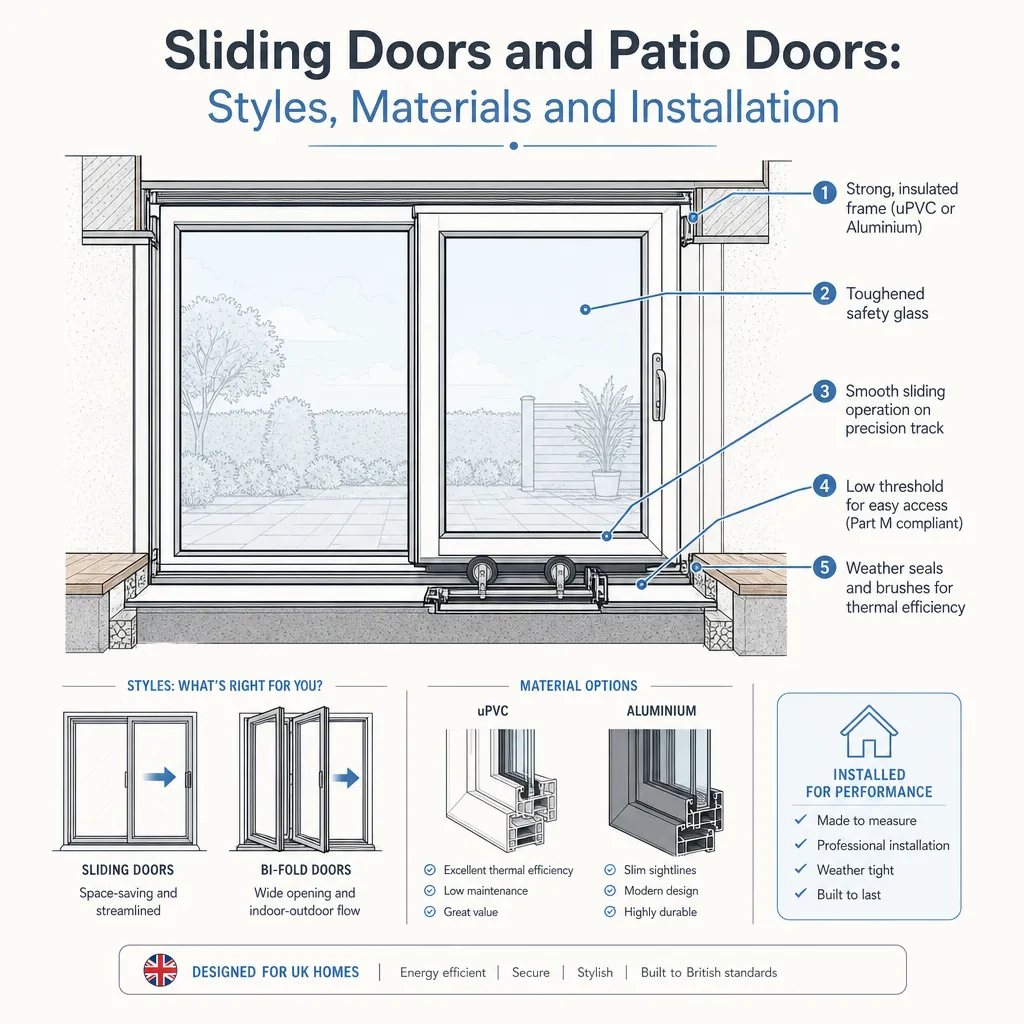
Sliding Doors and Patio Doors: Styles, Materials and Installation
Sliding patio doors move horizontally on a track, keeping outside space clear compared to a swinging door.
 Improvement & Build
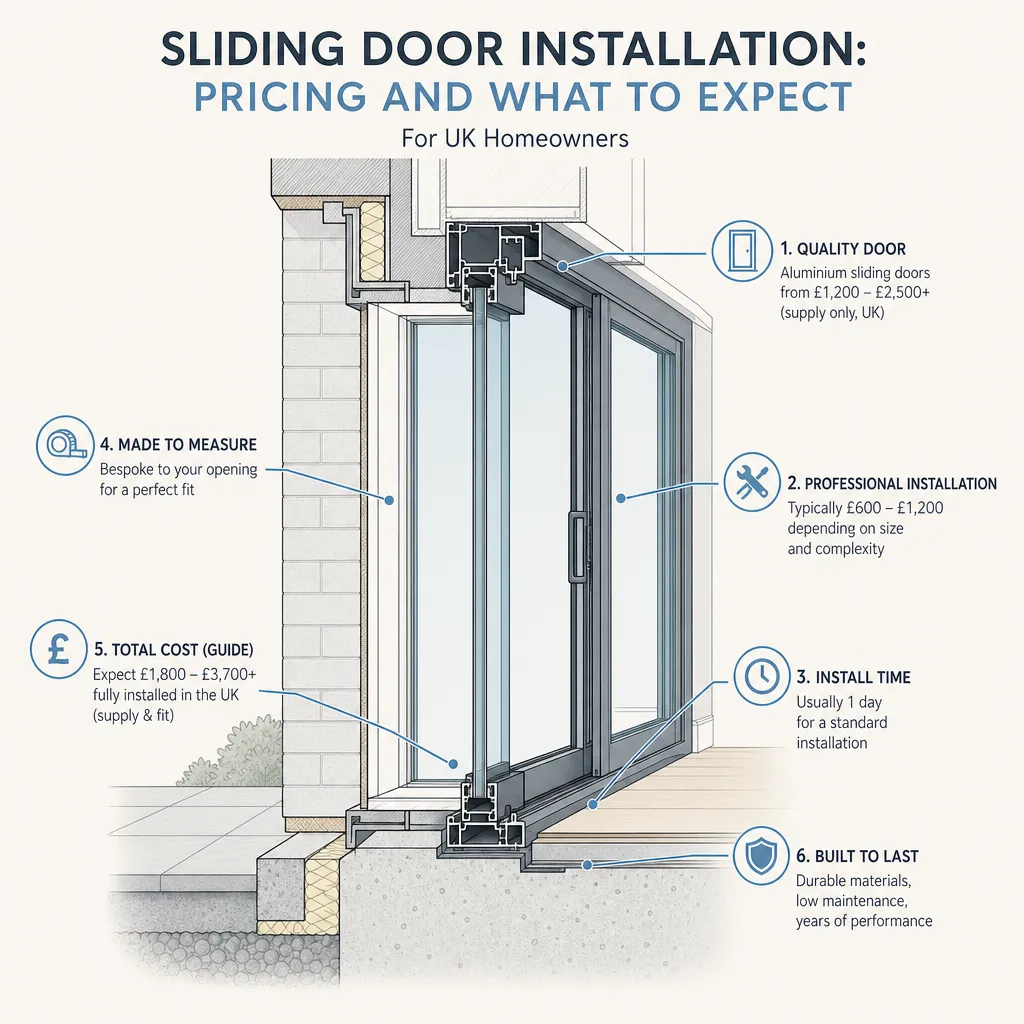
Sliding door installation: pricing and what to expect
A new sliding patio door in the UK typically costs £800–£3,000 fully installed, depending on size, material, and glazing specification.
 Improvement & Build
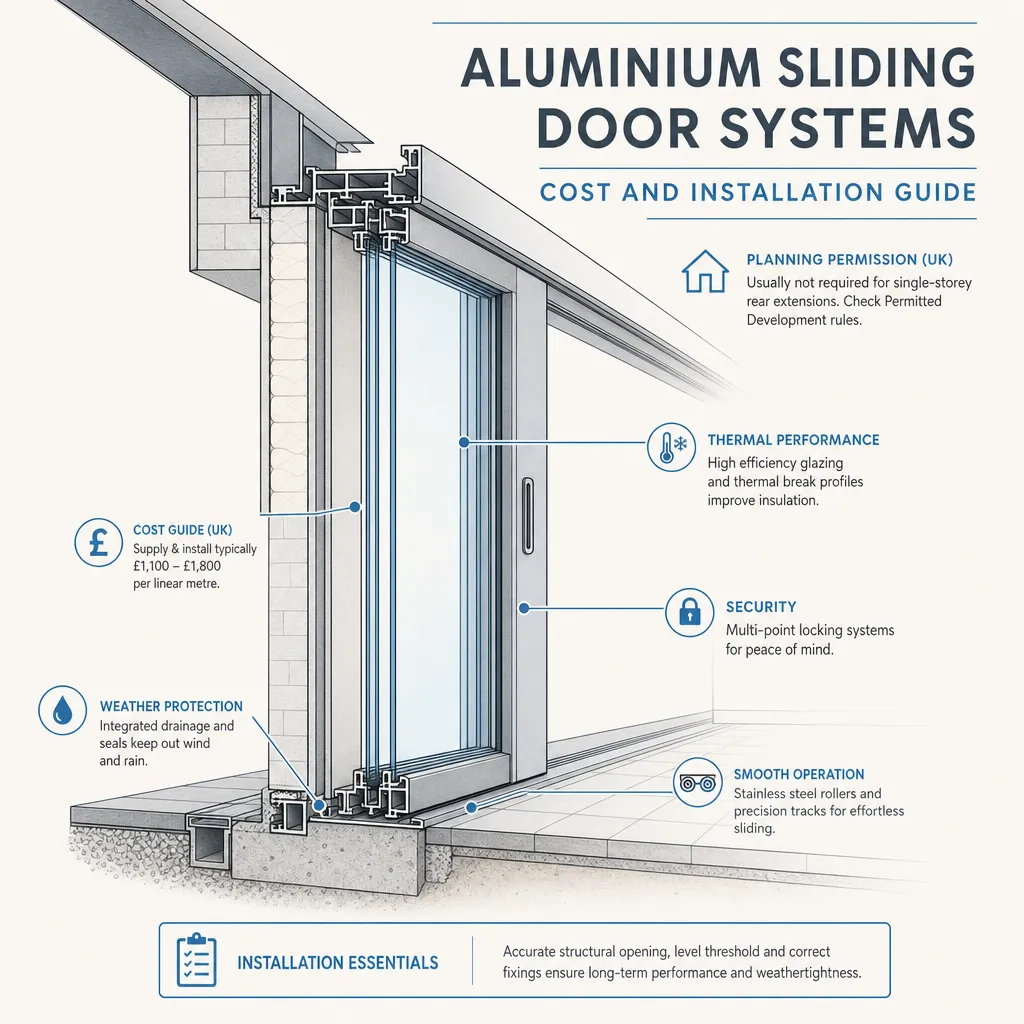
Aluminium Sliding Door Systems: Cost and Installation Guide
Aluminium sliding doors typically cost £2,500–£7,000 supply and fitted for a standard opening.
 Improvement & Build
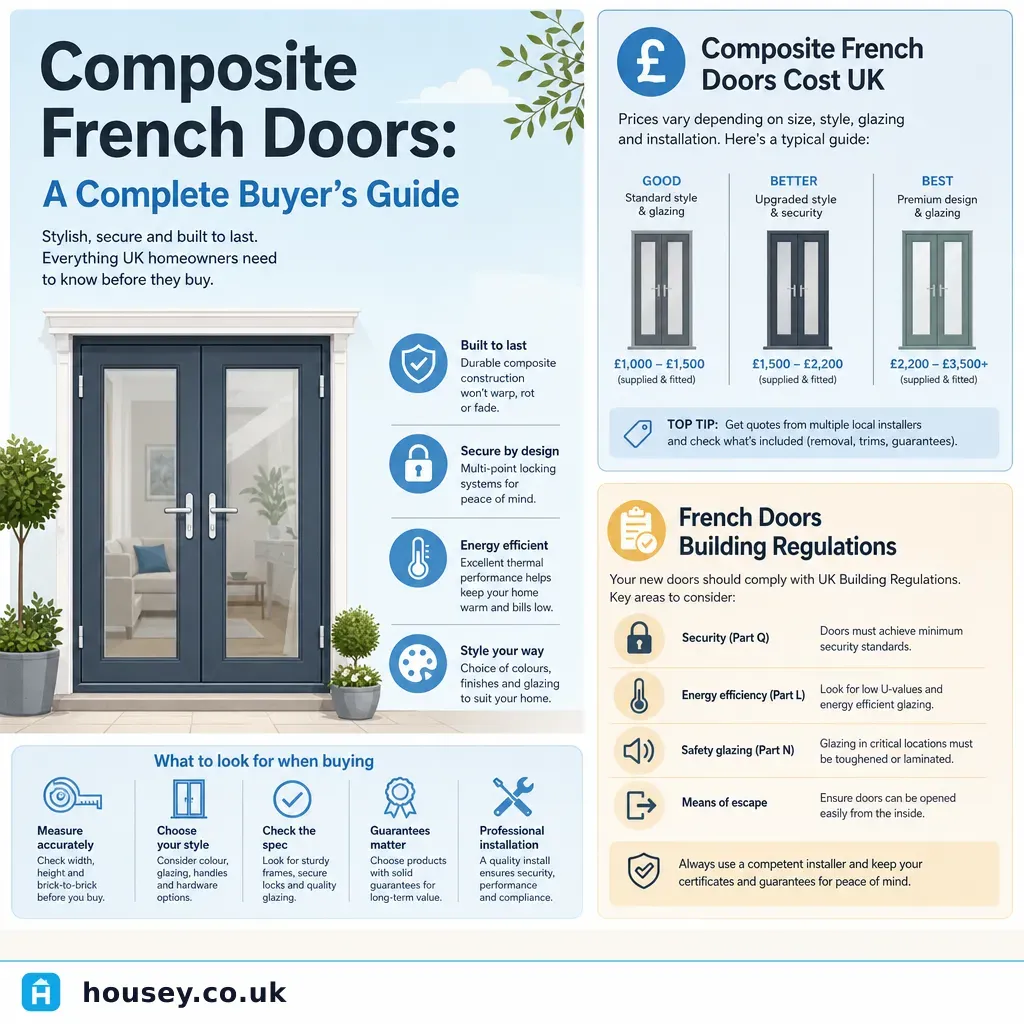
Composite French Doors: A Complete Buyer's Guide
Composite French doors combine a GRP or timber-effect outer skin with a solid insulated core, offering durability and low maintenance suited to UK weather.
 Improvement & Build
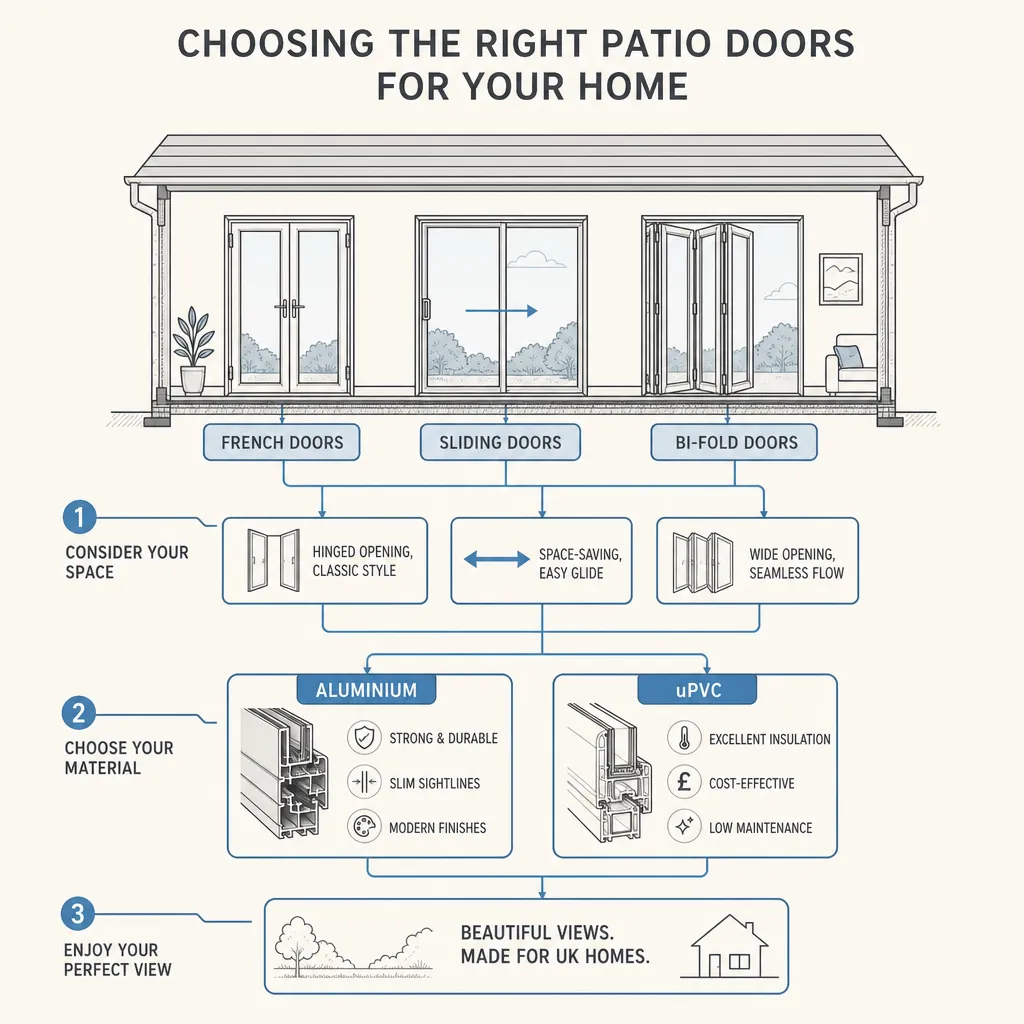
Choosing the Right Patio Doors for Your Home
The right patio doors depend on your opening width, available swing space, home style, and budget.