Aluminium and uPVC Doors: Selecting the Right Material for Your Home
By Housey · Last reviewed 11th of May 2026
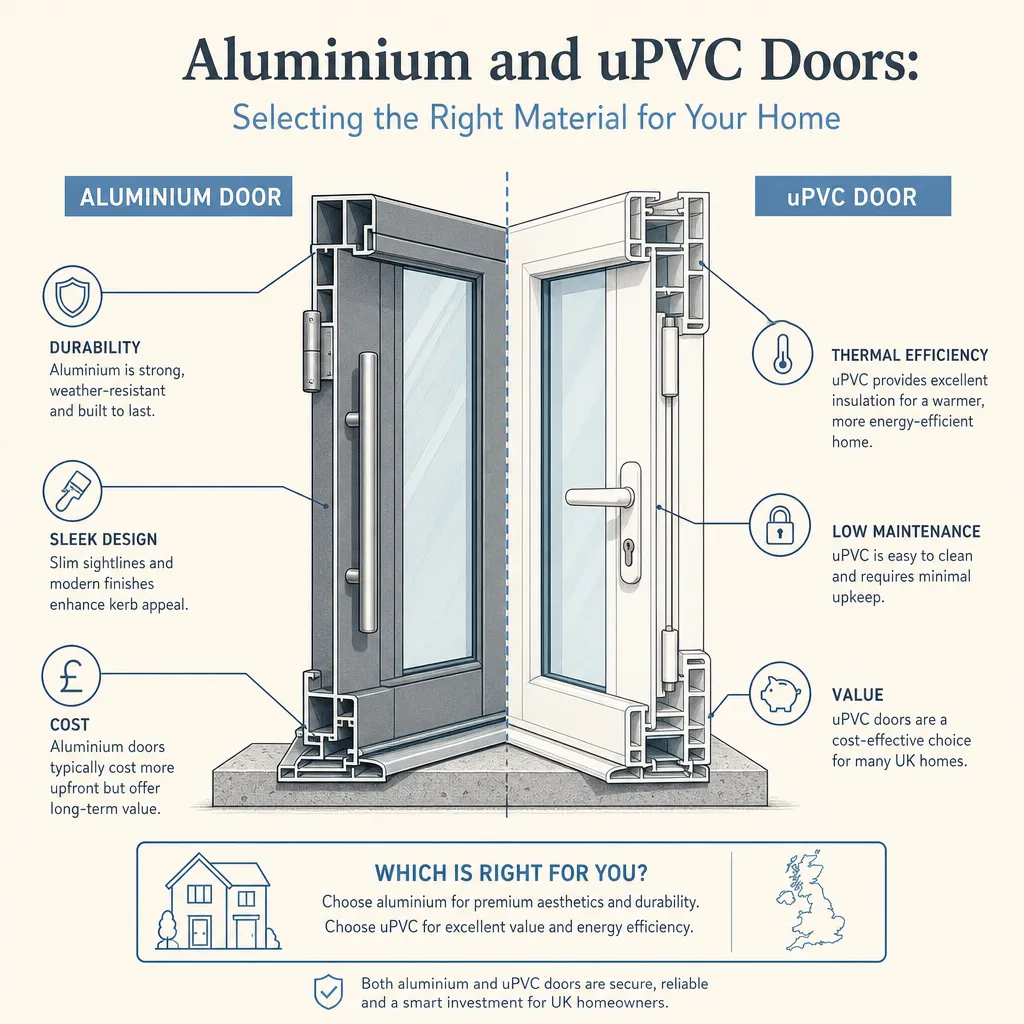
Aluminium and uPVC Doors: Selecting the Right Material for Your Home
Replacing an external door involves a more considered choice than it might first appear — the material determines not just how the door looks but how long it will last, how well it performs thermally, what maintenance it demands, and whether it satisfies any planning or listed building requirements. Getting a clear picture of both options before you commit saves time, money, and potential compliance headaches.
Key points
- Both aluminium and uPVC replacement doors must comply with Building Regulations Part L (Conservation of Fuel and Power), which requires a maximum U-value of 1.4 W/m²K for replacement doors in existing dwellings in England — the complete door system's U-value, not just the glazing, must meet this threshold.
- Installers registered with FENSA or CERTASS can self-certify Part L compliance, removing the need for a separate building control application — always request the certificate on completion, as it is required when selling the property.
- Aluminium doors typically last 40–60 years or more; uPVC doors typically 20–35 years, though quality varies considerably between manufacturers and product ranges.
- Powder-coated aluminium can be finished in virtually any RAL colour and is readily recoated; uPVC colour ranges are more limited and darker colours in particular can fade over time.
- Properties in conservation areas, national parks, or listed buildings may face restrictions on door materials, colours, or designs — check with your local planning authority before ordering.
Thermal performance: which material keeps the heat in?
Both aluminium and uPVC doors can achieve excellent thermal performance, but the overall door system design — frame profile, glazing specification, seals, and threshold — matters as much as the frame material itself.
uPVC multi-chamber profiles trap air within the frame to provide good insulation. Modern uPVC doors with quality seals and double or triple glazing consistently achieve U-values well below the 1.4 W/m²K threshold required by Part L.
Aluminium is a more thermally conductive material than uPVC, which historically made it less efficient. Modern aluminium door profiles address this with a thermal break — a low-conductivity polyamide bar inserted between the inner and outer aluminium sections — substantially reducing heat transfer through the frame. High-specification thermally broken aluminium doors can match or exceed uPVC in thermal performance.
When comparing quotes, ask each supplier for the U-value of the complete door system (not just the glass unit) and confirm it meets or exceeds the Part L threshold for your situation.
Durability, maintenance, and lifespan
Factor | uPVC | Aluminium |
|---|---|---|
Typical lifespan | 20–35 years | 40–60+ years |
Maintenance | Wipe clean; seals and hinges may need periodic attention | Low-maintenance; powder coat may need repainting after 20+ years |
Corrosion resistance | Excellent | Excellent with quality powder coat or anodising |
Colour stability | Darker colours can fade over 10–15 years | Powder coat holds colour well; can be professionally recoated |
Repairability | Profiles difficult to repair; often replaced in sections | Can often be refinished or repaired by a specialist |
Inherent rigidity | Requires steel reinforcement for strength and security | Inherently rigid and strong without additional reinforcement |
Aesthetics and design flexibility
Aluminium profiles are inherently slimmer than uPVC, allowing for larger glazed areas and cleaner sightlines. This makes aluminium particularly popular for contemporary and architect-designed homes, large bifold or sliding systems, and situations where maximising light or views is a priority. The virtually unlimited powder-coat colour range is a significant advantage for bespoke or modern projects.
uPVC has traditionally been associated with white or woodgrain finishes, though modern foiled uPVC now offers a wider range including anthracite grey and slate. For standard residential applications where budget is the primary driver, uPVC provides solid performance at a meaningfully lower cost.
For period properties — Victorian terraces, Edwardian semis, Georgian townhouses — the aesthetics of both materials can be debated, and in conservation areas or for listed buildings, the local planning authority may require a specific material or finish. Always confirm any restrictions before ordering.
Cost comparison
Door type | Typical uPVC installed cost | Typical aluminium installed cost |
|---|---|---|
Standard front door (single) | £600–£1,500 | £1,200–£3,500+ |
French doors (double) | £1,000–£2,500 | £2,000–£5,000+ |
Sliding patio doors (2-pane) | £1,500–£3,500 | £3,000–£7,000+ |
Bifold doors (3–4 pane) | £2,000–£5,000 | £4,000–£10,000+ |
Indicative UK costs, last reviewed 2026-05-11. Prices vary by size, glazing specification, hardware, and installer. Always obtain at least three quotes from FENSA- or CERTASS-registered installers.
Which material should you choose?
- Choose uPVC if you want a reliable, low-maintenance door at a lower upfront cost and have no strong requirement for slim sightlines or bespoke finishes.
- Choose aluminium if you want slimmer profiles for a larger glazed area, a wider colour choice, a more premium finish, or a door system that is likely to outlast multiple uPVC replacements.
- Choose aluminium if you are installing a large glazed system — bifold or wide sliding doors — where slim frame profiles make a tangible visual difference.
- Consult your LPA before ordering if the property is listed or in a conservation area, as specific materials, finishes, or designs may be required or excluded.
- Prioritise the door system's U-value over the frame material if reducing heat loss is your primary goal — both materials can perform excellently when the overall specification is correct.
- Seek structural advice if you are widening or creating a new opening, which may require a lintel assessment and a building regulations application beyond the standard Part L self-certification route.
Building regulations compliance checklist
Before installation, confirm each of the following:
When to get professional help
Seek specialist advice before proceeding if:
- You are widening or creating a new door opening, which may require a structural assessment of the lintel and a formal building regulations application.
- The property is listed or in a conservation area and you are uncertain what materials or finishes the LPA will accept.
- You are replacing multiple external doors as part of a wider energy-improvement project and want to confirm the works will not cause ventilation or moisture issues.
How Housey can help
Housey can connect you with vetted local window and door installers who are registered under FENSA or CERTASS, can supply and fit compliant aluminium or uPVC door systems, and will provide the required compliance certificate on completion.
Frequently asked questions
Do I need planning permission to replace my front door?
For most properties in England, replacing a front door is permitted development and does not require planning permission, provided the replacement is similar in appearance to the original. However, if your property is listed, in a conservation area, or subject to an Article 4 direction, permission or listed building consent may be required. Always check with your local planning authority before ordering to avoid enforcement problems.
Is aluminium or uPVC more secure?
Both materials can achieve high security ratings. Look for doors tested and certified to PAS 24:2022 (enhanced security for doorsets in dwellings) and meeting Secured by Design standards. The quality of the locking mechanism, hinge specification, and threshold construction matters as much as the frame material when assessing security performance.
How do I compare quotes for aluminium and uPVC doors?
Request itemised quotes specifying the door system's U-value, glass specification (double or triple glazed, gas fill, low-e coating), hardware grade, and installation warranty. Confirm whether the quote includes the FENSA or CERTASS certificate, threshold fitting, and any making-good work to the surrounding wall or frame. Always obtain at least three quotes from registered installers before deciding.
Can I repaint or refinish a uPVC door?
uPVC can be repainted using specialist uPVC-compatible paints, but the finish is rarely as durable as the original factory colour. Aluminium powder coat is more readily refinished by a specialist, holds colour better over time, and can be recoated to a high standard if the profile is in good condition — a useful consideration when weighing long-term maintenance costs.
Sources and further reading
- Building Regulations Approved Document L — GOV.UK
- FENSA — competent person scheme for windows and doors — FENSA
- Doors — planning guidance — Planning Portal
- Windows and doors — energy saving advice — Energy Saving Trust
Useful next reads
 Improvement & Build
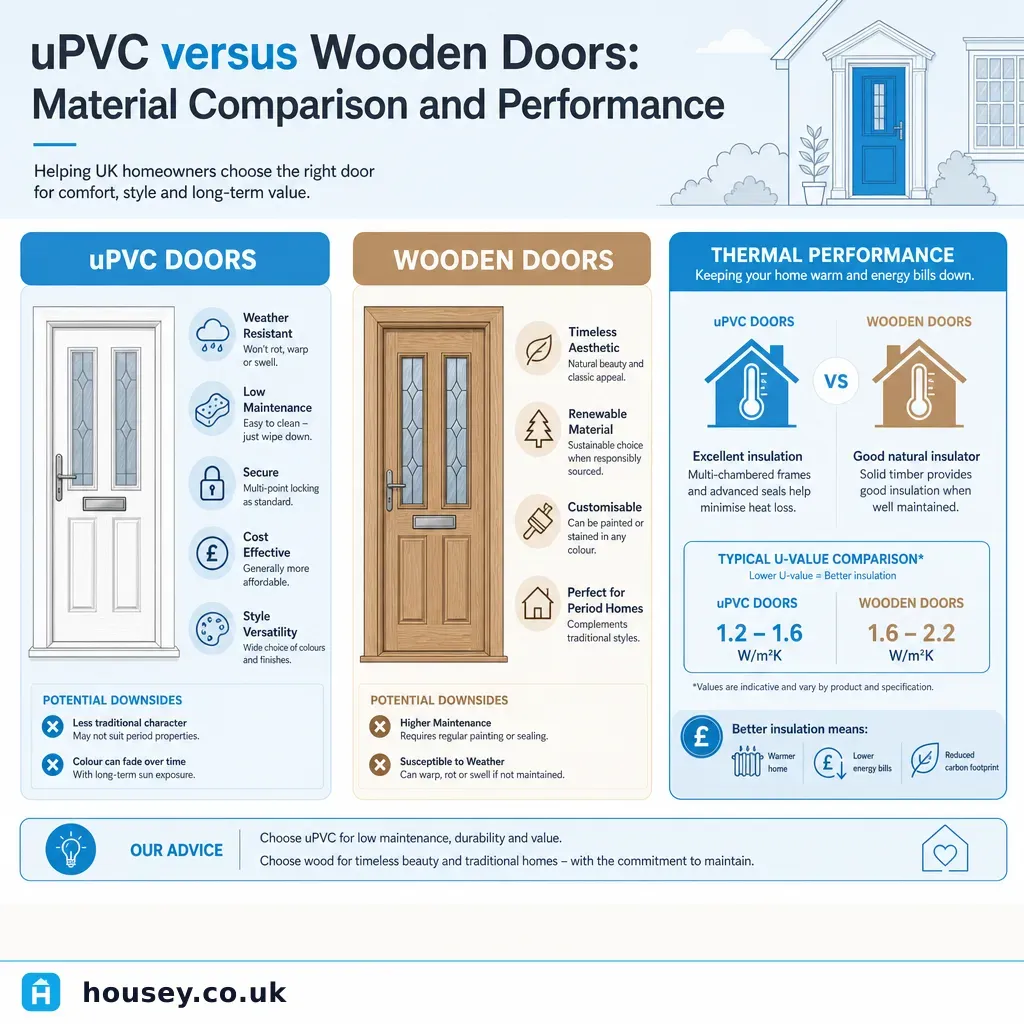
uPVC versus Wooden Doors: Material Comparison and Performance
uPVC doors are generally lower maintenance, better draught-sealed from the factory, and cheaper to install than timber doors.
 Improvement & Build
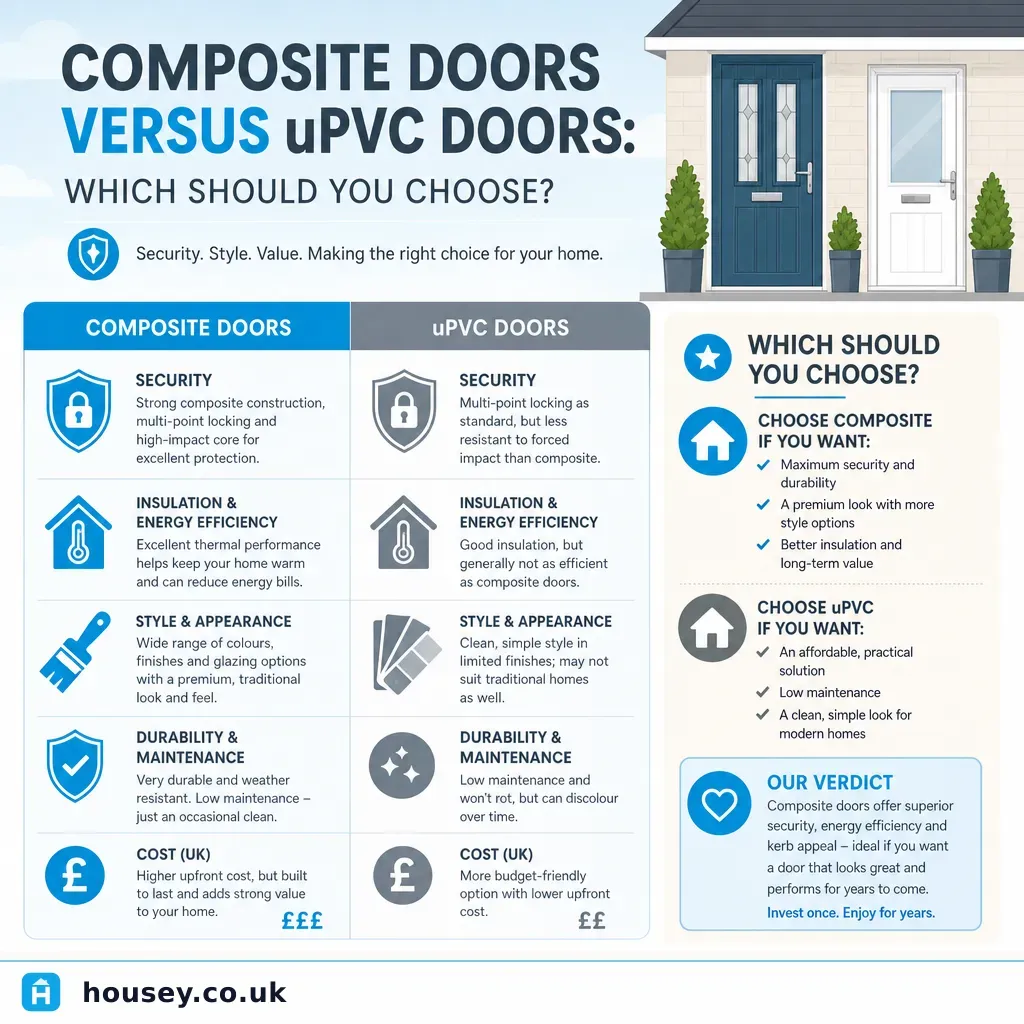
Composite doors versus uPVC doors: which should you choose?
Composite doors have a solid GRP-skinned core, stronger security credentials, and a typical lifespan of 35-plus years, but cost more than uPVC.
 Improvement & Build
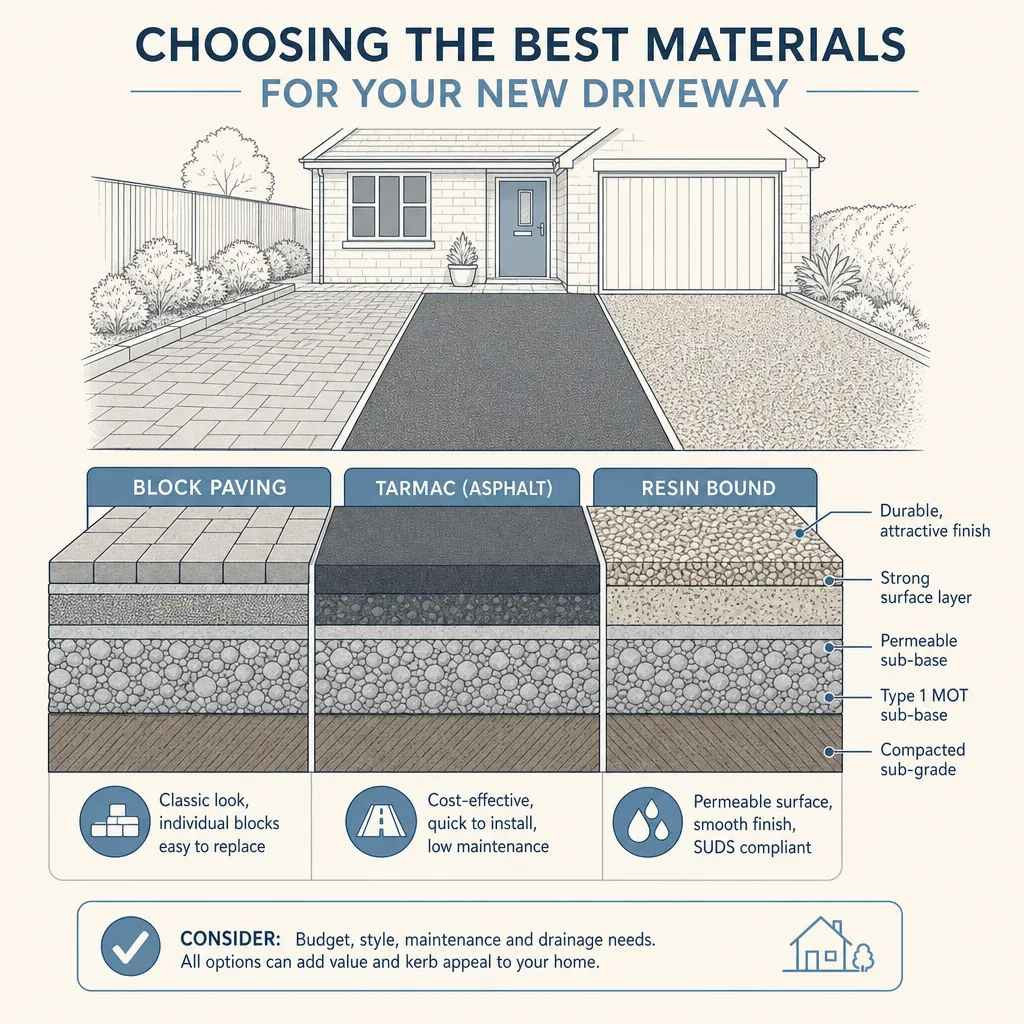
Choosing the best materials for your new driveway
The most common driveway materials in the UK are tarmac, block paving, resin-bound surfacing, concrete, and gravel.
 Improvement & Build
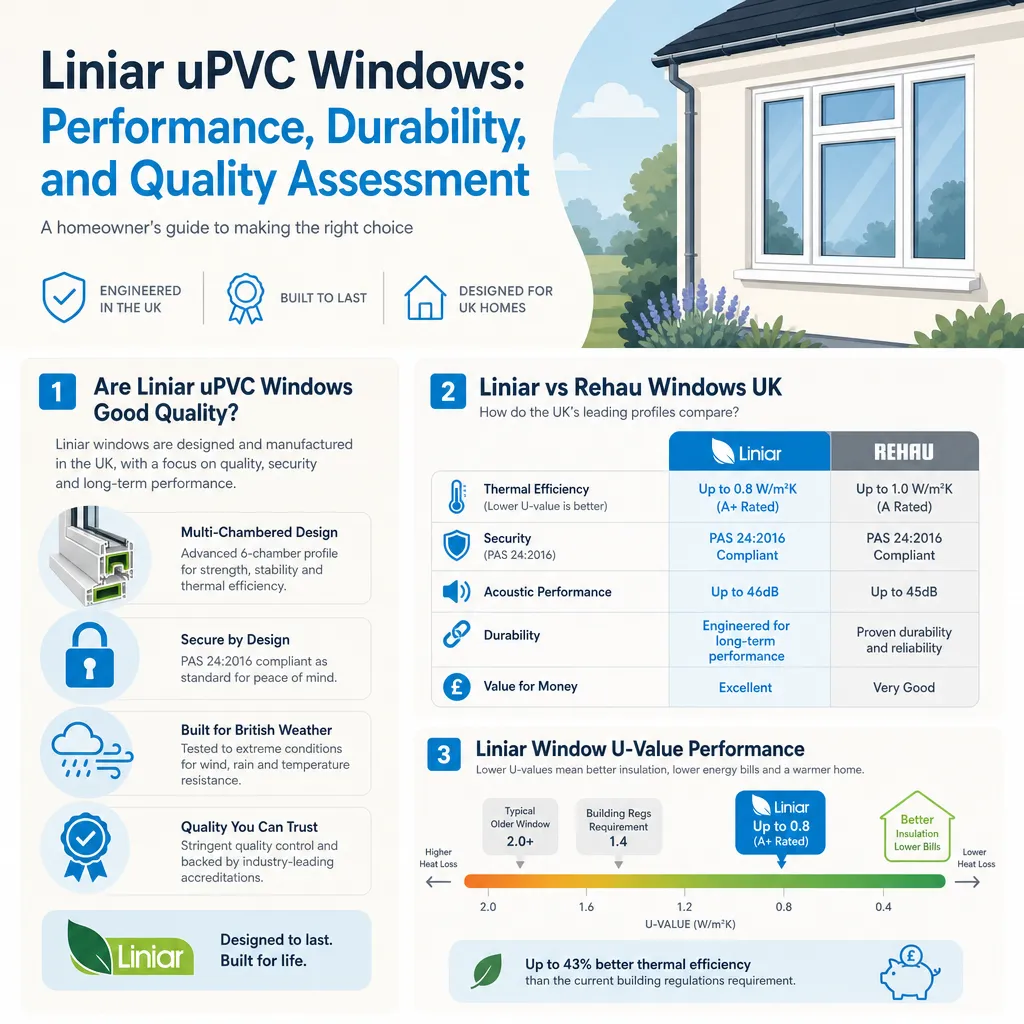
Liniar uPVC Windows: Performance, Durability, and Quality Assessment
Liniar uPVC window profiles are manufactured in the UK using multi-chambered, foamed frames.
 Improvement & Build
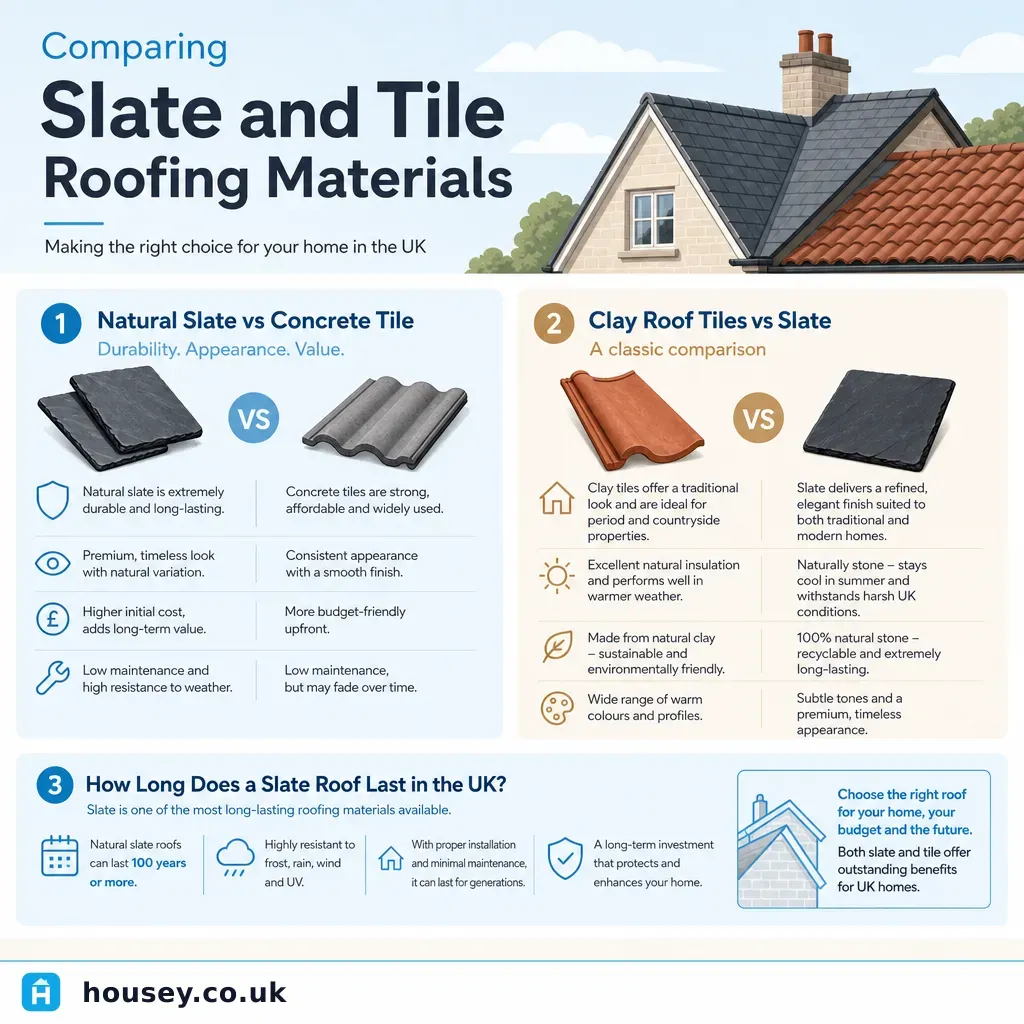
Comparing Slate and Tile Roofing Materials
Natural slate typically lasts 80–150 years and suits period and listed UK properties, while clay tiles offer 60–100 years and remain historically appropriate for Victorian and Edwardian stock.