Sliding door installation: pricing and what to expect
By Housey · Last reviewed 1st of June 2026
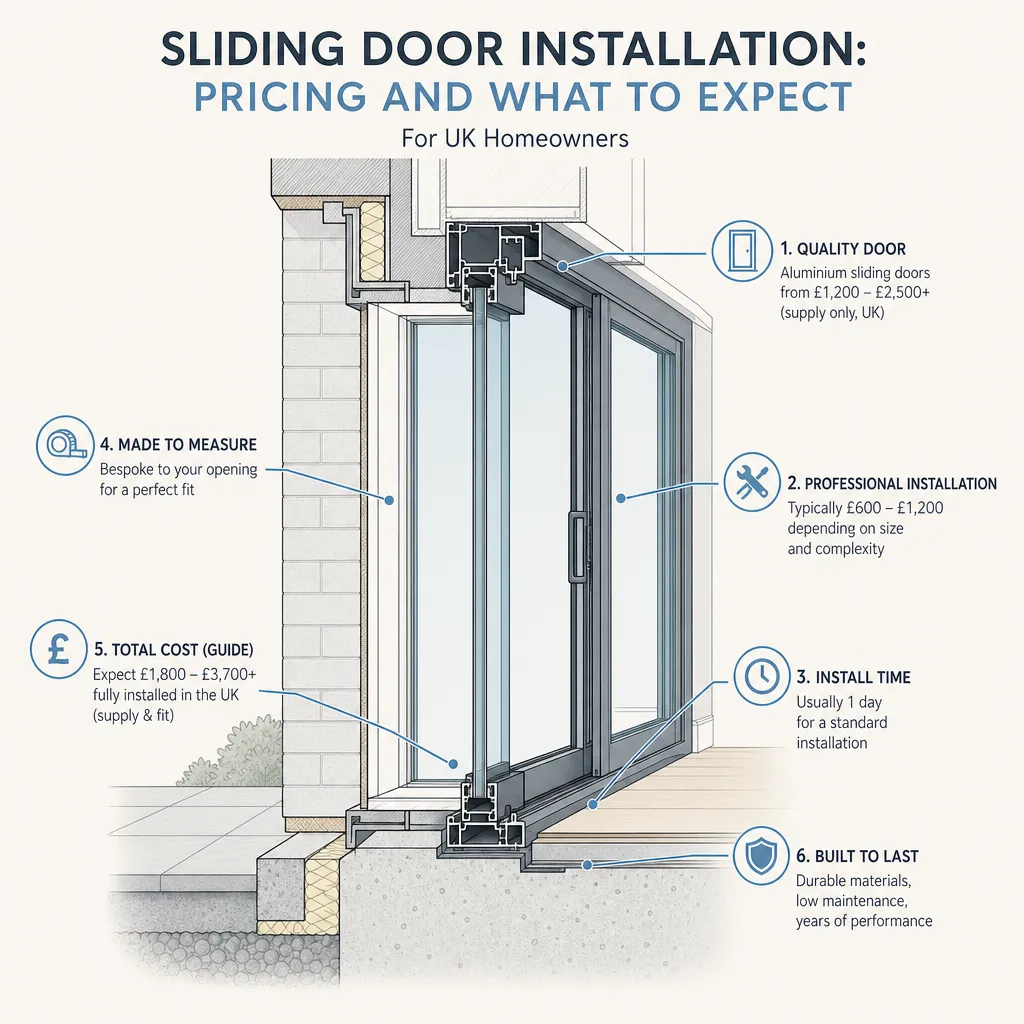
Sliding door installation: pricing and what to expect
Sliding patio doors are one of the most popular ways to open up a rear elevation — whether fitted as a direct replacement for French doors, as part of a new extension, or to create a wider threshold between a kitchen and garden. Costs vary considerably depending on material, size, glazing specification, and whether the opening needs structural alteration. Understanding what drives the price helps homeowners compare quotes fairly and avoid surprises at the installation stage.
Key points
- uPVC sliding patio doors cost approximately £600–£1,500 supply only; aluminium thermally broken frames typically range from £1,200 to £3,500 or more depending on size and specification. Indicative UK costs, last reviewed 2026-06-01.
- Replacement glazed doors must meet Building Regulations Part L, which requires a maximum U-value of 1.6 W/m²K for the whole unit.
- The installer must be registered with a competent-persons scheme — FENSA or CERTASS — so the work self-certifies under Building Regulations without a separate building notice to your local authority.
- Like-for-like door replacements generally fall under permitted development and do not require planning permission; listed buildings and conservation areas are exceptions.
- Labour for a standard two-panel sliding door installation typically adds £200–£600 to the supply cost, varying by location and whether structural lintel work is needed.
How much does sliding door installation cost in the UK?
Costs split into supply (the door unit itself) and installation (labour, disposal, and any associated making good).
Indicative UK costs, last reviewed 2026-06-01.
Door type | Supply cost (approx.) | Typical installation | Notes |
|---|---|---|---|
uPVC sliding patio door (2-panel) | £600–£1,200 | £200–£400 | Most affordable; suits most suburban homes |
uPVC sliding door (3- or 4-panel) | £900–£1,800 | £300–£500 | Wider spans; check lintel specification |
Aluminium sliding door (thermally broken, 2-panel) | £1,200–£2,500 | £300–£600 | Slim sightlines; higher thermal performance available |
Aluminium sliding door (large-format, 3–4 panel) | £2,500–£5,000+ | £400–£800 | Requires structural assessment for wide spans |
Timber sliding door | £1,800–£4,000+ | £400–£700 | Best for period properties; higher maintenance |
Prices vary by region, supplier, and specification. Always obtain at least three like-for-like quotes.
What drives the cost?
- Frame material. Aluminium frames with thermally broken profiles outperform standard uPVC on slimness and longevity but cost more to supply.
- Number of panels and overall width. Wider openings may require a structural engineer to check the lintel or beam, adding £300–£600 to the overall project cost.
- Glazing specification. Triple glazing, laminated glass, or low-emissivity coatings increase supply cost but improve thermal and acoustic performance.
- Opening-up work. If the existing opening is being widened or a new opening formed in a load-bearing wall, building control involvement is required regardless of the FENSA route.
- Disposal and making good. Removal of existing frames, plastering around reveals, and external sealant work are often included in a comprehensive quote — confirm before accepting.
uPVC vs aluminium vs timber: which material suits your home?
Material | Best for | Not ideal for | Maintenance | Typical lifespan |
|---|---|---|---|---|
uPVC | Modern or 1980s–2000s homes; budget-conscious projects | Period properties where slim sightlines matter aesthetically | Very low; wipe clean | 20–30 years |
Aluminium (thermally broken) | Extensions, new builds, contemporary renovations | Tight budgets | Low; powder-coat finish | 30–45 years |
Timber | Victorian, Edwardian, or listed buildings | High-traffic or exposed coastal positions without regular upkeep | Moderate to high; regular painting or staining | 30+ years with maintenance |
For homes in conservation areas or with Article 4 Directions removing permitted development rights, check with your local planning authority before choosing a material that differs significantly from the original.
Do you need planning permission or building regulations approval?
Planning permission is not usually required for a like-for-like replacement sliding door — this falls under permitted development for most houses. You will need to apply if:
- The property is a listed building (any grade).
- The property is in a conservation area and the work affects a principal elevation.
- An Article 4 Direction removes permitted development rights in your area.
- The work forms part of an extension that itself requires planning permission.
Flats and maisonettes do not benefit from permitted development rights; check with your local planning authority before proceeding.
Building Regulations Part L applies to all replacement glazed units. The door must achieve a whole-unit U-value of 1.6 W/m²K or better. Compliance is self-certified when the installer is registered with FENSA or CERTASS. If they are not registered, you or the installer must submit a building notice to your local authority building control department before work begins. Retain the FENSA or CERTASS certificate — you will need it when selling the property.
Structural alteration. If the opening is being widened or a new opening formed in a load-bearing wall, building regulations approval is required through building control, separate from the glazing self-certification route. A structural engineer's calculations are typically needed before any brickwork is removed.
Worked example: replacing French doors with a wider sliding door in a 1990s semi
A homeowner in the East Midlands wants to replace a 1,600 mm-wide French door with a three-panel 2,400 mm aluminium sliding door to improve garden access and natural light.
Scope of work:
- Remove existing French doors and timber frame.
- Widen opening by 800 mm in a cavity wall.
- Install a new steel lintel (structural engineer sign-off required).
- Install thermally broken aluminium sliding door, double-glazed to Part L standard.
- Internal plaster patch, external pointing, and perimeter sealant.
Indicative cost breakdown:
- Structural engineer assessment and calculations: £350–£500
- Lintel supply and installation (builder): £400–£700
- Aluminium sliding door (supply): £1,800–£2,500
- Door installation (FENSA-registered): £350–£550
- Making good (plaster, decoration): £200–£400
- Total indicative range: £3,100–£4,650
Building control approval is required for the structural alteration. The FENSA certificate covers the glazing element; the structural work requires separate building control sign-off or a full plans application. Indicative UK costs, last reviewed 2026-06-01.
Homeowner checklist: before accepting a quote
When to get professional help
Most sliding door installations are routine for a FENSA-registered window and door installer. Seek additional professional advice if:
- The existing opening needs widening into a load-bearing wall — a structural engineer's calculations are required before any brickwork is touched.
- You notice signs of dampness, rot, or structural movement around the existing opening — these need investigation before new doors are fitted.
- The property is listed or in a conservation area — seek planning advice before specifying materials or proceeding with work.
- The door opening is adjacent to a party wall — a party wall surveyor may need to be involved depending on the extent of structural work.
How Housey can help
Housey connects homeowners with vetted window and door installers who are FENSA or CERTASS registered, as well as extension builders if your sliding door project forms part of a wider build. Submit one brief and compare quotes from up to four local specialists.
Frequently asked questions
Do I need a FENSA certificate for a sliding door replacement?
Yes, if the installer is FENSA-registered the work self-certifies under Building Regulations Part L and you receive a FENSA certificate on completion. If the installer is not FENSA or CERTASS registered, a building notice must be submitted to your local authority building control before work starts. Keep the certificate — it is required when you sell the property.
How long does sliding door installation take?
A straightforward like-for-like replacement of a standard two-panel sliding patio door typically takes one day. Wider or multi-panel installations, or those involving structural alterations to the opening, may take two to three days including associated making-good work such as plastering and external sealing.
Can I fit a sliding door myself?
Replacing a glazed door unit in an existing opening is technically possible for a skilled DIYer, but the work must still comply with Building Regulations Part L. Without FENSA or CERTASS registration you cannot self-certify — you must submit a building notice to local authority building control and arrange for an inspection. Most homeowners find it more straightforward to use a registered installer.
Will a new sliding door improve my home's EPC rating?
Replacing old single-glazed or poorly performing doors with double- or triple-glazed units meeting Part L U-value requirements can improve the EPC rating. The magnitude of the improvement depends on the total glazed area, the existing condition of other building elements, and the assessor's methodology.
Sources and further reading
- Building Regulations Approved Document L: Conservation of fuel and power — GOV.UK
- FENSA: competent persons scheme for windows and doors — FENSA
- CERTASS: glazing compliance certification — CERTASS
- Planning Portal: windows and doors permitted development guidance — Planning Portal
- Energy Saving Trust: double glazing — Energy Saving Trust
Useful next reads
 Improvement & Build
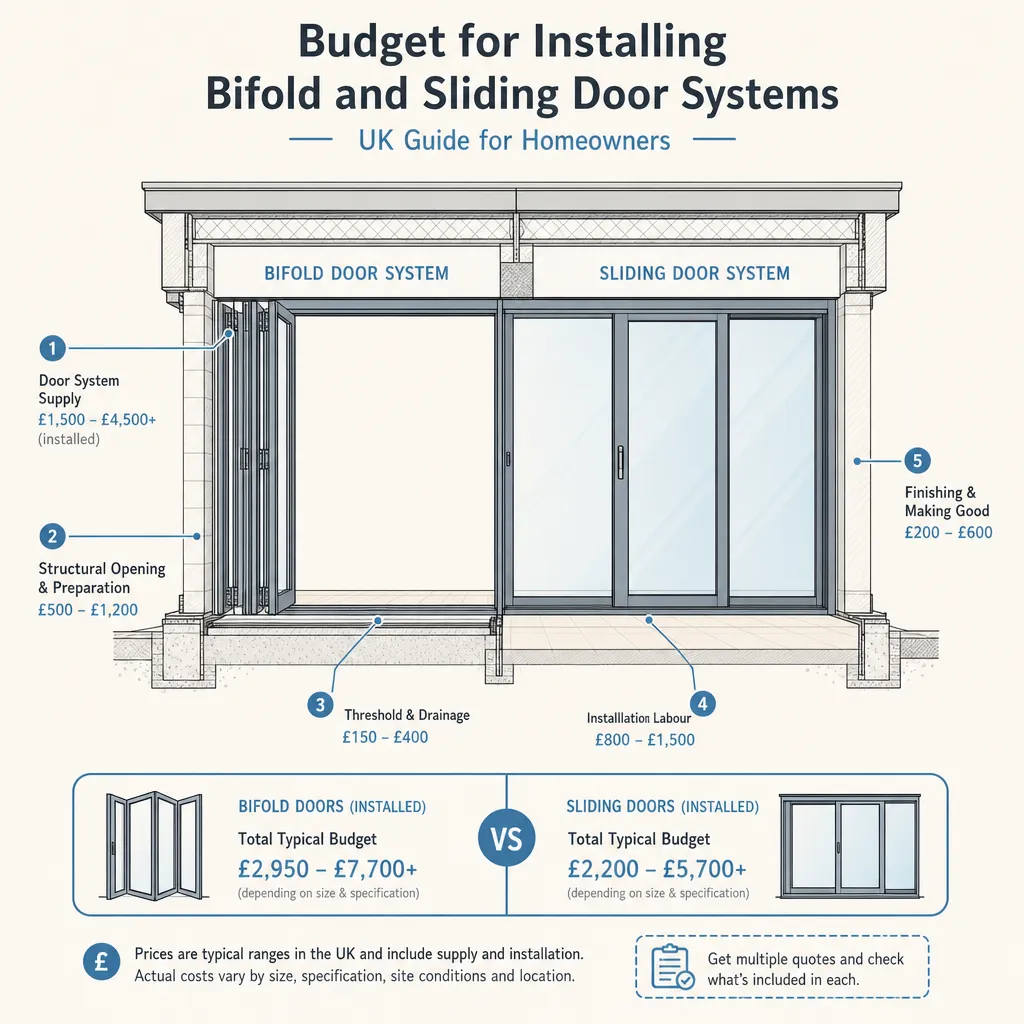
Budget for Installing Bifold and Sliding Door Systems
Aluminium bifold doors typically cost £4,000–£12,000 supplied and installed; uPVC bifolds run £2,500–£6,000.
 Improvement & Build
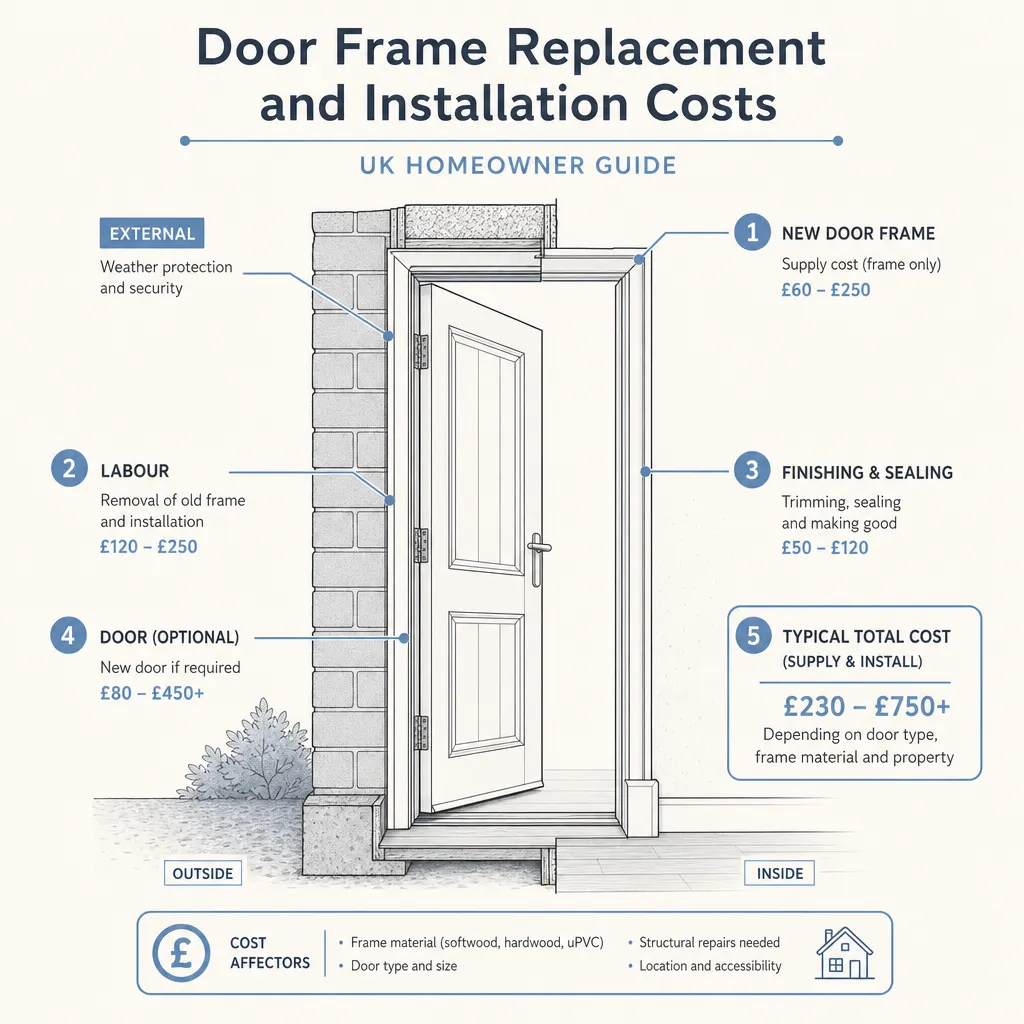
Door Frame Replacement and Installation Costs
Replacing an internal door lining in the UK typically costs £100–£300 including labour; an external door frame costs £300–£800 for softwood or UPVC and £600–£1,500 or more for hardwood or composite.
 Improvement & Build
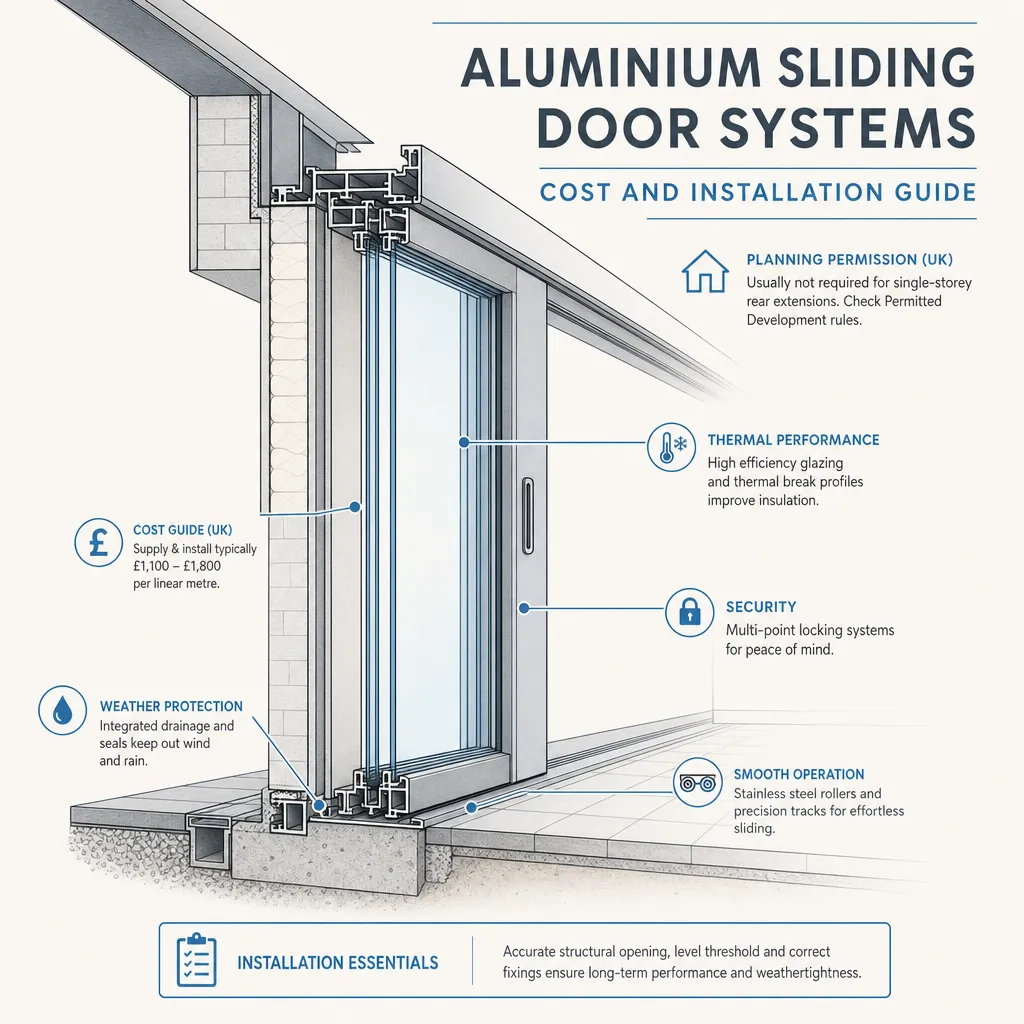
Aluminium Sliding Door Systems: Cost and Installation Guide
Aluminium sliding doors typically cost £2,500–£7,000 supply and fitted for a standard opening.
 Improvement & Build
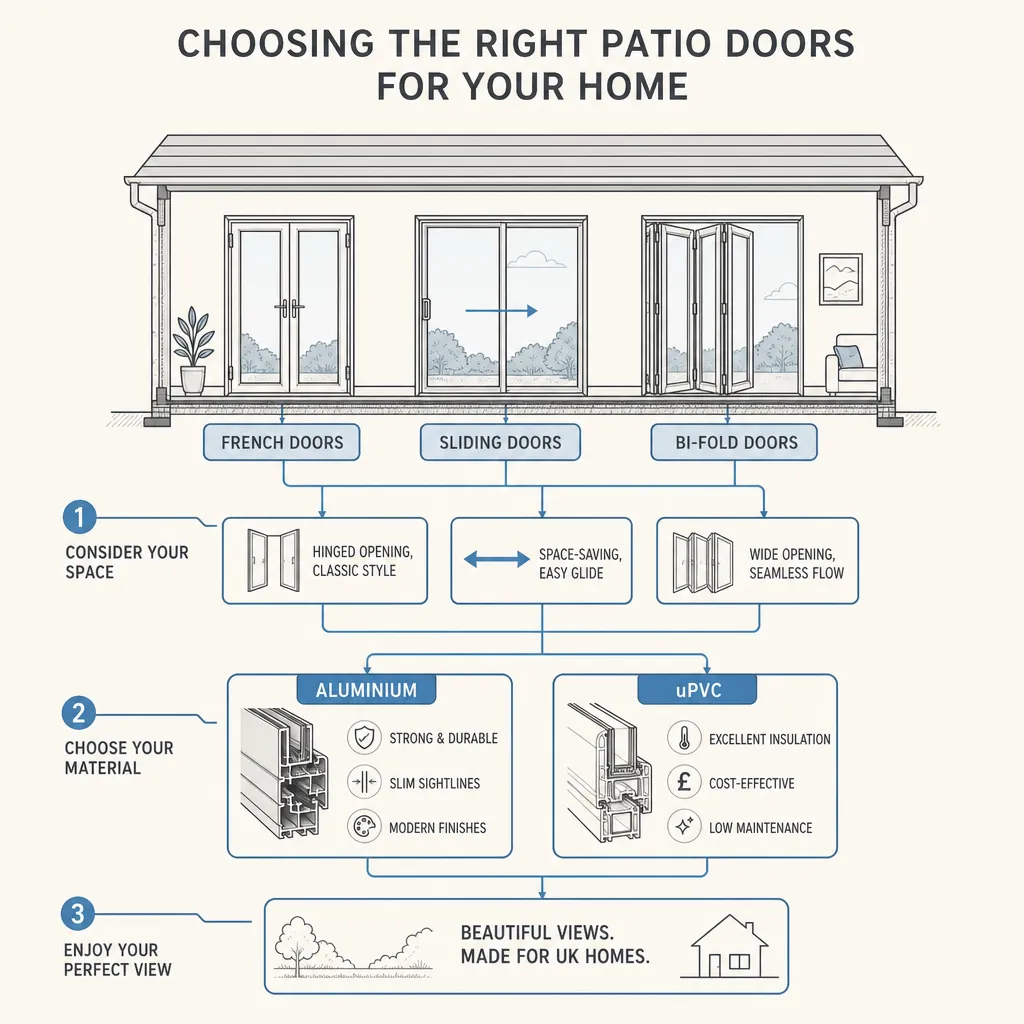
Choosing the Right Patio Doors for Your Home
The right patio doors depend on your opening width, available swing space, home style, and budget.
 Improvement & Build
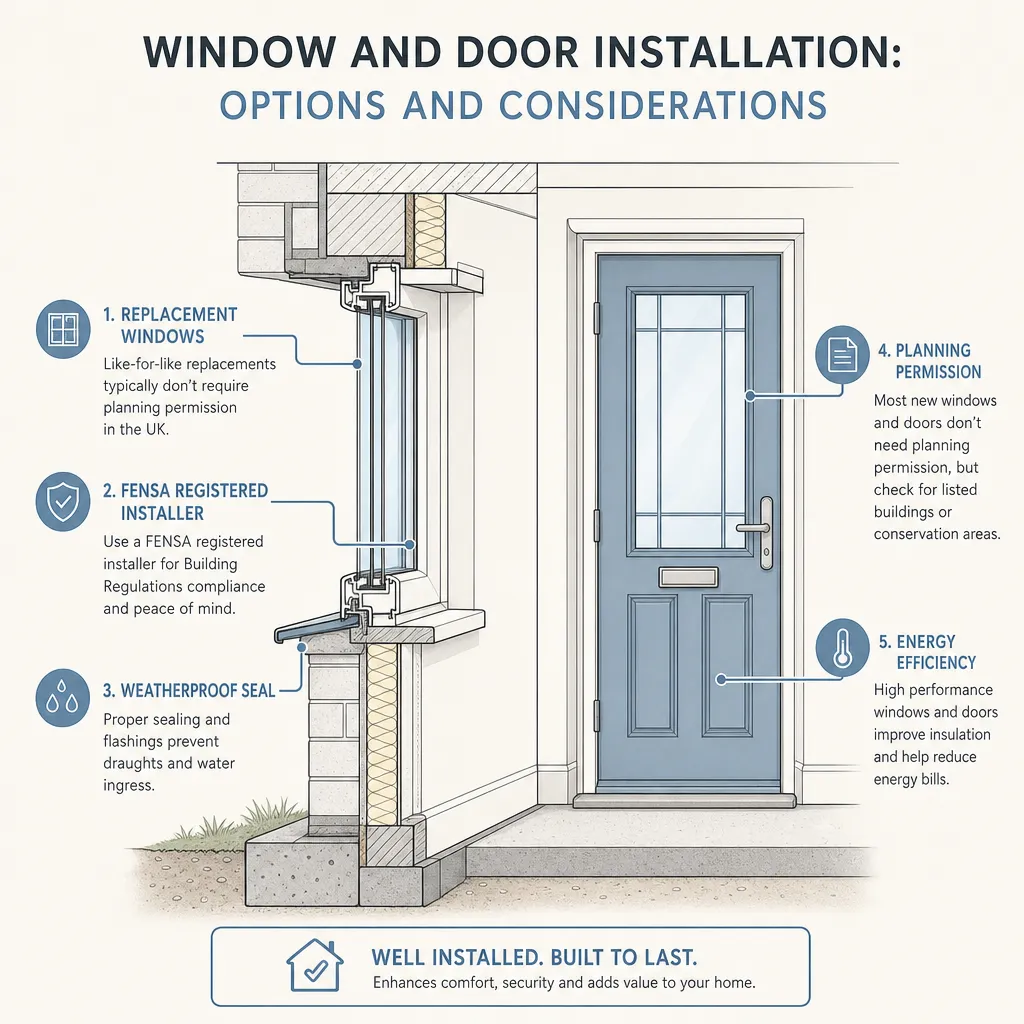
Window and Door Installation: Options and Considerations
Replacing windows and external doors in the UK requires compliance with Building Regulations Part L (thermal performance) and Part K (safety glazing).