Choosing the best materials for your new driveway
By Housey · Last reviewed 11th of May 2026
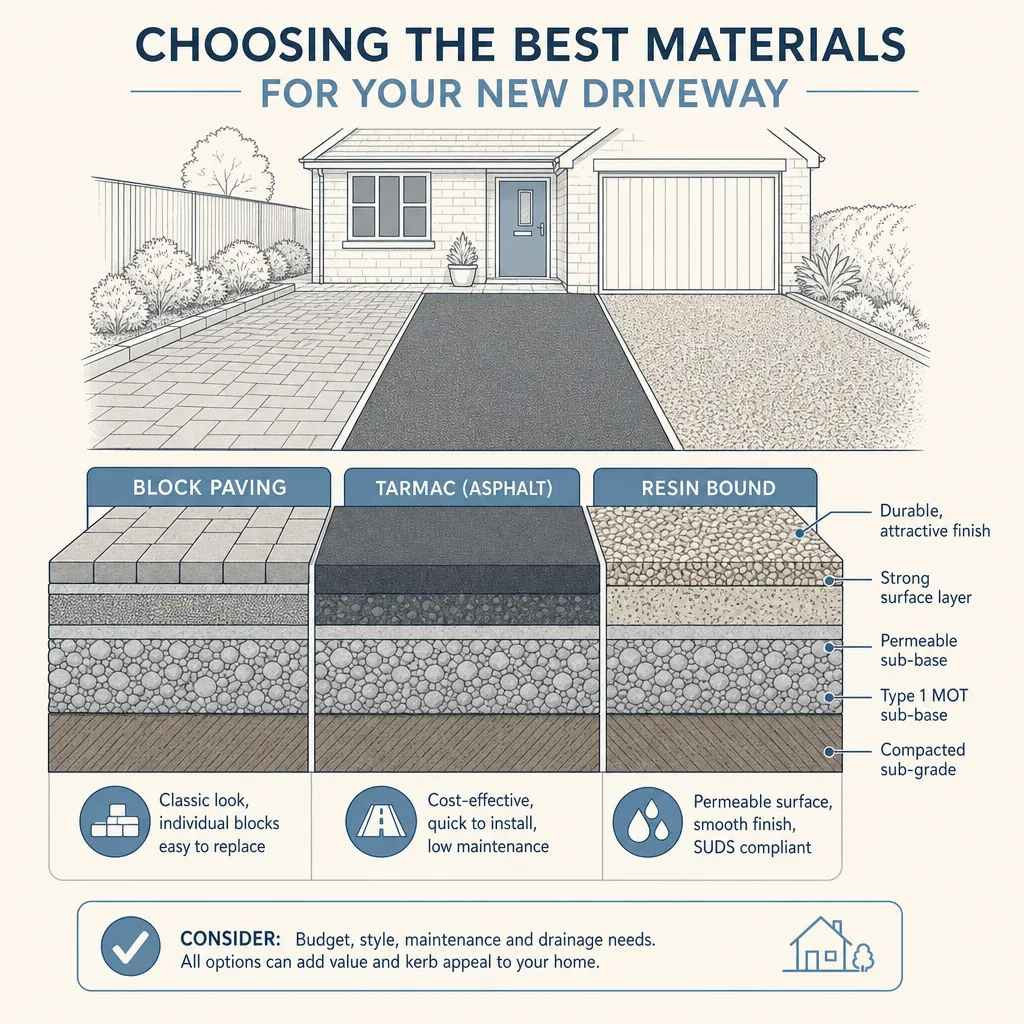
Choosing the best materials for your new driveway
Replacing or installing a new driveway is one of the most visible home improvement projects a UK homeowner can undertake — it affects kerb appeal, day-to-day usability, and surface water drainage. The planning rules that govern front garden surfacing are frequently misunderstood, and the range of materials now available is wider than many homeowners realise. Getting both the material choice and the planning position right from the start saves money and avoids enforcement problems later.
Key points
- Laying or replacing a front garden driveway with an impermeable surface over 5m² in England typically requires planning permission under Schedule 2, Part 1, Class F of the GPDO 2015, unless run-off drains to a garden or soakaway rather than the road.
- Permeable surfaces — including resin-bound gravel, permeable block paving with open jointing, and loose gravel — are generally permitted development regardless of area.
- In Wales, Sustainable Drainage Systems (SuDS) approval is required for most new hard surfaces under rules introduced via the Flood and Water Management Act 2010; consult your local planning authority before commencing work.
- Resin-bound and block-paved surfaces typically cost £50–£120/m² installed; tarmac £25–£50/m²; concrete £50–£90/m² (indicative UK costs, last reviewed 2026-05-11; regional variation and groundworks requirements can significantly affect final prices).
- Sub-base quality and depth are as important as the surface material: a poorly prepared base will shorten the lifespan of any surfacing by years.
Driveway materials compared
Material | Typical installed cost /m² | Lifespan | Maintenance | Drainage | Planning (front garden, England) |
|---|---|---|---|---|---|
Tarmac/asphalt | £25–£50 | 20–30 years | Low (reseal every 3–5 yrs) | Impermeable | Likely needs PP if >5m² |
Block paving (permeable jointing) | £60–£120 | 25–40 years | Moderate (weed, re-sand joints) | Permeable | Generally permitted development |
Block paving (solid mortar jointing) | £60–£120 | 25–40 years | Moderate | Impermeable | Likely needs PP if >5m² |
Resin-bound | £50–£120 | 15–25 years | Very low | Permeable | Generally permitted development |
Loose gravel | £10–£30 | Indefinite (top-up) | Low-moderate (rake, top-up) | Permeable | Generally permitted development |
Concrete | £50–£90 | 25–40+ years | Low | Impermeable | Likely needs PP if >5m² |
Porcelain/natural stone | £80–£150+ | 25–40+ years | Low | Depends on bedding | Check with LPA |
Indicative UK costs, last reviewed 2026-05-11. Costs vary significantly by region, access, extent of groundworks, and specification. Obtain at least three quotes before committing. PP = planning permission.
Tarmac and asphalt driveways
Hot-laid tarmac (asphalt) remains the most affordable option for larger driveways and is widely available from contractors across the UK. It handles UK freeze-thaw cycles well and can be resurfaced — rather than replaced — if the sub-base is sound.
Best for: Larger driveways where cost per m² matters; properties where a clean, utilitarian finish is preferred; homeowners who want a long-lasting surface with minimal day-to-day upkeep.
Watch out for: Surface cracking near tree roots; oil stains are difficult to remove; standard tarmac is impermeable, so planning permission is usually required for front gardens over 5m² unless drainage is directed to a soakaway or garden area.
Block paving driveways
Block paving is consistently popular in UK suburban housing, offering flexibility in pattern, colour, and layout. Individual blocks can be lifted and relaid to access drainage or underground services — an advantage over poured surfaces that cannot be reinstated without visible patching.
Best for: Homeowners wanting a premium, long-lasting appearance; driveways where underground service access may be needed in future; those who want a wide choice of colours and patterns.
Watch out for: Weed growth between blocks over time (preventable with appropriate jointing compound and plate compaction during installation); settlement if the sub-base is not correctly prepared; higher cost than tarmac. Block paving with permeable open jointing qualifies as a permeable surface under the GPDO 2015; standard solid mortar jointing does not.
Resin-bound driveways
Resin-bound surfacing — small stone aggregate mixed with a UV-stable polyurethane resin and trowelled onto a prepared base — has grown significantly in popularity. It is fully permeable, available in a wide range of aggregate colours and blends, and has very low maintenance requirements once cured.
Best for: Homeowners wanting a contemporary, low-maintenance finish; front gardens where a permeable surface avoids a planning application; properties where surface water drainage is a concern.
Watch out for: Quality varies significantly between contractors — poorly mixed or laid resin-bound can crack and look patchy within a few years; a correctly prepared asphalt or concrete base is essential; not suitable for gradients steeper than approximately 3–4%; higher upfront cost than tarmac.
Note: resin-bound (aggregate fully enclosed in resin throughout) is permeable and distinct from resin-bonded chip (surface-broadcast aggregate on a resin coat), which is not considered permeable.
Concrete driveways
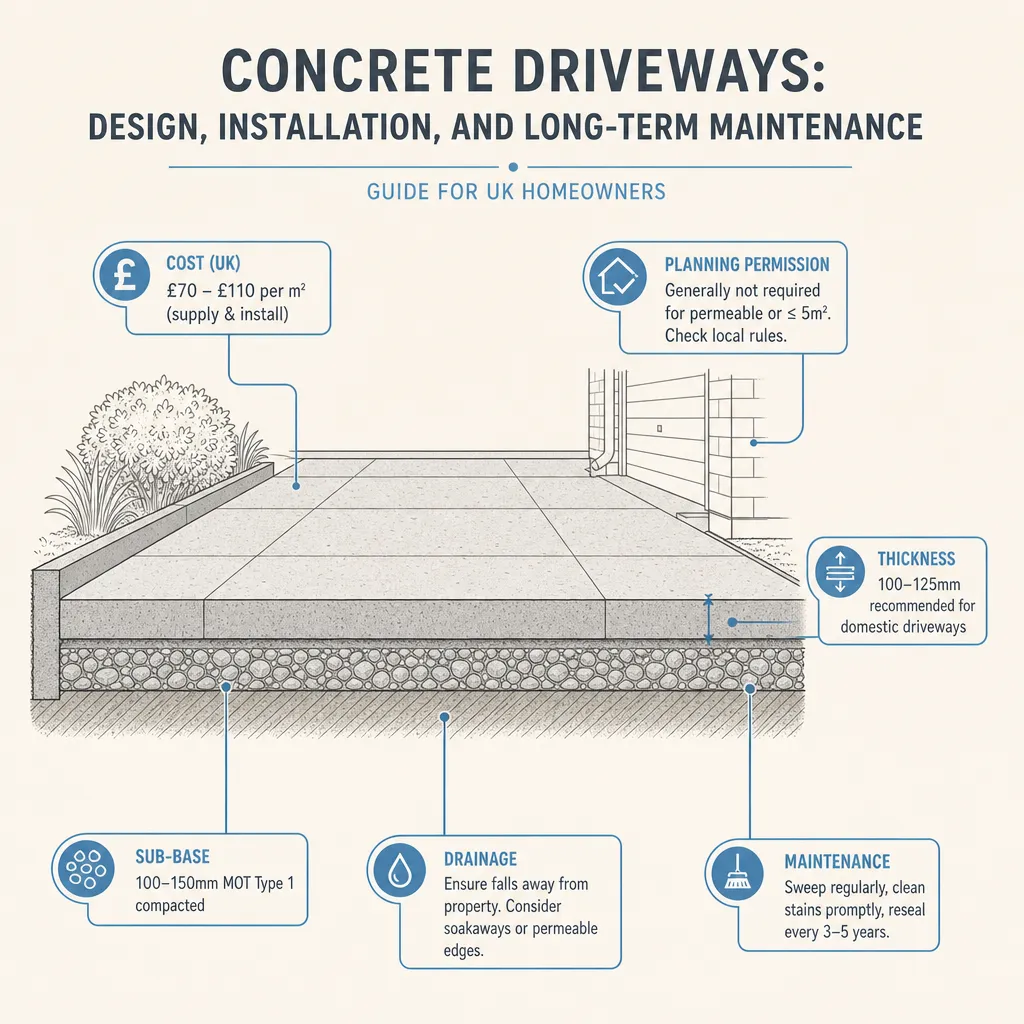
Concrete is extremely durable and, when well constructed, can last 40 years or more with minimal maintenance. It suits contemporary homes and is available in brushed, polished, or imprinted decorative finishes.
Best for: Long-lasting, low-maintenance surfaces; contemporary or minimalist aesthetics; homeowners who want a permanent solid base.
Watch out for: Standard concrete is impermeable, so planning permission is likely required for front gardens over 5m²; more expensive to repair than tarmac if cracking occurs; oil and tyre marks can be visible on lighter finishes.
Gravel driveways
Loose gravel is one of the most affordable and planning-friendly driveway options and remains popular on rural, period, and larger-plot properties.
Best for: Budget-conscious homeowners; period and rural properties; large driveways where cost per m² is a priority; informal or naturalistic aesthetics.
Watch out for: Gravel can migrate onto roads and footpaths; unsuitable where mobility is a concern (wheelchairs, pushchairs); regular raking and occasional top-up required; some councils have raised concerns about gravel migration onto public highways.
Planning permission and permeable surfaces
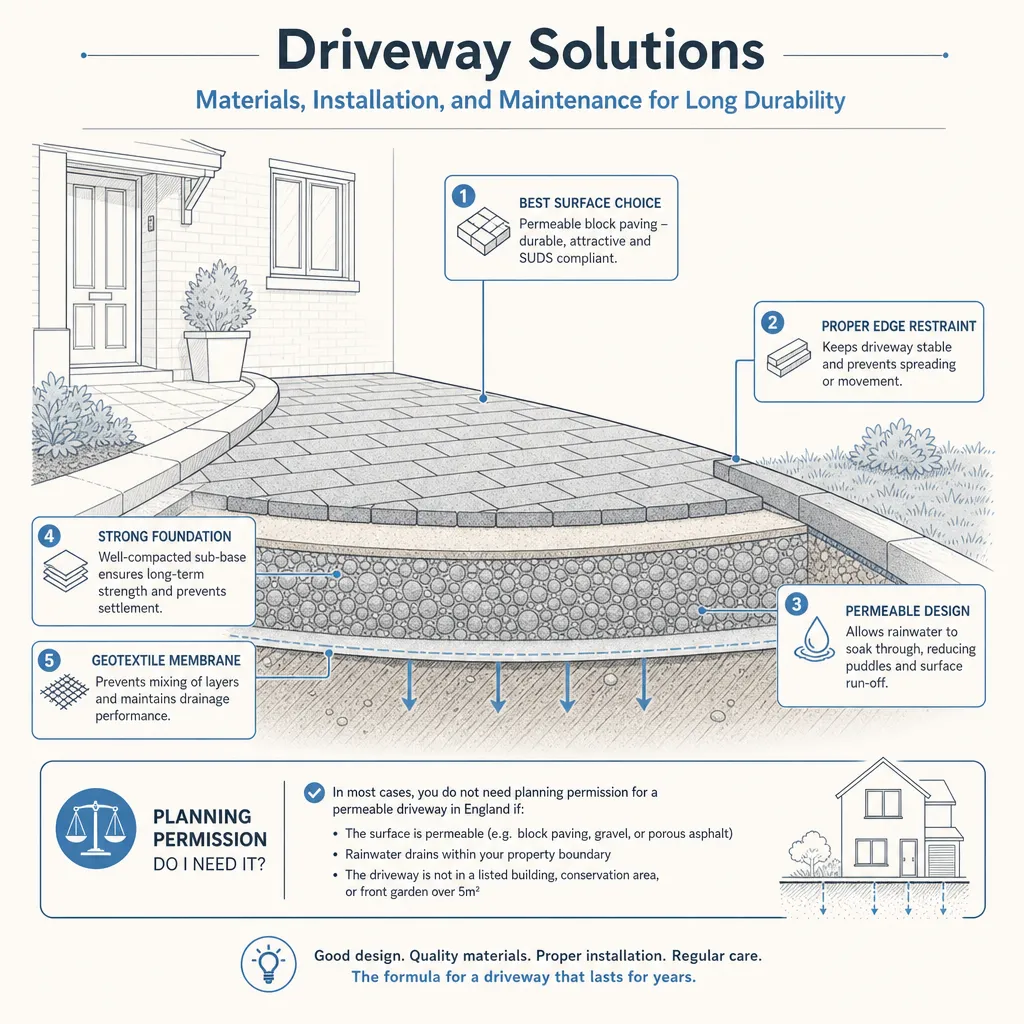
Under Schedule 2, Part 1, Class F of the Town and Country Planning (General Permitted Development) (England) Order 2015, laying a new or replacement hard surface to the front of a dwelling does not require planning permission if:
- The surface material is permeable or porous, OR
- Run-off from an impermeable surface is directed to a lawn, border, or soakaway — not to the road.
If neither condition is met and the area exceeds 5m², a planning application is required. Conservation area and listed building restrictions may impose additional constraints regardless of surface type.
In Wales, the requirements are more stringent and SuDS approval from the local authority is required for most new hard surfaces — consult your LPA before laying any new hard standing.
Always confirm the rules that apply to your specific property with your local planning authority before commencing work.
What to ask before accepting a driveway quote
- What sub-base depth and specification are you proposing, and why is it appropriate for this surface and ground conditions?
- Is the surface permeable, and have you considered the planning implications for my property?
- How will surface water from the driveway be managed?
- Does the quote include removal and disposal of the existing surface?
- What guarantee do you offer on materials and workmanship, and is it in writing?
- Is VAT included in the quoted price?
- Can you provide references or photographs of similar recent installations?
- What could change the price or programme after work has started?
When to get professional help
For most straightforward driveway replacements, a reputable contractor with clear references and a written guarantee is sufficient. Seek advice from a structural engineer or chartered surveyor if:
- There is evidence of existing ground movement, soft spots, or subsidence in the driveway area
- The driveway is adjacent to a retaining wall, boundary structure, or shallow foundations
- Your property is in a flood-risk zone and correct drainage design is critical to the specification
How Housey can help
Housey connects homeowners with vetted driveway installers across the UK. Submit your requirements and receive up to four quotes, enabling you to compare materials, specifications, and prices before committing to any contractor.
Frequently asked questions
Do I need planning permission for a new driveway?
In England, planning permission is not required if you use a permeable surface, or if run-off from an impermeable surface drains to a garden or soakaway rather than the road. For impermeable surfaces over 5m² draining to the road, planning permission is required. Rules differ in Scotland, Wales, and Northern Ireland. Conservation area or listed building status may impose additional requirements.
How long does driveway installation take?
A typical driveway replacement takes 1–4 days for most residential sizes, depending on the material and extent of groundworks needed. Resin-bound surfaces require 24–48 hours curing before vehicle use. Block paving and concrete may need additional time if significant excavation or drainage work is required.
What is the most durable driveway material?
Concrete and natural stone are among the most durable options, with potential lifespans of 30–50+ years when properly laid. Block paving and resin-bound surfaces also perform well over 20–30+ years with appropriate maintenance. Tarmac typically lasts 20–30 years. Sub-base quality is equally important — a poorly prepared base shortens the lifespan of any surface.
Can I install a driveway myself?
Loose gravel is the most accessible DIY option. Other materials — particularly tarmac, resin-bound, and concrete — require specialist equipment, materials knowledge, and groundworks experience. Incorrectly installed sub-bases or drainage lead to premature failure, so professional installation is recommended for most surface materials.
Sources and further reading
- Hard surfaces in your garden — Planning Portal — permitted development rules for England
- Flood and Water Management Act 2010 — legislation.gov.uk — SuDS requirements
- Listed buildings and conservation areas — Historic England — listed building and conservation area guidance
- CIRIA SuDS design guidance — sustainable drainage systems reference for designers and specifiers
Useful next reads
 Improvement & Build
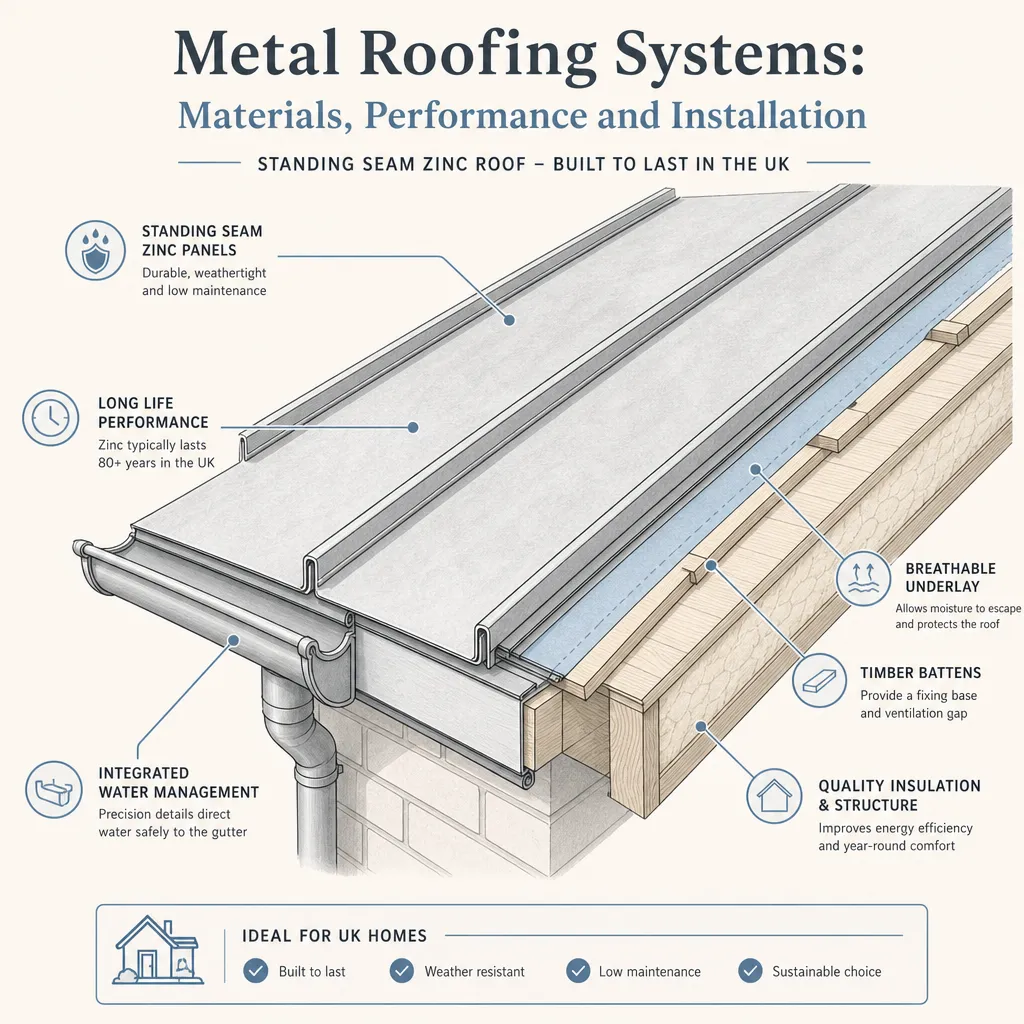
Metal Roofing Systems: Materials, Performance and Installation
Metal roofing systems in the UK include standing seam zinc, coated steel, aluminium, and copper panels, as well as profiled sheets.
 Improvement & Build
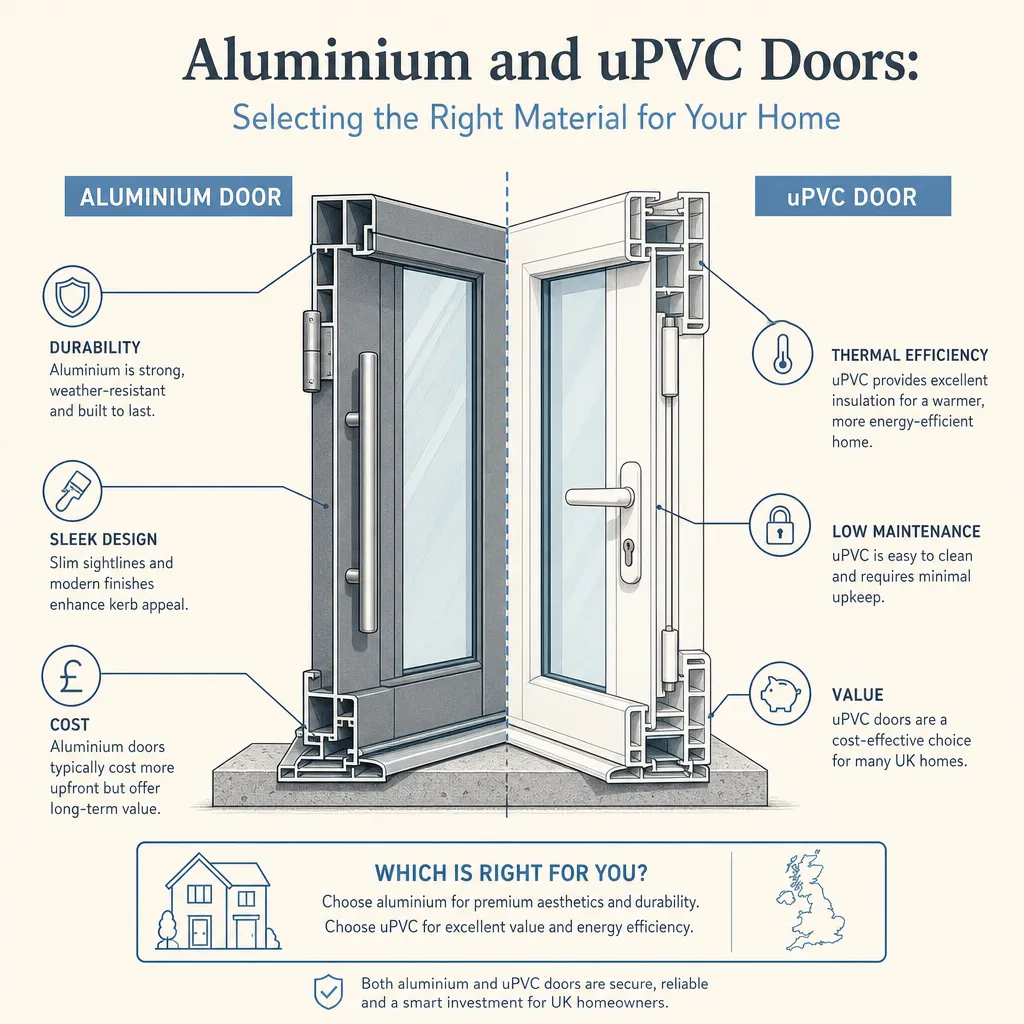
Aluminium and uPVC Doors: Selecting the Right Material for Your Home
uPVC doors are lower-cost and low-maintenance, making them a practical choice for most UK homes.
 Improvement & Build
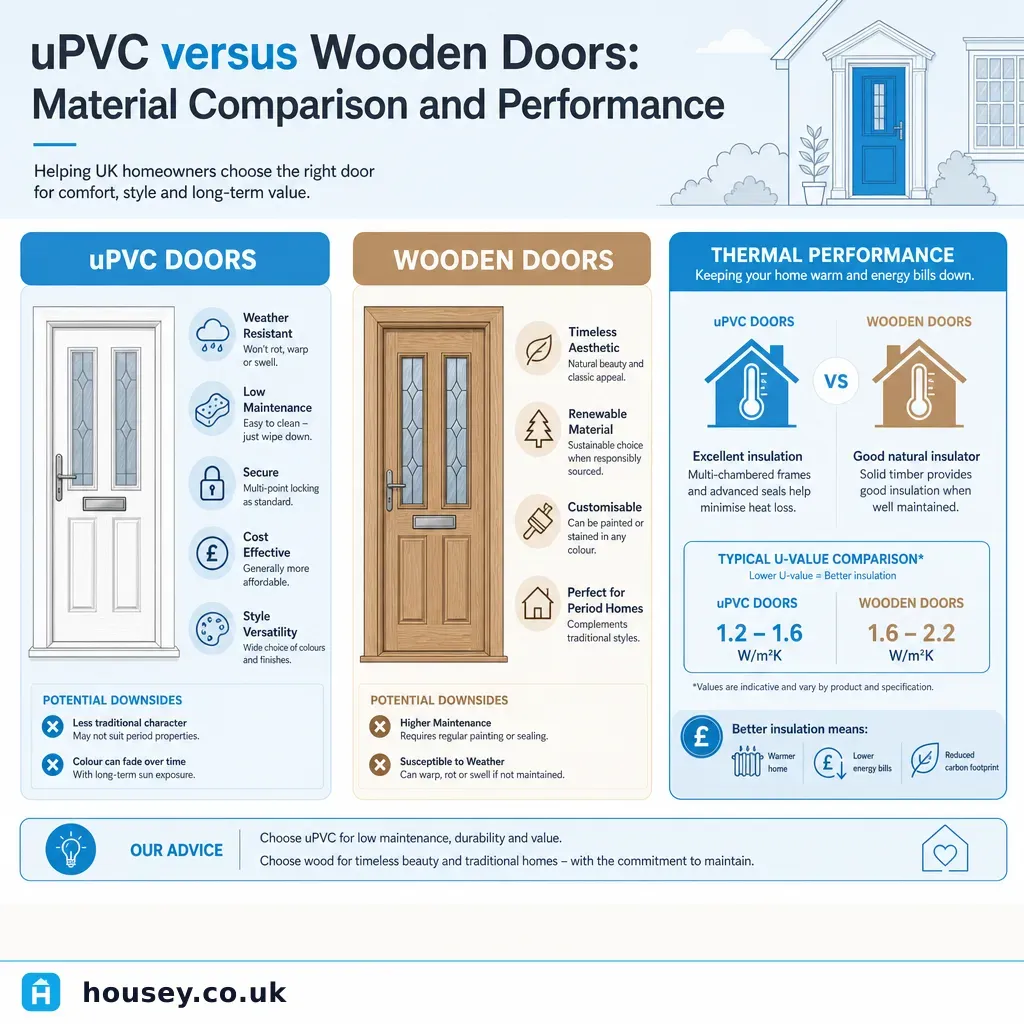
uPVC versus Wooden Doors: Material Comparison and Performance
uPVC doors are generally lower maintenance, better draught-sealed from the factory, and cheaper to install than timber doors.
 Improvement & Build
Concrete Driveways: Design, Installation, and Long-Term Maintenance
A concrete driveway requires a compacted sub-base of at least 150mm and a concrete slab of at least 100mm for domestic use.
 Improvement & Build
Driveway Solutions: Materials, Installation, and Maintenance for Long Durability
In England, driveways over 5 square metres need planning permission unless they use a permeable surface or drain to a lawn or border.