uPVC versus Wooden Doors: Material Comparison and Performance
By Housey · Last reviewed 11th of May 2026
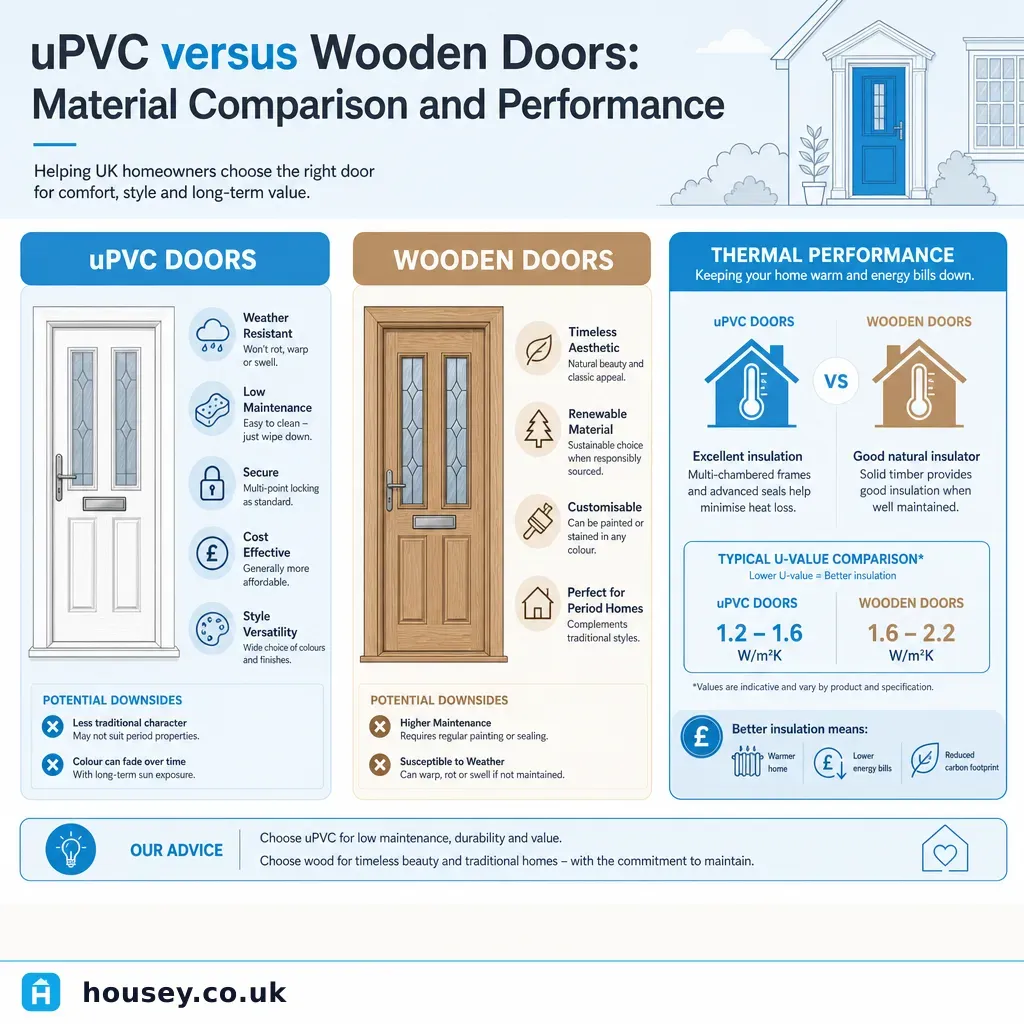
uPVC versus Wooden Doors: Material Comparison and Performance
Choosing between a uPVC and a wooden door involves weighing cost, maintenance demands, thermal performance, aesthetics, and — for some properties — planning constraints. The decision typically arises when a front or back door reaches the end of its serviceable life, during a wider renovation, or when a homeowner wants to reduce draughts and improve energy efficiency. Neither material is universally superior: the right choice depends on the property type, the local planning context, and what the homeowner values most over the door's lifetime.
Key points
- Building Regulations Part L sets minimum thermal performance requirements for replacement external doors: ≤ 1.4 W/m²K for doors with more than 60% glazing and ≤ 1.8 W/m²K for solid or partly-glazed doors (last reviewed 2026-05-11) — both uPVC and timber can meet these thresholds when correctly specified.
- Properties in conservation areas or with listed building conditions may be required to use timber doors that match the original character; uPVC is often restricted or prohibited by local planning guidance in such settings.
- uPVC doors cannot be repainted — if the colour fades or preferences change, the door must be replaced rather than refinished.
- Engineered or solid hardwood timber doors can match or exceed uPVC thermal performance when fitted with a dense insulated core and correct draught sealing, but typically cost more to buy and install.
- Timber sourced with FSC or PEFC certification carries verified sustainability credentials; uPVC is petroleum-derived, though most profiles contain recycled content and can be processed at specialist recycling facilities at end of life.
How the two materials compare
Feature | uPVC | Timber |
|---|---|---|
Typical installed cost | £500–£1,500 | £800–£3,000+ |
Thermal performance (U-value) | Typically 1.2–1.6 W/m²K | 1.2–2.0 W/m²K (depends on core and glazing) |
Maintenance | Low — wipe clean, no painting required | Moderate to high — painting or staining every 3–7 years |
Expected lifespan | 20–35 years | 30–60+ years with proper maintenance |
Colour options | Factory colours only; cannot be repainted | Any colour achievable; can be repainted at any time |
Repairability | Limited — damaged sections usually require full replacement | Individual sections, glazing, and hardware can be repaired or replaced |
Conservation area suitability | Often restricted — always check with your local planning authority | Generally acceptable; conditions may apply to profile and colour |
Acoustic insulation | Good with multi-chamber profiles | Good with solid core; hollow-core doors perform less well |
Security hardware | Multipoint locking standard on most modern doors | Multipoint locking available; older doors may have single-point locks only |
Sustainability | Petroleum-derived; partially recycled content common | FSC/PEFC certified timber available from responsible sources |
Indicative UK costs, last reviewed 2026-05-11. Prices vary by specification, supplier, and region.
Thermal performance and Building Regulations
Both uPVC and timber are capable of meeting Part L requirements for replacement external doors. The determining factor is not the frame material alone but the complete door assembly — the core specification, any glazing units, draught sealing quality, and how carefully the door is installed.
- A standard hollow-core uPVC door with single-glazed panels will not meet Part L minimum standards. A thermally broken uPVC profile with double-glazed units typically will.
- A solid hardwood door with a dense insulated core — such as polyurethane foam-filled engineered timber — can achieve U-values of 1.0 W/m²K or below, outperforming many mid-range uPVC doors.
- When a door is replaced, the installer is responsible for confirming the new unit meets current minimum standards. In England, a FENSA-registered installer provides a certificate of compliance; alternatively, a Building Regulations application to the local authority is required before work begins.
Maintenance requirements compared
uPVC
uPVC doors need minimal routine upkeep. Cleaning the frame with warm soapy water, lubricating the lock mechanism annually with a dry PTFE spray, and periodically inspecting the seals for compression loss is sufficient for most doors. The frame cannot be refinished — modern UV-stabilised profiles resist discolouration better than older formulations, but replacement is the only option if the appearance deteriorates beyond what you are comfortable with.
Timber
Timber doors require more active maintenance to remain weathertight and presentable over the long term:
- Painting or staining: typically every 3–7 years, depending on the exposure, orientation, and product used. South- and west-facing doors weather fastest.
- Seasonal swelling: timber absorbs moisture and can stick in winter or wet conditions — a well-finished door minimises this, but some seasonal movement is normal.
- Checking the drip bar and seals: a damaged drip moulding or failing bottom seal allows water ingress at the lower rail, which leads to rot if ignored.
- Prompt repair: a crack in the paint or stain allows moisture in quickly. Caught early, the repair is straightforward; left untreated, it can progress to rot requiring new sections or full door replacement.
Planning and conservation area considerations
In a conservation area or on a listed building, the permitted development rights that ordinarily allow external door replacement may be restricted or removed. Many local authorities publish specific supplementary planning guidance for conservation areas, which commonly:
- Requires timber doors that replicate the original style, profile, and colour palette of the building.
- Restricts or prohibits uPVC where it would harm the character or appearance of the area.
- Applies to rear and side elevations as well as the front in some conservation areas.
Always check with your local planning authority before ordering a replacement door on a conservation area property or where listed building consent conditions may apply. Installing an unapproved uPVC door can result in an enforcement notice requiring its removal at the homeowner's cost.
Decision tree: which material suits your situation?
- Choose uPVC if the property is a post-war or modern home without planning restrictions, low maintenance is a priority, and upfront budget is a key factor.
- Choose timber if the property is in a conservation area or is listed, original character matters aesthetically, or you want a material that can be refinished and structurally repaired over several decades.
- Consider composite if you want timber character with improved stability and lower maintenance — composite doors use a glass-reinforced plastic skin over a timber or foam core and are widely accepted in most non-designated planning contexts.
- Check with your local planning authority if the property is in a conservation area, has an Article 4 direction removing permitted development rights, or is a leasehold flat where the lease may restrict changes to the external appearance.
- Ask a window and door installer if you are unsure which door specification meets Part L, or you want guidance on whether the existing frame can be retained to reduce cost and disruption.
What to ask a window and door installer before buying
- What is the U-value of the complete door assembly, including any glazing units?
- Does this installation comply with Building Regulations Part L — will you provide a FENSA certificate or arrange building control sign-off?
- What is the warranty on the door, frame, and hardware, and who is my point of contact for aftercare issues?
- For timber: what species and grade of timber is used, and what maintenance schedule do you recommend to protect the warranty?
- For uPVC: does the profile contain recycled content, and what UV stabilisation is used to prevent discolouration?
- Are there any planning restrictions I should confirm with my local planning authority before you install?
- What happens if access issues or unexpected frame damage are discovered during fitting — how would costs change?
When to get professional help
A window and door installer can advise on specification, carry out Part L compliance checks, and handle FENSA registration. For properties in conservation areas or subject to listed building conditions, speaking with the local planning authority's conservation officer before committing to a material will avoid a potentially costly mistake.
How Housey can help
Housey connects you with vetted window and door installers who can quote on supply and installation of both uPVC and timber doors, advise on Part L compliance, and confirm whether your property has any planning restrictions that affect your choice of material.
Frequently asked questions
Which is cheaper — uPVC or timber doors?
uPVC doors are generally cheaper to supply and install, typically ranging from £500–£1,500 for a standard front door (supply and fit, indicative UK costs last reviewed 2026-05-11). Solid hardwood or engineered timber doors usually start at £800 and can exceed £3,000 for period-style designs. Maintenance costs over time narrow the overall gap.
Do I need planning permission to replace my front door?
In most cases, replacing a front door is permitted development — no planning permission is needed. However, if your property is in a conservation area, is a listed building, or has an Article 4 direction removing permitted development rights, you may need prior approval or listed building consent. Always check with your local planning authority before ordering.
Which is better for security — uPVC or timber?
Both can offer high security when correctly specified. Modern uPVC doors typically include multipoint locking as standard. Timber doors vary more — older single-point mortice locks offer less security than a modern multipoint system. Whichever material you choose, look for a multipoint lock, a TS007 3-star euro cylinder, and toughened or laminated glass in any glazed panels.
Can I get a uPVC door that looks like wood?
Yes — most uPVC manufacturers offer wood-grain foil finishes that closely mimic timber. These are durable and need no painting, but the colour cannot be changed if preferences alter. Composite doors — with a glass-reinforced plastic skin over a structural core — also offer timber-effect finishes and tend to look more convincing than standard foil-finished uPVC.
How long does a uPVC door last compared to a wooden door?
A well-installed uPVC door typically lasts 20–35 years before the profile or seals deteriorate significantly. A well-maintained solid hardwood door can last 50 years or more — potentially indefinitely if damaged sections are repaired and the finish renewed. A neglected timber door, however, may need replacing sooner than a properly maintained uPVC one.
Sources and further reading
- Approved Document L: Conservation of Fuel and Power — GOV.UK
- FENSA — Window and Door Compliance — FENSA
- Historic England — Windows and Doors in Historic Buildings — Historic England
- Forest Stewardship Council — Certified Timber — Forest Stewardship Council
- Planning Portal — Permitted Development for Householders — Planning Portal
Useful next reads
 Improvement & Build
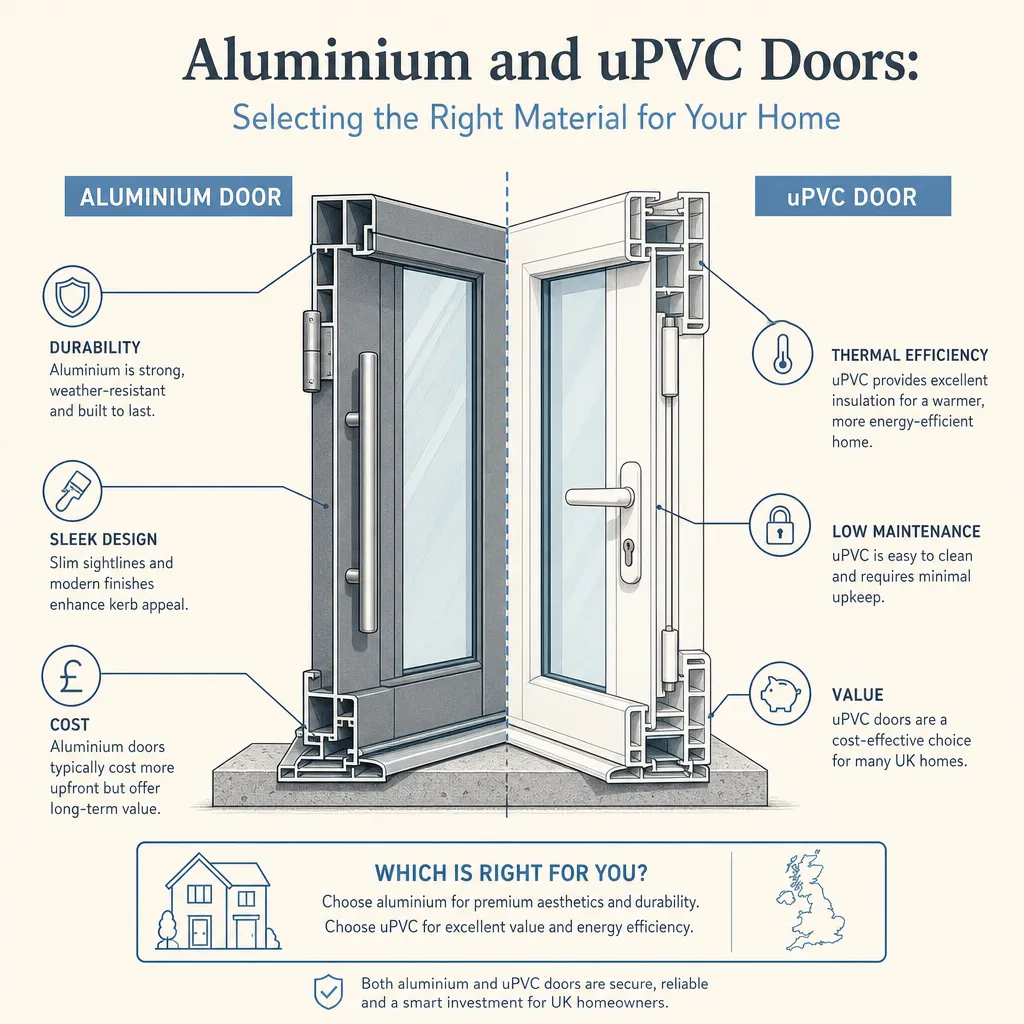
Aluminium and uPVC Doors: Selecting the Right Material for Your Home
uPVC doors are lower-cost and low-maintenance, making them a practical choice for most UK homes.
 Improvement & Build
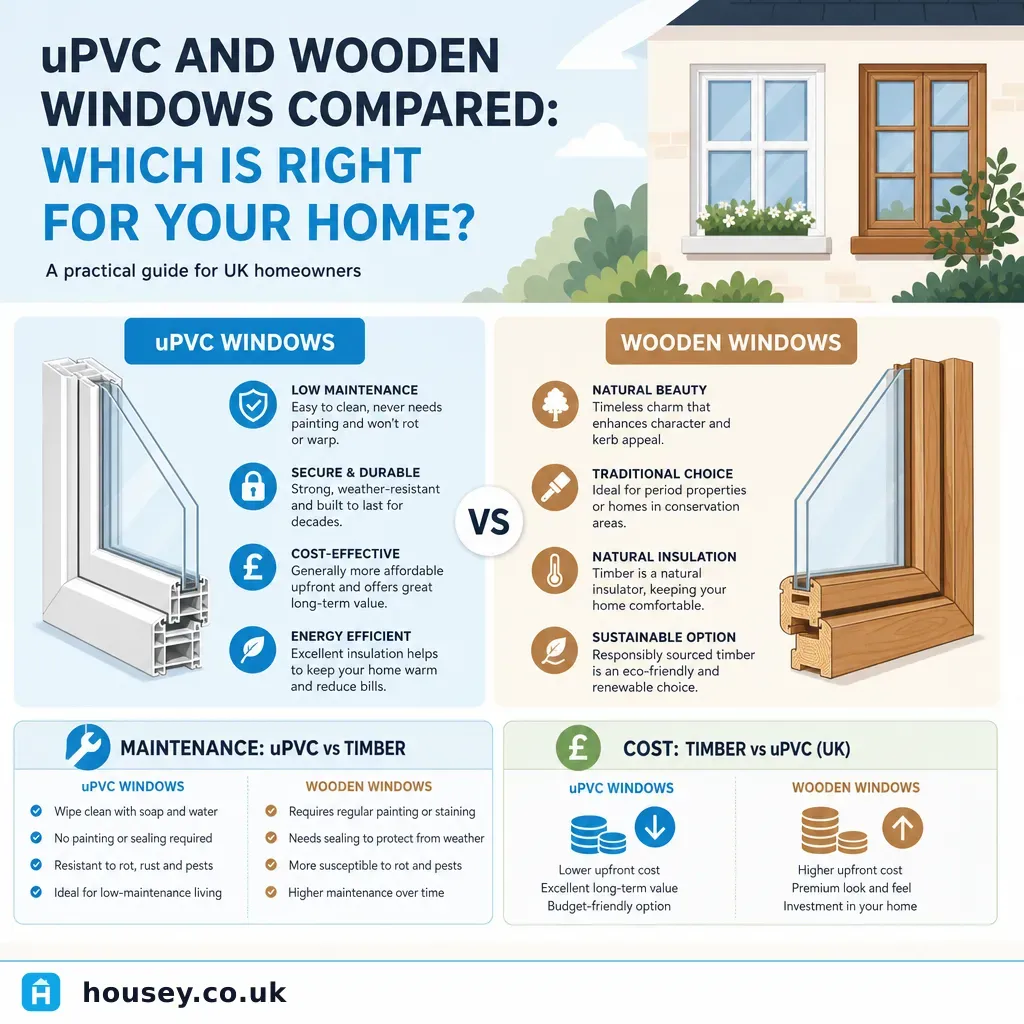
uPVC and Wooden Windows Compared: Which Is Right for Your Home
uPVC and timber windows both meet Building Regulations when properly specified.
 Improvement & Build
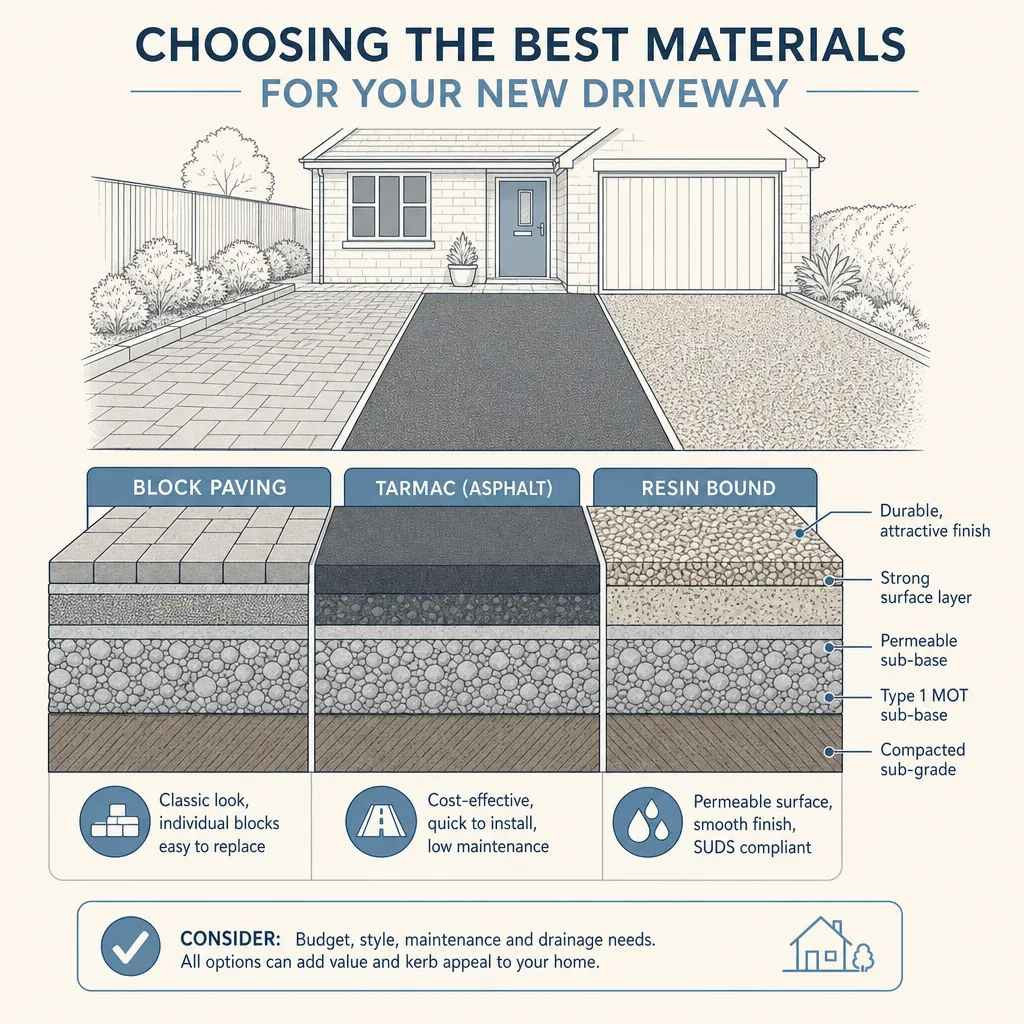
Choosing the best materials for your new driveway
The most common driveway materials in the UK are tarmac, block paving, resin-bound surfacing, concrete, and gravel.
 Improvement & Build
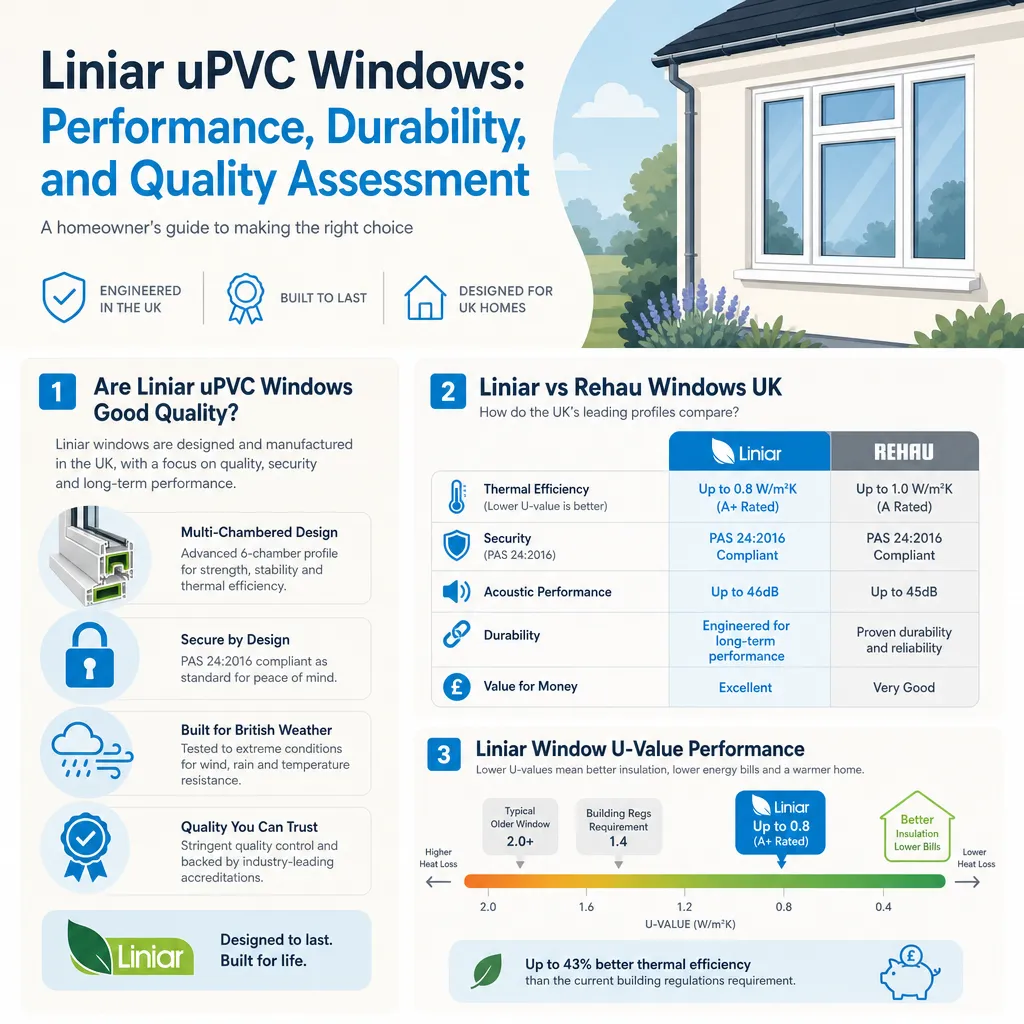
Liniar uPVC Windows: Performance, Durability, and Quality Assessment
Liniar uPVC window profiles are manufactured in the UK using multi-chambered, foamed frames.
 Improvement & Build
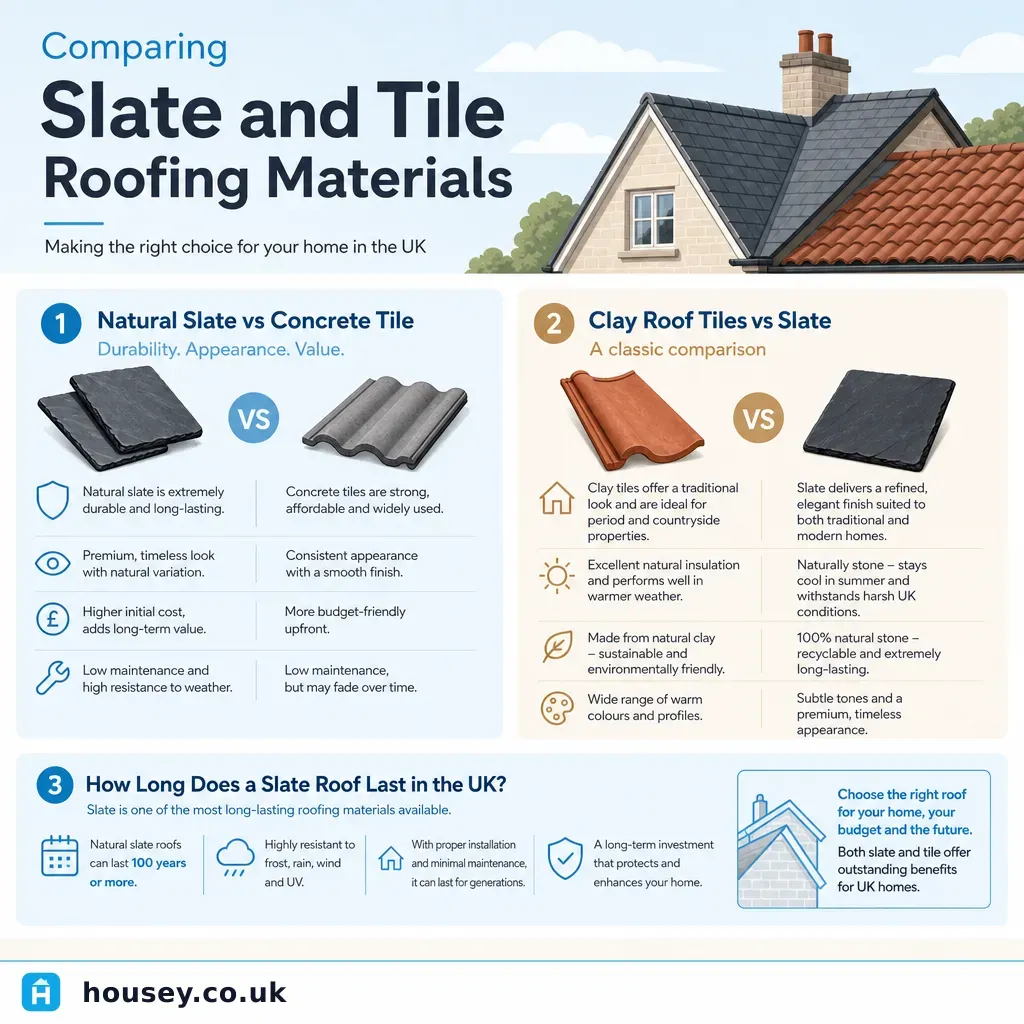
Comparing Slate and Tile Roofing Materials
Natural slate typically lasts 80–150 years and suits period and listed UK properties, while clay tiles offer 60–100 years and remain historically appropriate for Victorian and Edwardian stock.