Choosing between aluminium and uPVC for your replacement windows
By Housey · Last reviewed 11th of May 2026
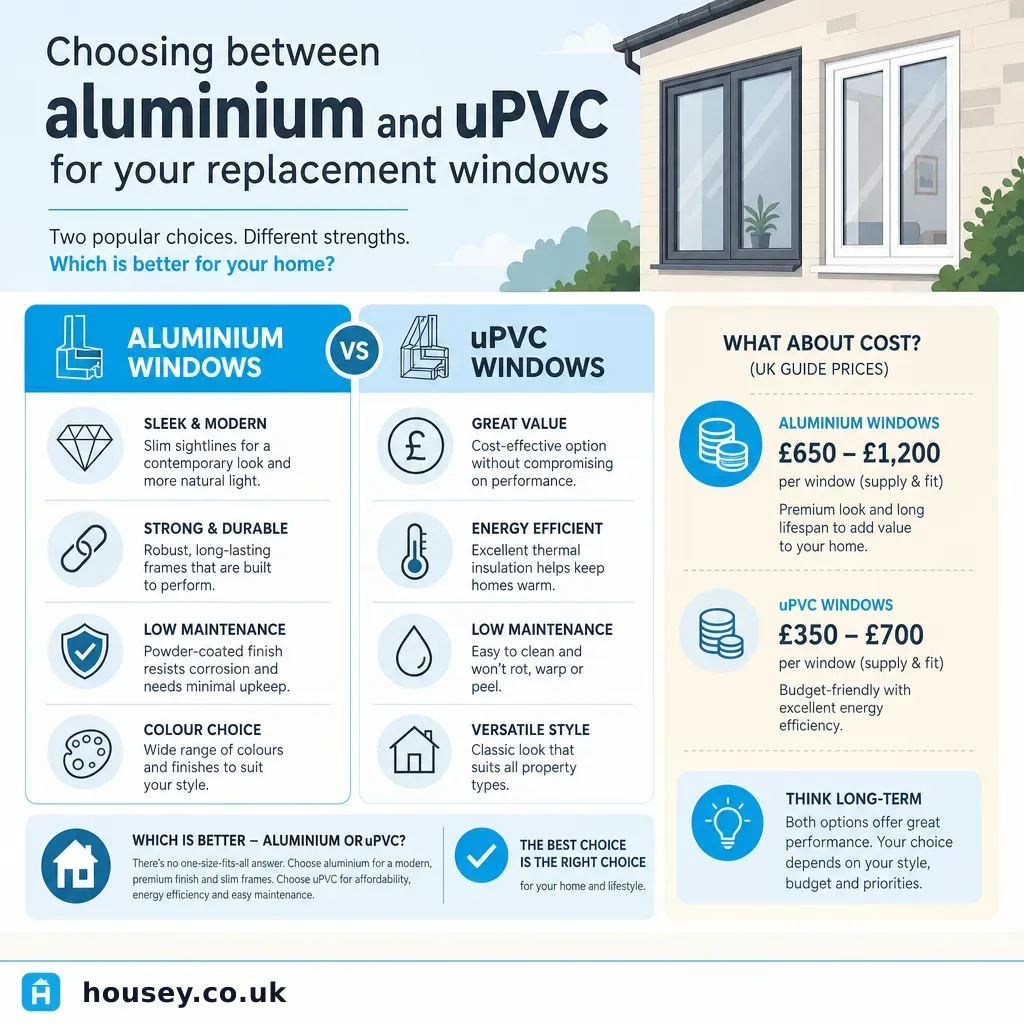
Choosing between aluminium and uPVC for your replacement windows
Replacing windows is one of the most visible upgrades a UK homeowner can make, and the material you choose affects everything from energy performance and planning eligibility to long-term maintenance costs. The decision usually arises during a renovation, after a survey flags draughty or failed sealed units, or when a homeowner wants to change the appearance of their property. Both materials are widely available from UK installers, yet they suit very different situations and budgets.
Key points
- uPVC windows typically cost £300–£600 per window installed; aluminium windows usually cost £600–£1,200 or more per window depending on size, glazing, and finish (Indicative UK costs, last reviewed 2026-05-11).
- Building Regulations Part L (England) requires replacement glazing to achieve a minimum whole-window U-value of 1.4 W/m²K or a Window Energy Rating of Band C or better.
- All replacement window work in England and Wales must be self-certified by a FENSA-registered installer or formally inspected by local building control.
- Aluminium frames can be as narrow as 35–45 mm, providing significantly more glass area than uPVC frames of comparable overall window size.
- In conservation areas, Article 4 direction areas, or on listed buildings, the local planning authority may restrict frame material and colour — check before ordering.
How aluminium and uPVC compare
Both materials are available with double or triple glazing and can meet Building Regulations thermal standards with the right specification. The meaningful differences lie in cost, frame width, longevity, and design range.
Feature | Aluminium | uPVC |
|---|---|---|
Typical installed cost per window | £600–£1,200+ | £300–£600 |
Expected lifespan | 40–45+ years | 20–35 years |
Frame width | Slim (35–55 mm) | Wider (60–80 mm) |
Colour options | Extensive (powder-coat, any RAL) | Wide (white, foil-wrap, painted) |
Maintenance | Occasional clean | Occasional clean; seals degrade over time |
Recyclability | Highly recyclable | Recyclable; lower-grade recyclate |
Thermal bridging risk | Higher unless thermally broken | Lower — uPVC is naturally insulating |
Best for | Contemporary builds, large panes, heritage colour matching | Standard UK housing, budget-conscious projects |
A note on thermal performance for aluminium: Aluminium conducts heat readily, so frames must include a thermal break — a non-conductive layer separating the inner and outer frame faces — to meet Part L requirements. Always confirm a thermally broken specification in writing before signing a contract.
Which material suits your property?
Use this decision guide before requesting quotes:
- Choose uPVC if your budget is under £600 per window installed, the property is a standard 1960s–2000s semi-detached or terrace, and low maintenance is a priority.
- Choose aluminium if you want slim sightlines on a contemporary extension or new build, need to match a heritage colour on a pre-war property, or require large fixed panes where frame-to-glass ratio matters.
- Compare both with quotes if the property is a 1930s–1950s semi — both materials can replicate the original look, though aluminium often does so more convincingly.
- Check with your local planning authority first if the property is in a conservation area, subject to an Article 4 direction, or is listed — restrictions may apply regardless of personal preference.
Energy efficiency and Building Regulations
Under Building Regulations Part L (England), all replacement windows must meet a minimum whole-window U-value of 1.4 W/m²K or achieve Window Energy Rating Band C or above. Both uPVC and thermally broken aluminium can comfortably hit this target — the glass unit specification and gas fill matter as much as the frame material itself.
Triple glazing is available in both materials and can push whole-window U-values below 0.8 W/m²K, which meaningfully reduces heat loss in well-insulated homes. It adds cost and weight, so older reveals may need structural assessment before triple-glazed units are specified.
All replacement window work in England and Wales must either be certified by a FENSA-registered installer or inspected by local building control. FENSA registration means the installer notifies building control on your behalf and issues a compliance certificate — keep it with your property documents, as solicitors commonly request it on sale.
What to ask before accepting a quote
The cost gap between uPVC and aluminium widens with window size, opening type, and specification complexity. Key cost drivers include the number of windows, glazing specification (double vs triple, gas fill, low-E coating), opening type (casement, tilt-and-turn, sash), and colour or finish. Before accepting any quotation, ask:
- Is VAT included in the price?
- What is the whole-window U-value and the glass unit specification?
- Is the installer FENSA-registered, and will I receive a completion certificate?
- For aluminium: what is the profile width, and is the frame thermally broken?
- What guarantee is offered on frames, sealed glazing units, and hardware?
- Does the price include removal and disposal of the existing frames?
- What happens if the reveals are found to be in poor condition once old frames are removed?
- Who manufactures the profiles, and what quality accreditation do they hold?
When to get professional help
For most straightforward replacements, a FENSA-registered installer handles design, supply, and certification without additional professional involvement. Seek further advice if:
- The property is listed or in a conservation area — contact the local planning authority or a conservation officer before specifying any material or colour.
- Opening sizes are to be enlarged — a structural engineer should confirm lintel adequacy before larger frames are ordered.
- A survey has flagged damp, timber rot, or inadequate reveals — address these before committing to new windows.
- You live in a leasehold flat — the lease may require landlord or managing agent consent before external alterations.
How Housey can help
Housey connects you with vetted window and door installers across the UK. Submit a quote request to compare proposals from FENSA-registered professionals in your area.
Frequently asked questions
Is aluminium worth the extra cost over uPVC?
It depends on your priorities. Aluminium windows typically last 40 years or more compared to 20–35 years for uPVC, and offer slimmer frames and greater design flexibility. For standard UK housing, uPVC usually offers better value for money. For contemporary extensions or properties where aesthetics and longevity are priorities, the additional cost of aluminium is often justified over the long term.
Do I need planning permission to replace my windows?
In most cases, no. Replacing windows like-for-like is permitted development in England, Wales, Scotland, and Northern Ireland. However, properties in conservation areas, Article 4 direction areas, and listed buildings often require planning consent. Always check with your local planning authority if you are unsure about your property's status before ordering.
What does FENSA certification mean?
FENSA (Fenestration Self-Assessment Scheme) allows registered window installers to self-certify that replacement glazing complies with Building Regulations in England and Wales. After installation, you receive a FENSA certificate confirming compliance. Keep this with your property documents — solicitors are likely to ask for it during a future sale.
Can I mix aluminium and uPVC windows in the same property?
Technically yes, though most installers and planning officers recommend consistency for aesthetic reasons and to avoid complications at resale. In conservation areas or on listed buildings, mixing frame materials may attract scrutiny from the local planning authority or Historic England, so it is worth checking before you proceed.
Sources and further reading
- Building Regulations Approved Document L — GOV.UK
- FENSA: Fenestration Self-Assessment Scheme — FENSA
- Planning permission for windows and doors — Planning Portal
- Double glazing and window upgrades — Energy Saving Trust
Useful next reads
 Improvement & Build
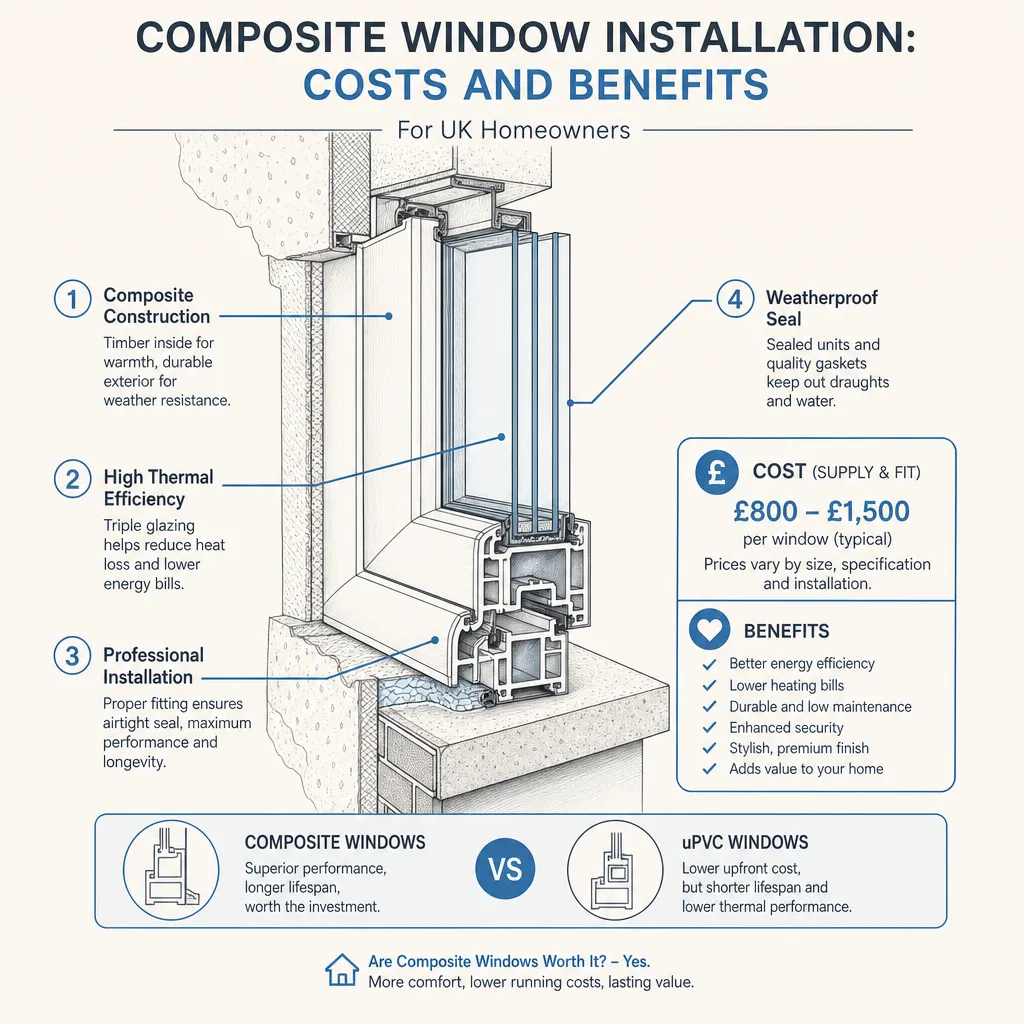
Composite Window Installation: Costs and Benefits
Composite windows combine two or more frame materials — typically a timber or aluminium core with a uPVC or aluminium outer casing — for better thermal performance and durability than standard uPVC.
 Improvement & Build
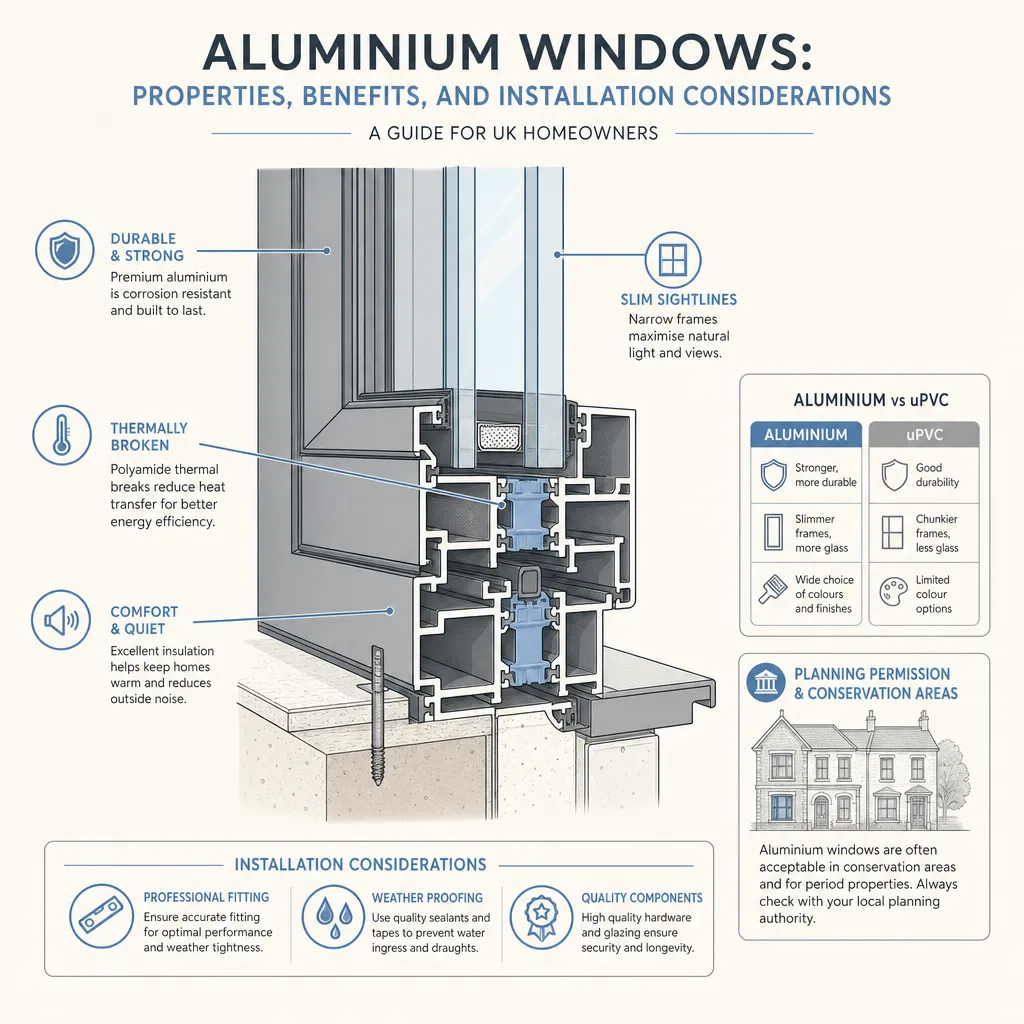
Aluminium Windows: Properties, Benefits, and Installation Considerations
Aluminium windows offer slim sightlines, long lifespan, and minimal maintenance.
 Improvement & Build
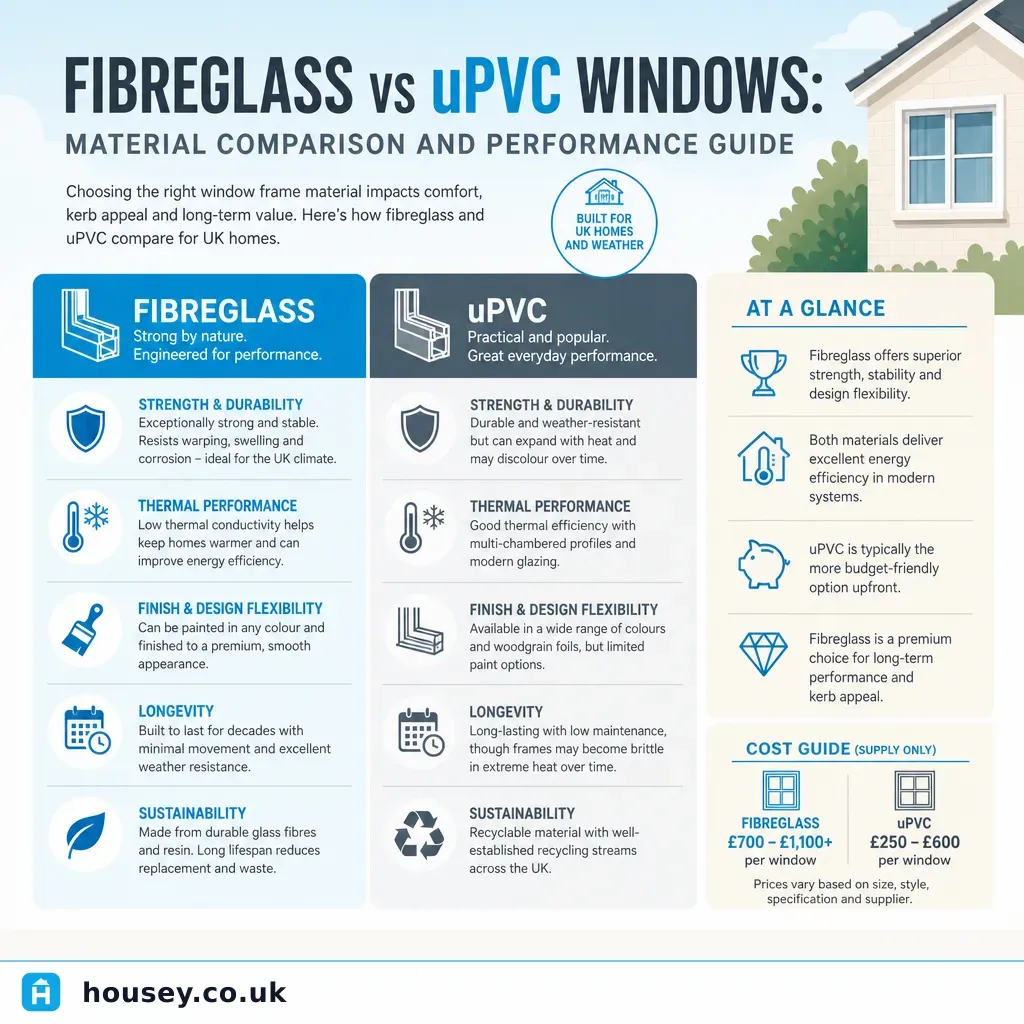
Fibreglass vs uPVC Windows: Material Comparison and Performance Guide
In the UK, vinyl windows are sold as uPVC — the dominant frame material for replacement windows.
 Improvement & Build
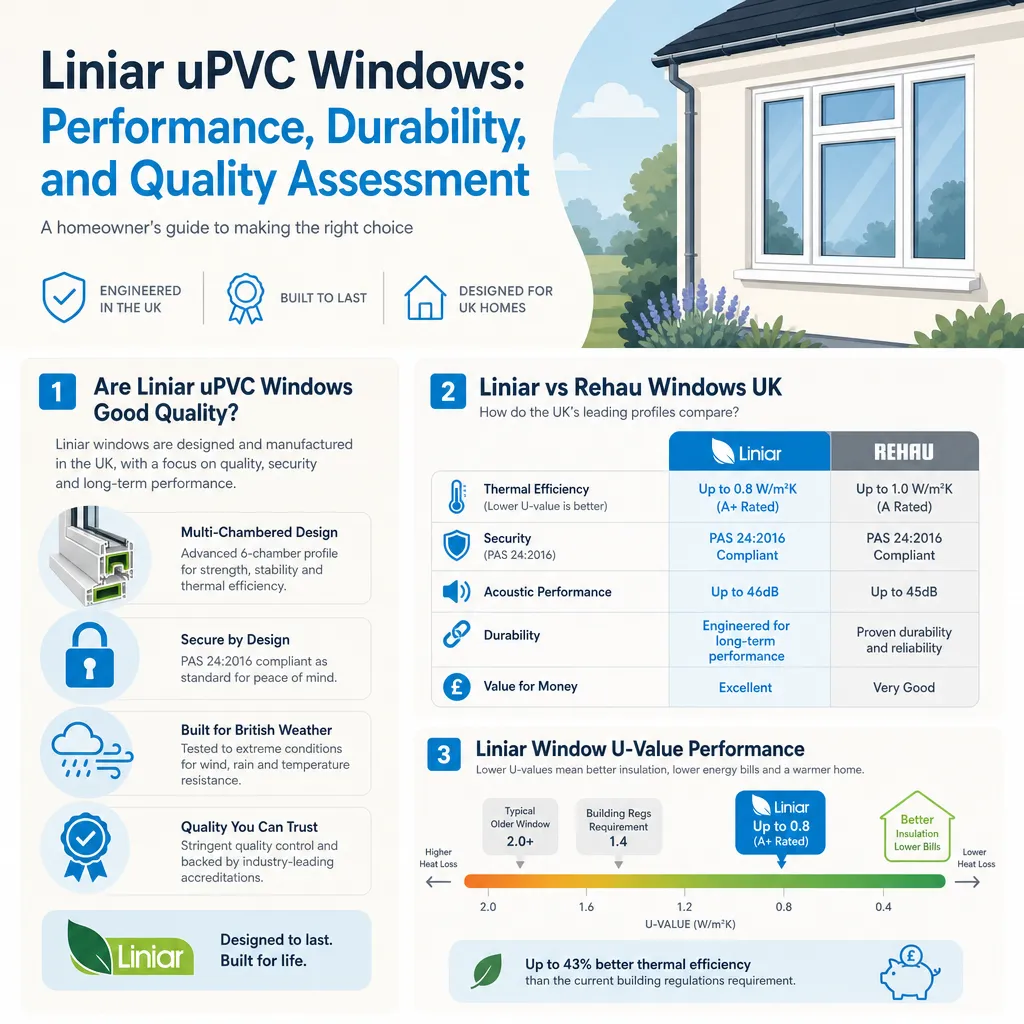
Liniar uPVC Windows: Performance, Durability, and Quality Assessment
Liniar uPVC window profiles are manufactured in the UK using multi-chambered, foamed frames.
 Improvement & Build
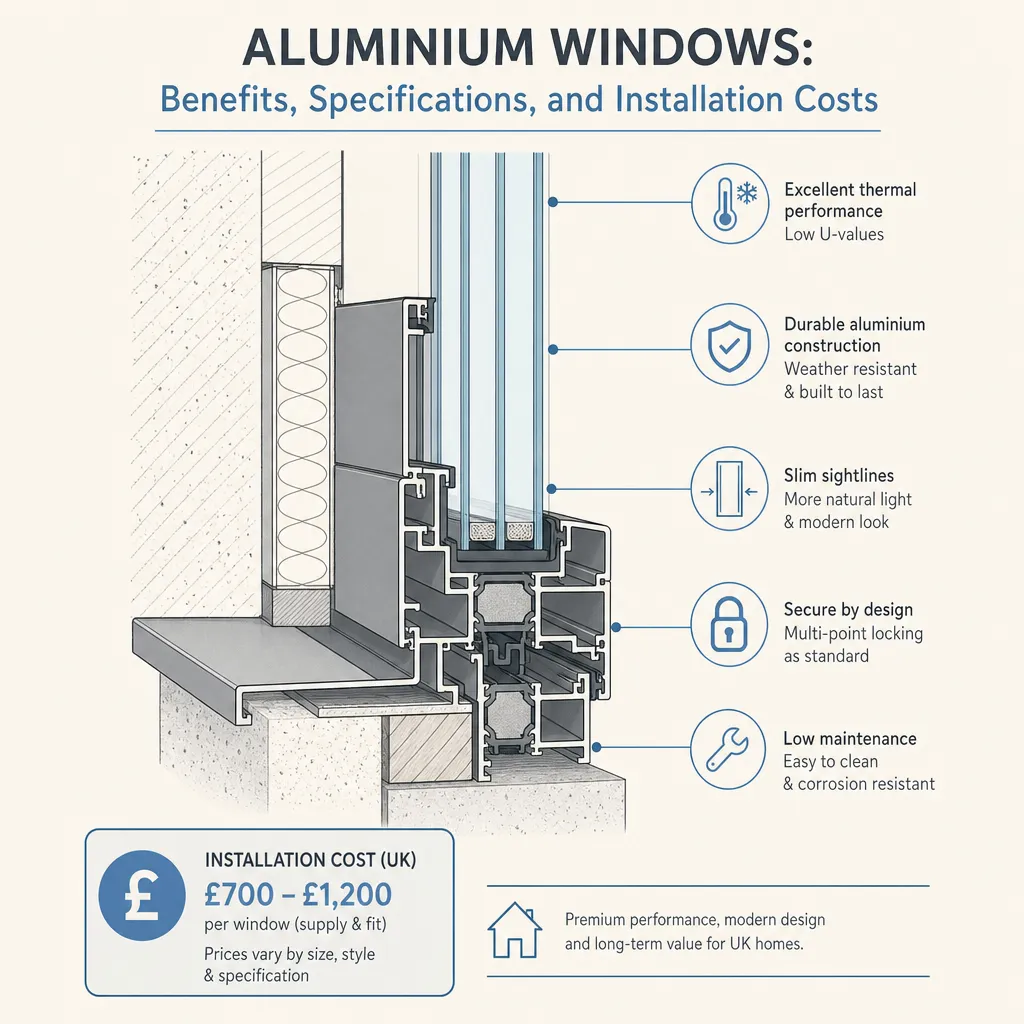
Aluminium Windows: Benefits, Specifications, and Installation Costs
Aluminium windows typically cost £600–£1,800 per window installed in the UK, depending on size and specification.