Aluminium Windows: Properties, Benefits, and Installation Considerations
By Housey · Last reviewed 18th of May 2026
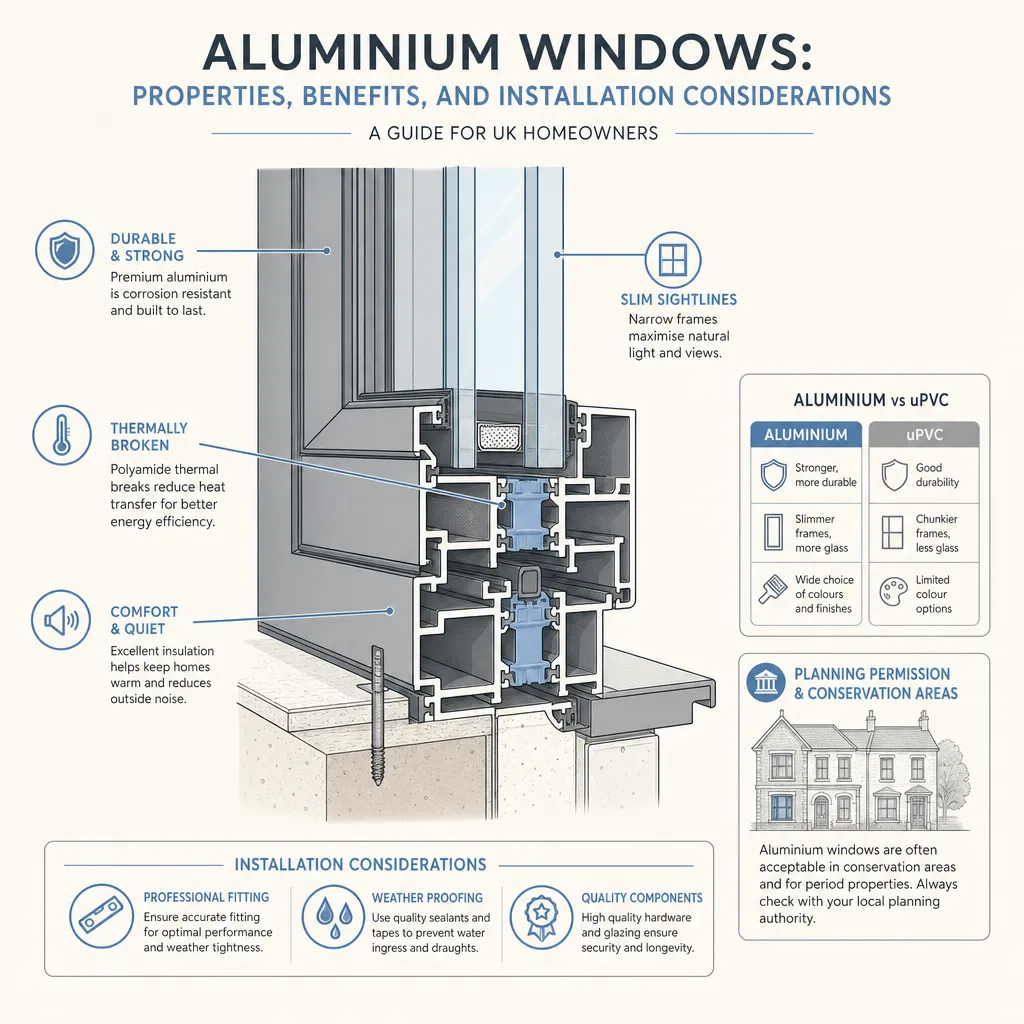
Aluminium Windows: Properties, Benefits, and Installation Considerations
Aluminium windows fell out of favour in UK housebuilding during the 1980s, largely displaced by uPVC, but have seen a significant resurgence in residential refurbishment over the past decade. Driven by improvements in thermal performance, the rise of minimalist architectural design, and growing demand for slimmer sightlines in extensions and loft conversions, aluminium frames are now a common specification choice for new openings and whole-house replacements alike. Choosing the right material involves weighing thermal efficiency, aesthetics, planning constraints, cost, and the compliance requirements that apply to any replacement window installation in England, Scotland, or Wales.
Key points
- Building Regulations Approved Document L (England) requires replacement windows to achieve a whole-window U-value no worse than 1.6 W/m²K; modern thermally broken aluminium frames typically achieve 1.0–1.4 W/m²K, comfortably meeting this standard.
- All replacement window installations in England must be carried out by a FENSA or CERTASS registered installer who self-certifies compliance, or the work must be separately notified to a local authority building control body.
- The thermal break in modern aluminium frames is a polyamide (nylon) strip bonded between the inner and outer aluminium profiles, reducing the frame's effective thermal conductivity and preventing cold inner surfaces and condensation.
- Aluminium windows in listed buildings require listed building consent; in conservation areas, permitted development rights may be restricted by an Article 4 Direction, meaning planning permission is needed even for like-for-like replacements.
- Powder-coated aluminium frames require no repainting and typically carry manufacturer coating guarantees of 20–25 years; the aluminium substrate does not rot, warp, or corrode in UK conditions.
How aluminium compares with other window frame materials
Choosing between aluminium, uPVC, timber, and composite frames is one of the most common decisions homeowners face when replacing or upgrading windows. Each material has distinct performance characteristics, maintenance requirements, and aesthetic profiles.
Frame material | Typical whole-window U-value | Approximate lifespan | Maintenance | Sightline width | Best suited for |
|---|---|---|---|---|---|
Thermally broken aluminium | 1.0–1.4 W/m²K | 40+ years | Very low | Slim (25–35 mm) | Contemporary extensions, large panes, Crittall-style glazing |
uPVC | 1.2–1.6 W/m²K | 20–35 years | Low | Moderate (50–70 mm) | Standard domestic replacement; cost-sensitive projects |
Timber | 1.2–1.6 W/m²K (with double glazing) | 30–60 years with maintenance | High (painting every 5–7 years) | Slim to moderate | Conservation areas, period properties, listed buildings |
Composite (timber/aluminium) | 1.0–1.4 W/m²K | 35–50 years | Low (aluminium exterior) | Moderate | Period aesthetic with reduced maintenance |
Indicative UK performance figures, last reviewed 2026-05-18. Actual U-values depend on glazing specification, frame geometry, and installation detailing; always request the whole-window U-value from your supplier, not just the centre-pane figure.
Thermal performance: the thermal break explained
The key difference between modern aluminium windows and the single-skin frames commonly installed in UK properties during the 1970s and 1980s is the thermal break. Without one, aluminium's high thermal conductivity (approximately 160 W/m·K) transfers heat directly through the frame, creating cold inner surfaces, condensation, and significant heat loss.
A polyamide thermal break bonded between the inner and outer aluminium profiles reduces the effective conductivity to around 0.3 W/m·K, enabling whole-window U-values that meet Building Regulations Part L and that approach — or match — the thermal performance of well-specified uPVC.
For projects targeting very high energy efficiency standards such as EnerPHit or Passivhaus, thermally broken aluminium frames with triple glazing and warm-edge spacer bars can achieve whole-window U-values below 0.8 W/m²K. These are specialist products, significantly more expensive than standard double-glazed aluminium, and require precise installation detailing to achieve the specified performance.
Building Regulations and FENSA compliance
Replacement windows in England are controlled by Building Regulations Part L and the accompanying Approved Document L. Any replacement window — regardless of frame material — must meet the minimum thermal performance requirements. Compliance is demonstrated in one of two ways:
- FENSA or CERTASS registered installer: the installer self-certifies compliance with Building Regulations and issues a certificate to the homeowner. This is the most straightforward route for standard domestic replacement.
- Local authority building control notification: the work is submitted to the local authority before installation, and a completion certificate is issued after inspection.
The completion certificate matters. Without it, the installation cannot be verified as compliant, which can raise questions during a conveyancing search when the property is sold. Always confirm that your installer is FENSA or CERTASS registered before signing any contract.
Wales and Scotland have equivalent requirements under their respective building regulations. Scotland also requires compliance with Section 6 (Energy) of the Building Standards technical handbooks.
Planning considerations: when you need more than permitted development
Most homeowners can replace windows under permitted development rights without needing planning permission, provided the replacement is in a similar style and the property is not subject to additional controls. There are important exceptions:
- Listed buildings: Any alteration to a listed building — including window replacement — requires listed building consent in addition to any building regulations compliance. Aluminium frames are unlikely to be approved in many listed buildings where the historic character depends on original or traditional window materials and profiles. Contact your local planning authority (LPA) or Historic England for guidance before ordering.
- Conservation areas: LPAs can require that replacement windows in conservation areas preserve the character of the area. An Article 4 Direction removes permitted development rights entirely for certain works, meaning full planning permission is required for any window replacement. Check your LPA's website or contact them directly before proceeding.
- Flats and maisonettes: Permitted development rights do not apply to flats; any window replacement in a flat typically requires planning permission, and the terms of the lease may also impose restrictions.
Design and aesthetic considerations
Aluminium's principal design advantage is structural rigidity, which allows thinner frame profiles and larger unsupported glass areas compared with uPVC. This makes it particularly well suited to:
- Large picture windows and sliding or bifold door sets where minimal sightlines are a design priority.
- Contemporary extensions and orangeries with floor-to-ceiling glazing.
- Crittall-style steel-look windows — a popular choice for period refurbishments seeking an industrial aesthetic with modern thermal performance and lower maintenance than original steel frames.
Powder-coated finishes are available in any RAL colour, and dual-colour options (one colour internally, another externally) are standard with most UK manufacturers. Anodised finishes offer a more metallic appearance and are common in commercial and high-specification residential projects.
What to ask before accepting a quote for aluminium windows
Before instructing an installer, ask the following:
- Are you registered with FENSA or CERTASS, and will you issue a compliance certificate on completion?
- What is the whole-window U-value (not just the glazing unit) for the frames you are quoting?
- What polyamide thermal break specification does the frame system use?
- What centre-pane U-value and spacer bar specification does the glazing unit carry — warm-edge or aluminium spacer?
- What powder-coat warranty does the frame manufacturer offer, and is the frame profile tested to BS 6375 for weather performance?
- Is the glazing unit argon- or krypton-filled?
- Do I need to check with my local planning authority before proceeding — conservation area, Article 4 Direction, or listed building?
- What guarantee is provided on the sealed unit against misting or seal failure?
- Is VAT included in this quote, and are there any additional costs for structural lintels, reveals, or making good?
- What access arrangements are needed, and how will internal finishes be protected during installation?
When to get professional help
Consult a qualified architect, heritage consultant, or specialist window supplier if:
- Your property is listed or in a conservation area and you are uncertain whether planning permission or listed building consent is required.
- You are specifying large structural openings alongside the window replacement — structural calculations and building control sign-off are likely to be required.
- You are targeting a high energy performance standard where frame, glazing, installation detailing, and thermal bridging all affect the outcome.
- You receive quotes with significantly different U-value specifications and cannot assess which best meets your requirements or the Building Regulations minimum.
How Housey can help
Housey connects homeowners with vetted FENSA-registered window and door installers who can specify and fit aluminium windows to your building's requirements. Compare credentials and quotes from local installers before committing to any frame material or glazing specification.
Frequently asked questions
Are aluminium windows more expensive than uPVC?
Aluminium windows typically cost 30–60% more than equivalent uPVC units, reflecting higher material and fabrication costs. Their longer lifespan of 40 or more years versus 20–35 years for uPVC, and minimal maintenance requirements, can offset the upfront premium over time. Indicative UK costs, last reviewed 2026-05-18; obtain written quotes for your specific project.
Do aluminium windows cause condensation?
Non-thermally-broken aluminium frames can develop condensation on the inner face in cold weather because the metal conducts cold directly to the interior surface. Modern thermally broken frames significantly reduce this risk. Condensation appearing between the glass panes — not on the frame — indicates a failed sealed unit, which is a warranty issue separate from the frame material.
Can aluminium window frames be recycled?
Yes. Aluminium is one of the most recyclable construction materials; recycled aluminium requires approximately 5% of the energy needed to produce virgin aluminium. Many UK window manufacturers offer frames with high recycled content as part of their sustainability credentials. Ask your installer or manufacturer what proportion of recycled aluminium is used in their profiles.
How long do aluminium windows last?
A well-manufactured thermally broken aluminium frame with a quality powder-coat finish can last 40 years or more in UK conditions. Aluminium does not rot, warp, or corrode. The sealed glazing unit typically carries a separate guarantee of 10–20 years and is more likely to require replacement before the frame itself needs attention.
Sources and further reading
- Approved Document L: conservation of fuel and power — GOV.UK
- FENSA: competent persons scheme for windows and doors — FENSA
- Listed buildings and conservation areas: listed building consent — Historic England
- Windows and doors energy advice — Energy Saving Trust
Useful next reads
 Improvement & Build
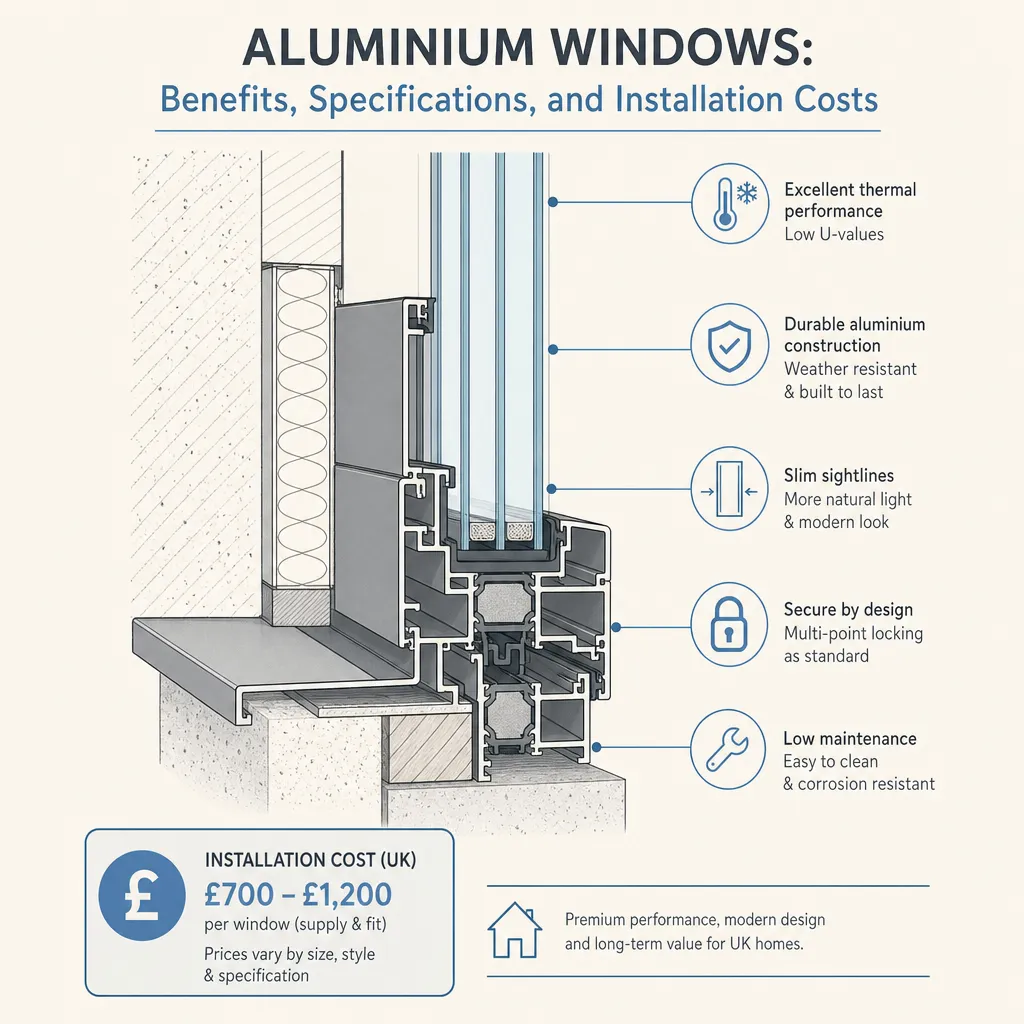
Aluminium Windows: Benefits, Specifications, and Installation Costs
Aluminium windows typically cost £600–£1,800 per window installed in the UK, depending on size and specification.
 Improvement & Build
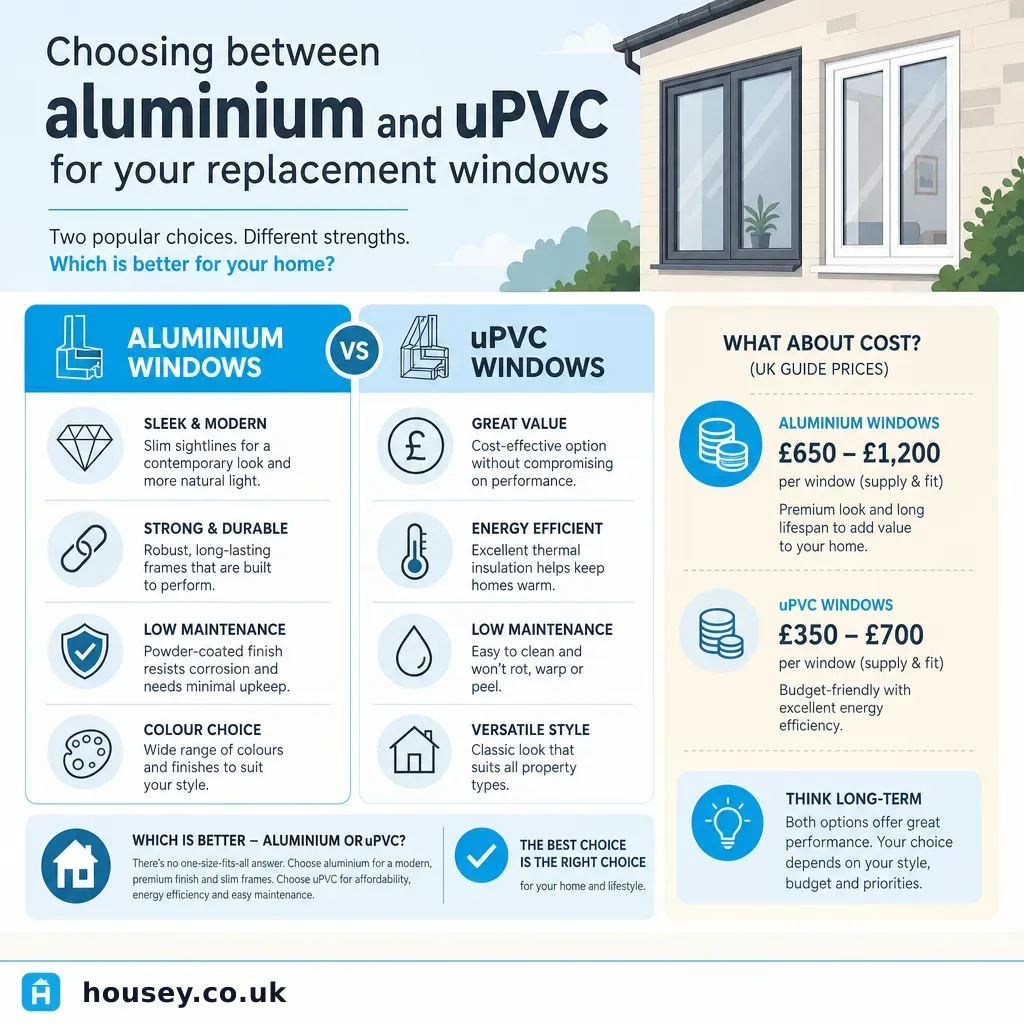
Choosing between aluminium and uPVC for your replacement windows
uPVC windows are typically the more affordable choice, offering good thermal performance and minimal maintenance, making them popular in most UK homes.
 Improvement & Build
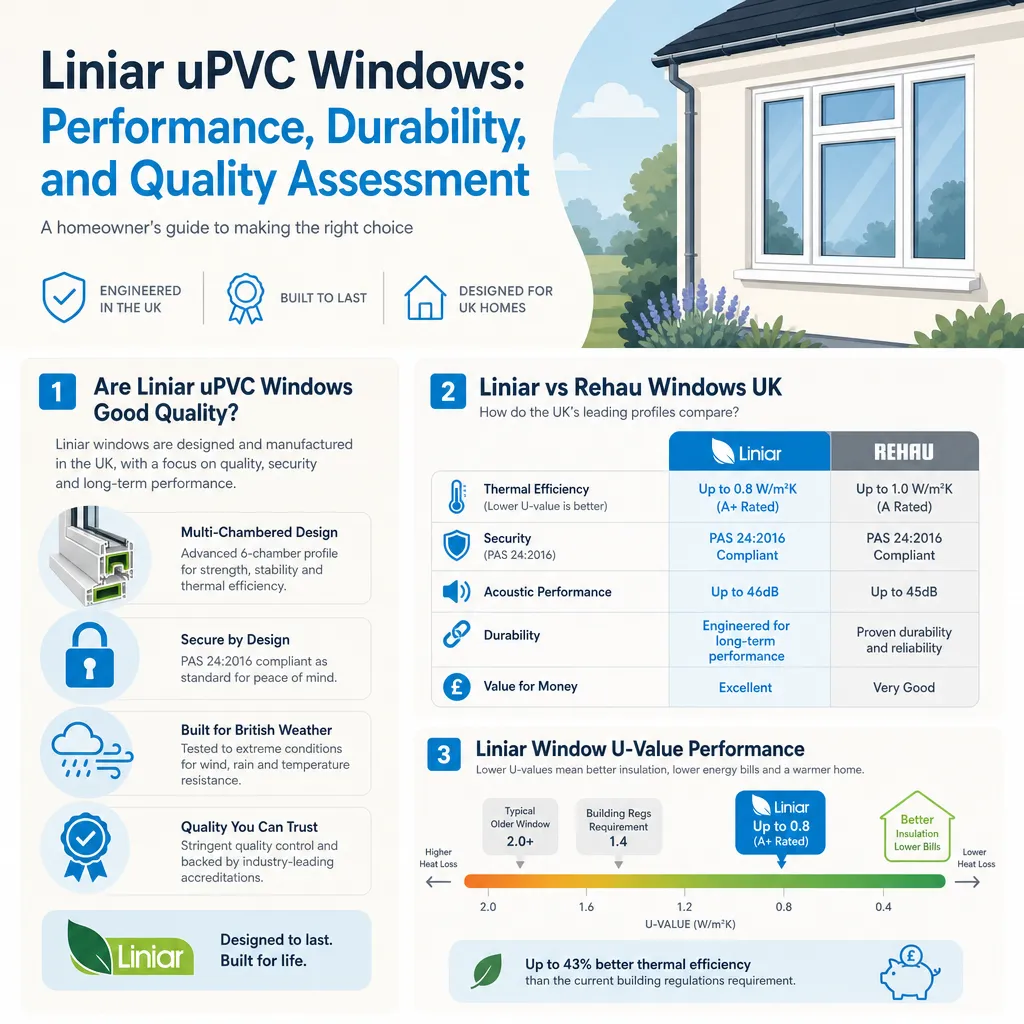
Liniar uPVC Windows: Performance, Durability, and Quality Assessment
Liniar uPVC window profiles are manufactured in the UK using multi-chambered, foamed frames.
 Improvement & Build
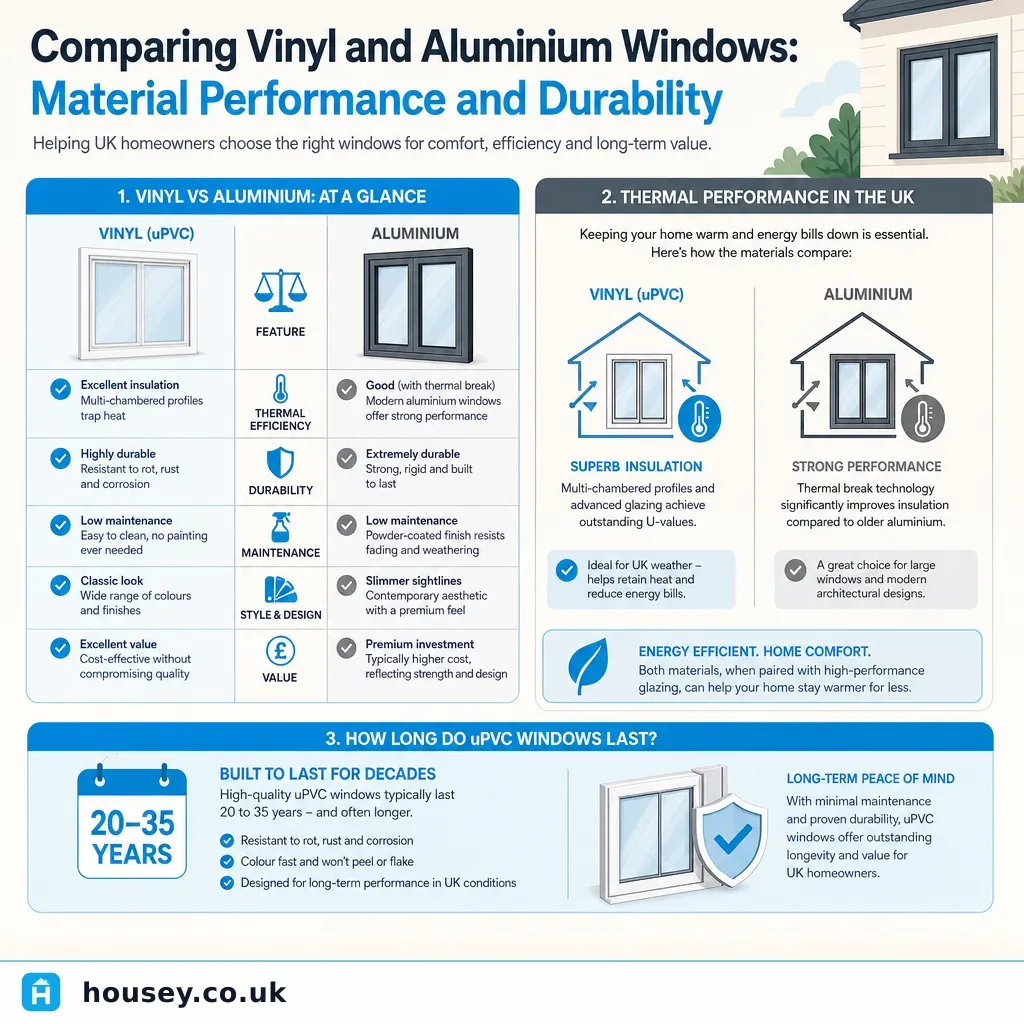
Comparing Vinyl and Aluminium Windows: Material Performance and Durability
uPVC (vinyl) and aluminium windows both meet UK Building Regulations Part L when properly specified.
 Improvement & Build
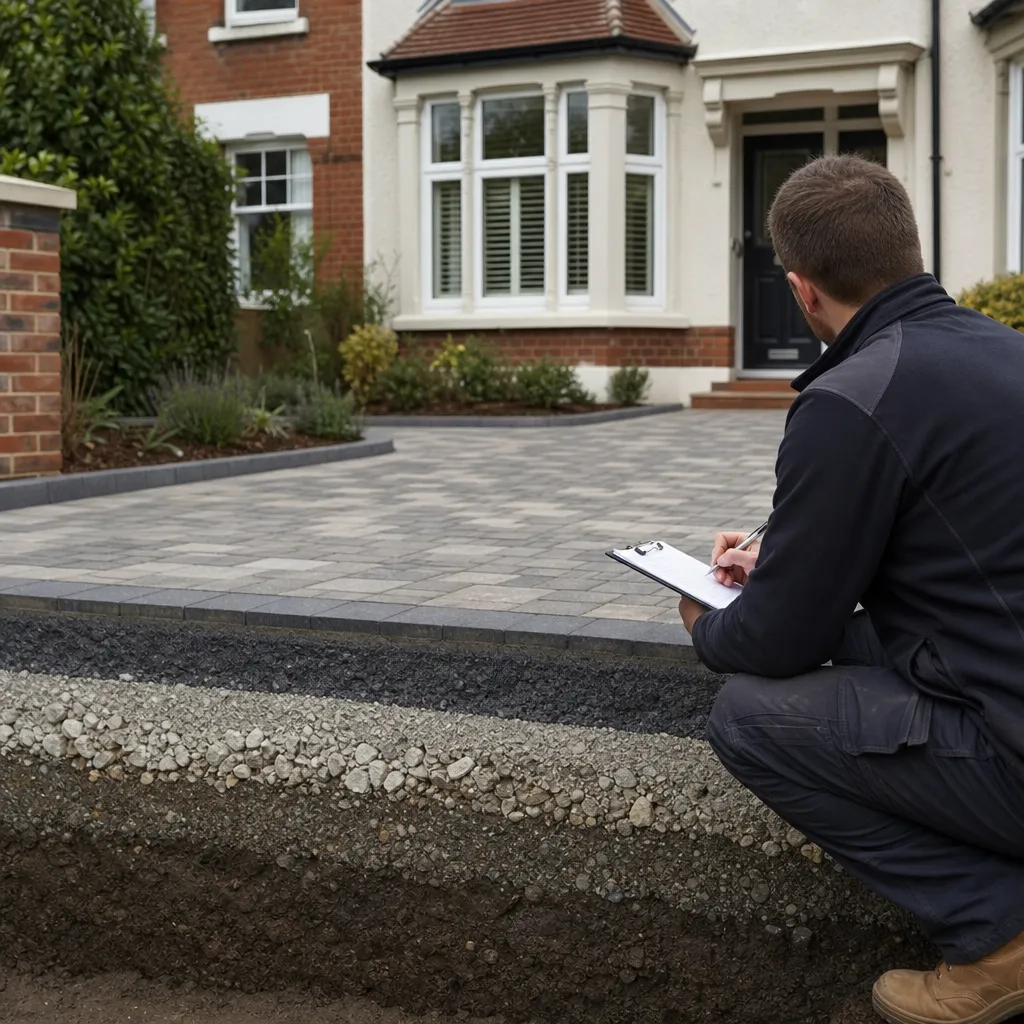
Driveway Thickness: Achieving the Right Specification for Residential Properties
The correct thickness for a residential driveway depends on the surface material and the traffic it will carry.