Composite Window Installation: Costs and Benefits
By Housey · Last reviewed 5th of May 2026
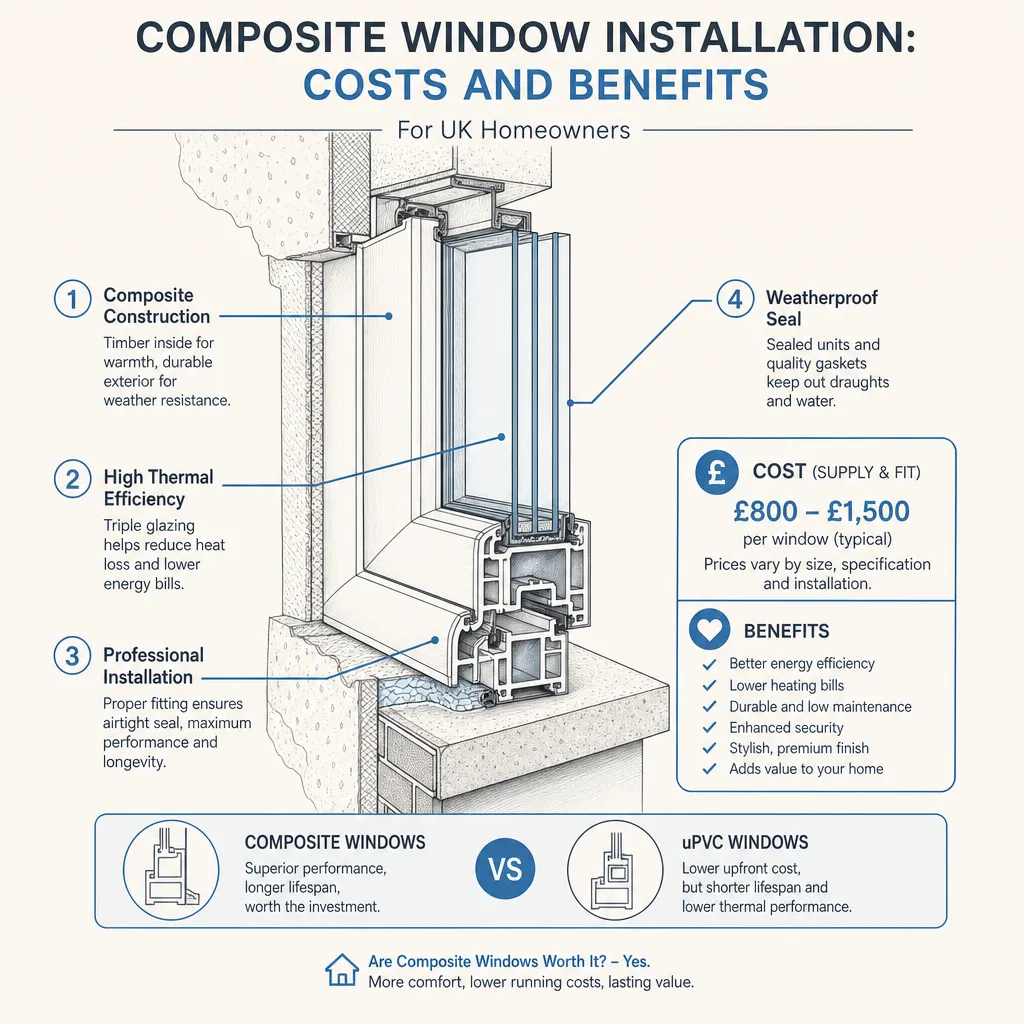
Composite Window Installation: Costs and Benefits
Windows are one of the first components a UK homeowner considers when tackling an energy upgrade or improving a property's appearance. Composite windows sit between premium timber frames and standard uPVC on the market, making them a common consideration during renovation, extension, and whole-house refurbishment projects. Choosing the right frame material affects energy bills, maintenance schedules, and the building's character — particularly in older or period properties where both performance and aesthetics matter.
Key points
- Replacement windows in England must meet a whole-window U-value of no more than 1.4 W/m²K under Building Regulations Part L; most timber-core composite units with A-rated double glazing achieve 1.0–1.3 W/m²K, comfortably exceeding this threshold.
- Replacement window work in England and Wales is notifiable under Building Regulations; use a FENSA- or CERTASS-registered installer to self-certify compliance, or apply for local authority building control approval before work begins.
- BFRC (British Fenestration Rating Council) energy labels rate windows from A++ to E — look for Band A or above when specifying composite glazing units.
- Indicative installed costs range from approximately £700 to £2,000 per composite window, depending on size, style, core material, and glazing specification. (Indicative UK costs, last reviewed 2026-05-05.)
- Manufacturer warranties for composite frames typically run 10–25 years, compared with around 10 years for standard uPVC — an important factor when calculating whole-of-life cost.
What are composite windows?
Composite windows use two or more materials in the frame construction — most commonly a timber or aluminium inner core bonded to a uPVC or aluminium outer casing. The inner layer provides structural rigidity and thermal mass; the outer layer resists weathering, UV degradation, and moisture ingress without the maintenance demands of exposed timber.
Most composite windows available in the UK fall into two main types:
- Timber-core composite: A solid or engineered timber inner frame with a uPVC or aluminium outer skin. The timber provides natural insulation and suits period properties where character matters.
- Aluminium-clad timber composite: An aluminium outer with a timber inner. Common in Scandinavian-style and contemporary builds, and well suited to exposed coastal or upland locations.
Both types are distinct from standard uPVC-only frames and from thermally-broken aluminium frames, which are sometimes also marketed as composite. Always check what the core material actually is before comparing quotes.
Composite windows compared: frame types at a glance
Frame type | Typical U-value | Maintenance | Lifespan | Indicative installed cost (per unit) | Best for |
|---|---|---|---|---|---|
Standard uPVC | 1.4–1.8 W/m²K | Very low | 20–25 years | £350–£900 | Budget upgrades, rental properties |
Composite (timber-core) | 1.0–1.4 W/m²K | Low–moderate | 25–35 years | £700–£2,000 | Period homes, energy upgrades, mid-to-long term ownership |
Composite (aluminium-clad timber) | 0.9–1.3 W/m²K | Very low | 30–40 years | £900–£2,500 | Exposed locations, contemporary builds, premium renovation |
Timber only | 1.2–2.0 W/m²K | High | 20–50+ years | £600–£3,000 | Listed buildings, heritage properties |
Aluminium (thermally-broken) | 1.3–1.8 W/m²K | Very low | 30–45 years | £600–£2,000 | Contemporary builds, large panes, commercial |
Indicative UK costs, last reviewed 2026-05-05. Costs vary significantly by size, style, glazing, and region. Obtain at least three quotes for comparison.
Energy efficiency and Building Regulations
Replacing windows in England and Wales is notifiable work under Building Regulations (Part L — Conservation of Fuel and Power). The current Part L requirement for replacement windows is a whole-window U-value of no more than 1.4 W/m²K, with a minimum equivalent energy rating of Band C on the BFRC scale.
Most composite windows with A-rated double glazing or any triple glazing exceed this requirement comfortably, achieving whole-window U-values of 1.0–1.3 W/m²K or better.
Self-certification: Using a FENSA- or CERTASS-registered installer allows them to certify compliance on your behalf and notify the local authority. You receive a certificate — important for future conveyancing — without needing a separate building control application. If your installer is not registered, a building control application must be submitted before work begins.
In Scotland, replacement windows fall under Scottish Building Standards Section 6 (Energy). Wales and Northern Ireland follow parallel but distinct regimes. If your property is outside England, check with the relevant authority before proceeding.
What composite windows cost in the UK
A typical composite window installation involves: supply of the frame and glazing unit, removal and disposal of the existing windows, installation labour, and finishing (internal trims, sealants, and making good).
Indicative UK costs, last reviewed 2026-05-05:
Window type | Supply only (per unit) | Installed (per unit) |
|---|---|---|
Standard casement (timber-core composite) | £400–£900 | £700–£1,500 |
Bay window (composite, 3-light) | £1,200–£2,500 | £2,000–£4,500 |
Sash composite | £600–£1,200 | £1,000–£2,000 |
Aluminium-clad composite casement | £600–£1,200 | £900–£2,500 |
VAT is typically included in retail installer quotes but confirm before signing. Scaffolding for upper-floor access may be quoted separately.
Key cost drivers include:
- Number of openable sashes and complexity of hardware
- Glazing specification (double vs triple, acoustic, solar-control, or obscured glass)
- Exterior finish (factory-finished aluminium outer vs painted timber outer)
- Access requirements (upper-floor work may require scaffold or a mobile elevated work platform)
- Whether lintels, reveals, or surrounding masonry need repair at the same time
Worked UK property scenario
A 1930s semi-detached in Harrogate — replacing 8 windows
The owners wanted to improve thermal comfort and replace deteriorating original steel-framed windows with something that respected the property's character. They obtained three quotes for timber-core composite windows in a heritage colour (anthracite grey outer, white timber inner), A-rated double glazing, from FENSA-registered installers.
- Quote A: £9,200 — includes removal, disposal, BFRC certificate, 15-year frame warranty
- Quote B: £11,400 — same specification, premium manufacturer, 25-year frame warranty, enhanced draught sealing
- Quote C: £8,500 — installer not FENSA-registered; homeowners would need a separate building control application (typically £200–£400 additional cost)
The owners chose Quote B after verifying the installer's FENSA registration and reviewing the manufacturer's product liability insurance. The 25-year warranty and hassle-free self-certification were judged worth the additional outlay, particularly given plans to sell the property within 10 years.
Illustrative scenario only. Costs will vary by property, specification, and local market conditions.
What to ask before accepting a quote
- Is the installer registered with FENSA or CERTASS, and will they issue a compliance certificate that is registered with the local authority?
- What is the whole-window U-value and BFRC energy rating of the specified unit?
- What is the core material of the composite frame — timber, aluminium, or other?
- Is scaffolding or an elevated work platform included in the quote, or priced separately?
- What does the manufacturer warranty cover, and for how many years?
- Is VAT included in the quoted price?
- What redecoration and making-good is included after installation?
- Will the existing frame be fully removed, or will new frames be over-clad (which reduces the opening size)?
When to get professional help
Composite window installation is skilled trade work and should be carried out by a competent, ideally registered, installer. Seek additional professional input if:
- Your property is listed — listed building consent is typically required before any window replacement, regardless of frame material. Consult the local conservation officer before ordering.
- Your property is in a conservation area — replacement windows must often match the original style and materials; permitted development rights may not apply.
- There is structural movement around existing window openings — cracked lintels, stepped cracking in surrounding brickwork, or frames that no longer close squarely are warning signs. A chartered surveyor or structural engineer should assess the openings before new windows are fitted.
- Windows serve as a protected fire escape route — consult a fire assessor or building control officer before altering any fire-escape window.
How Housey can help
If you are ready to compare quotes from qualified installers, Housey can connect you with vetted window and door installers who cover your area. Request quotes, check FENSA registration, and compare specifications before committing to a contract.
Frequently asked questions
Do I need planning permission to replace windows with composite frames in the UK?
In most cases, no. Replacing like-for-like windows is usually permitted development in England, Wales, and Scotland. However, if your property is listed or in a conservation area, you may need listed building consent or planning permission before replacing any windows, regardless of the material. Check with your local planning authority before ordering.
Are composite windows better than uPVC?
Composite windows typically offer better thermal performance, longer warranties, and a more premium appearance than standard uPVC frames. They cost more upfront, but the gap in whole-of-life costs narrows when maintenance and replacement frequency are factored in. The right choice depends on your budget, property type, and priorities.
How long do composite windows last?
Most timber-core composite windows carry manufacturer warranties of 10–25 years, with well-maintained frames lasting 30 years or more in practice. Aluminium-clad composite windows often last 30–40 years. Longevity depends on the quality of the frame, finish, and installation, as well as exposure to weather and local climate.
Do composite windows add value to a home?
Energy-efficient windows with a valid FENSA certificate can make a property more attractive to buyers and may be noted positively in a RICS survey. Specific value uplift depends on the local market, property type, and overall condition. Composite windows are generally viewed as a quality upgrade over standard uPVC.
Can I install composite windows myself?
Supply-only purchase is possible, but self-installation means you cannot use FENSA or CERTASS self-certification. You would need to apply for local authority building control approval before the work starts, adding cost and time. For most homeowners, using a registered installer is the simpler and more straightforward route.
Sources and further reading
- Building Regulations Approved Document L: Conservation of Fuel and Power — GOV.UK
- FENSA: Glazing competency scheme for window and door installers — FENSA
- BFRC energy ratings for windows and doors — British Fenestration Rating Council
- Planning permission: windows, roof windows and rooflights — Planning Portal
- Windows and doors: energy efficiency advice — Energy Saving Trust
Useful next reads
 Improvement & Build
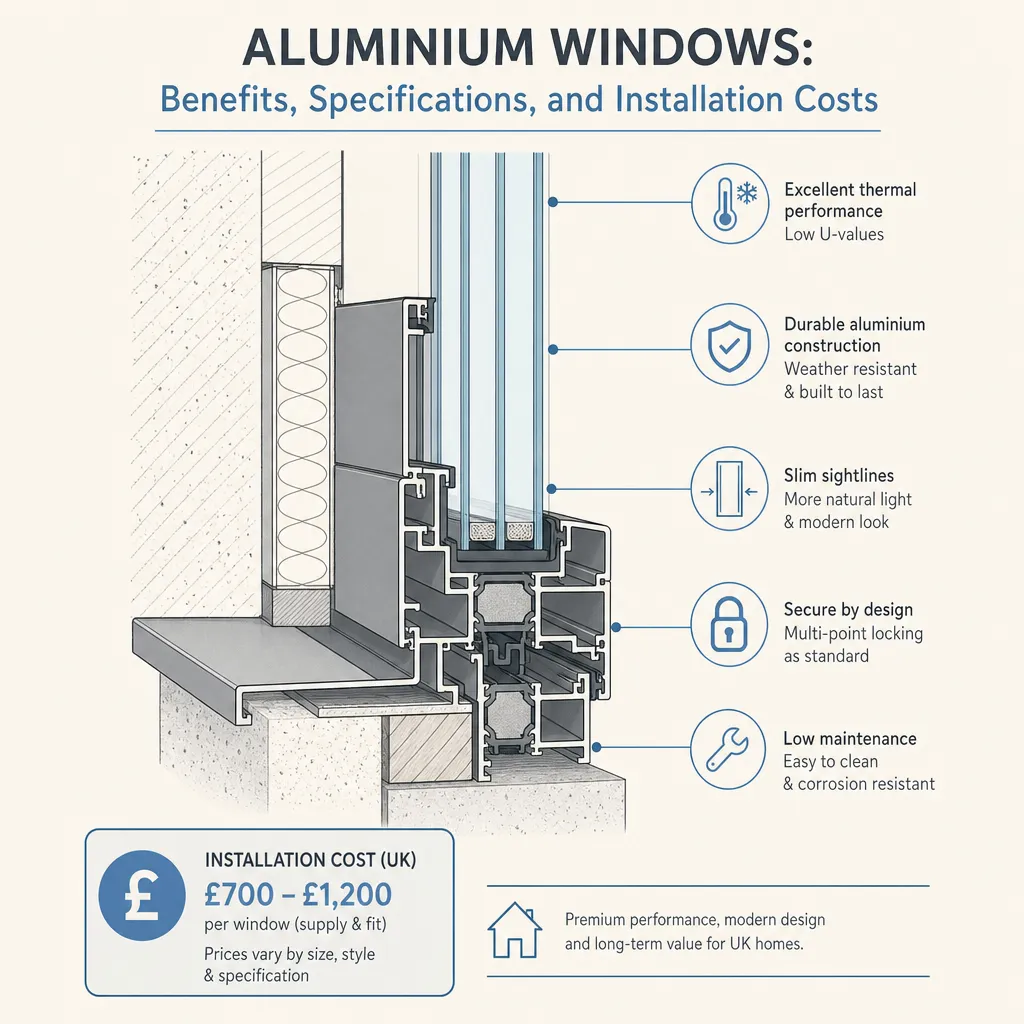
Aluminium Windows: Benefits, Specifications, and Installation Costs
Aluminium windows typically cost £600–£1,800 per window installed in the UK, depending on size and specification.
 Improvement & Build
Custom Glass Solutions: Windows, Doors, and Glazing Services
Replacement windows and doors in England and Wales must comply with Building Regulations Approved Document L (2022), requiring a whole-window U-value of 1.
 Improvement & Build
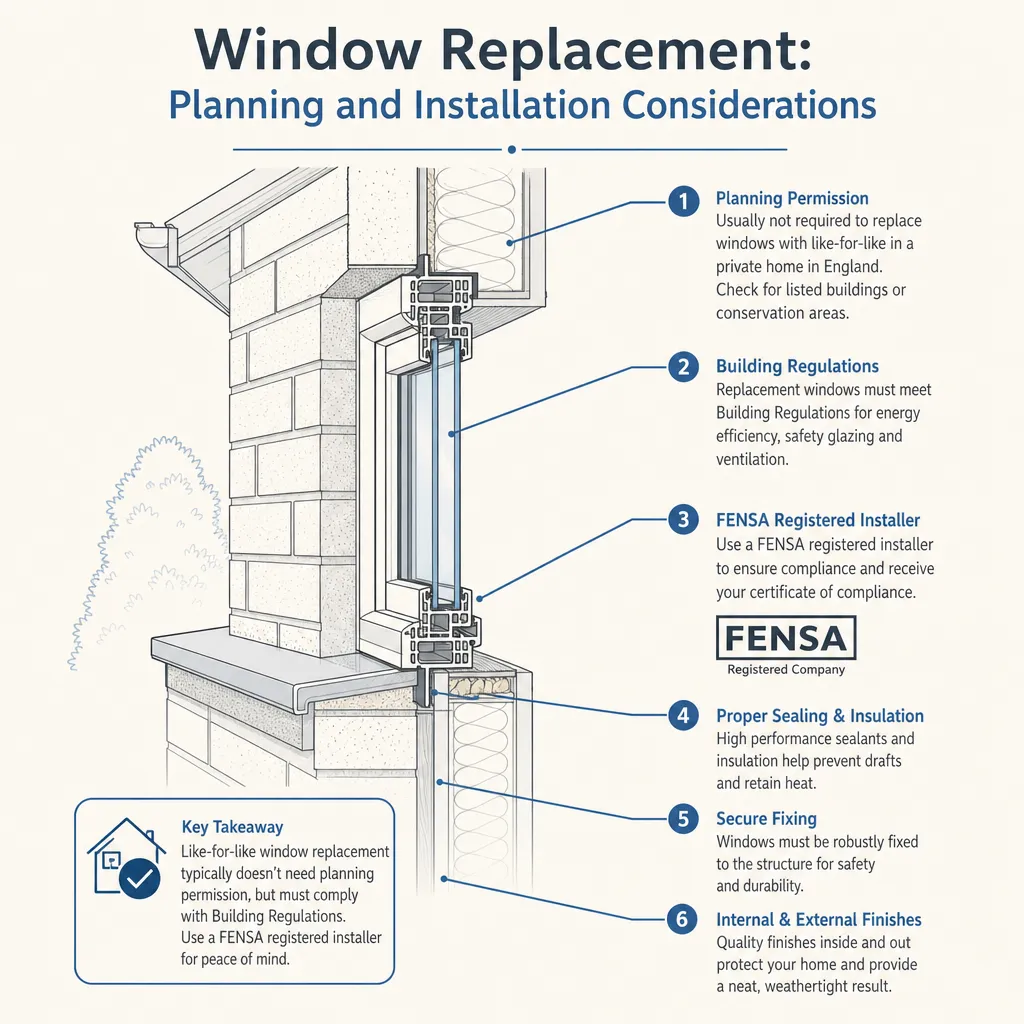
Window Replacement: Planning and Installation Considerations
Most window replacements in England fall under permitted development and do not need planning permission, though listed buildings, flats, and conservation areas are exceptions.
 Improvement & Build
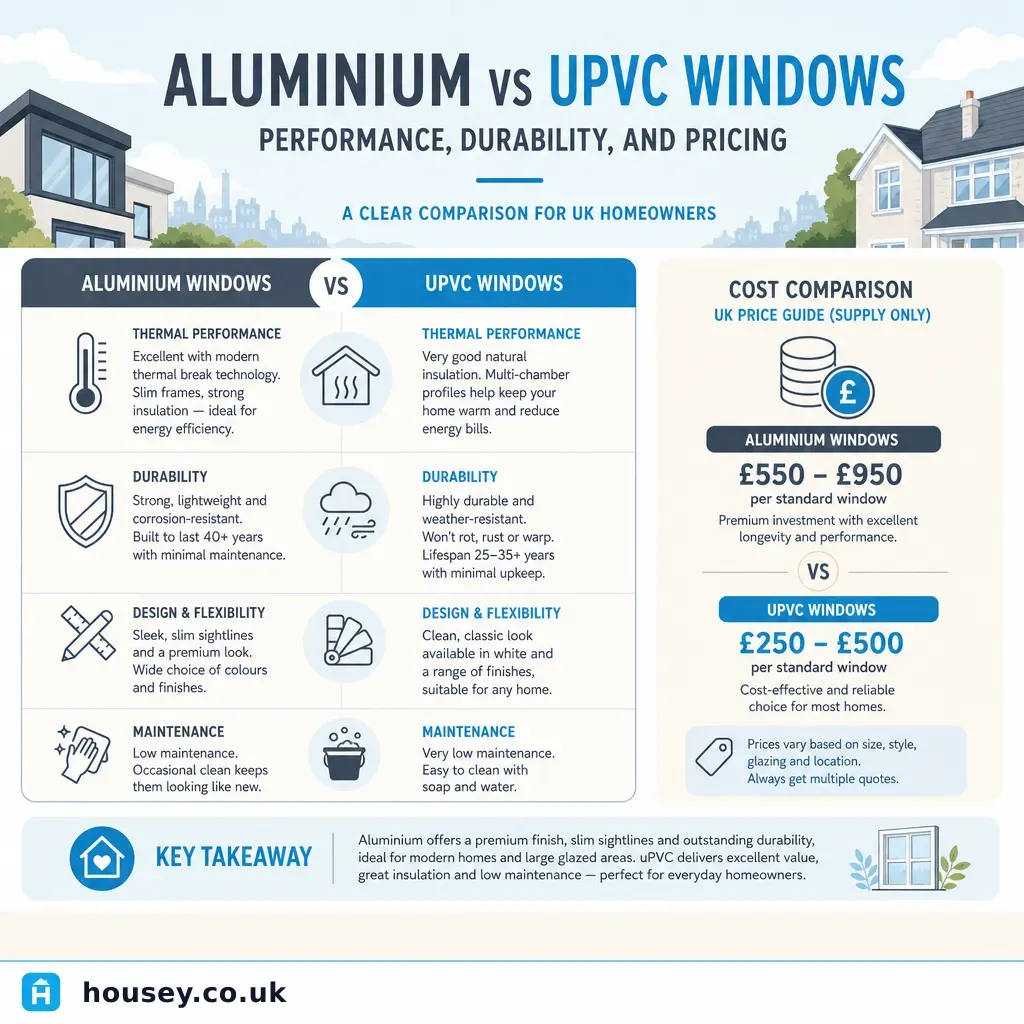
Aluminium vs UPVC Windows: Performance, Durability, and Pricing
Aluminium windows offer slimmer frames, greater longevity of 45 or more years, and a premium look, but typically cost roughly twice as much as UPVC.
 Improvement & Build
Cost of Zinc Roofing Installation
Zinc roofing typically costs £100–£200 per m² installed in the UK for standing seam systems, with flat roof applications ranging from £80–£160 per m².