Aluminium vs UPVC Windows: Performance, Durability, and Pricing
By Housey · Last reviewed 5th of May 2026
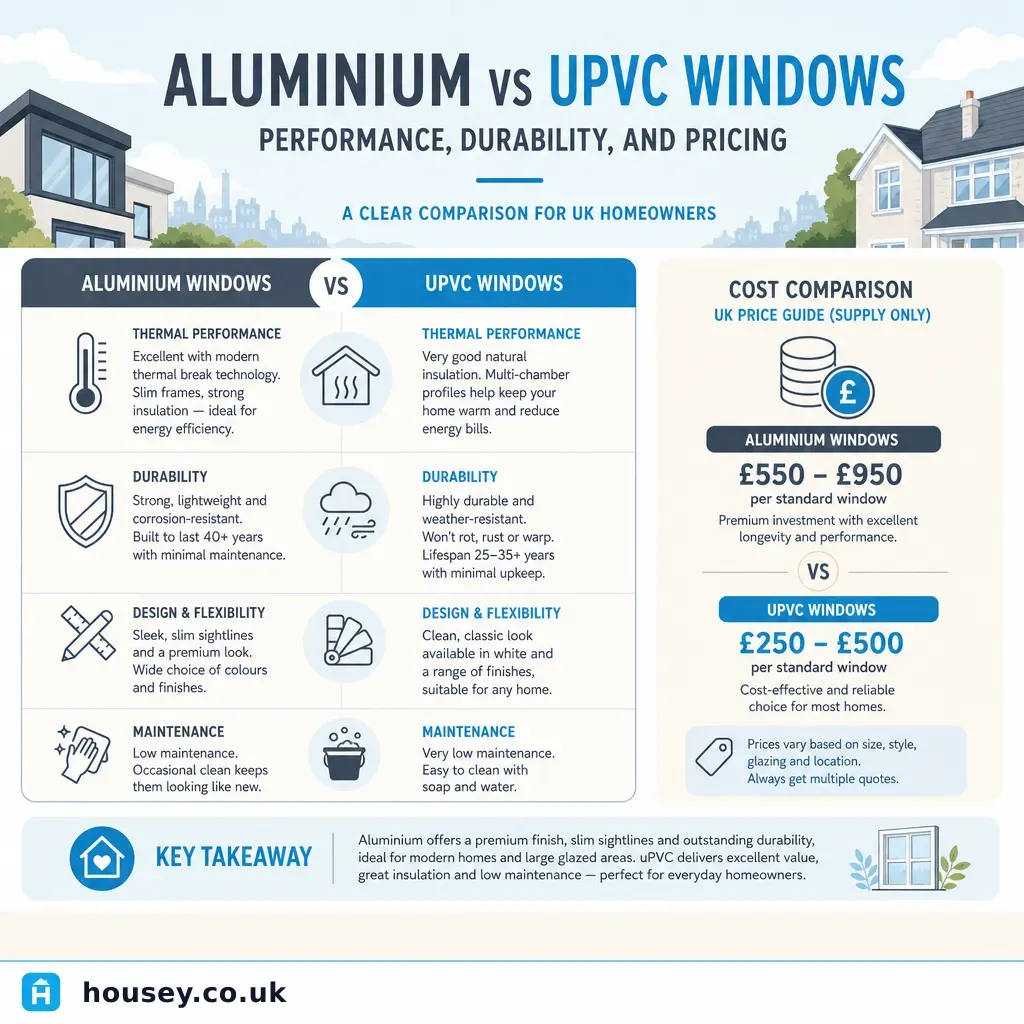
Aluminium vs UPVC Windows: Performance, Durability, and Pricing
Choosing between aluminium and UPVC windows is one of the more consequential decisions in a window replacement project — the material affects upfront cost, long-term durability, thermal performance, and how your home looks for decades. The question tends to arise during a refurbishment, after a surveyor flags single glazing as a heat-loss issue, or when a planning condition restricts the frame material you can use.
Key points
- UPVC windows typically cost £300–£900 per window installed; aluminium windows often range from £600–£1,800+ per window, depending on size, configuration, and glazing specification (indicative UK costs, last reviewed 2026-05-05).
- Aluminium profiles can be as slim as 25–35 mm, allowing larger glass areas; UPVC profiles are typically 60–70 mm wide.
- Both materials must meet Building Regulations Approved Document L — a minimum whole-window U-value of 1.4 W/m²K for replacement windows in England.
- UPVC guarantees are commonly 10–15 years; aluminium window guarantees often extend to 25–30 years, with a practical lifespan of 45+ years.
- Window installers replacing windows in existing England and Wales dwellings must be FENSA or CERTASS registered, or notify building control before work starts.
How aluminium and UPVC windows compare side by side
The table below sets out the main differences across the factors that matter most to UK homeowners.
Feature | Aluminium | UPVC |
|---|---|---|
Typical installed cost per window | £600–£1,800+ | £300–£900 |
Frame profile width | 25–35 mm (slim sight lines) | 60–70 mm (wider profiles) |
Practical lifespan | 45+ years | 20–35 years |
Typical guarantee | 25–30 years | 10–15 years |
Achievable whole-window U-value | 0.8–1.4 W/m²K (with thermal break) | 0.8–1.4 W/m²K (multi-chamber profile) |
Maintenance | Wipe clean; powder coat is durable | Wipe clean; may yellow or warp over time |
Colour range | Virtually unlimited RAL palette | Limited; foil wraps available |
Recyclability | Highly recyclable | Recyclable but less commonly processed |
Planning suitability | Often preferred in conservation areas | May be restricted in sensitive locations |
Best suited to | Period, contemporary, and large-format projects | Most standard post-war and modern homes |
Indicative UK costs, last reviewed 2026-05-05. Costs vary by size, opening configuration, glazing spec, and installer.
Thermal performance: which material insulates better?
In practice, neither aluminium nor UPVC is inherently superior on thermal performance — the glazing unit and any thermal break in the aluminium frame do most of the insulating work.
Modern aluminium frames use a polyamide thermal break: a strip of reinforced plastic separating the inner and outer sections of the aluminium profile. Without it, aluminium conducts heat readily — roughly 1,000 times more readily than UPVC. With a quality thermal break, a well-specified aluminium window can achieve a whole-window U-value of 0.8–1.2 W/m²K, comparable to premium UPVC.
UPVC achieves low conductivity through multi-chamber construction — hollow cavities within the profile trap air and slow heat transfer. Both materials, when fitted with argon-filled double or triple glazing and a warm-edge spacer, can comfortably meet or exceed the Part L requirement.
Always ask your installer for the whole-window U-value — not just the glazing unit U-value — which accounts for the combined effect of frame, glazing unit, and edge spacer together.
Durability and maintenance over time
Aluminium has a clear advantage in lifespan. Powder-coated aluminium resists UV fading, corrosion, and warping, and the finish can be refreshed if damaged. A well-maintained aluminium window in a UK coastal or urban environment can last 50 years without structural degradation.
UPVC performs well in most UK conditions but can yellow gradually in high-UV exposure and may distort slightly in extreme temperature ranges. Better-quality UPVC uses titanium dioxide stabilisers that resist discolouration, and foil-wrapped UPVC can mimic timber or darker tones effectively. Expect to replace UPVC windows after 20–30 years in most UK climates.
Neither material requires painting. Both clean easily with soapy water. Hardware — hinges, handles, and locking points — typically benefits from light lubrication once a year regardless of frame material.
Aesthetics and planning considerations
Aluminium's slim profiles are well-suited to contemporary extensions and refurbishments where large glass areas and minimal framing are desirable. They also suit Victorian, Edwardian, and Georgian properties, where slim sight lines are closer to the proportions of original timber windows and may satisfy conservation area requirements more readily than UPVC.
UPVC is adequate aesthetically for most mid-century and post-war homes, but local planning authorities and conservation officers may object to UPVC in Article 4 Direction areas, conservation areas, or for listed buildings. Always check with your local planning authority before ordering windows if your home has any planning restrictions.
Replacing windows in a listed building always requires listed building consent regardless of the material chosen. Historic England's guidance recommends retaining original windows where possible.
Which should you choose? A decision guide
- Choose aluminium if your property is in a conservation area, if slim profiles and large glass panes matter to your design, if you plan to stay for 20 or more years and want a long-lived asset, or if contemporary aesthetics are the priority.
- Choose UPVC if budget is the main constraint, if you need a large number of windows replaced in one project, or if your home is a standard post-war or modern property where wider frames are not a concern.
- Consider timber or a timber-alternative if your property is listed or in a conservation area where neither aluminium nor UPVC is acceptable to the local planning authority.
- Ask a FENSA-registered installer for U-value specifications in writing, sample materials, and written confirmation that the replacement will comply with Approved Document L before you commit.
What drives the cost difference?
The gap between aluminium and UPVC comes from material cost, fabrication complexity, and the manufacture of thermal-break profiles.
Aluminium cost drivers:
- Profile complexity — slim-line, flush, and heritage-style profiles cost more than standard sections
- Powder-coat colour — bespoke RAL colours or dual-colour (inside vs outside) finishes add to fabrication cost
- Thermal break specification and width
- Hardware quality — shootbolt locking and push-to-open fittings are priced above standard
- Size and weight of opening
UPVC cost drivers:
- Number of chambers in the profile
- Foil wrap vs solid white or cream finish
- Steel reinforcement inserts, which add rigidity and security
- Glazing specification — triple glazing, argon fill, warm-edge spacers, and low-emissivity coatings all add to unit cost
Always obtain at least three written quotes. Ask each installer to specify the profile system, whole-window U-value, frame colour, hardware, guarantee terms, and whether VAT is included.
When to get professional help
Window replacement is notifiable work under Building Regulations in England and Wales. Use a FENSA- or CERTASS-registered installer who can self-certify compliance and issue a certificate — you will need this when you sell the property.
Seek additional professional input if:
- Your property is listed or in a conservation area — consult a planning consultant or conservation officer before ordering.
- You are replacing a substantial proportion of glazed area as part of a wider refurbishment — an energy assessor may need to model the thermal impact.
- Windows are adjacent to a party wall — check whether Party Wall etc. Act 1996 obligations apply to the structural opening.
- A surveyor has identified structural movement around window openings — get this assessed before replacing frames.
How Housey can help
Housey connects UK homeowners with vetted, FENSA-registered window and door installers who can advise on material choice, provide itemised written quotes, and handle Building Regulations self-certification. Submit a quote request with your property details and window counts to compare options from local installers.
Frequently asked questions
Do aluminium windows add more value to a home than UPVC?
Aluminium windows can enhance kerb appeal, particularly on period or contemporary properties, and their longevity is a tangible asset. However, the value uplift is not universal. Estate agents generally note that well-fitted UPVC on a standard post-war home performs similarly for most buyers. In conservation areas, appropriate materials matter more than any frame premium.
Are aluminium windows warmer than UPVC?
A well-specified aluminium window with a thermal break can match UPVC on thermal performance, achieving whole-window U-values of 0.8–1.4 W/m²K. The key variable is the quality of the thermal break and glazing unit specification, not the frame material alone. Always ask for the whole-window U-value, not just the glazing unit figure.
How long does window replacement take?
A typical single-family home with eight to twelve windows usually takes one to three days for a professional installation team. Aluminium windows may take slightly longer than UPVC due to more complex frame assembly, but the timeline depends on the installer, project scope, and any structural work needed to the openings.
Do I need planning permission to replace my windows?
In most cases, replacing like-for-like windows in England is permitted development and does not require planning permission. However, listed buildings, conservation areas with Article 4 Directions, and certain designated areas may require planning permission or listed building consent. Always check with your local planning authority before ordering new frames.
Can I mix aluminium and UPVC windows in the same house?
Technically yes, but mismatched frame materials can look inconsistent and may affect resale appeal. If you are replacing windows incrementally, choosing one material and staying with it creates a more uniform appearance. Some installers offer UPVC windows with aluminium-look foil finishes that can help blend the two aesthetically.
Sources and further reading
- Building Regulations Approved Document L — Conservation of Fuel and Power — GOV.UK
- FENSA: competent person scheme for window and door installation — FENSA
- CERTASS: competent person scheme — CERTASS
- Windows in historic buildings — Historic England
- Double glazing and insulation guidance — Energy Saving Trust
Useful next reads
 Improvement & Build
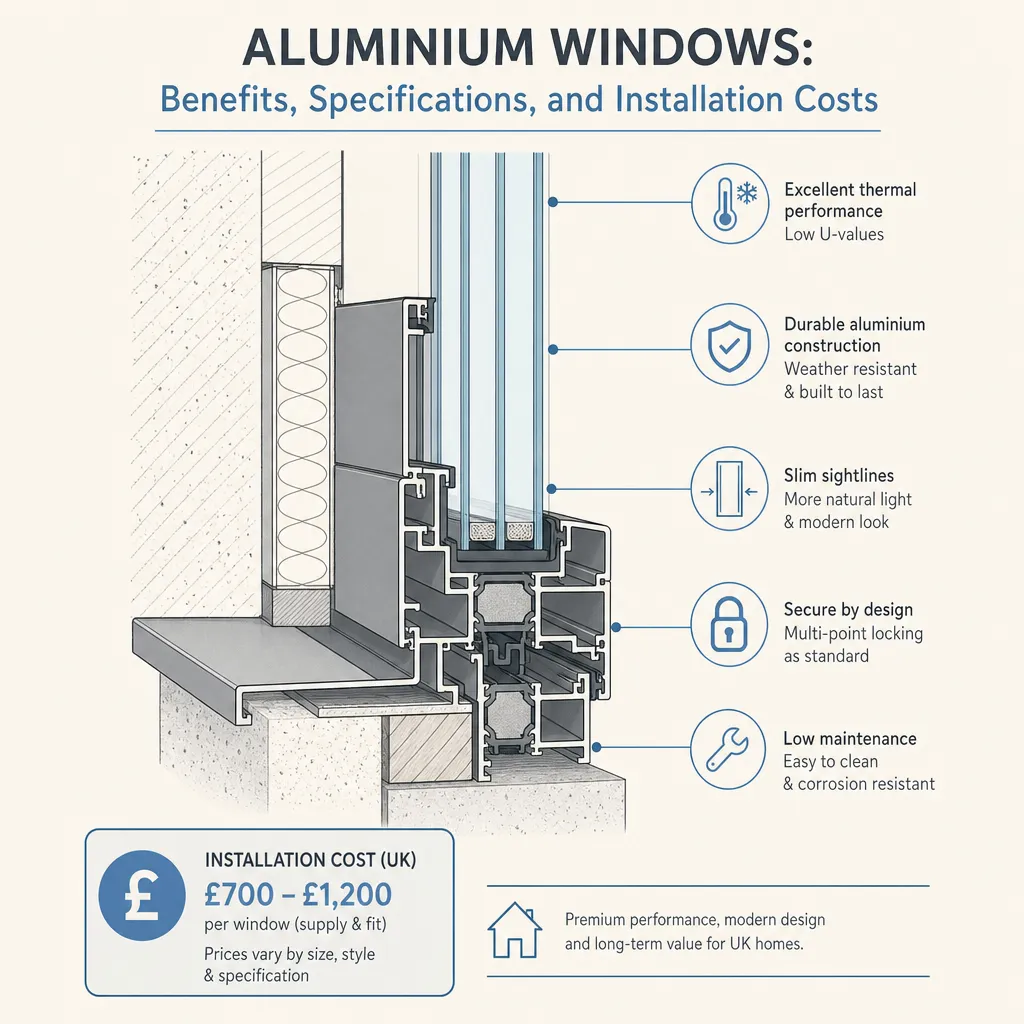
Aluminium Windows: Benefits, Specifications, and Installation Costs
Aluminium windows typically cost £600–£1,800 per window installed in the UK, depending on size and specification.
 Improvement & Build
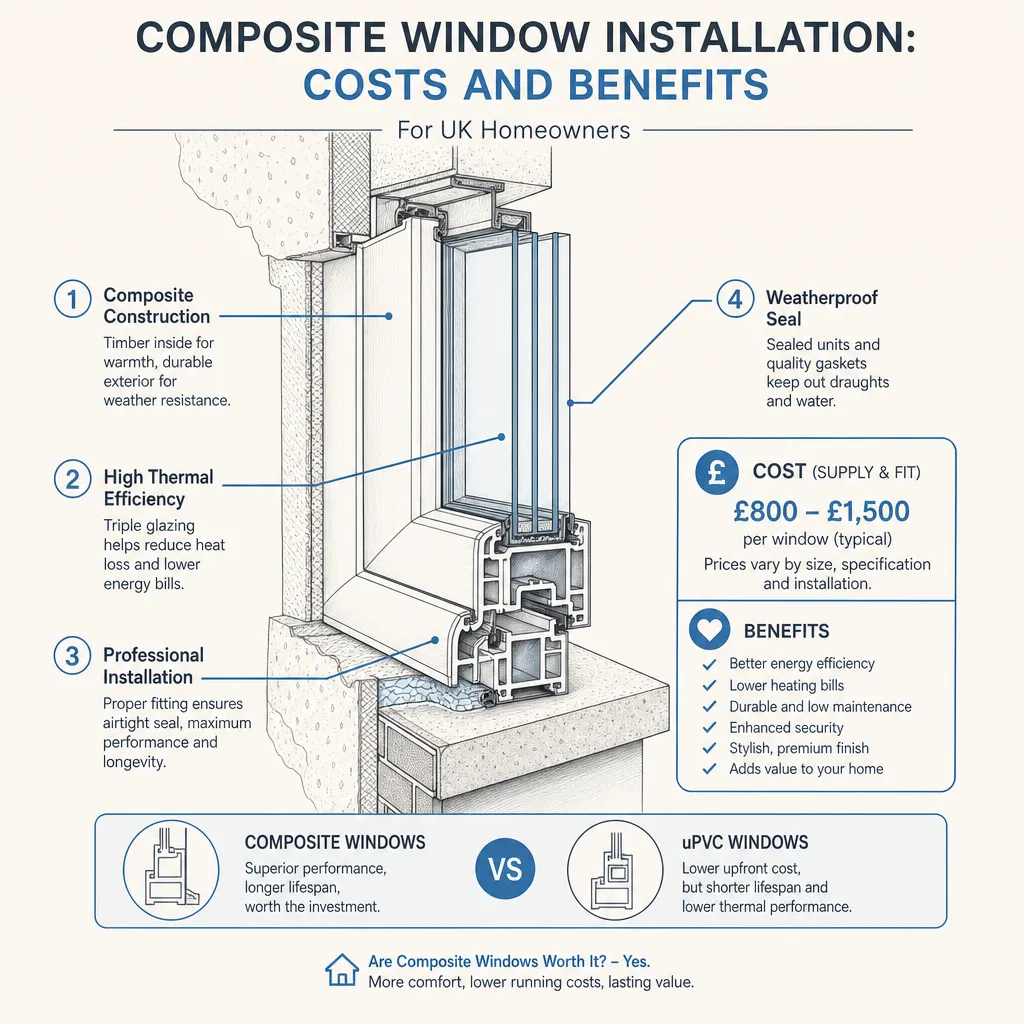
Composite Window Installation: Costs and Benefits
Composite windows combine two or more frame materials — typically a timber or aluminium core with a uPVC or aluminium outer casing — for better thermal performance and durability than standard uPVC.
 Improvement & Build
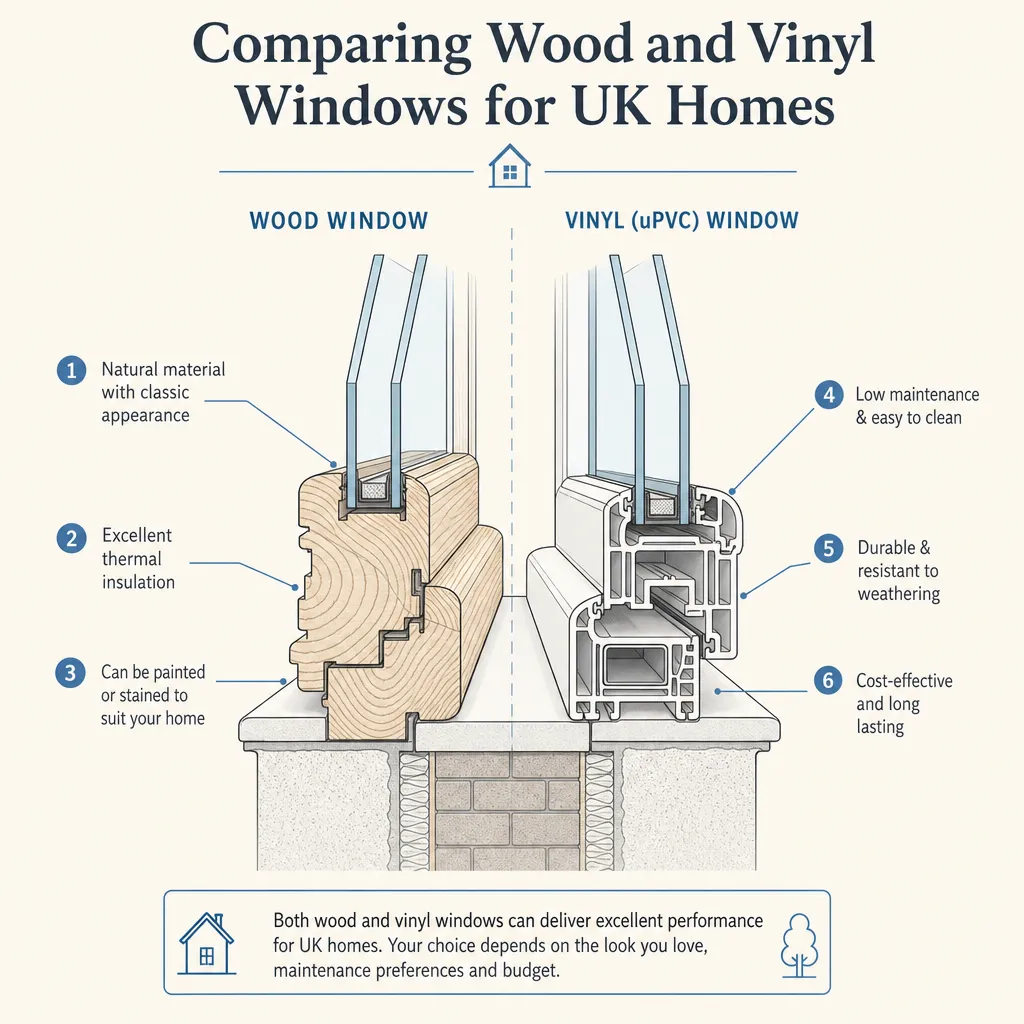
Comparing Wood and Vinyl Windows for UK Homes
Timber windows typically cost more upfront than uPVC but can last twice as long with regular maintenance.
 Improvement & Build
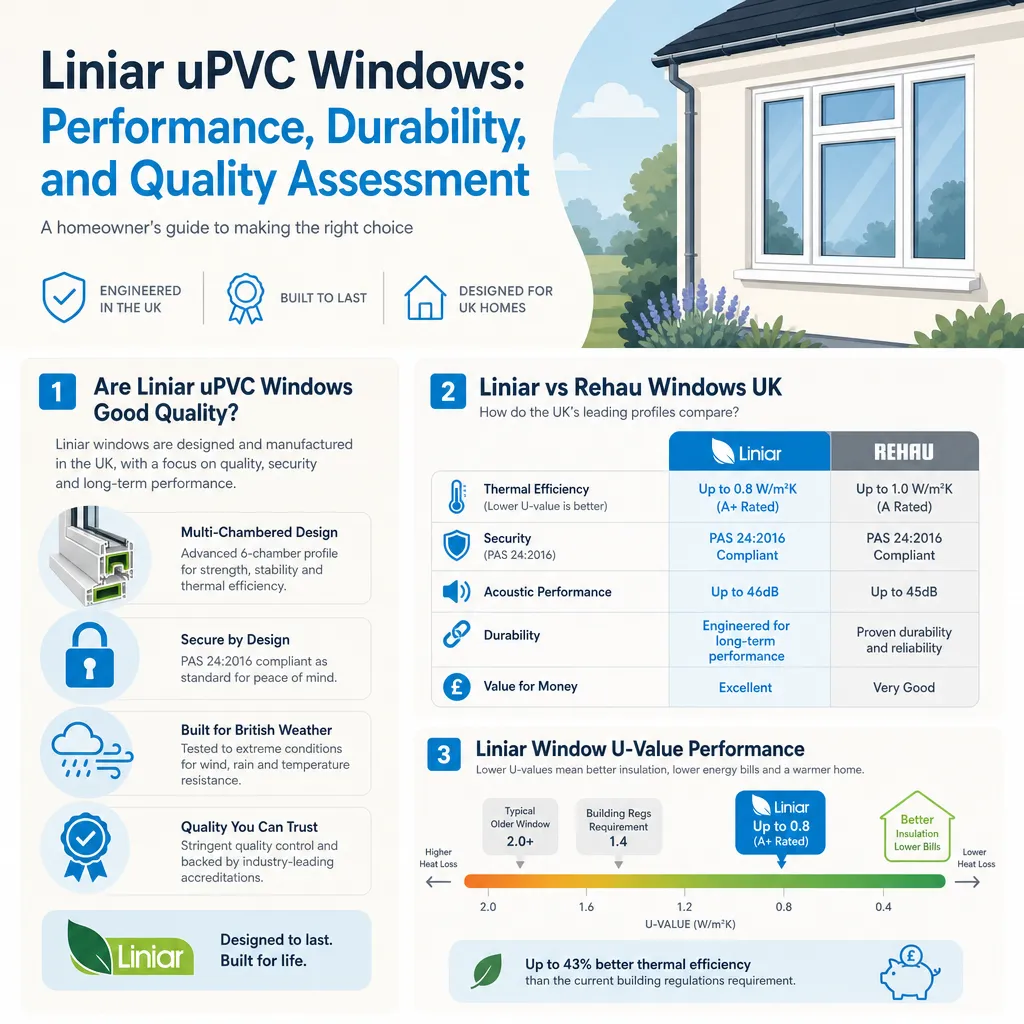
Liniar uPVC Windows: Performance, Durability, and Quality Assessment
Liniar uPVC window profiles are manufactured in the UK using multi-chambered, foamed frames.
 Improvement & Build
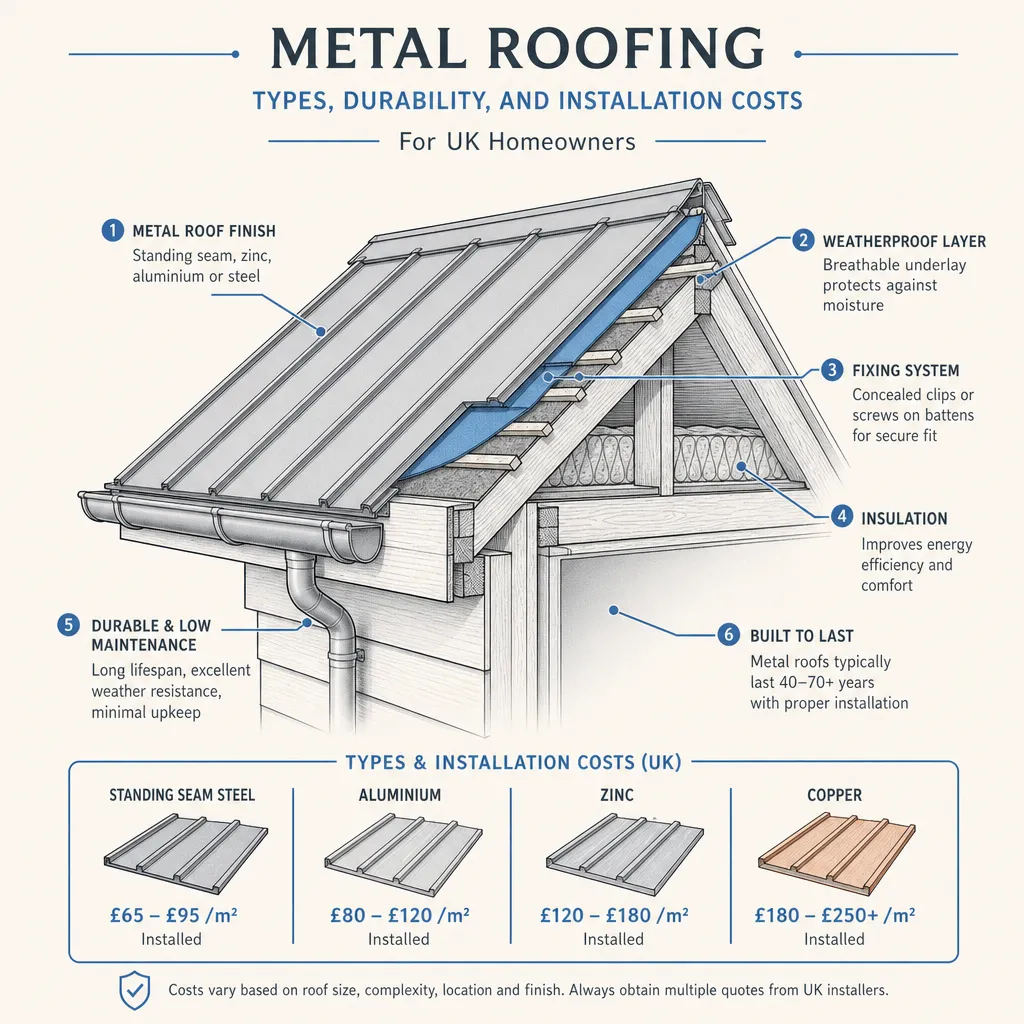
Metal Roofing: Types, Durability, and Installation Costs
Metal roofing in the UK includes standing seam, corrugated sheet, and metal tile systems in steel, aluminium, zinc, or copper.