Comparing Wood and Vinyl Windows for UK Homes
By Housey · Last reviewed 19th of May 2026
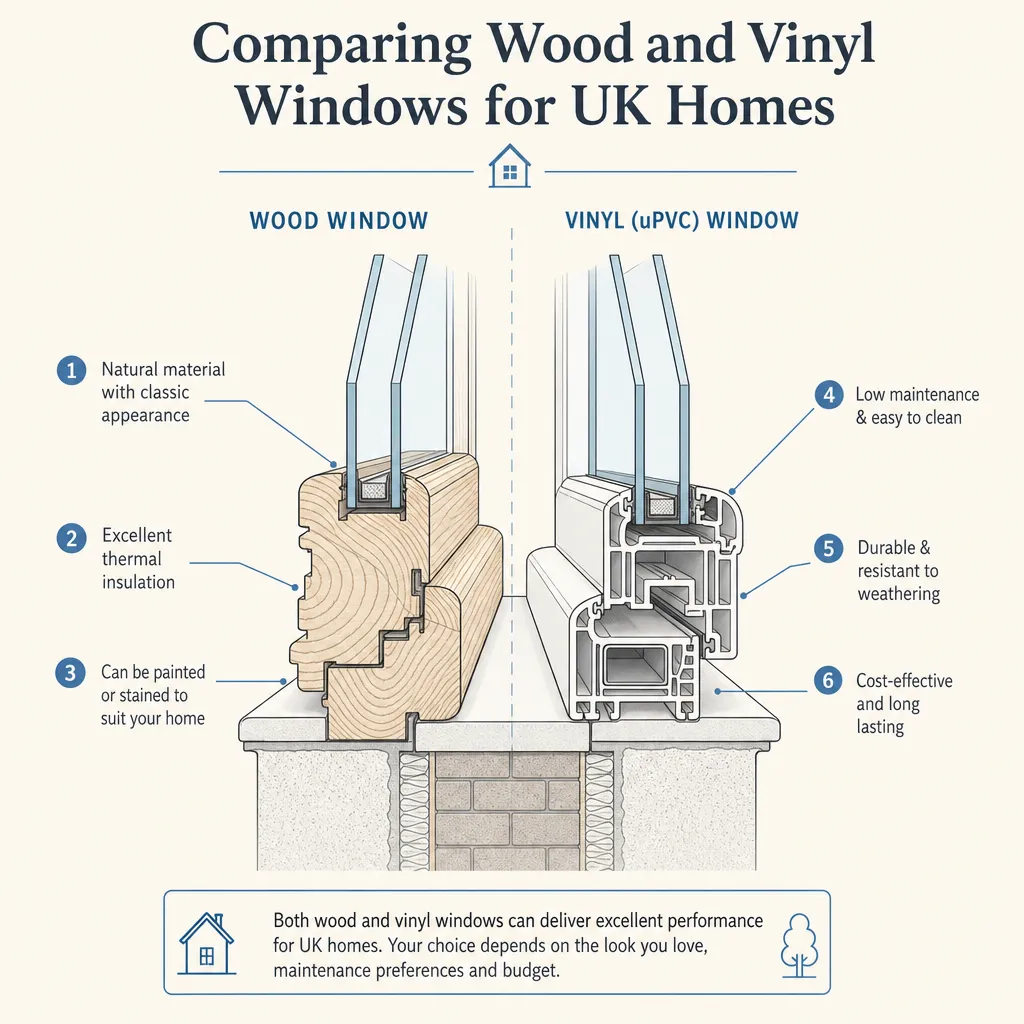
Comparing Wood and Vinyl Windows for UK Homes
Window replacement is one of the most visible home improvement decisions you will make — and one that directly affects energy bills, planning consent, maintenance burden, and resale appeal. Whether you are upgrading draughty frames in a 1930s semi or specifying windows for a new extension, the choice between timber and uPVC (the UK term for vinyl window frames) involves practical trade-offs that vary by property age, location, and budget.
Key points
- Building Regulations Part L (2022) requires replacement windows in England to achieve a maximum whole-window U-value of 1.4 W/m²K; both timber and uPVC products can meet this threshold with modern glazing units.
- Replacement windows in England and Wales must be installed by a FENSA or CERTASS registered installer, or notified separately to local building control — failure to do so can cause complications on resale.
- Listed buildings and properties in conservation areas typically require timber or timber-look frames; local planning authorities frequently refuse uPVC in designated areas.
- Timber windows require repainting or re-staining every 3–7 years to prevent rot and maintain weatherproofing; uPVC needs little beyond occasional cleaning.
- Responsibly sourced timber carrying FSC or PEFC certification has lower embodied carbon than uPVC over its full lifespan, provided maintenance is sustained.
How do timber and uPVC windows compare?
The two most common window frame materials in UK homes are timber (softwood or hardwood) and uPVC. Aluminium frames are a third option, but are not covered in this guide.
Feature | Timber | uPVC |
|---|---|---|
Typical lifespan | 40–80+ years (with maintenance) | 20–35 years |
Maintenance | Repaint or re-stain every 3–7 years | Wipe clean; minimal upkeep |
Thermal performance | Good with modern glazing units | Good with modern glazing units |
Planning suitability | Often required in conservation areas | Frequently refused in conservation areas |
Indicative installed cost | £600–£1,500+ per window | £300–£700 per window |
Environmental credentials | Lower embodied carbon if FSC/PEFC certified | Higher embodied carbon; limited recyclability |
Repairability | Sections can be spliced and repaired | Full frame typically replaced when damaged |
Indicative UK costs, last reviewed 2026-05-19. Actual costs vary by window size, specification, location, and contractor.
Which window material should you choose?
Use this decision guide before requesting quotes:
- Choose timber if your property is listed, sits in a conservation area, or is pre-1919 and you want to preserve original character — and you are prepared to commit to periodic repainting or staining.
- Choose timber if long-term ownership is planned and you value a repairable, lower-embodied-carbon frame with a potentially longer service life.
- Choose uPVC if low maintenance is the priority and the property is post-1970s, where planning appearance restrictions are typically less demanding.
- Choose uPVC if upfront cost is the deciding factor and you expect to sell within 10–15 years.
- Ask a planning or conservation officer before ordering if your property is in a designated area — uPVC may not receive consent regardless of your preference.
- Confirm FENSA or CERTASS registration before appointing any installer, whatever material you select.
Thermal performance: what the regulations say
Both frame types can accommodate A-rated double or triple glazing. The glazed unit contributes the majority of a window's thermal performance — frame material is less significant than glass specification and installation quality.
Building Regulations Part L1B sets a maximum whole-window U-value of 1.4 W/m²K for replacement windows in England; both timber and uPVC routinely achieve this and better with current glazing technology. A widespread misconception is that uPVC is inherently more thermally efficient than timber. A properly fitted, draught-stripped timber window with modern double glazing performs comparably to equivalent uPVC. The critical variable is installation quality, not frame material.
Maintenance and long-term costs
Timber windows can outlast uPVC by decades when properly maintained. A Victorian sash window that has been regularly painted often remains serviceable after a century; uPVC typically needs replacing after 20–35 years as profiles yellow, seals degrade, and frames become brittle.
The trade-off is ongoing maintenance cost. Repainting or re-staining a full house of timber windows every 3–7 years is a recurring expense in materials and labour. Many homeowners underestimate this commitment when choosing timber for its appearance. Factor maintenance into your total cost of ownership before ordering.
When damaged, uPVC frames usually require full replacement; timber allows sections to be repaired without replacing the whole unit, which reduces long-term waste.
What not to assume
- "uPVC is always cheaper over time" — once replacement cycles are accounted for across 40 years, the lifetime cost gap between timber and uPVC narrows considerably.
- "Timber windows always require planning permission" — replacing windows in the same or similar style on an unlisted property outside a designated area is normally permitted development.
- "All timber windows are environmentally better" — only if the timber carries FSC or PEFC certification and the windows are actually maintained for their full potential lifespan.
- "Modern uPVC will satisfy a conservation officer" — foiled uPVC profiles can resemble timber at a distance, but planners in conservation areas rarely accept this as sufficient justification.
When to get professional help
Get professional advice before ordering if you are replacing multiple windows, if your property is listed, if it sits in a conservation area, or if there is any uncertainty about planning status.
Red flags that suggest you need guidance:
- A contractor who does not mention FENSA or CERTASS registration.
- Any claim that conservation area properties do not require consent for window replacement.
- Quotes that omit U-values, glass specification (double or triple), or frame thickness.
- Pressure to sign a contract before a planning check has been completed.
How Housey can help
Housey connects you with vetted window and door installers who can survey your property, advise on planning constraints, and provide comparable quotes across timber and uPVC options — so you can make a well-informed decision before committing.
Frequently asked questions
Do I need planning permission to replace windows in the UK?
In most cases, replacing windows with a similar style is permitted development for houses. Conservation areas and listed buildings apply stricter rules — uPVC is typically refused in conservation areas. Flats do not share the same permitted development rights as houses. Always confirm with your local planning authority before ordering.
How long do uPVC windows last compared to timber?
uPVC windows typically last 20–35 years before seals fail and frames yellow or become brittle. Well-maintained timber windows can last 40–80 years or longer; hardwood frames such as oak or accoya generally outlast softwood. The lifespan difference narrows significantly if timber maintenance is neglected.
Are there grants for window replacement in the UK?
Window replacement alone is rarely funded by mainstream retrofit schemes such as ECO4 or the Great British Insulation Scheme, which focus on insulation. Some local authority schemes include windows as part of a whole-house energy retrofit. The Energy Saving Trust publishes regularly updated eligibility guidance.
Do replacement windows require building regulations approval?
Yes. Replacement windows must meet Part L thermal performance and Part K safety-glazing requirements. An installer registered with FENSA or CERTASS self-certifies compliance; otherwise you must notify your local building control authority separately before or during installation.
Sources and further reading
- Building Regulations Approved Document L — Conservation of Fuel and Power — GOV.UK
- FENSA — window and door replacement competent person scheme — FENSA
- Planning Portal — windows and permitted development — Planning Portal
- Windows and doors — energy saving advice — Energy Saving Trust
- Windows in historic buildings — technical guidance — Historic England
Useful next reads
 Improvement & Build
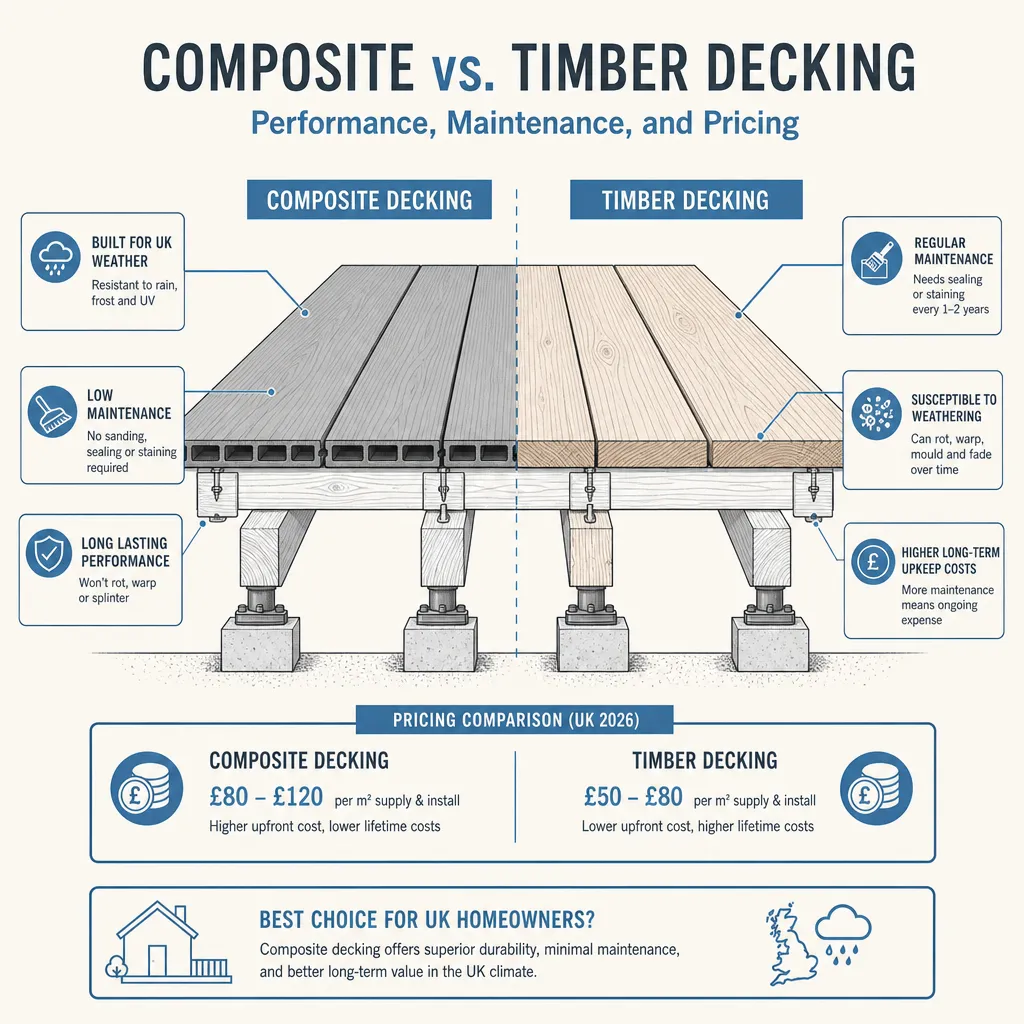
Composite vs. Timber Decking: Performance, Maintenance, and Pricing
Composite decking costs more upfront — typically £120–£220 per m² installed versus £80–£150 for treated softwood — but requires far less maintenance and carries a 25-year warranty.
 Improvement & Build
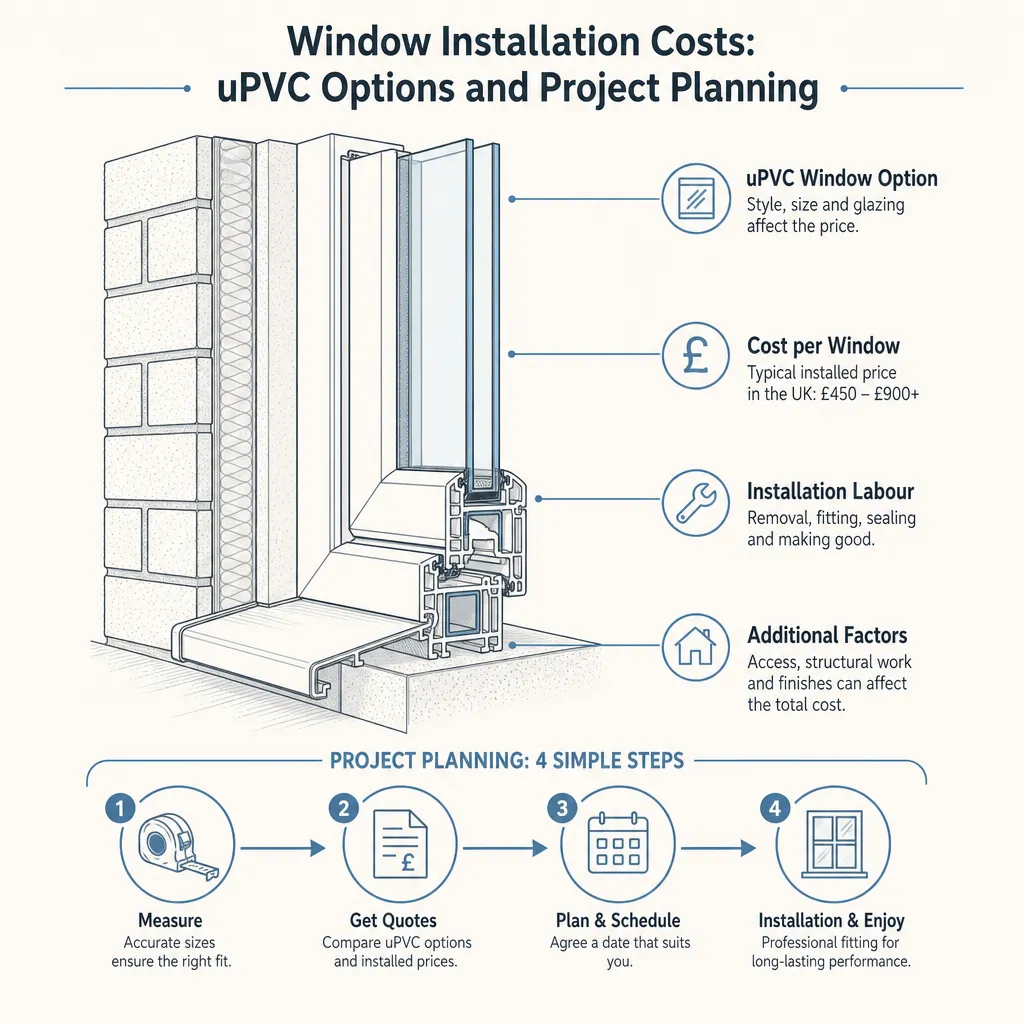
Window Installation Costs: uPVC Options and Project Planning
Replacing uPVC (vinyl) windows in the UK typically costs £400–£900 per casement window installed.
 Improvement & Build
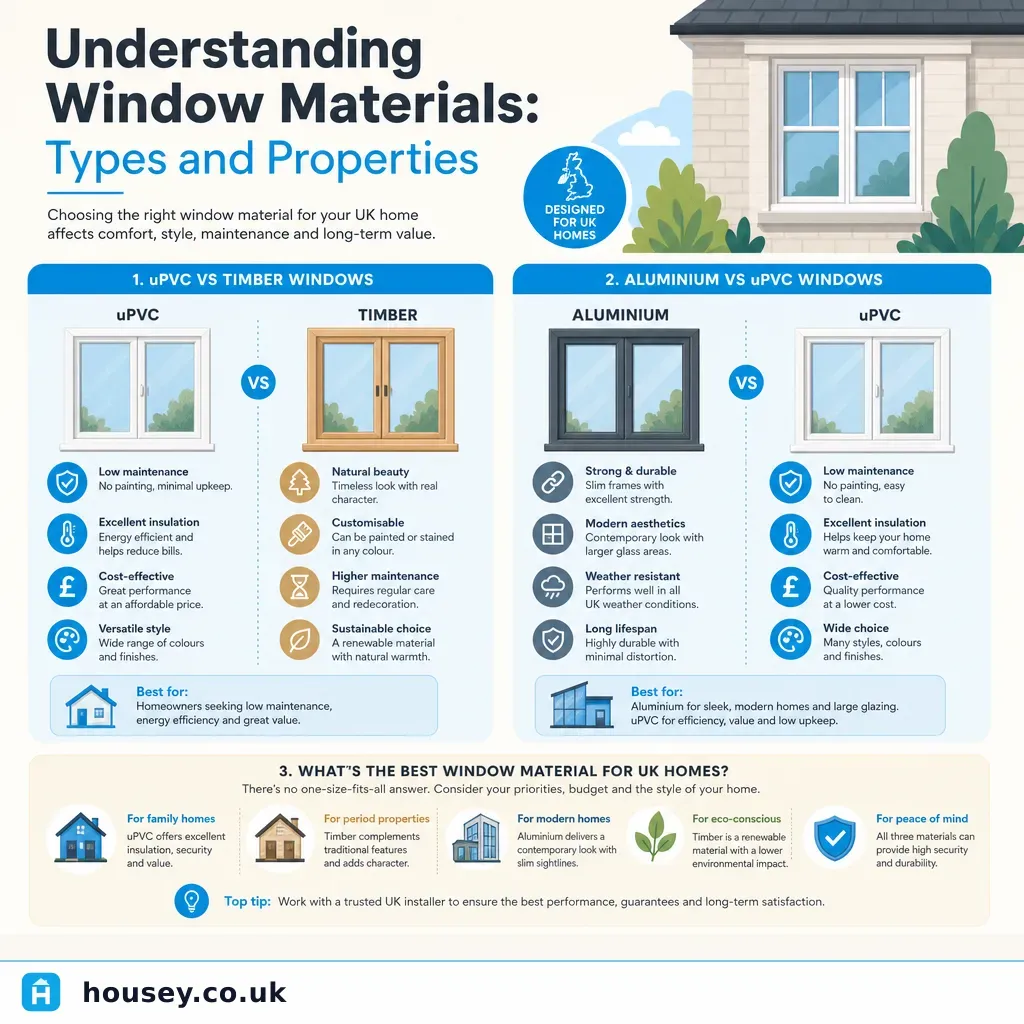
Understanding Window Materials: Types and Properties
uPVC is the most common UK window material, offering low maintenance and adequate thermal performance at a lower cost.
 Improvement & Build
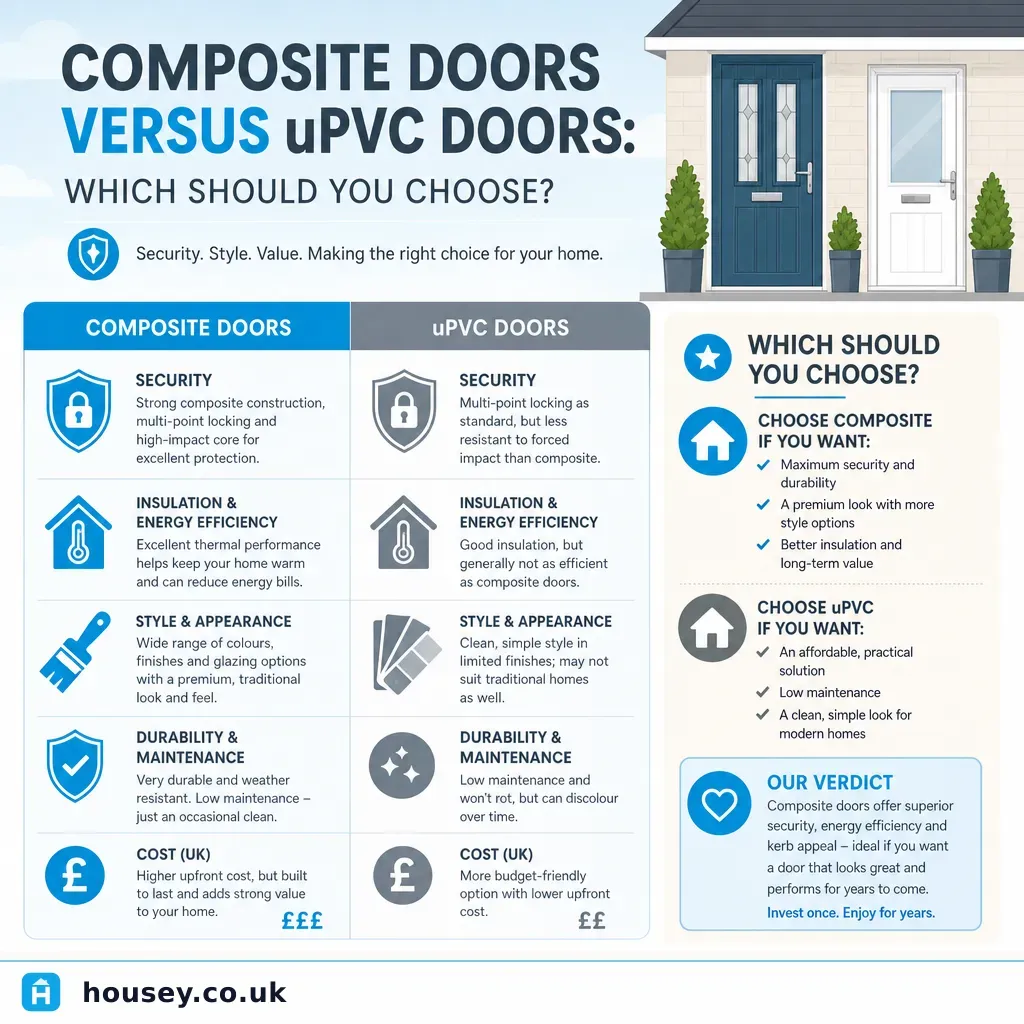
Composite doors versus uPVC doors: which should you choose?
Composite doors have a solid GRP-skinned core, stronger security credentials, and a typical lifespan of 35-plus years, but cost more than uPVC.
 Improvement & Build
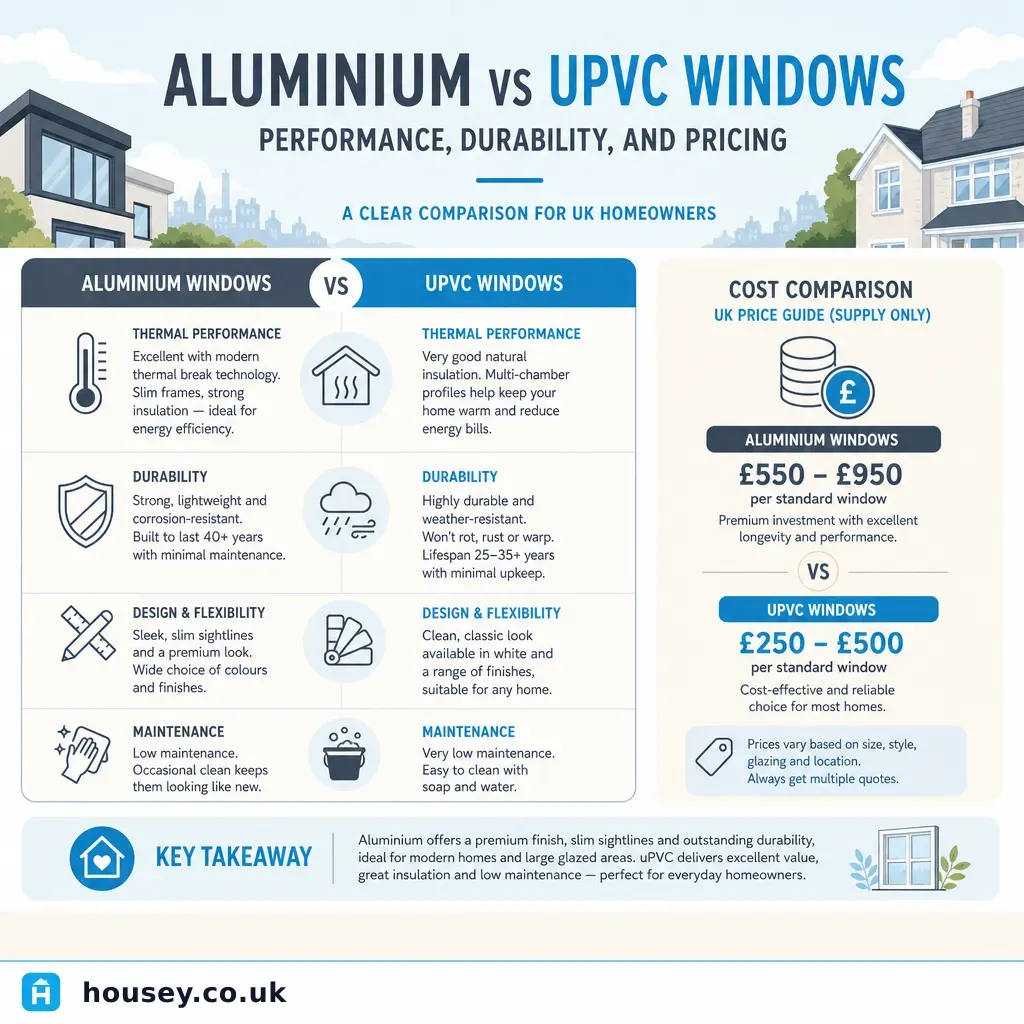
Aluminium vs UPVC Windows: Performance, Durability, and Pricing
Aluminium windows offer slimmer frames, greater longevity of 45 or more years, and a premium look, but typically cost roughly twice as much as UPVC.