Metal Roofing: Types, Durability, and Installation Costs
By Housey · Last reviewed 30th of May 2026
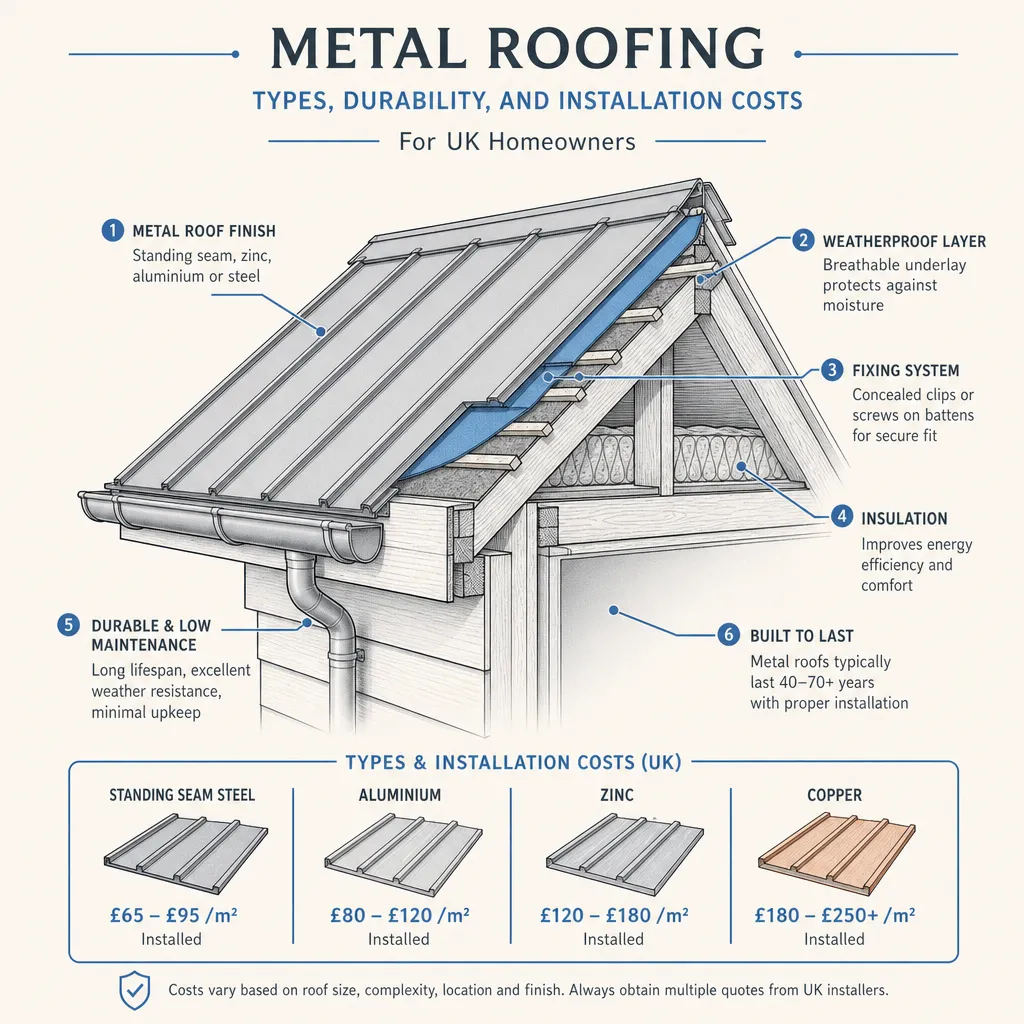
Metal Roofing: Types, Durability, and Installation Costs
Metal roofing has moved well beyond agricultural sheds and industrial units in the UK. Standing seam zinc, aluminium tiles, and Corten steel panels are now regularly specified for residential extensions, self-builds, and whole-roof replacements. With lifespans potentially exceeding 80 years for premium materials, the upfront cost calculation looks different from standard concrete tile or felt flat roofing — but only if you understand the main systems, what affects durability, and what drives the installed price.
Key points
- Metal roofing systems used on UK homes include standing seam (concealed fixings, low-pitch capable), corrugated or profile sheet (visible fixings, utilitarian aesthetic), and metal tiles (mimics slate or clay, suited to steeper pitches).
- Zinc and copper standing seam roofs typically have lifespans of 80–100+ years; factory-coated steel systems usually carry manufacturer guarantees of 30–50 years, with PVDF coatings significantly outperforming polyester.
- Most metal roof installations on extensions or new builds require Building Regulations compliance covering Part A (structure), Part C (moisture resistance), and Part L (thermal performance).
- Standing seam systems use floating clips to allow panels to expand and contract with temperature — inadequate provision for thermal movement is a common cause of premature failure.
- Like-for-like roof replacement generally falls within permitted development rights, but conservation areas, Article 4 Direction areas, and listed buildings may require consent for a material change.
Types of metal roofing
Standing seam
Standing seam is the most widely specified metal system for high-quality residential work. Vertical panels interlock at raised seams with concealed floating clips that allow thermal movement. It is suited to flat and low-pitch roofs, typically as low as 1.5°–3° depending on system and manufacturer.
Materials include:
- Coated steel (e.g., Colorcoat HPS200 Ultra, Corten weathering steel) — most affordable; wide colour range.
- Aluminium — lightweight, good corrosion resistance, fully recyclable.
- Zinc (e.g., VMZINC, Rheinzink) — develops a protective patina; widely used in UK contemporary residential builds.
- Copper — very long lifespan, distinctive appearance; highest material cost.
Corrugated and profile sheet
Corrugated steel or aluminium sheet is increasingly used in contemporary residential projects — garden rooms, outbuildings, and extensions where a deliberately industrial aesthetic is intended. Visible fixings are characteristic of this system and must be correctly sealed and periodically inspected to prevent water ingress.
Metal tiles
Metal tiles in steel or aluminium are formed and coated to replicate slate, clay, or concrete tile profiles. Weighing typically 5–12 kg/m² against 40–50 kg/m² for concrete tiles, they are often chosen when structural loading makes a lightweight material preferable or when planning requirements or personal preference favours a traditional appearance.
Metal roofing comparison
System | Materials | Min. pitch | Typical lifespan | Best for | Main limitation |
|---|---|---|---|---|---|
Standing seam | Steel, aluminium, zinc, copper | 1.5–5° | 40–100+ years | Extensions, flat/low-pitch roofs, contemporary builds | Higher install cost |
Corrugated/profile | Steel, aluminium | 5–10° | 25–50 years | Outbuildings, garden rooms | Visible fixings; less refined finish |
Metal tiles | Steel, aluminium | 14–20° | 30–60 years | Residential re-roofing, period appearance | Less suited to complex shapes |
Copper | Copper | 3°+ | 80–100+ years | Heritage, bespoke, listed buildings | Highest material cost |
Zinc | Zinc alloy | 1.5°+ | 80–100+ years | Residential, contemporary, heritage | Higher cost than steel |
What affects durability?
The coating system is the most critical durability factor for steel roofing. PVDF (polyvinylidene fluoride) coatings significantly outperform standard polyester for UV and corrosion resistance, reflected in longer manufacturer guarantees. Other key factors:
- Fixing specification — dissimilar metals in contact cause galvanic corrosion; fixings must be specified to match the sheet material.
- Underlay and ventilation — a correctly specified breather membrane and ventilation gap beneath the metal deck prevents underside condensation.
- Coastal exposure — properties within a few kilometres of the sea require marine-grade coatings and stainless steel fixings.
- Maintenance — clearing debris from valleys and outlets, and periodically inspecting fixings, materially extends service life.
Indicative installation costs
Indicative UK costs, last reviewed 2026-05-30. Prices vary by material, system, roof complexity, access, and region. Obtain at least three itemised quotes.
System | Material | Indicative cost per m² (installed) |
|---|---|---|
Corrugated profile sheet | Coated steel | £50–£90 |
Metal tiles | Coated steel or aluminium | £75–£120 |
Standing seam | Pre-coated steel | £100–£170 |
Standing seam | Aluminium | £120–£180 |
Standing seam | Zinc | £150–£220 |
Standing seam | Copper | £200–£350+ |
For context, a typical UK semi-detached with approximately 80 m² of roof area: a pre-coated steel standing seam installation might cost £8,000–£14,000; corrugated steel might cost £4,000–£7,000. These are indicative figures only.
Planning permission and building regulations
Planning permission is not usually required for like-for-like re-roofing under permitted development rights. You may need consent if:
- The property is in a conservation area or subject to an Article 4 Direction that restricts roof alterations.
- The property is listed — listed building consent is required for any material alteration to the roof covering.
- The project involves a new build or extension rather than a like-for-like replacement.
Building Regulations typically apply to new builds, extensions, and significant re-roofing projects where insulation or structural elements are affected. A competent roofer registered with a Competent Person Scheme can self-certify some works; others require a formal building control application. Confirm this arrangement before work begins.
Red flags when getting quotes
Watch out for the following when reviewing roofing quotations:
- No specification of underlay, insulation, or ventilation detail in the quote document.
- No mention of how thermal movement will be accommodated, particularly for standing seam panels.
- An unusually low price that omits flashings, valleys, verge, or ridge details.
- No reference to the coating system specification or manufacturer guarantee period.
- No discussion of whether building control notification is needed.
- Contractor unable to provide evidence of relevant experience, trade membership, or public liability insurance.
When to get professional help
All roofing work involves working at height and must be carried out by trained, insured contractors using appropriate scaffolding or access equipment. DIY metal roof installation is not appropriate. Additionally, seek specialist advice before commissioning metal roofing if:
- The existing roof structure shows signs of movement, rot, or structural inadequacy — a structural assessment may be needed before specifying a new covering.
- The property is listed or in a conservation area — consult your local planning authority or a heritage consultant before proceeding.
- Existing damp, water ingress, or defective rafters are present — these should be resolved before a new covering is installed.
How Housey can help
Housey connects homeowners with experienced, vetted roofers who can advise on the right metal roofing system for your property, specification, and planning situation. Request quotes from up to four local contractors and compare detailed specifications before committing.
Frequently asked questions
Is metal roofing suitable for houses in the UK?
Yes. Metal roofing is well-established in the UK residential market, particularly for extensions, flat or low-pitch areas, self-builds, and contemporary whole-roof replacements. Metal tiles are widely used where a traditional appearance is required. Performance in the UK's wet climate is reliable when correctly specified and installed.
Is a metal roof noisier in rain?
Not if correctly installed. An appropriate breather membrane and insulation layer beneath the metal deck attenuates rain noise to levels comparable with conventional tiled or felt roofing systems. The perception that metal roofs are noisy is associated with older agricultural or industrial installations that have no underlay beneath the sheet.
How long does a zinc or copper standing seam roof last?
A correctly installed and maintained zinc standing seam roof typically lasts 80–100 years; copper can last longer, with some historic examples exceeding 150 years. Both materials develop a protective patina that slows further oxidation. Pre-coated steel systems carry manufacturer guarantees of 30–50 years depending on the coating specification.
Does metal roofing add value to a home?
A long-life, low-maintenance roof can be viewed positively by buyers and surveyors, particularly where the alternative is a material requiring re-roofing every 20–30 years. Whether this translates to measurable market value uplift depends on property type, location, and the buyer profile.
Sources and further reading
- Building Regulations Approved Document A (Structure) — GOV.UK
- Building Regulations Approved Document L (Conservation of Fuel and Power) — GOV.UK
- Planning Portal: Roofing and Permitted Development — Planning Portal
- HSE: Working at Height Regulations 2005 — Health and Safety Executive
- Historic England: Maintaining and Repairing Historic Buildings — Historic England
Useful next reads
 Improvement & Build
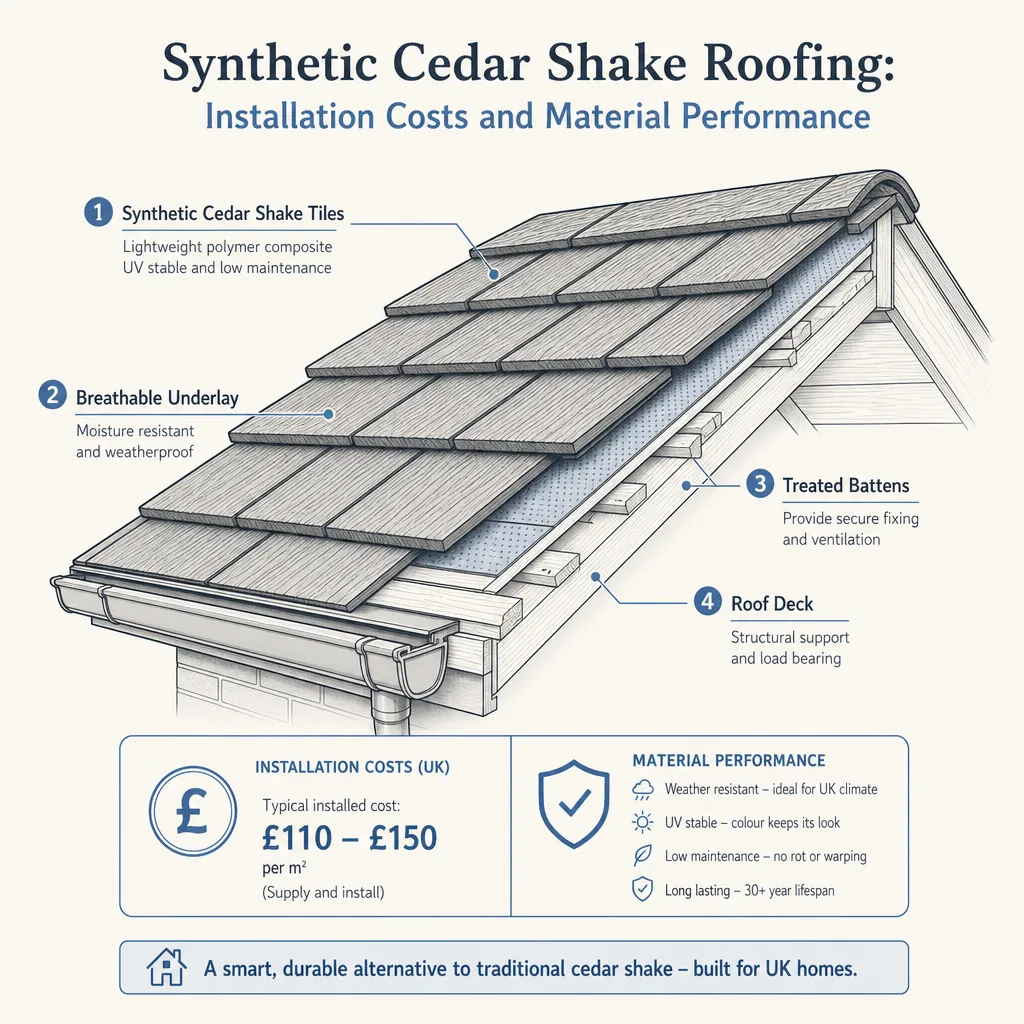
Synthetic Cedar Shake Roofing: Installation Costs and Material Performance
Synthetic cedar shake roofing uses polymer composite, rubber, or fibre-cement tiles to replicate the look of natural cedar wood shingles.
 Improvement & Build
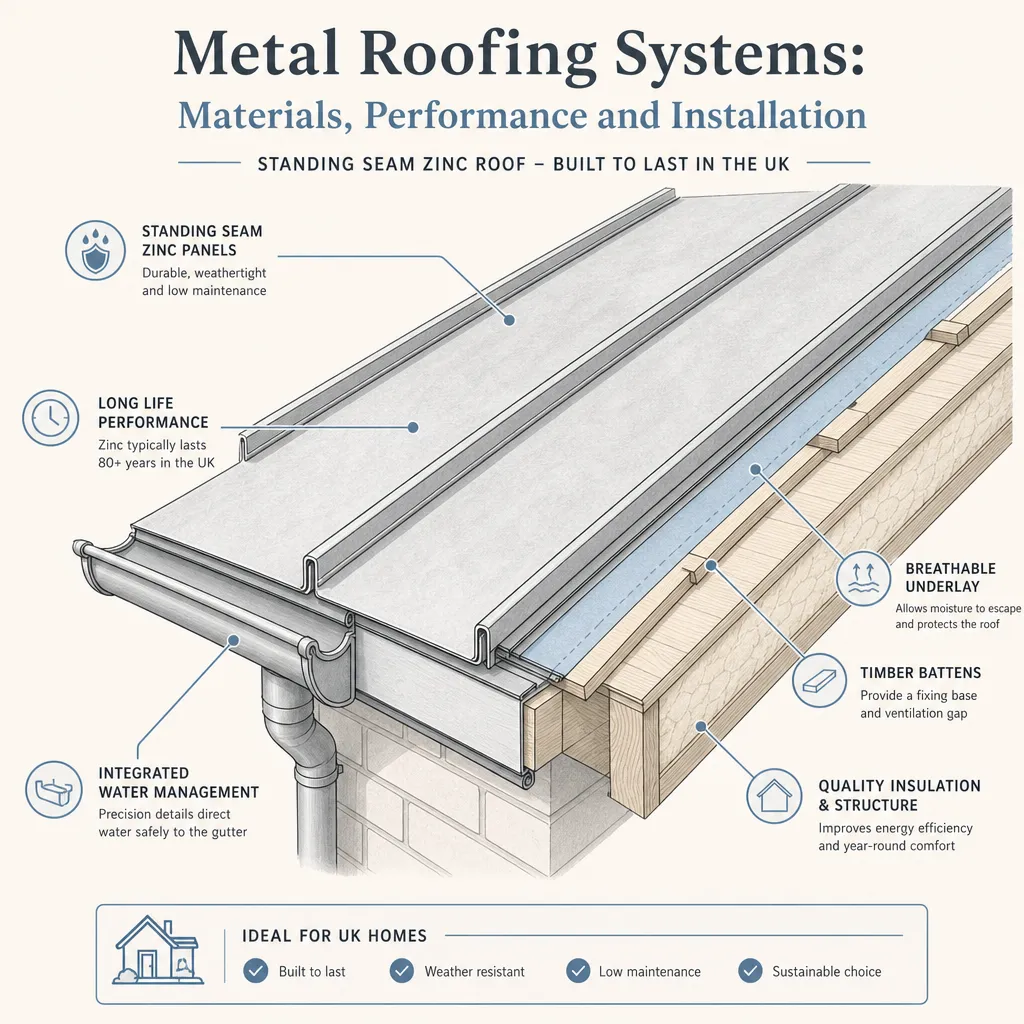
Metal Roofing Systems: Materials, Performance and Installation
Metal roofing systems in the UK include standing seam zinc, coated steel, aluminium, and copper panels, as well as profiled sheets.
 Improvement & Build
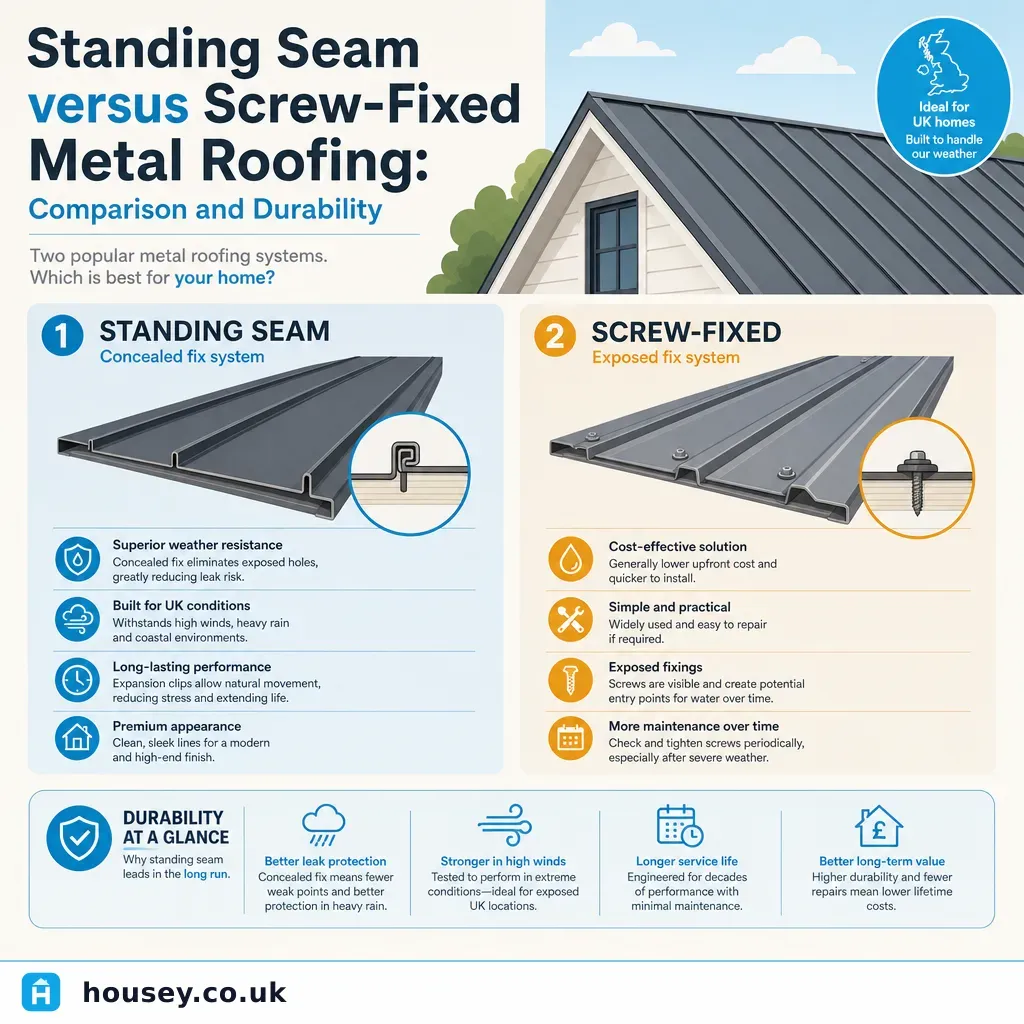
Standing Seam versus Screw-Fixed Metal Roofing: Comparison and Durability
Standing seam uses concealed clips to hold panels, keeping all fasteners out of the weatherline and giving a design life of 40–60 years or more.
 Improvement & Build
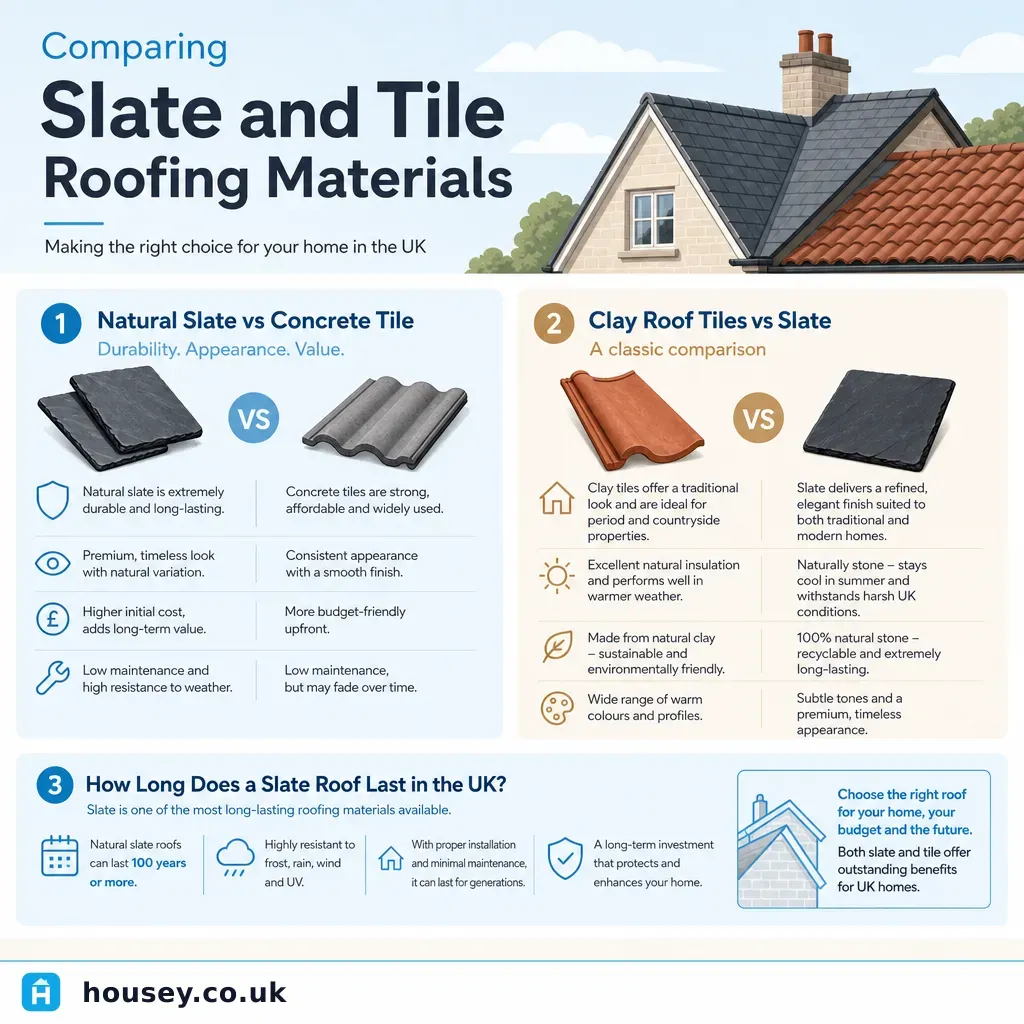
Comparing Slate and Tile Roofing Materials
Natural slate typically lasts 80–150 years and suits period and listed UK properties, while clay tiles offer 60–100 years and remain historically appropriate for Victorian and Edwardian stock.
 Improvement & Build
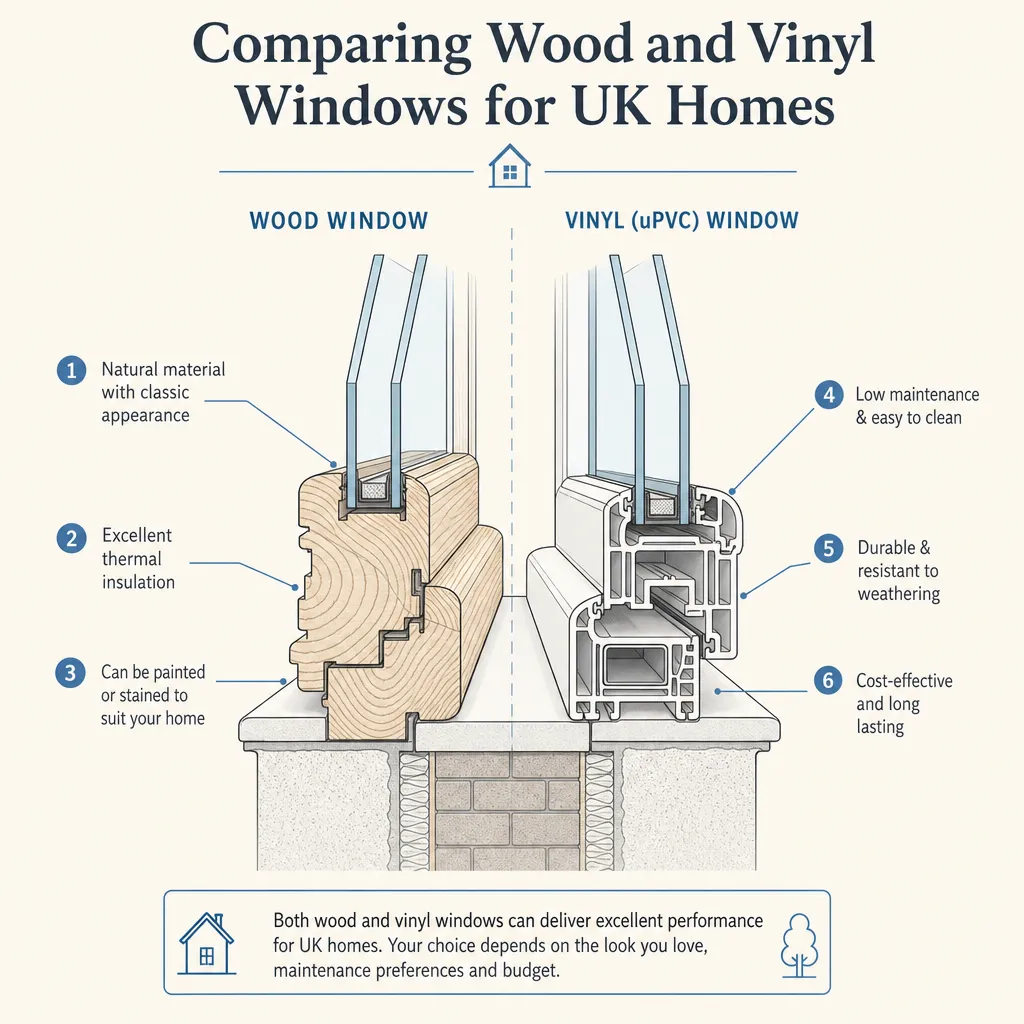
Comparing Wood and Vinyl Windows for UK Homes
Timber windows typically cost more upfront than uPVC but can last twice as long with regular maintenance.