Driveway Thickness: Achieving the Right Specification for Residential Properties
By Housey · Last reviewed 11th of May 2026
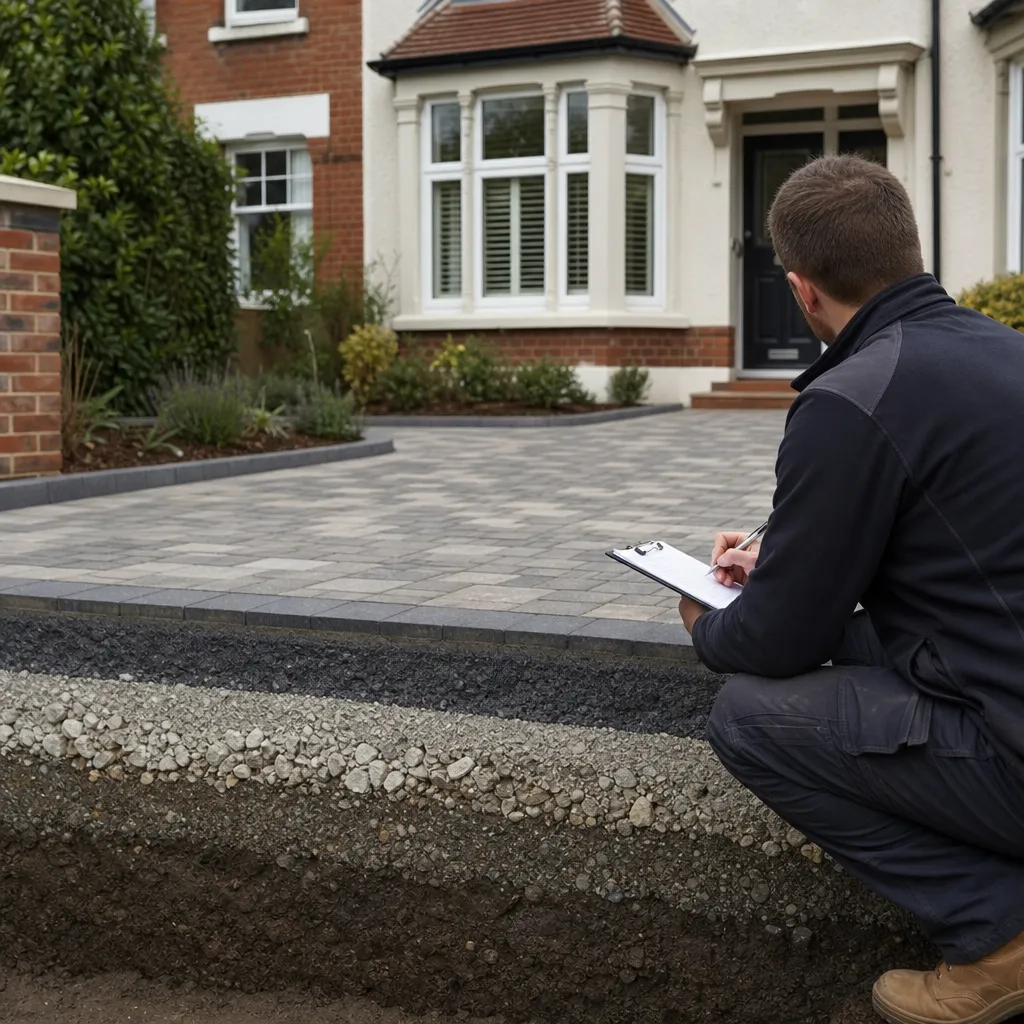
Driveway Thickness: Achieving the Right Specification for Residential Properties
Whether you're replacing a tired tarmac drive on a 1930s semi or laying a new block-paved front garden, getting the depth specification right is the difference between a surface that lasts 20 years and one that sinks, cracks, or rutts within a few seasons. Driveway thickness is a frequently overlooked aspect of residential construction in the UK, yet it is one of the most consequential decisions a homeowner makes before work begins.
Key points
- Block paving driveways require blocks of 60–80mm depth, laid on at least 50mm of compacted sharp sand, over a 100–150mm compacted granular sub-base (typically MOT Type 1 or Type 3).
- Tarmac (asphalt) driveways for light residential use need a minimum total depth of 65–75mm, usually comprising a 40–50mm binder course and a 25mm surface course.
- Concrete driveways for private cars should be at least 100mm thick; for occasional heavier vehicle access such as vans or motorhomes, 150mm is generally recommended.
- The sub-base is the most important structural layer — poor compaction or insufficient depth causes surface failure regardless of the material above it.
- Driveways over 5m² in a front garden using an impermeable surface may require planning permission under permitted development rules; permeable alternatives such as block paving with permeable joints, resin-bound aggregate, or gravel can avoid this requirement.
Which surface material suits your property?
The correct thickness varies by material type and by what the driveway will carry. Private cars weigh roughly 1,000–2,000kg, but a transit van or loaded SUV can push closer to 2,500–3,500kg — which affects sub-base depth requirements.
Surface type | Block or surface thickness | Bedding or binder layer | Sub-base depth (light domestic) | Sub-base depth (heavier vehicles) |
|---|---|---|---|---|
Concrete block paving | 60–80mm | 50mm compacted sharp sand | 100–150mm MOT Type 1 | 150–200mm |
Tarmac / asphalt | N/A | 40–50mm binder + 25mm surface course | 100–150mm MOT Type 1 | 150–200mm |
In-situ concrete | 100mm (reinforced mesh recommended) | N/A | 100mm compacted hardcore | 150mm |
Resin-bound aggregate | 15–18mm resin layer | Tarmac or concrete base (as above) | As per base specification | As per base specification |
Loose gravel | 50mm gravel depth | — | 100mm compacted hardcore | 150mm |
Indicative UK specifications, last reviewed 2026-05-11. Site conditions vary; always consult your installer or a civil engineer for ground with poor bearing capacity.
Why the sub-base matters more than the surface
Many driveway failures in UK residential properties are caused not by the surface material but by inadequate sub-base preparation. Clay soils — common across much of England — can shrink in summer and expand in winter, causing surface heave and settlement if the sub-base does not provide adequate load distribution.
A properly installed sub-base serves three purposes:
- Load spreading — distributes vehicle weight across a wider area of natural ground, preventing point-load failure.
- Drainage — provides a permeable layer that carries water away from the surface before it reaches the subgrade.
- Frost protection — prevents frost penetration from heaving surface materials in cold weather.
MOT Type 1 (crushed limestone or granite graded to a standard specification) is the most widely used material for residential driveway sub-bases. It is compacted in layers — typically no more than 150mm per pass — using a vibrating plate compactor. Skipping or under-performing this compaction step is the single most common cause of premature driveway failure.
Planning permission and drainage requirements
Since 2008, regulations under the Town and Country Planning Act 1990 (amended) mean that laying or replacing a front garden driveway with an impermeable surface of more than 5m² requires planning permission if drainage runs to the highway drain. This affects most traditional solid concrete and standard dense-graded tarmac surfaces.
Permeable alternatives that can avoid this requirement include:
- Permeable block paving — block paving with open-jointed, permeable fill that allows rainwater to drain through to the sub-base.
- Resin-bound aggregate — allows water to drain through the surface into a permeable sub-base.
- Loose gravel — naturally permeable and usually the simplest solution for a front garden.
- Porous asphalt — a specialist product with an open void structure that drains freely.
If your property is in a conservation area or is listed, additional restrictions may apply. Check with your local planning authority before starting work.
Driveway specification checklist
Use this checklist when reviewing a quote or specification from an installer:
When to get professional help
Most residential driveways are installed by specialist driveway contractors without the need for further professional input. However, certain situations warrant additional assessment:
- If your ground is soft, waterlogged, or shows signs of poor bearing capacity — such as existing surfaces that have sunk or cracked significantly — a civil or structural engineer may need to assess sub-base depth requirements before specification.
- If your property is in a conservation area, is listed, or has restrictive covenants limiting surface materials.
- If the driveway is adjacent to a boundary wall, a tree with a significant root protection area (refer to BS 5837:2012), or a retaining structure.
- If you are installing for heavier vehicles such as camper vans, caravans, or light commercial vehicles, as the standard residential specification may be insufficient.
Red flags when reviewing quotes:
- Sub-base depth not specified, or described only as "where necessary."
- No edge restraint included in the specification.
- No mention of compaction method or equipment.
- A price significantly below comparable quotes without a clear explanation.
How Housey can help
Housey connects UK homeowners with vetted local driveway installers who can assess your site conditions, provide detailed written specifications, and deliver quotes you can compare side by side. Receiving multiple itemised quotes — with sub-base depths, block thicknesses, and drainage solutions clearly stated — means you can make an informed decision and hold your contractor to a written standard.
Frequently asked questions
How thick should a block paving driveway be in the UK?
Standard residential block paving uses 60mm blocks for car-only use and 80mm blocks where heavier vehicles are expected. These sit on 50mm of compacted sharp sand over a sub-base of at least 100mm of compacted MOT Type 1. Total construction depth is typically 210–280mm below the finished surface level, depending on the block thickness and sub-base depth specified.
Do I need planning permission for a new driveway?
If your front garden driveway uses an impermeable surface and covers more than 5m², you generally need planning permission unless drainage runs to a lawn, border, or soakaway. Permeable materials such as permeable block paving, resin-bound aggregate, or gravel can avoid this requirement. Always check with your local planning authority, particularly for listed properties or conservation areas.
Can I lay a new driveway over an existing one?
Sometimes, but only if the existing base is in sound condition. Laying new tarmac or block paving over a failed or poorly compacted base inherits the same problems. A reputable installer should inspect and often excavate the existing construction before laying new material, rather than overlaying a compromised sub-base.
How long should a properly specified driveway last?
A correctly specified and installed block paving or tarmac driveway typically lasts 20–25 years with basic maintenance — re-sanding joints on block paving, occasional jet-washing, and sealing if desired. Concrete can last longer but is more susceptible to cracking if the sub-base is inadequate or tree roots are present nearby.
What is the difference between MOT Type 1 and MOT Type 3 sub-base?
Both are granular sub-base materials. MOT Type 1 is crushed granite or limestone graded to a standard specification and is the most widely used for residential driveways. MOT Type 3 is an open-graded, more permeable alternative suitable for SuDS-compliant drainage systems. For most residential driveways, Type 1 is the standard choice unless permeable drainage through the sub-base is required.
Sources and further reading
- Householder permitted development rights: technical guidance — GOV.UK
- The guide to concrete block paving — British Precast / Interpaving
- CIRIA SuDS Manual (C753) — CIRIA
- BS 5837:2012 Trees in relation to design, demolition and construction — BSI Group
Useful next reads
 Improvement & Build
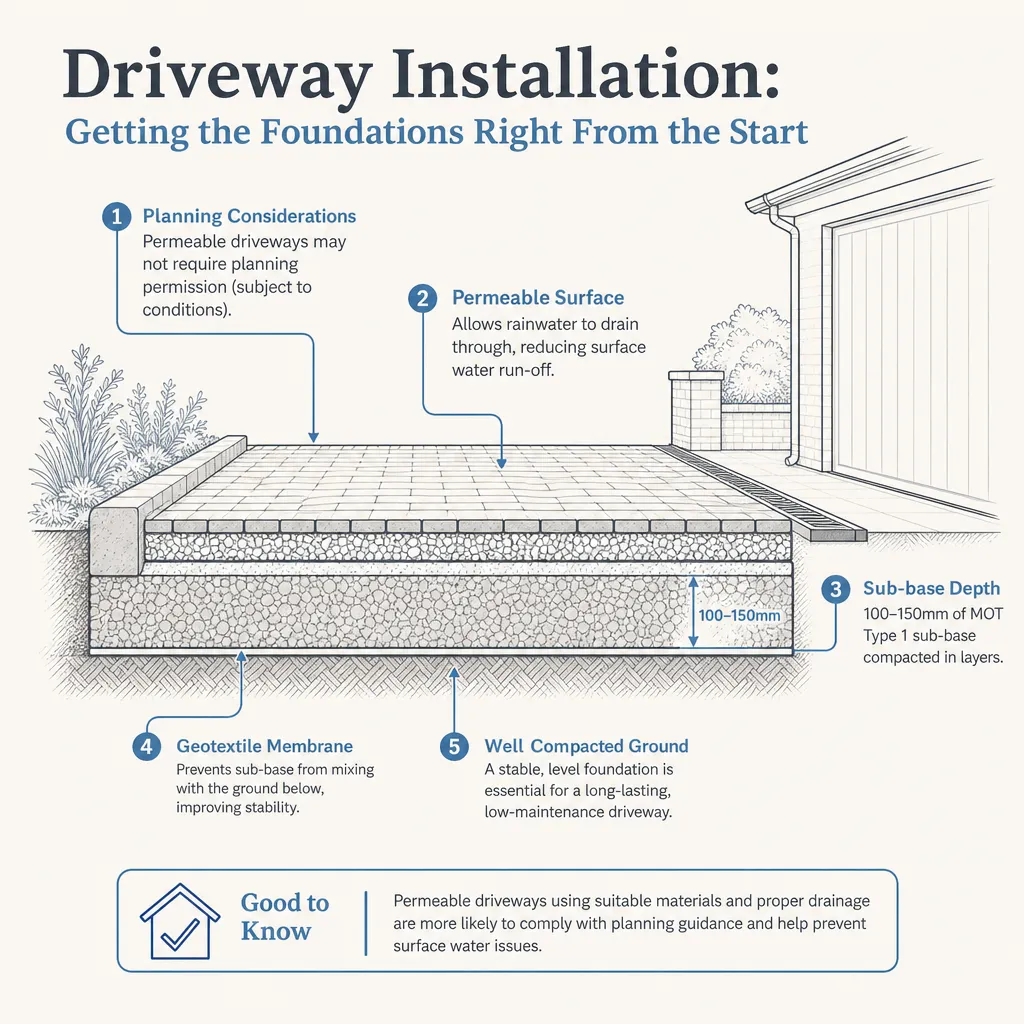
Driveway Installation: Getting the Foundations Right From the Start
A long-lasting driveway depends more on sub-base depth and drainage design than on the surface material chosen.
 Improvement & Build
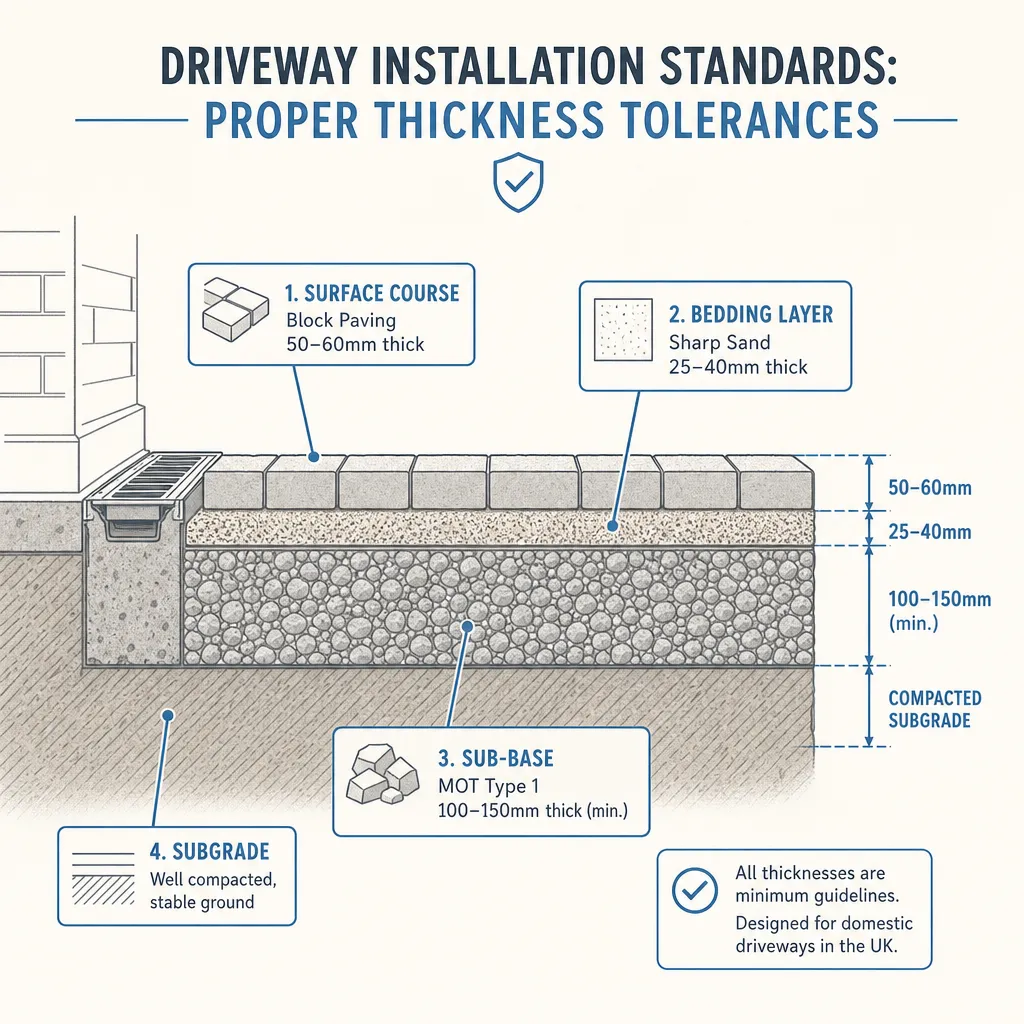
Driveway Installation Standards: Proper Thickness Tolerances
Driveway thickness in the UK depends on material and load.
 Improvement & Build
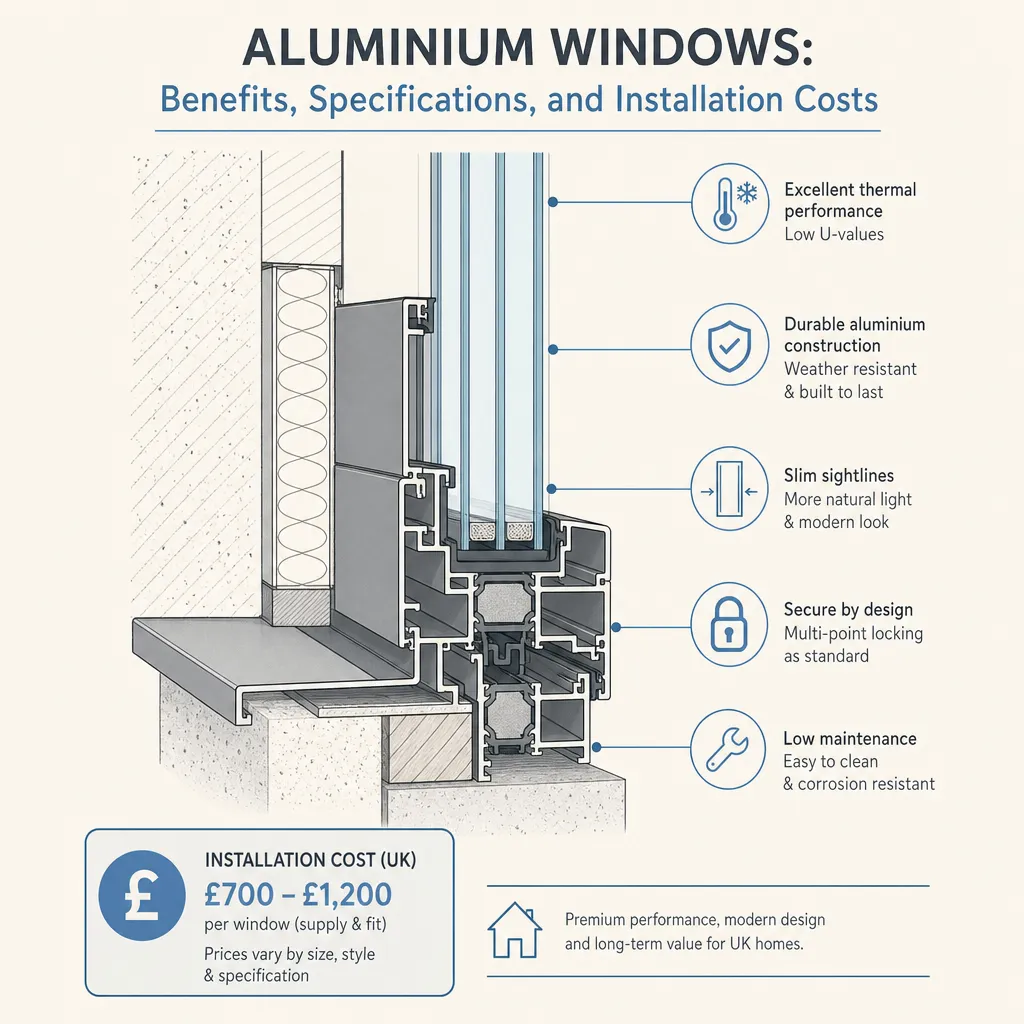
Aluminium Windows: Benefits, Specifications, and Installation Costs
Aluminium windows typically cost £600–£1,800 per window installed in the UK, depending on size and specification.
 Improvement & Build
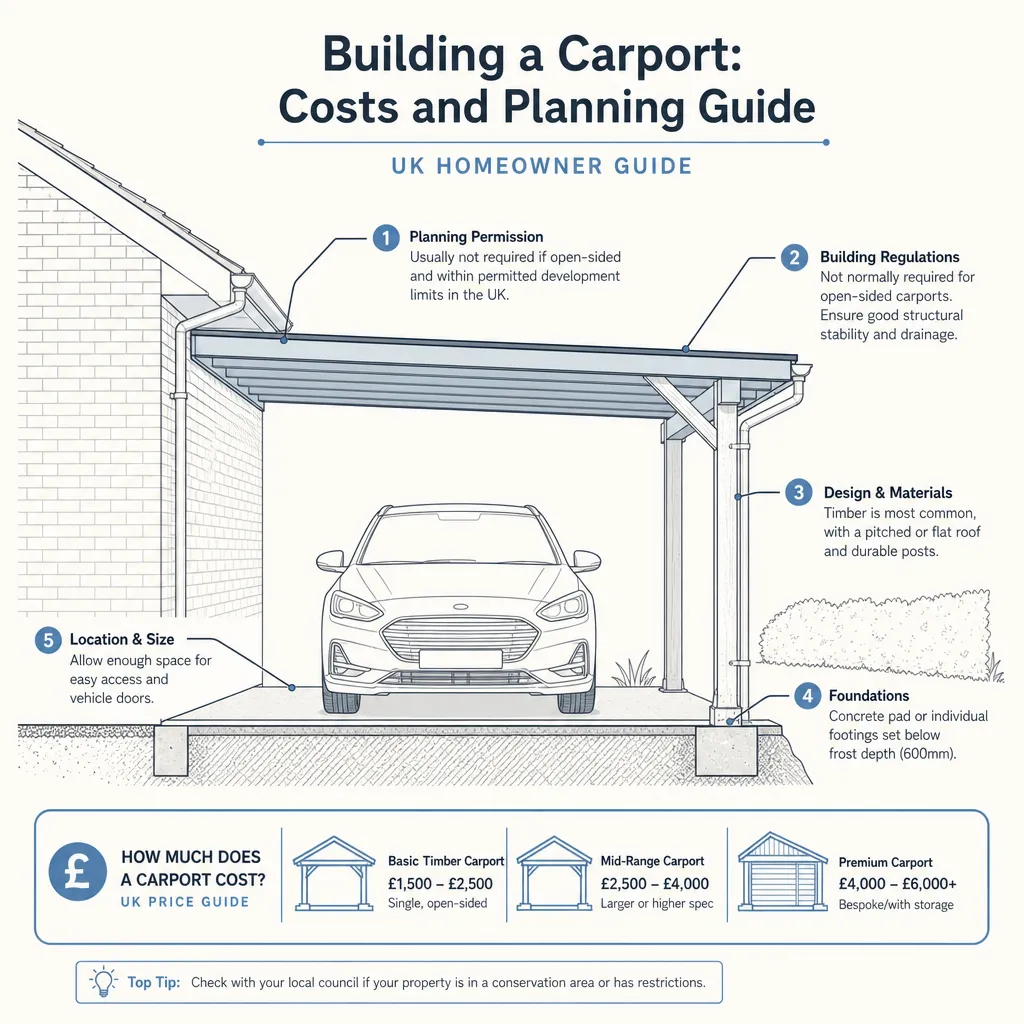
Building a Carport: Costs and Planning Guide
A single-bay carport in the UK typically costs £3,000–£12,000 installed, depending on material and groundworks.
 Improvement & Build
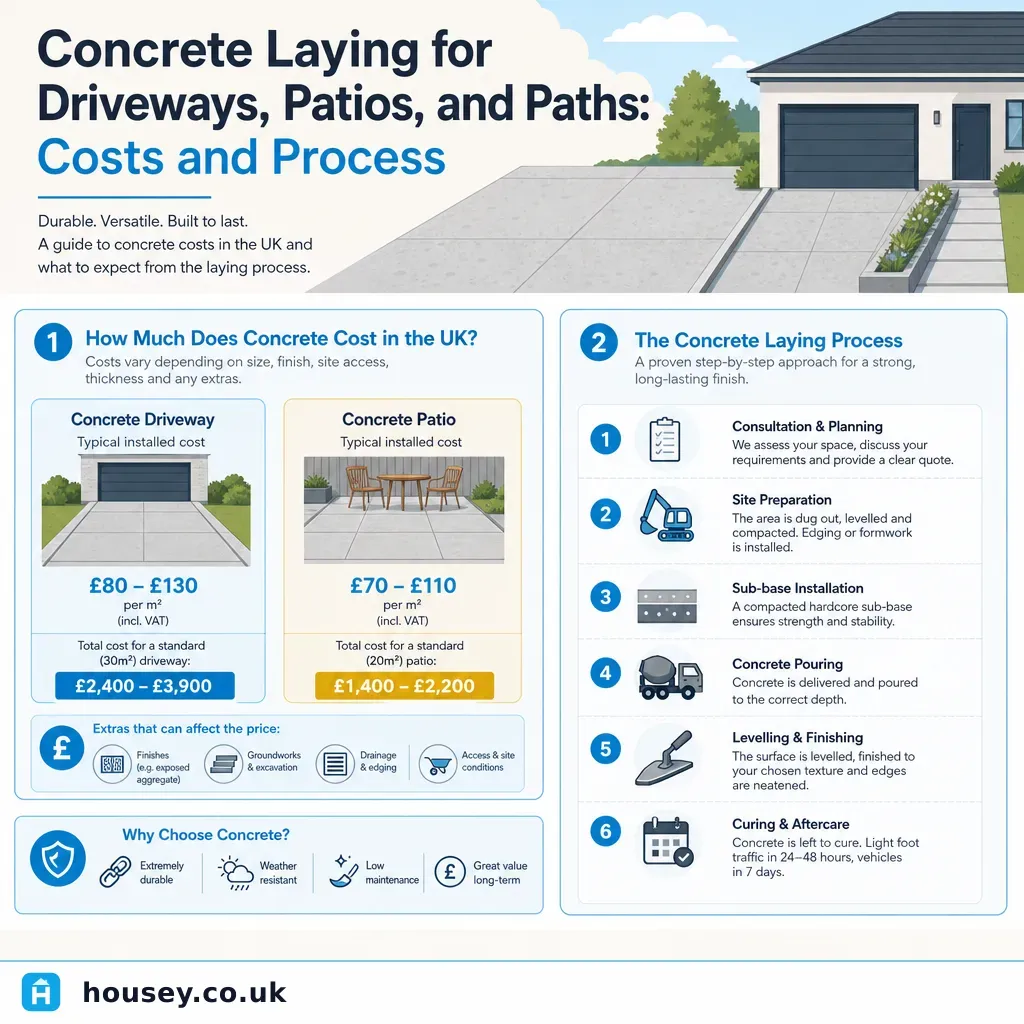
Concrete Laying for Driveways, Patios, and Paths: Costs and Process
Concrete laying for a UK driveway typically costs £65–£110 per square metre, including sub-base, reinforcement, formwork, and finishing.