Annual Home Maintenance Checklist and Schedule
By Housey · Last reviewed 11th of May 2026
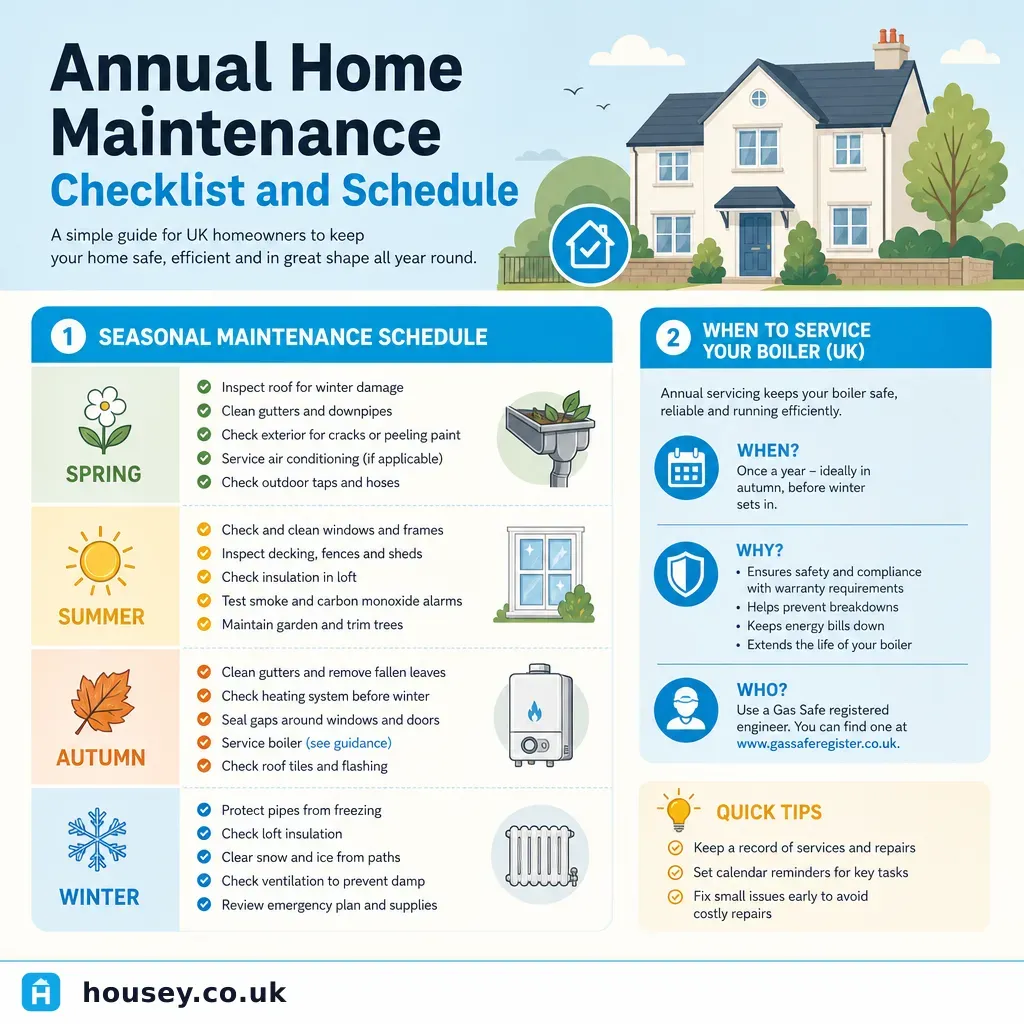
Annual Home Maintenance Checklist and Schedule
A typical UK home quietly deteriorates in the gaps between emergency repairs — gutters block gradually, roofing felt cracks unnoticed, and timberwork softens before it becomes a visible problem. For homeowners managing everything from a Victorian terrace to a 1990s new-build flat, a structured maintenance schedule is one of the most effective ways to prevent small issues from becoming expensive ones.
Key points
- RICS recommends a professional survey at least every five years as a baseline for monitoring a property's condition; annual self-checks help identify changes between surveys.
- Gutters and downpipes should be cleared at least once a year — twice if the property is surrounded by deciduous trees — as blockages are one of the leading causes of penetrating damp in UK homes.
- Gas boilers require an annual service by a Gas Safe registered engineer; landlords are legally required to provide tenants with a Gas Safety Record (CP12 certificate) every 12 months.
- EICR (Electrical Installation Condition Report) certificates are valid for up to 10 years for owner-occupiers; landlords must renew every 5 years under the Electrical Safety Standards in the Private Rented Sector (England) Regulations 2020.
- Flat roofs have a typical lifespan of 10–20 years depending on the material; annual inspection of upstands, drains, and surface condition can identify blistering or seal failure before a serious leak develops.
How to structure your maintenance schedule
The seasonal groupings below reflect UK weather patterns: spring to address winter damage, summer as the dry-weather maintenance window, autumn to prepare for wet and cold conditions, and winter for vigilance and rapid response. The exact timing matters less than doing the checks consistently.
Not every item applies to every property. A top-floor flat has different priorities from a detached 1930s semi with a cellar and a flat-roof rear extension. Use this schedule as a framework and adapt it to your property's type, age, and construction.
Spring (March to May): post-winter review
Roof and exterior
- Roof covering: Check from ground level — binoculars help on taller properties — for slipped, cracked, or missing tiles; moss growth on older coverings; and distorted ridge or hip tiles. Arrange a roof survey if you have not had one recently or notice any changes since last season.
- Gutters and downpipes: Clear winter debris; check for sag, leaks at joints, and that downpipes discharge correctly into drains or soakaways rather than discharging against the wall.
- Brickwork and pointing: Look for stepped cracks through mortar joints, spalled bricks, or patches of failed pointing. Minor cracks in render can allow water ingress; address them before the next winter.
- External joinery: Check window frames, fascias, soffits, and bargeboards for peeling paint, splitting timber, or early signs of rot. Catching fungal decay early prevents it spreading into structural timberwork.
Interior
- Loft: Check insulation for gaps or compression; look for daylight visible through the roof deck (indicating cracked or slipped tiles); inspect for condensation marks, mould, or signs of rodent activity.
- Damp and condensation: Post-winter is when moisture damage typically becomes visible. Check external corners of rooms, the areas under windows, behind furniture on external walls, and around chimney breasts. If damp patches are present, a damp and timber survey can distinguish rising damp, penetrating damp, and condensation — each requiring a different remedy.
Summer (June to August): maintenance and planning window
Dry warm conditions make summer the best season for exterior repairs that need good adhesion or drying time:
- Repointing and masonry repairs: The ideal time for mortar work; ensure adequate curing before autumn rains arrive.
- External redecorating: Sills, frames, fascias, and gates benefit from paint applied in warm dry conditions.
- Garden drainage: Check that surface water runs away from the house; any ponding near walls or foundations should be investigated before winter.
- Flat roof inspection: Walk or visually inspect flat roof surfaces for blistering, ponding water, blocked drains, and the integrity of upstands and flashings around abutments and penetrations.
- Boiler service: Booking a Gas Safe registered engineer in summer usually means shorter lead times than the autumn rush.
Autumn (September to November): pre-winter preparation
- Second gutter clear: Clear fallen leaves from gutters, hoppers, and downpipe grilles before the main rainfall period begins.
- Heating system check: Bleed radiators, check the boiler pressure gauge, test the thermostat and programmer, and confirm the annual service has been completed.
- Draught-proofing: Check seals on external doors, window frames, loft hatches, and around pipework penetrations; replace perished foam or brush seals.
- External taps and exposed pipework: Drain and isolate external taps; lag any pipework in unheated spaces — loft, garage, outbuildings — before temperatures fall.
- Smoke and CO alarms: Test all alarms; replace batteries; confirm CO detectors are within their certification date — most are certified for 5 to 7 years.
Winter (December to February): protection and response
- Frozen pipes: Locate and clearly mark your main stopcock. Keep the property above 10°C even when unoccupied. Insulate exposed pipework in the loft, garage, and external wall cavities.
- After storms: Inspect from ground level for slipped or missing tiles, damaged chimney stacks, and blocked drainage runs following significant wind or rain events.
- Condensation management: Run extractor fans in bathrooms and kitchens; ensure trickle vents on newer windows are open; where condensation recurs on internal walls, investigate the cause before masking it with decoration.
Annual checks regardless of season
Check | Recommended frequency | Standard or regulation | Notes |
|---|---|---|---|
Gas boiler service | Annually | Gas Safe Register | Mandatory for landlords (CP12); strongly recommended for owner-occupiers |
Smoke alarm test | Monthly | BS 5839-6 | Weekly if connected to a monitored alarm system |
CO detector certification check | Annually | BS EN 50291 | Replace unit if past manufacturer's certification date |
EICR (electrical inspection) | Every 10 years (owner-occupier) / every 5 years (rental) | BS 7671 / Electrical Safety Standards Regulations 2020 | Landlords must provide report to tenants within 28 days |
Chimney sweep (open fire or solid fuel) | Annually minimum | HETAS guidance | Twice yearly for heavy users |
Flat roof inspection | Annually | — | More frequently after storms or high winds |
Septic tank service | Annually | Environment Agency permit conditions | Frequency varies by tank size and usage |
Damp-proof course check | Every 2 to 5 years | — | Review after landscaping or ground-level changes near the building |
What a professional inspection adds
Self-checks are valuable but have inherent limits. A RICS home survey carried out by a qualified surveyor provides a systematic inspection of elements not accessible to a homeowner — roof structure, sub-floor timbers, early-stage movement, and the likely causes of damp. RICS guidance recommends a professional survey at least every five years for most owner-occupied properties. If you are planning significant works, approaching a sale, or simply want a reliable condition baseline, the investment is usually well justified.
For specific concerns — roof condition after storm damage, suspected timber decay below the floors, or a persistent damp patch that has not responded to ventilation — a targeted specialist survey by a roof surveyor or damp and timber specialist provides more diagnostic depth than a general visual check.
When to get professional help
The following should prompt professional inspection rather than continued self-monitoring:
- Stepped cracks through brickwork or mortar joints, or any crack that has widened since it was first noticed
- Persistent damp patches that do not respond to improved ventilation or redecorating
- Gas smell anywhere in the property — call the National Gas Emergency line on 0800 111 999 immediately
- Roof tiles that have slipped, cracked, or blown off following a storm
- Any sign of sagging in a ceiling, floor, or roof structure
- White powdery deposits (efflorescence) on internal masonry walls — often a sign of active water movement through the structure
- Evidence of rodent or pest activity in the loft void or below-floor space
How Housey can help
When a self-check raises a concern that warrants specialist eyes, Housey connects you with qualified local professionals. Whether you need a RICS home survey for a full condition assessment, a roof survey following storm damage, or a damp and timber survey to diagnose a persistent moisture problem, you can request and compare quotes through Housey.
Frequently asked questions
How often should I have my boiler serviced?
Your boiler should be serviced annually by a Gas Safe registered engineer. Annual servicing maintains efficiency, extends the boiler's working life, and confirms that the heat exchanger, flue, and gas pressure are operating safely. Landlords are legally required to service gas appliances annually and provide tenants with a valid Gas Safety Record (CP12). Most boiler warranties also require annual servicing as a condition of cover.
What is the most common cause of damp in UK homes?
Penetrating damp — from blocked gutters, failed pointing, or cracked render — is a common cause in Victorian and Edwardian terraces. Condensation from inadequate ventilation is the most common cause overall, particularly in well-insulated homes and flats. Rising damp from the ground is far less common than often assumed. A professional damp diagnosis is important before committing to remedial works, as each cause requires a different remedy.
How do I know if a crack in my wall is serious?
Hairline cracks in plaster or render under 0.5 mm wide are usually caused by thermal movement and are not structural. Cracks wider than 5 mm, stepped cracks through brickwork mortar joints, horizontal cracks in basement walls, or any crack that appears to be widening should be assessed by a chartered surveyor or structural engineer. Crack monitors can be fitted to track whether movement is continuing.
Do I need an annual inspection if my house is newly built?
New-build homes typically come with a 2-year developer warranty and a 10-year structural warranty (usually NHBC Buildmark or equivalent). Maintenance is still necessary — gutters, boilers, and alarms require the same regular attention as older homes. Many defects appear in the first two years; a snagging inspection at handover and a further review approaching the end of the developer warranty period are both advisable.
Sources and further reading
- Gas Safety: landlord responsibilities — GOV.UK
- Electrical Safety Standards in the Private Rented Sector (England) Regulations 2020 — legislation.gov.uk
- RICS home surveys — RICS
- HSE: Domestic gas appliance safety — Health and Safety Executive
- Energy Saving Trust: draught-proofing advice — Energy Saving Trust
Useful next reads
 Surveys & Inspections
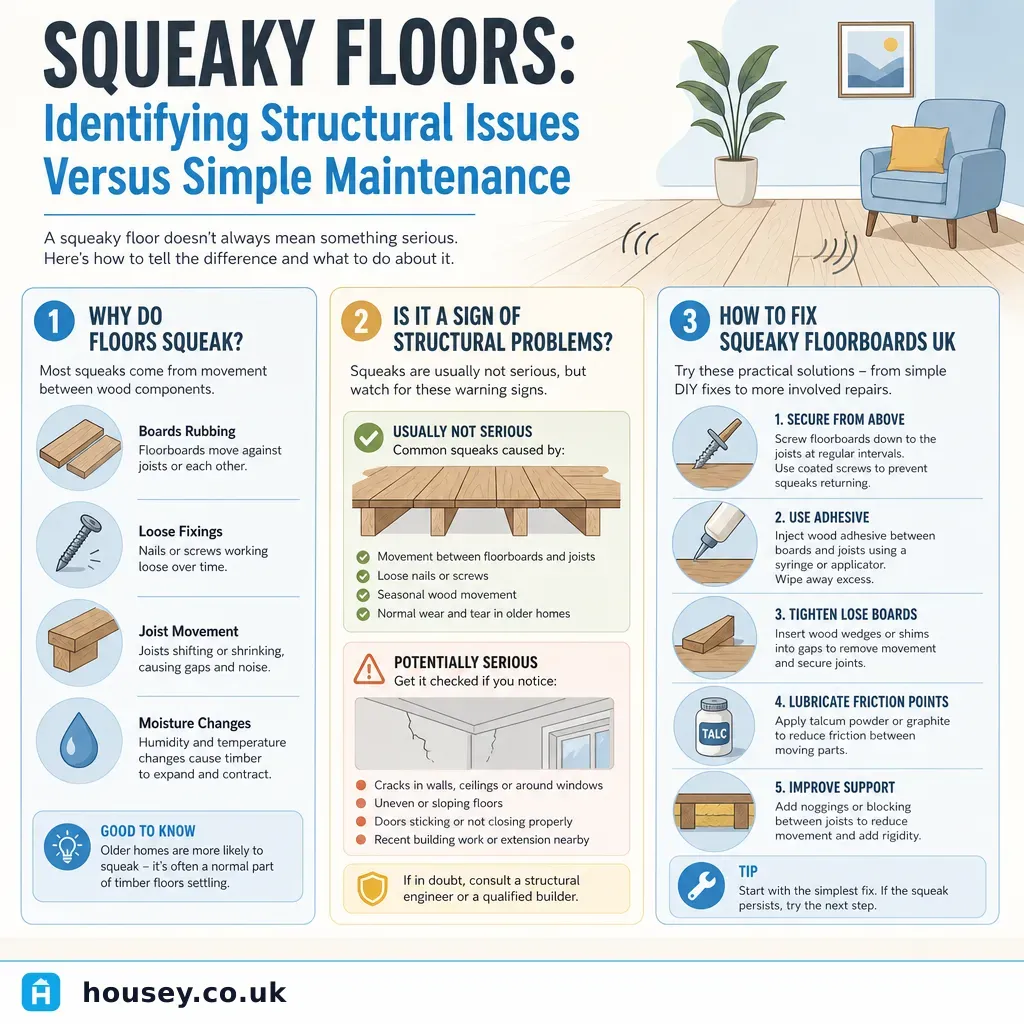
Squeaky Floors: Identifying Structural Issues Versus Simple Maintenance
Most squeaky floors in UK homes are caused by floorboards rubbing against each other or against fixings as they expand and contract — a maintenance issue rather than a structural one.
 Surveys & Inspections
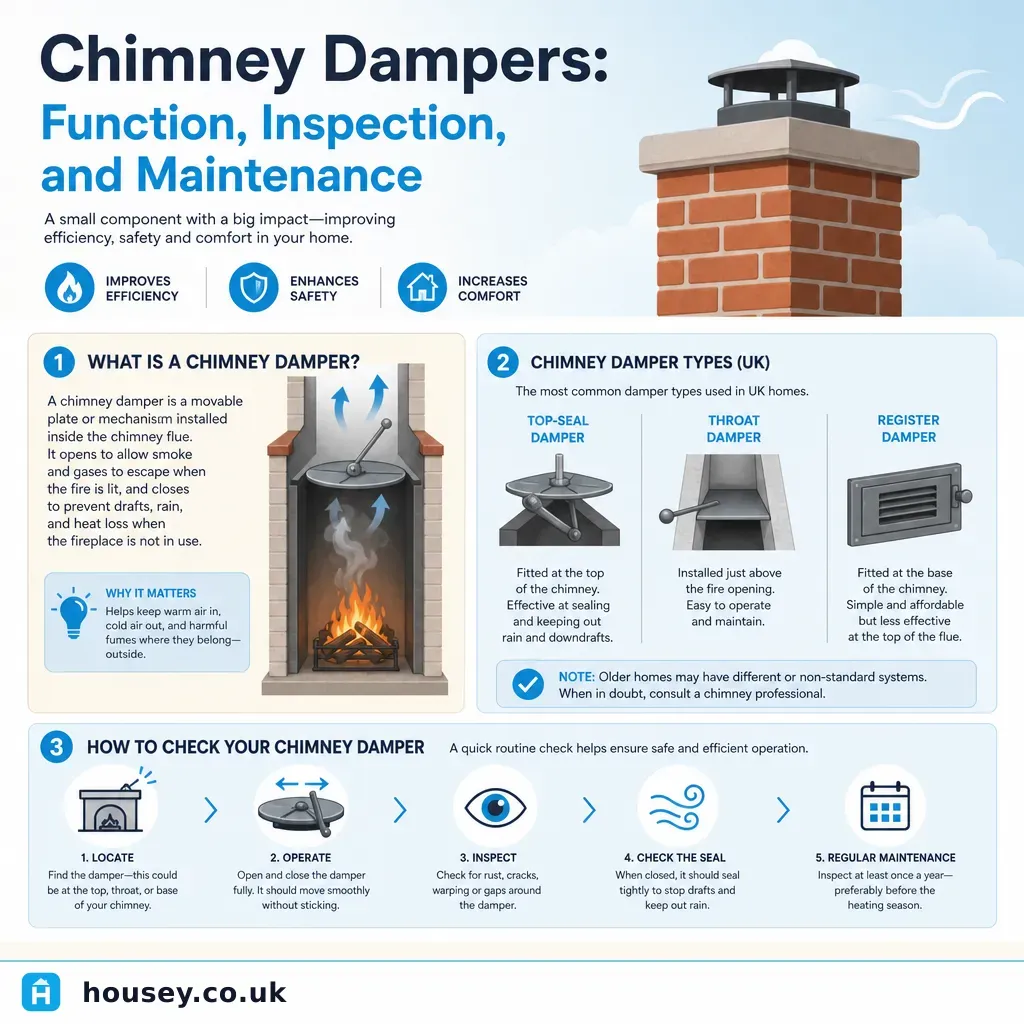
Chimney Dampers: Function, Inspection, and Maintenance
A chimney damper is a movable plate or valve in the flue that controls airflow when the fire is lit and seals the chimney when it is not.
 Surveys & Inspections
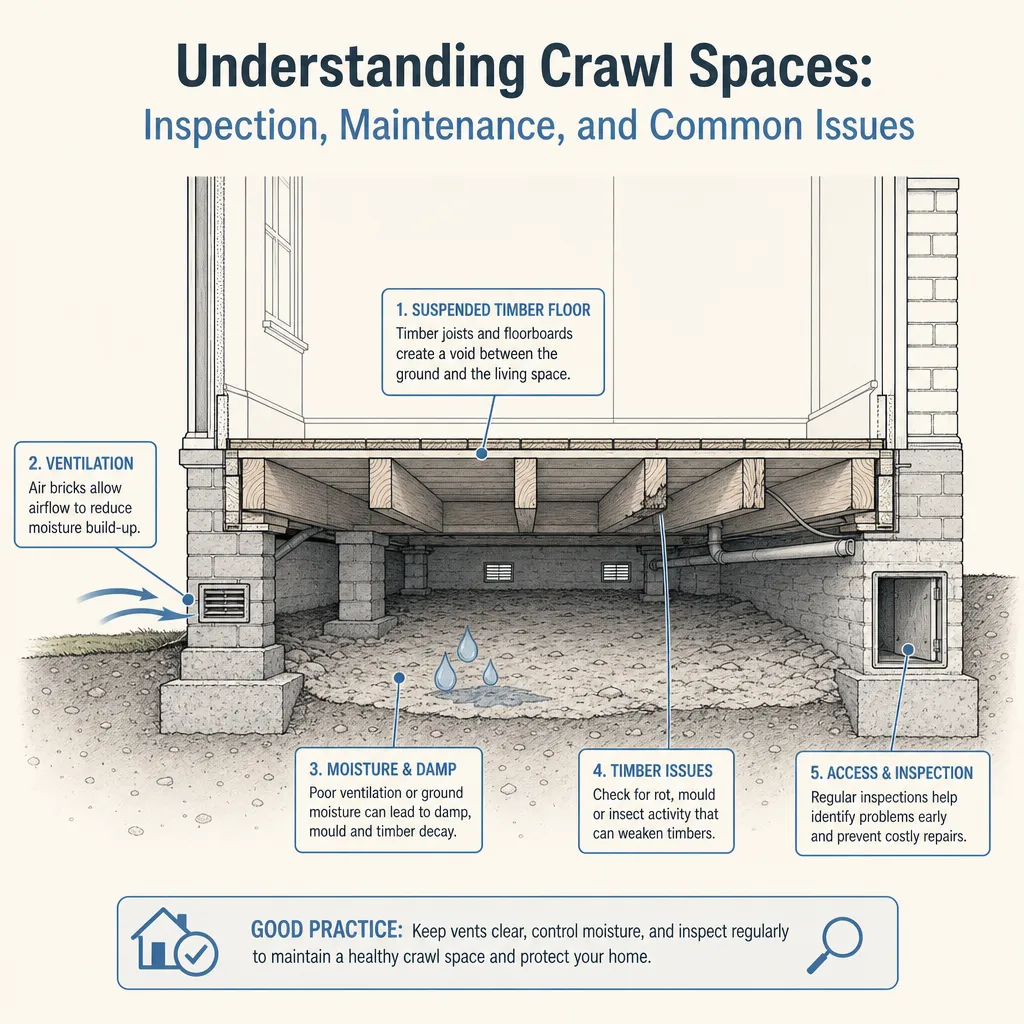
Understanding Crawl Spaces: Inspection, Maintenance, and Common Issues
Sub-floor voids beneath suspended timber ground floors in pre-1960 UK homes need cross-ventilation through airbricks to prevent dry rot and wet rot in floor timbers.
 Surveys & Inspections
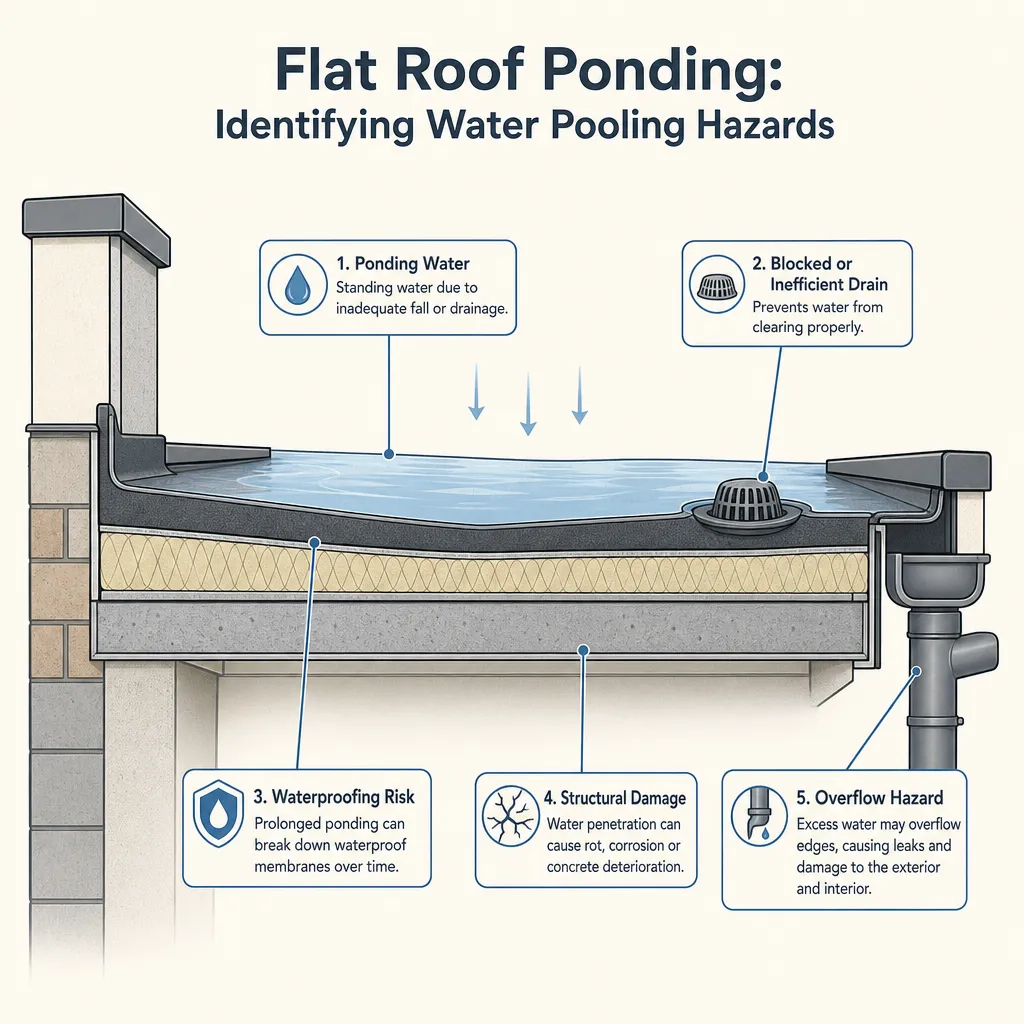
Flat Roof Ponding: Identifying Water Pooling Hazards
Flat roof ponding lasting more than 24–48 hours after rainfall warrants investigation.
 Surveys & Inspections
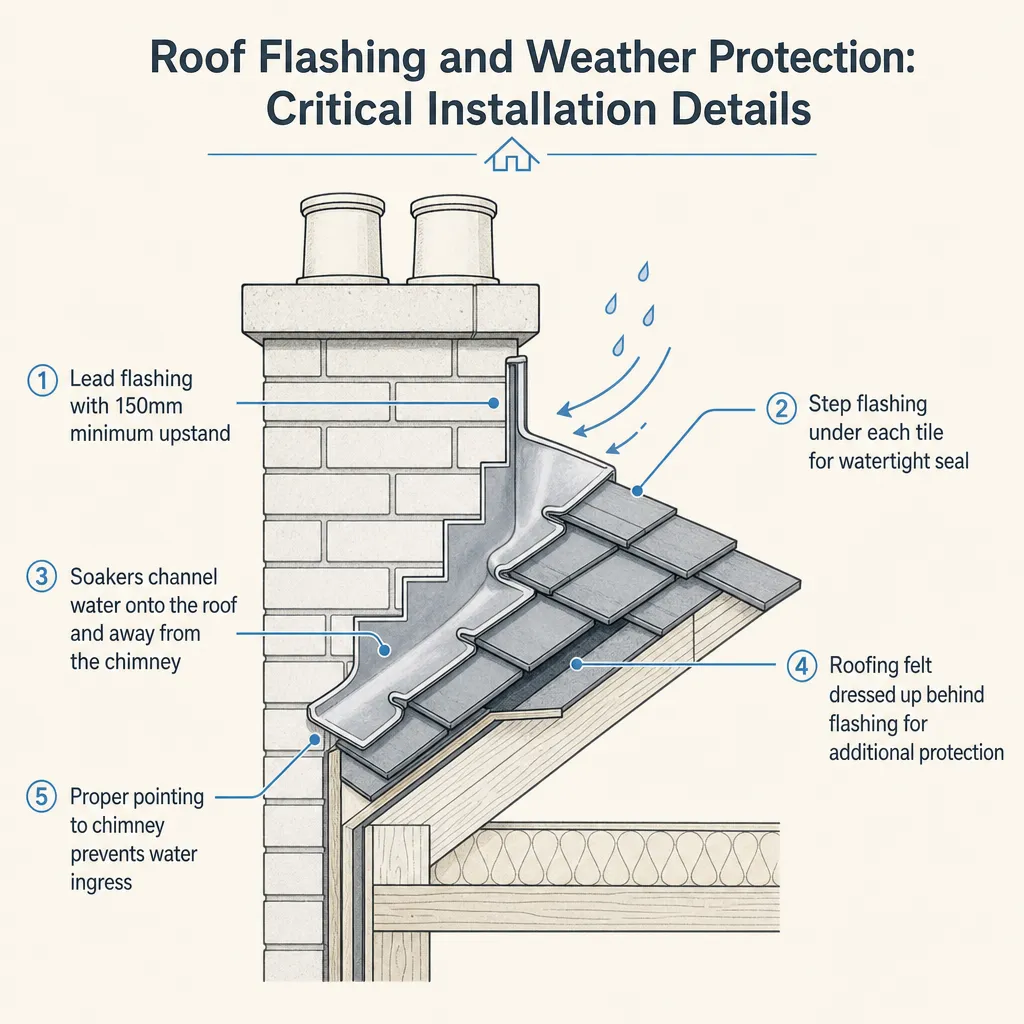
Roof Flashing and Weather Protection: Critical Installation Details
Roof flashing is waterproof material — usually lead or a metal alternative — installed at junctions between roof surfaces and vertical elements such as chimneys, dormers, and abutments.