Architect or Builder: Determining the Right Professional for Your Project
By Housey · Last reviewed 3rd of May 2026

Architect or Builder: Determining the Right Professional for Your Project
Most UK homeowners who want to extend, convert, or significantly alter their property eventually face a sequencing problem: who should be engaged first, and what does each professional actually do? Getting this wrong — instructing a builder before design and consent stages are complete, or paying for professional design services that exceed what the project requires — is a common and avoidable source of delay and cost.
Key points
- Architects registered with the Architects Registration Board (ARB) hold the protected title "architect"; individuals who are not ARB-registered may not use this title regardless of experience, under the Architects Act 1997.
- Planning applications for extensions and conversions typically require scaled drawings prepared to specific requirements; most builders cannot produce these without additional design training.
- Building Regulations require technical drawings satisfying Part A (structure), Part L (energy), Part B (fire safety), and other applicable parts — typically produced by an architect or architectural technologist.
- An architect acting as contract administrator during construction provides an independent check on the builder's work and administers the building contract on the homeowner's behalf.
- Architectural technologists (MCIAT members of the Chartered Institute of Architectural Technologists) can produce technical design and building regulations drawings for many domestic projects at a lower fee than a full RIBA-chartered architect appointment.
What an architect does
An architect's role on a domestic project typically covers some or all of the following RIBA Plan of Work stages:
- Feasibility and briefing: understanding the client's requirements and assessing what is achievable within planning constraints and budget.
- Planning drawings: producing plans, elevations, sections, and supporting documentation for a planning application to the local authority.
- Technical design (building regulations): detailed drawings and specifications that satisfy building control and allow accurate tendering by builders.
- Tendering: preparing a tender pack, inviting quotes from builders, evaluating returns, and advising on contractor selection.
- Contract administration: issuing instructions to the builder, certifying stage payments, managing variations, and inspecting works on site.
- Completion: co-ordinating the building control final inspection, obtaining the completion certificate, and managing handover.
A homeowner can engage an architect for all stages (full appointment) or for individual stages only — planning drawings alone, or technical design only. The scope should always be agreed in writing before any fee is committed.
What a builder does
A builder plans and executes the physical construction work. On a design-and-build basis, some builders offer to manage drawings and the planning process, but they cannot use the title "architect" and are not registered with the ARB unless they separately hold that qualification. On most domestic projects, a builder:
- Prices the work from drawings and a written specification.
- Manages subcontractors — plumbers, electricians, roofers, plasterers.
- Sources and organises materials and plant.
- Co-ordinates building control inspections at required stages.
- Delivers the finished building in line with the agreed specification.
Where no architect or contract administrator is appointed, the homeowner manages the builder directly. This requires time, confidence in reading technical drawings, and an understanding of when to challenge work quality or programme.
Which professional do you need? A decision tree
- Is planning permission likely to be required? → An architect or architectural technologist should produce the planning drawings. A builder cannot do this without specific design training.
- Does the project involve structural alterations — removing walls, extending foundations, altering the roof structure? → You will need structural engineering calculations in addition to architectural drawings, plus building regulations consent.
- Is the project a straightforward like-for-like replacement (kitchen, bathroom, rewire) with no planning or structural elements? → A builder alone is often sufficient, though building regulations may still apply for specific elements such as electrics or heating.
- Is the project high-value, complex, or on a listed building or in a conservation area? → Full architectural appointment including contract administration is usually worth the fee.
- Do you want independent oversight of the builder's work? → Appoint an architect or project manager to act as contract administrator or site monitor.
- Is your primary need technically accurate building regulations drawings rather than creative design input? → An architectural technologist may provide the same output at a lower fee than a full RIBA-chartered practice.
Professional roles: a comparison table
Aspect | Architect (ARB registered) | Architectural technologist (MCIAT) | General builder |
|---|---|---|---|
Protected title | Yes — "architect" protected under Architects Act 1997 | No — but MCIAT indicates recognised CIAT training | No |
Planning drawings | Yes | Yes | Not usually |
Building regulations drawings | Yes | Yes | Not usually |
Structural calculations | No — refer to structural engineer | No — refer to structural engineer | No |
Design creativity and aesthetics | Strong focus — core of the role | Technical focus; less design-led | Not a design role |
Contract administration | Yes | Some offer this | No |
Physical construction | No | No | Yes — core role |
Typical fee basis | 8–15% of build cost or fixed fee | Fixed fee or hourly rate | Fixed price or daywork |
Fee ranges are indicative only, last reviewed 2026-05-03. They vary significantly by project scale, location, and scope of appointment. Always agree the scope in writing.
When you need both — and in what order
For most significant domestic projects you need both a design professional and a builder — and the sequence matters considerably.
- Engage the architect or architectural technologist first to establish feasibility, prepare planning drawings, and obtain planning consent before any construction commitment is made.
- Once planning consent is obtained, commission the full technical design — building regulations drawings, specification, and schedules of work.
- Tender to builders from that specification. Comparing quotes is only meaningful when all builders are pricing the same scope from the same documents.
- Appoint the builder and, where appropriate, retain the architect or technologist as contract administrator to certify staged payments and inspect works.
Engaging a builder before planning consent is obtained — and certainly before technical drawings exist — typically results in inaccurate quotes, scope creep, and disputes over what was originally agreed.
What an architectural technologist offers
For many domestic extensions and loft conversions, an architectural technologist can provide planning and building regulations drawings without the cost of a full architectural appointment. Key distinctions:
- Architectural technologists hold MCIAT membership of the Chartered Institute of Architectural Technologists and are trained primarily in the technical design of buildings.
- They are well-suited to projects where the design approach is broadly established and the value lies in technically accurate, compliant drawings.
- For design-sensitive or complex projects — unusual sites, listed buildings, innovative spatial arrangements — an architect's broader design training and aesthetic judgement is often worth the additional fee.
- For straightforward rear extensions or loft conversions on standard UK house types, an architectural technologist is often the most cost-effective route to planning and building control approval.
Building control: who manages it?
Building control consultants — whether local authority building control (LABC) or a private approved inspector — administer the building regulations process. They are distinct from architects and builders, though either may manage the submission on the homeowner's behalf.
The process involves submitting full plans or using the building notice route, followed by inspections at key stages: foundations, damp-proof course, structural frame, roof, insulation, drainage, and completion. A completion certificate is issued when the work is satisfactorily finished.
An architect or architectural technologist typically manages the building control submission as part of their appointment. If they are not retained for this stage, the builder may manage building control — but confirm this responsibility in writing and ensure the completion certificate is obtained and stored. It is required when the property is sold.
What to ask a design professional before appointing them
- Are you ARB-registered (for architects) or an MCIAT member (for architectural technologists)?
- What is included in your fee at each stage — feasibility, planning, building regulations, tendering, and contract administration?
- Have you completed projects of similar type and scale in this area, and can you provide references from recent clients?
- Who will personally carry out the work — you or a junior in your practice?
- How do you handle planning objections, pre-application discussions, or building control queries?
- What professional indemnity (PI) insurance do you hold, and to what limit?
- What happens to the programme and fee if build costs change significantly from the initial estimate?
When to get professional help
Most domestic building projects of any significance — extensions, loft conversions, structural alterations, anything likely to require planning permission or building regulations consent — benefit from professional design input before approaching builders. Engage an architect or architectural technologist first, before committing to any contractor.
For complex projects requiring co-ordination of multiple professionals and trades, consider appointing a project manager to manage the full programme on your behalf.
How Housey can help
Housey connects UK homeowners with qualified architects, architectural technologists, and building control consultants for domestic projects across the country. If your project also requires end-to-end co-ordination, Housey can help you find and compare project managers experienced in residential builds.
Frequently asked questions
Can a builder draw up planning permission plans?
A builder without design training cannot legally use the title 'architect' or prepare regulated architectural drawings for submission. Some builders offer a design-and-build service and sub-contract the design to a qualified architect or architectural technologist — but always confirm who is producing the drawings and check their professional registration before proceeding.
Is an architect compulsory for a home extension?
There is no legal requirement to appoint an ARB-registered architect for a home extension. However, planning applications usually require scaled drawings, and building regulations require detailed technical specifications — these are typically produced by an architect or architectural technologist. Attempting to manage these stages without professional drawings often results in planning delays or building control difficulties.
What is the difference between planning permission and building regulations?
Planning permission considers the external appearance, use, and impact of a development — granted by the local planning authority. Building regulations cover the structural safety, energy efficiency, fire safety, and technical standards of the construction — administered by local authority building control or an approved inspector. Most projects require both; they are separate processes with distinct application routes and requirements.
How much does an architect cost for a home extension?
Architectural fees for domestic extensions typically range from 8% to 15% of the construction cost for a full service, or less for partial appointments such as planning drawings only. Indicative UK costs, last reviewed 2026-05-03. Fees vary by practice size, location, and project complexity. Always agree the scope and fee basis in writing before any work begins.
When is a project manager worth appointing?
A project manager is particularly useful when the homeowner cannot commit time to regular site visits and contractor management, when multiple specialist trades need tight co-ordination, or when the project is complex enough that delays and cost overruns present a significant financial risk. Project management fees typically range from 5% to 10% of construction cost, last reviewed 2026-05-03.
Sources and further reading
- Architects Registration Board: about registration — ARB
- Architects Act 1997 — legislation.gov.uk
- Chartered Institute of Architectural Technologists — CIAT
- RIBA: finding an architect — Royal Institute of British Architects
- Planning permission: when you need it — GOV.UK
- Building regulations approval — GOV.UK
Useful next reads
 Planning & Pre-Build
Choosing Between an Architect and Structural Engineer
Most UK extension and loft conversion projects need both professionals: an architect or architectural technologist for design, planning, and building regulations drawings, and a structural engineer for beam calculations and foundation design.
 Planning & Pre-Build
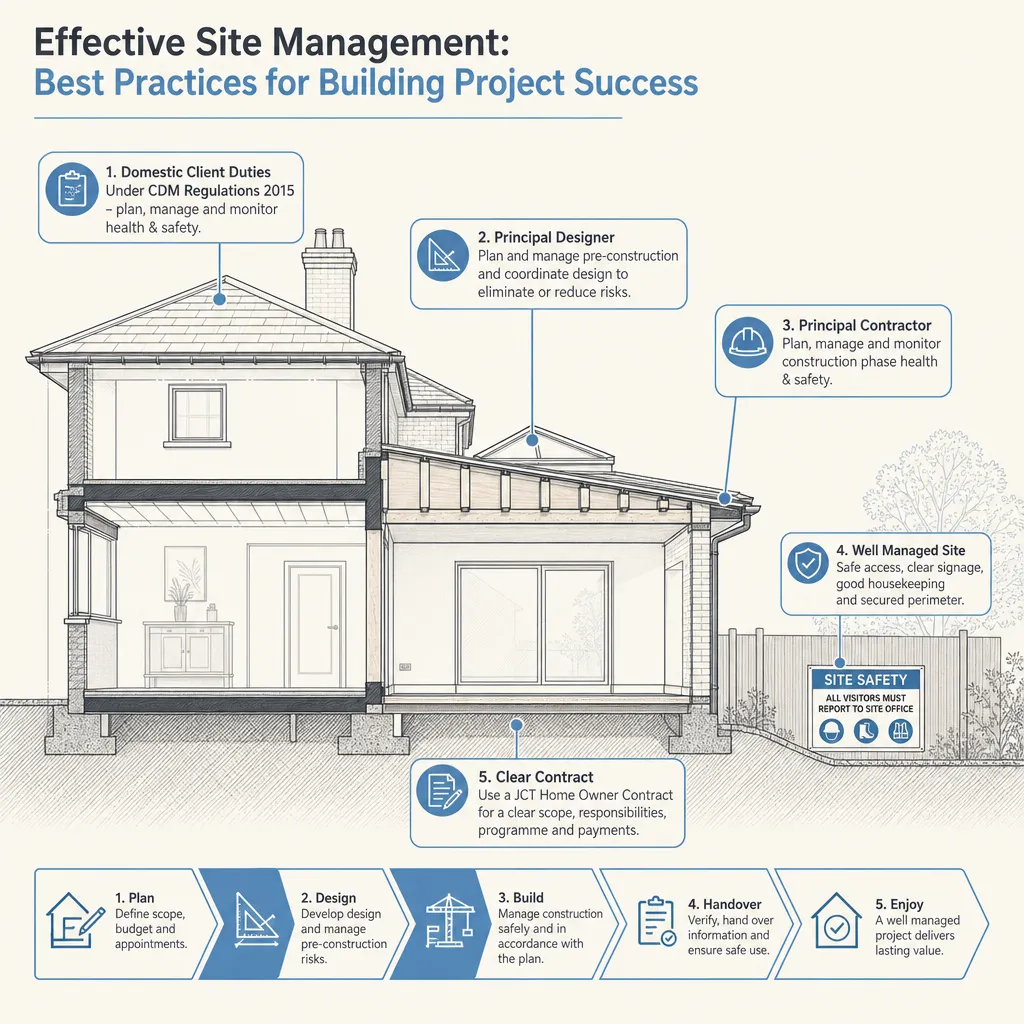
Effective Site Management: Best Practices for Building Project Success
Effective site management on a UK building project requires a clear programme, written contracts, CDM Regulations compliance, and proactive coordination between the principal contractor and all trades.
 Planning & Pre-Build
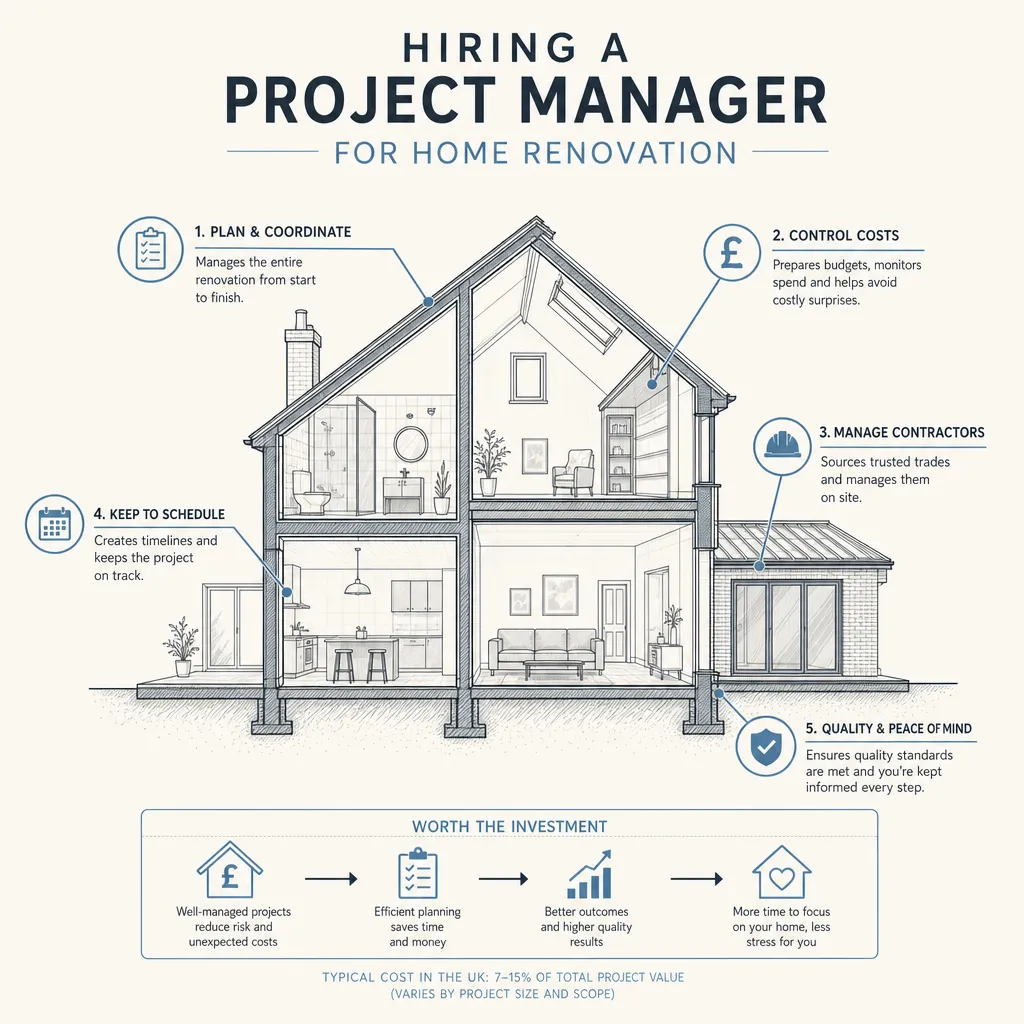
Hiring a Project Manager for Home Renovation
A project manager for home renovation coordinates contractors, manages programme and budget, and oversees quality and building control liaison on your behalf.
 Planning & Pre-Build
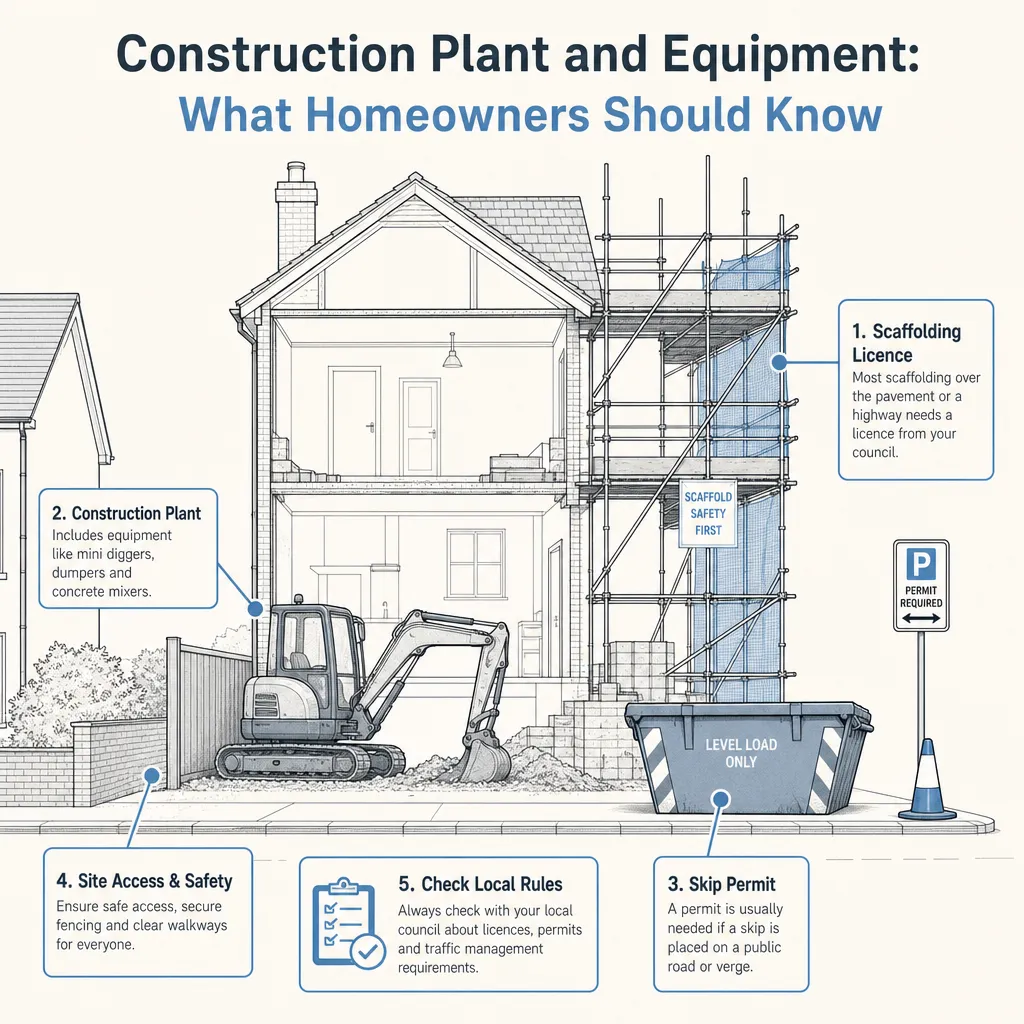
Construction Plant and Equipment: What Homeowners Should Know
Construction plant covers scaffolding, skips, excavators, cranes, and other site machinery.
 Planning & Pre-Build
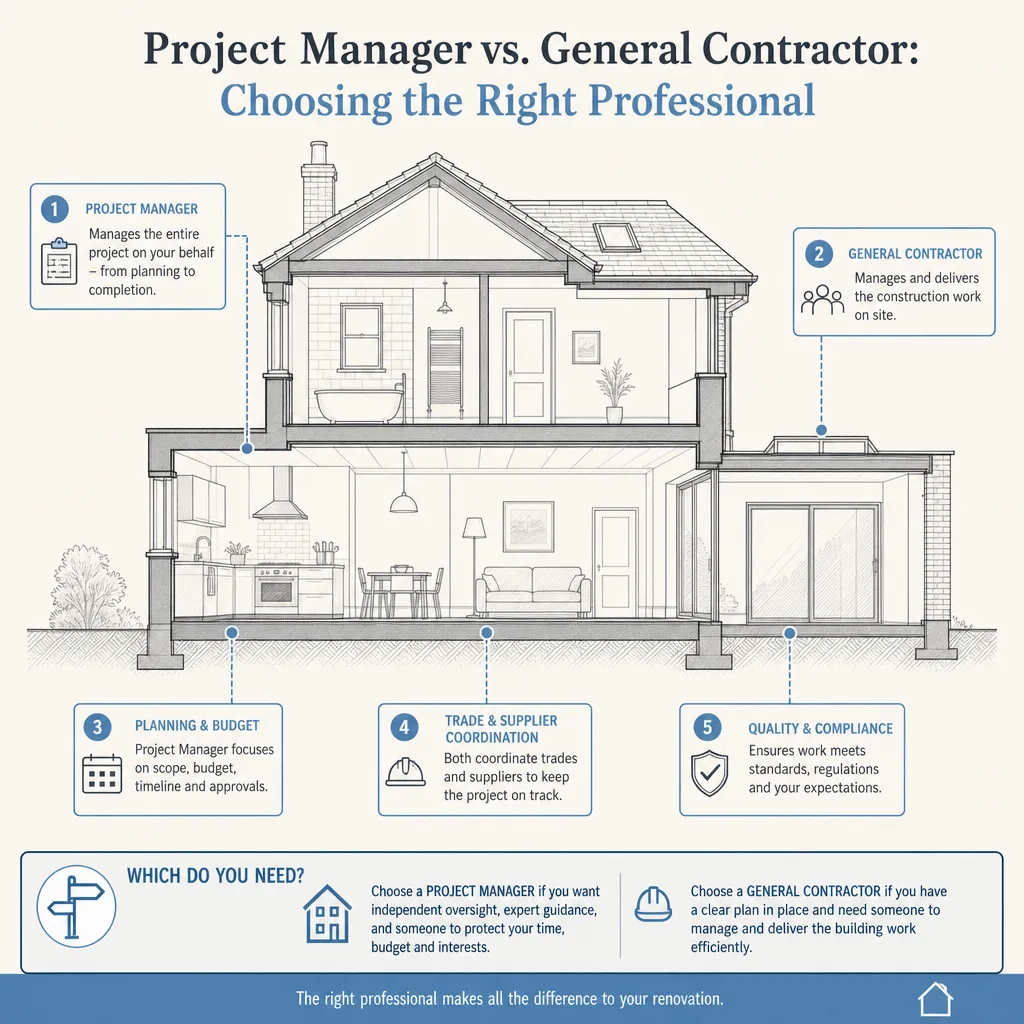
Project Manager vs. General Contractor: Choosing the Right Professional
A project manager works on your behalf to oversee programme, costs, and contractor performance — they do not carry out building work themselves.