Hiring a Project Manager for Home Renovation
By Housey · Last reviewed 7th of May 2026
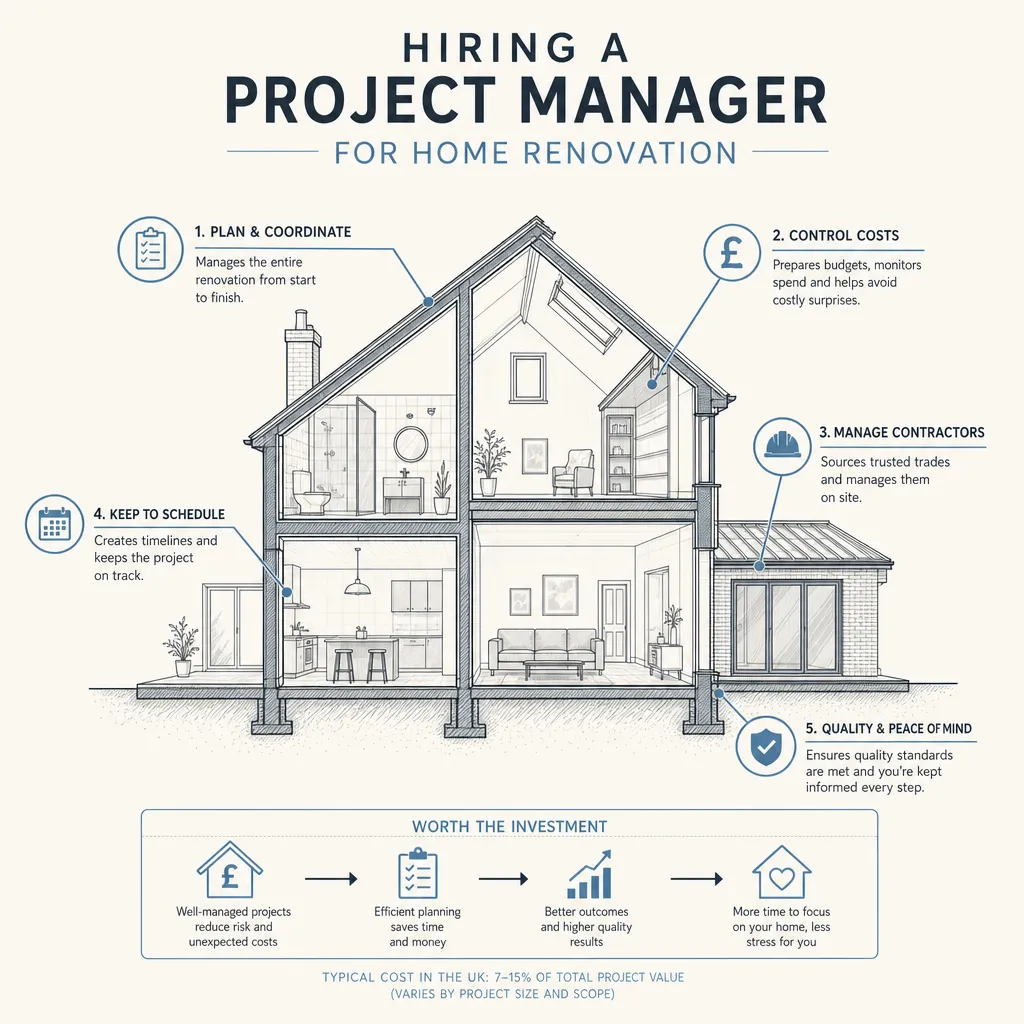
Hiring a Project Manager for Home Renovation
Most homeowners only realise they needed a project manager after things have already gone wrong — a trade sequence clash that left the plumber waiting on the electrician, or a missed building control inspection that halted work for a fortnight. UK renovation projects regularly involve five or more contractors, each with their own programme and payment expectations. Coordinating them well is effectively a full-time job.
Key points
- Project manager fees typically run at 10–20% of total build cost, or a fixed fee agreed at scope sign-off; day rates range from roughly £250–£600 depending on experience and region (Indicative UK costs, last reviewed 2026-05-07).
- A PM coordinates contractors and manages programme and budget — they do not produce architectural drawings or submit planning applications.
- The Construction (Design and Management) Regulations 2015 (CDM 2015) require a formal Principal Designer and Principal Contractor appointment on projects with more than one contractor working simultaneously.
- There is no statutory licensing requirement for the title "project manager" in residential construction — verify professional membership through CIOB, APM, or RICS.
- Always confirm in writing whether building control submissions and inspections fall to the PM or to another member of the design team.
What does a project manager do?
A PM takes day-to-day responsibility for running your project on your behalf. Core duties include producing and managing the works programme, coordinating trade sequences, procuring and recommending contractors, tracking spend against budget, managing contractor invoices, liaising with building control, and overseeing quality before sign-off.
What a PM does not do: produce design drawings, apply for planning permission, act as a structural engineer, or guarantee regulatory compliance — those responsibilities remain with the relevant qualified professionals.
Do you need a project manager?
- Manage yourself if: a single main contractor is involved; the project runs under eight weeks; you can be available daily; your budget is under £30,000.
- Consider a PM if: two or more separate contractors are needed; the project involves structural works or a loft conversion; your budget exceeds £60,000; you cannot be on-site daily.
- Strongly consider a PM if: works span more than six months; the property is not your main residence; CDM 2015 applies because more than one contractor will work simultaneously.
- Seek a specialist PM if: the property is listed, in a conservation area, or involves an unusually complex structural arrangement requiring a PM experienced in that building type.
Project manager vs architect vs architectural technologist
Role | Designs drawings? | Manages contractors? | Best suited to |
|---|---|---|---|
Project manager | No | Yes | Multi-trade renovations, extensions, programme-critical builds |
Architect | Yes | Sometimes (contract admin role) | Design-led projects, planning applications |
Architectural technologist | Yes (technical) | Sometimes | Building regulations drawings, technical compliance |
Main contractor | No | Their own supply chain | Turnkey builds with single point of accountability |
If your project needs new drawings for planning or building regulations, appoint a designer first — a PM can be brought in alongside. Some practices offer combined design and project management services; confirm scope in writing before appointment. You can find architectural technologists through Housey if your project needs technical design support alongside site management.
What to ask before hiring a project manager
- What projects of similar type and value have you managed in the last three years, and can I contact a previous client?
- What professional memberships do you hold — MCIOB, MRICS, or MAPM?
- Will you personally be on site, or will a junior manage visits?
- How often will you visit site, and how will you communicate with me between visits?
- Is your fee a percentage of build cost, a fixed sum, or a day rate — and what triggers additional charges?
- Do you carry professional indemnity insurance, and what is the limit?
- Who manages building control submissions and inspection bookings — you or the designer?
How project manager fees are structured
Fee model | Typical range | Best suited to |
|---|---|---|
Percentage of build cost | 10–20% | Projects where scope may change |
Fixed fee | Agreed at scope sign-off | Well-defined, shorter projects |
Day rate | £250–£600/day | Part-time oversight or consultancy |
Indicative UK costs, last reviewed 2026-05-07. Obtain at least three quotes before appointing.
A lower fee combined with infrequent site visits may ultimately cost more — confirm expected visit frequency and what the fee includes before appointment.
Homeowner checklist: before your project manager starts
When to get professional help
If your renovation is already under way and you are experiencing contractor disputes, programme overruns, or unexplained cost increases, a PM brought in mid-project can carry out a recovery audit — reviewing contracts, agreeing a revised programme, and documenting outstanding items.
Red flags that suggest you need oversight now:
- Contractors requesting large upfront payments without milestone-linked structure
- Building control inspections being skipped or deferred without explanation
- Materials substituted without written approval from you or your designer
- Invoices received without reference to an agreed schedule or payment breakdown
For building regulations compliance queries, a building control consultant can advise on inspection stages, notices, and sign-off requirements independently of your contractor.
How Housey can help
Housey lets you request quotes from vetted project managers across the UK, compare their experience and approach, and connect with related specialists including architectural technologists for technical drawings and building control support. Start by finding project managers on Housey.
Frequently asked questions
Do I legally need a project manager for a home renovation?
There is no legal requirement to appoint a project manager for most residential renovations. However, CDM 2015 requires a Principal Designer and Principal Contractor to be formally appointed on projects with more than one contractor working simultaneously. A qualified PM can fulfil the Principal Contractor role. For single-contractor projects, the legal obligation rests with the homeowner as client.
Can an architect act as project manager?
Many architects offer contract administration or project management alongside their design role. This is common on design-led extensions and conversions, but is not always included in standard fees. Confirm in writing whether your architect will handle contractor coordination, cost tracking, and building control liaison — or whether a separate PM appointment is needed.
What is the difference between a project manager and a main contractor?
A main contractor takes legal and commercial responsibility for all site works, subcontracting trades and including a management margin in their price. A project manager is appointed by the homeowner and acts in their interest, overseeing contractors rather than executing work. Main contractors offer a single accountability point; a PM with individual contractors can reduce cost but increases client management responsibility.
Is a project manager worth the cost?
On multi-trade projects, a PM typically earns their fee through programme savings, avoided rework, and early identification of scope creep. On simple single-trade jobs, the overhead is harder to justify. Homeowners who have managed complex renovations without a PM often report that contractor disputes and delays cost considerably more than PM fees would have.
Sources and further reading
- Construction (Design and Management) Regulations 2015 — legislation.gov.uk
- CDM 2015 guidance for domestic clients — Health and Safety Executive
- Chartered Institute of Building — CIOB
- Association for Project Management — APM
- RICS guidance on construction project management — Royal Institution of Chartered Surveyors
Useful next reads
 Planning & Pre-Build
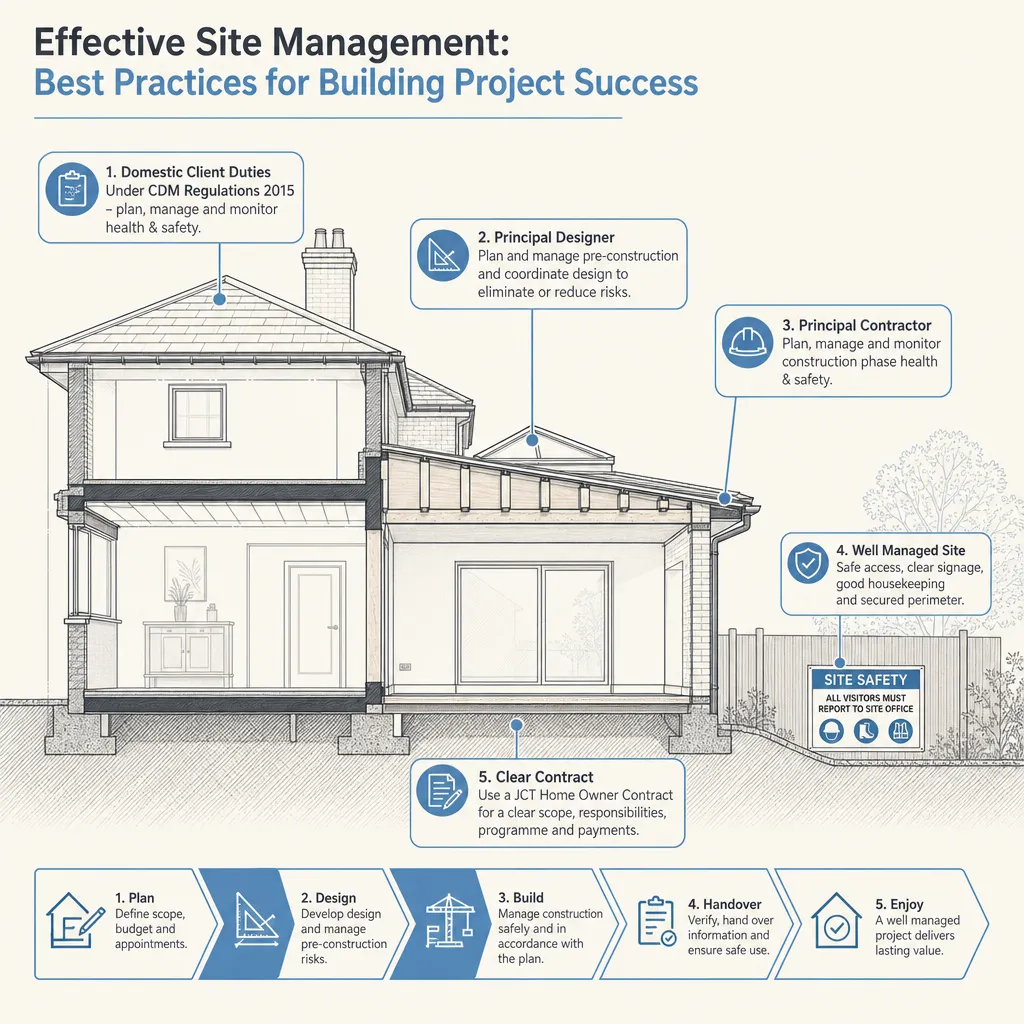
Effective Site Management: Best Practices for Building Project Success
Effective site management on a UK building project requires a clear programme, written contracts, CDM Regulations compliance, and proactive coordination between the principal contractor and all trades.
 Planning & Pre-Build
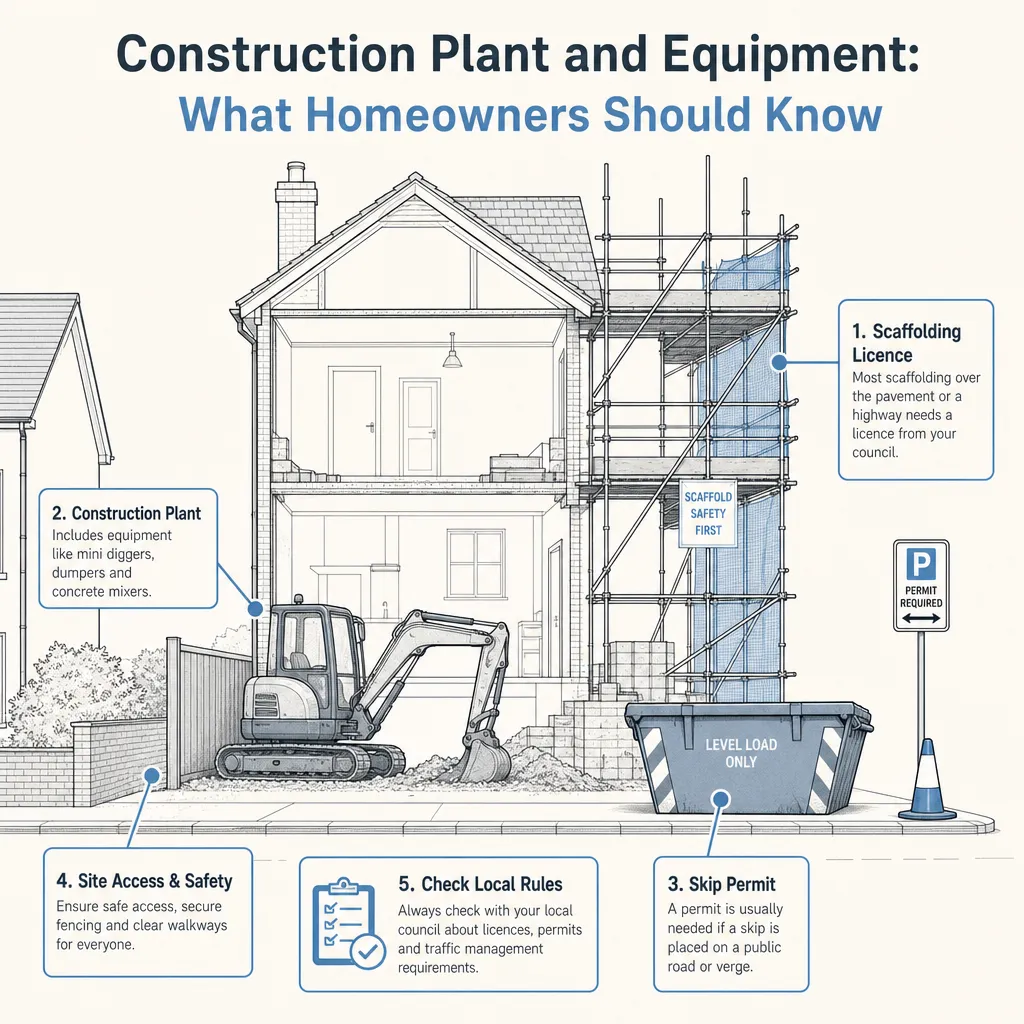
Construction Plant and Equipment: What Homeowners Should Know
Construction plant covers scaffolding, skips, excavators, cranes, and other site machinery.
 Planning & Pre-Build
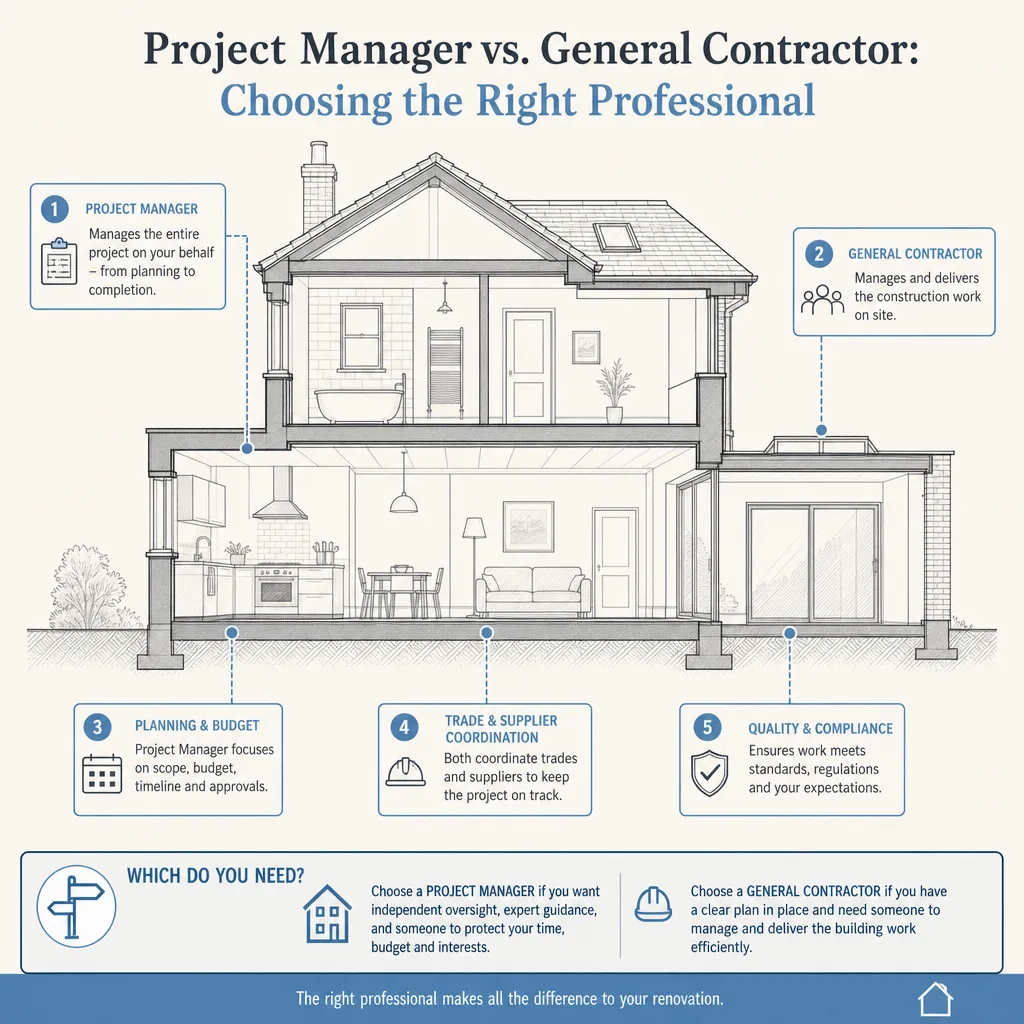
Project Manager vs. General Contractor: Choosing the Right Professional
A project manager works on your behalf to oversee programme, costs, and contractor performance — they do not carry out building work themselves.
 Planning & Pre-Build
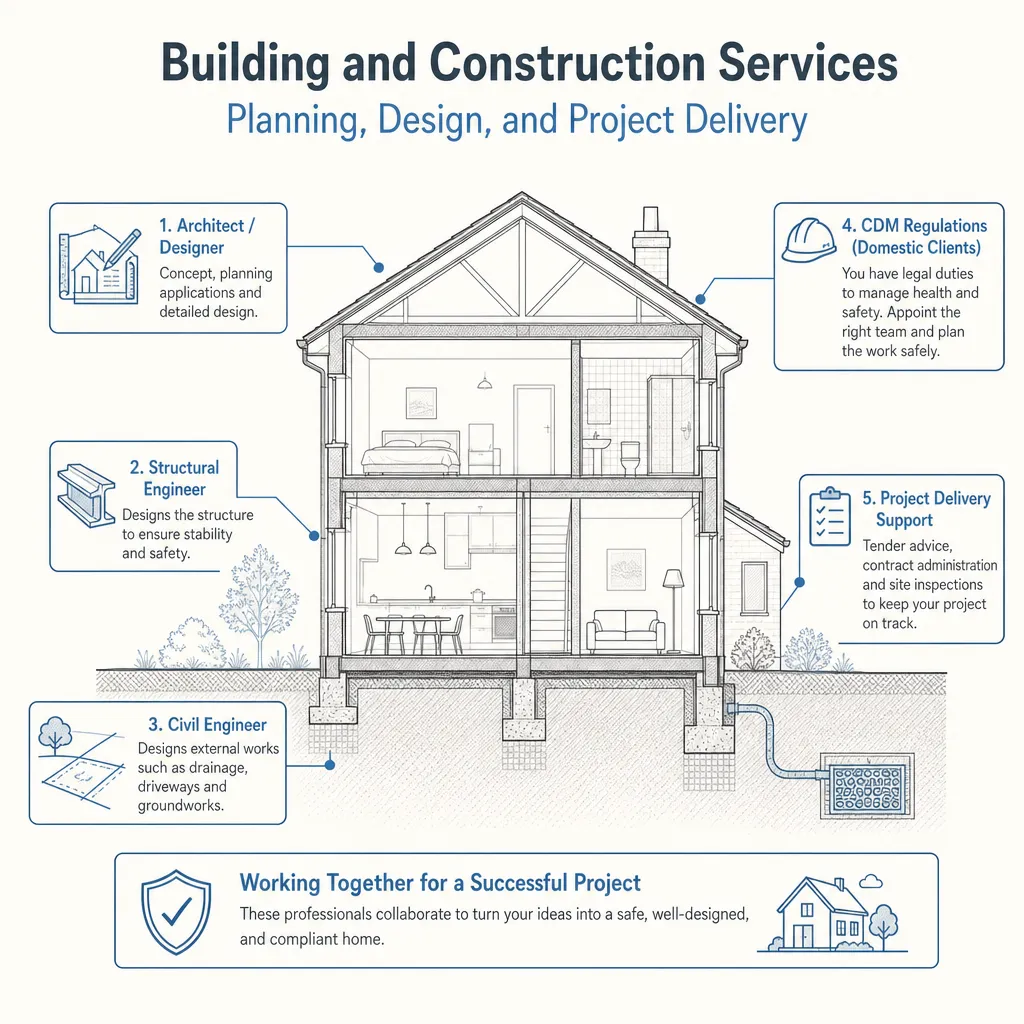
Building and Construction Services: Planning, Design, and Project Delivery
Construction projects in the UK typically involve architects, structural engineers, civil engineers, project managers, and quantity surveyors — each with a distinct role at different stages.
 Planning & Pre-Build
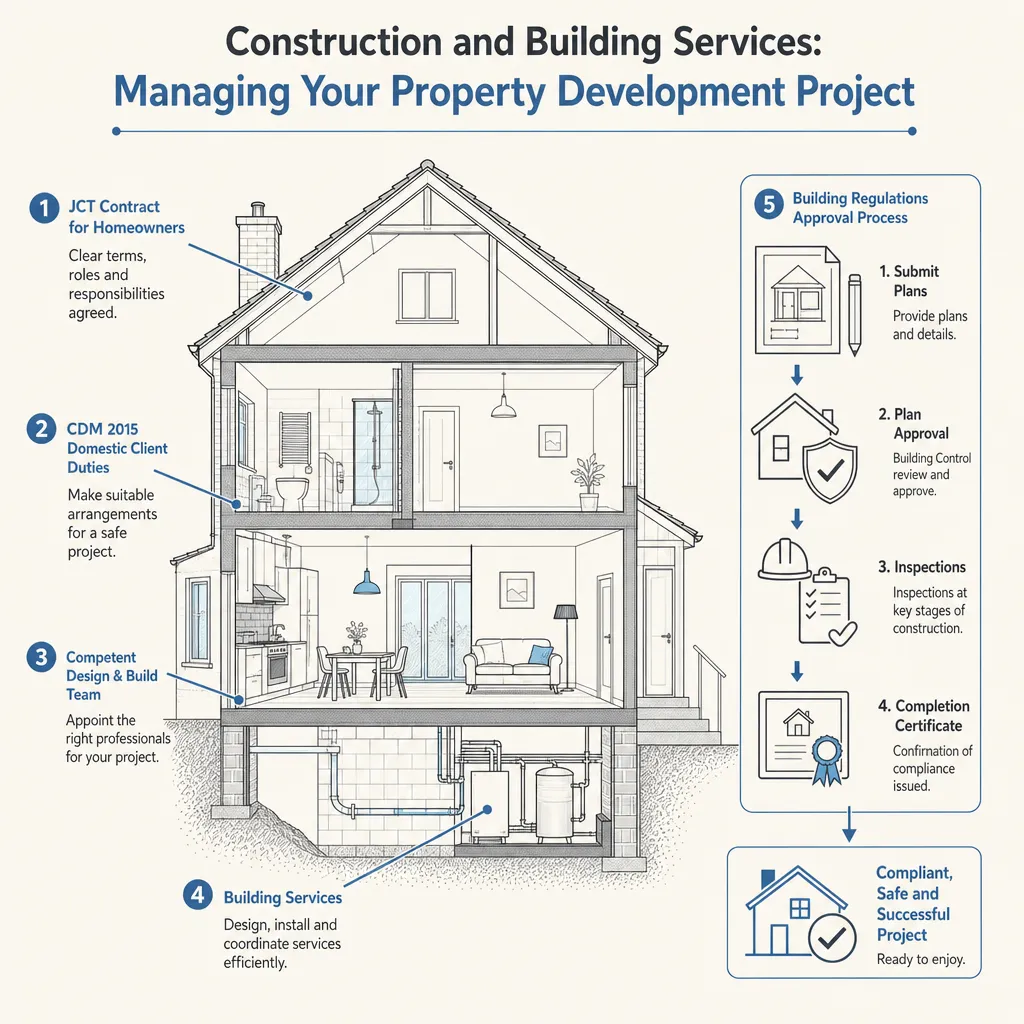
Construction and Building Services: Managing Your Property Development Project
Managing a UK property construction project requires Building Regulations approval, a written contract (ideally JCT-based), and formal appointment of a Principal Designer and Principal Contractor under CDM 2015 where two or more contractors are involved.