Construction Plant and Equipment: What Homeowners Should Know
By Housey · Last reviewed 24th of May 2026

Construction Plant and Equipment: What Homeowners Should Know
When a contractor turns up with a mini-excavator, erects scaffolding, or arranges a skip outside your house, several regulations, licences, and neighbour-relations considerations come into play — most of which are unfamiliar to homeowners until something goes wrong. Understanding what construction plant is, who is responsible for it, and what permissions may be needed can help your project run more smoothly and reduce the risk of disputes, delays, or enforcement problems.
Key points
- The Provision and Use of Work Equipment Regulations 1998 (PUWER) place legal duties on contractors to ensure all plant and machinery used on site is suitable, maintained, and operated by competent persons.
- The Lifting Operations and Lifting Equipment Regulations 1998 (LOLER) apply to all lifting equipment on site — including scaffold hoists, forklifts, and cranes — and require thorough examination at prescribed intervals.
- A skip placed on the public highway requires a permit from the local authority; this is usually obtained by the skip hire company, but confirm this when booking.
- Scaffolding that oversails or is erected on the public footpath or highway requires a licence from the local authority, typically under Section 169 of the Highways Act 1980.
- Under the Control of Pollution Act 1974, contractors must comply with Section 60 and 61 consent procedures if the local authority serves a notice regarding construction noise.
What is construction plant?
In UK construction, "plant" refers to machinery, equipment, and large tools used to carry out or support building operations. The term is distinct from "materials" (bricks, timber, glass) and "hand tools" (power drills, saws). Plant can be owned by the contractor, hired from a plant hire company, or — for specialist items — operated by a specialist subcontractor.
Common types of plant encountered on domestic projects:
Plant type | Typical use on domestic projects | Licence or permit needed? | Who typically arranges it |
|---|---|---|---|
Scaffold | Working at height: roofing, renders, extensions | Highway licence if erected over pavement or road | Scaffolding contractor |
Skip | Removing demolition waste and excavated spoil | Highway permit if placed on public road | Skip hire company (usually) |
Mini-excavator (digger) | Foundation excavation, drainage runs, groundworks | No permit for private land use | Groundworks contractor |
Mobile crane | Structural steel lifting, large prefabricated sections | Oversail licence if crane arm crosses neighbour's land | Main contractor or specialist hirer |
Concrete pump | Pouring slabs and strip foundations | No permit unless pump vehicle obstructs highway | Concrete contractor |
Scaffold hoist or materials lift | Moving materials vertically on scaffold | LOLER thorough examination required before first use | Scaffolding or main contractor |
What the regulations mean for you as the homeowner
You are unlikely to be the formal dutyholder for most health and safety legislation on your site — that responsibility typically sits with the principal contractor you appoint. However, there are practical implications for homeowners that are worth understanding before work begins.
Insurance and liability. Check that your contractor holds public liability insurance that covers all plant and machinery to be used on site. If a skip is struck by a passing vehicle, if scaffolding causes damage to a neighbouring property, or if a mini-excavator severs an underground service, the contractor's insurance should respond — but only if the policy covers the specific plant in use. Ask to see the insurance certificate and note the coverage limit and expiry date.
The Party Wall etc. Act 1996. If scaffolding, a crane arm, or other plant oversails your neighbour's property, you may need a Party Wall Agreement or a separate licence from your neighbour. This is separate from any highway licence issued by the local authority.
The Construction (Design and Management) Regulations 2015 (CDM 2015). On larger domestic projects involving more than one contractor, CDM 2015 is likely to apply. As a domestic client, most practical duties transfer to the principal contractor — but ask your contractor whether CDM 2015 applies to your project and who is taking on the role of principal designer.
Highways Act 1980, Section 59. Heavy plant vehicles on older or weaker road surfaces can damage the public highway. Under Section 59, local authorities can require a bond or agreement from haulage operators to cover road damage caused by vehicles serving the site.
Homeowner checklist: before plant arrives on site
Use this checklist before construction work begins:
When to get professional help
For small, straightforward projects — a single-storey extension with standard scaffold and a skip on the driveway — your contractor should manage all plant-related permits and compliance as a matter of course. Seek additional professional input if:
- Your project involves multiple contractors, significant lifting operations, or plant operating close to neighbouring properties or structures.
- A neighbouring property, public right of way, or listed structure may be affected by plant operations.
- You receive a Section 60 notice from the local authority regarding noise or disruption from construction plant.
- Unexpected underground services or contaminated ground are discovered during excavation.
- Your contractor cannot provide evidence of current public liability insurance or LOLER inspection certificates for any lifting equipment being used.
How Housey can help
For complex projects requiring careful coordination of site plant and logistics, Housey can connect you with experienced project managers, civil engineers, and demolition contractors who understand the regulatory landscape and can help manage plant operations safely and compliantly across the UK.
Frequently asked questions
Do I need a permit to put a skip on the road outside my house?
Yes. A skip placed on the public highway requires a permit from the local authority. Your skip hire company should obtain this as part of their service — confirm this when booking. Skips on private driveways do not need a permit, but must carry reflective markings and a flashing amber light if visible from the road at night, under the Builders' Skips (Markings) Regulations 1984.
Who is responsible if a contractor's machinery damages my neighbour's property?
Primary responsibility lies with the contractor, whose public liability insurance should cover third-party property damage. As the homeowner commissioning the work, verify that your contractor holds adequate insurance before work begins — ask to see the certificate and note the coverage limit. If damage occurs and the contractor's insurance is inadequate, you may have a claim against the contractor under contract law.
Do I need planning permission for a crane on my property?
Temporary mobile cranes used for construction generally do not require planning permission for short operational periods, as they benefit from permitted development for incidental construction activities. However, if the crane arm oversails a neighbouring property or public road, additional consents may be needed. If the crane is to remain in place for an extended period, check with your local planning authority before erection.
Sources and further reading
- PUWER 1998 — provision and use of work equipment — Health and Safety Executive
- LOLER 1998 — lifting operations and lifting equipment — Health and Safety Executive
- CDM 2015 — guidance for domestic clients — Health and Safety Executive
- Highways Act 1980 — legislation.gov.uk
- Linesearch Before U Dig — safe digging guidance — Linesearch Before U Dig
Useful next reads
 Planning & Pre-Build
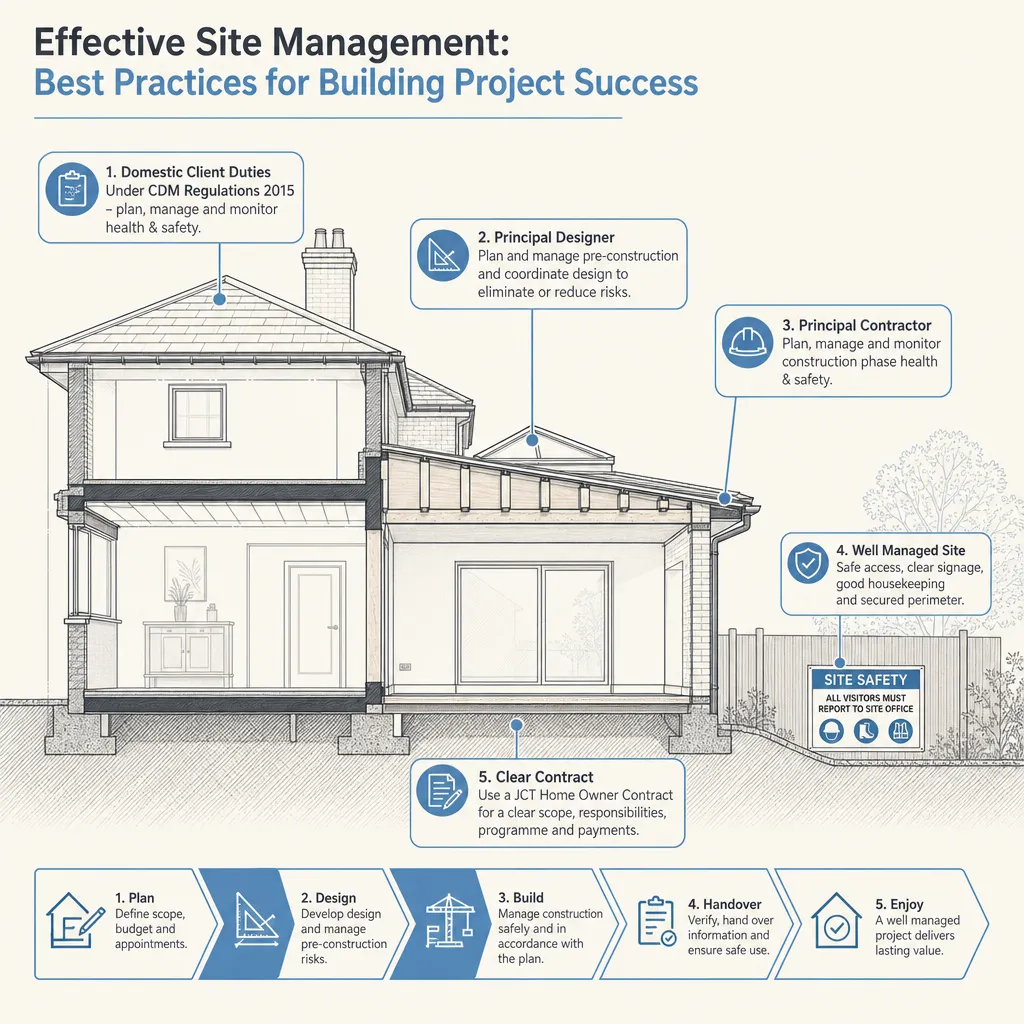
Effective Site Management: Best Practices for Building Project Success
Effective site management on a UK building project requires a clear programme, written contracts, CDM Regulations compliance, and proactive coordination between the principal contractor and all trades.
 Planning & Pre-Build
Hiring a Project Manager for Home Renovation
A project manager for home renovation coordinates contractors, manages programme and budget, and oversees quality and building control liaison on your behalf.
 Planning & Pre-Build
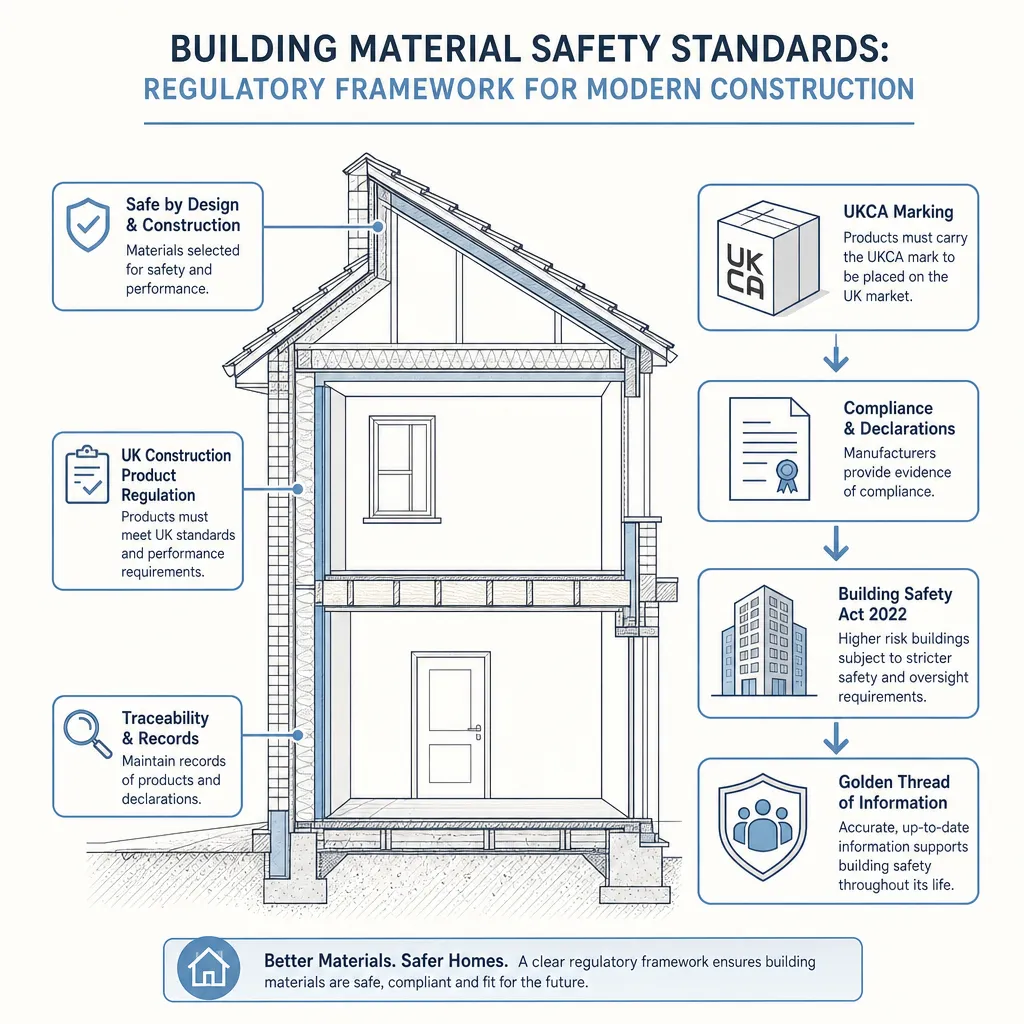
Building Material Safety Standards: Regulatory Framework for Modern Construction
UK building material safety standards are set through the Building Regulations 2010 and associated Approved Documents covering structure, fire, damp, energy, and ventilation.
 Planning & Pre-Build
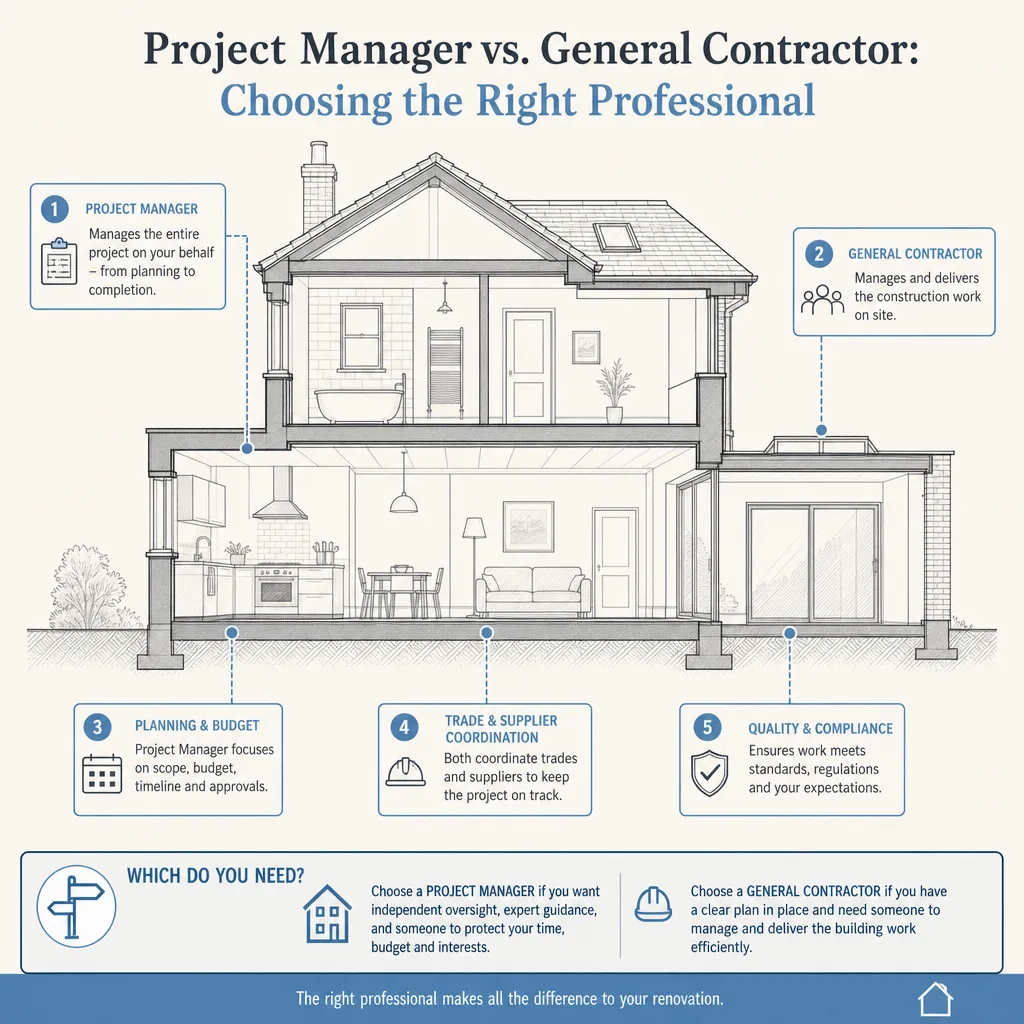
Project Manager vs. General Contractor: Choosing the Right Professional
A project manager works on your behalf to oversee programme, costs, and contractor performance — they do not carry out building work themselves.
 Planning & Pre-Build
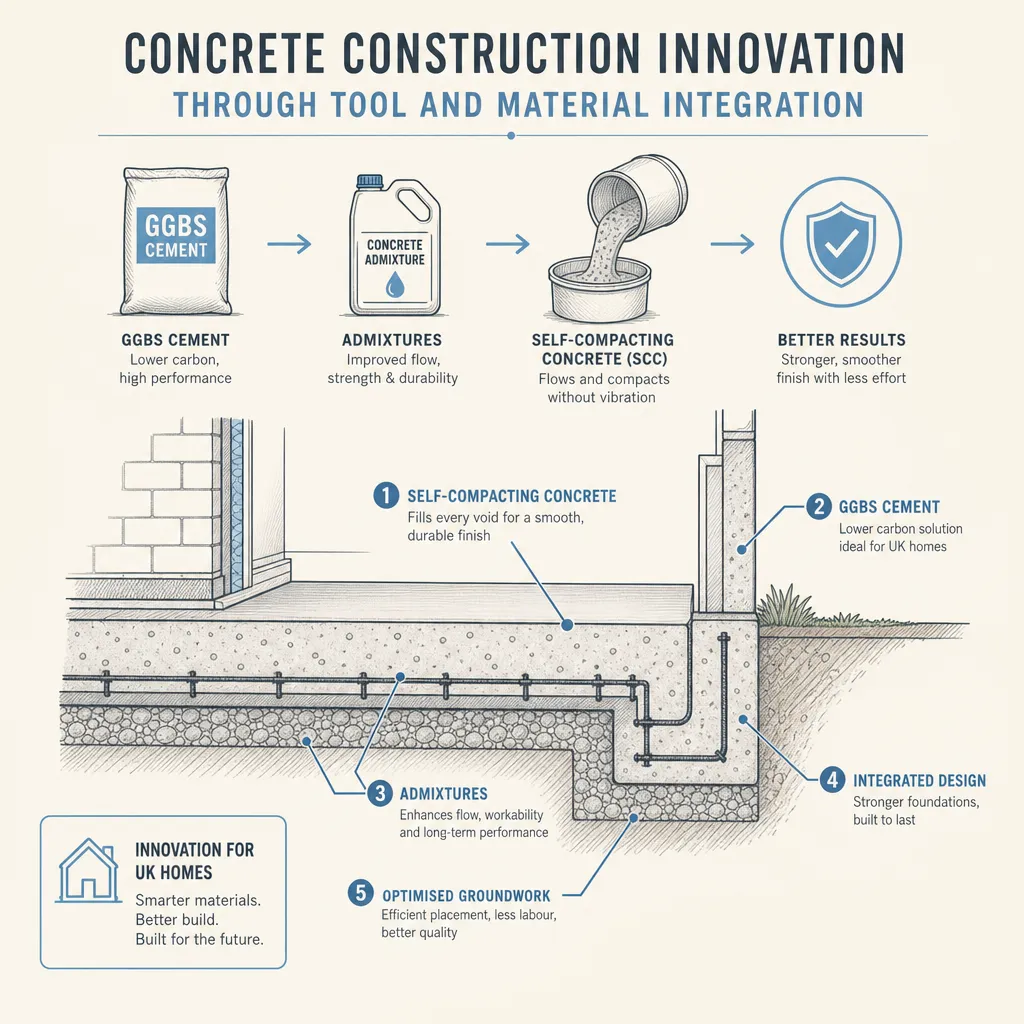
Concrete Construction Innovation Through Tool and Material Integration
Modern concrete mixes — self-compacting, fibre-reinforced, and low-carbon GGBS blends — require specific placement equipment and admixtures to perform correctly.