Architectural Services for Home Design and Development
By Housey · Last reviewed 31st of May 2026
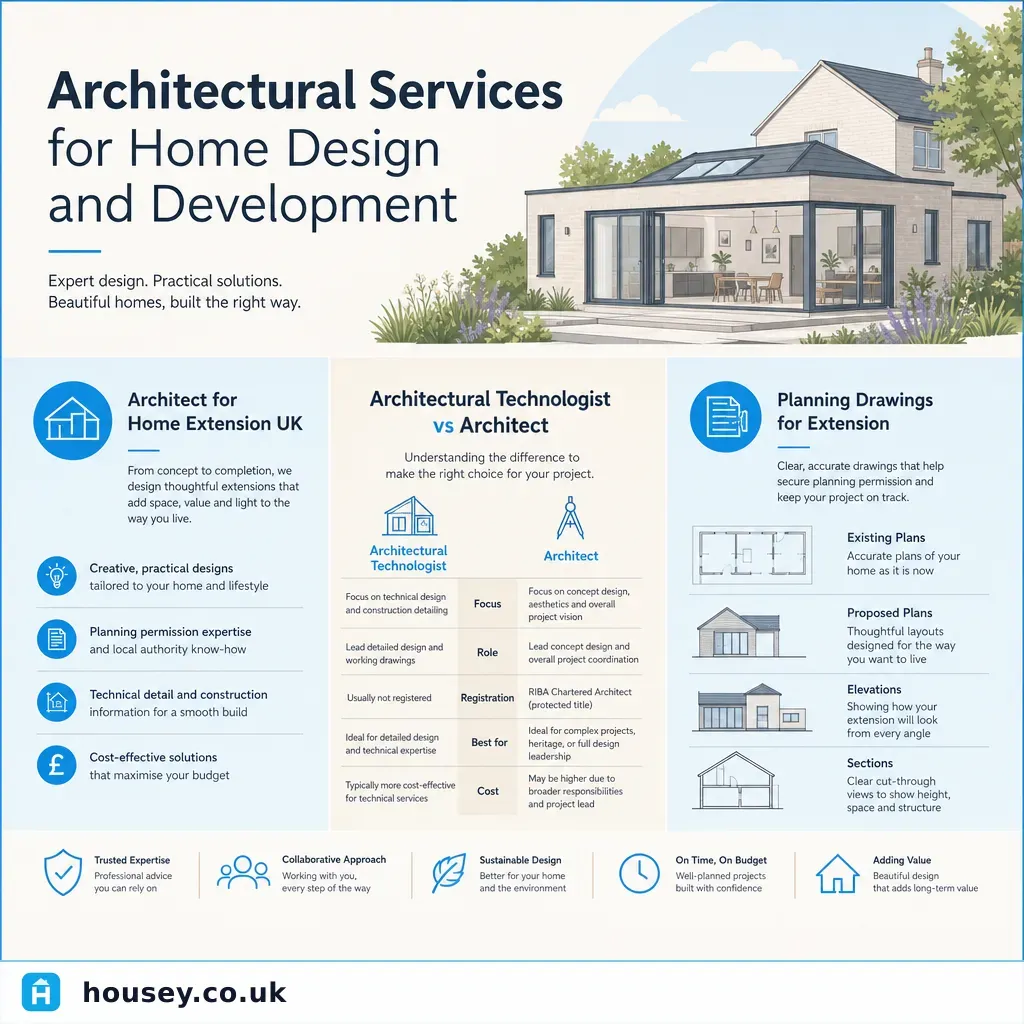
Architectural Services for Home Design and Development
Planning a home extension, loft conversion, or new-build project in the UK involves navigating design requirements, planning policy, and Building Regulations — and the right professional can make the difference between a smooth process and costly delays or refusals. Architects and architectural technologists work across every stage, from initial feasibility through to construction drawings and building control sign-off. Understanding what each type of service offers, and when you need it, helps you commission the right support at the right time and avoid paying for more — or less — expertise than your project requires.
Key points
- Architects registered with the Architects Registration Board (ARB) are the only professionals legally permitted to use the title 'architect' in the UK, under the Architects Act 1997.
- Architectural technologists holding MCIAT qualification from the Chartered Institute of Architectural Technologists (CIAT) specialise in the technical design and delivery of buildings.
- Planning applications for householder works require drawings showing existing and proposed plans, elevations, and a site location plan — these are distinct from Building Regulations drawings.
- Building Regulations drawings must show full construction details including structural elements, insulation (to Part L), drainage, ventilation, and fire safety to comply with Approved Documents.
- The RIBA Plan of Work 2020 defines seven stages (0–6); most homeowner extension and conversion projects engage professionals across stages 1 to 5.
Which architectural professional do you need?
Different professionals operate in the architectural design space, and their qualifications, scope, and typical fees vary considerably. Understanding the distinctions helps you commission the right expertise for your project.
Professional | Qualification body | Best suited to | Limitations to consider |
|---|---|---|---|
Chartered Architect | ARB (legally required); typically RIBA member | Complex projects, new builds, listed buildings, design-led work | Higher fees; may exceed what simpler projects require |
Architectural Technologist | MCIAT — CIAT | Technical design, building regulations, extensions and conversions | May not lead large complex new-build design from concept |
Architectural Designer or Draughtsperson | Unregulated; qualifications vary widely | Simple planning drawings, permitted development, small extensions | No regulated qualification; always check experience and PI insurance |
Structural Engineer | IStructE or ICE member | Structural calculations required by building control | Design role only — needed alongside an architect or technologist |
For most UK householder projects — single-storey extensions, loft conversions, garage conversions — an architectural technologist or experienced architectural designer is often sufficient for planning and technical drawings.
What does an architect or architectural technologist actually do?
The scope of service varies by project and the terms agreed at instruction, but typically includes work across several RIBA stages:
Feasibility and initial design (RIBA Stages 1–2) Reviewing your brief, site, and budget; advising on planning policy and permitted development rights; preparing sketch designs and initial layout options.
Planning application support (RIBA Stages 2–3) Preparing planning drawings (location plan, site plan, existing and proposed floor plans and elevations); writing a Design and Access Statement where required; submitting the application and liaising with the local planning authority.
Technical and Building Regulations design (RIBA Stage 4) Producing full technical drawings for Building Regulations approval; coordinating with structural engineers, mechanical and electrical consultants, and other specialists; specifying materials, insulation standards to Part L, and construction methods.
Construction support (RIBA Stage 5) Acting as contract administrator or project manager; reviewing contractor work on site; certifying payment applications; confirming practical completion.
Many homeowners use a partial service — for example, engaging a professional only for planning drawings and then managing the builder themselves. Agree the scope and deliverables clearly in writing before instructing.
Do I need an architect for planning permission?
You are not legally required to use a qualified architect to submit a planning application in England or Wales. Many homeowners use architectural technologists, experienced draughtspeople, or specialist planning consultants. However, for:
- Listed buildings (where listed building consent is needed alongside planning permission)
- Complex or contentious applications in conservation areas, greenbelts, or near sensitive sites
- New builds or substantial extensions requiring design justification
…the judgement, design skill, and professional indemnity insurance of an ARB-registered architect or MCIAT-qualified technologist is often worth the additional cost.
Permitted development rights allow certain works without planning permission, but the rules depend on property type, location, prior extensions, and whether Article 4 Directions apply locally. Always check with your local planning authority or the Planning Portal before starting work.
Decision tree: which professional do you need?
- Choose an architectural technologist (MCIAT) if your project is a straightforward extension, loft conversion, or garage conversion with no significant planning complications.
- Choose an ARB-registered architect if your project involves a listed building, conservation area, complex site, or large new build requiring design leadership.
- Instruct a structural engineer (IStructE or ICE member) alongside your architect or technologist whenever structural calculations are required by building control — this is typical for extensions removing load-bearing walls.
- Use an architectural designer or experienced draughtsperson if your budget is tight and the project is a simple permitted development addition with no planning concerns — but verify their insurance and portfolio first.
- Check with your local planning authority if you are unsure whether your project requires permission or falls within permitted development — rules can vary by property history and location.
What to ask before instructing an architectural professional
- Are you ARB-registered (architect) or MCIAT-qualified (architectural technologist), and can you provide your registration number?
- Do you hold professional indemnity (PI) insurance, and what is the level of cover?
- Have you worked on similar projects in this local planning authority area before?
- What is included in the fee — planning drawings only, Building Regulations drawings, site visits, or contract administration?
- Will you personally carry out the work, or will it be delegated to a junior member of your practice?
- What is the expected timeline from instruction to planning submission and, if applicable, to Building Regulations approval?
- How do you handle changes to the brief or unexpected planning or structural issues?
Important limitations
Planning policy, permitted development rights, and Building Regulations requirements vary significantly by local planning authority, property type, listing status, and the history of works already carried out at a property. This article is a general guide only and does not constitute planning, legal, or design advice. Before instructing a professional or starting any works, check current planning policy with your local planning authority. Rules for listed buildings, conservation areas, and areas of outstanding natural beauty are considerably more restrictive than standard residential zones.
When to get professional help
You should seek qualified design advice if:
- Your project involves removing or altering load-bearing walls, adding a storey, or significant structural change
- The property is listed or sits within a conservation area
- You have received a planning refusal and want to reapply or appeal
- Your project requires a Design and Access Statement or Heritage Statement
- You are uncertain whether your proposed works fall within permitted development
- Building Regulations approval is required — as it is for most extensions and conversions
What to ask a qualified professional
- Is this project likely to need full planning permission, or could it qualify as permitted development?
- What planning policies apply to my site — local plan allocations, conservation area appraisal, or Article 4 Directions?
- What structural input will be needed and how will that be coordinated with the design drawings?
- Will you produce both planning and Building Regulations drawings, or is the fee for one stage only?
- How will you handle the Building Regulations submission — full plans application or building notice?
- What happens procedurally if the planning application is refused?
How Housey can help
Housey connects homeowners with qualified design professionals across the full range of architectural services. You can find architects for home design projects including extensions, conversions, and new builds; architectural technologists for technical design and delivery; and specialists in building regulations drawings for projects where planning permission has already been granted.
Frequently asked questions
How much do architectural services cost in the UK?
Indicative UK costs, last reviewed 2026-05-31. For a typical single-storey extension, planning drawings may cost £800–£2,500 depending on scope and complexity. Full architectural services — covering planning through to Building Regulations and site monitoring — typically range from 5–15% of the build cost for smaller residential projects. Architectural technologists often charge lower fees than chartered architects for comparable technical work. Always request itemised, fixed-fee quotes.
What is the difference between planning drawings and building regulations drawings?
Planning drawings show what a building will look like and its impact on the surrounding area — they are reviewed by the local planning authority to assess design and planning policy compliance. Building Regulations drawings show how the building will be constructed, covering structure, insulation to Part L, drainage, fire safety, and accessibility. Both are usually required for extensions and conversions, but are prepared at different stages and submitted to different bodies.
How long does a householder planning application take?
Most householder planning applications in England are decided within 8 weeks of validation by the local planning authority. More complex applications, or those requiring wider consultation, may take 13 weeks or longer. Some authorities are slower due to workload. Your architect or technologist should advise on likely timescales based on local authority performance and the complexity of your proposal.
Can I use an architectural technologist instead of an architect?
Yes, for most residential projects. Architectural technologists hold MCIAT qualification from CIAT and are fully competent to prepare planning and Building Regulations drawings, coordinate with structural engineers, and support the construction process. The choice depends on project complexity — listed buildings, contentious planning sites, or large new builds may benefit from a chartered architect's design leadership and broader professional scope.
Sources and further reading
Useful next reads
 Planning & Pre-Build
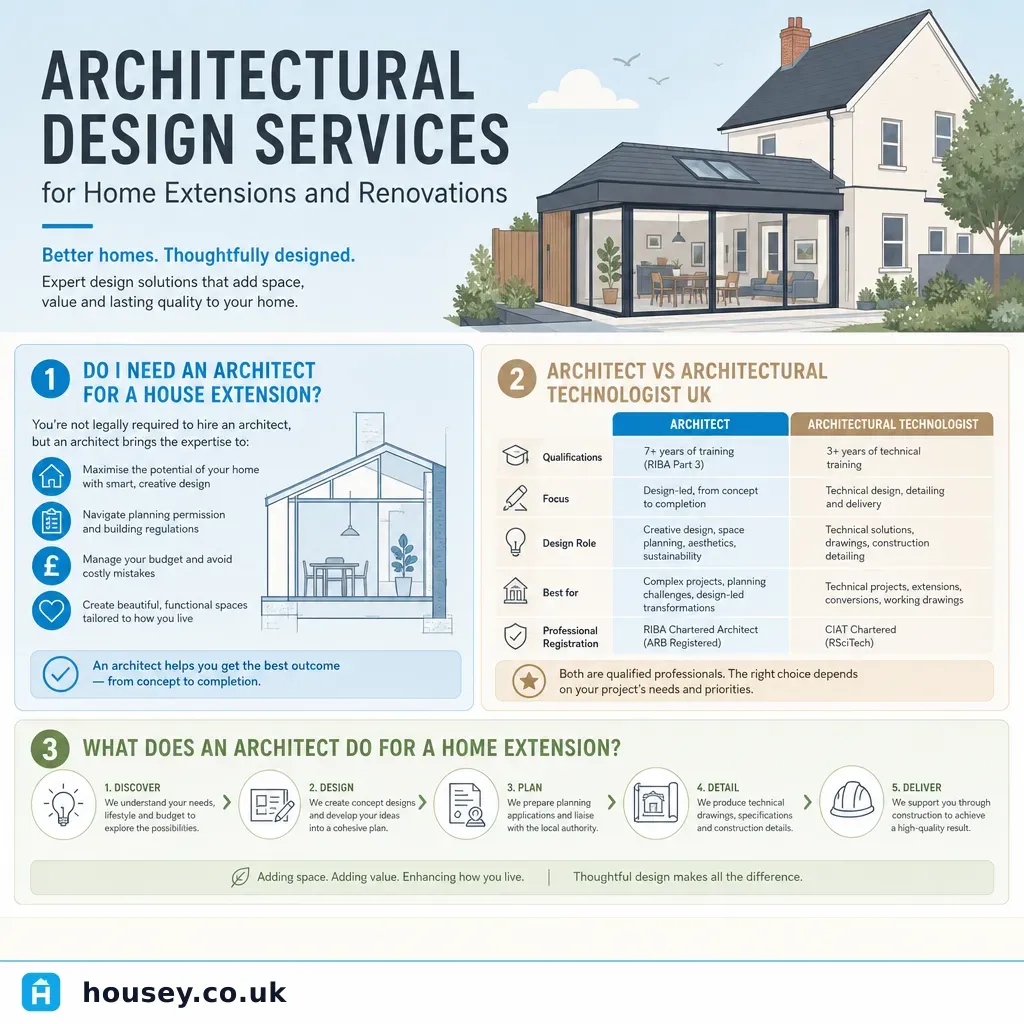
Architectural Design Services for Home Extensions and Renovations
Architectural design services for UK extensions and renovations span initial feasibility, planning drawings, building regulations packages, and site monitoring.
 Planning & Pre-Build
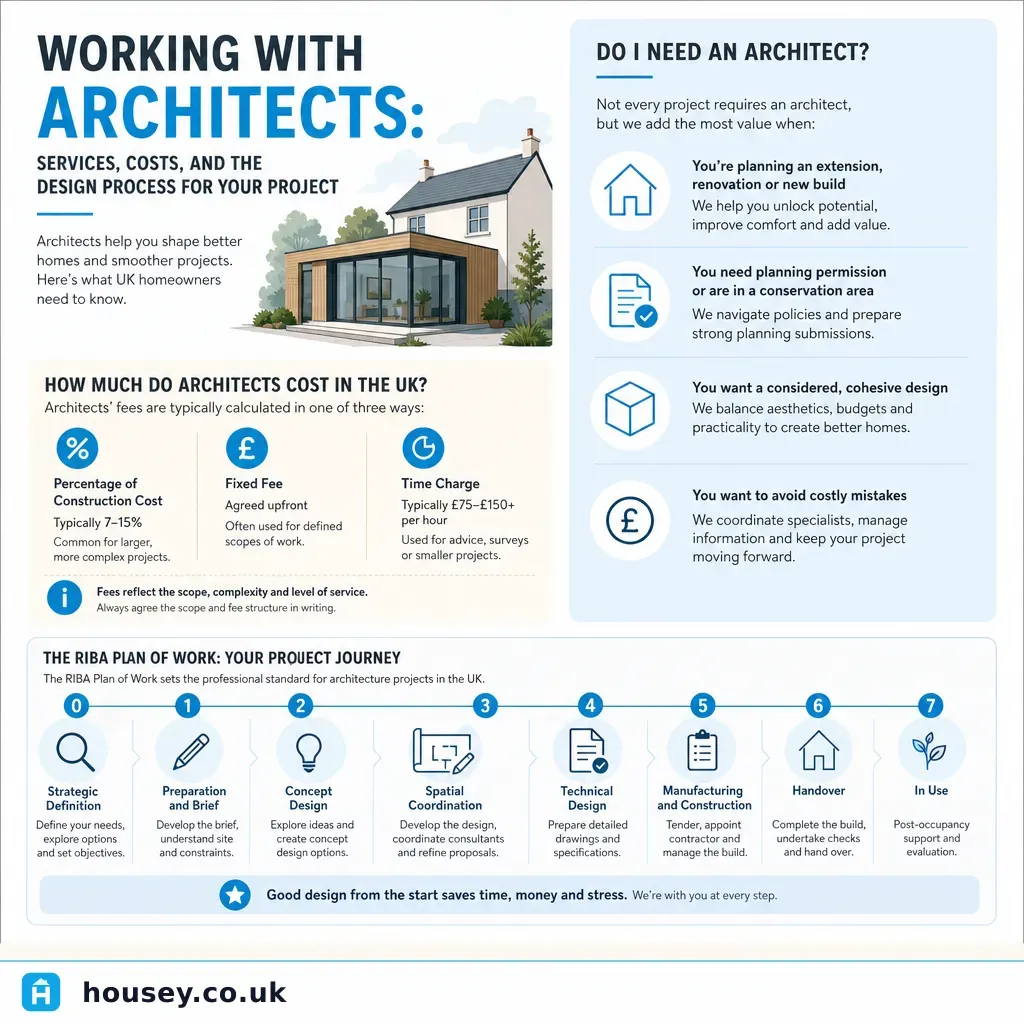
Working with Architects: Services, Costs, and the Design Process for Your Project
In the UK, the title 'architect' is legally protected under the Architects Act 1997.
 Planning & Pre-Build
Award-winning architectural homes: design inspiration from celebrated television projects
Award-winning UK residential architecture is defined by a clear design concept, quality of execution, and thoughtful response to site and context.
 Planning & Pre-Build
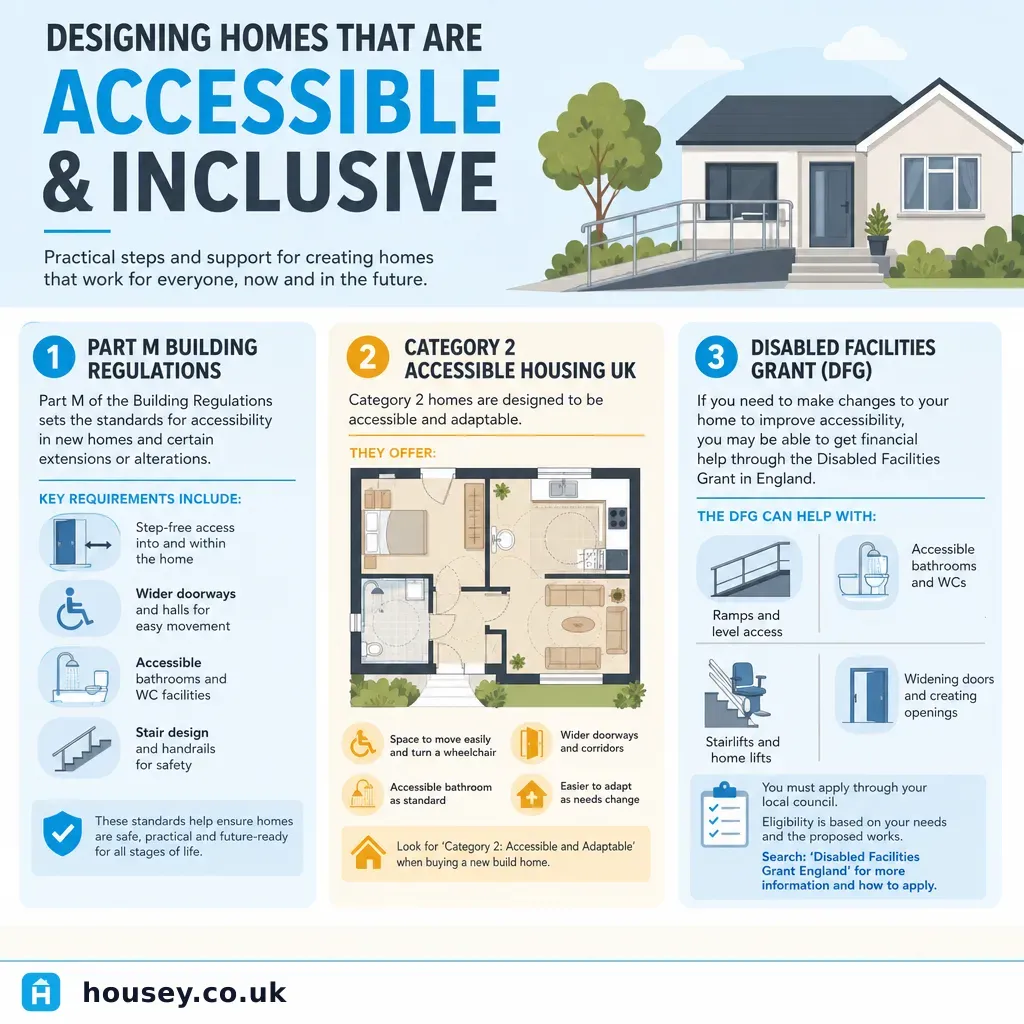
Designing Homes That Are Accessible and Inclusive
Accessible home design in the UK is guided by Building Regulations Approved Document M, which sets three standards for new dwellings: Category 1 (Visitable), Category 2 (Accessible and Adaptable), and Category 3 (Wheelchair User Dwelling).
 Planning & Pre-Build
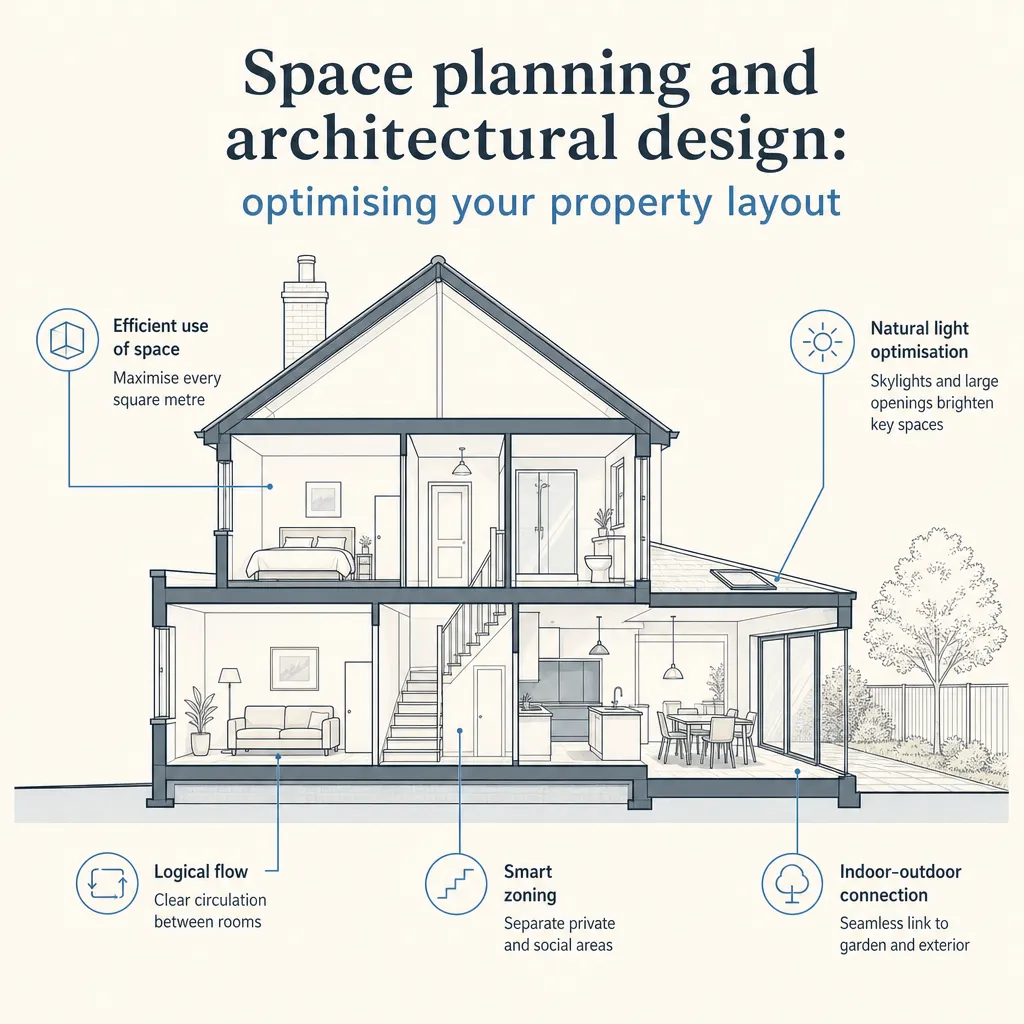
Space planning and architectural design: optimising your property layout
Space planning defines how rooms, circulation routes, and services are arranged within a property to make the best use of available area.