Space planning and architectural design: optimising your property layout
By Housey · Last reviewed 12th of May 2026
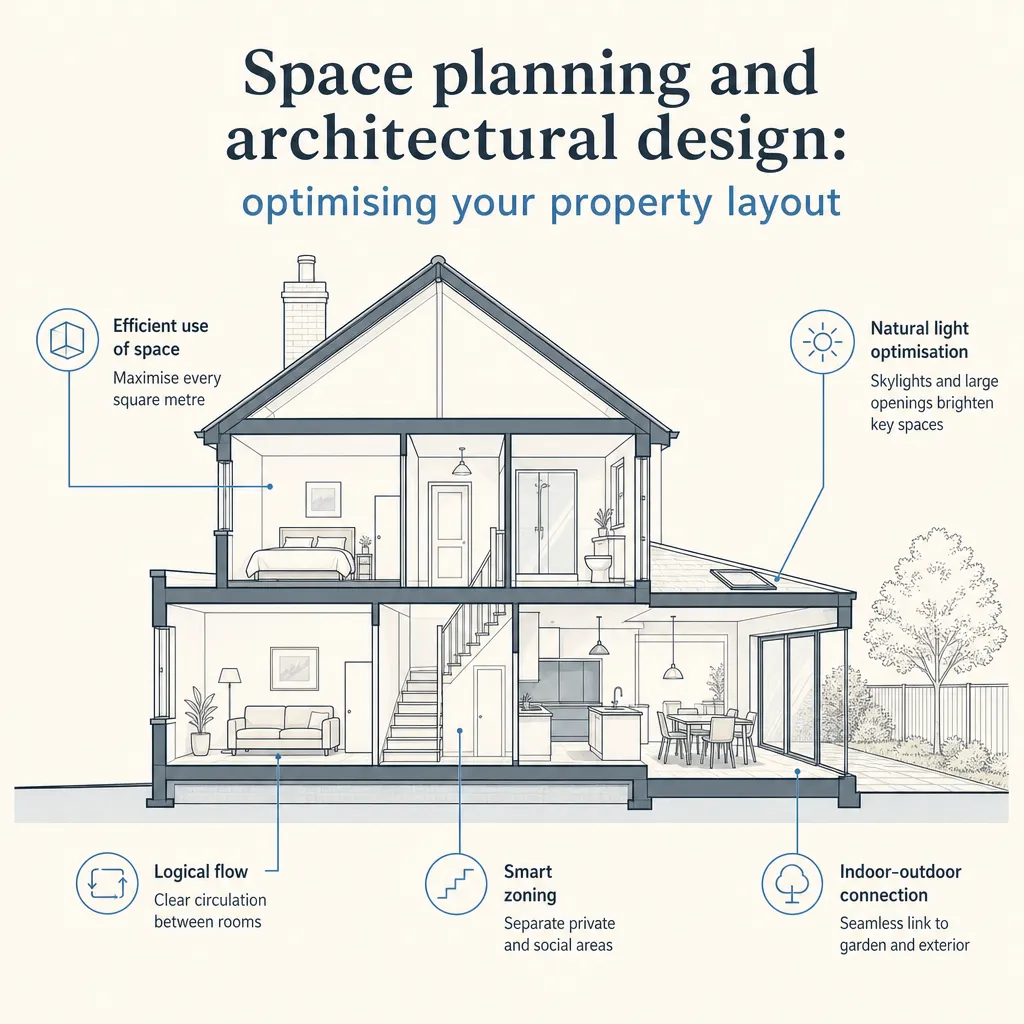
Space planning and architectural design: optimising your property layout
Before drawings are submitted or builders are engaged, the decisions about how spaces relate to one another — where rooms sit, how people move between them, where natural light enters, how services run — shape everything that follows. For UK homeowners planning an extension, loft conversion, or internal reconfiguration, investing time in space planning at the pre-design stage typically saves money and produces better results than adjusting a layout once structural work has begun.
Key points
- Architectural space planning is distinct from interior design: it defines structural arrangement, circulation routes, and spatial relationships before finishes or furniture are considered.
- Planning applications require floor plan drawings at a minimum of 1:50 scale — an architectural technologist or architect produces these as part of the design package.
- Part M of the Building Regulations (access to and use of buildings) sets minimum door width and room dimension requirements for new dwellings and material alterations, which must be incorporated at the space planning stage.
- Permitted development rights for single-storey rear extensions are subject to dimensional limits (4 m for detached houses, 3 m for other houses under the Neighbour Consultation Scheme) — space planning determines whether layout ambitions fit within these limits.
- The RIBA Plan of Work 2020 identifies space planning at Stage 2 (Concept Design) and Stage 3 (Spatial Coordination) — commissioning design input at Stage 1 (Preparation and Briefing) allows the greatest influence over the outcome at the lowest cost.
What space planning involves
Space planning at the architectural scale is not furniture arrangement. It addresses the fundamental organisation of a home:
Circulation: where corridors, staircases, and door swings sit, and whether movement through the home is efficient and intuitive for all occupants.
Adjacency: which rooms benefit from proximity (kitchen to utility, bedroom to en-suite, study to garden access) and which should be separated (home office from a noisy family room, utility from a principal bedroom).
Aspect and light: orienting principal rooms to capture the best daylight and direct sunlight; avoiding west-facing bedroom glazing that causes summer overheating.
Structural and service constraints: load-bearing walls, chimney breasts, soil stacks, and drainage runs impose fixed constraints that must be understood before a layout is proposed. These should inform the brief, not surprise the designer mid-scheme.
Future adaptability: whether spaces can accommodate home working, changing family size, or ageing in place without requiring further structural work.
Which professional do you need?
Professional | Best for | Typical deliverable | Not ideal for |
|---|---|---|---|
Architect (ARB-registered) | Complex briefs, listed buildings, sensitive sites, full RIBA service | Planning and Building Regulations drawings, contract administration | Small-scope projects where cost is the primary constraint |
Architectural technologist (MCIAT) | Technical design, Building Regulations compliance, extensions, loft conversions | Planning and BR drawings, specifications | Projects needing creative concept design leadership |
Interior designer (spatial focus) | Internal reconfiguration without structural changes | Proposed layouts, furniture plans, room data sheets | Planning applications, structural alterations |
Design-and-build firm | Integrated design and construction for defined-scope projects | Design, planning, build package | Clients who want independent design followed by a separate competitive tender |
Decision tree: which approach suits your project?
- Choose an architect if the project involves a listed building, conservation area, multi-storey extension, or you want creative design led from brief through to completion.
- Choose an architectural technologist if the project is a standard extension, loft conversion, or internal remodel where technical execution and regulatory compliance are the priority.
- Choose a design-and-build firm if you want a single point of accountability for design and construction and the project scope is reasonably well defined from the outset.
- Start with a spatial interior designer if the work involves internal reconfiguration only — no structural changes, no planning permission required — and the focus is layout and livability.
- Consult your local planning authority (LPA) first if the property is listed, in a conservation area, or if previous extensions may have used up permitted development allowances — space planning options depend on what is actually permissible.
How to write an effective design brief
A well-prepared brief reduces design fees by cutting iterations, avoids late-stage changes, and produces a space plan that fits how you actually live. Include:
- Number and type of rooms needed, with any specific dimensional requirements
- How you currently use the property versus how you want to use it after the works
- Constraints: budget ceiling, planning sensitivity, structural elements to retain or remove
- Lifestyle factors: working from home, frequent entertaining, accessibility requirements, children or elderly relatives in the household
- Programme: target start date and any fixed deadlines such as lease events or school years
What to ask before appointing a space planning professional
- Are you ARB-registered, MCIAT-accredited, or a member of a relevant professional body?
- What proportion of your work is residential, and can you provide references from comparable projects?
- What does your fee cover — concept sketches only, or through to planning submission and Building Regulations drawings?
- Will you check permitted development limits and planning policy constraints before proposing a layout?
- If structural input is required, is a separate structural engineer fee involved, and how is that coordinated?
- How many design iterations are included in your fee, and what is the process for changes outside that scope?
- Do you hold professional indemnity insurance, and to what level of cover?
Common space planning mistakes in UK homes
- Designing before checking structural constraints: moving a load-bearing wall or chimney breast carries cost and programme implications that affect whether a preferred layout is viable at all. A structural engineer's view should inform the brief, not follow it.
- Ignoring planning history: a previous extension may have used the property's permitted development allowances. Adding further space may require a full planning application — the brief should reflect what is actually permissible.
- Trading circulation space for extra floor area: corridors and door swings that are too narrow produce homes that feel cramped and are difficult to furnish, regardless of total square metreage.
- Underinvesting in the brief stage: a half-day with a professional at RIBA Stage 1 often prevents weeks of redesign later in the process.
- Overlooking Part M dimensions: minimum door widths (775 mm clear opening for accessible design under M4(2)), wheelchair turning circles, and level threshold requirements for new dwellings must be built into the space plan from the outset, not retrofitted onto finished drawings.
When to get professional help
Space planning for any project involving structural alterations, planning permission, or Building Regulations compliance should always involve a qualified professional. Specifically:
- Any project requiring walls to be removed or relocated — structural assessment is needed before the layout can be fixed
- Properties that are listed or in a conservation area — listed building consent and conservation area consent carry requirements beyond standard planning
- Extensions or conversions that exceed permitted development limits
- New dwellings or conversions where Part B (fire safety), Part K (protection from falling), Part L (energy efficiency), and Part M (access) all apply from the design outset
How Housey can help
Whether you are planning a modest internal reconfiguration or a substantial extension, our architectural technologists can translate your brief into compliant, buildable drawings. Our design-and-build firms offer integrated design and construction packages for homeowners who want a single point of accountability from concept through to completion.
Frequently asked questions
Do I need an architect for an extension or loft conversion in the UK?
You are not legally required to use an ARB-registered architect. The work can be designed by an architectural technologist, a technician, or in some cases a contractor. However, planning applications and Building Regulations submissions require professional-quality drawings at the correct scale and with required technical content. An ARB architect or MCIAT architectural technologist can produce these.
How much do architectural space planning services cost?
Design fees for a typical extension or loft conversion — from planning through to Building Regulations drawings — typically range from £2,000–£8,000 depending on size, complexity, and scope of service. Space planning-only services (layout options without a full drawings package) may range from £500–£2,000 for a residential project. Always clarify what is and is not included. Indicative UK costs, last reviewed 2026-05-12.
What is the difference between planning drawings and Building Regulations drawings?
Planning drawings show the proposed appearance and layout for planning consent — typically at 1:100 or 1:50 scale with limited technical detail. Building Regulations drawings (working drawings) show the construction specification: structural elements, insulation, fire compartmentation, drainage, and other technical information required for building control approval. Both sets are usually needed for extension projects.
How long does the space planning and design process take?
A concept space plan for a standard extension may be produced within one to two weeks of an initial brief meeting. Full planning drawings typically take two to four weeks to prepare. A householder planning application is decided within eight weeks. Factor in time for structural input and design revisions when planning your overall programme.
Sources and further reading
- Planning Portal: householder permitted development guidance — Planning Portal / GOV.UK
- RIBA Plan of Work 2020 — Royal Institute of British Architects
- Approved Document M: Access to and use of buildings — GOV.UK
- ARB: find a registered architect — Architects Registration Board
- CIAT: find a chartered architectural technologist — Chartered Institute of Architectural Technologists
Useful next reads
 Planning & Pre-Build
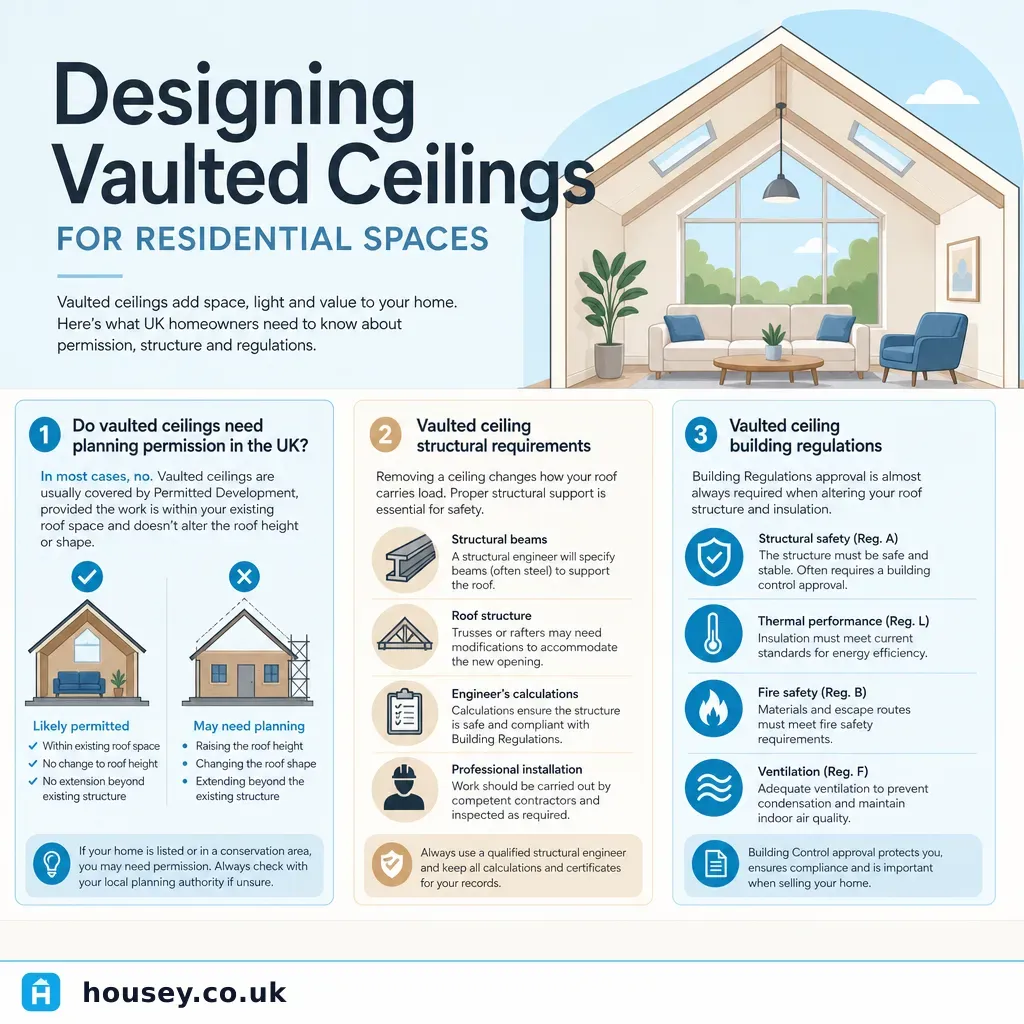
Designing vaulted ceilings for residential spaces
Creating a vaulted ceiling in an existing home involves restructuring the roof timbers that form the structural triangle, which always requires a structural engineer's calculations and Building Regulations approval under Approved Document A.
 Planning & Pre-Build
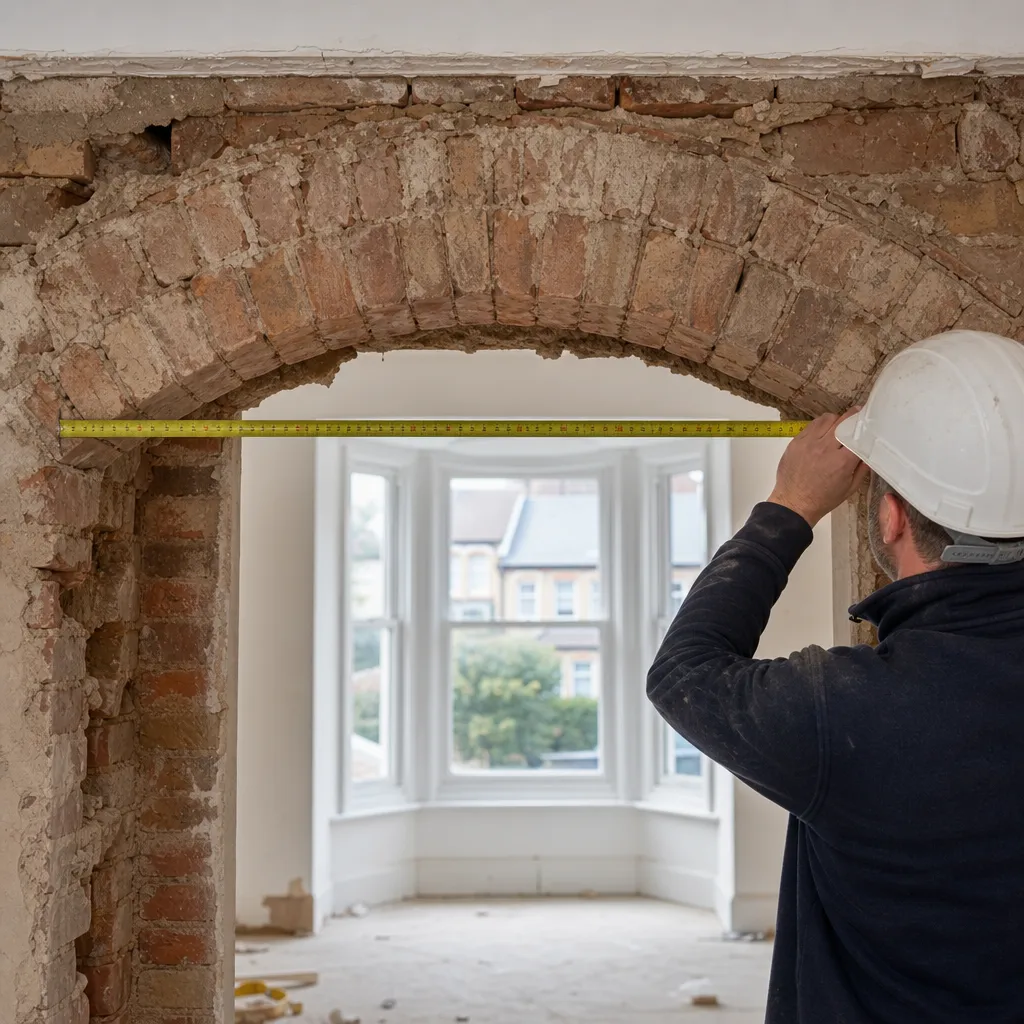
Structural Arching in Walls: Load Distribution and Design
Structural arching occurs when masonry redistributes compressive loads in a triangular or parabolic path around an opening, reducing the load on the lintel below.
 Planning & Pre-Build
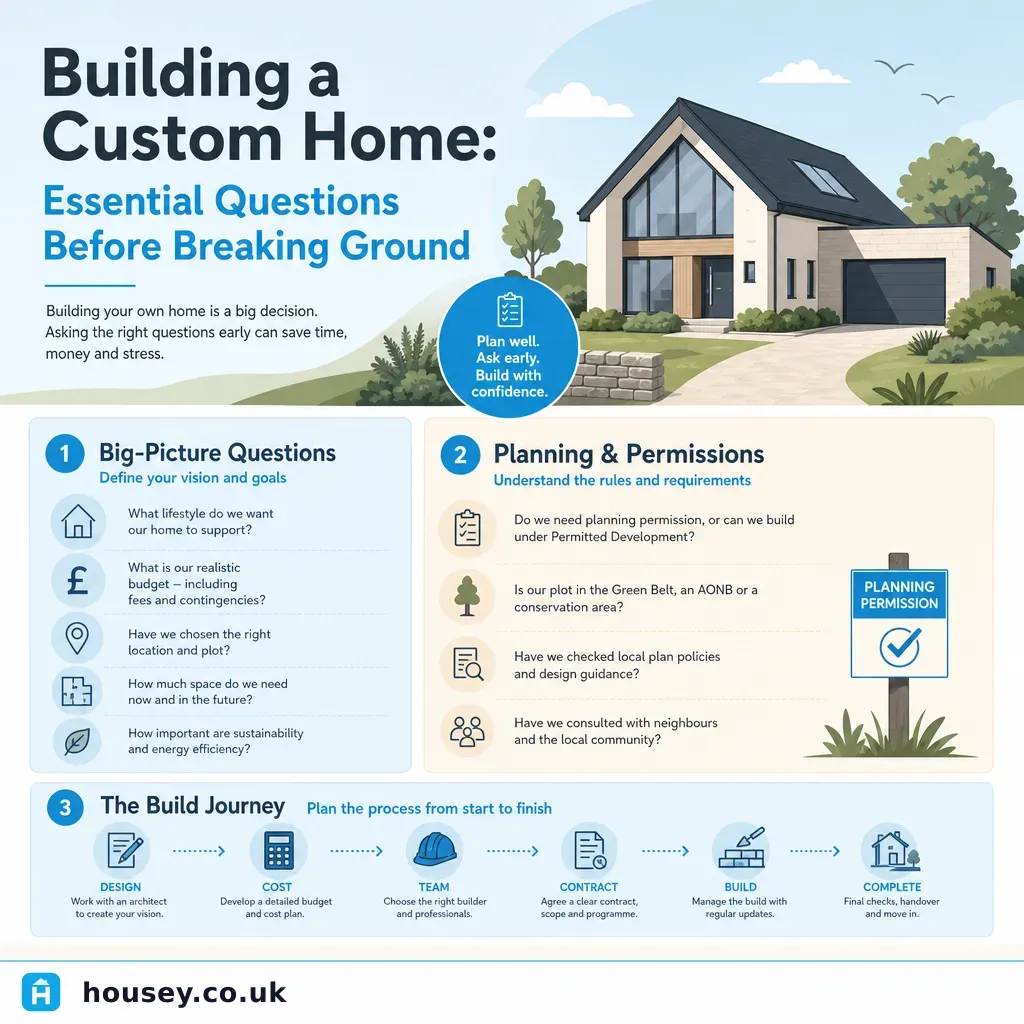
Building a Custom Home: Essential Questions Before Breaking Ground
Building a custom home in the UK requires planning permission, separate Building Regulations approval, and a professional team typically including an architect or architectural technologist, structural engineer, and building control body.
 Planning & Pre-Build
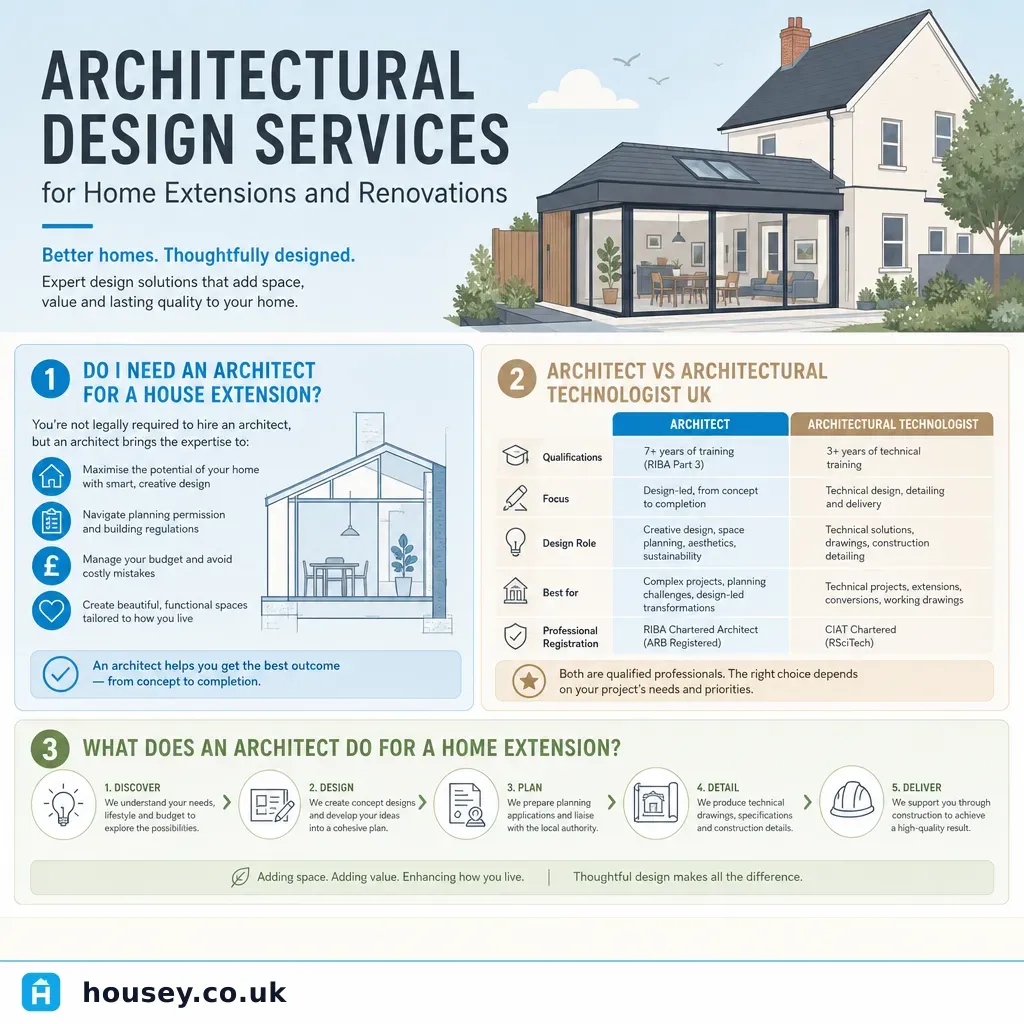
Architectural Design Services for Home Extensions and Renovations
Architectural design services for UK extensions and renovations span initial feasibility, planning drawings, building regulations packages, and site monitoring.
 Planning & Pre-Build
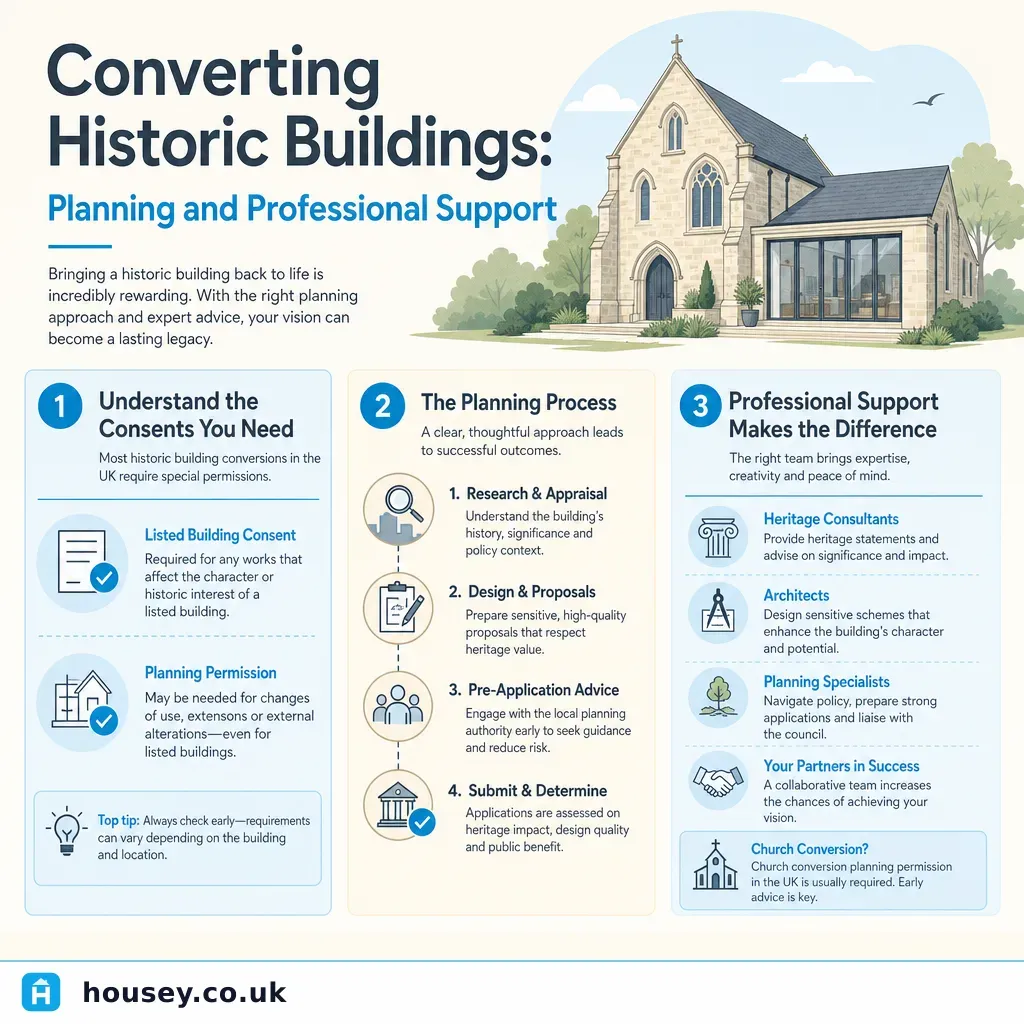
Converting Historic Buildings: Planning and Professional Support
Converting a historic or listed building in the UK requires Listed Building Consent in addition to planning permission, both granted by the local planning authority.