Working with Architects: Services, Costs, and the Design Process for Your Project
By Housey · Last reviewed 18th of May 2026
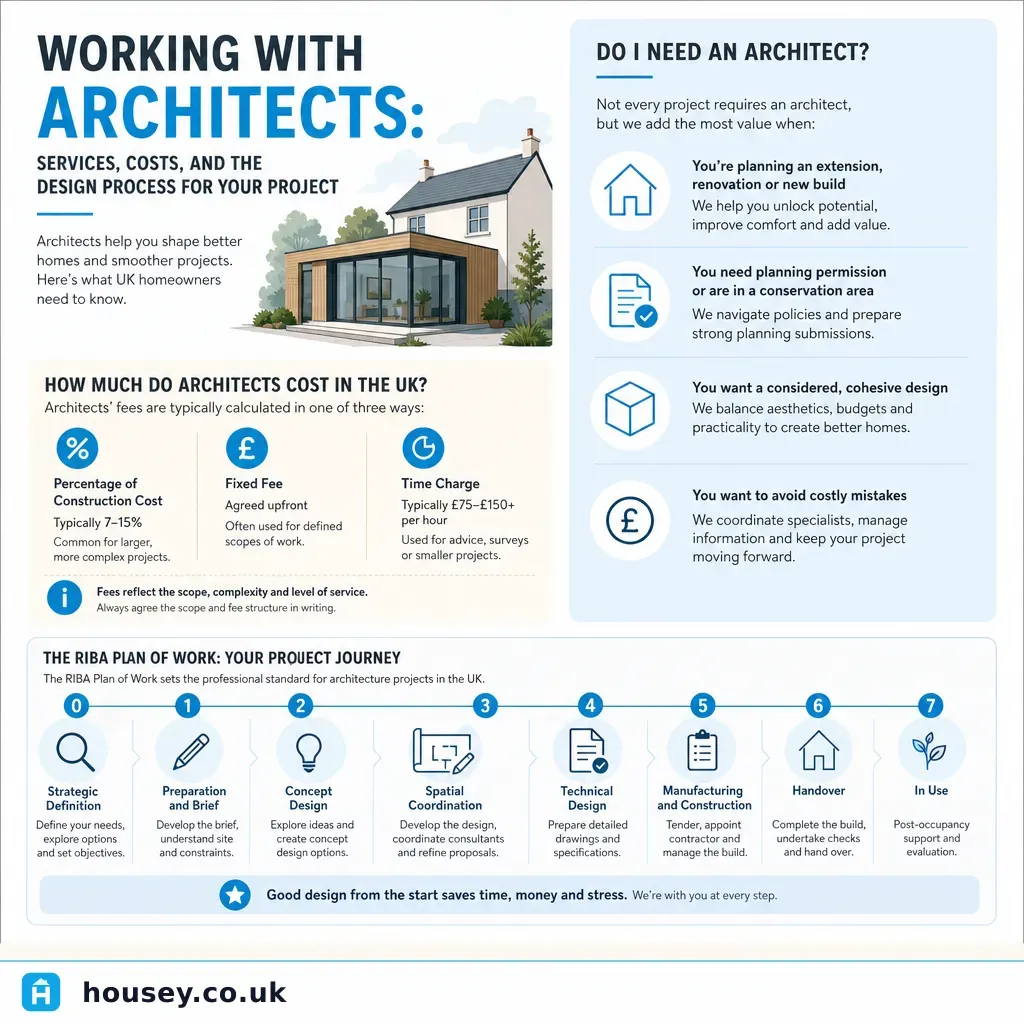
Working with Architects: Services, Costs, and the Design Process for Your Project
Planning a significant home project — whether an extension, loft conversion, or new build — often raises the question of whether to bring in an architect and what that actually involves. The answer depends on project scale and complexity, the level of planning and regulatory oversight required, and how much design input you need. Getting this decision right before work starts can affect both the quality of the outcome and your overall budget.
Key points
- The title "architect" is legally protected in the UK: anyone using it must be registered with the Architects Registration Board (ARB) under the Architects Act 1997.
- The RIBA Plan of Work 2020 defines eight stages (0–7) from strategic definition through to building occupation — most residential projects engage an architect across Stages 1 to 5.
- Architects typically charge 5–15% of the construction cost for a full-service commission, though fixed or stage-based fees are common for smaller domestic projects.
- A Design and Access Statement is required with most major planning applications and many householder applications in sensitive areas such as conservation areas or World Heritage Sites.
- Under the Building Safety Act 2022, a Principal Designer must be appointed for higher-risk buildings above 18 metres or seven storeys — a role architects may fulfil if appropriately qualified.
Do you need an architect, or will another professional do?
Not every building project requires a fully registered architect. A range of professionals can prepare drawings and support planning applications, each with different qualifications and scopes of work.
Professional | Qualification body | Best for | Not ideal for |
|---|---|---|---|
Registered architect | ARB (mandatory); RIBA (voluntary) | Complex, bespoke, or large projects; sensitive and listed sites; full design service | Small, straightforward extensions where budget is tight |
Architectural technologist | CIAT | Technical design, building regulations drawings, standard residential work | Highly creative or concept-led briefs |
Architectural designer / technician | No protected title | Routine householder extensions; planning drawings only | Projects requiring a full design service or specialist input |
Structural engineer | IStructE or ICE | Structural calculations, beam sizing, foundation design | Design and planning work beyond structural scope |
For a straightforward rear extension on a 1990s estate house, an architectural technologist or designer may be sufficient. For a bespoke listed building conversion, a registered architect with heritage experience is likely worth the additional cost.
Which professional should you choose?
- Choose a registered architect if your project is complex, bespoke, involves a sensitive or listed site, or you want a full design and contract administration service.
- Choose a CIAT-qualified architectural technologist if your priority is technical accuracy and building regulations compliance on a standard domestic project.
- Choose an architectural designer if your scope is limited to planning drawings for a routine householder application and budget is a key constraint.
- Ask your local planning authority (LPA) whether your site has specific design requirements — such as a conservation area character appraisal or a local design code — before appointing anyone.
- Consult a structural engineer separately for any element requiring structural calculations; most architects subcontract this or can recommend one.
What does an architect do? The RIBA Plan of Work stages
The RIBA Plan of Work 2020 is the standard project framework in the UK. For residential extensions and renovations, the stages most relevant to homeowners are:
Stage 1 — Preparation and Briefing: The architect visits the site, takes measured surveys, and agrees the project brief. They will identify planning constraints, permitted development rights, and any listed building or conservation area considerations.
Stage 2 — Concept Design: Initial design options are developed and presented. Spatial layouts, appearance, and key design decisions are agreed. Indicative costs may be prepared at this stage.
Stage 3 — Spatial Coordination: The design is developed and coordinated with structural and services engineers. The planning application package — including drawings, design and access statement, and supporting documents — is typically prepared at this stage.
Stage 4 — Technical Design: Detailed construction drawings and specifications are produced for building regulations approval and tendering to contractors.
Stage 5 — Manufacturing and Construction: The architect may administer the building contract, inspect works on site, certify contractor payments, and manage practical completion.
Many homeowners engage architects for Stages 1–3 only and then either proceed without ongoing design services or reappoint for technical design and construction. Clarify the agreed scope in writing before signing a fee agreement.
How much does an architect cost?
Architect fees vary by project type, complexity, location, and scope of service. The figures below are indicative only.
Indicative UK costs, last reviewed 2026-05-18. Obtain at least two to three quotes; fees vary significantly by region, project complexity, and scope.
Service scope | Typical fee basis | Indicative range |
|---|---|---|
Feasibility or initial consultation | Fixed fee | £300–£1,500 |
Planning drawings only (Stages 1–3) | Fixed fee or percentage | £2,000–£8,000 for a typical extension |
Full service to planning (Stages 1–3) | Percentage of construction cost | 5–8% |
Full service including contract administration (Stages 1–5) | Percentage of construction cost | 8–15% |
Listed building or heritage projects | Percentage with specialist uplift | 12–20%+ |
Fees in London and the South East are typically higher than in other UK regions. VAT at 20% applies to architect fees.
What to ask before accepting a quote
- What RIBA Plan of Work stages are included in the fee, and which are excluded?
- Who will carry out the work — the named architect or a junior team member?
- What professional indemnity insurance do you hold, and what is the limit of indemnity?
- What structural, mechanical, or specialist consultants are included, and what are their fees?
- Are planning application fees and building regulations fees included in the quoted price?
- Is VAT included?
- What happens if a planning application is refused — is a resubmission included in the fee?
- What deliverables (drawings, specifications, reports) will I receive at each stage?
What not to assume
Planning permission is not guaranteed. An architect can prepare a well-presented application, but approval rests with the LPA. Pre-application advice from the LPA is worth the cost on sensitive or unusual proposals.
Building regulations approval is not automatic. Planning permission and building regulations approval are separate consents. Budget for a full plans application or building control inspector on any notifiable building work.
Permitted development rights may not apply. These rights can be removed by an Article 4 Direction, may not apply in certain designated areas, or may have been used by previous owners. Always verify with the LPA before assuming no planning application is required.
The architect does not automatically manage the contractor. Contract administration is a separate scope of service. If you appoint an architect only to planning stage, you will need to manage the build yourself or appoint a project manager for the construction phase.
When to get professional help
Most projects involving planning applications, building regulations, structural alterations, or heritage constraints benefit from professional design input from the outset. Seek advice early if:
- Your property is listed or located in a conservation area.
- The project involves removing or altering structural walls, roof structures, or foundations.
- You are planning a change of use — for example, converting a garage or commercial building to residential.
- The property is in a flood zone, on a contaminated site, or subject to a restrictive covenant.
- You have received an enforcement notice or pre-application refusal from the LPA.
How Housey can help
If you are ready to discuss your project with a qualified professional, Housey can connect you with registered architects and architectural designers working on domestic projects across the UK. Compare approaches and fee proposals before committing to a design appointment.
Frequently asked questions
Do I need an architect for a house extension in the UK?
You are not legally required to use a registered architect for a house extension. An architectural technologist or experienced designer can prepare planning drawings for standard domestic projects. However, for complex, unusual, or listed buildings, or where you want a full design and contract administration service, a registered architect adds significant value and professional accountability.
How long does the architectural design process take?
For a typical domestic extension, Stages 1–3 of the RIBA Plan of Work (up to planning application submission) usually take 6–14 weeks, depending on complexity and decision-making pace. Planning determination takes a further 8 weeks for most householder applications. Building regulations approval and technical design add further time before a contractor can start on site.
What is the difference between a planning drawing and a building regulations drawing?
Planning drawings show the proposed design and appearance in enough detail for the LPA to assess neighbourhood impact. Building regulations drawings are more detailed technical documents covering construction methods, insulation, fire safety, and structural elements — sufficient for a contractor to price and build from. Both are typically required for any significant project.
Can an architect act as Principal Designer under the Building Safety Act 2022?
Yes, if they hold the appropriate competence. The Principal Designer under the Building Safety Act 2022 coordinates building safety during design, and is distinct from — though may overlap with — the CDM Principal Designer role. If your project is a higher-risk building (above 18 metres or seven storeys with two or more dwellings), check that your architect can evidence the required competence for this role.
Sources and further reading
- Architects Registration Board — statutory register of architects in the UK
- RIBA Plan of Work 2020 — Royal Institute of British Architects
- Planning Portal — house extensions — Planning Portal
- Building Safety Act 2022 — legislation.gov.uk
Useful next reads
 Planning & Pre-Build
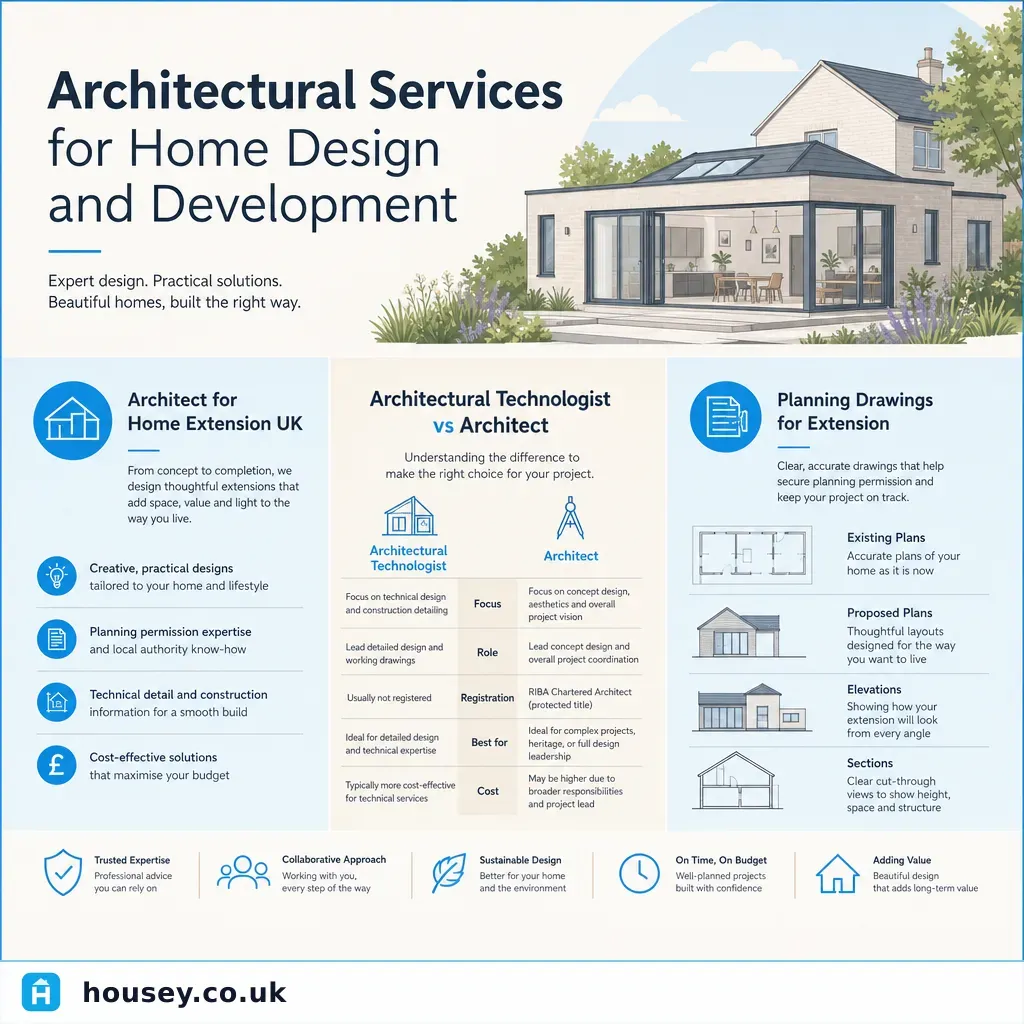
Architectural Services for Home Design and Development
Architects and architectural technologists handle design, planning applications, and building regulations drawings for UK home projects.
 Planning & Pre-Build
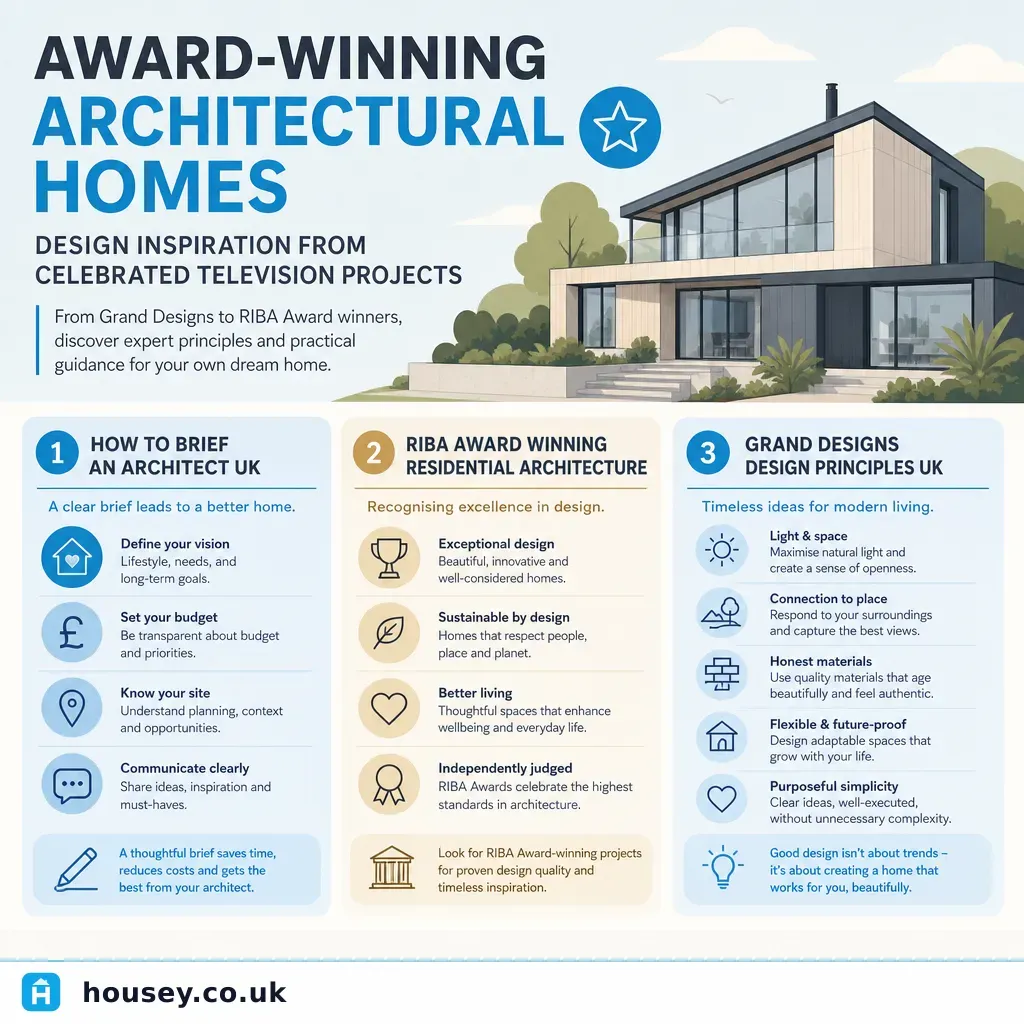
Award-winning architectural homes: design inspiration from celebrated television projects
Award-winning UK residential architecture is defined by a clear design concept, quality of execution, and thoughtful response to site and context.
 Planning & Pre-Build
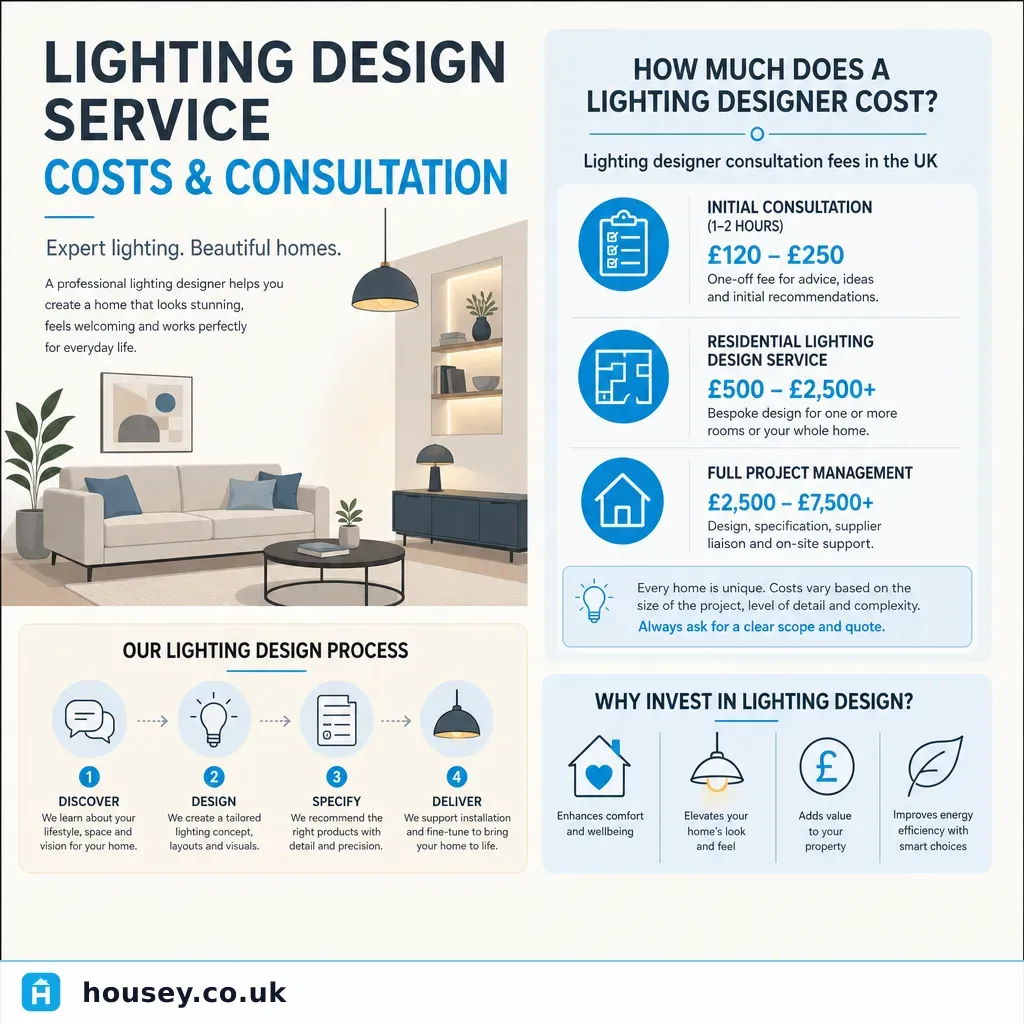
Lighting Design Service Costs and Consultation
A lighting designer in the UK typically charges £60–£120 per hour, with full residential schemes ranging from £500 to £5,000 or more depending on property size and scope.
 Planning & Pre-Build
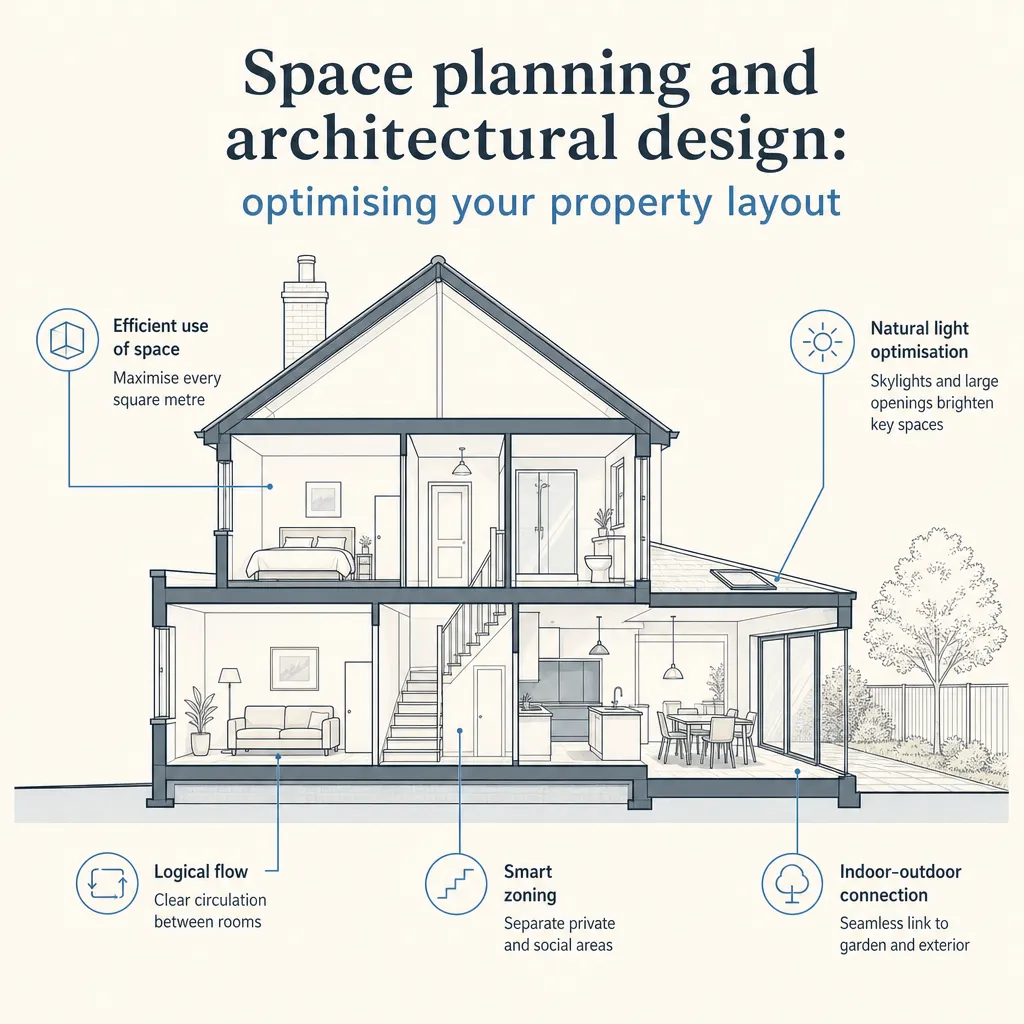
Space planning and architectural design: optimising your property layout
Space planning defines how rooms, circulation routes, and services are arranged within a property to make the best use of available area.
 Planning & Pre-Build
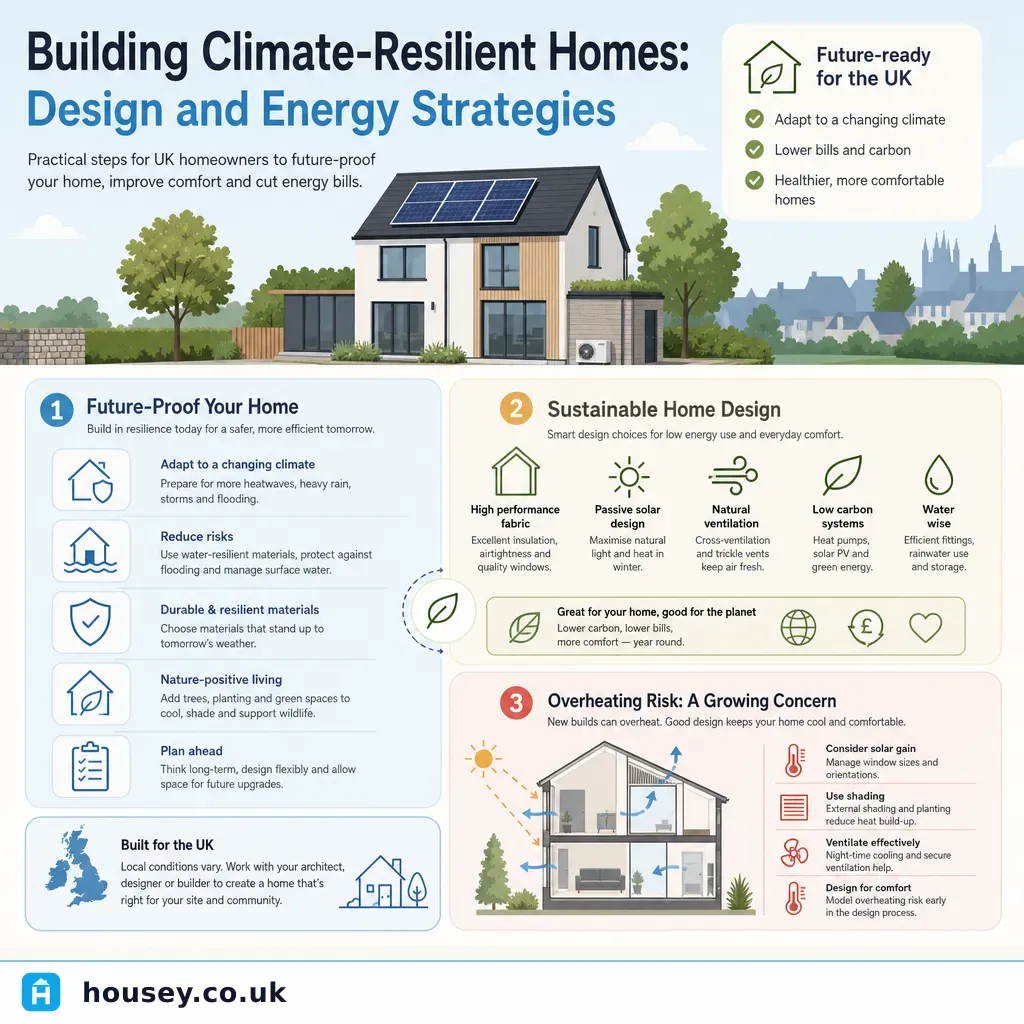
Building Climate-Resilient Homes: Design and Energy Strategies
A climate-resilient UK home handles hotter summers, wetter winters, and rising energy costs through high-performance insulation, overheating mitigation, flood-resilient construction, low-carbon heating, and good water management.