Award-winning architectural homes: design inspiration from celebrated television projects
By Housey · Last reviewed 7th of May 2026
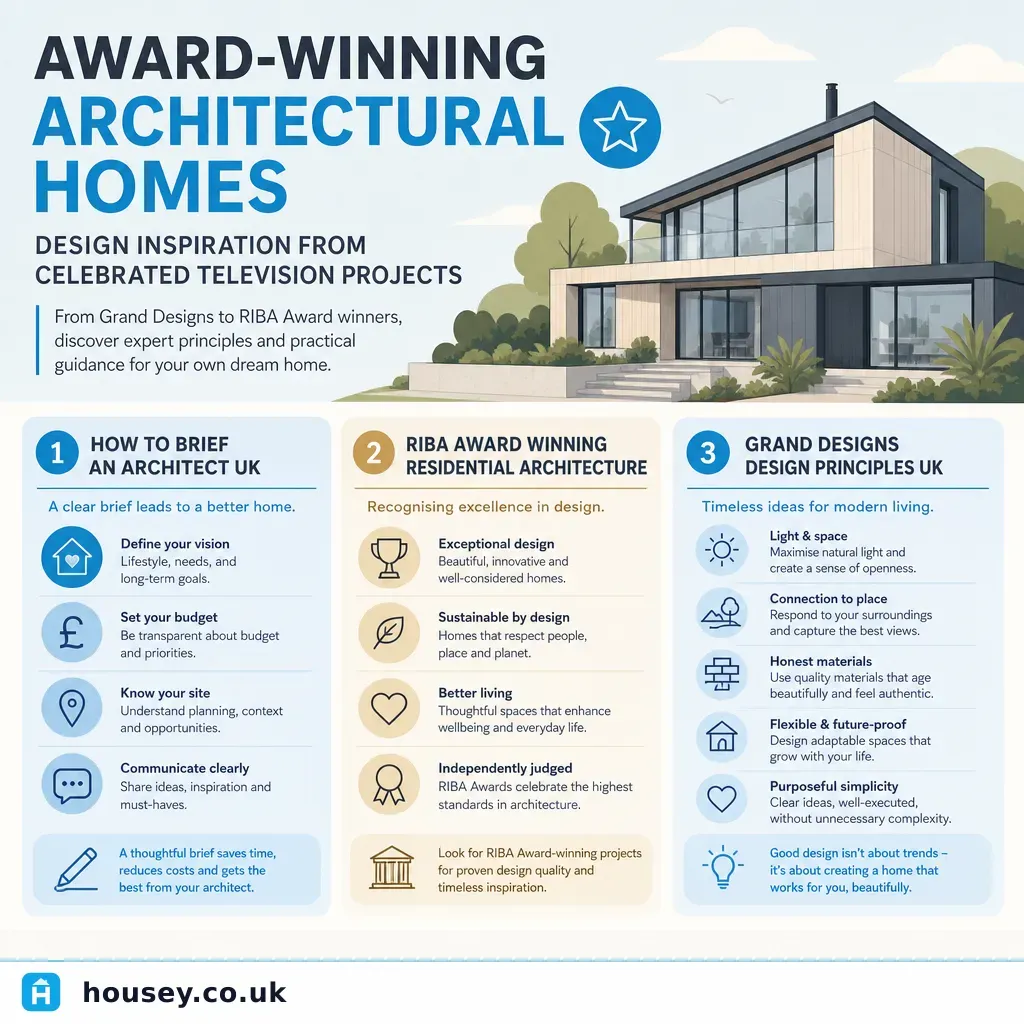
Award-winning architectural homes: design inspiration from celebrated television projects
Television programmes such as Grand Designs have transformed how UK homeowners think about what is architecturally possible within a residential budget. Whether you are planning a self-build, a substantial extension, or a renovation of a listed building, understanding the design principles behind celebrated projects can help you brief an architect more effectively and set realistic expectations before work begins.
Key points
- The RIBA Stirling Prize is the UK's most prestigious architectural award, presented annually by the Royal Institute of British Architects; regional RIBA Awards cover residential projects across all eight UK regions.
- Grand Designs has aired on Channel 4 since 1999 and typically features projects where clients have engaged RIBA-chartered architects or experienced architectural designers, with budgets that often far exceed initial estimates.
- RIBA guidance suggests residential architectural fees of 8–15% of construction cost for a full service, varying significantly by project complexity and stage (indicative UK costs, last reviewed 2026-05-07).
- Planning permission is almost always required for new-build dwellings and for extensions that exceed permitted development limits; conservation area or listed building status adds further constraints requiring early pre-application engagement with the local planning authority.
- A feasibility study or initial design appraisal from an architect is a low-risk starting point before committing to a full architectural commission.
What televised architectural projects actually teach UK homeowners
Programmes such as Grand Designs compress a two-to-five-year project into 50 minutes, which means the editorial narrative often foregrounds dramatic moments — planning rejections, structural surprises, budget overruns — rather than the months of measured drawing, specification work, and contractor negotiation that define most architectural projects.
What these programmes usefully demonstrate is the range of design ambition achievable within UK planning and building regulations, and the value of a clear, sustained design concept from day one. The homes that attract RIBA commendations rarely succeed by accident: they reflect a consistent idea about light, materiality, and relationship to landscape or street, pursued carefully through every stage from sketch to completion.
Key lessons from high-profile UK architectural projects:
- Early planning engagement pays off. Projects that involve pre-application discussions with the local planning authority (LPA) tend to avoid costly late redesigns.
- Material quality is a budget decision, not a design one. Award-winning homes often use inexpensive materials applied with precision: fair-faced concrete, cross-laminated timber (CLT), or standard brick in carefully considered bond patterns.
- Energy performance is now inseparable from good design. Since the 2021 uplift to Building Regulations Part L, new residential buildings must meet significantly tighter fabric energy efficiency standards. Many RIBA Award-winning homes outperform Part L requirements by a considerable margin.
- Structural creativity comes at a cost. Long spans, cantilevers, and unusual geometries require a structural engineer working alongside the architect from an early stage.
Which professional do you need?
Project type | Professional most likely needed | Why |
|---|---|---|
New self-build or replacement dwelling | RIBA-chartered architect | Full design, planning, building regulations, and contract administration |
Large extension (over 50 m², or in a conservation area) | Architect or experienced architectural designer | Design quality, planning navigation, Part L compliance |
Modest extension within permitted development | Architectural technologist | Detailed drawings and building control without a full design service |
Listed building alteration | Architect with heritage experience | Listed Building Consent, Historic England guidance, and material specification |
Design-and-build package | Design-and-build firm | Single point of contact; design scope is typically more constrained |
Complex or unusual structure | Architect and structural engineer working together | Engineering analysis underpins design ambition |
How to translate design inspiration into a brief
A common mistake is presenting an architect with a collection of images from Grand Designs or design publications without articulating what those images represent. An effective brief addresses what you value most (natural light, low energy bills, a particular material aesthetic), what constraints you accept (budget ceiling, planning risk tolerance, disruption timeline), and what you want to avoid (overlooking neighbours, maintenance-intensive materials, over-engineered mechanical systems).
A structured brief saves time and fees at every subsequent stage.
Homeowner checklist: before your first architect meeting
What makes a home award-worthy?
The RIBA assesses residential buildings across criteria including design quality, technical performance, client satisfaction, and contribution to the built environment. Projects do not need to be large or expensive to attract regional recognition.
Common characteristics of RIBA Award-winning homes:
- A clear response to the specific site — orientation, topography, neighbouring buildings, and views.
- A coherent relationship between inside and outside, often through carefully positioned glazing rather than maximum glass area.
- Materials chosen for durability and low-maintenance longevity, not novelty.
- Structural solutions that serve the design concept without overpowering it.
- Compliance with, and often significant outperformance of, Building Regulations Part L (energy efficiency), Part F (ventilation), and Part M (accessibility).
What TV projects do not always show
What not to assume
- That the budget shown is complete. TV budgets frequently exclude professional fees, VAT, planning application fees, and the full extent of cost overruns that may be edited down in the final programme.
- That your plot or property shares the same planning context. A striking glazed extension in a rural setting may be entirely unacceptable in a conservation area semi-detached in a market town.
- That modern architecture is always cheaper to build. Flat roofs, structural steel, and large-format glazing systems often cost more per square metre than traditional pitched roofs and masonry construction.
- That a design-and-build firm delivers the same outcome as an independent architectural commission. Design-and-build firms offer valuable project simplicity, but design scope is typically more constrained than a fully commissioned architect relationship.
- That the timeline shown is typical. Projects on Grand Designs frequently run two, three, or more years beyond the original programme's implied schedule.
When to get professional help
The moment you are considering a project involving planning permission, structural alterations, changes to a listed building, or a budget above approximately £50,000, a preliminary conversation with a qualified architect is worth the time. Most RIBA-chartered architects offer a short initial consultation — sometimes free, sometimes at a fixed fee — to assess feasibility before any commitment.
Red flags that mean engage a professional immediately:
- Your project requires or may require listed building consent
- The site is on or near a flood plain
- Neighbours are likely to object to a planning application
- The existing structure shows signs of movement, damp, or poor previous alteration work
- Your design aspirations significantly exceed what permitted development allows
How Housey can help
If you are ready to move from inspiration to action, Housey can help you find and compare qualified architects and architectural technologists in your area. For projects where a single point of contact across design and construction would suit you better, you can also request quotes from design-and-build firms.
Frequently asked questions
Do I need an RIBA-chartered architect for my project?
You are not legally required to use an RIBA-chartered architect. However, only architects registered with the Architects Registration Board (ARB) may legally use the title 'architect'. RIBA membership signals ongoing professional development and ethical practice. For complex projects, listed buildings, or anything requiring careful planning navigation, the added rigour of a chartered architect usually justifies the fee.
How much do residential architectural fees typically cost in the UK?
RIBA guidance suggests fees of 8–15% of construction cost for a full residential service, though this varies with project complexity, scope, and region. A feasibility study or initial design appraisal may be offered at a fixed fee of £500–£3,000. Indicative UK costs, last reviewed 2026-05-07; always request itemised quotes for your specific project.
How long does an architectural project take from brief to completion?
For a substantial extension: expect 3–6 months for design and planning, 2–4 months for building regulations and contractor procurement, and 6–18 months for construction. A new-build self-build typically runs longer. Projects documented on Grand Designs are often multi-year in duration — normal, not exceptional, for ambitious residential schemes.
Can award-quality design be achieved on a modest budget?
Yes. RIBA regional awards have recognised modest conversions, small extensions, and sensitive repairs to historic properties. Award-winning outcomes depend on clarity of concept, quality of execution, and the relationship between the building and its context — all achievable without exceptional spend if the design brief is focused from the outset.
Sources and further reading
- RIBA Find an Architect — Royal Institute of British Architects
- RIBA Awards — Royal Institute of British Architects
- Building Regulations Approved Document L — GOV.UK
- Planning Portal: Do I need planning permission? — Planning Portal
- Architects Registration Board — ARB
Useful next reads
 Planning & Pre-Build
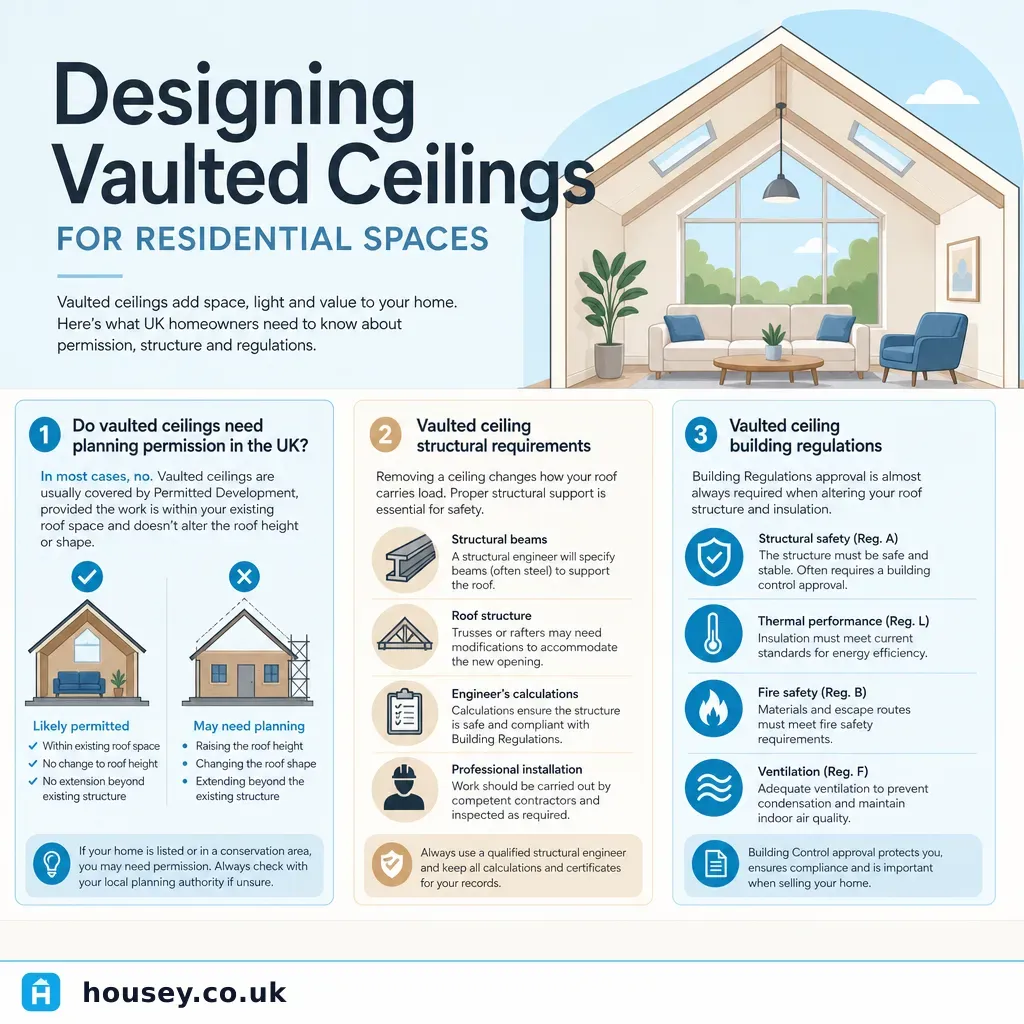
Designing vaulted ceilings for residential spaces
Creating a vaulted ceiling in an existing home involves restructuring the roof timbers that form the structural triangle, which always requires a structural engineer's calculations and Building Regulations approval under Approved Document A.
 Planning & Pre-Build
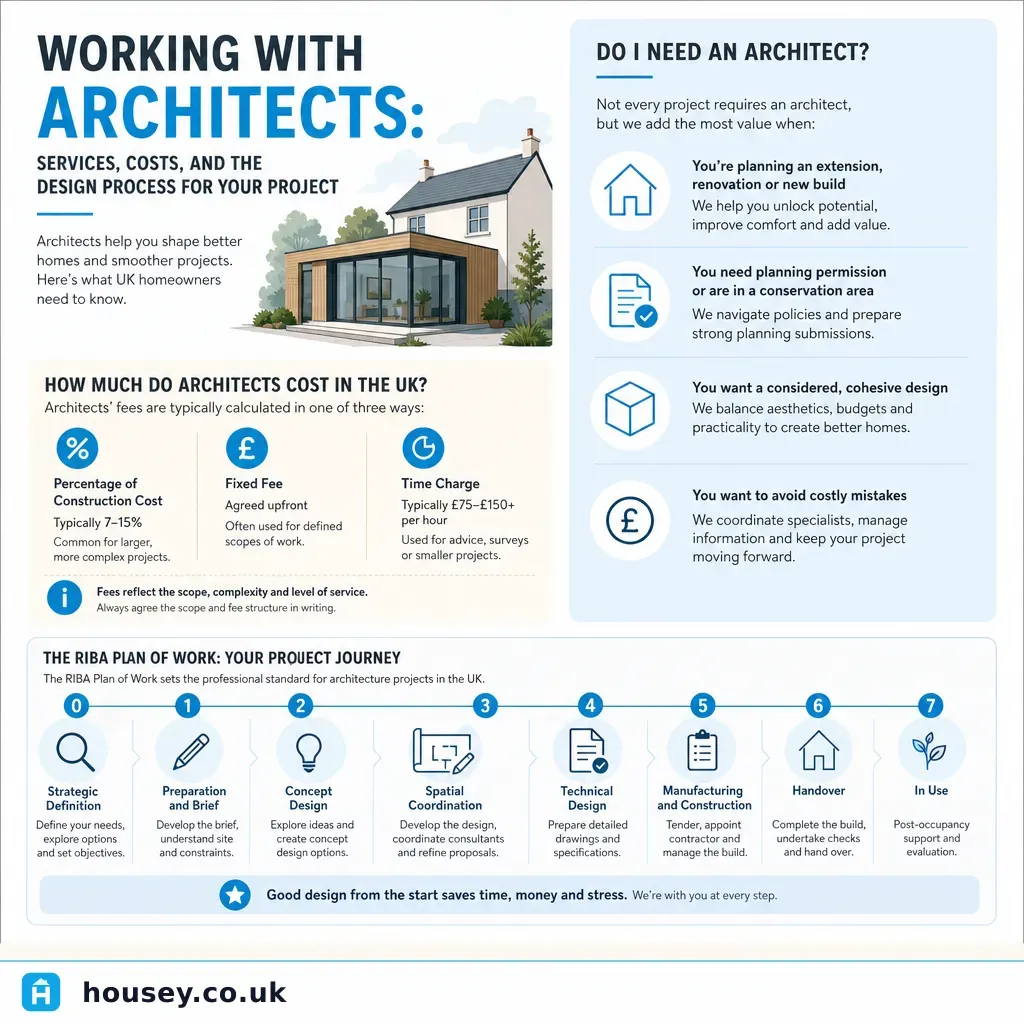
Working with Architects: Services, Costs, and the Design Process for Your Project
In the UK, the title 'architect' is legally protected under the Architects Act 1997.
 Planning & Pre-Build
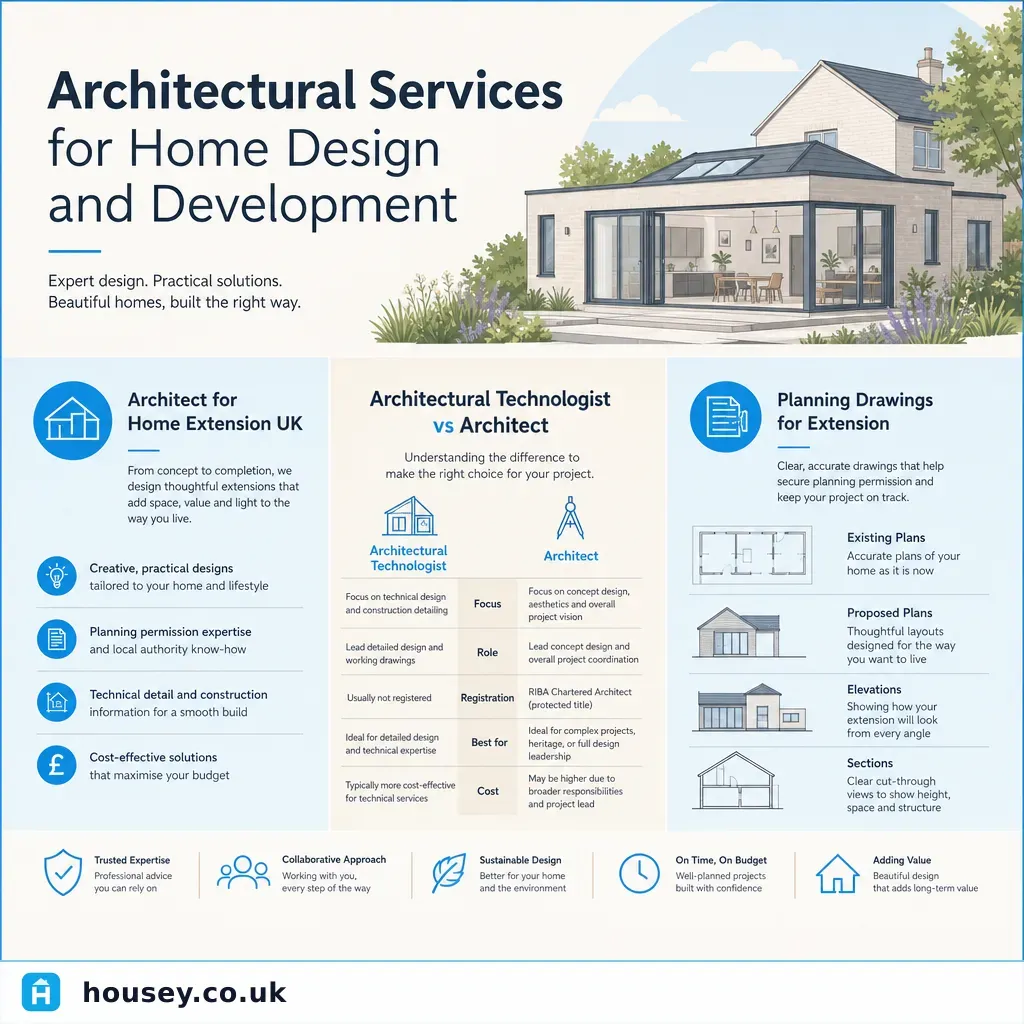
Architectural Services for Home Design and Development
Architects and architectural technologists handle design, planning applications, and building regulations drawings for UK home projects.
 Planning & Pre-Build
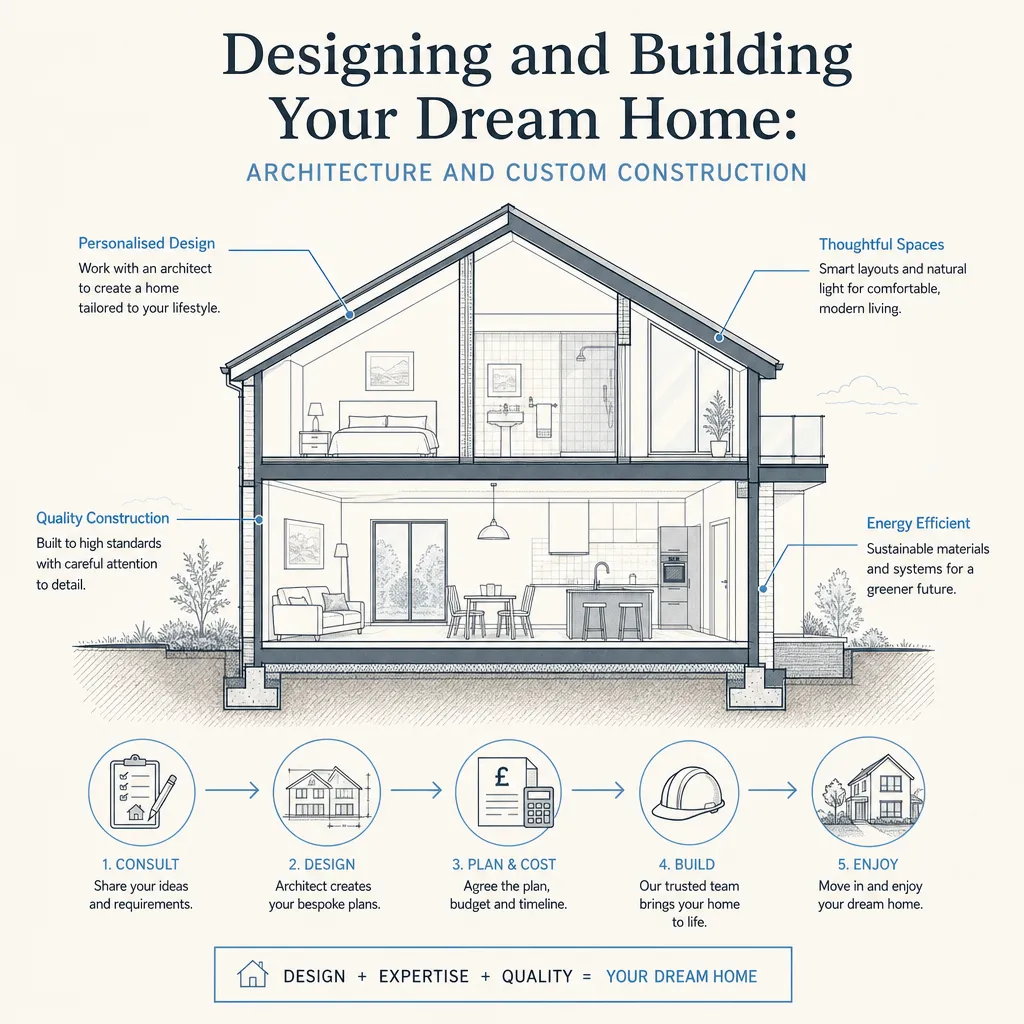
Designing and Building Your Dream Home: Architecture and Custom Construction
Building a custom home in the UK involves a RIBA eight-stage design process, full planning permission — permitted development does not apply to new dwellings — and a team that typically includes an architect, architectural technologist, structural engineer, and project manager.
 Planning & Pre-Build
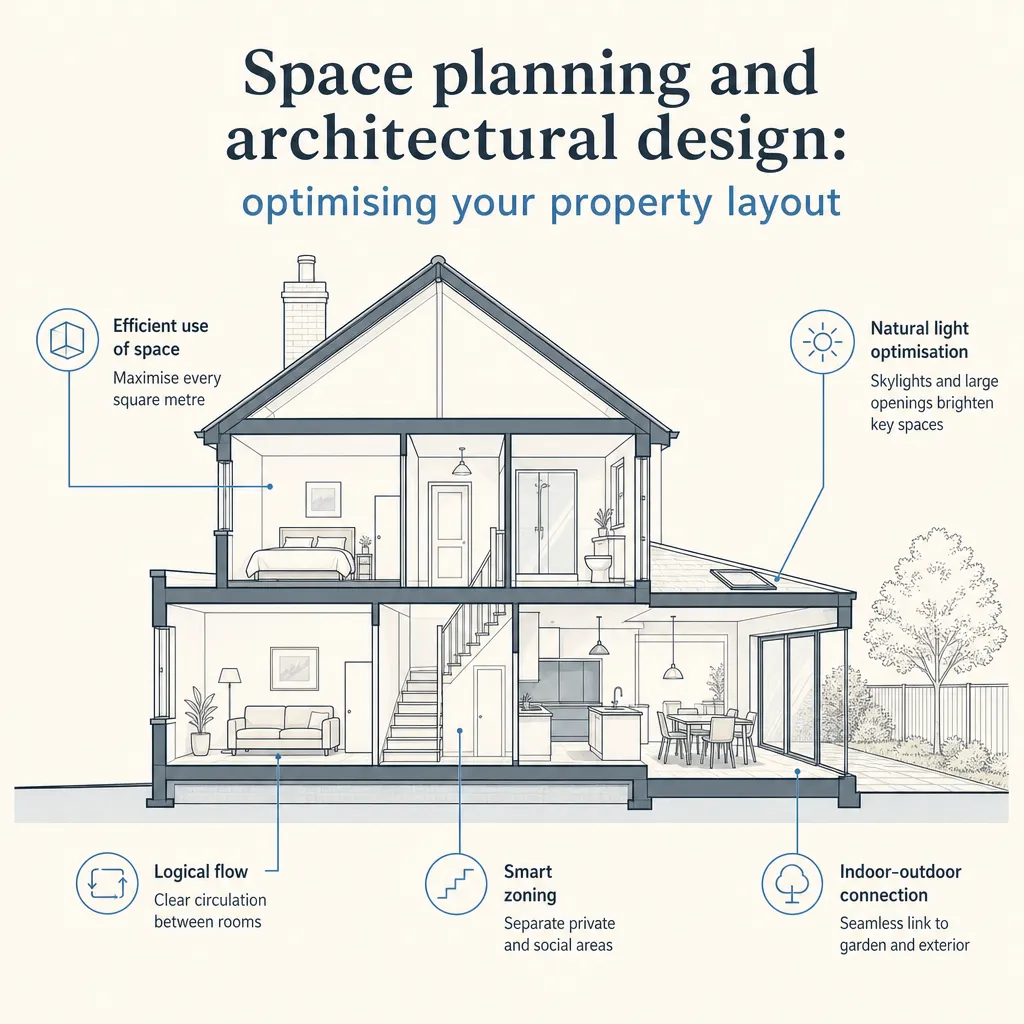
Space planning and architectural design: optimising your property layout
Space planning defines how rooms, circulation routes, and services are arranged within a property to make the best use of available area.