Architectural Shingles vs Standard Shingles: Specification and Cost Comparison
By Housey · Last reviewed 1st of June 2026
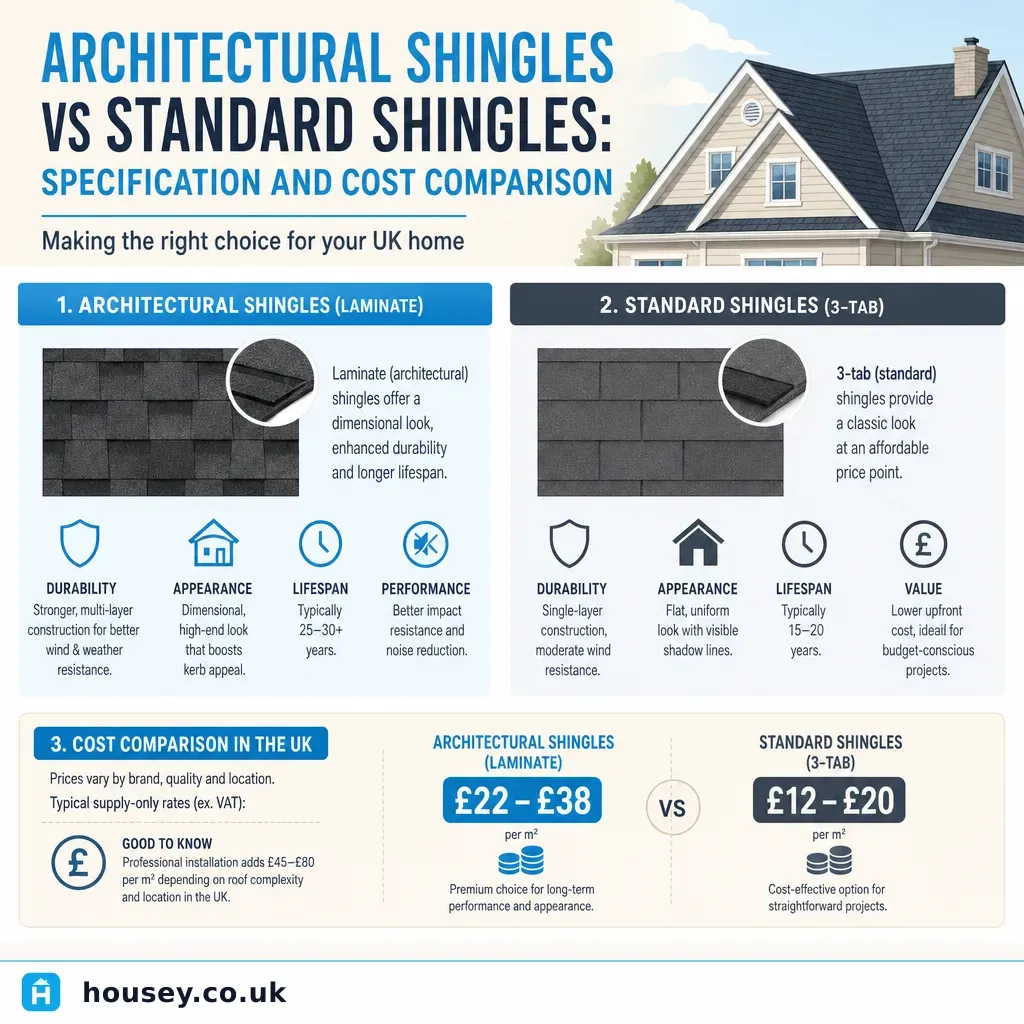
Architectural Shingles vs Standard Shingles: Specification and Cost Comparison
Asphalt shingles are more closely associated with North American roofing than with mainstream UK construction, but they are used in Britain on garden rooms, outbuildings, garages, low-pitch roof extensions, and some contemporary residential projects where a lightweight, cost-effective covering is appropriate. When specifying or replacing a shingle roof, the key choice is between standard three-tab shingles and architectural shingles — also called laminate or dimensional shingles — which differ meaningfully in thickness, weather resistance, service life, and cost.
Key points
- Architectural shingles use a multi-layer laminate construction, typically 3–5 mm thick, versus a single layer of 2–3 mm for standard three-tab shingles.
- Wind uplift resistance for architectural shingles is typically rated at 110–130 mph; standard shingles are rated at 60–80 mph — a significant difference for exposed UK locations.
- British Board of Agrément (BBA) certification is the most relevant independent accreditation for asphalt shingle products used in the UK; always specify a BBA-certified product or one with an equivalent European Technical Assessment (ETA).
- Both types are generally suitable for pitches of 17.5° or above; below this, a continuous waterproof membrane system is usually more appropriate for UK conditions.
- Indicative installed costs in the UK: standard shingles £35–£55/m²; architectural shingles £55–£90/m² (indicative UK costs, last reviewed 2026-06-01; obtain quotes for your specific roof).
What are standard and architectural shingles?
Standard three-tab asphalt shingles are manufactured from a single layer of fibreglass-reinforced bitumen mat, surfaced with mineral granules. The three cut-outs at the lower edge of each strip create the appearance of individual tiles once installed. They have been used across Europe for decades on outbuildings and extension roofs, though they remain far more prevalent in North American residential roofing.
Architectural shingles (also called laminate, HD, or dimensional shingles) bond two or more layers of the same bitumen mat material together, producing a thicker, heavier product with a more pronounced surface texture and varying shadow lines. The visual result can simulate slate, cedar shingle, or dimensional tile. The extra mass contributes to improved wind resistance, impact resistance, and longer manufacturer-warranted service life.
Specification comparison
Feature | Standard three-tab shingles | Architectural (laminate) shingles |
|---|---|---|
Thickness | 2–3 mm (single layer) | 3–5 mm (multi-layer laminate) |
Approximate weight | 10–12 kg/m² | 13–18 kg/m² |
Wind resistance rating (typical) | 60–80 mph | 110–130 mph |
Manufacturer warranty (typical) | 20–25 years | 30–50 years |
BBA-certified UK products available | Yes | Yes |
Surface appearance | Flat, uniform, three-tab lines | Dimensional, textured, varied shadow lines |
Minimum suitable pitch | 17.5° (some products: 12.5° with enhanced underlay) | 17.5° (some products: 12.5°) |
Indicative installed cost (UK) | £35–£55/m² | £55–£90/m² |
Indicative UK costs, last reviewed 2026-06-01. Costs vary by region, roof complexity, and contractor.
Where are shingles used in the UK?
In the UK, asphalt shingles are most commonly specified on:
- Garden rooms and home offices: The lightweight nature of shingles suits timber-frame structures where the additional dead load of concrete or clay tiles could overload the roof frame.
- Garages, outbuildings, and storage buildings: Cost-effective, quick to install, and adequate for non-habitable structures in sheltered positions.
- Low-pitch porch and extension roofs: Where a traditional profiled tile would not drain effectively at the pitch, but a fully flat-roof membrane system would look incongruous.
- Annexes and habitable garden buildings: Where appearance matters more than on a basic outbuilding and architectural shingles' dimensional profile adds visual quality.
On main dwellings, clay tile, concrete tile, and natural slate remain the standard coverings in the UK. Asphalt shingles are rarely the primary material on a full two-storey house roof. If you are replacing an existing shingle roof on a main dwelling, confirm with your building control body whether the re-roofing triggers a Part L compliance assessment for the insulation below.
Which shingle type should you choose?
- Choose standard three-tab shingles for a basic garage, garden shed, or outbuilding on a tight budget in a sheltered location where appearance is not a priority and the 20–25 year warranty aligns with your expectations for the structure.
- Choose architectural shingles for a garden room, home office, annexe, or porch where the roof will be visible, the location has any meaningful wind exposure, or a longer service life justifies the additional upfront cost.
- Opt for a 30- or 50-year warranted architectural product if the structure is a habitable room — home office, garden studio, or annexe — where early re-roofing would be significantly disruptive.
- Consult a roofer or commission a roof survey if you are replacing an existing shingle layer and are unsure whether the deck, batten spacing, or underlay specification is adequate for the product being considered.
Installation and underlay requirements
Both shingle types require the same fundamental installation conditions:
- A solid or closely spaced boarded deck — typically 18 mm OSB or structural plywood — or close-spaced battens at centres specified by the manufacturer.
- A BS-compliant vapour-permeable underlay beneath the shingles, lapped correctly to direct water to the gutter.
- Starter strips at eaves and rakes to ensure the first full course bonds and seals correctly.
- Stainless steel ring-shank or hot-dipped galvanised nails as specified by the manufacturer; staple fixing is not acceptable for wind-resistance compliance.
- Adequate roof ventilation in accordance with BS 5250:2021 if the structure has a cold roof void beneath the deck.
BBA certificates for specific products are conditional on following the manufacturer's stated fixing instructions exactly. Using NFRC-member roofers helps ensure installation matches both manufacturer requirements and recognised industry standards.
What to ask before accepting a shingle roofing quote
- Does the quote include stripping the existing covering, removing all waste, and replacing any rotten or inadequate deck boards?
- What shingle product and manufacturer are specified, and does it hold a current BBA certificate or European Technical Assessment?
- What underlay specification is included, and does it comply with BS 8747 requirements for reinforced bitumen membranes?
- What nail type, pattern, and minimum penetration depth are specified in the installation method?
- Is VAT included in the quoted price?
- What workmanship warranty does the installer offer in addition to the manufacturer's product warranty?
- Will a completion note or guarantee certificate be provided on finishing the work?
When to get professional help
Consult a professional before proceeding if:
- The existing roof deck is suspected to be rotten, inadequately braced, or of insufficient board thickness to support the shingle specification.
- The structure is in an exposed coastal or elevated location where the standard wind resistance rating of three-tab shingles may be insufficient.
- You are uncertain whether the minimum pitch requirement for the specified product is met across all roof planes, including any valleys or hips.
- The roof has dormers, valleys, or complex geometry where weathering detailing requires hands-on roofing experience to execute correctly.
- Building regulations compliance for the overall roof structure under Part L, Part C, and Part A must be formally demonstrated to a building control surveyor.
A roof survey before specifying new materials will identify deck conditions, structural concerns, and ventilation deficiencies that should be resolved before a new shingle layer is applied.
How Housey can help
Housey connects homeowners with vetted local roofers experienced in asphalt shingle installation, and with specialists who carry out roof surveys to assess deck condition and specify the right product for your structure. Describe your project to receive and compare quotes from local professionals.
Frequently asked questions
Are asphalt shingles approved for use in UK construction?
Yes, provided the product carries independent certification. The British Board of Agrément (BBA) certifies specific shingle products for UK conditions, and using a BBA-certified product is important when building regulations compliance must be demonstrated. Always check that the product specified has a current BBA certificate or equivalent European Technical Assessment before installation begins.
How long do architectural shingles last in the UK climate?
Most architectural shingle manufacturers offer warranties of 30–50 years. Actual service life depends on exposure, installation quality, ventilation, and maintenance. Well-installed architectural shingles on a sheltered garden room or annexe can realistically last 30–40 years. Standard three-tab shingles are typically warranted for 20–25 years under comparable conditions.
Can new shingles be overlaid on top of existing ones?
Some manufacturers permit a single overlay on a sound existing shingle layer, which reduces disposal costs and labour time. However, overlaying masks the deck condition, adds dead load, and may not comply with the specific BBA certificate terms for the new product. Stripping to bare deck is best practice and is recommended by the NFRC for any significant re-roofing project.
Do I need planning permission to re-roof with shingles?
Re-roofing a house with like-for-like materials generally does not require planning permission under permitted development rights. Changing the roof's appearance — for example, replacing natural slate with shingles — or working on a listed building or property in a conservation area may require planning permission or listed building consent. Check with your local planning authority if in any doubt.
Sources and further reading
- British Board of Agrément: Roofing Product Certificates — British Board of Agrément
- National Federation of Roofing Contractors — NFRC
- BS 5250:2021 Code of Practice for Control of Condensation in Buildings — BSI
- Building Regulations Approved Document C: Resistance to Moisture — GOV.UK
- NHBC Technical Standards: Chapter 7 — NHBC
Useful next reads
 Surveys & Inspections
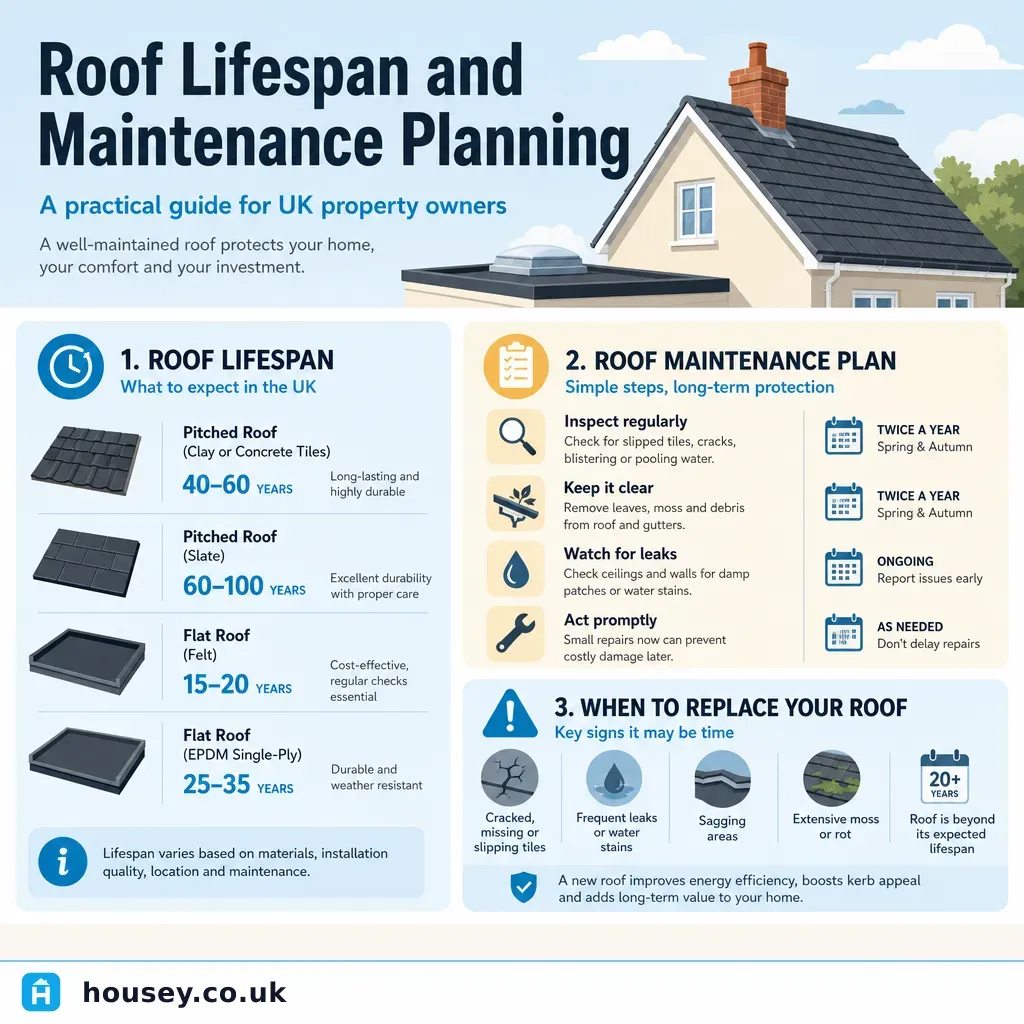
Roof Lifespan and Maintenance Planning for Property Owners
Most UK pitched roofs last 40–100+ years depending on covering material, with natural slate lasting longest and concrete tiles typically 40–60 years.
 Surveys & Inspections
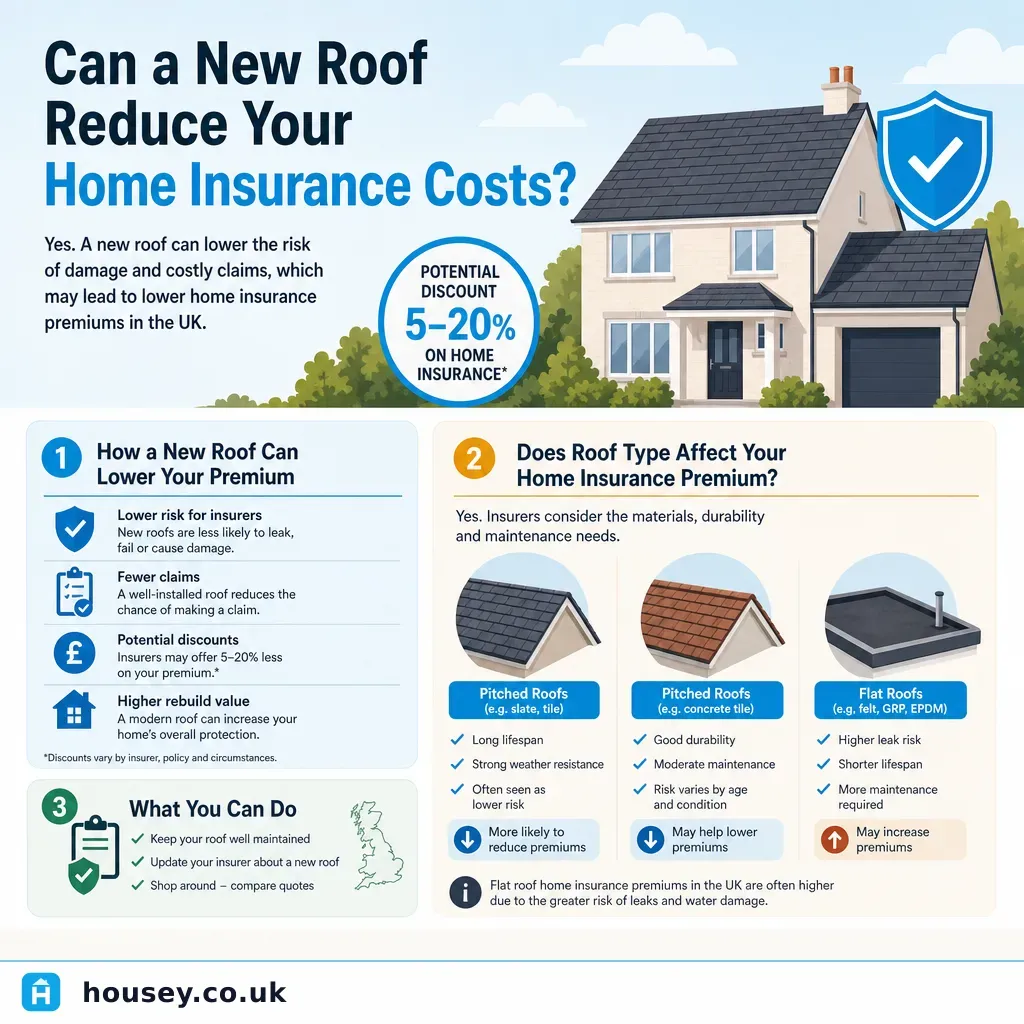
Can a New Roof Reduce Your Home Insurance Costs?
A new roof can improve your home insurance position in the UK, particularly if you replace an aged flat roof or a deteriorating pitched roof.
 Surveys & Inspections
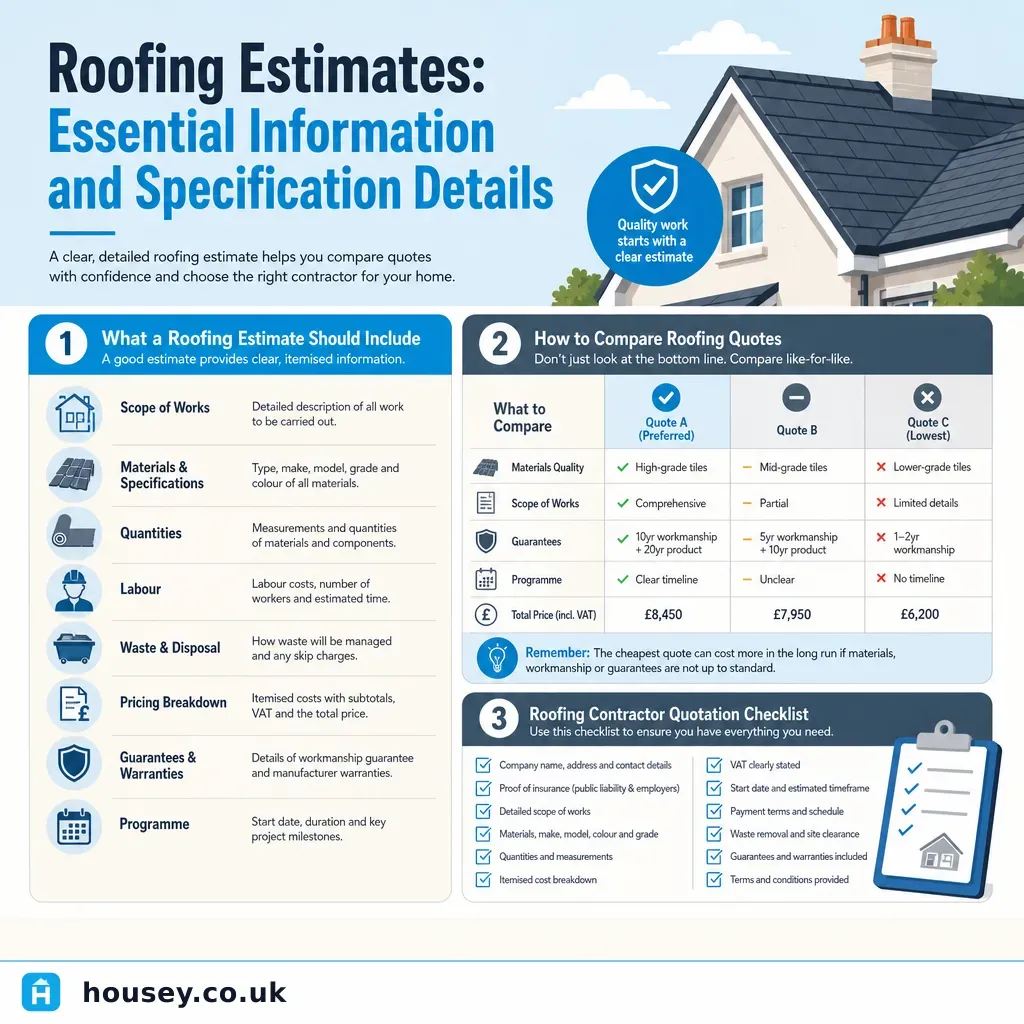
Roofing Estimates: Essential Information and Specification Details
A robust UK roofing estimate should specify materials by manufacturer and product code, reference BS 5534 for pitched roofs or the relevant system standard for flat roofs, state the workmanship and manufacturer warranty terms, itemise scaffolding and waste disposal, and set out a stage payment schedule.
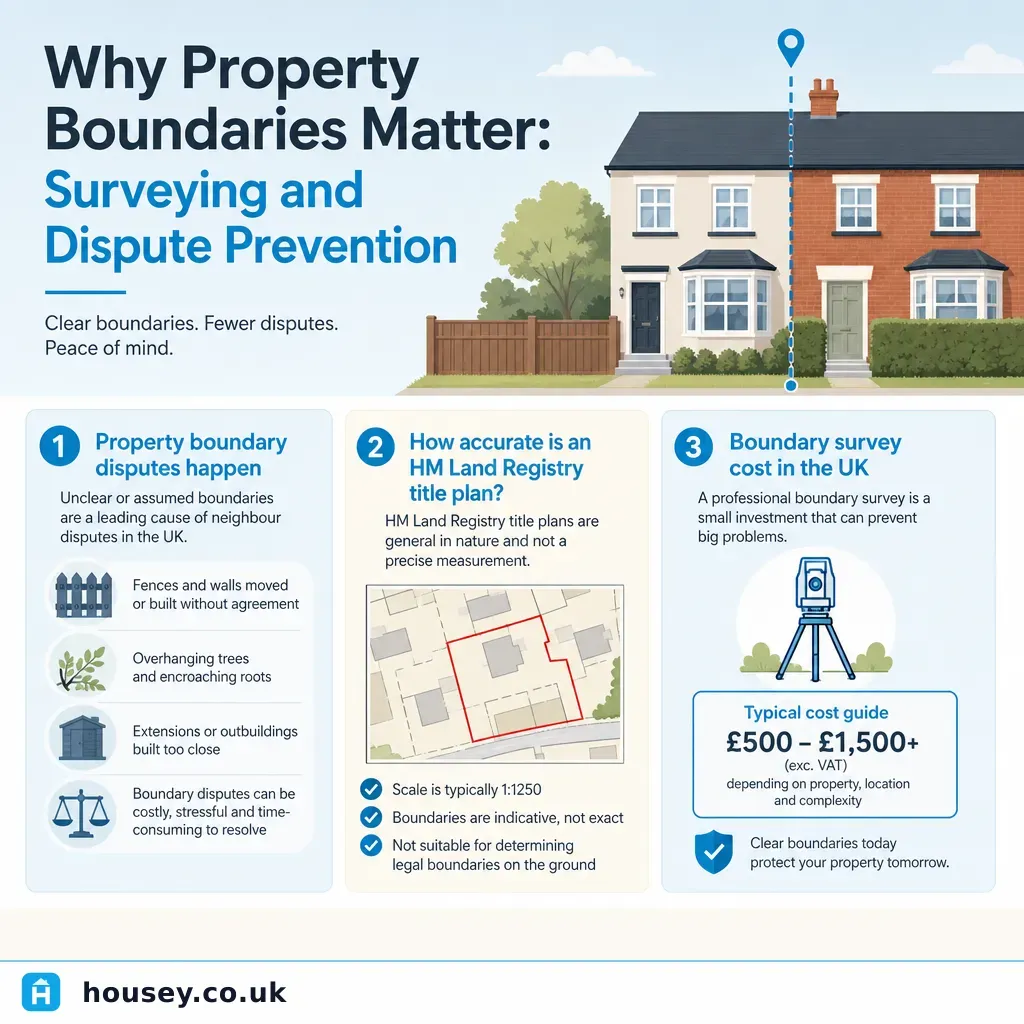 Surveys & Inspections
Why Property Boundaries Matter: Surveying and Dispute Prevention
Property boundaries in England and Wales are recorded as general boundaries by HM Land Registry — not precise measurements.
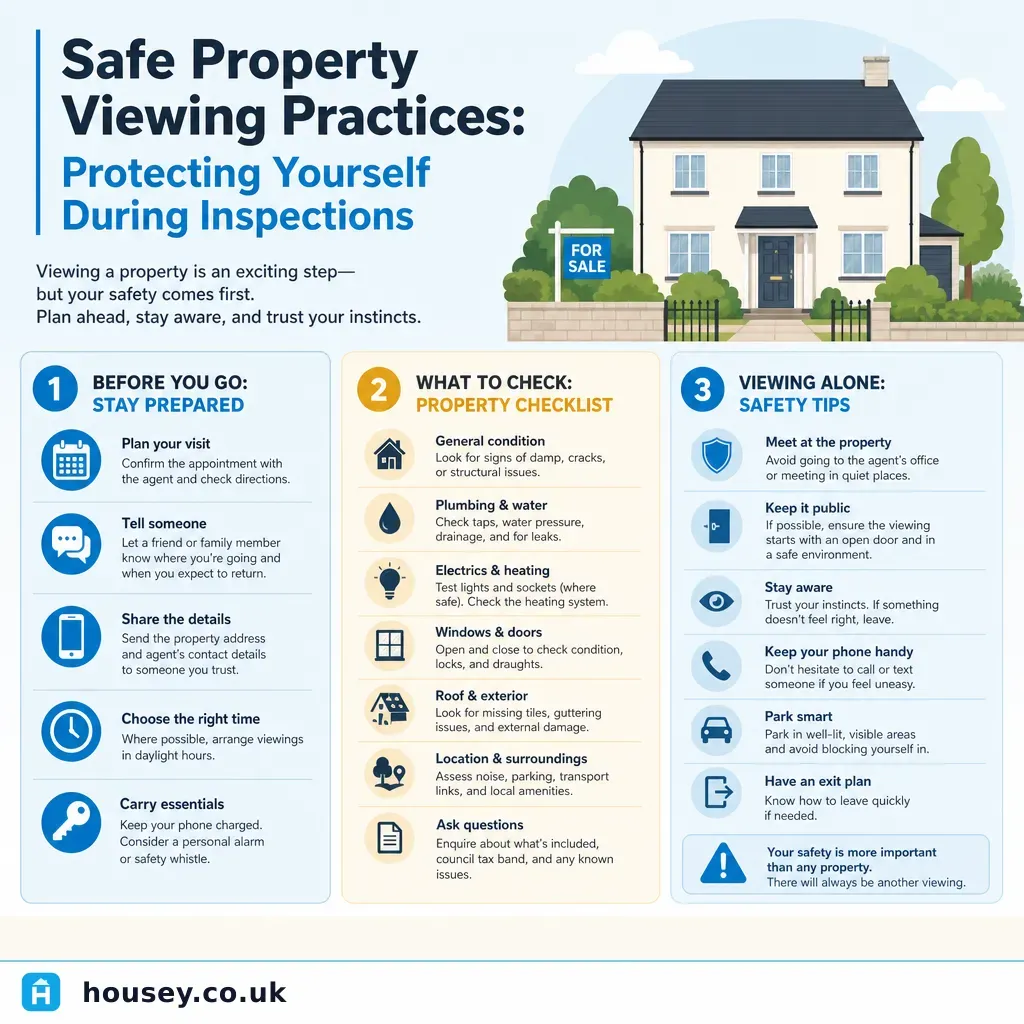 Surveys & Inspections
Safe Property Viewing Practices: Protecting Yourself During Inspections
When viewing a property in the UK, always tell someone where you are going and share the full address before you leave.