Can a New Roof Reduce Your Home Insurance Costs?
By Housey · Last reviewed 19th of May 2026
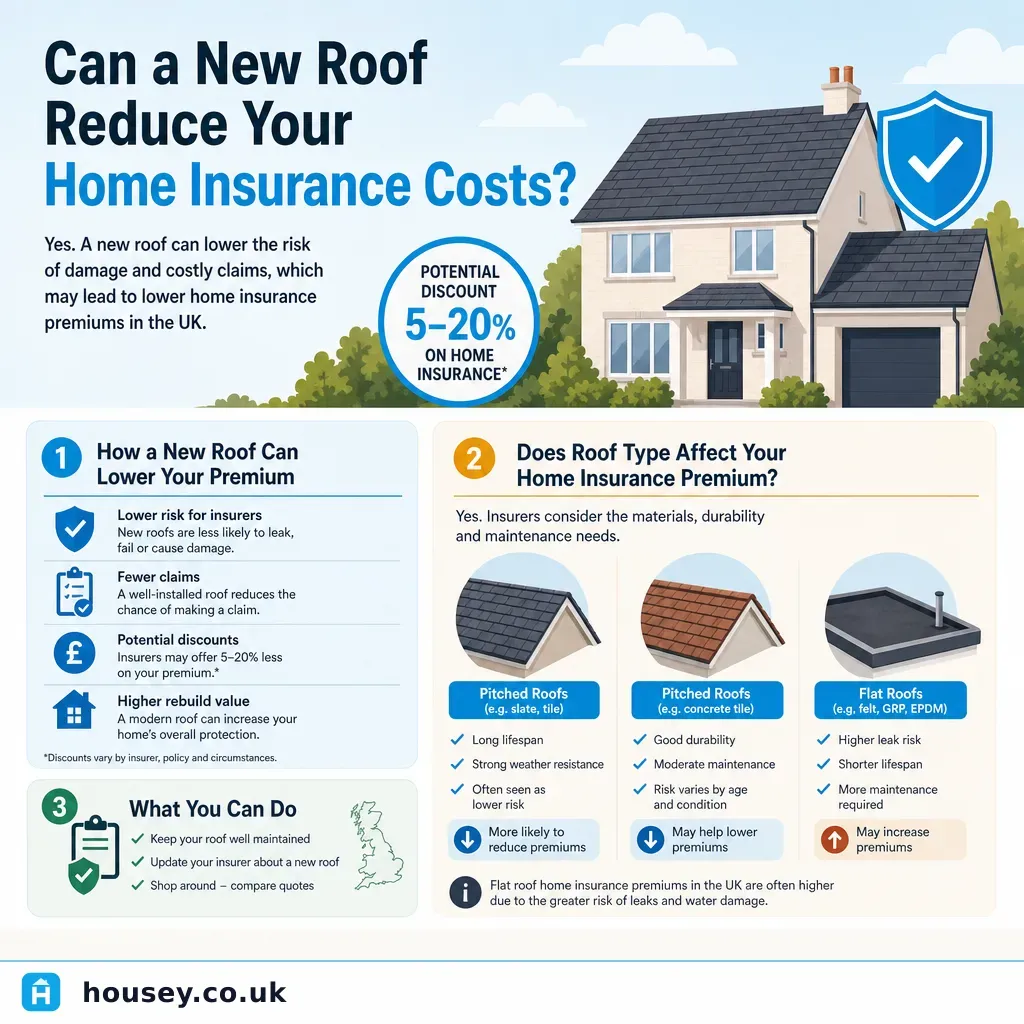
Can a New Roof Reduce Your Home Insurance Costs?
Replacing a roof is one of the most significant investments a UK homeowner can make — a full re-roof on a typical three-bedroom semi-detached house commonly costs several thousand pounds. It is natural to ask whether that expenditure might also bring down the cost of buildings insurance. The outcome depends on your insurer, your existing roof type, the replacement material, and how you communicate the change — all factors that sit entirely within your control.
Key points
- UK home insurers treat roof condition and age as significant risk factors for buildings cover — an aged, deteriorating, or flat roof typically produces higher premiums than a sound, recently replaced pitched roof.
- Flat roofs are usually rated at higher risk than pitched roofs, often adding 10–25% or more to buildings insurance premiums depending on the proportion of flat roof and the material used.
- Replacing a flat roof with a modern single-ply membrane or GRP (glass reinforced plastic) system rather than traditional felt may improve your insurer's risk assessment at renewal.
- You are required to notify your insurer of material changes to the property, including roof replacement — failure to do so could invalidate a subsequent claim.
- A professional roof survey or condition report can help evidence the quality and specification of new roofwork to your insurer or broker, particularly after a flat roof replacement.
How insurers assess roof risk
UK home buildings insurance is individually underwritten. Insurers and their pricing algorithms assess dozens of property characteristics, and roof condition is consistently one of the most significant variables. The roof is the primary barrier against storm damage, water ingress, and the consequential internal damage that generates the most costly claims.
Key factors insurers consider:
- Roof age: An older roof is seen as more likely to fail, leak, or suffer storm damage. Traditional felt flat roofs typically last 10–15 years; pitched slate or clay tile roofs can last 50–100 years with maintenance. A new roof materially reduces the perceived risk.
- Roof type: Pitched roofs (slate, clay tiles, concrete tiles) are generally regarded as lower risk than flat roofs. Properties with more than 25–30% flat roof area typically attract higher premiums or additional policy conditions.
- Roof material: Natural slate and clay tiles are among the most favourably rated materials. Concrete tiles are widely accepted. Flat roof materials vary significantly — GRP and single-ply membranes are rated more favourably than older felt systems.
- Recent replacement: A roof replaced within the last 5–10 years is often treated as recently renewed and may attract more competitive terms at renewal.
Insurers rarely publish explicit 'new roof discount' figures — any saving is built into the overall risk calculation. Shopping the market after a new roof is completed, rather than simply auto-renewing with your existing insurer, is typically where any premium benefit is captured.
Roof types and their typical insurance impact
Roof type | Typical insurer attitude | Key risk factors | Notes |
|---|---|---|---|
Pitched — natural slate | Favourable | Age, condition of pointing and ridge | Long lifespan; evidencing recent works is helpful |
Pitched — clay or concrete tile | Standard to favourable | Tile condition, valley lead, ridge mortar | Most common UK residential roof type |
Flat — GRP or fibreglass | Increasingly favourable | Installation quality, drainage | Considered more durable than felt |
Flat — single-ply membrane (EPDM or TPO) | Standard to favourable | Age, laps and seams | Modern standard; 20–25-year lifespan |
Flat — traditional felt (2 or 3 layer) | Higher risk | Age, blistering, ponding | Lifespan typically 10–15 years; replacement recommended if aged |
Mixed — part pitched, part flat | Context-dependent | Flat proportion; flat material type | Premium impact depends on percentage of flat |
Indicative. Individual insurer attitudes vary. Always check policy conditions carefully.
Worked example: 1960s semi-detached with a flat garage roof
Consider a typical 1960s three-bedroom semi-detached house in the East Midlands with an original felt flat roof over a rear kitchen extension and integral garage. The roof is 18 years old with visible blistering and a history of minor leaks.
The homeowner replaces the felt with a GRP fibreglass system installed by an NFRC-registered contractor. After completion, they notify the insurer of the change and provide the installer's 20-year guarantee and a brief specification of the GRP system.
At the next renewal, the homeowner shops the market for the first time in several years. Two quotes come in noticeably lower than the previous year's premium. One insurer explicitly asks about flat roof material and age during the online quotation process, notes the recent GRP replacement, and prices accordingly. The annual saving is modest — perhaps £80–£150 — but the greater benefit is the reduced likelihood of a water-ingress claim and its associated excess and no-claims discount impact.
This example illustrates that the value of a new roof extends beyond premium savings alone: it reduces the risk of a claim that would far outweigh any premium reduction.
Notifying your insurer: what you must do
When you replace a roof, your insurer needs to know. Most UK home insurance policies require you to notify the insurer of material changes to the property. A roof replacement — particularly one that changes the material, type, or structure — is a material change.
If you do not notify your insurer:
- A claim related to the roof or resulting water damage may be disputed or declined on grounds of non-disclosure.
- If the change reduces the risk (as a new roof typically does), you may be paying an unnecessarily high premium.
When notifying your insurer after replacement:
- Provide the roof specification — material type, pitched or flat, approximate area, and the contractor's credentials.
- Obtain the contractor's guarantee, any NFRC accreditation documentation, and building control sign-off where structural roofwork was involved.
- Ask whether the change affects your premium, sum insured, or any policy conditions.
At the next renewal:
- Provide updated roof details to all insurers you approach for quotes.
- Specify that the roof was recently replaced and with what material — some online quote forms prompt for this, others do not; proactively volunteer the information.
What to ask your insurer or broker
Before or after a roof replacement:
- Does my policy require me to notify you of the roof replacement, and what is the correct process for doing so?
- Will the new roof specification change my premium, sum insured, or any policy conditions?
- Which roof materials do you rate most favourably for buildings cover?
- Will you require a roof survey report, contractor guarantee, or building control certificate to evidence the quality of the work?
- Does the proportion of flat roof on the property affect my premium, and does the material type matter?
- Should I review my buildings sum insured now that the roof has been replaced?
- Are there any ongoing warranty or maintenance conditions I need to comply with to maintain cover?
Rebuilding cost: do not overlook this
A new roof changes the rebuilding cost of the property — the figure on which your buildings insurance sum insured should be based. If you are underinsured when a claim occurs, even for an unrelated event, the insurer may apply averaging and reduce the payout proportionally.
After a significant roof replacement, review your buildings sum insured. The BCIS House Rebuilding Cost Calculator provides indicative guidance. For older, unusual, listed, or high-value properties, a formal insurance valuation by a RICS-registered surveyor provides a more accurate figure and documents the basis of assessment — useful evidence if the sum insured is ever queried at claims stage.
When to get professional help
Consider professional advice if:
- Your property has a large or complex flat roof and your insurer is applying a significant premium loading or placing conditions on the policy.
- You are unsure whether the replacement roof specification will satisfy your insurer's requirements.
- The property is listed or in a conservation area — replacement roof materials may be restricted by the local planning authority, and listed building consent may be required before any work starts.
- You want an accurate rebuilding cost figure after a significant roof replacement — a professional roof survey and formal insurance valuation provide documented evidence that insurers and brokers can rely on.
Red flags:
- An insurer places a policy condition requiring the flat roof to be replaced within a set timeframe — this signals the current roof condition is already flagged as a risk.
- A claim is declined citing undisclosed roof condition — you may need a professional roof survey and legal advice to challenge the decision.
- You have not reviewed your buildings sum insured since the roof was replaced several years ago — UK rebuilding costs have risen significantly since 2020.
How Housey can help
Whether you are assessing the condition of an existing roof ahead of replacement or evidencing a completed roof to your insurer, professional surveys and valuations add weight to your case. Housey connects you with specialists for professional roof surveys to document current condition, insurance valuations to establish an accurate rebuilding cost, and — where structural roofwork requires building control sign-off — building control consultants.
Frequently asked questions
How much can I expect to save on home insurance with a new roof?
There is no fixed saving — insurers price individually and do not publish roof-specific discount tables. The benefit comes through a lower likelihood of claims, more competitive underwriting at renewal, and the ability to present an improved risk profile when shopping the market. Switching insurers after a new roof is completed is typically the most effective way to capture any premium benefit.
Does the type of roof material affect home insurance premiums in the UK?
Yes. Natural slate and clay tiles are among the most favourably rated materials. Modern flat roof systems — GRP and EPDM single-ply — are rated better than traditional felt. Always specify the material clearly when seeking quotes, particularly for flat or mixed-roof properties where material choice has the greatest premium impact.
Do I need a roof survey before replacing my roof?
A roof survey is not legally required before replacement, but it is useful: it confirms the extent of works needed, documents existing condition, and provides a benchmark for the insurance conversation. A completion report from the roofing contractor after the work — or a post-works survey — gives documented evidence to share with your insurer.
Will replacing a flat roof reduce my insurance premium?
It can, particularly if you replace traditional felt with a modern GRP or single-ply system. Flat roof premiums reflect the perceived risk of water ingress and the shorter lifespan of older materials. A quality replacement, properly certificated and notified to your insurer, typically improves your position — but savings vary by insurer, property, and policy.
Sources and further reading
Useful next reads
 Surveys & Inspections
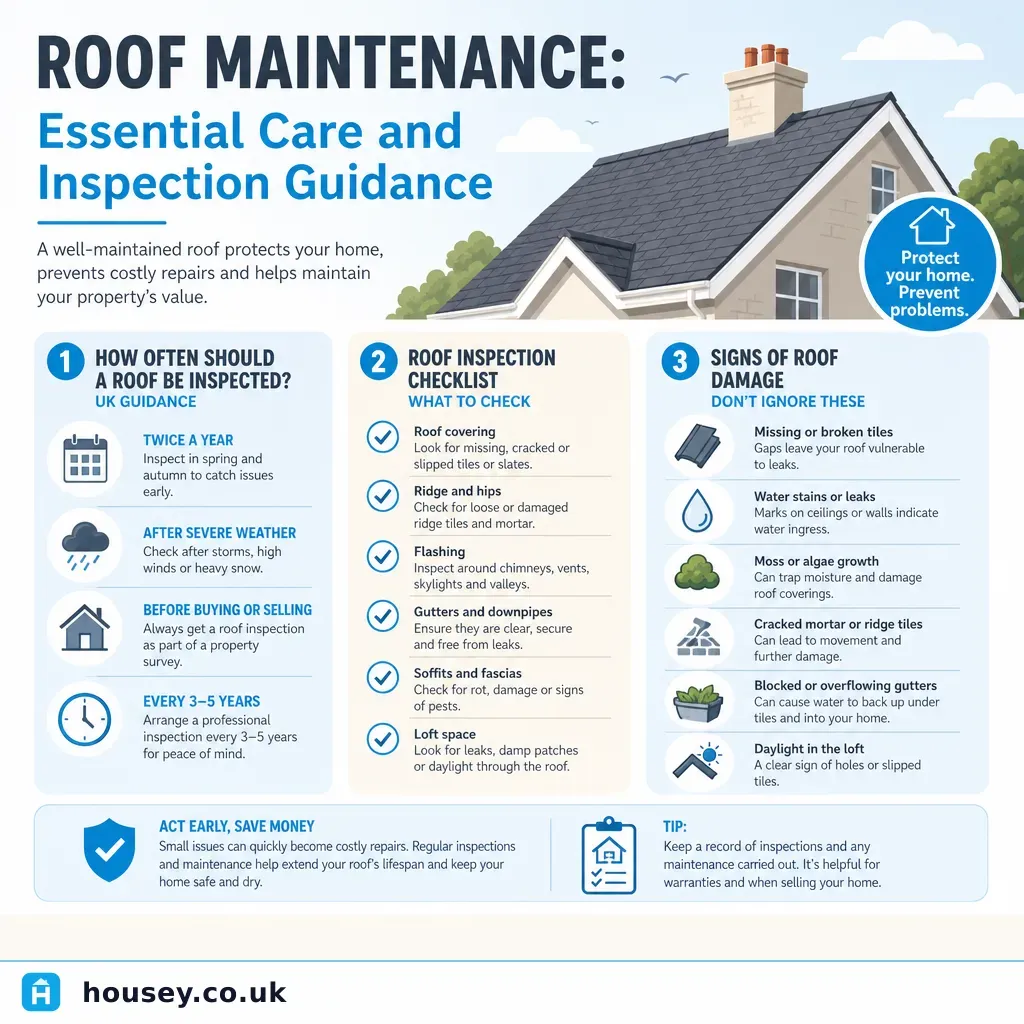
Roof Maintenance: Essential Care and Inspection Guidance
UK roofs should be visually inspected at least once a year — ideally in autumn before winter — and after any significant storm.
 Surveys & Inspections
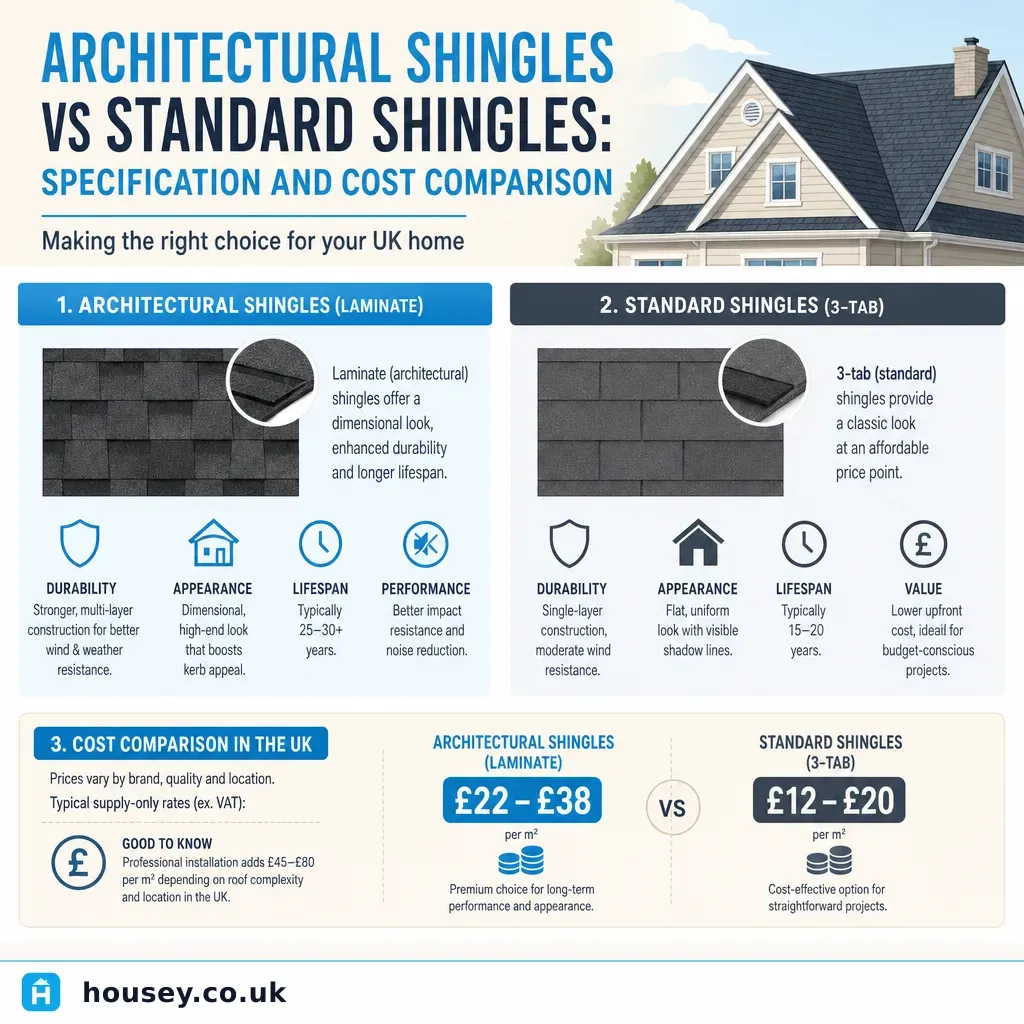
Architectural Shingles vs Standard Shingles: Specification and Cost Comparison
Architectural (laminate) shingles use a multi-layer construction, typically 3–5 mm thick, with better wind resistance and longer warranties than standard three-tab shingles at 2–3 mm.
 Surveys & Inspections
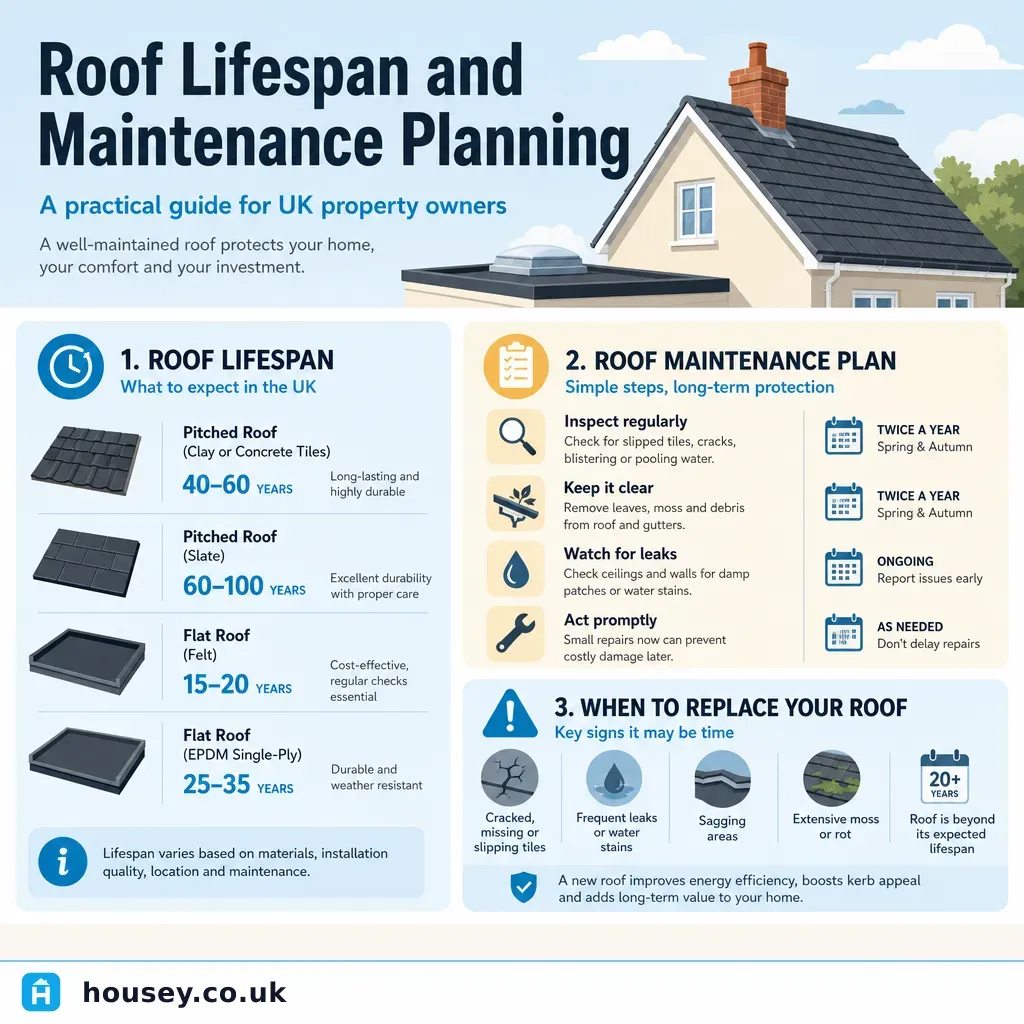
Roof Lifespan and Maintenance Planning for Property Owners
Most UK pitched roofs last 40–100+ years depending on covering material, with natural slate lasting longest and concrete tiles typically 40–60 years.
 Surveys & Inspections
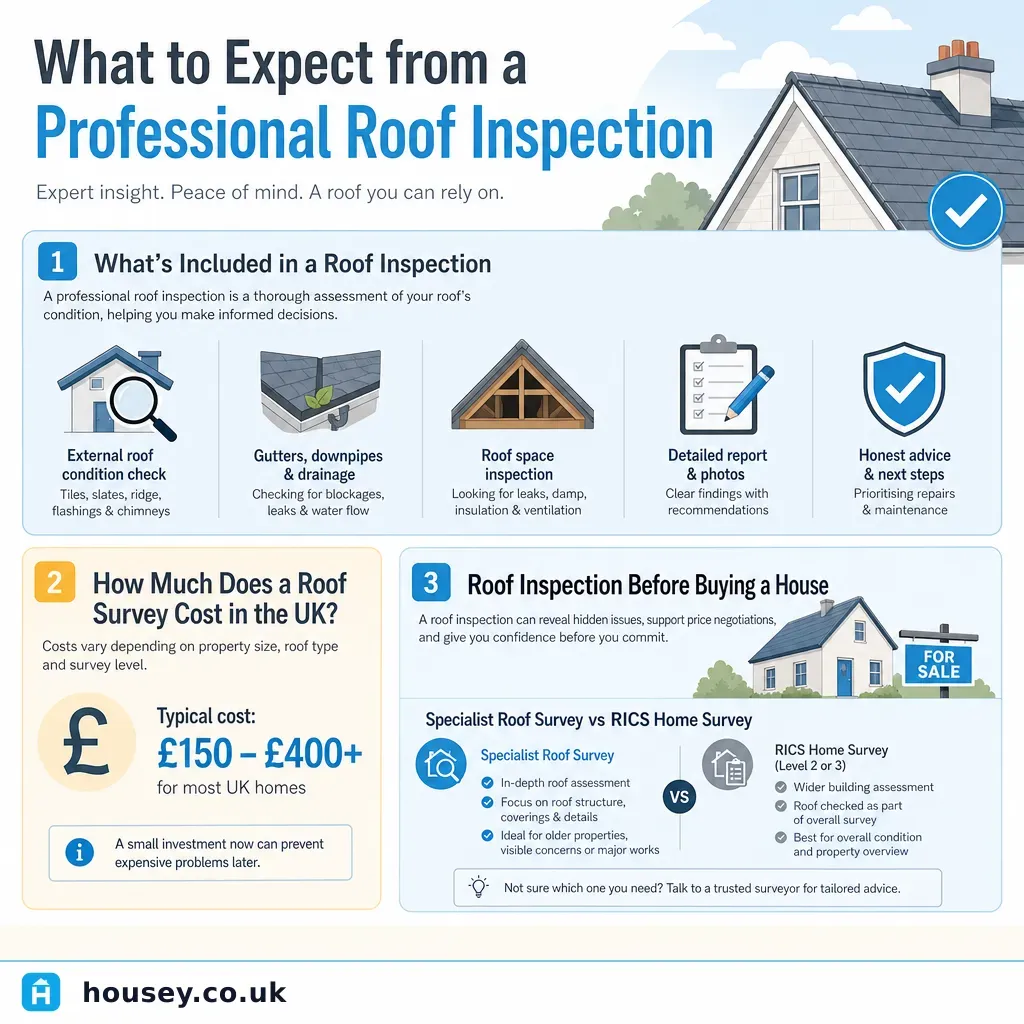
What to Expect from a Professional Roof Inspection
A professional roof inspection involves a qualified specialist examining your roof coverings, flashings, mortar, gutters, and structure.
 Surveys & Inspections
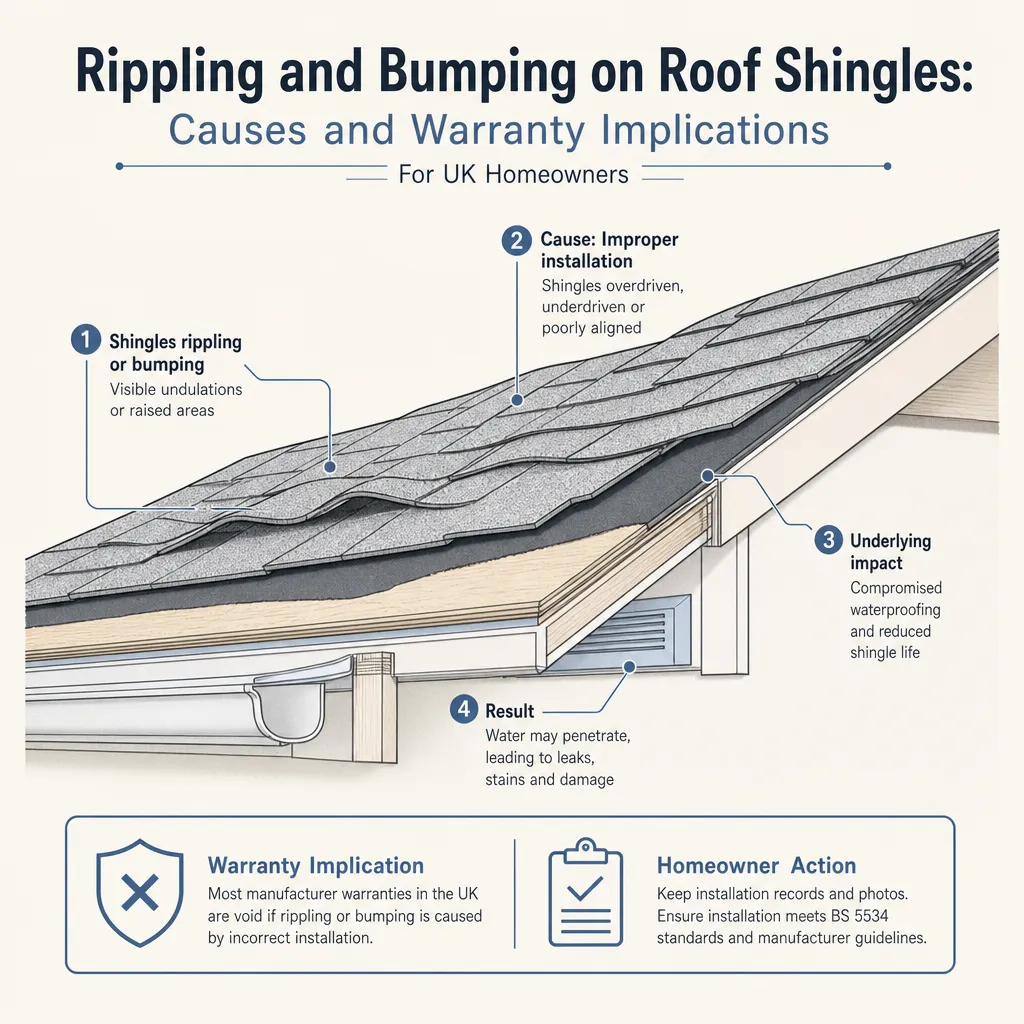
Rippling and Bumping on Roof Shingles: Causes and Warranty Implications
Rippling or bumping on roof shingles is almost always caused by installation error — typically inadequate fastening or a damp, uneven substrate — rather than a product defect.