Roof Lifespan and Maintenance Planning for Property Owners
By Housey · Last reviewed 1st of June 2026
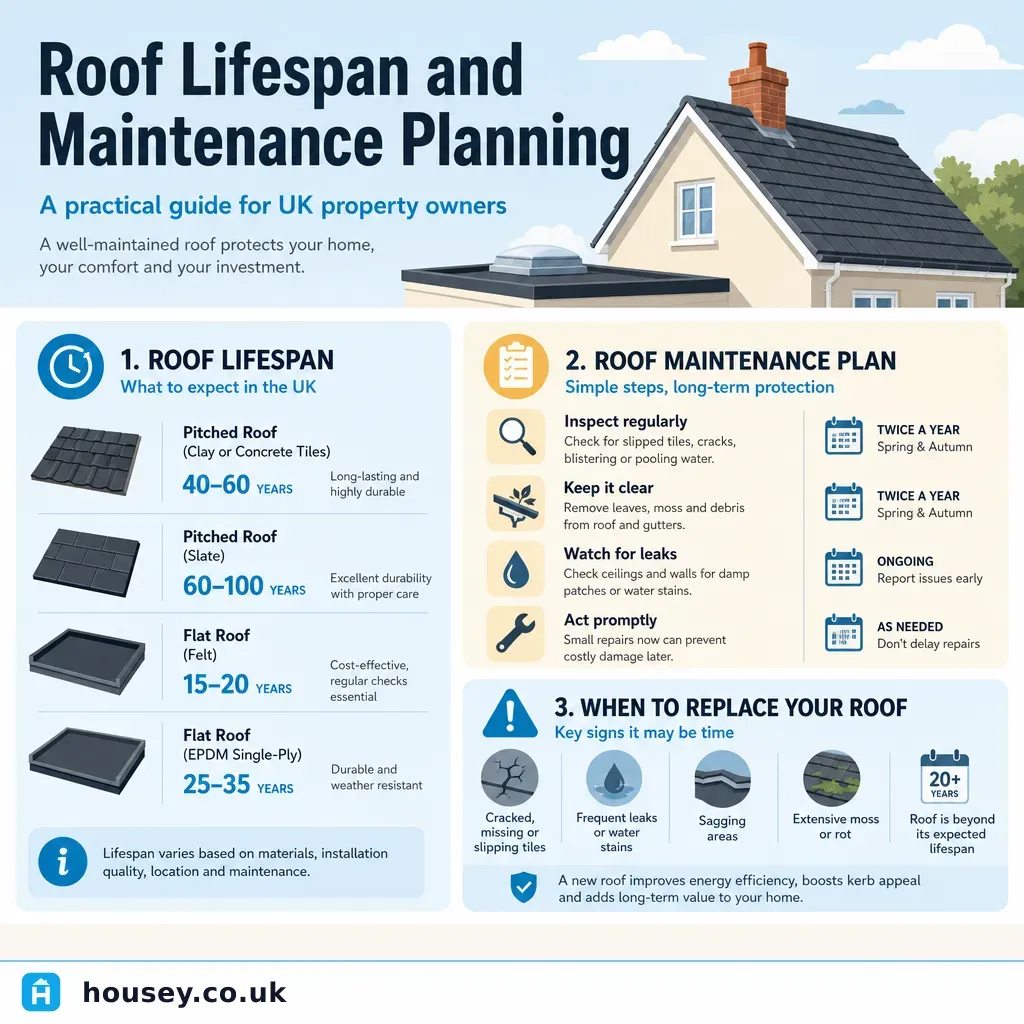
Roof Lifespan and Maintenance Planning for Property Owners
The roof is one of the most expensive components of a UK property to repair or replace, yet it is often overlooked until a problem becomes visible indoors. Understanding how long different roof types last — and what maintenance keeps them serviceable — helps property owners plan expenditure, avoid costly emergency repairs, and make informed decisions when buying or commissioning surveys.
Key points
- Clay plain tiles typically last 60–100 years; natural slate 80–150 years; concrete interlocking tiles 40–60 years; single-ply flat roof membranes (EPDM/TPO/PVC) 20–30 years.
- The RICS Home Survey Standard rates visible roof defects on a 1–3 condition scale; a Condition 3 rating indicates urgent repair is needed and is flagged prominently in survey reports.
- Building Regulations Approved Document C covers weather-resistance and moisture management for roofs; BS 5250 provides the companion standard for ventilation of roof voids.
- Like-for-like replacement of a roof covering does not normally require a building regulations application, but listed buildings need listed building consent and conservation area properties may need planning permission before changing materials.
- Replacing the complete covering on a three-bedroom semi-detached house costs indicatively £5,000–£15,000+, depending on pitch, access, materials, and region. (Indicative UK costs, last reviewed 2026-06-01; always obtain written quotes.)
How long does a UK roof last?
Lifespan depends primarily on the covering material, with installation quality and maintenance history playing a significant secondary role. The table below summarises typical ranges for the most common UK roof types.
Roof covering | Typical lifespan | Main maintenance requirements | Common early failure signs |
|---|---|---|---|
Natural slate | 80–150 years | Inspect fixings (nail sickness); repoint verges | Slipping slates; delamination; open verge joints |
Clay plain tiles | 60–100 years | Repoint ridge and hip tiles periodically | Broken or slipped tiles; failed ridge mortar |
Lead (flashings/valleys) | 60–100+ years | Inspect joints; check for fatigue cracking | Splits at bossed joints; open laps |
Concrete interlocking tiles | 40–60 years | Remove moss; check ridge pointing | Surface erosion; pointing failure; slippage |
Fibre cement slate | 30–40 years | Visual inspection for cracks | Brittleness; moisture absorption |
GRP (fibreglass) flat roof | 25–40 years | Inspect gel coat; clear drainage outlets | Crazing; delamination near upstands |
Single-ply membrane (EPDM/TPO/PVC) | 20–30 years | Inspect seams and upstands annually | Lifted seams; cracking around penetrations |
Built-up felt flat roof | 15–25 years | Annual inspection; ensure free drainage | Ponding water; blistering; splits |
Indicative ranges. Actual lifespan varies with exposure, pitch, ventilation, and maintenance history.
Factors that accelerate deterioration
Several conditions common in UK properties reduce a roof below its expected service life.
Poor ventilation. Cold-roof flat roofs and pitched roofs without adequate eaves cross-ventilation trap moisture, leading to timber rot and premature felt failure. BS 5250 and NHBC Standards both address minimum ventilation requirements, but many pre-1990s properties were built before current guidance was established.
Blocked drainage. Gutters and downpipes clogged with leaves and debris allow water to back up under roof coverings. This is among the most frequent causes of early deterioration and is largely preventable with twice-yearly clearing.
Poor original installation. Tiles laid at too shallow a pitch for the material, insufficient flashing laps, or flat roof upstands below the minimum height allow water ingress that may remain hidden for years before causing visible internal damage.
Nail sickness. Older slate roofs fixed with iron or steel nails — common in UK properties built before approximately 1950 — experience corrosion over time, causing widespread slippage. Because it typically affects the whole roof rather than isolated areas, full re-slating is often more economical than piecemeal repair once slippage is significant.
Environmental exposure. Coastal, upland, and high-wind locations experience faster weathering. North-facing slopes accumulate moss and lichen that retain moisture and accelerate tile degradation over time.
Planning a maintenance programme
A structured inspection schedule helps you catch problems early, when repair costs are typically lower than emergency or extensive remediation.
Recommended inspection frequency
- Every 2–3 years as a minimum for most UK roof types.
- After any significant storm or prolonged freeze–thaw period.
- Before buying or selling a property.
- When new damp patches or staining appear on top-floor ceilings.
- When the roof covering approaches the upper end of its expected lifespan.
Homeowner maintenance checklist
Budget planning
Homeowners can plan maintenance reserves by estimating the current age of the covering, its material type (see table above), approximate remaining years of useful life, and the indicative replacement or major repair cost for the relevant area and material. Dividing the estimated cost by the remaining years gives a rough annual reserve figure. A professional inspection report provides a more precise condition grade and cost estimate.
Repair or replace? A practical decision guide
- Choose localised repair when fewer than 10–15% of tiles or slates are affected, flashings are broadly sound, and the underlying structure shows no moisture damage.
- Consider partial re-covering when one slope has deteriorated faster than others but matching materials are available.
- Plan for full replacement when the covering has reached or exceeded its expected lifespan, when widespread slippage or pointing failure is present, or when a professional inspection reveals interacting defects across multiple areas.
- Obtain a structural assessment before any covering work where there is sagging, bowing, or timber decay — a new covering will not resolve an underlying structural problem.
Red flags: arrange a professional inspection without delay
- Visible sagging or uneven lines along any roof slope when viewed from outside.
- Daylight visible through the covering when looking up from within the loft.
- Multiple rooms on the top floor showing new damp patches or ceiling staining after rain.
- Tiles, slates, or ridge sections falling, or multiple units missing after a storm.
- A flat roof with persistent ponding water that has not drained within 48 hours of rainfall.
- A loft with a damp smell, visible mould on timbers, or saturated mineral-wool insulation.
- Any roof movement in a property with known structural concerns or a history of subsidence.
When to get professional help
A ground-level visual check is a useful first step, but it cannot reveal defects hidden beneath the covering, within the roof void, or at flashings obscured by parapets or abutments. Arranging a roof survey from a qualified roofer or building surveyor provides a systematic, written condition assessment suitable for maintenance planning, insurance, and conveyancing. Where internal symptoms are present but the source is unclear, a specific defect survey — focused on diagnosing a single problem — is often more efficient than a general inspection.
If a survey identifies signs of rafter decay, sagging, or concerns about the roof structure, a structural survey by a chartered structural engineer is the appropriate next step. Carrying out covering repairs without first addressing structural problems is both wasteful and potentially unsafe.
How Housey can help
Housey connects property owners with qualified roofers and surveyors who carry out roof surveys across the UK. Submit a request to receive quotes from local professionals who can assess your roof's current condition, advise on the most cost-effective repair or replacement strategy, and provide written reports suitable for insurance or conveyancing purposes.
Frequently asked questions
How often should I have my roof professionally inspected?
Every 2–3 years is a reasonable baseline for most UK properties. Older roofs approaching the end of their expected lifespan benefit from more frequent checks, and flat roofs warrant annual inspection. Always arrange an inspection after a significant storm and before exchange of contracts on a purchase or sale. A written report gives you a baseline against which to measure any future deterioration.
Can I tell if my roof needs replacing from inside the house?
Some warning signs are visible internally: daylight through the covering, damp patches on top-floor ceilings after rain, a musty smell in the loft, or water staining on roof timbers. These are worth taking seriously, but they do not confirm that full replacement is needed — a single failed flashing can produce similar symptoms at far lower remedial cost. A professional inspection establishes the extent and cause of deterioration before you commit to expenditure.
Do I need building regulations approval to replace my roof covering?
Like-for-like replacement in the same material generally does not require a formal building regulations application, though your local building control body can confirm this. If you are changing materials, adding insulation, or making structural alterations, building regulations are more likely to apply. Listed buildings need listed building consent before any material is changed, and conservation areas may restrict visible materials — check with your local planning authority before starting work.
What is nail sickness, and how serious is it?
Nail sickness is the progressive corrosion of iron or steel nails used to fix slates, most common in UK properties built before approximately 1950. As nails corrode they lose grip and slates slip — typically across the whole roof rather than in isolated patches. Widespread re-nailing is rarely practical, so full re-slating is often more cost-effective once slippage becomes significant. A roof inspection can confirm whether nail sickness is the primary cause.
Sources and further reading
Useful next reads
 Surveys & Inspections
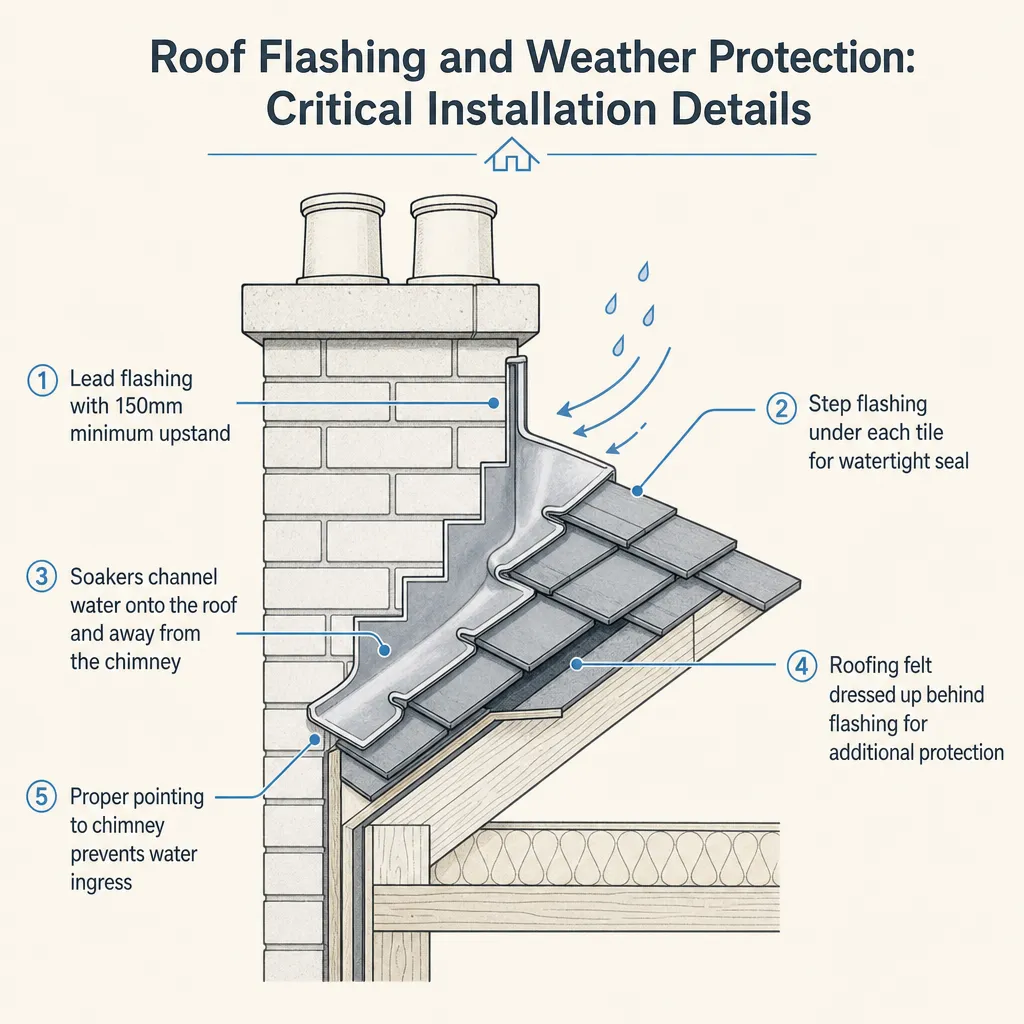
Roof Flashing and Weather Protection: Critical Installation Details
Roof flashing is waterproof material — usually lead or a metal alternative — installed at junctions between roof surfaces and vertical elements such as chimneys, dormers, and abutments.
 Surveys & Inspections
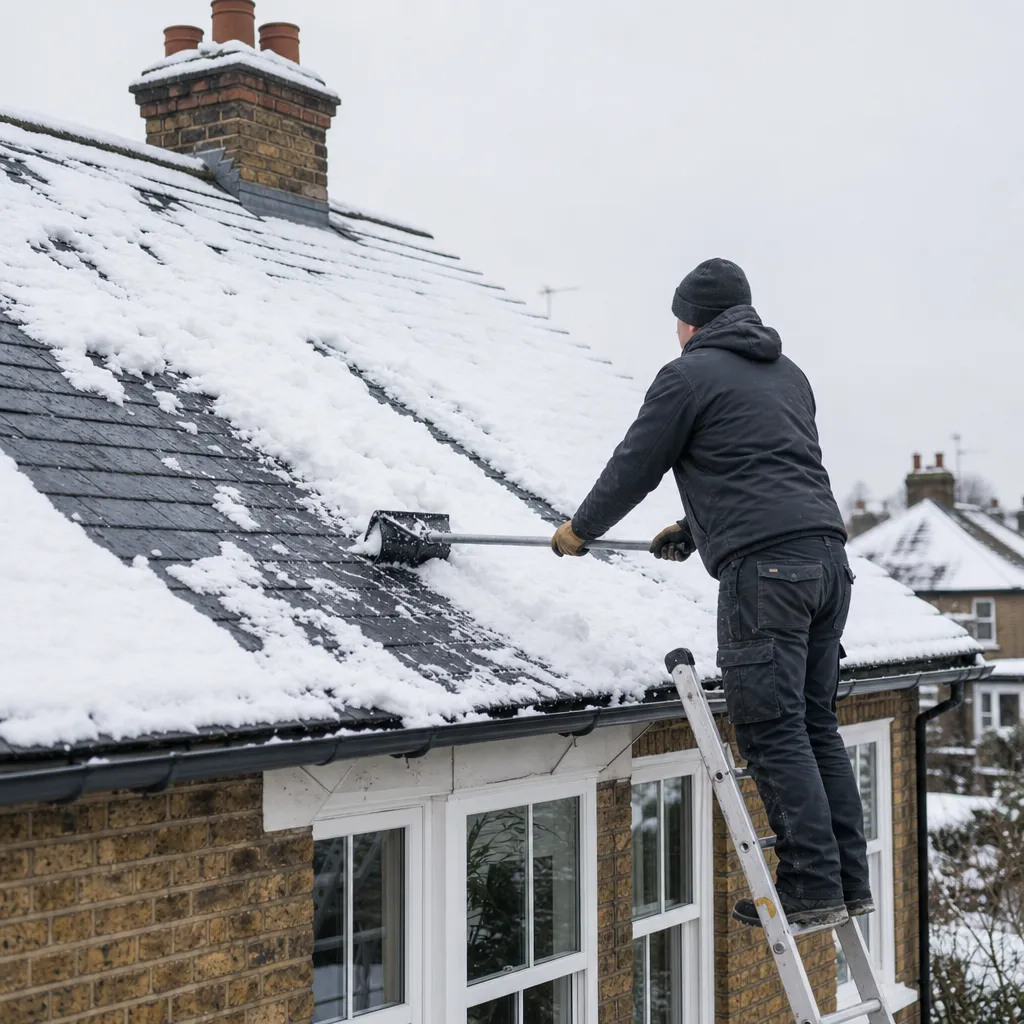
Roof Snow Removal: Safety and Structural Considerations
In the UK, most pitched roofs in good condition can tolerate typical snowfall without intervention.
 Surveys & Inspections
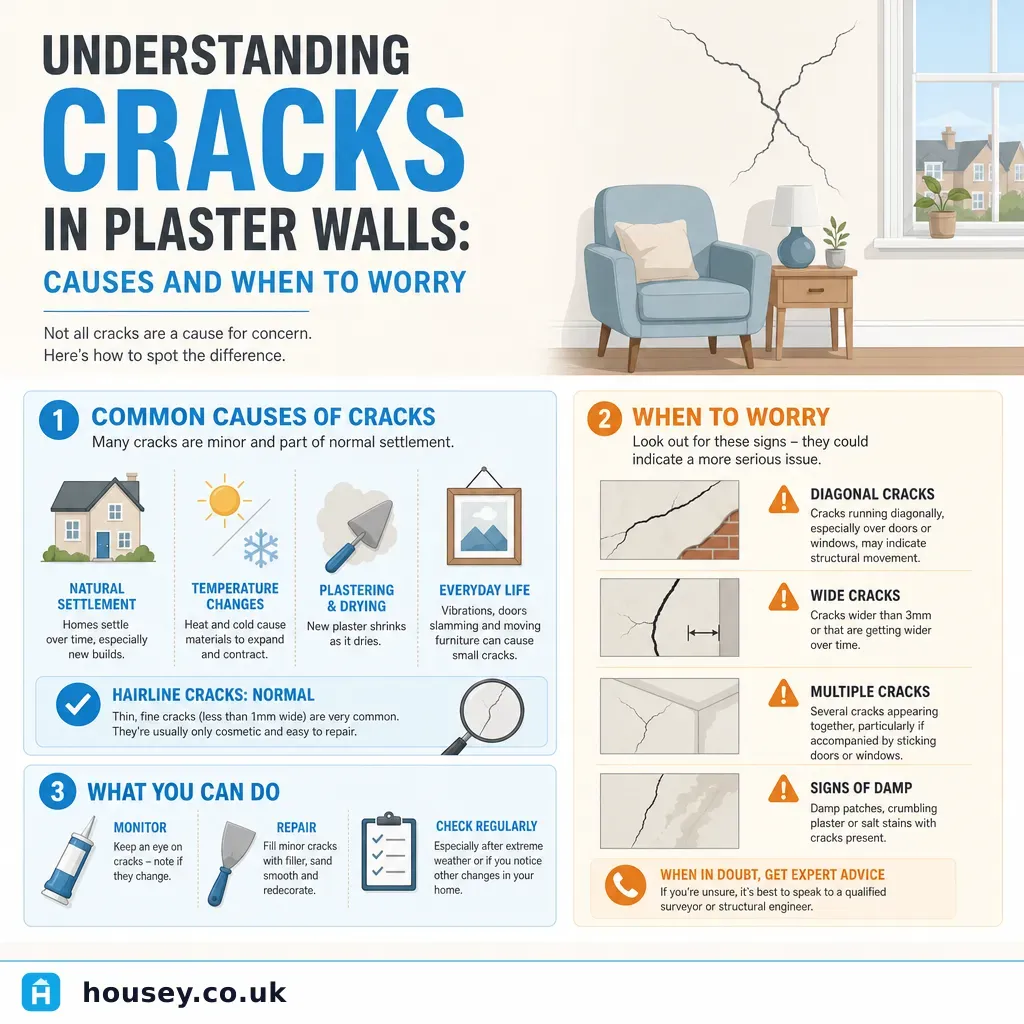
Understanding Cracks in Plaster Walls: Causes and When to Worry
Most hairline plaster cracks are cosmetic, caused by seasonal shrinkage or minor settlement.
 Surveys & Inspections
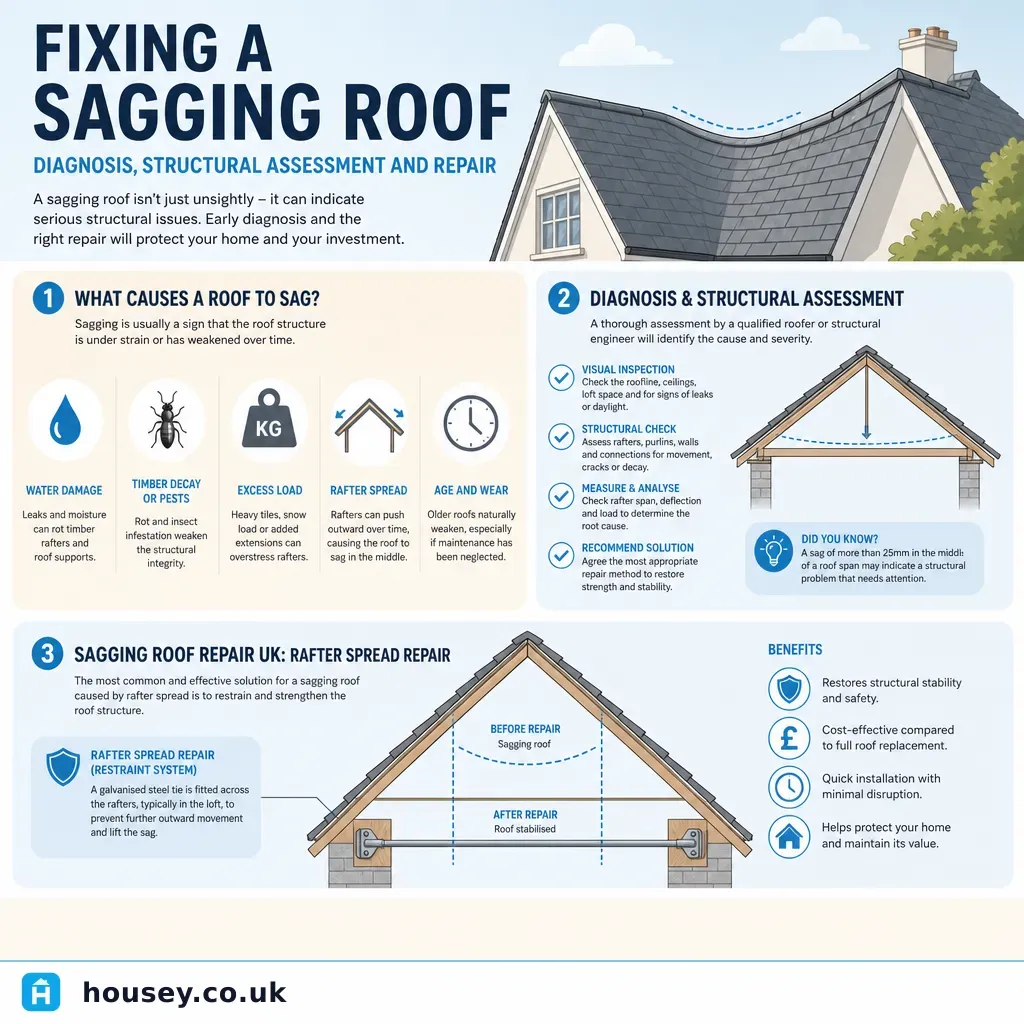
Fixing a Sagging Roof: Diagnosis, Structural Assessment and Repair
A sagging roof usually points to failed or overloaded roof timbers, rafter spread, or a compromised ridge board.
 Surveys & Inspections
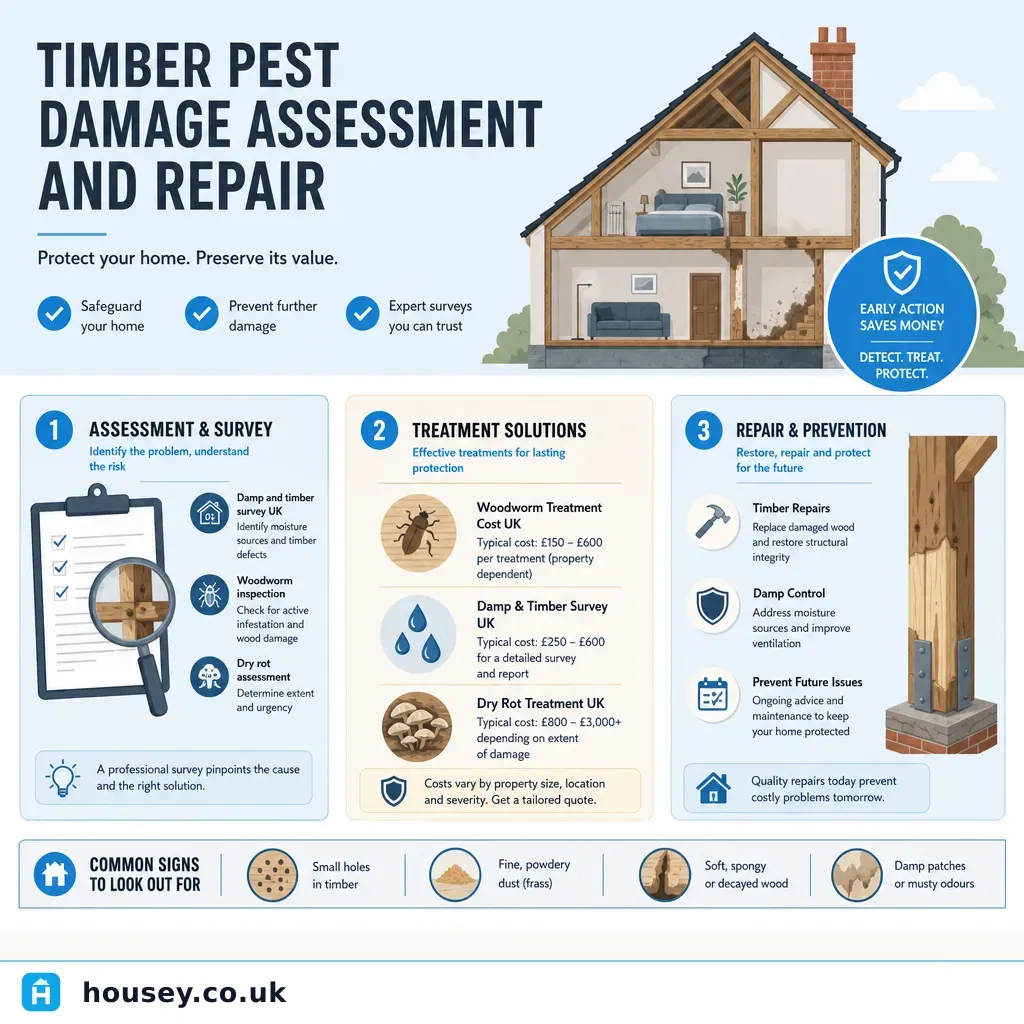
Timber Pest Damage Assessment and Repair
Timber pest damage in UK homes is most commonly caused by Common Furniture Beetle (woodworm), Death Watch Beetle, or fungal decay such as dry rot.