Safe Property Viewing Practices: Protecting Yourself During Inspections
By Housey · Last reviewed 18th of May 2026
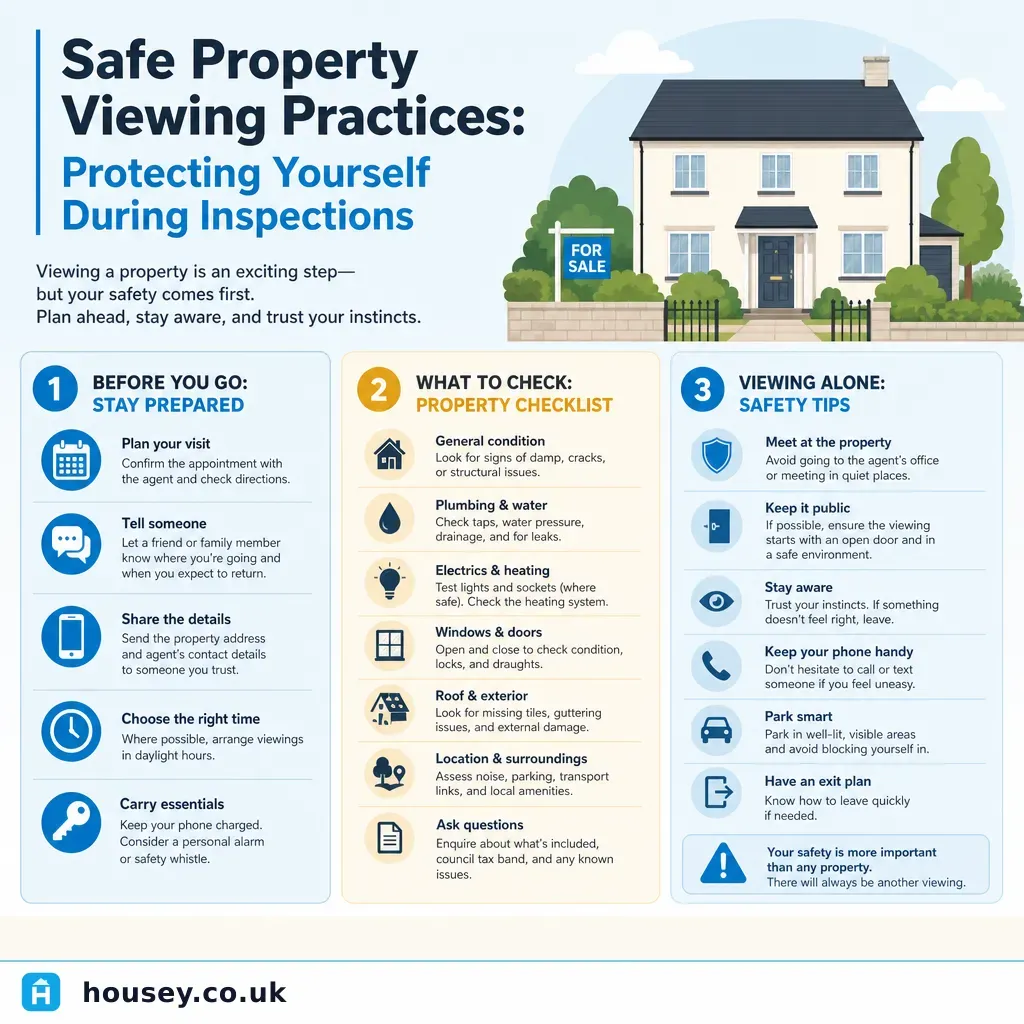
Safe Property Viewing Practices: Protecting Yourself During Inspections
Property viewings are a routine part of buying a home across England and Wales, yet they involve entering unfamiliar buildings and, in some cases, meeting vendors without any third party present. Whether you are viewing a 1930s semi through a local estate agent or attending a private sale in a rural setting, consistent habits protect both your personal safety and the quality of information you gather before committing to an offer.
Key points
- Estate agents in the UK must comply with the Money Laundering, Terrorist Financing and Transfer of Funds Regulations 2017, which require identity verification of vendors before a property can be listed for sale.
- The National Trading Standards Estate and Letting Agency Team (NTSELAT) requires agents to provide material information upfront — including tenure (freehold or leasehold), council tax band, and EPC rating — under Parts B and C of its guidance.
- HM Land Registry title registers are searchable online for £3 per title and show previous sale prices, registered charges, and ownership history — useful background before any viewing.
- A second viewing before submitting an offer is standard practice; most agents expect the request and should accommodate it without pressure.
- RICS Level 3 Building Surveys are particularly advisable for properties built before 1930, those that have been extended or significantly altered, or any home where a viewing reveals visible defects.
Personal safety before and during viewings
The most reliable precaution is to tell someone your plans before you leave. Share the full property address, the name of the agent or vendor, and an expected return time. This applies to all viewings — not only private ones.
Agent-accompanied versus private viewings
Most viewings arranged through a regulated estate agent will have a member of staff present, and the agent will already have conducted basic identity verification of the vendor under the Money Laundering Regulations 2017. Private viewings — arranged directly with a seller through a private listing — carry different considerations:
- No intermediary has verified the seller's identity.
- The seller may be present throughout without a neutral third party.
- You have less immediate recourse if something feels wrong.
For private viewings, consider asking a trusted friend or family member to accompany you, particularly on a first visit to an unfamiliar property or area.
Viewing without accompaniment
If you attend a viewing alone, share your live location via your mobile with a contact you trust. Keep your phone charged, accessible, and on a working signal. It is entirely reasonable to decline entry, to leave early, or to reschedule — a legitimate seller or agent will not pressure you otherwise.
What to inspect during the viewing
A viewing is your primary opportunity to assess the property's condition before commissioning a formal survey. A systematic approach — rather than simply following the agent's tour — helps you gather consistent information across multiple properties.
Structure and exterior
Walk around the exterior before entering where possible. Look for:
- Cracks in brickwork, particularly stepped or diagonal cracks running through mortar joints, which may suggest settlement or subsidence.
- Horizontal cracks in external walls, which can indicate more serious structural stress.
- Visible damp patches, staining, or missing pointing on exterior walls.
- The condition of the roof, guttering, and chimney stacks from ground level.
Interior: damp, services, and condition
Inside, pay attention to:
- A musty smell, particularly in ground-floor rooms, cellars, or older unoccupied properties.
- Discolouration, tide marks, or fresh paint applied in isolated patches, which can occasionally indicate attempts to conceal damp.
- The age and condition of the boiler and consumer unit (fuse box).
- Whether replacement windows carry FENSA certification, relevant for windows installed since April 2002 in England and Wales.
- Sticking doors and windows, which can indicate structural movement in some cases.
Property viewing checklist
Before you arrive
During the viewing
Questions to ask the estate agent or vendor
Red flags that warrant closer investigation
The following observations during a viewing should prompt further professional scrutiny before making an offer, rather than immediate withdrawal:
- Cracks wider than approximately 5 mm, or stepped cracks running through brick courses that appear recent or are widening.
- Sloping or uneven floors, particularly in Victorian or Edwardian terraces with original suspended timber floors.
- Ceiling staining on upper floors, which may indicate a roof leak or plumbing failure above.
- Very recent cosmetic redecoration in an otherwise tired property, especially with a strong smell of fresh plaster or paint in isolated areas.
- A high frequency of recent sales — HM Land Registry data may show the property has changed hands several times within a short period, which can indicate a persistent unresolved problem.
- Reluctance to provide documentation for works carried out, or evasive answers about planning history.
None of these observations is automatically a dealbreaker, but each warrants investigation before proceeding to exchange.
When to get professional help
If a viewing raises structural, damp, or roof concerns, discuss this with a RICS-qualified surveyor before instructing only a standard Level 2 Home Survey. A Level 3 Building Survey provides a detailed assessment of construction, defects, and maintenance requirements — advisable for properties built before 1930, significantly altered homes, or any property where a viewing has revealed potential red flags.
A solicitor should be consulted promptly if you are concerned about lease length, undisclosed alterations, or any ownership disputes identified through the Land Registry.
How Housey can help
If a viewing has raised questions about a property's condition, a RICS home survey arranged through Housey connects you with qualified surveyors across the UK, covering all property types from Victorian terraces to new-build flats.
Frequently asked questions
How many times should I view a property before making an offer?
Most buyers attend two viewings — a first to assess the property broadly and a second to look more carefully at areas of concern. For older, larger, altered, or unusual properties, a third viewing is entirely reasonable and should not be refused by a well-managed vendor. There is no legal limit on the number of viewings you can request before submitting an offer.
Is it safe to view a property without an estate agent present?
It can be safe, but additional precautions are advisable. Before leaving, tell a trusted contact exactly where you are going and share the full property address. Consider taking a friend, particularly on a first visit to an unfamiliar area. Keep your mobile phone charged and accessible throughout. Private viewings without an estate agent present are more common in rural areas and private sales.
Can I take photographs during a property viewing?
Usually yes, but ask for permission from the estate agent or vendor before you begin. Photographs help you compare properties once details start to blur and allow you to record areas of concern to raise with a RICS surveyor before making an offer. Avoid photographing personal belongings or any private documents visible in the property.
What should I look for in the garden and exterior?
Look at boundary features such as fences and walls — ownership affects future maintenance responsibilities. Check the condition of any outbuildings or extensions, note whether drainage inspection covers are present, and assess the roof, chimney stacks, and external walls from ground level. If the property backs onto neighbouring land or a commercial premises, ask about any known issues.
Sources and further reading
- Money Laundering, Terrorist Financing and Transfer of Funds Regulations 2017 — legislation.gov.uk
- NTSELAT material information guidance — National Trading Standards
- Search for land and property information — GOV.UK
- Home surveys — RICS
Useful next reads
 Surveys & Inspections
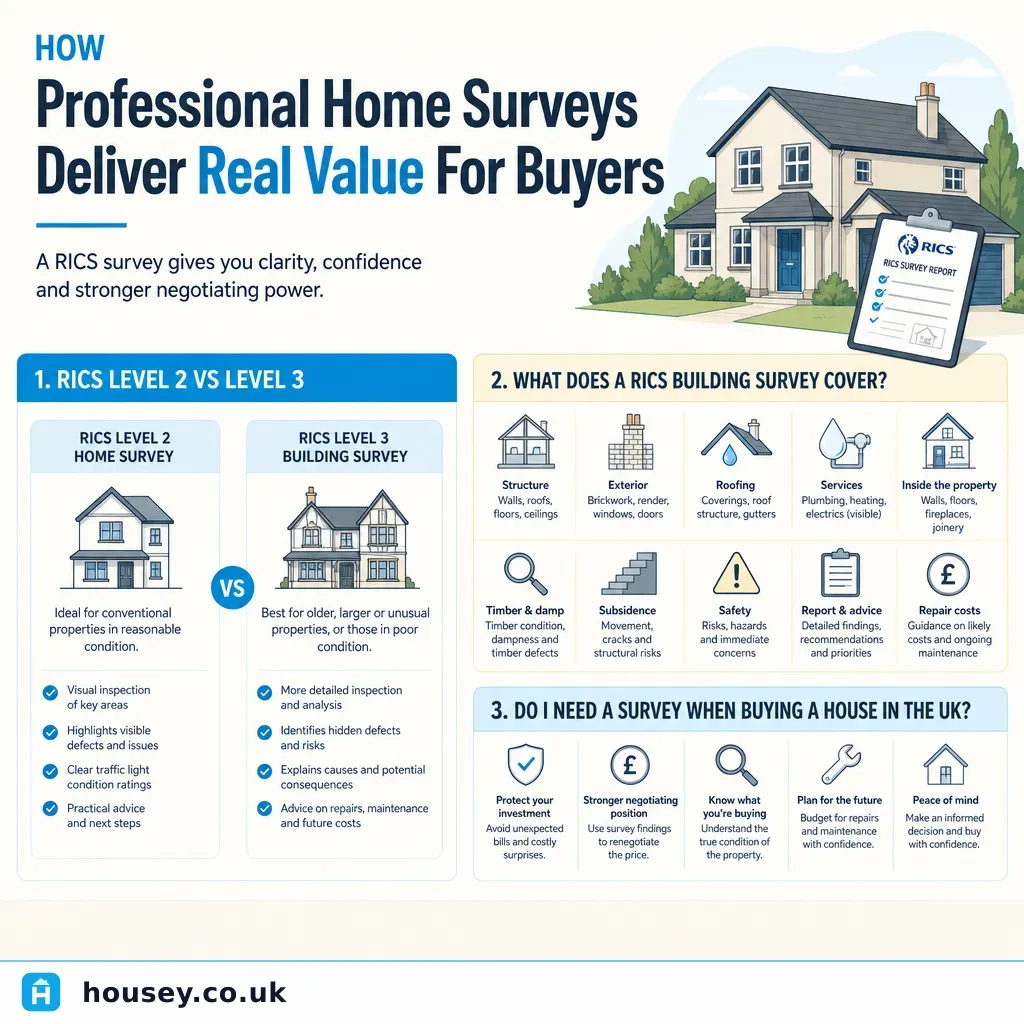
How Professional Home Surveys Deliver Real Value For Buyers
A professional home survey by a RICS-registered surveyor can identify defects, legal compliance gaps, and cost liabilities before exchange of contracts, giving buyers an evidence base for negotiation or withdrawal.
 Surveys & Inspections
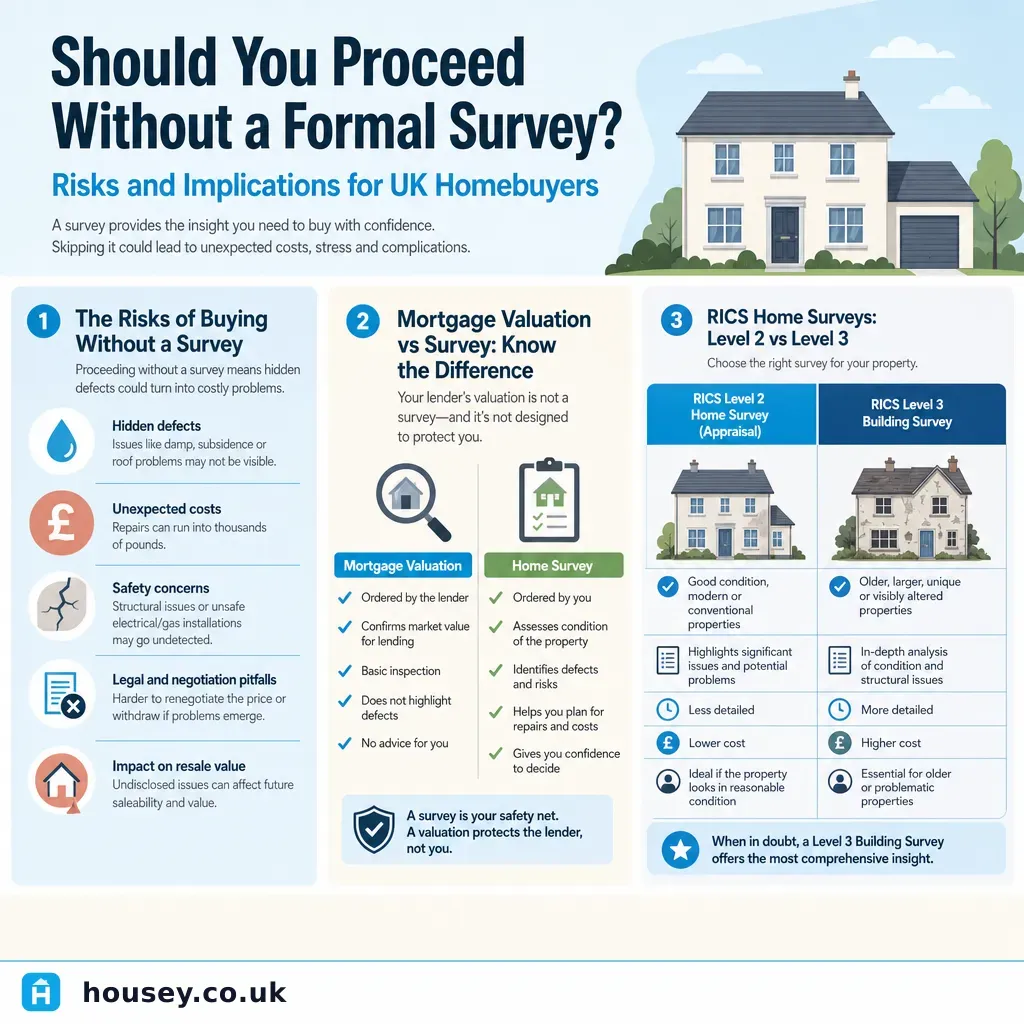
Should You Proceed Without a Formal Survey? Risks and Implications
In England and Wales there is no legal requirement to obtain a survey before exchange, but caveat emptor means any undisclosed defects become your problem the moment contracts are exchanged.
 Surveys & Inspections
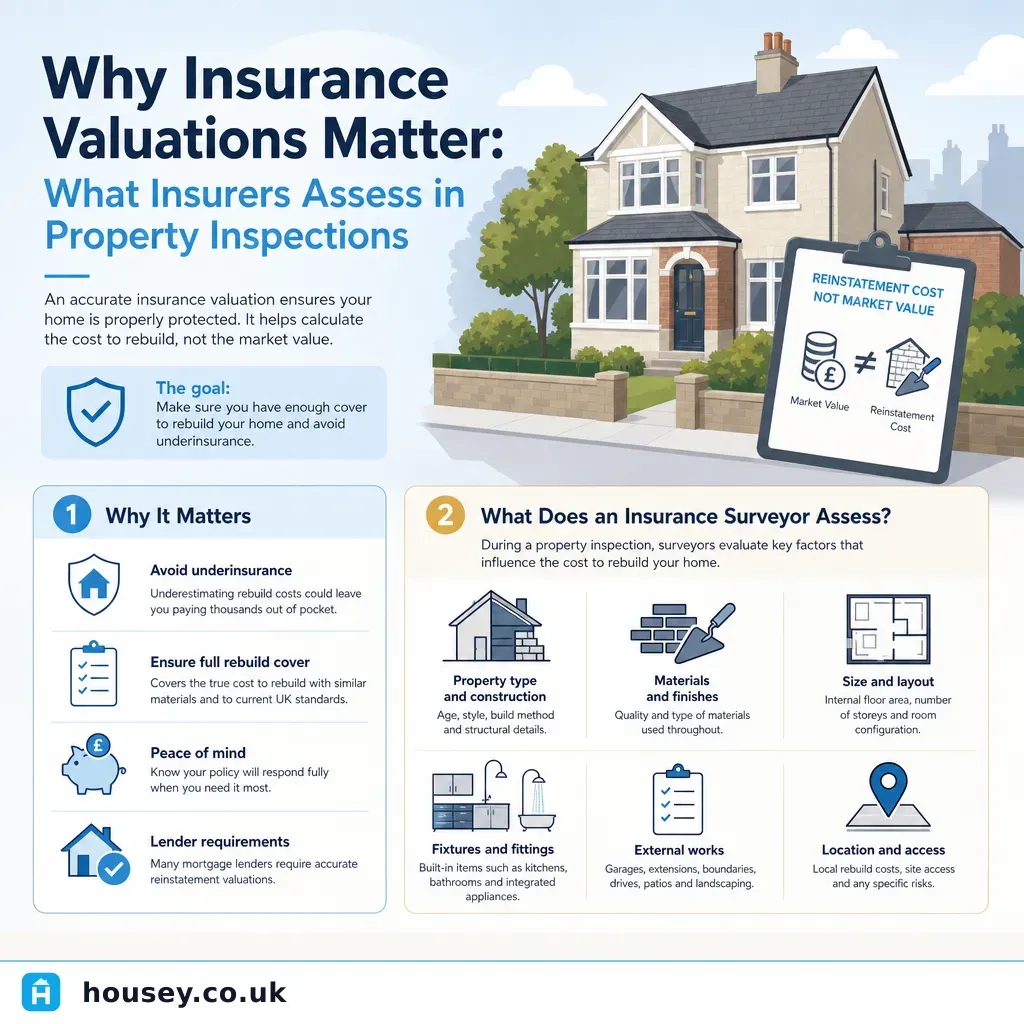
Why Insurance Valuations Matter: What Insurers Assess in Property Inspections
An insurance valuation establishes the reinstatement cost of your property — what it would cost to demolish and rebuild it — not its market value.
 Surveys & Inspections
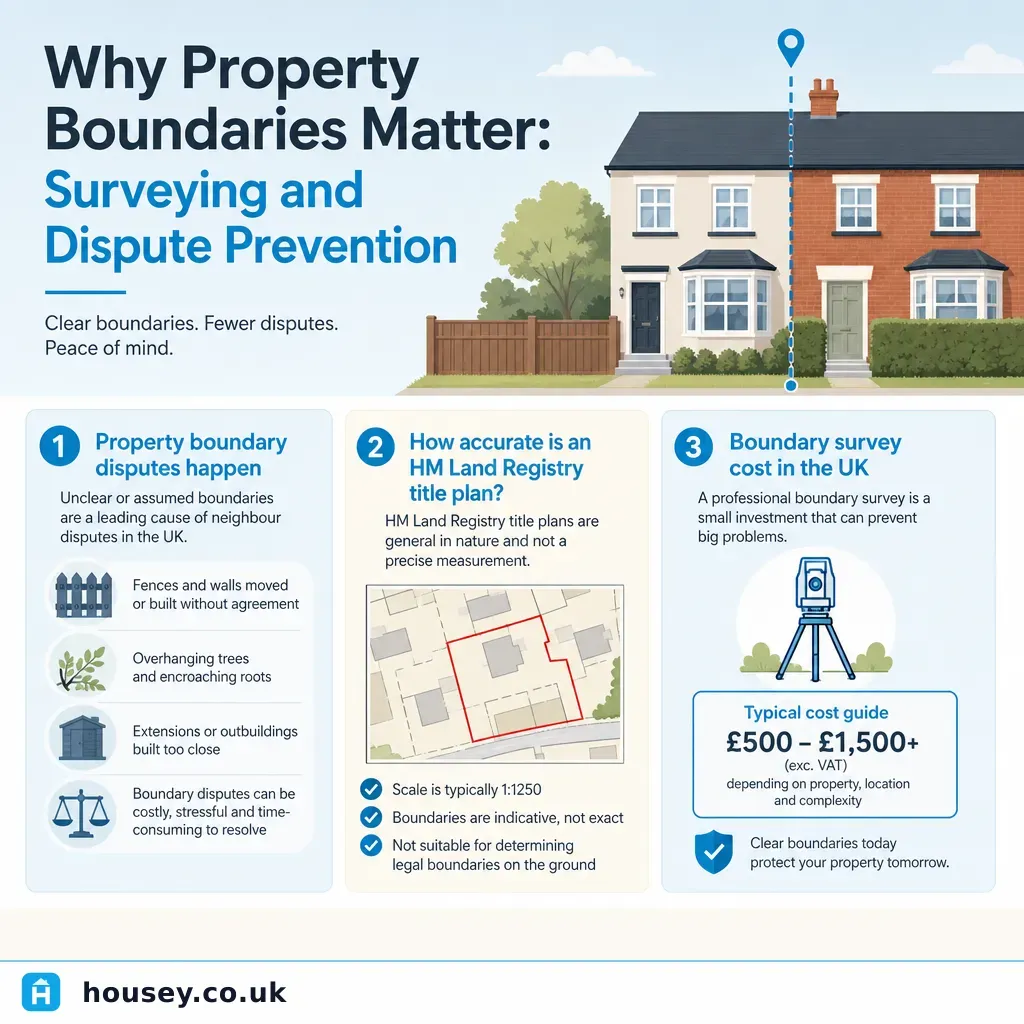
Why Property Boundaries Matter: Surveying and Dispute Prevention
Property boundaries in England and Wales are recorded as general boundaries by HM Land Registry — not precise measurements.
 Surveys & Inspections
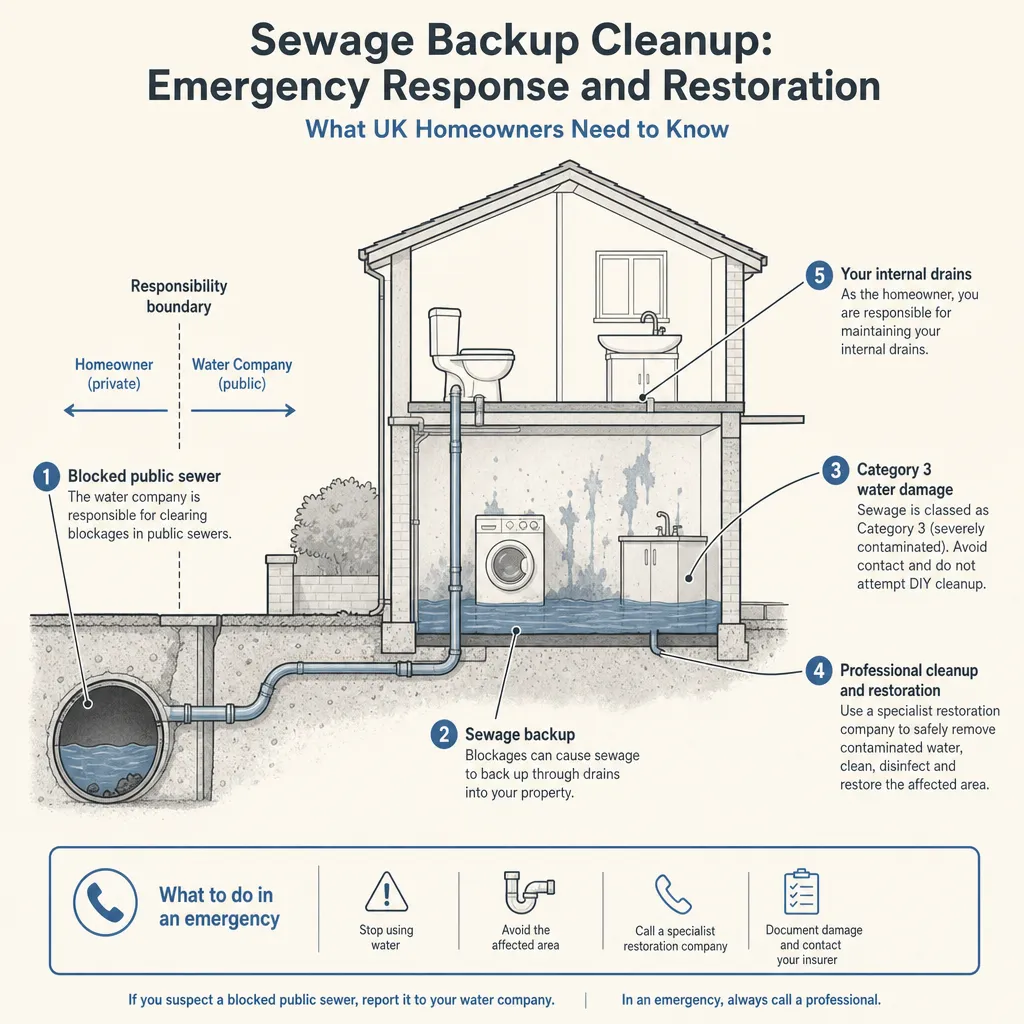
Sewage Backup Cleanup: Emergency Response and Restoration
A sewage backup should be treated as a Category 3 contamination event.