Are solar panels worth the investment for your property?
By Housey · Last reviewed 11th of May 2026
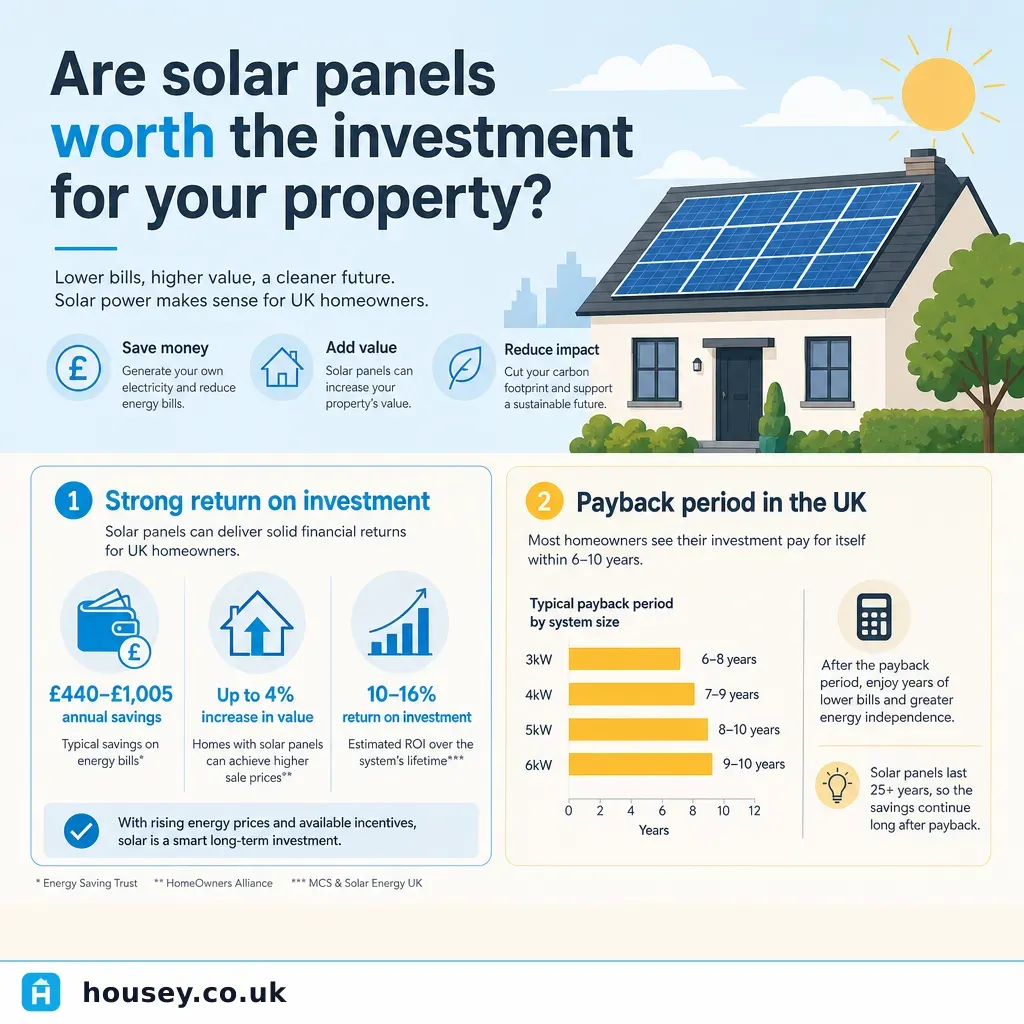
Are solar panels worth the investment for your property?
Solar panel installations have become one of the most common retrofit choices for UK homeowners, driven by rising electricity bills, improved panel efficiency, and the arrival of the Smart Export Guarantee (SEG). Whether panels are worth it depends heavily on your roof, your energy patterns, your tenure, and your time horizon — the calculation for a south-facing detached house in the south-east looks very different from a north-facing terrace in the north-west. Getting beyond the headline payback figures requires understanding what actually drives a return on a UK installation.
Key points
- Solar panels are currently subject to 0% VAT in the UK (reduced from 20% in April 2022 and extended through 2027 by HM Treasury), materially reducing the effective purchase cost.
- The Smart Export Guarantee (SEG) requires licensed electricity suppliers with 150,000 or more customers to offer a tariff for surplus electricity exported to the grid; export rates vary significantly by supplier and tariff.
- A typical 4 kWp solar system for a UK home costs approximately £5,000–£8,000 installed (indicative UK costs, last reviewed 2026-05-11; obtain comparative quotes as prices vary by system size, roof type, and region).
- MCS (Microgeneration Certification Scheme) certification is required for both the installer and the installation to qualify for SEG export payments — uncertified installations are ineligible.
- Solar panels do not usually require planning permission on a house (permitted development), but listed buildings, conservation areas, and flats face additional restrictions.
Is the financial return on solar panels realistic?
The core calculation compares upfront cost against annual savings. Savings come from two sources: electricity you generate and use directly (displacing grid electricity at the full retail rate) and surplus electricity you export to the grid (paid via the SEG).
Factors that improve the return:
- South, south-east, or south-west facing roof at 30–45° pitch with minimal shading
- High daytime electricity consumption — home workers, EV owners charging during daylight hours
- High grid electricity tariff (every kWh you self-consume avoids paying the full retail rate)
- Battery storage alongside panels (increases self-consumption; adds cost but can improve whole-system returns when combined with a time-of-use tariff)
Factors that reduce the return:
- North or north-west facing roof
- Significant shading from trees, chimneys, or neighbouring buildings
- Electricity use concentrated in the evening when panels are not generating
- Flat or very low-pitch roof without tilt frames
- Leasehold property — installation may require freeholder and mortgage lender consent
Worked scenario: 1970s semi-detached in the Midlands
Property: 1970s semi-detached house, south-facing rear roof, 30° pitch, two adults working from home, annual electricity consumption of 4,200 kWh.
System: 4 kWp, 10 panels, no battery.
Item | Estimate |
|---|---|
Annual generation (PVGIS estimate) | approx. 3,400 kWh |
Self-consumed electricity (est. 50%) | 1,700 kWh × £0.24/kWh = approx. £408/year |
SEG export income (est. 50%) | 1,700 kWh × £0.05/kWh = approx. £85/year |
Total annual benefit | approx. £493/year |
System cost | approx. £6,500 installed |
Simple payback period | approx. 13 years |
These figures are illustrative. Actual generation, self-consumption rates, grid tariffs, and SEG rates will vary. Use the Energy Saving Trust solar calculator or commission a solar survey for property-specific estimates.
Decision tree: is solar right for your property?
- Choose solar if you have a south, south-east, or south-west facing roof with minimal shading and plan to remain in the property for at least 10 years.
- Consider adding battery storage if you have high evening electricity use, an EV to charge, or access to a time-of-use tariff with cheap overnight rates.
- Get a solar survey first if you are unsure about your roof's condition, structural suitability, or shading profile — a professional assessment prevents investing in a poorly performing system.
- Check leasehold terms before proceeding if you own a flat or leasehold house — freeholder consent and mortgage lender approval may both be required.
- Do not proceed without MCS certification — only MCS-certified installations qualify for SEG payments, and uncertified work may affect your buildings insurance or mortgage conditions.
- Check with your local planning authority if your property is listed, in a conservation area, or if panels would face a public highway — permitted development rights do not apply universally.
What does a solar survey assess?
Before any installation, a qualified assessor should evaluate:
- Roof orientation, pitch, and shading using site assessment tools or shade analysis software
- Roof structure and condition — panels add load and should not be fitted to a failing roof
- Available roof area and optimal panel layout to maximise generation
- Existing electrical installation, including inverter location, consumer unit capacity, and DNO (Distribution Network Operator) connection requirements
- Battery storage viability and appropriate sizing for your consumption profile
- DNO notification requirements for systems above 3.68 kW per phase
A proper survey reduces the risk of a poorly performing system, expensive retrofits, or voided warranties, and provides an independent basis for assessing installer quotes.
Homeowner checklist: before accepting a solar quote
When to get professional help
A solar survey is advisable before accepting any installation quote. Seek independent advice if:
- Your roof is more than 20 years old or shows visible defects.
- You are unsure whether planning permission is required for your specific property.
- Multiple installers give conflicting advice on system size, panel placement, or battery sizing.
- You are considering adding battery storage and want an independent view of whether it is cost-effective for your consumption profile.
- Your property is leasehold and you need to understand what consents are required before work can begin.
How Housey can help
A solar survey from a qualified assessor gives you an independent view of your roof's suitability, realistic generation estimates, and an objective check on any quotes you have already received. Housey connects you with local assessors who can provide an honest picture before you commit to an installation.
Frequently asked questions
Do solar panels add value to a UK property?
Evidence suggests solar panels can positively affect property values, particularly as EPC ratings become more important for both sales and rental compliance. However, the effect varies by location, buyer type, and market conditions. Poorly installed or uncertified systems can complicate sales or mortgage applications, so always use an MCS-certified installer and retain all installation documentation.
Can I get a grant for solar panels in the UK?
There is currently no direct government grant for residential solar panels in England. However, 0% VAT applies to solar panel purchases and installation from April 2022, extended through 2027. Some local authority and energy company schemes may offer support — check with your council and energy supplier. The ECO4 scheme covers insulation and heating measures for eligible households but does not typically cover solar PV.
Do solar panels work in winter or on cloudy days?
Solar panels generate electricity from daylight rather than direct sunlight. Output is lower in winter and on overcast days, but panels produce electricity year-round across the UK. The country's annual sunshine hours — typically 1,350–1,750 hours depending on region — are sufficient for a meaningful return over the panel lifetime.
How long do solar panels last?
Most solar panels carry a 25-year performance warranty, typically guaranteeing at least 80% of rated output at year 25. Physical panel life often extends beyond 30 years. Inverters usually need replacing after 10–15 years at an indicative cost of £500–£1,500 depending on type. Factor inverter replacement into your whole-of-life cost calculation alongside the initial installation.
Sources and further reading
- Smart Export Guarantee: guidance — GOV.UK
- Solar panels: overview — Energy Saving Trust
- MCS certified installer search — Microgeneration Certification Scheme
- PVGIS solar irradiance tool — European Commission Joint Research Centre
- Permitted development rights for householders — GOV.UK Planning Practice Guidance
Useful next reads
 Energy & Retrofit
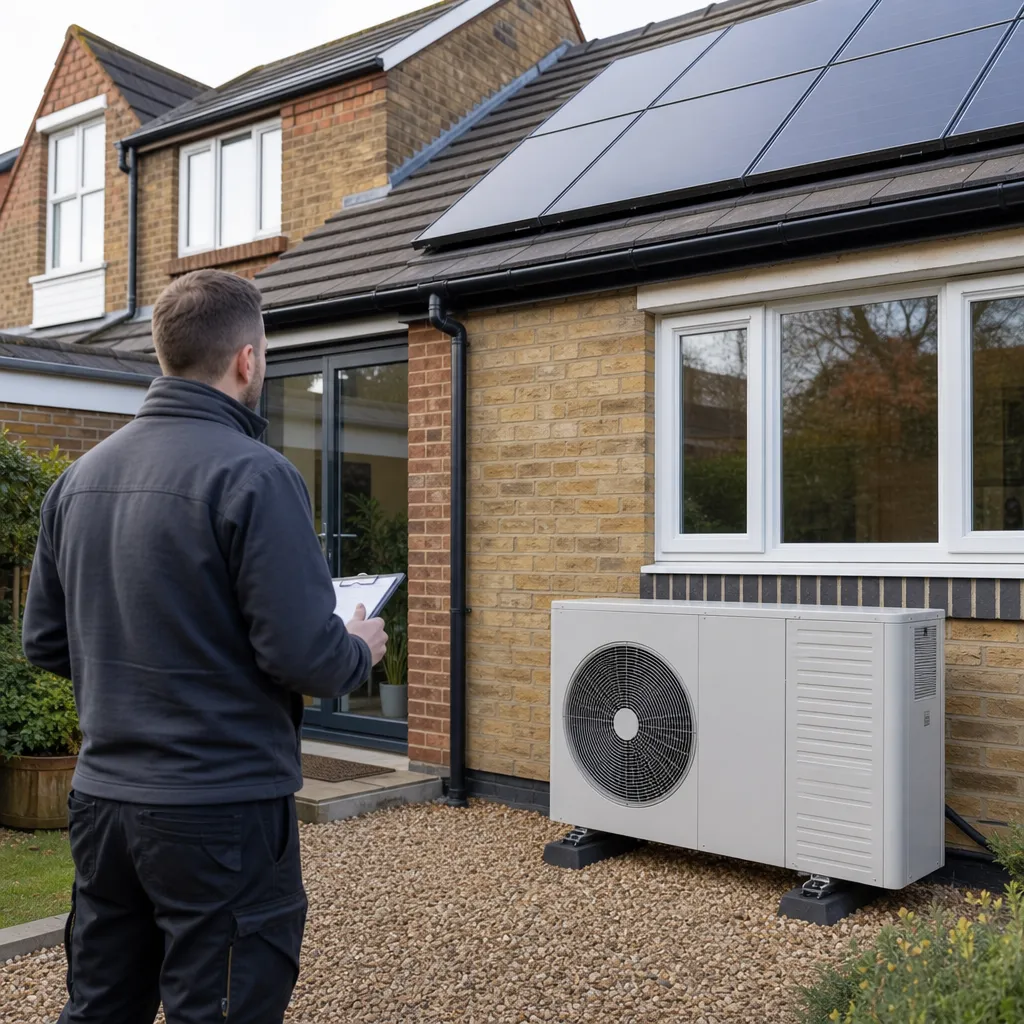
Renewable Energy Systems and Property Value: Solar Panels and Heat Pumps
Solar panels can add a modest 1–4% to UK property values in the right conditions, particularly when they improve the EPC rating.
 Energy & Retrofit
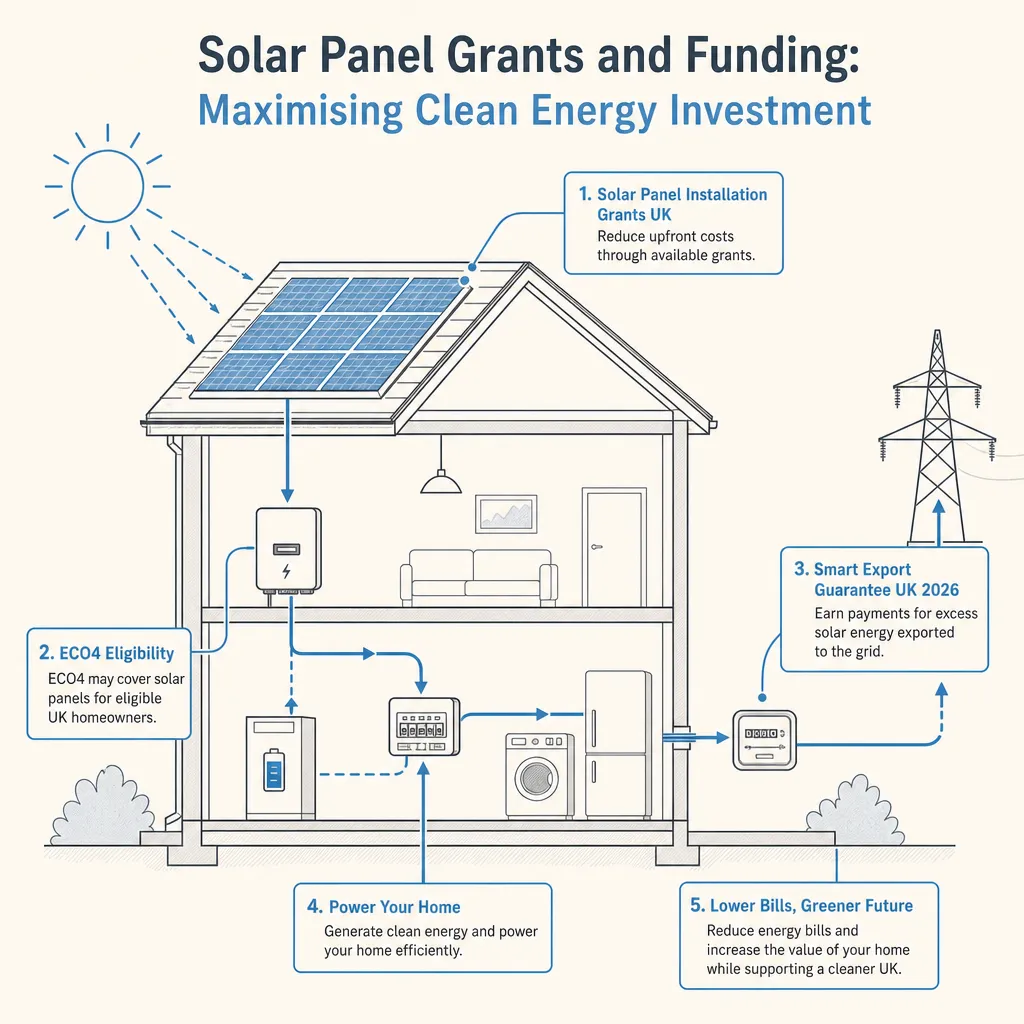
Solar Panel Grants and Funding: Maximising Clean Energy Investment
Several UK solar funding schemes are currently open: the Smart Export Guarantee pays homeowners for surplus electricity exported to the grid, ECO4 can fund free or subsidised panels for eligible low-income households, and 0% VAT on installation applies until at least March 2027.
 Energy & Retrofit
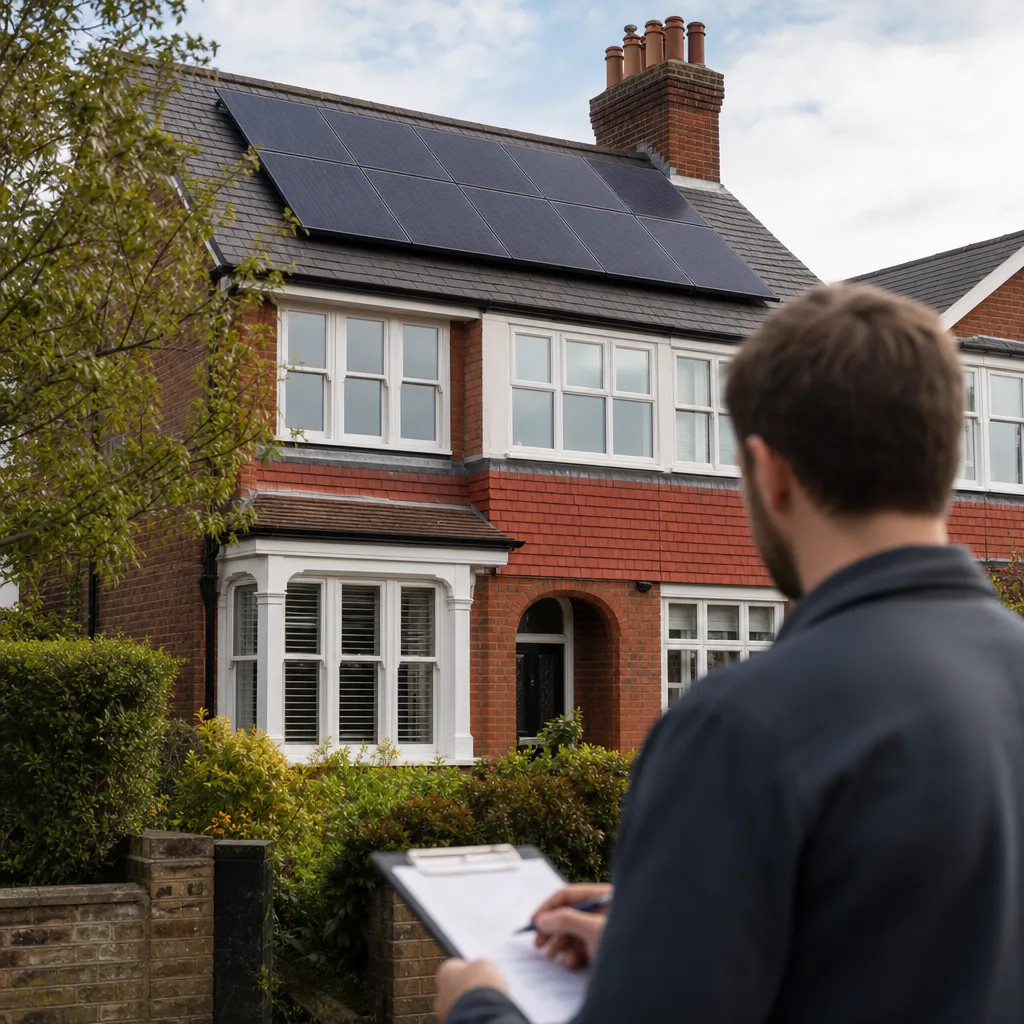
Do Solar Panels Increase Property Value?
Solar panels generally add value to UK properties, with research suggesting an uplift of 0.
 Energy & Retrofit
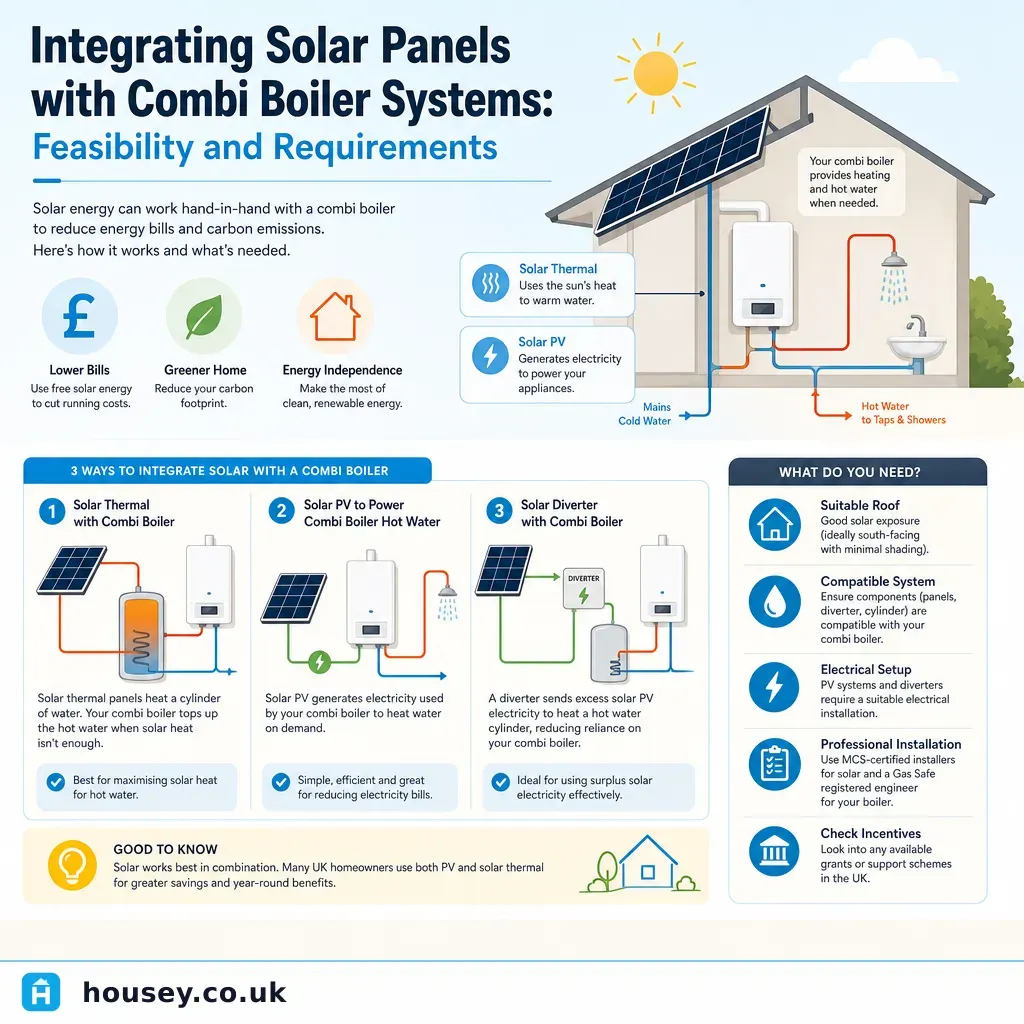
Integrating Solar Panels with Combi Boiler Systems: Feasibility and Requirements
Combi boilers heat water on demand without a hot water storage cylinder, making direct solar thermal integration impractical.
 Energy & Retrofit
HVAC System Upgrades: Cost Savings for Older Properties
Upgrading heating and ventilation systems in an older UK home can significantly reduce energy bills, but the best approach depends on the property's insulation, construction, and heat demand.