Integrating Solar Panels with Combi Boiler Systems: Feasibility and Requirements
By Housey · Last reviewed 3rd of May 2026
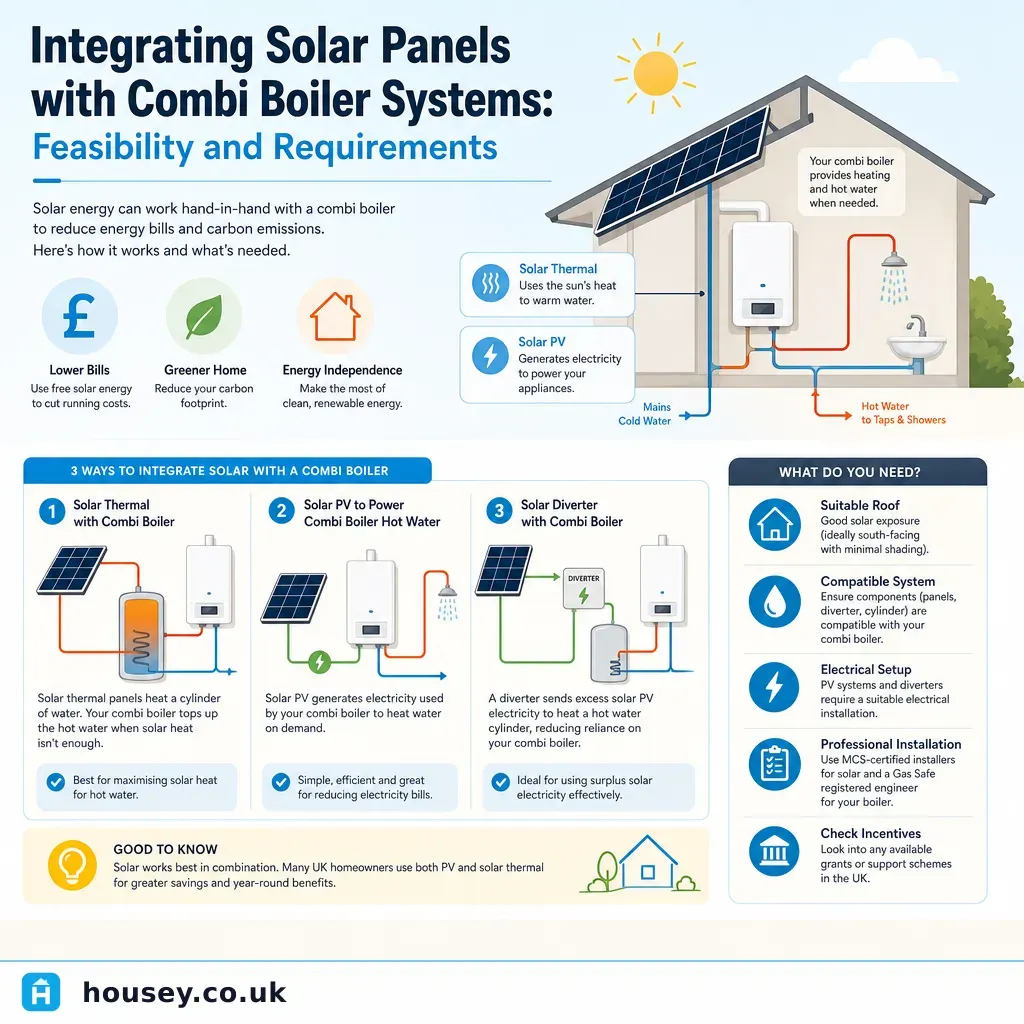
Integrating Solar Panels with Combi Boiler Systems: Feasibility and Requirements
Most UK homes with a combi boiler face an immediate technical mismatch when exploring solar energy. Combi boilers heat water on demand — there is no hot water storage cylinder in the system — yet solar thermal panels are specifically designed to pre-heat stored water. Understanding how these systems interact is essential before committing to a retrofit, because the right approach depends significantly on which type of solar technology you choose and whether your home can accommodate additional equipment.
Key points
- Combi boilers heat water on demand with no storage cylinder, so solar thermal panels cannot feed directly into a standard combi system without significant pipework and equipment changes.
- Solar photovoltaic (PV) panels combined with a power diverter device can redirect surplus electricity to an immersion heater in a newly installed hot water cylinder, providing a practical workaround that leaves the combi untouched.
- Solar thermal integration typically requires replacing the combi with a system boiler or regular boiler paired with a twin-coil unvented hot water cylinder.
- All solar installations claiming Microgeneration Certification Scheme (MCS) status must be installed by an MCS-certified contractor to access government incentives such as the Smart Export Guarantee.
- Part L of the Building Regulations applies to changes in heating system configuration; notify your local building control body if the existing system changes materially.
Why combi boilers and solar thermal don't pair easily
A combi boiler fires at the point of demand — turn on a tap and the boiler heats water instantly. Solar thermal panels collect heat from the sun and transfer it to water stored in a hot water cylinder, usually over several hours. Without a cylinder to store that heated water, there is nowhere for the solar thermal energy to go in a standard combi system.
Options if you want solar thermal:
- Full system upgrade: Replace the combi with a system boiler or regular boiler. Add a twin-coil unvented hot water cylinder (one coil for the solar circuit, one for the boiler). This is the most efficient integration but involves significant upheaval and cost.
- Dedicated solar cylinder with thermal store: Keep the combi for space heating and install a standalone solar thermal system for domestic hot water only. Some specialist configurations permit this, though a cylinder and thermal store must fit within the property.
Neither approach is straightforward. Consult a qualified heating engineer and an MCS-certified solar thermal installer before proceeding.
Solar PV as a combi-compatible alternative
Solar PV generates electricity, not heat, and requires no direct connection to your heating circuit. When panels produce more electricity than you are using, a power diverter device (such as Eddi or Immersun) can route that surplus to an immersion heater in a separately installed hot water cylinder.
This works alongside a combi because the solar circuit is entirely separate — the combi still heats water on demand, while the cylinder provides a solar-heated store. When the cylinder is hot, you draw from it; when it runs cold, the combi tops up on demand.
Indicative UK costs, last reviewed 2026-05-03:
Component | Approximate installed cost |
|---|---|
Solar PV system (3–4 kWp, typical semi-detached) | £5,000–£8,000 |
Power diverter device (e.g., Eddi, Immersun) | £200–£500 installed |
Unvented hot water cylinder (150–210 litre) | £800–£1,500 installed |
Smart Export Guarantee registration | £0 |
Quotes vary by property, region, and installer. Obtain at least three written quotes. Indicative UK costs, last reviewed 2026-05-03.
Comparing your main options
Approach | Compatible with combi? | Main advantage | Main drawback |
|---|---|---|---|
Solar PV + diverter + cylinder | Yes (separate circuit) | Low disruption; retains combi | Cylinder space required |
Solar thermal + twin-coil cylinder | Requires boiler change | High hot water efficiency | Costly system upgrade |
Solar PV for electricity only | Yes | No plumbing changes | No direct hot water benefit |
Replace combi + full solar thermal | Yes (after boiler change) | Fully integrated system | Highest cost and disruption |
Which approach suits your home?
Use these decision points to guide your choice:
- Choose solar PV + diverter if you want to retain the combi and have loft or airing-cupboard space for a hot water cylinder.
- Choose full solar thermal if you are already replacing the boiler and want to maximise domestic hot water efficiency in a single project.
- Choose PV for electricity only if cylinder space is unavailable or your primary goal is reducing electricity bills.
- Ask an energy-efficiency consultant if you are weighing solar against a heat pump or want independent whole-house advice before committing.
- Check with your local planning authority before specifying roof-mounted panels if the property is listed or in a conservation area.
MCS certification and grant eligibility
The Microgeneration Certification Scheme (MCS) is the UK standard for small-scale renewable energy installations. MCS certification of both the product and the installer is required to access:
- The Smart Export Guarantee (SEG): payments from licensed energy suppliers for surplus PV electricity exported to the grid.
- Most local authority and energy supplier grants, which typically specify MCS installation as a condition.
Solar thermal systems installed alongside heat pumps may qualify for the Boiler Upgrade Scheme (BUS). Check current Ofgem eligibility criteria before assuming any scheme is available, as funding rounds open and close.
Building Regulations considerations
Adding an unvented hot water cylinder must comply with Building Regulations Approved Document G. Cylinders above 15 litres must be installed by a competent person registered with a Competent Person Scheme such as APHC or BPEC, or under a local authority building control application. Without a registered installer you will not receive the G3 compliance certificate, which can cause problems on resale.
Solar PV panel installation on a roof typically does not require Building Regulations approval, but permitted development conditions apply. Listed buildings and conservation area properties should check with the local planning authority before installation.
When to get professional help
- Before purchasing any equipment — design errors in solar installations are expensive to reverse.
- If the boiler is over 10 years old — a combined upgrade with a new heating system may offer better overall value.
- If the roof has shading, a flat pitch, or unusual construction — a solar survey will assess viability before you commit.
- For any change to the heating circuit (new cylinder, revised pipework, pressure system alterations) — use a Gas Safe registered heating engineer.
How Housey can help
A solar survey assesses roof orientation, pitch, and shading to right-size a system before you invest. For independent whole-house guidance on solar, heat pumps, and insulation without a sales agenda, an energy-efficiency consultant can provide an impartial assessment that considers all the options together.
Frequently asked questions
Can I add solar panels to my home if I have a combi boiler?
Yes, with caveats. Solar PV can be added without touching your heating system; add a diverter and cylinder if you want hot water benefits. Solar thermal cannot connect directly to a combi without replacing the boiler and adding a cylinder — discuss the full system design with a qualified heating engineer before proceeding.
What is a solar diverter and how does it work?
A solar diverter monitors real-time electricity consumption and, when PV panels generate more than you are using, routes the surplus to an immersion heater in a hot water cylinder. The combi boiler is unaffected. Typical installed cost is £200–£500, plus the cost of a cylinder if you do not already have one.
Do I need planning permission for solar panels?
Most roof-mounted solar PV installations in England are permitted development and do not require a planning application. Restrictions apply to listed buildings, conservation area properties, and some flats. Check with your local planning authority before ordering equipment if any restriction might apply.
Will solar panels reduce my energy bills if I have a combi boiler?
Solar PV reduces electricity bills and earns Smart Export Guarantee payments for surplus exported to the grid. Hot water savings require a diverter and cylinder. Solar thermal covers roughly 40–60% of annual domestic hot water energy needs in a suitable system according to Energy Saving Trust estimates, but requires a boiler change for full integration.
Is an MCS-certified installer worth paying more for?
MCS certification is required for the Smart Export Guarantee and most grants. Non-MCS quotes may appear cheaper upfront, but loss of export payments and grant eligibility typically outweighs the saving over the installation's lifetime.
Sources and further reading
Useful next reads
 Energy & Retrofit
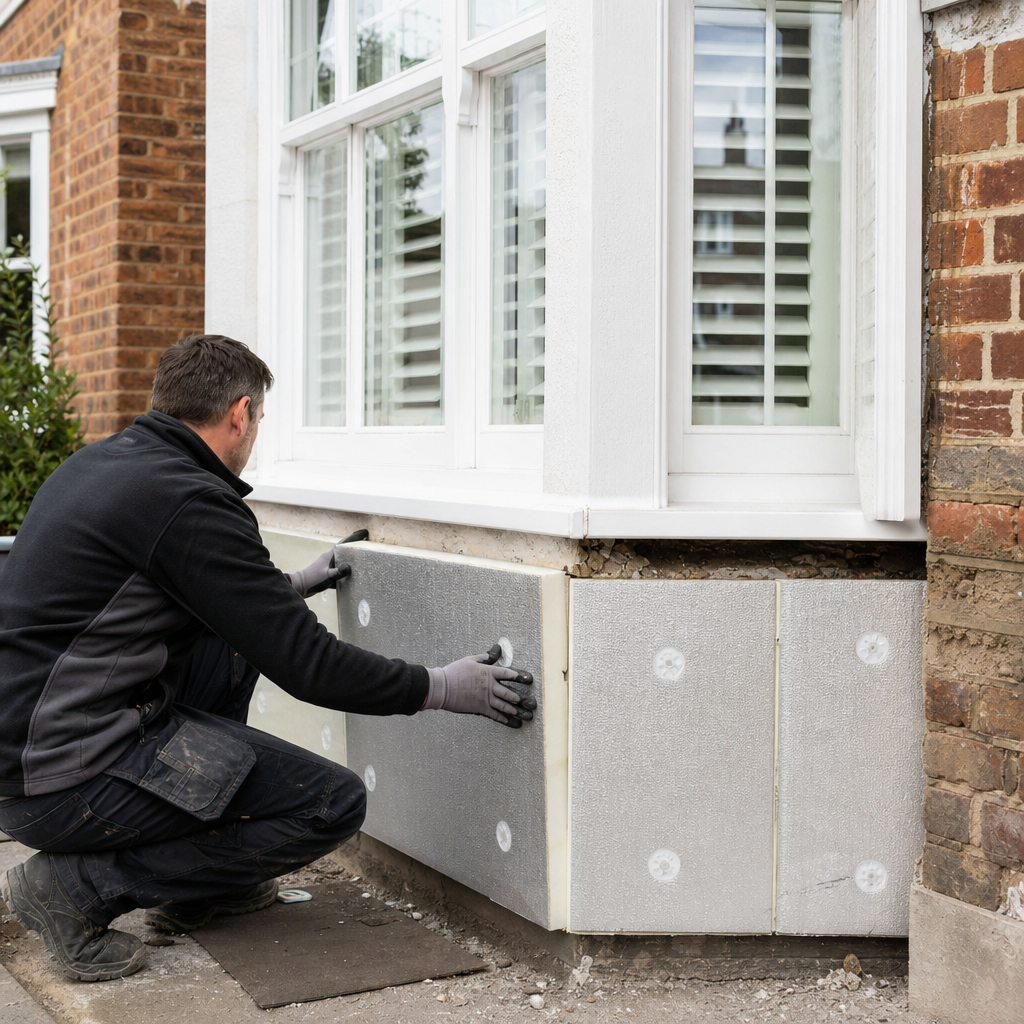
Insulating Solid Masonry Walls Under Bay Windows: Technical Guidance
Insulating solid masonry walls under bay windows requires specialist detailing at angled wall faces, window reveals, and the bay floor and ceiling junctions.
 Energy & Retrofit
Solar Panel Grants and Funding: Maximising Clean Energy Investment
Several UK solar funding schemes are currently open: the Smart Export Guarantee pays homeowners for surplus electricity exported to the grid, ECO4 can fund free or subsidised panels for eligible low-income households, and 0% VAT on installation applies until at least March 2027.
 Energy & Retrofit
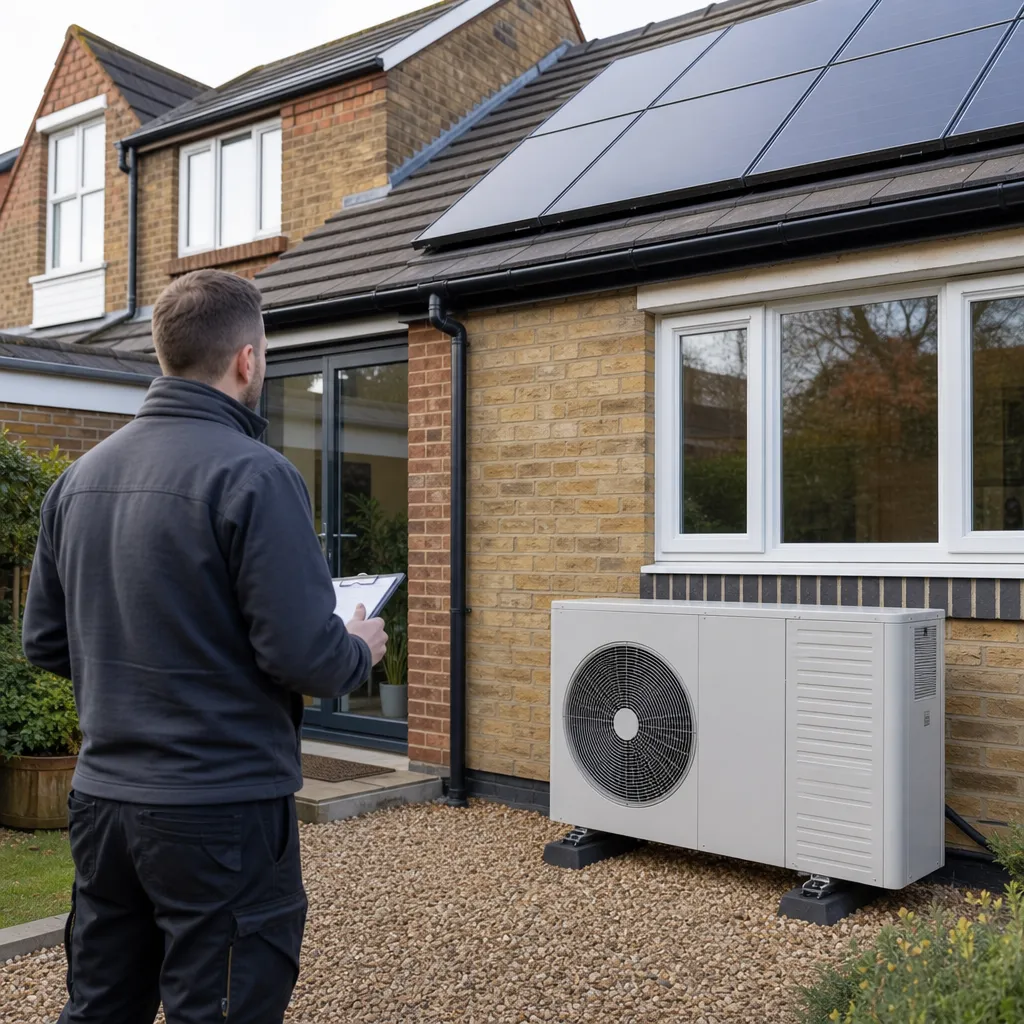
Renewable Energy Systems and Property Value: Solar Panels and Heat Pumps
Solar panels can add a modest 1–4% to UK property values in the right conditions, particularly when they improve the EPC rating.
 Energy & Retrofit
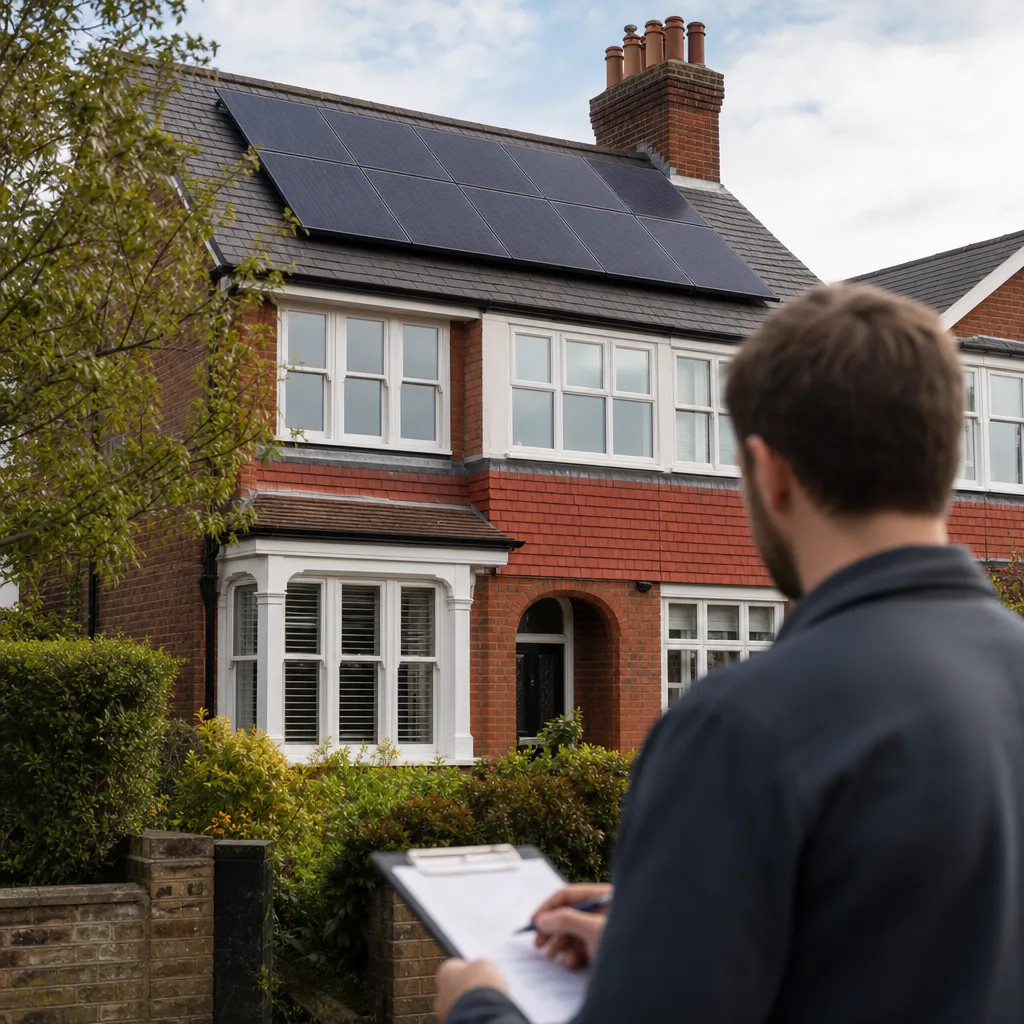
Do Solar Panels Increase Property Value?
Solar panels generally add value to UK properties, with research suggesting an uplift of 0.
 Energy & Retrofit
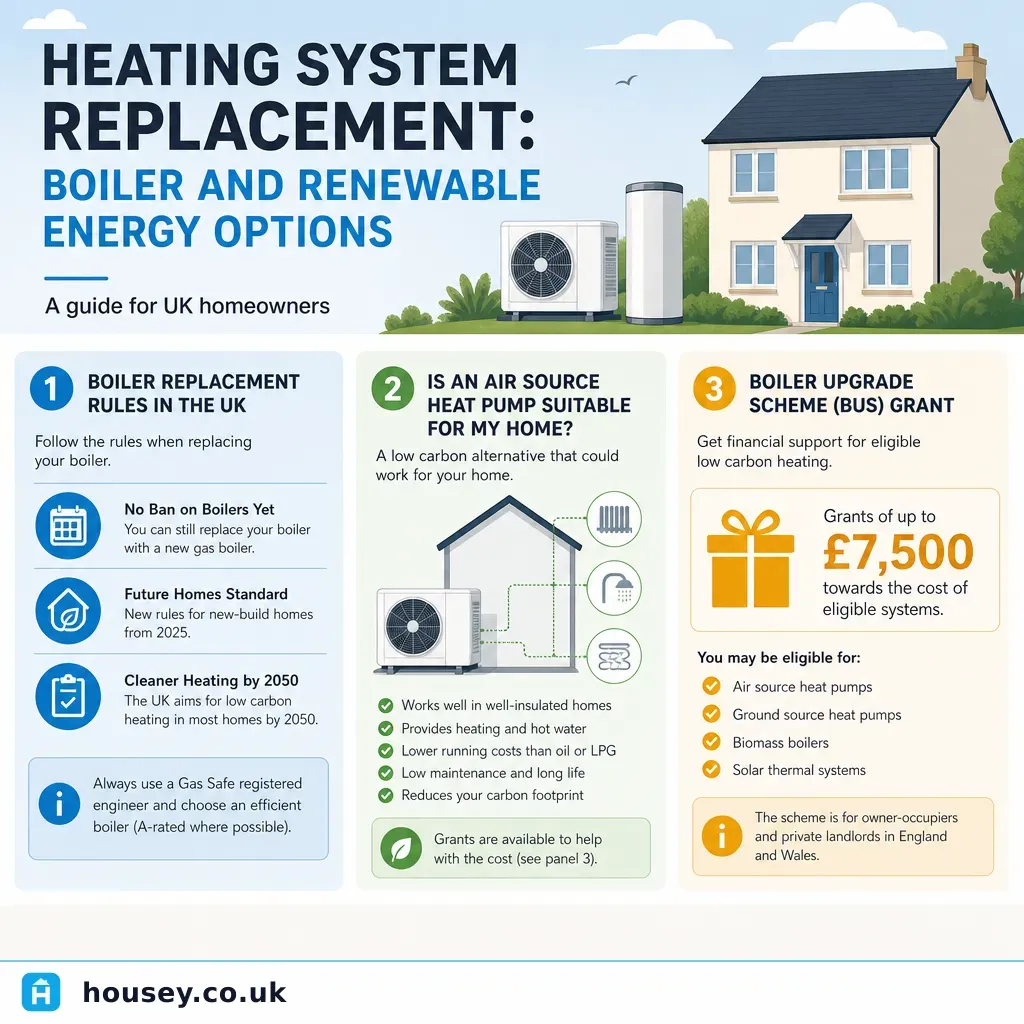
Heating System Replacement: Boiler and Renewable Energy Options
When replacing a heating system in the UK, a new gas boiler must comply with Boiler Plus (Part L) and be fitted by a Gas Safe registered engineer.