Artex Ceiling Removal and Surface Preparation
By Housey · Last reviewed 5th of May 2026
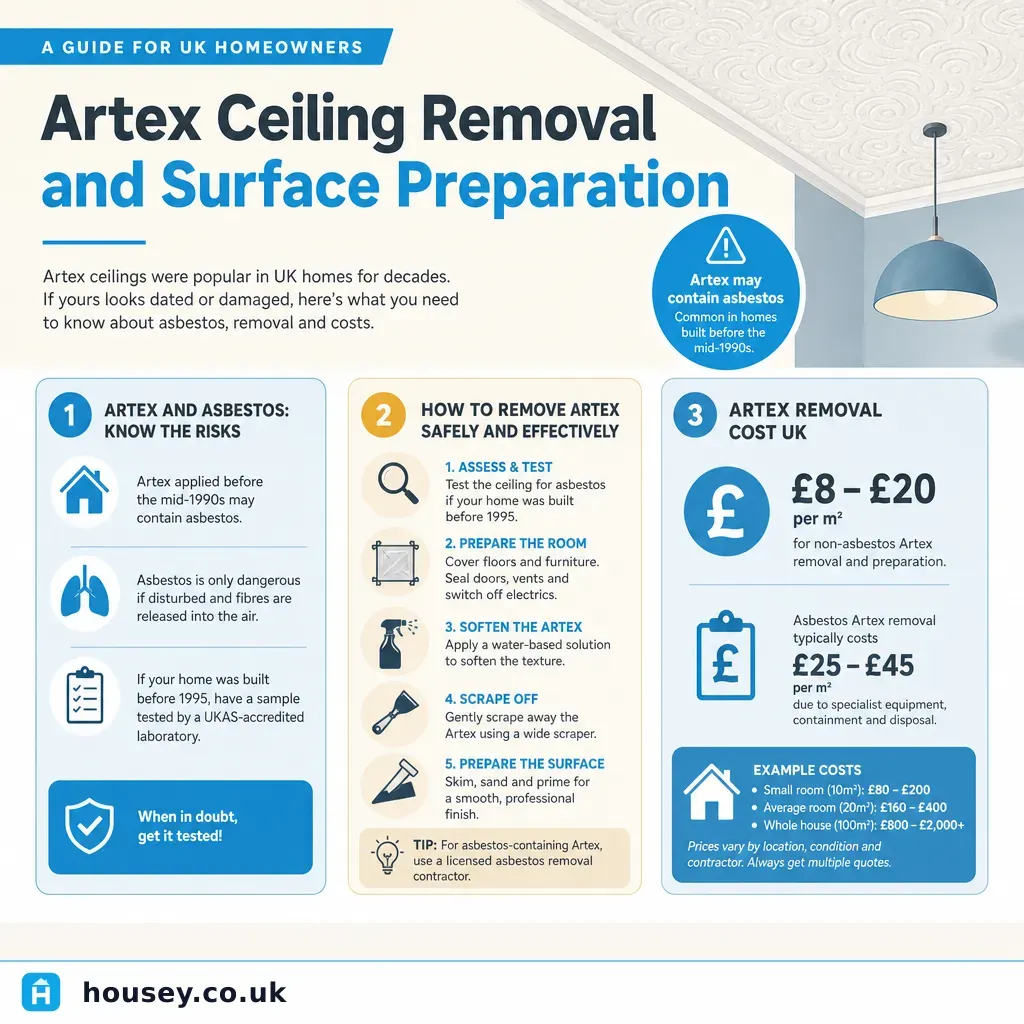
Artex Ceiling Removal and Surface Preparation
Artex and similar textured coatings appear in millions of UK homes built or refurbished between the 1950s and the late 1990s. Whether you are redecorating after a purchase, preparing a property for sale, or simply want a smooth ceiling finish, the approach you take depends almost entirely on when the coating was applied and whether it contains asbestos — a question that must be answered before any physical work begins.
Key points
- Artex and textured coatings applied before 2000 may contain chrysotile (white) asbestos, which requires UKAS-accredited laboratory testing before any disturbance.
- Disturbing asbestos-containing materials without correct controls is a criminal offence under the Control of Asbestos Regulations 2012 (SI 2012/632).
- Three main treatment routes exist: removal, encapsulation, or boarding over with plasterboard — each suits different conditions and asbestos status.
- A refurbishment asbestos survey typically costs £150–£300 for a single room (Indicative UK costs, last reviewed 2026-05-05) and is the required first step for any pre-2000 ceiling.
- Skim plastering over a confirmed asbestos-free, stable textured surface requires a bonding coat applied before the finish plaster to prevent adhesion failure.
Why Artex ceilings require careful handling
Artex was the dominant UK brand name for textured ceiling coatings, and the term is used generically for similar products from other manufacturers. Manufacturers stopped adding asbestos to these products in 1984, but existing stock continued to be applied on construction sites until around 1999–2000. The application date — not the manufacture date — determines the risk, and that date is rarely documented in household records.
In the absence of documentary evidence or test results, any textured ceiling in a property built or refurbished before 2000 should be treated as potentially containing asbestos until confirmed otherwise by laboratory analysis.
Asbestos risk: what the regulations require
The Control of Asbestos Regulations 2012 (SI 2012/632) requires duty holders to manage asbestos-containing materials and prohibits the unlicensed disturbance of licensable materials. For homeowners commissioning ceiling work, the practical requirement is to arrange a refurbishment asbestos survey before any work that would disturb the coating.
A refurbishment survey involves a surveyor taking a small sample of the ceiling coating for submission to a UKAS-accredited laboratory. Results are typically available within 2–5 working days. Do not rely on DIY testing kits sold online as the sole basis for a safety decision — they are not an equivalent substitute for UKAS-accredited laboratory analysis.
If asbestos is confirmed:
- Asbestos content above 1% is notifiable; removal must be carried out by an HSE-licensed asbestos contractor.
- Content between trace levels and 1% may be addressed by a competent unlicensed contractor following HSE guidance, though encapsulation or boarding over is often the safer and more cost-effective route.
- Where no asbestos is detected, standard treatment and removal options apply without licensing requirements.
Treatment options compared
Option | Best for | Not ideal for | Typical trade | Main risk if wrong |
|---|---|---|---|---|
Removal (wet scraping) | Post-2000 ceilings; confirmed no asbestos | Pre-2000 ceilings before testing | Plasterer or decorator | Releasing fibres if asbestos is present |
Encapsulation (coating over) | Intact coatings; asbestos confirmed in situ | Loose, flaking, or damaged coatings | Specialist contractor or decorator | Paint delaminates; condition requires ongoing management |
Skim plaster over | Non-asbestos surfaces with moderate texture | Very deep texture without a bonding coat | Qualified plasterer | Adhesion failure or cracking if preparation is inadequate |
Board over (plasterboard) | Confirmed asbestos coatings; major ceiling defects | Low ceiling heights; complex light fittings | Dry liner plus plasterer | Can conceal underlying damp or structural problems |
Surface preparation for skim plastering
Where asbestos has been ruled out and the textured coating is stable and well bonded, skim plastering is the most common route to a flat, smooth ceiling finish. A qualified plasterer will typically:
- Check adhesion across the ceiling — any loose areas must be consolidated or removed before skimming begins.
- Apply a bonding agent (typically diluted PVA or a proprietary bonding coat) to reduce suction and improve adhesion of the finish plaster.
- Apply gypsum finish plaster in two thin passes, ruling flat and feathering to the edges and cornices.
- Allow full drying — usually 3–5 days depending on ventilation and temperature — before decoration.
Deep or heavily textured surfaces may require a base coat plaster layer before the finish skim, or may be better addressed by boarding over, as plaster applied over significant undulation is prone to cracking as it dries.
Red flags: when to stop and seek professional advice
Stop work and consult a qualified professional if you observe any of the following:
- The coating is crumbly, powdery, or breaks apart easily when touched — potential indicators of friable asbestos-containing material.
- Staining, bubbling, or sagging in the ceiling suggests damp ingress or a structural issue that must be investigated before any plastering work proceeds.
- Multiple layers of coating are visible, some appearing older than others — each layer may have a different composition and age profile.
- Previous patch repairs use materials visually different from the main ceiling surface.
- The ceiling deflects, drops, or makes cracking sounds when lightly probed.
- You cannot confirm the property's refurbishment history or the approximate application date of the coating.
Important limitations
This article provides general information about Artex removal and ceiling treatment options for UK residential properties. Regulations and risks vary significantly depending on the age of the property, the specific product applied, and the physical condition of the surface. Nothing in this article constitutes advice that asbestos is or is not present in any specific ceiling — only UKAS-accredited laboratory testing can confirm that. A qualified asbestos surveyor or specialist contractor must assess your situation before any work is carried out.
What to ask a qualified professional
Before instructing an asbestos surveyor or ceiling contractor, ask:
- Are you UKAS-accredited for asbestos bulk sampling analysis, or which accredited laboratory will you use?
- What type of survey is appropriate for my property — a management survey or a refurbishment survey?
- If asbestos is confirmed, are you HSE-licensed for removal, or will you recommend a licensed contractor?
- What treatment method do you recommend for this ceiling, and what is your reasoning?
- What documentation will I receive — a survey report, a clearance certificate, a waste transfer note?
- How will waste materials be disposed of, and under what duty-of-care documentation?
- Is VAT included in your quote, and what factors could change the final price?
When to get professional help
Do not begin any Artex removal work if the property was built or refurbished before 2000 and has not been tested by a UKAS-accredited surveyor. Professional input is also required where the coating is flaking or friable, where the ceiling shows signs of damp or structural movement, or where the building's history is unclear.
Even for confirmed asbestos-free surfaces, ceiling plastering is a skilled trade. Poorly applied skim coats crack, delaminate, or telegraph the underlying texture through paint and decoration. A qualified plasterer will produce a more durable and consistent result.
How Housey can help
Housey helps UK homeowners request quotes from qualified local tradespeople for plastering and specialist ceiling work. Once asbestos testing is complete and the correct treatment route is confirmed, you can use Housey to compare local plasterers and ceiling contractors serving your area.
Frequently asked questions
How do I know if my Artex ceiling contains asbestos?
Visual inspection cannot confirm or rule out asbestos in textured coatings. The only reliable method is a refurbishment asbestos survey carried out by a UKAS-accredited surveyor, who takes a small sample for laboratory analysis. This step is required before any work that would disturb the coating. Properties built or refurbished before 2000 carry the highest risk and should always be tested first.
Can I skim plaster over Artex without removing it?
Yes, provided the coating has been confirmed to contain no asbestos, is firmly bonded to the ceiling substrate, and the texture is not excessively deep. A plasterer will apply a bonding coat before the finish skim. Very deep or uneven textures are often better addressed by boarding over, as plaster applied over significant undulation can crack as it dries and settles.
Does Artex removal require planning permission?
Artex removal is an internal maintenance task and generally does not require planning permission. However, if the property is a listed building, listed building consent may be required before altering internal surfaces. Check with your local planning authority if you are uncertain of your property's listed status or whether any conditions attached to a previous consent affect internal works.
How much does Artex ceiling treatment cost in the UK?
Costs vary by method, room size, and location. Indicative UK costs, last reviewed 2026-05-05: asbestos testing £150–£300 per room; skim plastering a standard room £200–£500; boarding over a ceiling £300–£700. Asbestos removal by an HSE-licensed contractor carries additional cost depending on extent and material type. Always obtain at least three written quotes before committing to any approach.
Can I remove Artex myself if no asbestos is present?
Where UKAS-accredited testing confirms no asbestos, wet scraping is an option some homeowners attempt on small areas. The process is messy, physically demanding, and requires careful surface preparation before any finish coat is applied. Poorly prepared ceilings telegraph through paint and decoration. A qualified plasterer will typically produce a better and more durable result, and is recommended for anything beyond a very small patch.
Sources and further reading
- Control of Asbestos Regulations 2012 — legislation.gov.uk
- Asbestos in homes: information for householders — Health and Safety Executive (HSE)
- Licensed asbestos work: guidance for contractors — Health and Safety Executive (HSE)
Useful next reads
 Improvement & Build
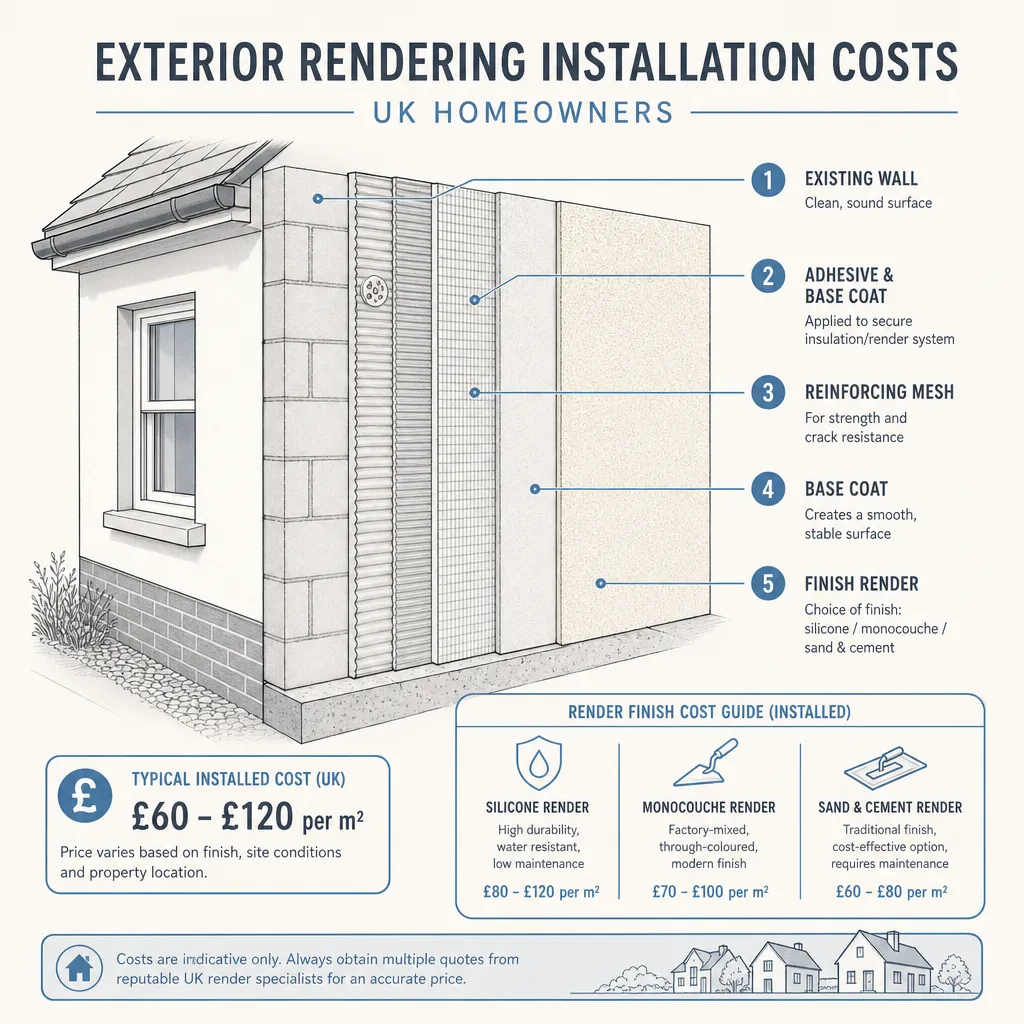
Exterior Rendering Installation Costs
Exterior rendering in the UK typically costs £20–£60 per square metre for standard render systems, or £80–£150 per square metre for External Wall Insulation with a render finish.
 Improvement & Build
Designing an outdoor kitchen for entertaining and garden living
An outdoor kitchen in a UK garden needs a stable, level base — typically a concrete slab or quality paving — with weather-rated materials such as stainless steel grade 316 or frost-rated porcelain.
 Improvement & Build
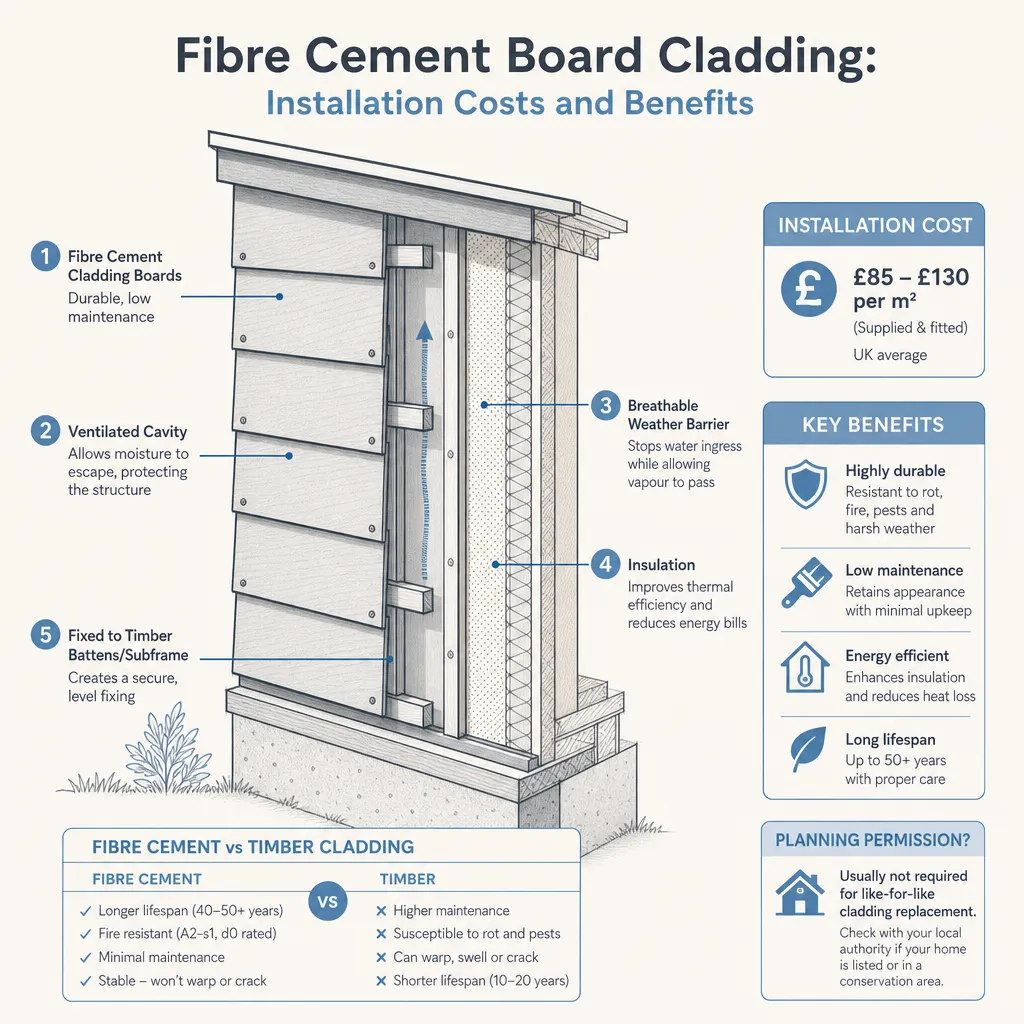
Fibre Cement Board Cladding: Installation Costs and Benefits
Fibre cement board cladding typically costs £80–£180 per m² installed in the UK, including boards, battens, breather membrane, and labour.
 Improvement & Build
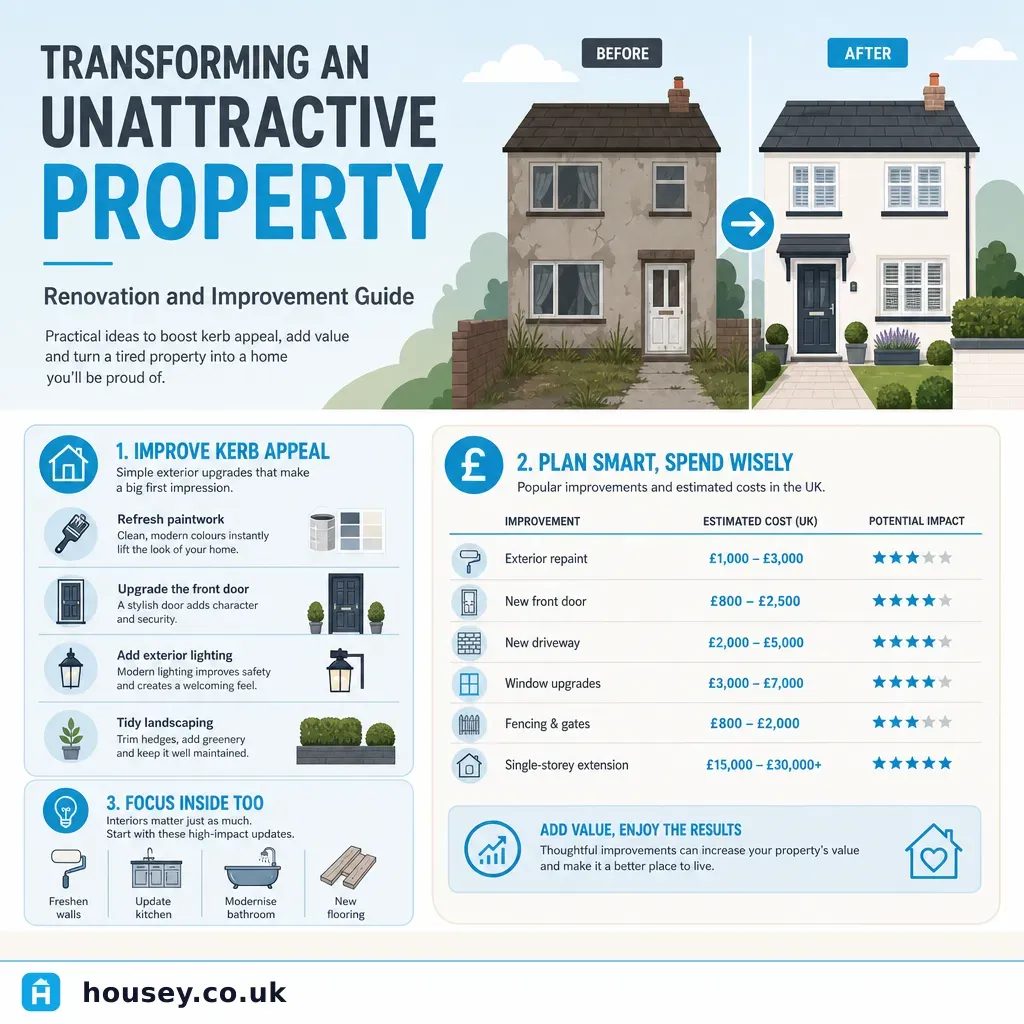
Transforming an Unattractive Property: Renovation and Improvement Guide
Transforming an unattractive UK property usually starts with surface-level improvements — render, windows, doors, and front landscaping — before tackling structural changes like extensions.
 Improvement & Build
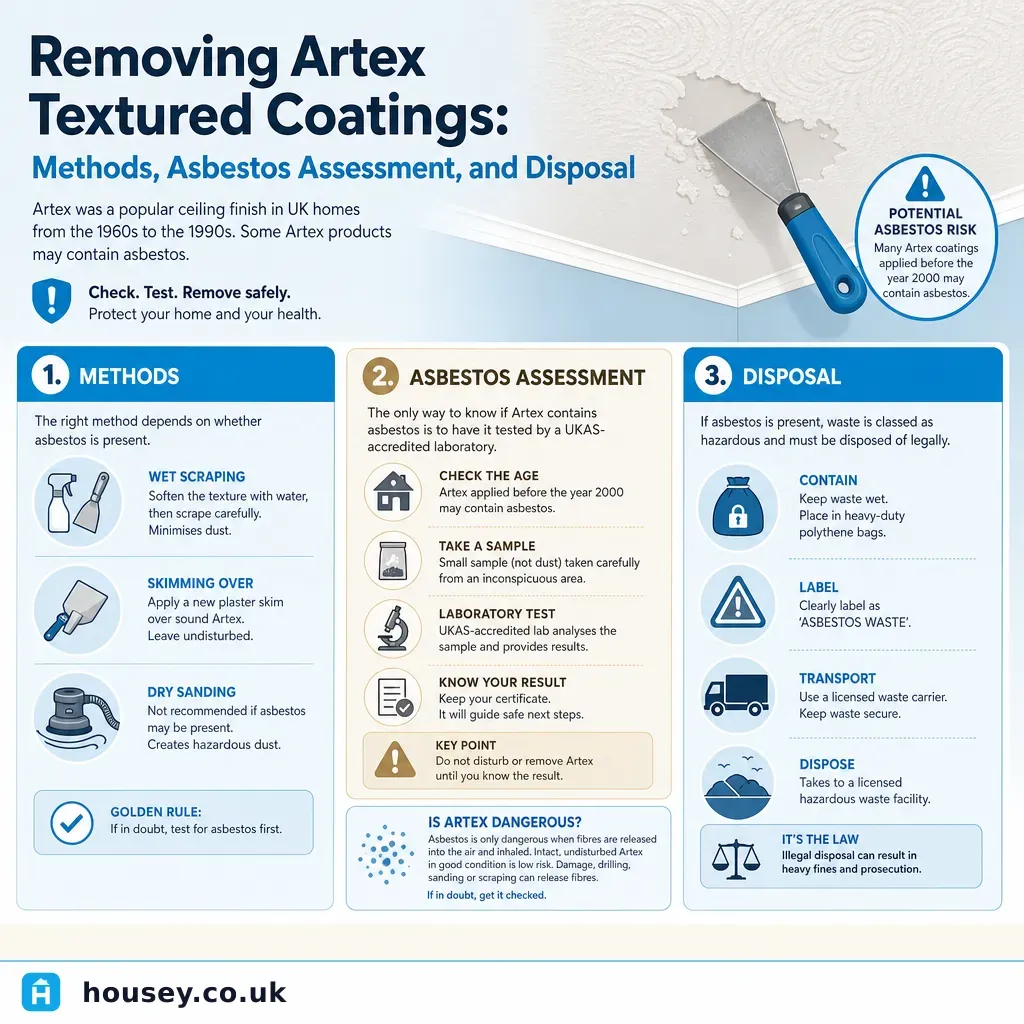
Removing Artex Textured Coatings: Methods, Asbestos Assessment, and Disposal
Before disturbing any textured ceiling coating in a pre-2000 UK home, have it tested for asbestos by a UKAS-accredited analyst.