Transforming an Unattractive Property: Renovation and Improvement Guide
By Housey · Last reviewed 8th of May 2026
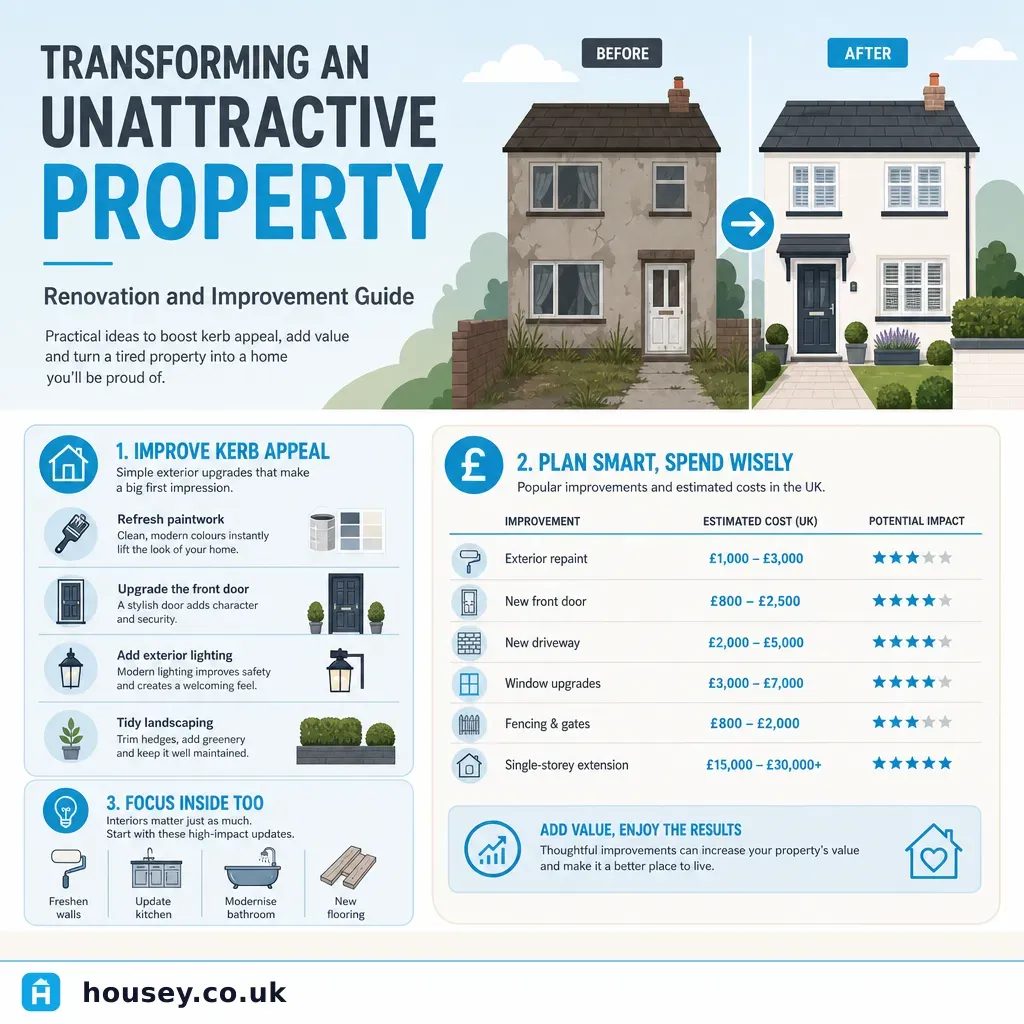
Transforming an Unattractive Property: Renovation and Improvement Guide
Many UK homeowners buy or inherit properties that look tired, dated, or simply uninspiring — a 1970s render-clad semi with peeling paintwork, a 1930s terrace with an overgrown front garden, or a post-war bungalow with mismatched windows and a neglected porch. Deciding where to start, and how to sequence works for the best return on time and money, is one of the most common challenges faced when embarking on a first significant improvement project. Getting the order right matters: cosmetic improvements applied over unresolved structural problems will fail prematurely, and committing budget to the wrong work first can be an expensive mistake.
Key points
- Replacing windows with double or triple glazing is typically permitted development under Schedule 2, Part 1 of the Town and Country Planning (General Permitted Development) (England) Order 2015, but frame material and style may be controlled in conservation areas and for listed buildings.
- Front garden hardstanding larger than 5 m² must use a permeable surface or drainage provision under Part 2 of the GPDO 2015; impermeable surfaces without drainage require a separate householder planning application.
- Nationwide Building Society research indicates a well-executed rear extension can add 10–20% to a property's value, though uplift varies significantly by location, property type, and build quality.
- FENSA- or CERTASS-registered window installers notify building control on the homeowner's behalf and provide a compliance certificate required for future property sales — this certificate should be kept with property documents.
- In England, properties in conservation areas, Areas of Outstanding Natural Beauty, or on the statutory list may require consent for routine external changes such as painting render, replacing roof tiles, or altering doors and windows.
What makes a property look unattractive — and what can you actually fix?
Most unattractive properties share a handful of identifiable problems: tired or crumbling render, mismatched or poorly maintained windows and doors, neglected gardens, outdated extensions, or features that date heavily to a particular construction era. The good news is that most of these are fixable, and many improvements fall within permitted development rights without the need for a planning application.
A practical first step is to photograph your property from the street on an overcast day — flat light makes surface defects easier to identify objectively. Then group what you observe into four categories:
- Surface-level issues (paint, render, paving, planting): usually no planning consent needed; quickest return on investment.
- Component replacement (windows, doors, roof tiles, guttering): permitted development in most cases, subject to conditions.
- Footprint or layout changes (extensions, loft conversions, garage conversions): may require planning permission and building regulations approval.
- Structural problems (subsidence, significant damp ingress, rotting frames): require professional assessment before any cosmetic work begins.
Working through this hierarchy — from structural to surface — protects your investment and prevents rework.
Kerb appeal: where to start for the fastest visible improvement
External render and masonry
Tired or crumbling render is one of the most visible problems on post-war UK homes. Options range from repainting sound existing render, to patching, to a full re-render. Modern silicone and monocouche renders are coloured throughout, typically do not require repainting for 20–25 years, and are water-repellent. For exposed brick properties, repointing and professional cleaning can transform appearance without render at all.
Painting render or masonry is generally permitted development in most areas. In conservation areas, colour and material choices may be restricted — confirm with your Local Planning Authority (LPA) before ordering.
Windows and doors
New double or triple-glazed windows transform a property's character and can improve its Energy Performance Certificate rating. Frames are available in uPVC, aluminium, timber, and composite. FENSA- or CERTASS-registered installers handle building control notification, providing a compliance certificate on completion.
In conservation areas or for listed buildings, frame material, glazing bar configuration, and opening style may be specified by the LPA. Check before ordering, as non-compliant installations may require removal.
Front gardens, driveways and boundary treatments
An overgrown or unkempt front garden is one of the easiest and most cost-effective kerb appeal improvements. New planting, gravel, external lighting, a fresh gate, and a repainted boundary wall or fence can transform first impressions at relatively modest cost.
If replacing an existing driveway or hardstanding with an impermeable surface larger than 5 m², you need either a permeable surface (gravel, open-jointed block paving, permeable resin bond) or a householder planning application. This requirement applies in England under Part 2 of the GPDO 2015.
Larger works: extensions, conversions and structural changes
When the property feels cramped or poorly configured — lacking a usable kitchen-diner, a downstairs WC, or adequate bedroom space — structural improvements may deliver more lasting value than cosmetic work alone. A well-designed rear extension or loft conversion addresses both the property's appearance and its functional shortcomings.
Improvement type | Permitted development? | Typical build timescale | Indicative value-add |
|---|---|---|---|
Single-storey rear extension (≤4 m detached / ≤3 m other) | Usually yes, subject to conditions | 3–5 months | 10–15% |
Two-storey rear extension | Planning permission usually required | 6–12 months | 12–20% |
Loft conversion (Velux or dormer) | Often permitted development | 8–16 weeks | 10–15% |
Garage conversion to habitable room | Usually permitted development | 4–8 weeks | 5–10% |
Full wrap-around or side-return extension | Planning required | 9–18 months | 15–25% |
Indicative UK value-add figures based on Nationwide and Savills research. Actual uplift depends on location, specification, and local market conditions. Last reviewed 2026-05-08.
Design-and-build firms vs. managing separate trades
For larger projects, working with a design-and-build firm consolidates architecture, planning, and construction under a single contract, reducing the coordination burden on the homeowner. For more straightforward extensions or conversions, many homeowners use an architect or architectural technologist for drawings and planning, then appoint an extension builder directly on a separate contract — which can offer more cost control but requires more management.
Decision tree: sequencing your property transformation
Use this framework to plan works in the right order:
- Address structural and damp issues first — cosmetic work applied over unresolved problems will fail prematurely and waste money.
- Secure the building envelope next — roof, windows, doors, render, guttering, and drainage must be sound before internal works proceed.
- Then tackle external landscaping — driveways, front gardens, boundary treatments, and external lighting.
- Then improve internal layout — extensions, conversions, wall removals, kitchen or bathroom repositioning.
- Finish with decoration and fitting out — internal decoration, fitted furniture, garden planting and finishing touches.
If working within a limited budget, prioritise visible external improvements first: they typically deliver the highest perceived value per pound spent.
Property renovation checklist
Work through this list before committing to any significant works:
Red flags: when to pause before spending
- Active cracking or movement: diagonal or stepped cracks in brickwork, sticking doors or windows — obtain a structural engineer's assessment before proceeding with any cosmetic works.
- Damp staining, tide marks, or persistent mould internally: identify and address the root cause before applying finishes over it.
- Pre-1999 building materials at potential risk of containing asbestos: textured Artex ceilings, insulating board, floor tiles, soffit boards — commission an asbestos survey before disturbing any of these materials.
- Unusual planning history: check the LPA's planning portal for conditions attached to prior consents that may restrict what you can change externally.
- Listed building or conservation area designation: consult the LPA before altering any external feature, however minor — unauthorised works can require costly reinstatement.
When to get professional help
Most surface-level improvements — repainting, landscaping, like-for-like window replacement — can be planned and managed by a confident homeowner using qualified tradespeople. Professional advice from an architect, structural engineer, or planning consultant is advisable when:
- Works touch a shared wall with a neighbour (Party Wall Act 1996 notice obligations apply).
- An extension or conversion requires structural calculations or beam design.
- Suspected subsidence, significant cracking, or active damp ingress is present before or during works.
- A planning application is required, particularly in sensitive locations such as conservation areas, AONB, or for listed buildings.
- Works involve the gas supply, the main electrical consumer unit, or new drainage connections to the sewer.
How Housey can help
Whether you are planning a rear extension, a full exterior renovation, or a garden transformation, Housey connects you with qualified local professionals. For structural improvement projects, request quotes from extension builders through Housey. For external landscaping and kerb appeal projects, landscapers and garden designers on the Housey platform can provide competitive quotes for everything from a new front garden layout to a full rear landscaping scheme.
Frequently asked questions
Which external improvements add the most value to a UK property?
Research from Nationwide and estate agent surveys consistently points to extensions — particularly kitchen-diners and master bedroom suites — and loft conversions as the strongest value-adds. Well-presented kerb appeal — a tidy front garden, clean render, new front door — can meaningfully improve buyer perception at comparatively modest cost, sometimes adding value disproportionate to spend in competitive local markets.
Do I need planning permission to repaint the outside of my house?
In most cases, repainting exterior masonry does not require planning permission in England. However, properties in conservation areas, Areas of Outstanding Natural Beauty, or listed buildings may have colour and material restrictions. Check with your local planning authority before painting external masonry or changing the colour of render in a sensitive area, as unauthorised changes may need to be reversed.
How much does a full property transformation typically cost in the UK?
Costs vary considerably by scope, location, and specification. Surface-level improvements (render, windows, front landscaping) might range from £8,000–£30,000 for a typical semi-detached. Adding a single-storey extension could add £30,000–£70,000 or more. Full renovations on a terrace can exceed £100,000. Indicative UK costs, last reviewed 2026-05-08. Always obtain at least three competitive quotes before committing to a contractor.
Can I improve a leasehold flat's exterior appearance?
Leasehold owners typically need freeholder or landlord consent for external works, even where permitted development rights might otherwise apply. The lease will specify what requires permission. Check your lease carefully and contact your freeholder or managing agent before beginning any external improvements, including changes to windows, doors, or shared garden and boundary areas.
Sources and further reading
- Town and Country Planning (General Permitted Development) (England) Order 2015 — legislation.gov.uk
- Planning permission: when you need it — GOV.UK
- FENSA: replacement windows and doors — FENSA
- Nationwide House Price Index and research — Nationwide Building Society
- Party Wall etc. Act 1996: guidance — GOV.UK
Useful next reads
 Improvement & Build
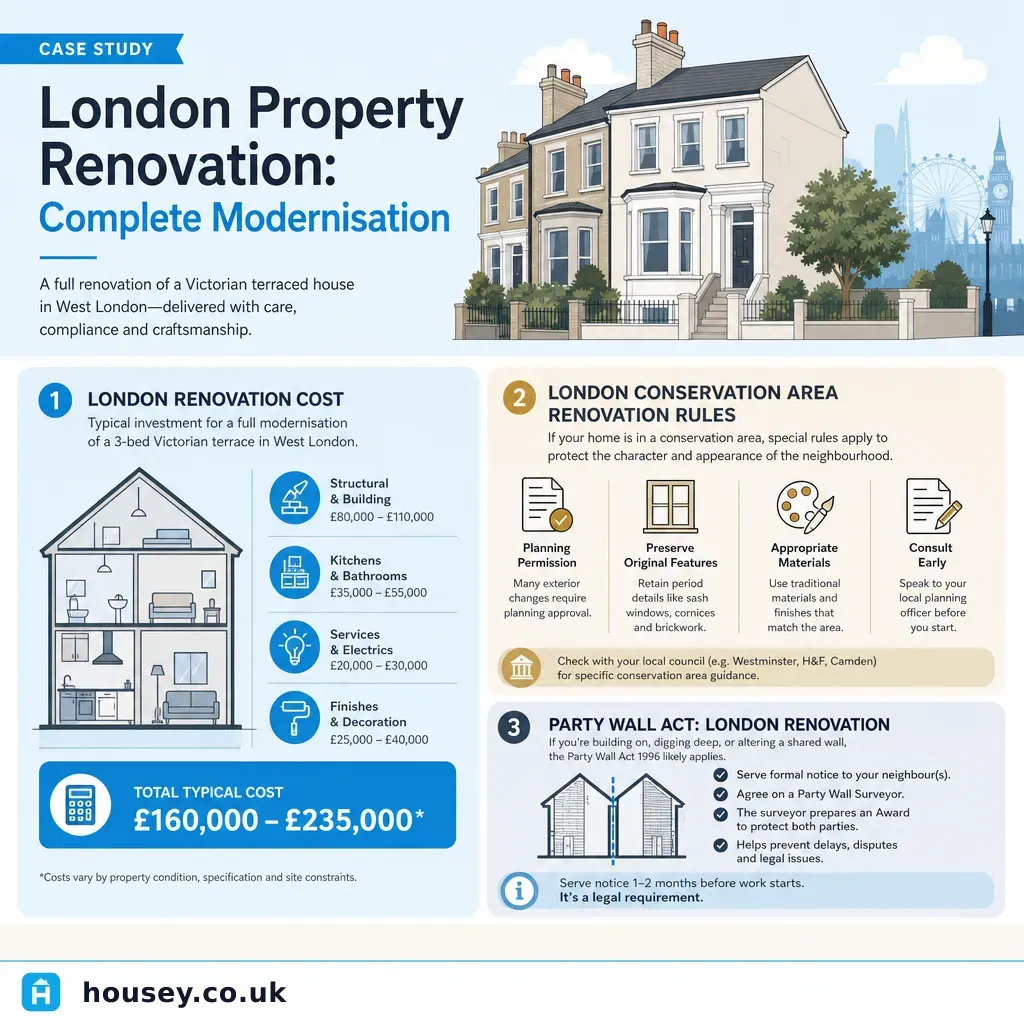
London Property Renovation: Complete Modernisation Case Study
Modernising a London property means navigating conservation area restrictions, party wall obligations, and Building Regulations alongside the build work itself.
 Improvement & Build
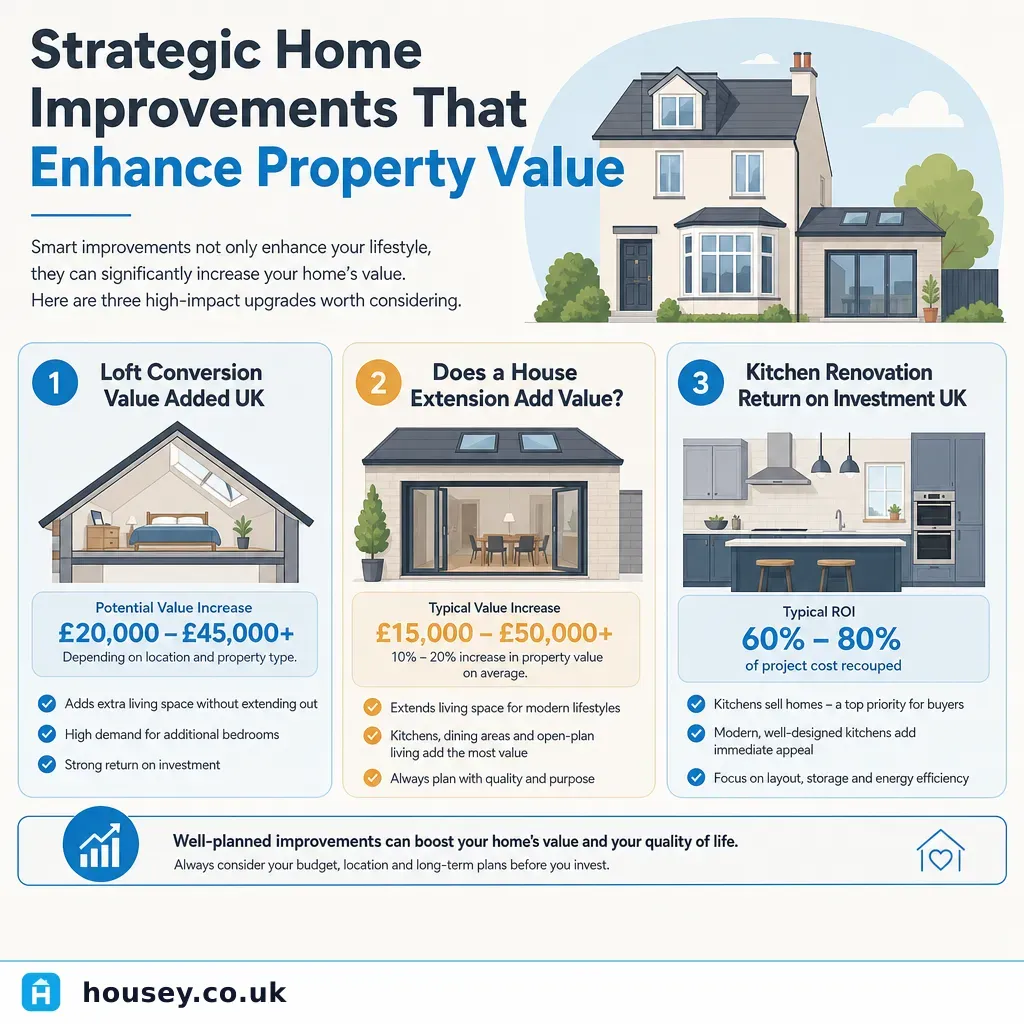
Strategic Home Improvements That Enhance Property Value
The home improvements most likely to add value in the UK are loft conversions (typically 10–20%), rear extensions (5–15%), and updated kitchens and bathrooms.
 Improvement & Build
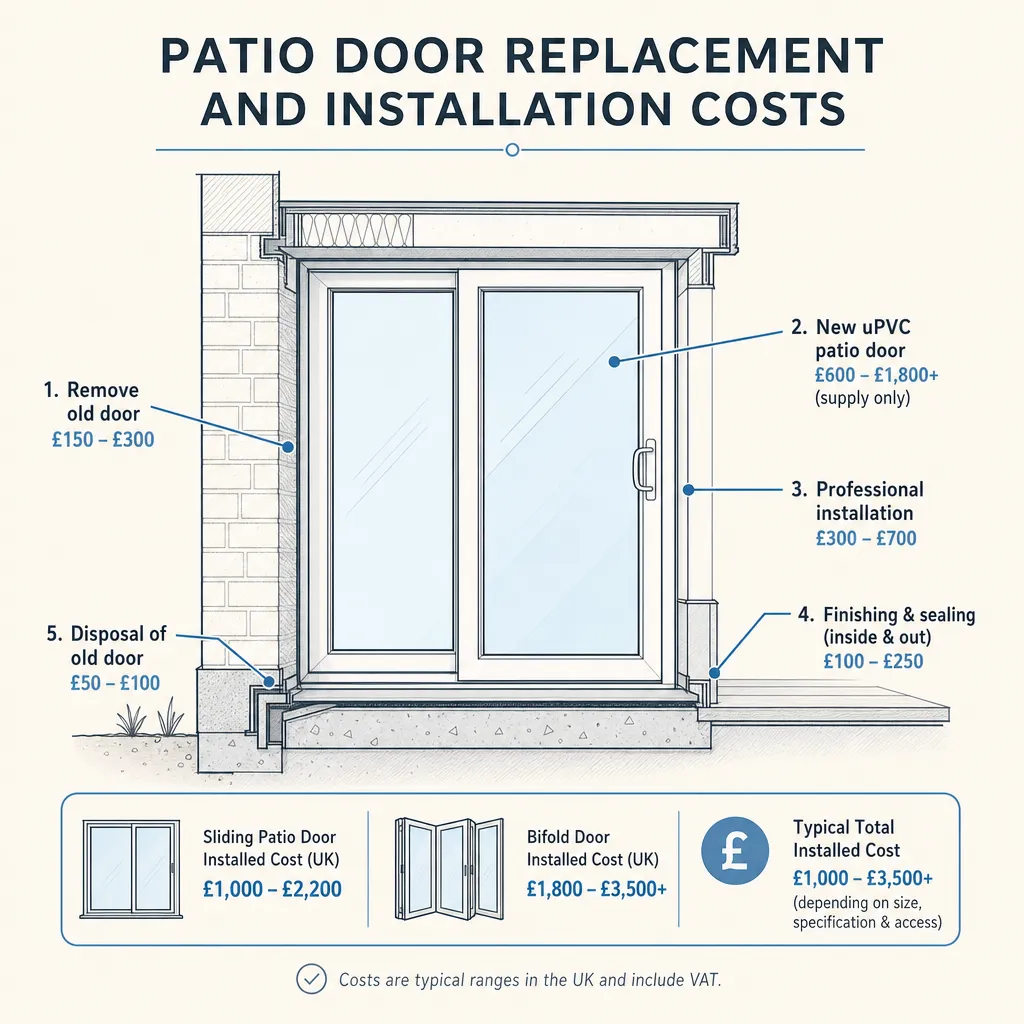
Patio Door Replacement and Installation Costs
Replacing patio doors in the UK typically costs £800–£2,000 installed for a standard uPVC sliding unit, rising to £3,000–£8,000 or more for aluminium bifold doors.
 Improvement & Build
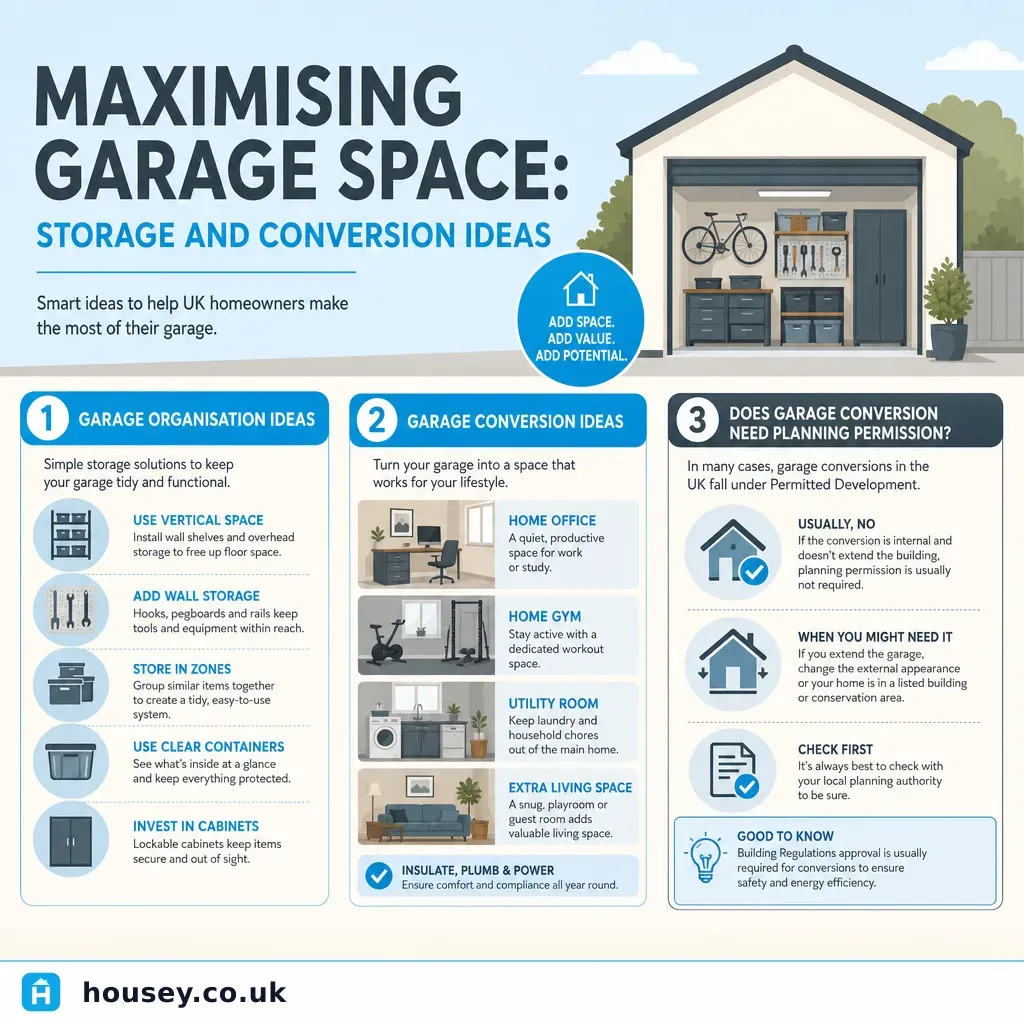
Maximising garage space: storage and conversion ideas
Garages can be transformed with wall-mounted racking, overhead storage, and mezzanine shelving without planning permission or building regulations approval.
 Improvement & Build
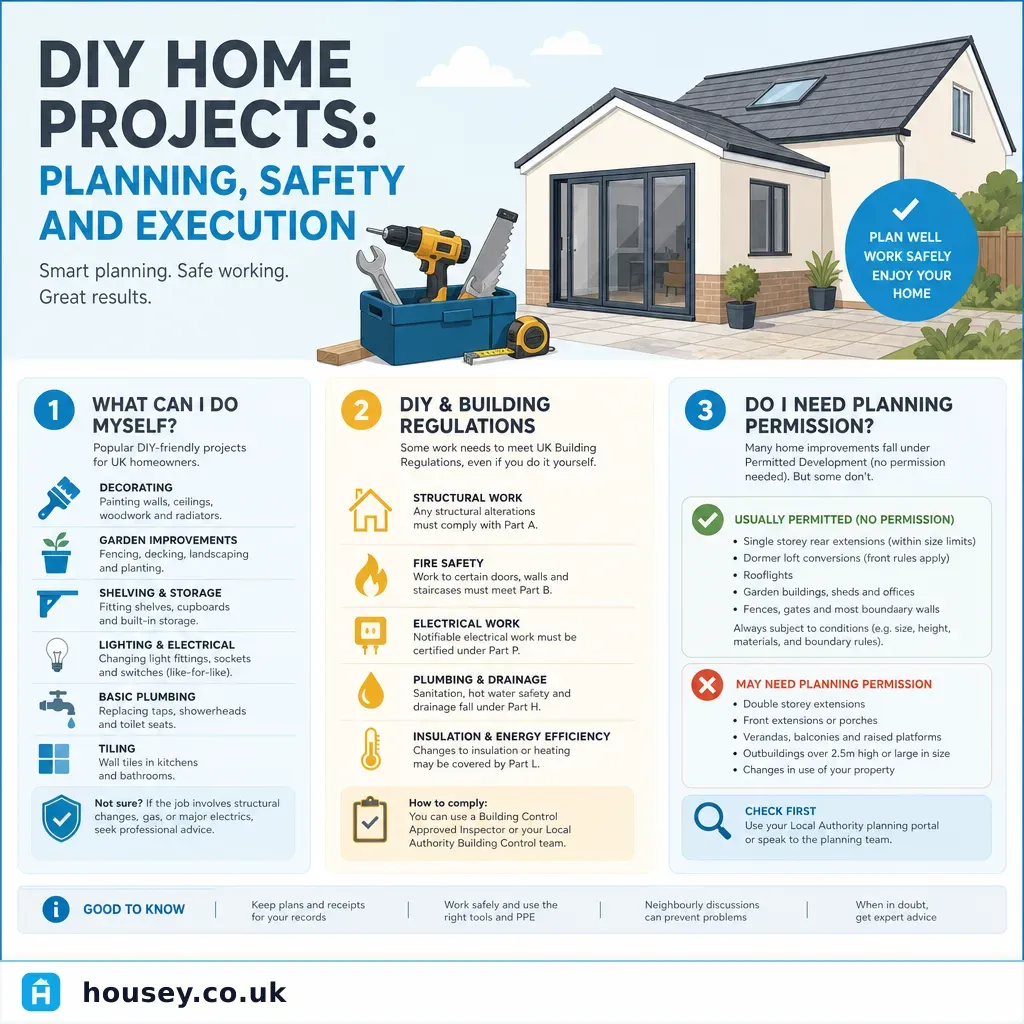
DIY Home Projects: Planning, Safety and Execution
Most decorating, minor repairs, and cosmetic work can be tackled as DIY in the UK.