Artificial Stone Veneer Cladding Installation Costs
By Housey · Last reviewed 7th of May 2026
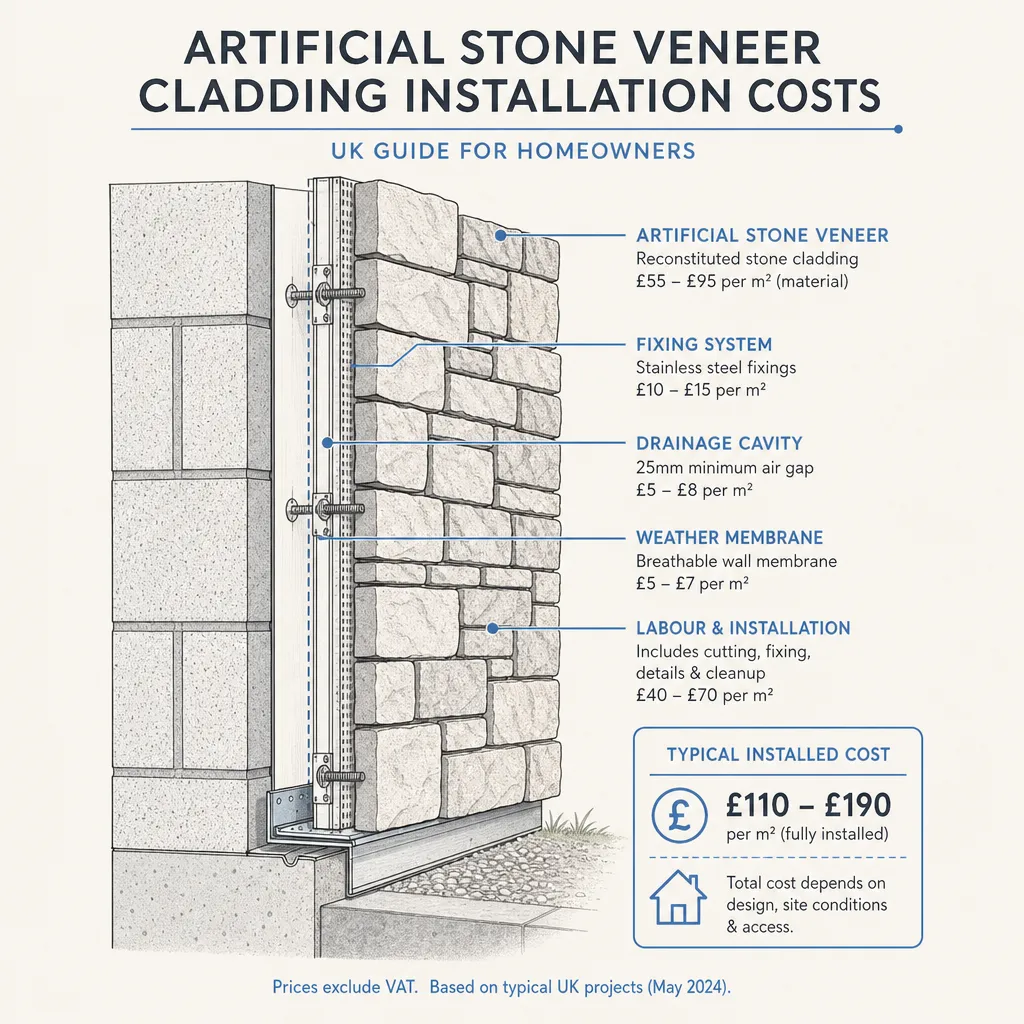
Artificial Stone Veneer Cladding Installation Costs
Artificial stone veneer cladding has become a popular exterior finish on UK homes, extensions, and boundary features, offering the visual weight of natural stone without the structural load or cost. Homeowners typically consider it during an extension project, when refreshing a tired render, or when updating a 1960s or 1970s facade. Understanding what drives installation costs — and what can go wrong if the specification is poor — helps you obtain accurate quotes and avoid costly remedial work later.
Key points
- Artificial stone veneer panels typically cost £25–£60 per m² for materials alone; installed costs range from £60 to £150 per m² depending on panel system, substrate condition, and access.
- Cladding a standard 20 m² elevation can cost £1,200–£3,000 supply and fit — a broad range driven primarily by panel brand, background preparation, and whether scaffolding is required.
- Cladding an existing dwelling does not usually require planning permission under Class A permitted development rights, but listed buildings, conservation areas, and Article 4 Directions are significant exceptions.
- Installation must allow for movement joints, drainage, and ventilation behind the panels; an improperly detailed system can trap moisture and cause premature failure or internal damp.
- Installers should follow manufacturer fixing specifications and any British Board of Agrément (BBA) certificate requirements for the specific product; departure from these can void the warranty and may affect Building Regulations compliance.
What artificial stone veneer cladding is and how it differs from alternatives
Artificial or manufactured stone veneer (also called cast stone veneer or reconstituted stone cladding) is made from Portland cement, lightweight aggregates, and natural pigments cast into moulds formed from real stone. It is typically 25–50mm thick — far thinner and lighter than natural stone ashlar (which starts at 75–100mm) — and is designed to be adhered or mechanically fixed to a prepared substrate rather than laid on a structural footing.
It is not the same as stone effect render (textured mineral or polymer render that mimics stone) or exposed aggregate panels (precast concrete units). Artificial stone veneer uses individual panel units, corner pieces, and sill sections fitted together to replicate the look of coursed or random rubble stonework.
Because it carries no structural load, it can be applied to timber frame, masonry, insulated render board, or existing render — subject to a substrate assessment.
What affects the installation cost
Materials
Panel costs vary substantially by manufacturer and stone style. Budget panel systems from trade merchants start around £25–£35 per m². Premium UK-manufactured panels with a broader range of profiles (coursed, ashlar, ledgestone, random rubble) can reach £50–£80 per m² for materials alone. Corner units are priced separately per linear metre (typically £15–£40/lm) and represent a disproportionate cost on elevations with many external corners.
Substrate preparation
The single biggest variable in quotes is substrate condition. A sound, flat, dry render or masonry background requires only priming and bonding. An unstable or contaminated background may need:
- Hacking off existing render: £10–£25/m² labour
- Applying a scratch coat of cement render as a key: £15–£30/m² materials and labour
- Installing a carrier board system over timber-frame walls: £20–£40/m²
- Remedial damp treatment before cladding (cost depends on extent)
Installers who quote without a substrate inspection often revise prices upwards on site. Request a pre-start survey where possible.
Access and scaffolding
Ground-floor work up to approximately 3m can usually be done from a hop-up or tower scaffold. Work above that level typically requires erected scaffolding at a cost of £500–£2,000+ depending on elevation length, height, scaffold hire duration, and whether an existing scaffold from a loft or extension project can be shared.
Labour rates
Experienced cladding installers — usually bricklayers, renderers, or dry-lining tradespeople who have completed manufacturer training — charge £200–£400 per day depending on location. A competent installer working on a straightforward elevation can typically install 5–10 m² per day.
Indicative UK costs, last reviewed 2026-05-07. Obtain at least three quotes from local installers for accurate pricing on your specific project.
Cost comparison: artificial stone veneer versus alternatives
Cladding type | Installed cost range (per m²) | Typical lifespan | Planning implications | Maintenance |
|---|---|---|---|---|
Artificial stone veneer | £60–£150 | 20–40 years | Permitted dev. usually applies | Low; periodic wash-down |
Natural stone (sandstone/limestone) | £150–£350+ | 100+ years | As above; heritage rules stricter on listed buildings | Low on good stone; repointing over time |
Stone effect render | £30–£80 | 15–25 years | As above | May need redecoration after 10–15 years |
Brick slip cladding | £70–£130 | 30–50 years | As above | Low |
Timber cladding | £50–£120 | 20–30 years (treated) | As above; fire rules near boundaries | Periodic staining or painting |
Planning permission and building regulations
Planning permission is not usually required to add cladding to a house under Class A permitted development rights, provided the property is not listed, not in a conservation area, and not subject to an Article 4 Direction removing those rights. However:
- In certain locations, the Town and Country Planning (General Permitted Development) (England) Order 2015 requires that materials used must be of a "similar appearance" to those in the original construction. In practice this is enforced inconsistently, but checking with your local planning authority before ordering materials is advisable.
- Flats and maisonettes do not benefit from the same permitted development rights as houses.
- Any cladding forming part of an extension that itself requires planning permission will be assessed as part of that application.
Building Regulations do not typically require a full approval for cladding replacement on standard domestic properties below 11m. However, if the total area of cladding exceeds certain thresholds on buildings over 11m, Approved Document B (fire safety) requirements become relevant. If in doubt, contact your local building control body before starting work.
Important: if your property is in a conservation area or is listed, you must obtain Conservation Area Consent or Listed Building Consent respectively before any external cladding work. Proceeding without consent is a criminal offence.
A worked example: cladding a single-storey extension rear elevation
Hypothetical illustration of how costs build up on a typical job.
A homeowner in Cheshire wants to clad the rear elevation of a newly built single-storey extension in a ledgestone artificial veneer. The elevation measures 5m wide × 2.4m high = 12 m². There are two external corners totalling 4.8 linear metres of corner pieces, and the background is sound new blockwork.
- Panels (12 m² at £45/m²): £540
- Corner units (4.8 lm at £28/lm): £134
- Adhesive, grout, fixings, and primer: £90
- Labour (2 days at £280/day): £560
- Access (tower scaffold, 1 week hire): £180
- Total estimate: approximately £1,504
She obtains three quotes ranging from £1,350 to £1,950. The highest quote uses a premium panel brand with a longer product warranty; the lowest uses a less experienced installer with no manufacturer training record. She selects the mid-range quote at £1,600, which includes a 10-year workmanship guarantee and a BBA-certificated panel system.
What to ask before accepting a quote
- What brand and range of stone veneer panel is included, and can you see physical samples before ordering?
- Is a substrate inspection included in the pre-start survey, and what are the likely additional costs if background preparation is needed?
- Does the quote include corner units, sills, and lintel cladding, or are these priced separately?
- How is the veneer fixed — adhesive only, mechanical fixings, or a combination — and does the fixing method comply with the manufacturer's BBA certificate?
- What provision is made for movement joints at changes in background material and at structural openings?
- Does the installer hold manufacturer accreditation or evidence of product training?
- Is scaffolding included in the price, and if hired separately, who coordinates and insures it?
- What warranty is provided on materials and workmanship, and what is the process if panels detach or crack after installation?
When to get professional help
Artificial stone veneer installation is generally a non-specialist trade task on straightforward elevations, but professional oversight or specialist input is appropriate in the following circumstances:
- The property is listed or in a conservation area — consult a heritage consultant or planning consultant before specifying any materials.
- The background structure is unknown, for example on a pre-1980s cavity wall or unusual frame construction — a structural assessment may be needed before fixing cladding.
- There is evidence of existing damp behind the substrate — a damp surveyor should assess and remediate before cladding traps further moisture.
- The elevation is above 3.5m with no existing scaffold — a scaffold design may be required under the Construction (Design and Management) Regulations 2015.
- You are cladding as part of a new extension — coordinate with your extension builders to ensure the background is prepared to the cladding manufacturer's specification from the outset.
How Housey can help
If you are planning artificial stone veneer cladding as part of a wider external improvement or extension project, Housey can connect you with vetted local tradespeople. Find installers and compare quotes through our extension builders service, or if the cladding relates to driveway piers or boundary features, explore our driveway installers.
Frequently asked questions
Does artificial stone veneer cladding add value to a property?
It can improve kerb appeal, which may support asking price, but estate agents and valuers treat external cladding cautiously. If the cladding style is out of keeping with the local area or applied poorly, it can have a neutral or negative effect on valuation. A well-installed veneer that complements the property's architecture is generally viewed positively by buyers.
How long does artificial stone veneer cladding last?
Quality artificial stone veneer systems from established manufacturers have expected lifespans of 20–40 years when correctly installed. The main failure modes are adhesive bond failure caused by moisture in the substrate at installation, frost damage to high water-absorption panels, and movement cracking at joints. Following manufacturer fixing specifications and providing movement joints significantly extends service life.
Can artificial stone veneer be installed over existing render?
Yes, if the existing render is sound, well-bonded to the background, and dry. Loose, cracked, or contaminated render must be removed first. Most installers will test adhesion before proceeding. Applying cladding over a compromised render background is the most common cause of premature panel failure and warranty disputes.
Do I need planning permission for stone cladding on a house?
Not usually on a standard house under permitted development rights. However, listed buildings, properties in conservation areas, properties subject to Article 4 Directions, and flats do not benefit from these rights. Always check with your local planning authority before starting work — retrospective enforcement can require removal of the cladding at your cost.
Is artificial stone veneer suitable for all UK climates?
Products vary in frost resistance. In exposed northern and Scottish locations, specifying a product with low water absorption reduces the risk of spalling in freeze-thaw cycles. Always request the technical data sheet from your supplier and check the frost resistance rating before ordering panels for use in cold or exposed locations.
Sources and further reading
- Permitted development rights for householders: technical guidance — GOV.UK
- Approved Document B: Fire safety — GOV.UK
- CDM Regulations 2015 guidance — Health and Safety Executive
- Works to listed buildings and conservation areas — Historic England
- Planning Portal: other exterior work — Planning Portal
Useful next reads
 Improvement & Build
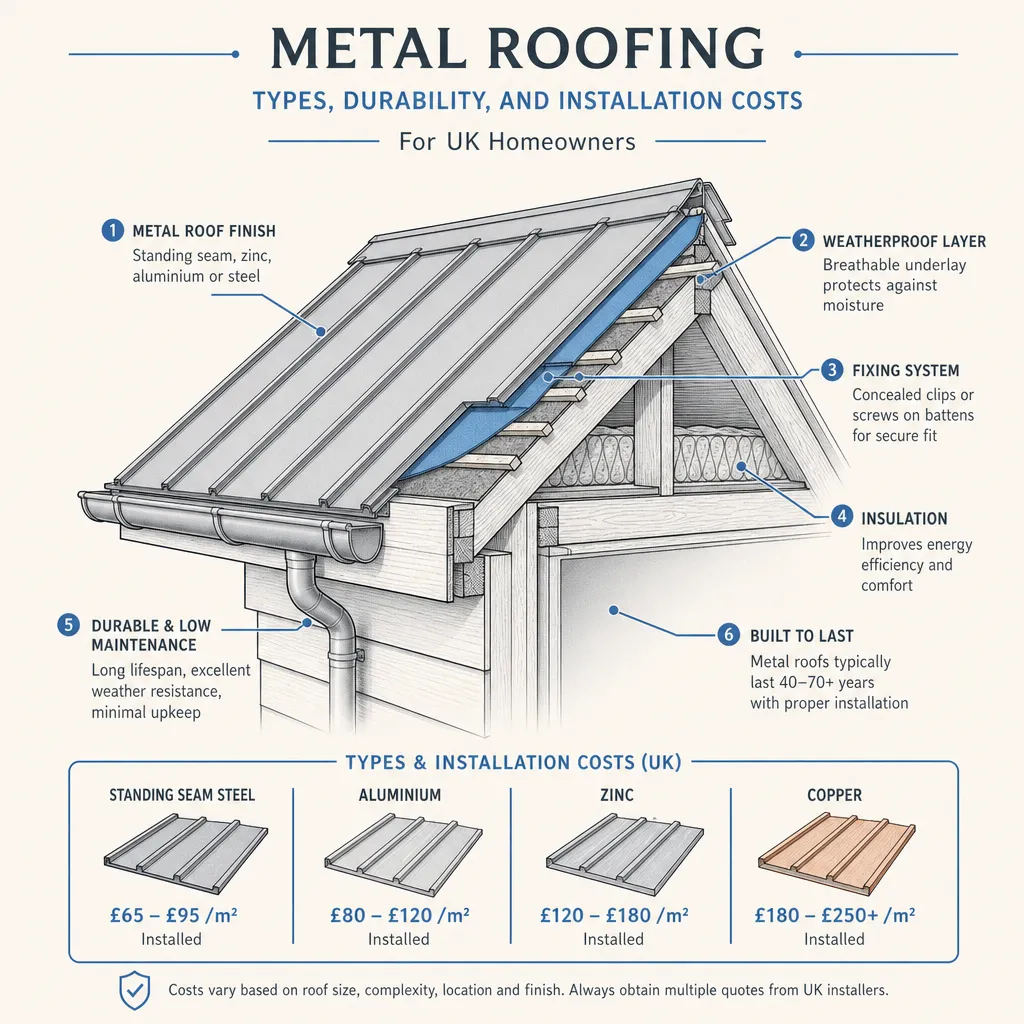
Metal Roofing: Types, Durability, and Installation Costs
Metal roofing in the UK includes standing seam, corrugated sheet, and metal tile systems in steel, aluminium, zinc, or copper.
 Improvement & Build
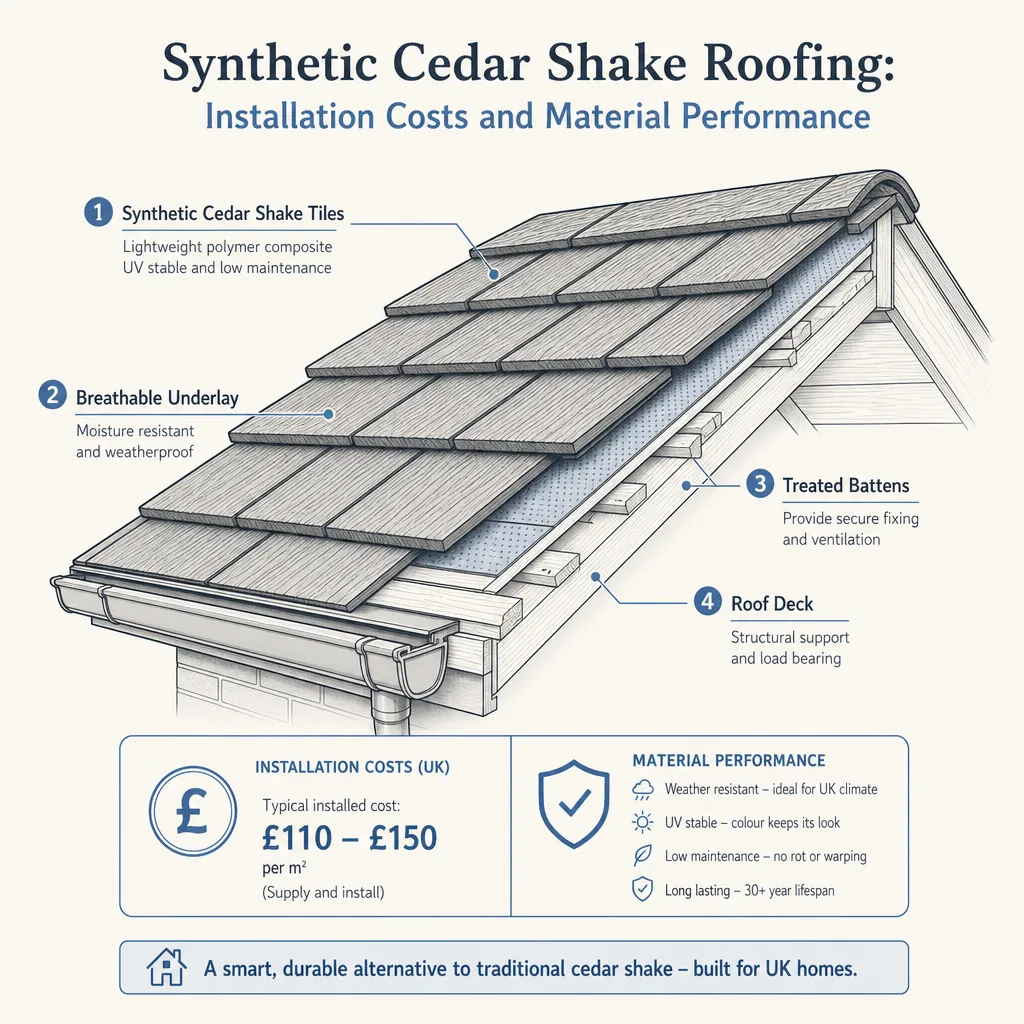
Synthetic Cedar Shake Roofing: Installation Costs and Material Performance
Synthetic cedar shake roofing uses polymer composite, rubber, or fibre-cement tiles to replicate the look of natural cedar wood shingles.
 Improvement & Build
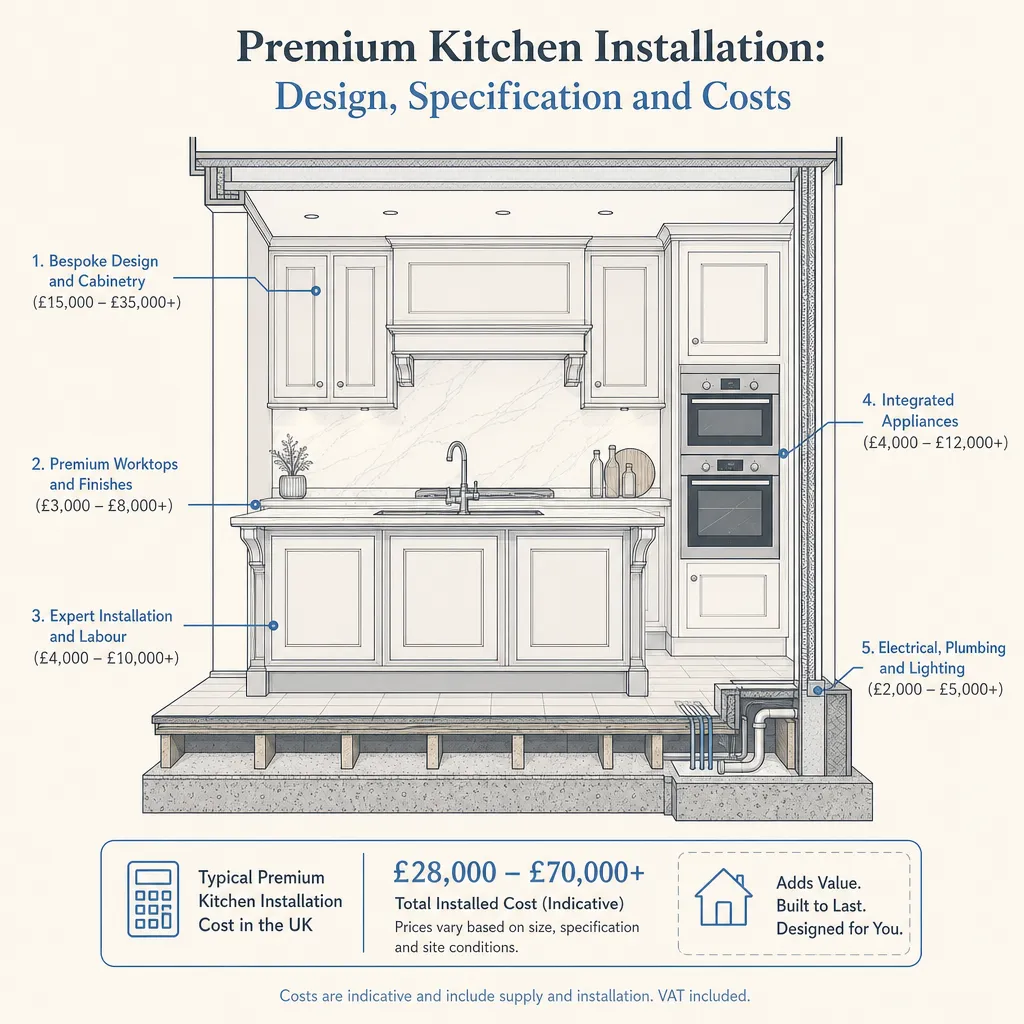
Premium Kitchen Installation: Design, Specification and Costs
A premium kitchen in the UK typically costs £20,000–£80,000 or more installed, depending on cabinetry specification, worktop material, appliance brands, and whether structural changes are needed.
 Improvement & Build
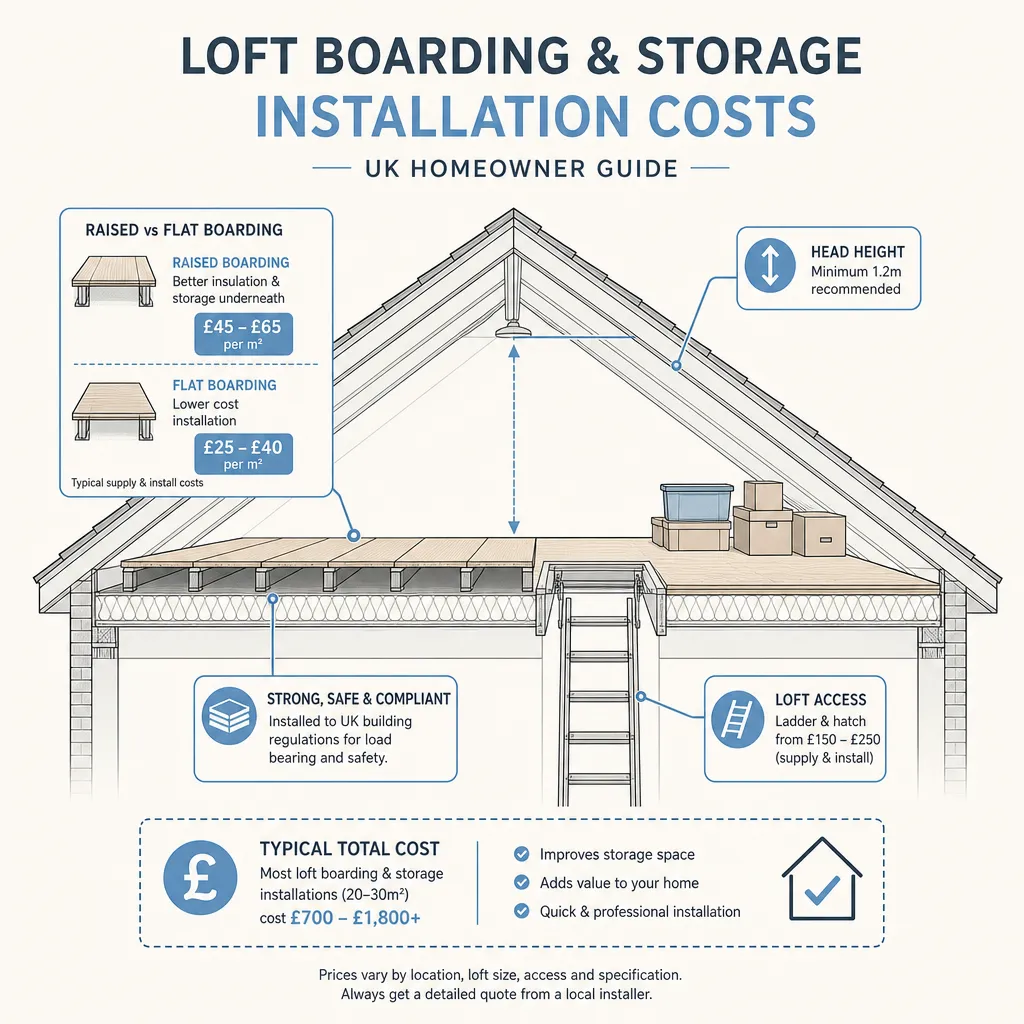
Loft Boarding and Storage Installation Costs
Basic loft boarding for an average semi-detached home costs £500–£1,500; a raised system that preserves insulation runs £800–£2,500.
 Improvement & Build
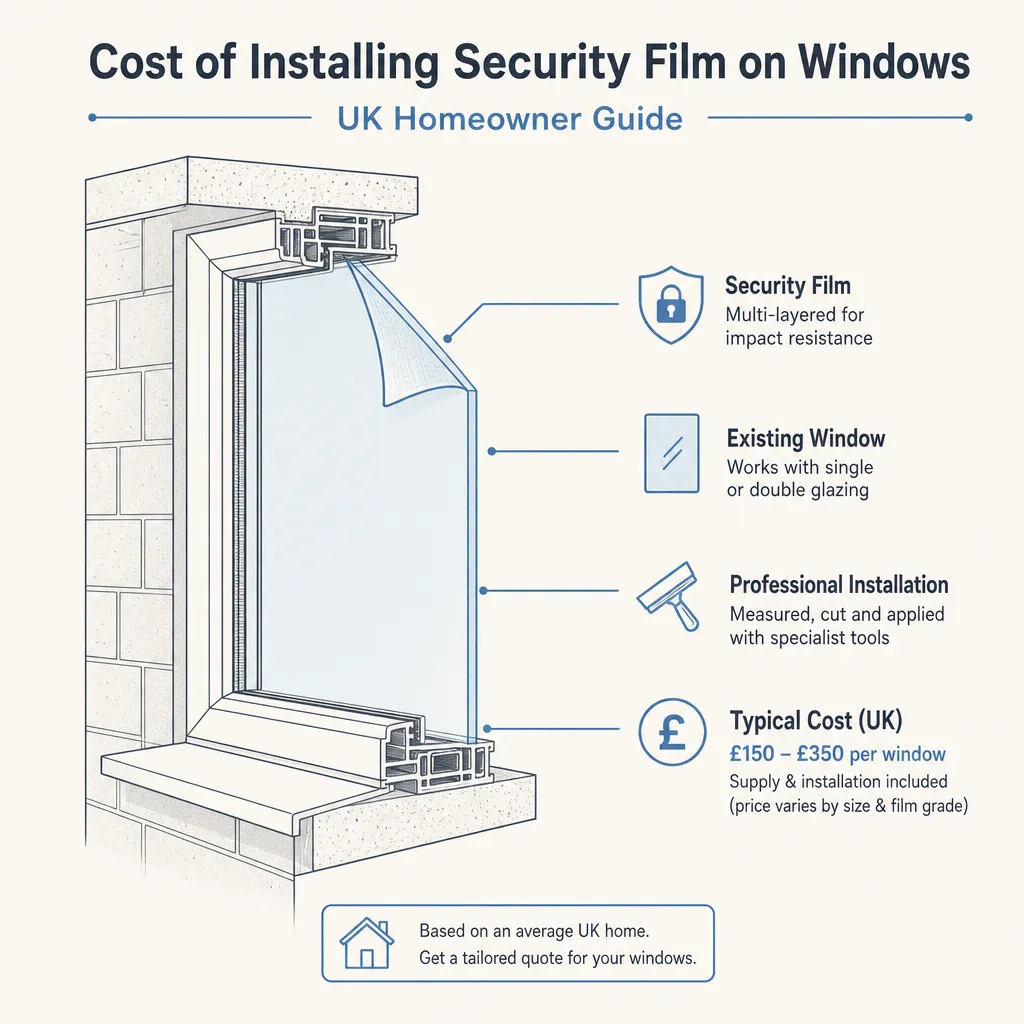
Cost of Installing Security Film on Windows
Security film for windows in the UK typically costs £25–£60 per m² for supply and professional installation, depending on film specification and window count.