Loft Boarding and Storage Installation Costs
By Housey · Last reviewed 7th of May 2026
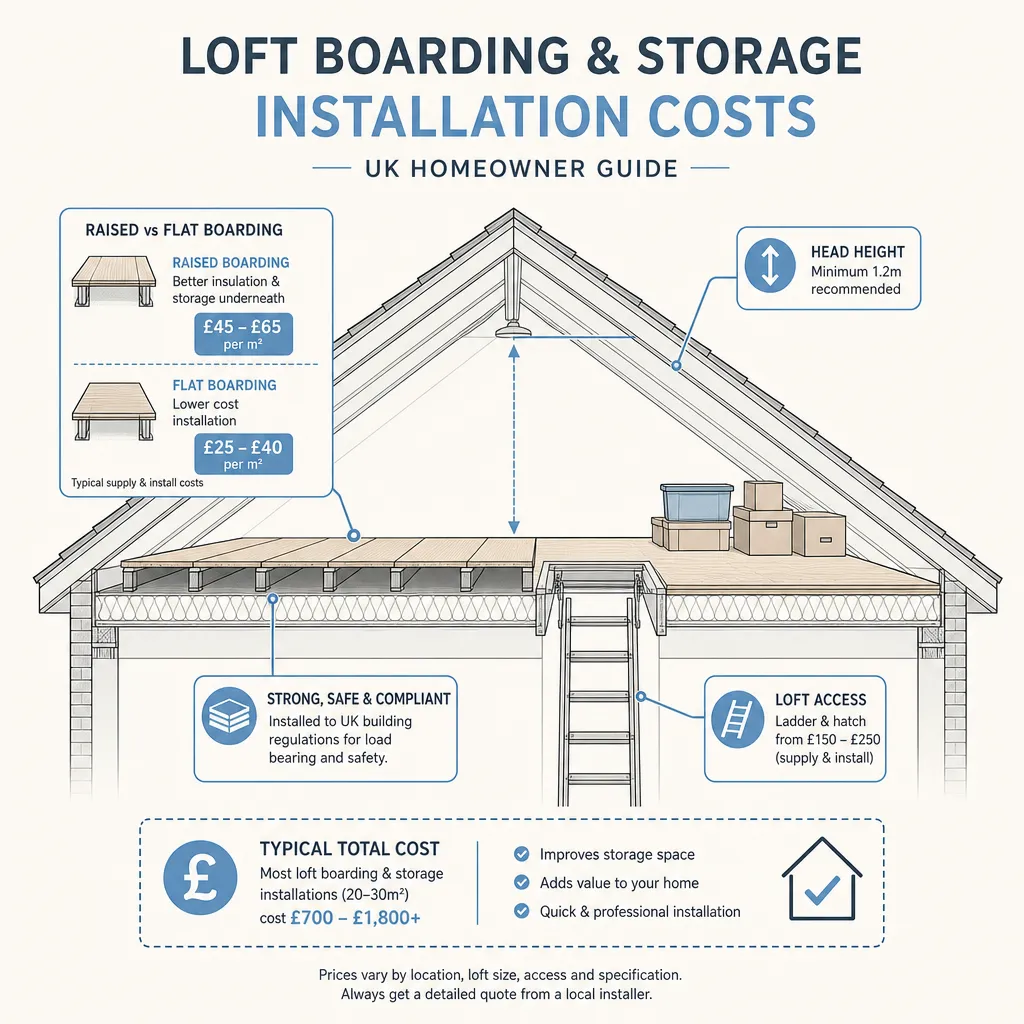
Loft Boarding and Storage Installation Costs
Most homes have a loft that is barely used — a dusty space serving as overflow for Christmas decorations and forgotten boxes. When storage pressures grow or a house move brings more belongings than the ground floor can absorb, loft boarding offers a practical and relatively affordable solution. Costs vary more than many homeowners expect, depending on the size of the space, the system chosen, and whether existing insulation needs to be preserved.
Key points
- Basic loft boarding for an average semi-detached home typically costs £500–£1,500; raised boarding systems that protect existing insulation run £800–£2,500 or more (Indicative UK costs, last reviewed 2026-05-07).
- Laying standard chipboard directly on loft joists compresses existing mineral wool insulation and can significantly reduce its thermal performance — a compliance concern under Building Regulations Part L where insulation has been recently installed or topped up.
- Loft joists in properties built before 1970 are often undersized for heavy storage loads; a structural assessment may be advisable before placing significant weight on the floor.
- Basic loft boarding for storage purposes does not normally require planning permission or building regulations approval — but converting a boarded loft into a habitable room triggers full building control.
- Pull-down loft ladders cost approximately £150–£500 installed and are commonly quoted as part of a boarding package.
What affects the cost of loft boarding?
Several factors push the price of a loft boarding job up or down.
Floor area: Most installers quote by the square metre or per board. A small two-bedroom house might have 15–20 m² of usable loft space; a four-bedroom detached property could have 35 m² or more.
System type: Standard tongue-and-groove (T&G) chipboard laid directly on joists is the cheapest option but compresses existing mineral wool insulation, reducing its effectiveness. Raised boarding systems — using proprietary spacers such as LoftZone StoreFloor or similar products — sit above the insulation and preserve its depth, at a higher upfront cost.
Insulation depth: If your loft already has 270 mm of mineral wool (the recommended depth for a cold loft), standard boarding will compress it — sometimes to under 100 mm — substantially cutting its thermal resistance. A raised system avoids this and is particularly important where insulation was recently installed under an ECO4 grant scheme.
Access ladder: A pull-down ladder is often quoted as part of a boarding package. Timber ladders are cheapest; aluminium concertina or telescopic models suit tighter ceiling voids.
Additional features: Lighting, safety handrails, storage shelving, or a decked platform area all add to the total cost.
Indicative UK cost ranges
Job type | Indicative cost range | Notes |
|---|---|---|
Flat boarding (chipboard, direct on joists) | £500–£1,200 | Compresses insulation; suits lofts with little or no existing insulation |
Raised boarding system | £800–£2,500 | Preserves insulation; better long-term thermal performance |
Boarding and pull-down ladder | £900–£2,500 | Most popular package combination |
Full storage system (shelving, lighting, handrail) | £2,000–£4,500 | Depends on specification and floor area |
Loft lighting only | £100–£300 | LED strip or bulkhead fitting |
Indicative UK costs, last reviewed 2026-05-07. Actual quotes will vary by region, specification, and access conditions.
Does loft boarding need planning permission or building regulations?
For basic loft boarding used purely as storage, neither planning permission nor building regulations approval is normally required. The work is classed as maintenance and repair rather than a material change of use or structural alteration.
However, there are important exceptions:
- Converting a boarded loft into a habitable room — even informally for occasional sleeping — triggers the full building regulations process: structural assessment, fire escape provision, minimum headroom (at least 2.2 m over half the floor area), insulation standards, and a compliant staircase.
- Adding a dormer window or rooflight to serve the loft space is a structural alteration requiring building regulations approval, and may need planning permission depending on size and location.
- Listed buildings and conservation areas may have restrictions on even minor roof alterations — always check with your local planning authority before proceeding.
The boundary between 'loft storage' and 'loft room' also matters for home insurance; check your policy if you plan to use the space for anything beyond seasonal storage.
Will loft boarding affect my insulation?
This is one of the most common misunderstandings in loft boarding projects. If your loft already has mineral wool insulation at the recommended 270 mm depth, laying 18 mm chipboard directly on the joists compresses it — often to 100 mm or less — cutting its thermal resistance substantially.
A raised boarding system uses rigid plastic or timber legs (typically 170–200 mm high) to hold the decking above the insulation, preserving thermal performance and avoiding a compliance issue if the insulation was recently installed or topped up. If you are unsure about your existing insulation depth, ask your installer to measure and photograph it before work begins.
What to ask before accepting a quote
- Is this a raised or flat-on-joist system, and what is the reason for the recommendation?
- What is the load rating of the proposed boarding, and is it suitable for what I intend to store?
- Will the installation compress my existing insulation, and by how much?
- Are the loft joists in adequate condition to take the proposed load?
- Is the pull-down ladder rated for regular daily use, or is it a light-duty model?
- What fixings are used — are they secured into the joists, or just the insulation quilt?
- Does the quote include debris removal and any patching around the ceiling hatch surround?
- Is VAT included in the price?
Red flags when getting loft boarding quotes
- A quote that makes no mention of your existing insulation or its depth.
- An installer who does not check joist size or condition before quoting.
- No discussion of load limits or the weight of items you intend to store.
- A very low price that omits a pull-down ladder when your existing access is only a pole-and-hatch arrangement.
- No written specification — if the system type, board thickness, and fixings are not confirmed in writing, disputes become difficult.
- Pressure to decide immediately or claims that prices will rise sharply within days.
When to get professional help
Basic loft boarding by an experienced installer is a straightforward job for most properties. However, seek independent structural advice before proceeding if:
- Your house was built before 1970 and the joists appear undersized or in poor condition.
- You plan to store very heavy items such as archived documents, gym equipment, or building materials.
- You notice signs of roof movement, sagging rafters, or evidence of previous timber treatment that may have weakened the structure.
- You want to create a raised mezzanine or decked platform within the loft.
A structural engineer can confirm whether existing joists need sistering or strengthening before any significant load is applied.
How Housey can help
If your loft boarding project is a stepping stone towards a more ambitious conversion, or you simply want to compare quotes from experienced installers, loft conversion companies on Housey can assess your space and advise on the most cost-effective approach — from basic storage boarding through to a fully habitable room.
Frequently asked questions
How long does loft boarding take?
A standard boarding installation for an average semi-detached home usually takes one to two days. Larger properties, or projects that include a raised system and a new pull-down ladder, may take two to three days. Access difficulties — such as a narrow or awkwardly positioned hatch — can add time to both.
Can I board my loft myself?
For simple flat-boarding, some homeowners do carry out the work themselves. You should be confident working at height, understand joist locations and load limits, and be clear about the insulation implications. Raised-system proprietary kits are available from builders' merchants, but incorrect installation can still compress insulation or create unstable flooring.
Does loft boarding add value to my home?
A well-boarded loft with a pull-down ladder and lighting is a practical selling point, particularly for buyers seeking storage in smaller homes. It is unlikely to add a measurable percentage to the sale price in the way a full bedroom conversion would, but it can improve saleability by making an awkward space genuinely usable.
Will my insurer cover stored items in a boarded loft?
Most home contents policies cover items stored in a loft, but check your policy's definition of covered storage areas and any sub-limits on items held in unheated spaces. High-value items — such as electronics or jewellery — may need to be specified separately on your policy to be fully covered.
Do I need building regulations approval for a loft ladder?
No — fitting a pull-down loft ladder does not normally require building regulations approval, provided it replaces or supplements a simple hatch and does not create a new structural opening between habitable floors. If the loft is being converted into a habitable room, the staircase must comply with Approved Document K.
Sources and further reading
- Conservation of fuel and power: Approved Document L — GOV.UK
- Roof and loft insulation — Energy Saving Trust
- Loft conversion: planning permission and building regulations — Planning Portal
Useful next reads
 Improvement & Build
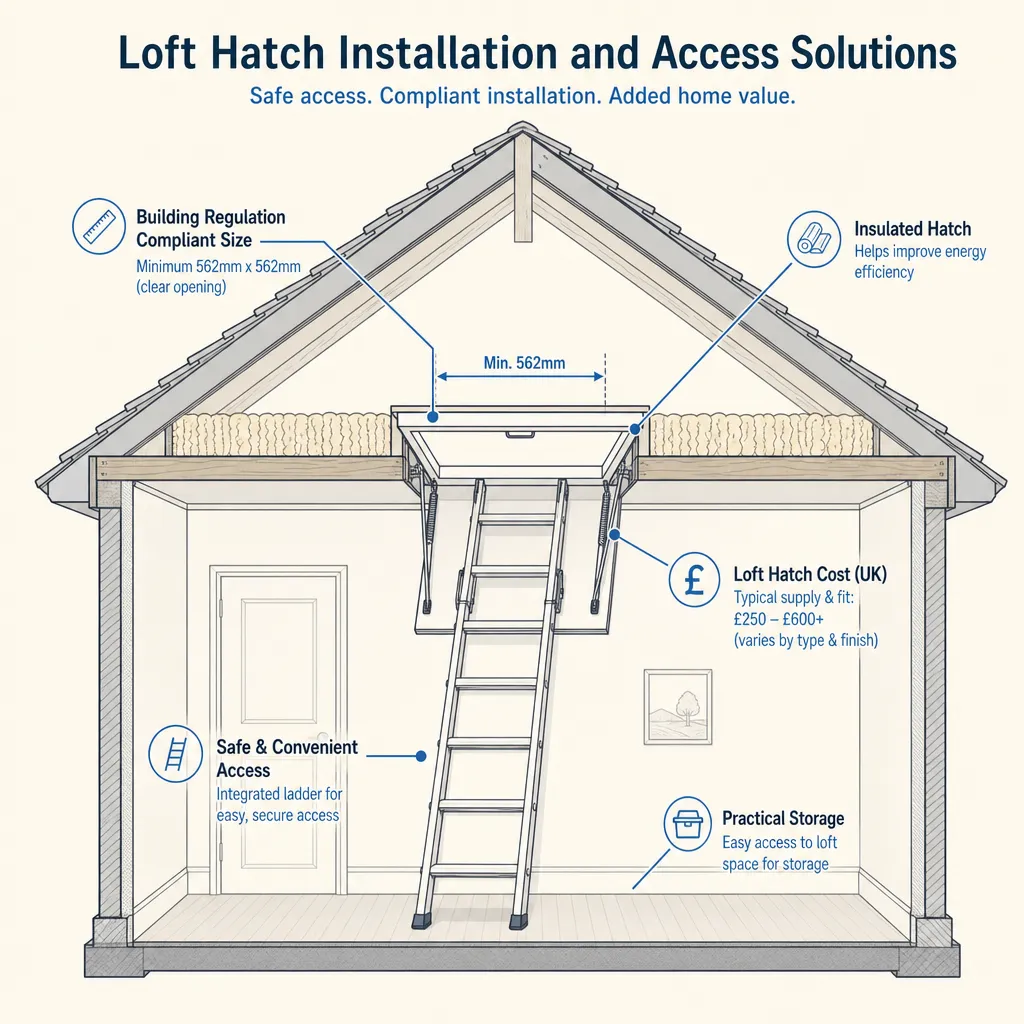
Loft Hatch Installation and Access Solutions
A basic loft hatch costs around £150–£350 fitted; a hatch with a folding ladder runs £350–£900.
 Improvement & Build
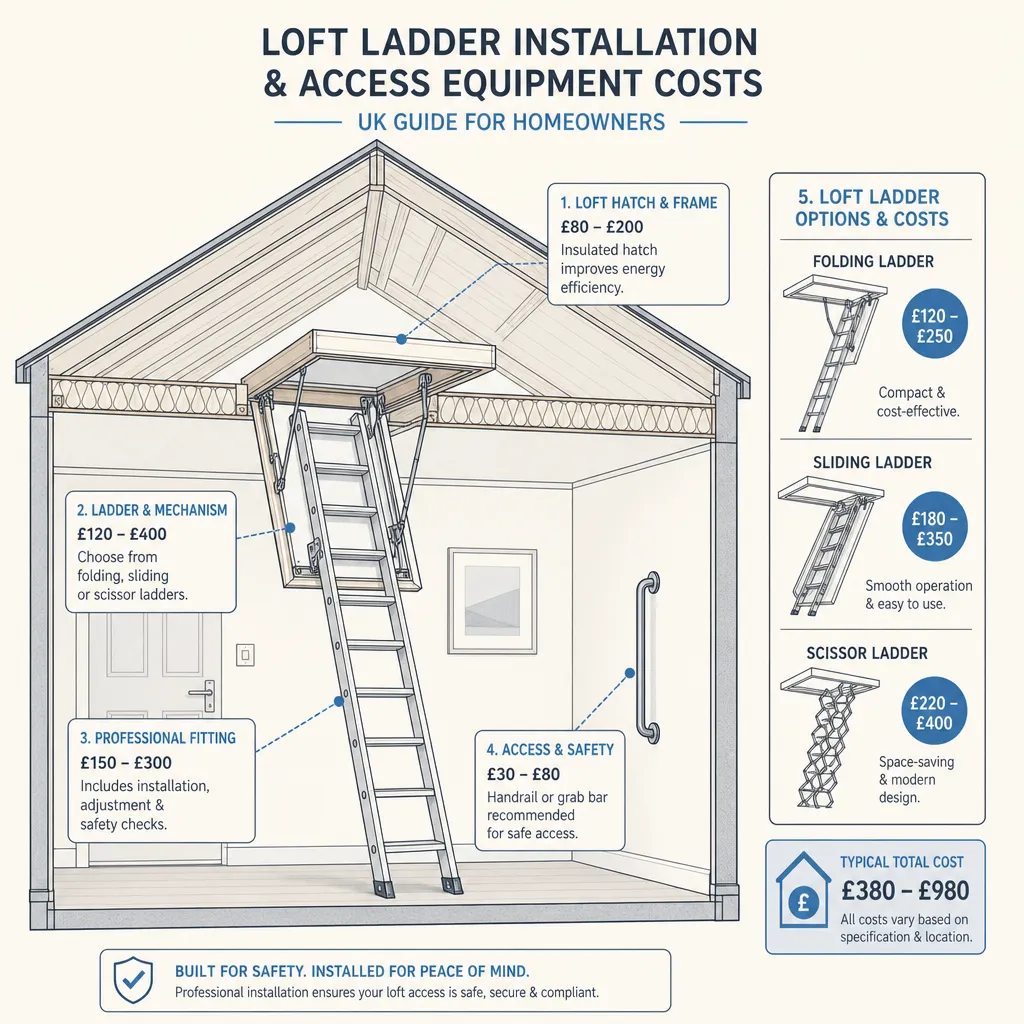
Loft Ladder Installation and Access Equipment Costs
Loft ladder installation typically costs £150–£450 supply and fit in the UK, depending on ladder type and whether the hatch needs enlarging.
 Improvement & Build
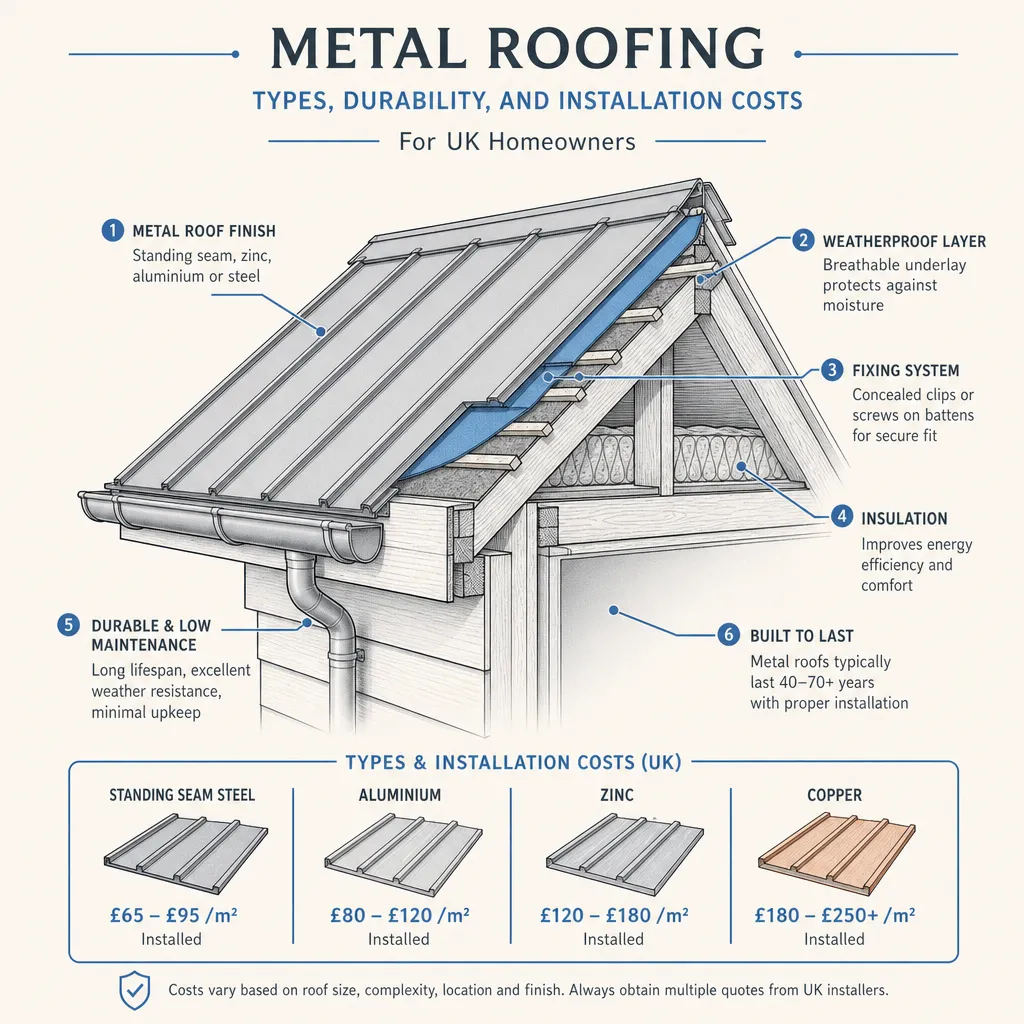
Metal Roofing: Types, Durability, and Installation Costs
Metal roofing in the UK includes standing seam, corrugated sheet, and metal tile systems in steel, aluminium, zinc, or copper.
 Improvement & Build
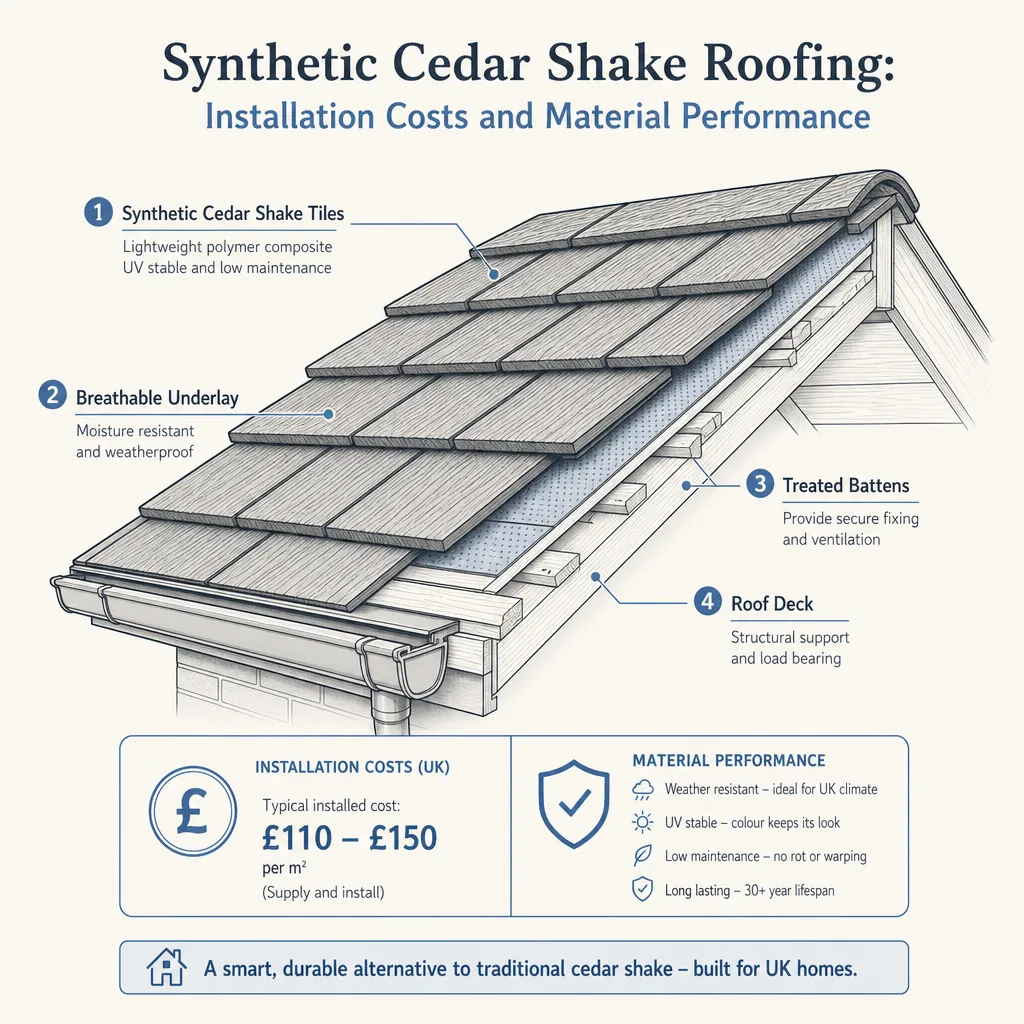
Synthetic Cedar Shake Roofing: Installation Costs and Material Performance
Synthetic cedar shake roofing uses polymer composite, rubber, or fibre-cement tiles to replicate the look of natural cedar wood shingles.
 Improvement & Build
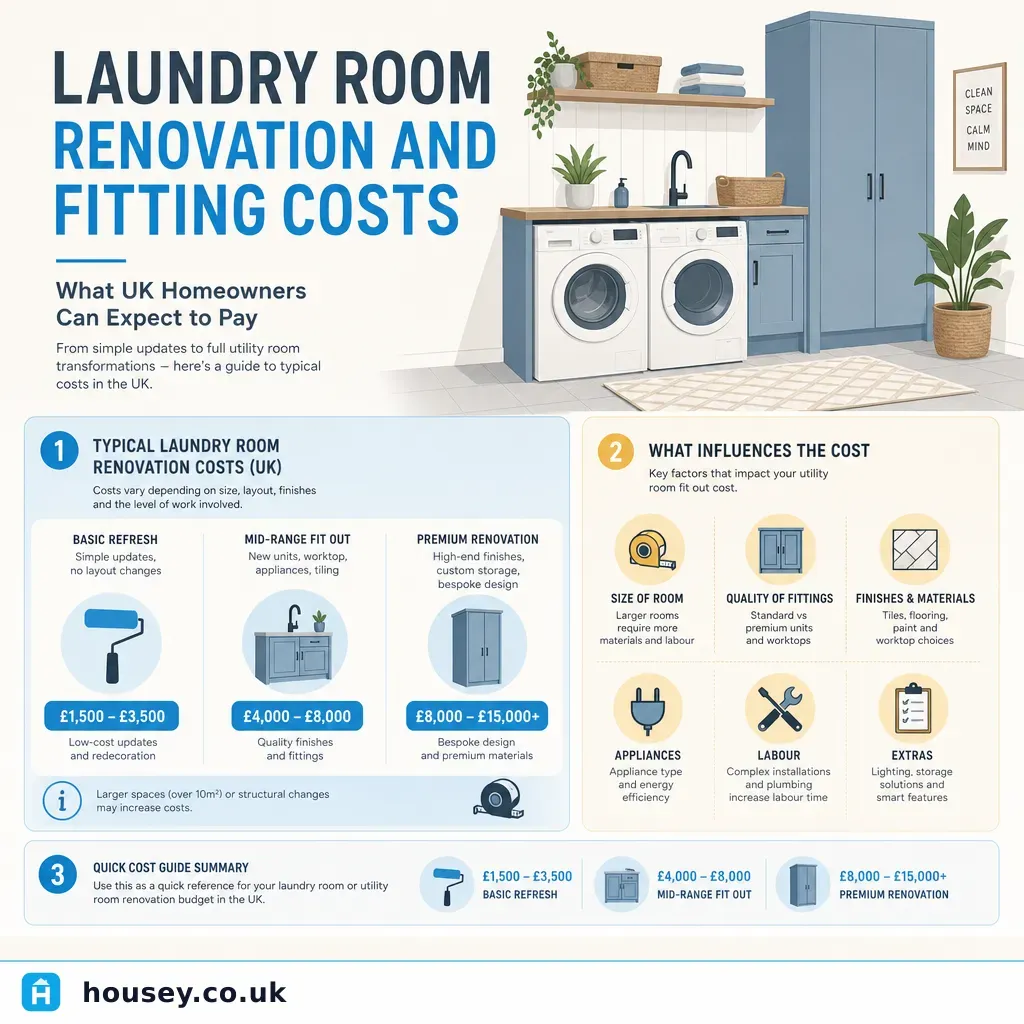
Laundry Room Renovation and Fitting Costs
A basic UK laundry room fit-out typically costs £2,000–£6,000 where plumbing and electrics are already in place, rising to £8,000–£15,000 or more when structural work, new drainage connections, or new electrical circuits are needed.