Synthetic Cedar Shake Roofing: Installation Costs and Material Performance
By Housey · Last reviewed 25th of May 2026
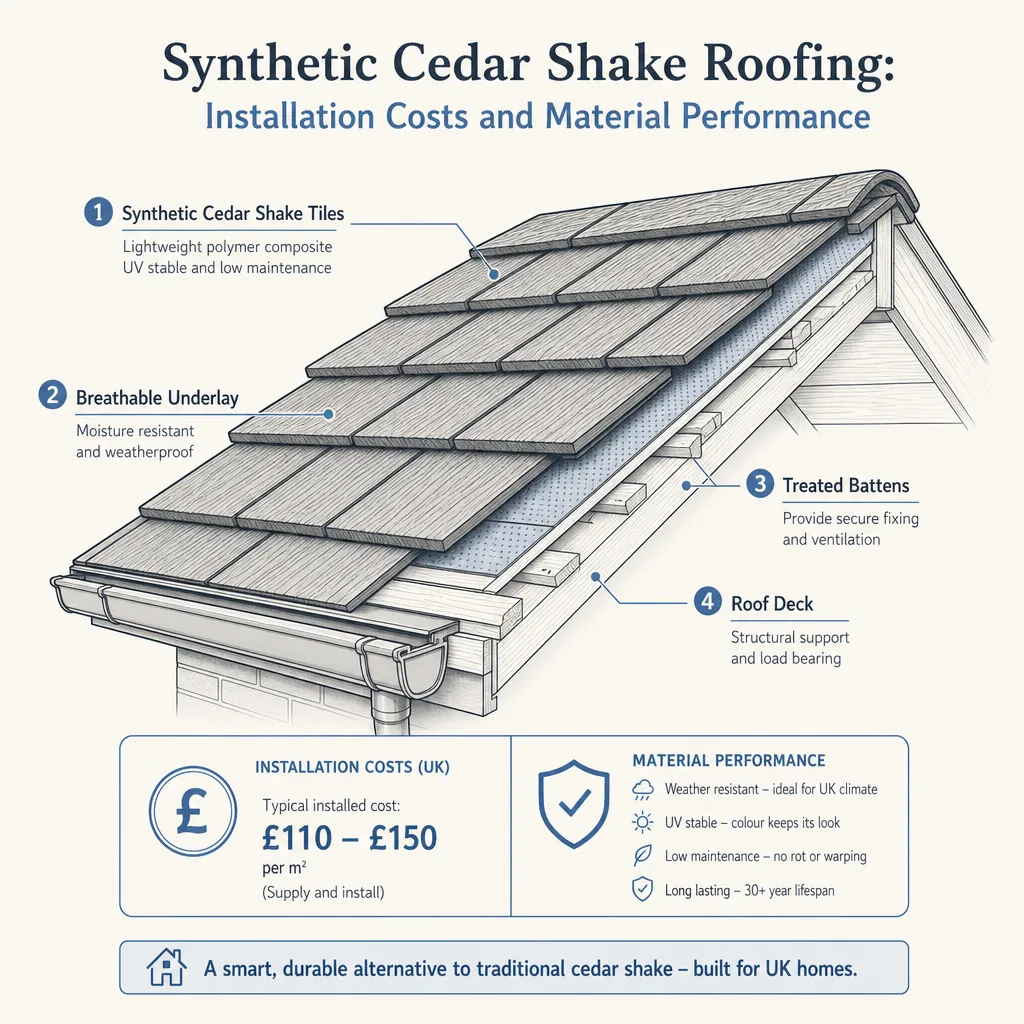
Synthetic Cedar Shake Roofing: Installation Costs and Material Performance
Choosing roofing materials is one of the most consequential decisions in any re-roofing or new-build project, and synthetic cedar shake has grown in visibility as homeowners seek the aesthetic of traditional North American shingle roofing without the maintenance demands of natural timber. In the UK, where natural slate and clay or concrete tiles dominate, synthetic shake sits in a specialist niche — typically considered by those restoring heritage-style properties, building garden studios, or looking for a lightweight alternative to conventional UK roof coverings. Understanding how these products perform under British weather conditions and what they cost to supply and install is essential before committing to a specification.
Key points
- Synthetic cedar shake tiles are typically manufactured from polymer composites, recycled rubber, or fibre-cement blends — each with different performance profiles for weight, UV resistance, and fire rating.
- Installation must comply with BS 5534:2014+A2:2018 (the British Standard for slating and tiling), which governs fixing methods, batten sizing, and exposure category specifications.
- Most synthetic shake products carry manufacturer warranties of 30–50 years, significantly longer than natural cedar shake, which typically requires retreatment every 5–10 years in UK conditions.
- Building Regulations Part C (site preparation and resistance to contaminants and moisture) and Part A (structural loading) both apply: confirm the product's declared weight and wind-uplift resistance for your roof pitch and exposure zone.
- Synthetic shake is generally more expensive per square metre than standard concrete interlocking tiles, but broadly competitive with natural Welsh slate when installed costs are compared over a 30-year lifecycle.
What is synthetic cedar shake roofing and how is it made?
Synthetic cedar shake tiles replicate the split-wood appearance of traditional North American cedar shingles using engineered materials. The three main product types available in the UK market are:
- Polymer composite: typically the most common, formed from a mixture of post-consumer plastics and UV stabilisers, offering a lightweight profile and long service life.
- Rubber composite: often incorporating recycled tyres, providing good impact resistance and flexibility in freeze-thaw conditions.
- Fibre-cement: heavier than polymer variants, more common in commercial or heritage applications; may require a structural assessment before installation on older roof timbers.
Modern products are moulded from actual cedar shake to reproduce surface grain and irregular edge profiles. Many are available in a range of weathered, grey-brown, and charcoal colourways. Colours are typically integral rather than surface-applied, which reduces fade compared with painted or coated alternatives.
In the UK, these products are imported or distributed through specialist roofing suppliers and are not stocked by most general builders' merchants. This has practical implications for lead times and for sourcing matching repair tiles in future — worth confirming with your contractor before committing to a product.
How do synthetic cedar shake tiles perform in UK conditions?
The UK's temperate, wet climate presents specific challenges for any roofing material: persistent driving rain, UV degradation during summer, and freeze-thaw cycling in exposed or northern locations. Synthetic shake performs reasonably well across these parameters, though performance varies by product specification.
Performance factor | Synthetic cedar shake | Natural Welsh slate | Concrete interlocking tile |
|---|---|---|---|
Lifespan (manufacturer claim) | 30–50 years | 80–100+ years | 30–60 years |
Approximate weight | 7–20 kg/m² | 25–35 kg/m² | 40–55 kg/m² |
Fire rating (typical) | Class B or C to BS EN 13501-5 | Non-combustible (A1) | Non-combustible (A1) |
Maintenance requirement | Low — periodic inspection | Low — occasional ridge repointing | Low — occasional inspection |
Conservation area suitability | Usually limited | Generally acceptable | Generally acceptable |
Cost position (installed) | Above concrete tile; competitive with mid-range slate | Moderate to high | Lower |
Indicative UK cost positioning, last reviewed 2026-05-25. Exact prices vary by supplier, roof area, pitch, access, location, and contractor.
One area where synthetic shake carries a notable limitation in UK planning terms is conservation areas. Many local planning authorities (LPAs) in conservation areas or Article 4 direction zones require materials that respect the character of the surrounding area. Synthetic products are often declined in favour of traditional slate or tile; always check with your LPA before specifying.
Installation: what does the process involve?
Synthetic cedar shake is typically installed by specialist roofing contractors familiar with the product's fixing requirements. Standard UK installation involves:
- Structural assessment: confirm existing rafters and ceiling joists can carry the product's declared weight, particularly if replacing heavier concrete tiles with a lighter synthetic product or vice versa.
- Removal of existing covering: old tiles or felt are stripped; timber battens inspected and replaced where necessary.
- Breathable roofing membrane: BS 5534:2014 requires an appropriate underlayment — most installations use a vapour-permeable (breathable) membrane rather than traditional bituminous felt.
- Batten installation: sized per the manufacturer's specification and BS 5534 requirements for the exposure zone.
- Tile laying: most synthetic shake products interlock or use hidden fixing clips; starter courses, ridge, hip, and valley detailing follow manufacturer instructions.
- Ridge and flashing: ridges are finished with a purpose-made synthetic shake ridge cap; lead or GRP flashing is used at abutments and valleys.
Installers should hold the relevant NVQ Level 2 in Roofing Occupations or equivalent, and ideally membership of the National Federation of Roofing Contractors (NFRC) or approval under the manufacturer's own installer scheme.
What does synthetic cedar shake roofing cost in the UK?
Because synthetic cedar shake is a specialist product, costs vary considerably depending on manufacturer, distributor, roof complexity, and region. The following table outlines the main cost elements to expect in any quote.
Indicative UK costs, last reviewed 2026-05-25. Always obtain at least three itemised quotes from qualified contractors.
Cost element | Notes |
|---|---|
Material supply | Per m² cost above standard concrete tile; broadly competitive with mid-range slate |
Scaffold | Required for any pitched roof; add separately to total project cost |
Stripping existing roof | Usually charged per m² or as a project fixed cost |
Waste disposal | Landfill or recycling surcharges apply; confirm inclusion in quote |
Batten replacement | May be required if existing battens are deteriorated or incorrectly sized |
VAT | Standard rate (20%) applies to most roofing work on existing residential properties |
A useful benchmark: a typical 80–100 m² roof on a 1930s semi-detached will attract a significant project cost even for standard tile replacement — synthetic shake, as a specialist product, tends to sit toward the upper end of the market. Request itemised quotes that separate labour, materials, scaffold, disposal, and detailing.
Homeowner checklist before accepting a synthetic cedar shake quote
Use this checklist to evaluate any quote you receive for synthetic cedar shake installation:
When to get professional help
Roofing is skilled, hazardous work — always use a qualified, insured contractor. Specific situations that warrant additional professional input include:
- Visible sagging, deflection, or bow in the roof plane — may indicate structural rafter or purlin issues requiring a structural engineer's assessment before re-roofing begins.
- Any suspected asbestos-containing materials in the existing roof structure (common in pre-2000 ridge fillers, eaves boards, and some felt layers) — these must be surveyed and removed by a licensed asbestos contractor before any other works begin.
- Listed buildings or scheduled monuments — listed building consent is required in addition to any planning permission; consult your local planning authority and Historic England before proceeding.
- Complex roof geometries with multiple valleys, dormers, chimneys, or rooflight openings — these increase the risk of detailing failures and require experienced contractors familiar with the specific product system.
How Housey can help
Finding a qualified, experienced roofer for specialist synthetic shake work takes time and care. Housey connects you with vetted local roofers who can assess your roof, advise on material suitability, and provide itemised quotes — so you can compare properly before committing to a specification.
Frequently asked questions
Is synthetic cedar shake suitable for all UK roof pitches?
Most synthetic shake products specify a minimum pitch — commonly between 15° and 22° depending on the manufacturer. Below this threshold, driving rain can be forced under the tiles. Always check the manufacturer's technical data sheet for minimum pitch and exposure zone guidance before finalising your specification with a roofing contractor.
Do I need planning permission to install synthetic cedar shake on my existing home?
In most cases, replacing like-for-like roofing materials falls under permitted development and does not require a planning application. However, if your property is in a conservation area, national park, or subject to an Article 4 direction, you may need express planning consent. Always check with your local planning authority before specifying any non-traditional roofing material.
Will synthetic cedar shake affect my home insurance?
Some insurers have specific requirements around roofing materials, particularly fire classification. Before work begins, inform your insurer of the intended specification and confirm the product's BS EN 13501-5 fire classification meets your policy terms. Failure to notify your insurer of a material change may affect your cover if you subsequently need to make a claim.
How long does a synthetic cedar shake roof last?
Manufacturer warranties for synthetic shake typically run to 30–50 years, though actual performance depends on installation quality, maintenance, and local weather exposure. Most warranties require registered installation by an approved contractor to remain valid. Early first-generation synthetic products from the late 1990s may have shorter effective service lives than modern specifications.
Sources and further reading
Useful next reads
 Improvement & Build
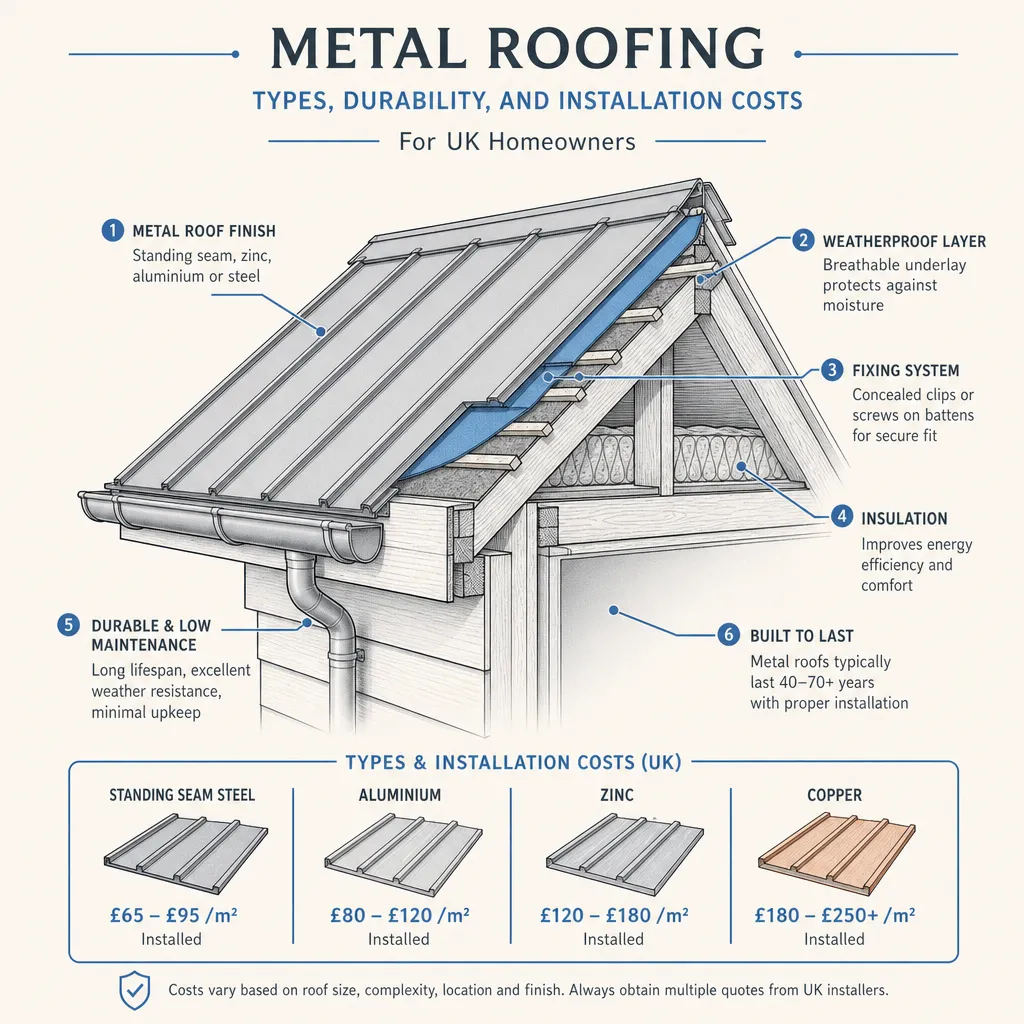
Metal Roofing: Types, Durability, and Installation Costs
Metal roofing in the UK includes standing seam, corrugated sheet, and metal tile systems in steel, aluminium, zinc, or copper.
 Improvement & Build
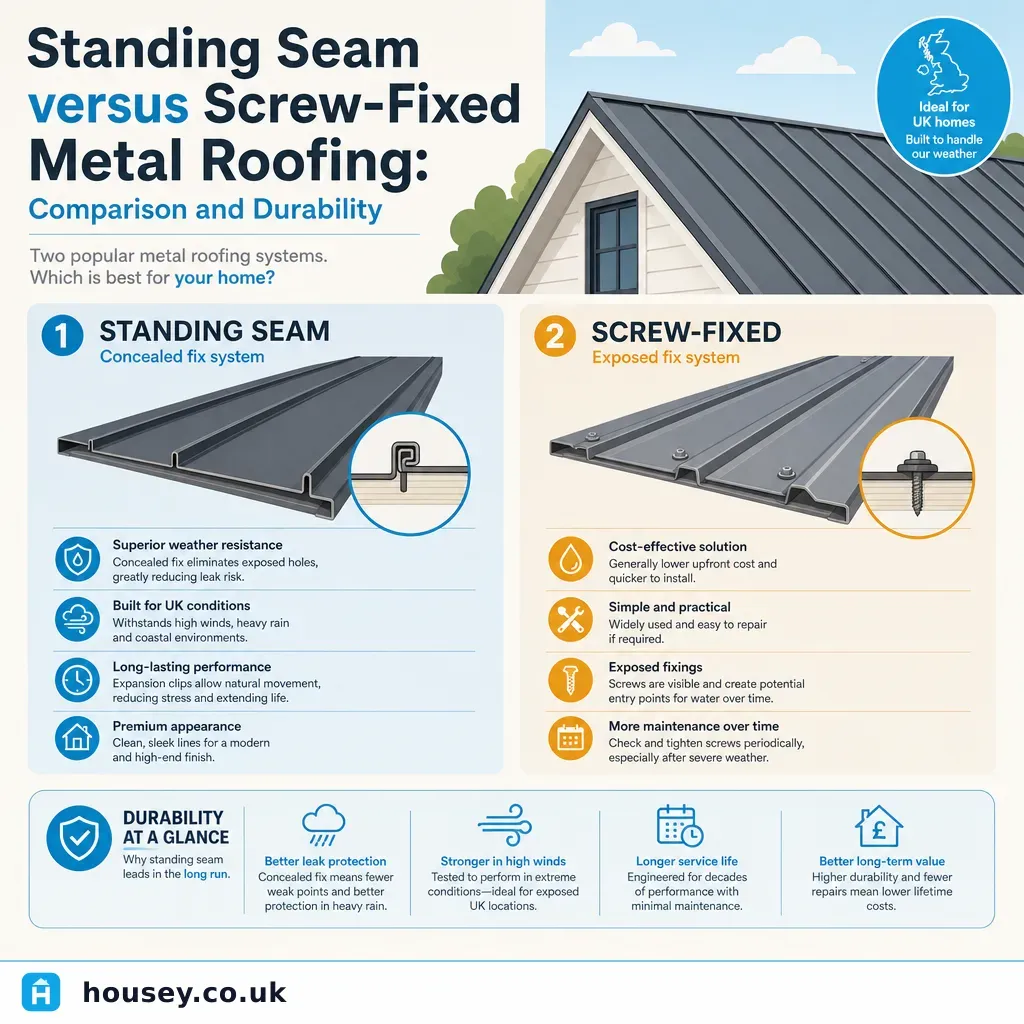
Standing Seam versus Screw-Fixed Metal Roofing: Comparison and Durability
Standing seam uses concealed clips to hold panels, keeping all fasteners out of the weatherline and giving a design life of 40–60 years or more.
 Improvement & Build
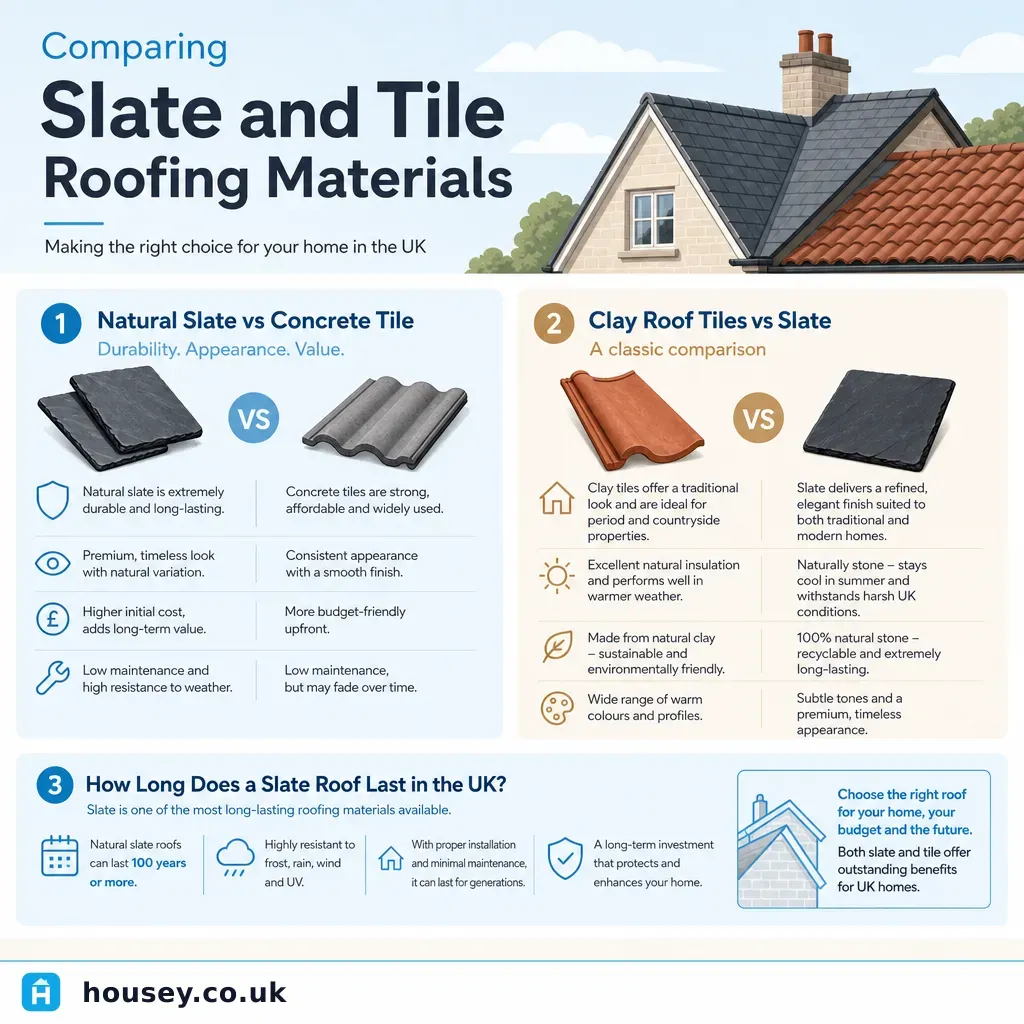
Comparing Slate and Tile Roofing Materials
Natural slate typically lasts 80–150 years and suits period and listed UK properties, while clay tiles offer 60–100 years and remain historically appropriate for Victorian and Edwardian stock.
 Improvement & Build
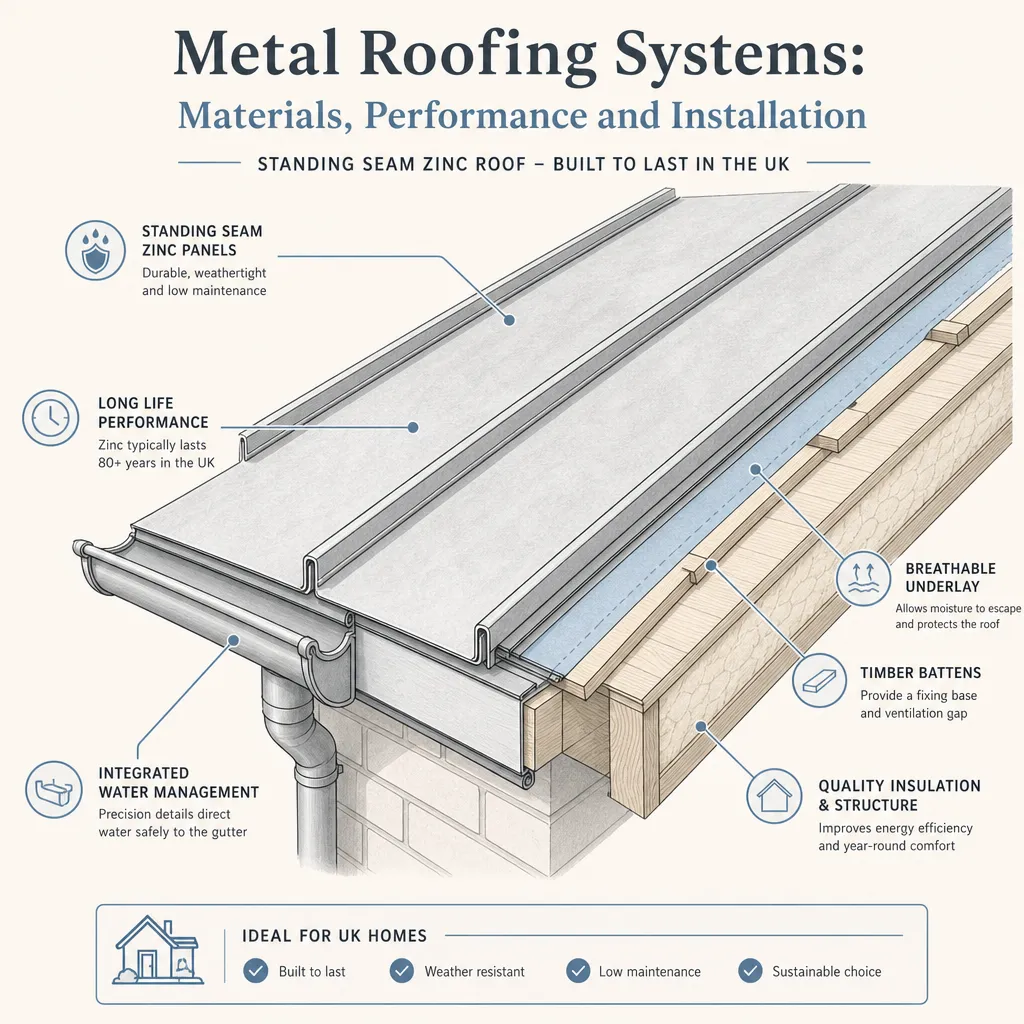
Metal Roofing Systems: Materials, Performance and Installation
Metal roofing systems in the UK include standing seam zinc, coated steel, aluminium, and copper panels, as well as profiled sheets.
 Improvement & Build
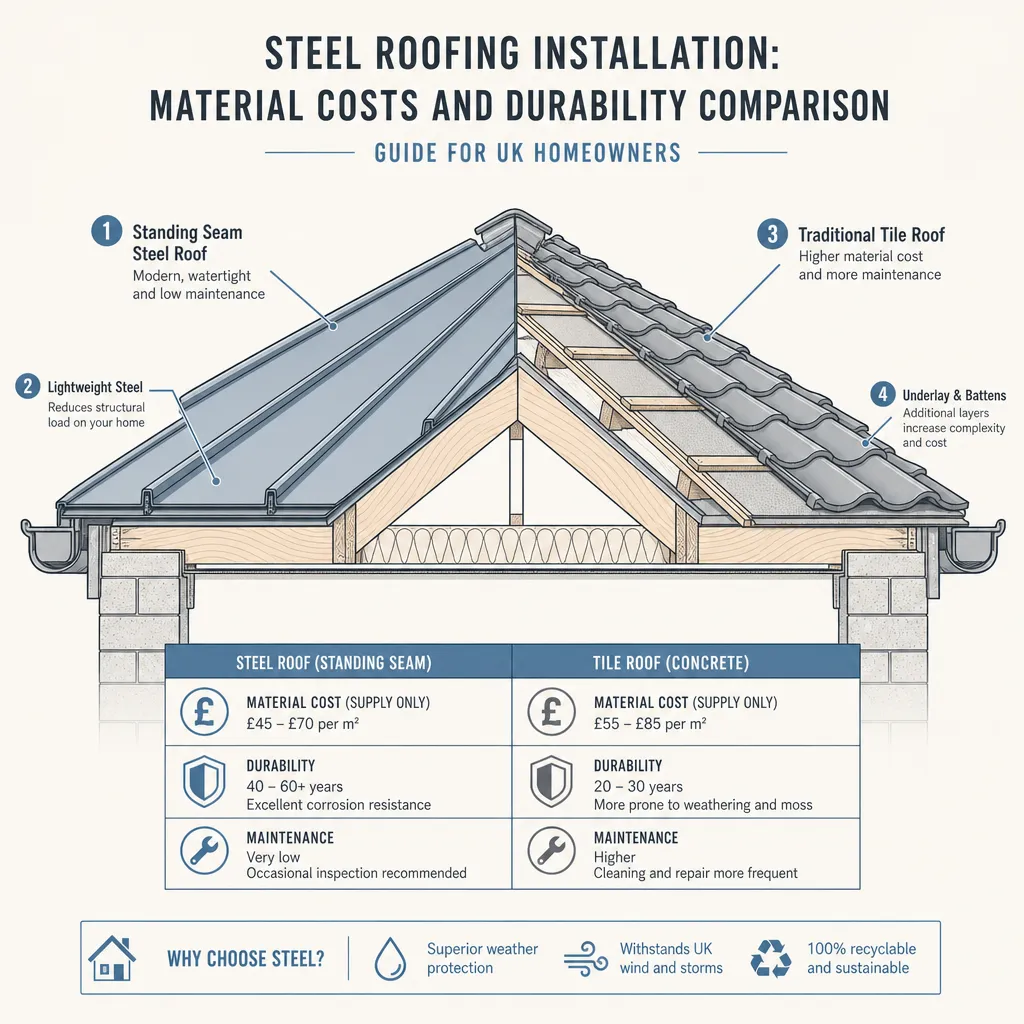
Steel Roofing Installation: Material Costs and Durability Comparison
Steel roofing comes in three main types for UK homes: standing seam (best for low-pitch contemporary roofs, 40–60 year lifespan), composite metal tile (traditional appearance), and corrugated sheet (outbuildings).