Asbestos Pipe Insulation: Recognition and Safe Management
By Housey · Last reviewed 31st of May 2026
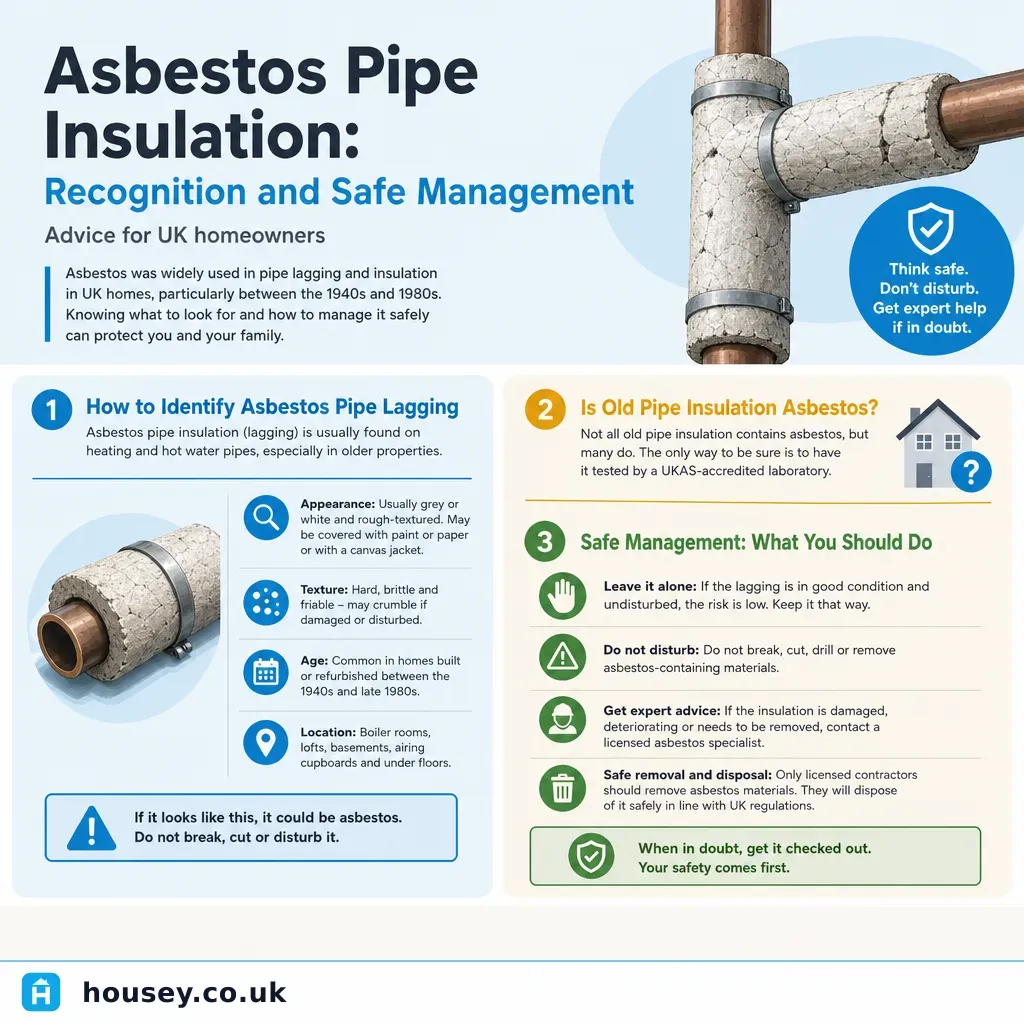
Asbestos Pipe Insulation: Recognition and Safe Management
Pipe lagging—the insulation wrapped around heating pipes, boiler flues, and hot-water cylinders—was one of the most widespread applications of asbestos in UK domestic and commercial buildings throughout the mid-twentieth century. If your home was built or had its heating system installed before the late 1990s and you have older insulation still in place around pipework in the loft, airing cupboard, or boiler room, there is a realistic chance it may contain asbestos. Understanding what it looks like, how to assess the risk, and what your management options are will help you approach the situation safely and in line with legal requirements.
Key points
- Amosite (brown asbestos) and chrysotile (white asbestos) were the types most commonly used in pipe lagging and thermal insulation products; both are banned in the UK under the full November 1999 import and use prohibition.
- Asbestos pipe lagging is considered particularly hazardous because exposure to repeated heating cycles and vibration accelerates deterioration, increasing the risk of fibre release over time.
- Under the Control of Asbestos Regulations 2012, the removal of asbestos insulation from pipes and boilers is classified as licensed work and must be carried out only by an HSE-licensed contractor.
- A property's asbestos register (where one exists) should record the location, type, condition, and risk rating of all known pipe lagging; the absence of a register does not mean no ACMs are present.
- Pipe lagging in good condition in an infrequently accessed location may be safely managed in place rather than removed, subject to professional assessment and documented condition monitoring.
What does asbestos pipe lagging look like?
Asbestos pipe insulation takes several forms depending on the era and application. The table below summarises the main types found in UK properties.
Form | Appearance | Common locations | Typical era |
|---|---|---|---|
Sectional preformed pipe sections | Curved grey or beige segments with a seam, secured with tape or wire | Heating pipes, boiler rooms | 1950s–1980s |
Rope or bandage wrapping | Brown, buff, or grey fibrous strips wound around pipe | Boiler flue connections, irregular pipe bends | 1950s–1970s |
Moulded insulation plaster | Hard, chalky grey coating applied over pipe or around bends | Older boiler flues, commercial plant | 1940s–1970s |
Insulated millboard sections | Flat board cut and wrapped around pipe runs | Victorian-era and older heating plant rooms | 1920s–1960s |
Cloth-covered lagging | Hessian or canvas outer with asbestos fill | Domestic heating and hot-water pipes in lofts and airing cupboards | 1950s–1980s |
The outer surface may have been painted, taped over, or re-covered during previous works, obscuring the original material. Do not peel back, probe, or cut any suspected lagging.
How to assess the condition of pipe lagging
The risk from asbestos pipe lagging is closely tied to its current condition. A professional surveyor will assess condition using categories based on the HSG264 scoring system:
- Good condition: Intact surface, no visible cracks or crumbling, outer cover undamaged. Lower risk of fibre release provided the material is not disturbed.
- Fair condition: Minor surface damage, some tape lifting, small localised areas of softness or discolouration. Monitoring and possibly encapsulation may be appropriate.
- Poor condition: Visible cracking, missing sections of insulation, exposed fibrous material, soft or compressible sections, or evidence of water damage. A priority for professional action.
Poor-condition amosite pipe insulation—particularly where heating cycles cause repeated expansion and contraction—is classified as high-risk by the HSE. Do not attempt to repair, patch, or tape over damaged lagging yourself.
Management options: removal, encapsulation, or management in place?
Asbestos pipe lagging in a domestic setting is typically managed using one of three approaches. The right choice depends on condition, location, and any planned works.
Management in place: If the lagging is in good condition, in an infrequently accessed area, and no work is planned nearby, a licensed professional may recommend leaving it in place with documented condition monitoring and an entry in the asbestos register. This is often the least disruptive and safest short-term approach.
Encapsulation: A specialist contractor applies a sealant or overwrap to stabilise the surface and prevent fibre release. Suitable for lagging in fair condition where removal would create greater risk than it resolves. Must be carried out by a licensed contractor where the process involves direct contact with asbestos insulation.
Licensed removal: Required where the lagging is in poor condition, where it must be disturbed for building work, or where the heating system is being replaced. This work must be carried out by an HSE-licensed asbestos removal contractor. At least 14 days' prior written notification to the HSE is required before licensed removal work begins.
Decision tree: what action should you take?
- Suspected lagging is intact and no building work is planned → commission a management survey; follow the surveyor's recommendation on monitoring or management in place.
- Building work is planned near or involving the pipework → commission a refurbishment and demolition asbestos survey before work begins; do not allow any trades to disturb the lagging.
- Lagging is visibly deteriorating or damaged → treat as urgent; minimise access to the area and contact an HSE-licensed asbestos professional promptly.
- Heating system is being replaced → the heating contractor must not disturb suspected lagging; a licensed asbestos removal contractor must assess and remove it before any heating work proceeds.
- Buying the property → request any existing asbestos register or survey; if none exists, factor the cost of a management survey into your pre-exchange due diligence.
Important limitations
This article provides general information only and should not be treated as a professional assessment of any specific property or material. Asbestos pipe insulation must be assessed by a qualified professional before any work is carried out near or on the pipework. The legal framework governing management, notification, and removal of asbestos pipe insulation is set out in the Control of Asbestos Regulations 2012 and the HSE Approved Code of Practice L143. Individual circumstances vary significantly; always seek qualified professional advice before taking action.
When this becomes urgent
Contact an HSE-licensed asbestos professional without delay if:
- Pipe lagging is visibly crumbling, cracking, or releasing dust or fibrous material.
- A plumber, heating engineer, or other contractor has already disturbed suspected pipe lagging.
- You plan to replace or repair a boiler, heating system, or hot-water cylinder and the existing pipework has aged insulation of unknown composition.
- You have discovered lagging that has been water-damaged, especially in loft spaces or under suspended floors.
- You have a pre-2000 property and no record of whether an asbestos survey has ever been carried out.
What to ask a qualified professional
Before commissioning an asbestos survey or removal of pipe lagging, ask:
- Is your company HSE-licensed for asbestos survey work and/or licensed removal?
- What type of survey do you recommend for my situation—management or refurbishment and demolition?
- How will samples be collected from the pipe lagging, and which UKAS-accredited laboratory will carry out the analysis?
- If removal is recommended, who is responsible for notifying the HSE (required at least 14 days before licensed work begins), and how will asbestos waste be classified, packaged, and disposed of under the Hazardous Waste Regulations?
- Will my heating contractor need to be present during removal, and how should the two sets of works be sequenced?
- Will I receive a written clearance certificate after removal is complete?
When to get professional help
Consult an asbestos professional before any planned work on a pre-2000 property's heating system or pipework. Red flags that warrant immediate professional contact:
- Crumbling, fibrous, or powdery material on any pipe, flue, or cylinder in an older property.
- Pipe insulation that is damp, stained, or has partially detached from the pipe surface.
- Any uncertainty about materials in the boiler room, loft pipework, or airing cupboard.
- A heating engineer or plumber who advises wrapping damaged lagging in tape and continuing without formal asbestos assessment.
How Housey can help
If you have concerns about pipe lagging or other asbestos-containing insulation in your home, Housey can connect you with HSE-licensed, UKAS-accredited professionals in your area. Our asbestos survey professionals can carry out a management or refurbishment and demolition survey, advise on whether removal or management in place is the appropriate course of action, and provide a written report with laboratory-confirmed results.
Frequently asked questions
Is all old pipe insulation asbestos?
No. Many pipe insulation products from the 1980s onwards used mineral wool, foam, or fibreglass rather than asbestos. However, because asbestos pipe lagging was in widespread use until the 1990s, any insulation on pipework in a pre-2000 property that cannot be positively identified as a non-asbestos product should be treated as potentially containing asbestos until professionally tested.
Can a plumber or heating engineer remove old pipe lagging?
No—not if the lagging is confirmed or suspected to contain asbestos. Removal of asbestos pipe insulation is classified as licensed work under the Control of Asbestos Regulations 2012 and may only be carried out by an HSE-licensed asbestos removal contractor. A plumber or heating engineer who removes suspected ACMs without a licence is in breach of the Regulations.
How much does asbestos pipe lagging removal cost?
Indicative UK costs, last reviewed 2026-05-31. Costs vary considerably depending on pipework length, accessibility, the number of locations involved, and whether encapsulation or full removal is needed. Domestic pipe lagging removal typically ranges from £500 to several thousand pounds. Always obtain at least three quotes from HSE-licensed contractors and request an itemised breakdown before proceeding.
Will my home insurance cover asbestos removal?
Most standard UK home insurance policies do not cover planned asbestos management or removal. Some policies include asbestos cover as an optional add-on, or may respond to emergency situations where accidental disturbance occurs. Review your policy wording carefully and contact your insurer before commissioning any work to understand what, if anything, is covered.
Sources and further reading
- Control of Asbestos Regulations 2012 — legislation.gov.uk
- Managing and working with asbestos — Approved Code of Practice L143 — Health and Safety Executive
- Asbestos licensing — Health and Safety Executive
- Asbestos in the home — Health and Safety Executive
- Hazardous Waste (England and Wales) Regulations 2005 — legislation.gov.uk
Useful next reads
 Surveys & Inspections
Asbestos Floor Tile Removal: Safety, Costs, and Professional Options
Asbestos floor tiles — common in UK homes built between the 1950s and late 1980s — must not be disturbed without a professional assessment.
 Surveys & Inspections
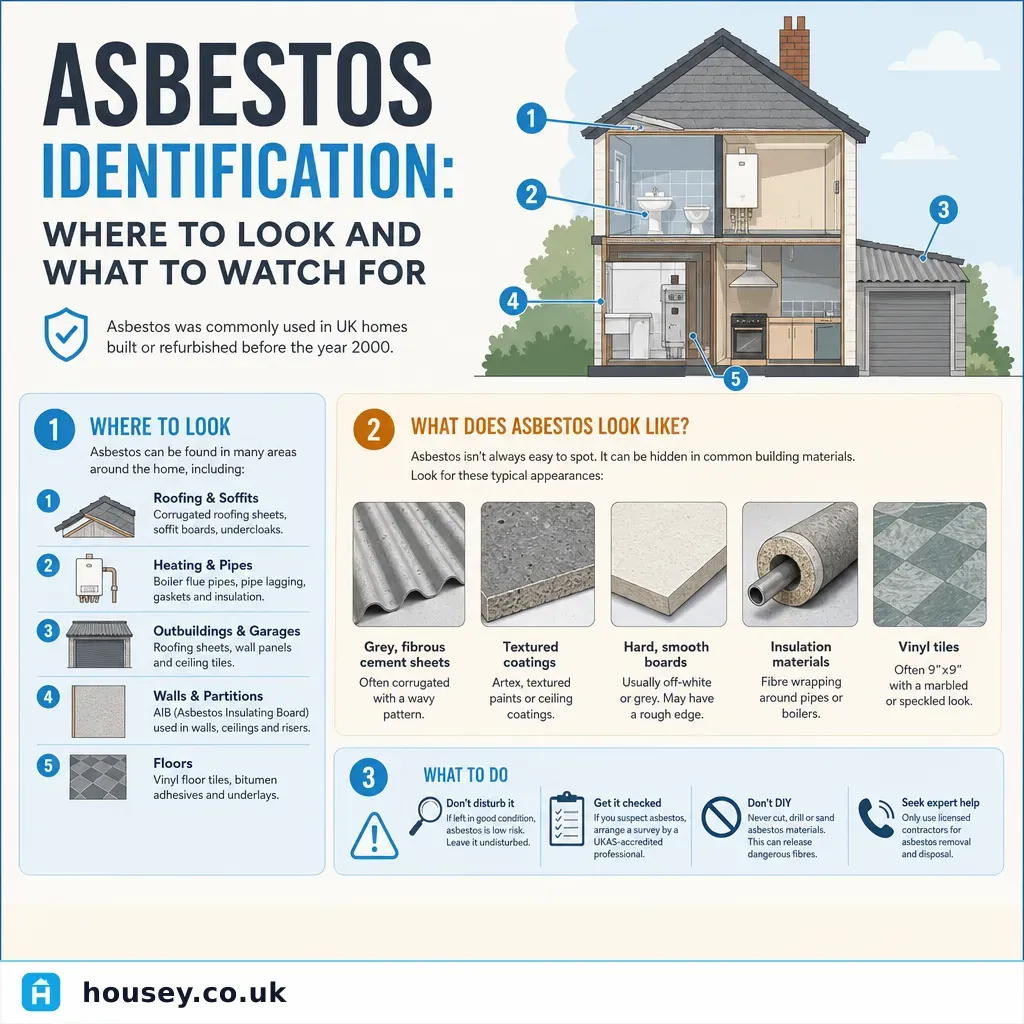
Asbestos Identification: Where to Look and What to Watch For
Asbestos can be present in dozens of locations in UK homes built before 2000, from textured ceiling coatings and floor tiles to pipe lagging and roof panels.
 Surveys & Inspections
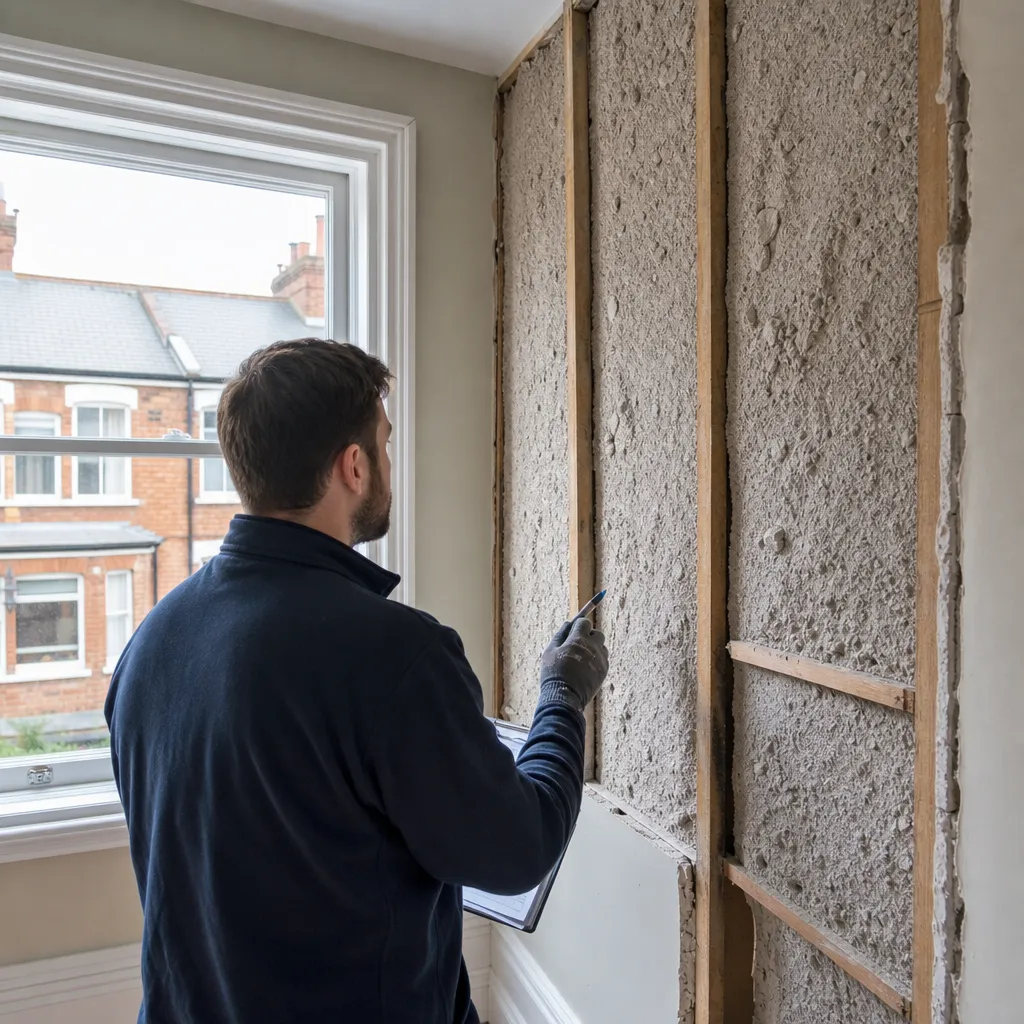
Identifying Asbestos in Drywall: Appearance and Safety Implications
You cannot identify asbestos in plasterboard or drywall compound by sight.
 Surveys & Inspections
Identifying Asbestos Insulation: What You Need to Know for Your Property
Asbestos insulation was widely used in UK properties built before 2000, commonly found in pipe lagging, ceiling tiles, loose-fill loft insulation, and around boilers.
 Surveys & Inspections
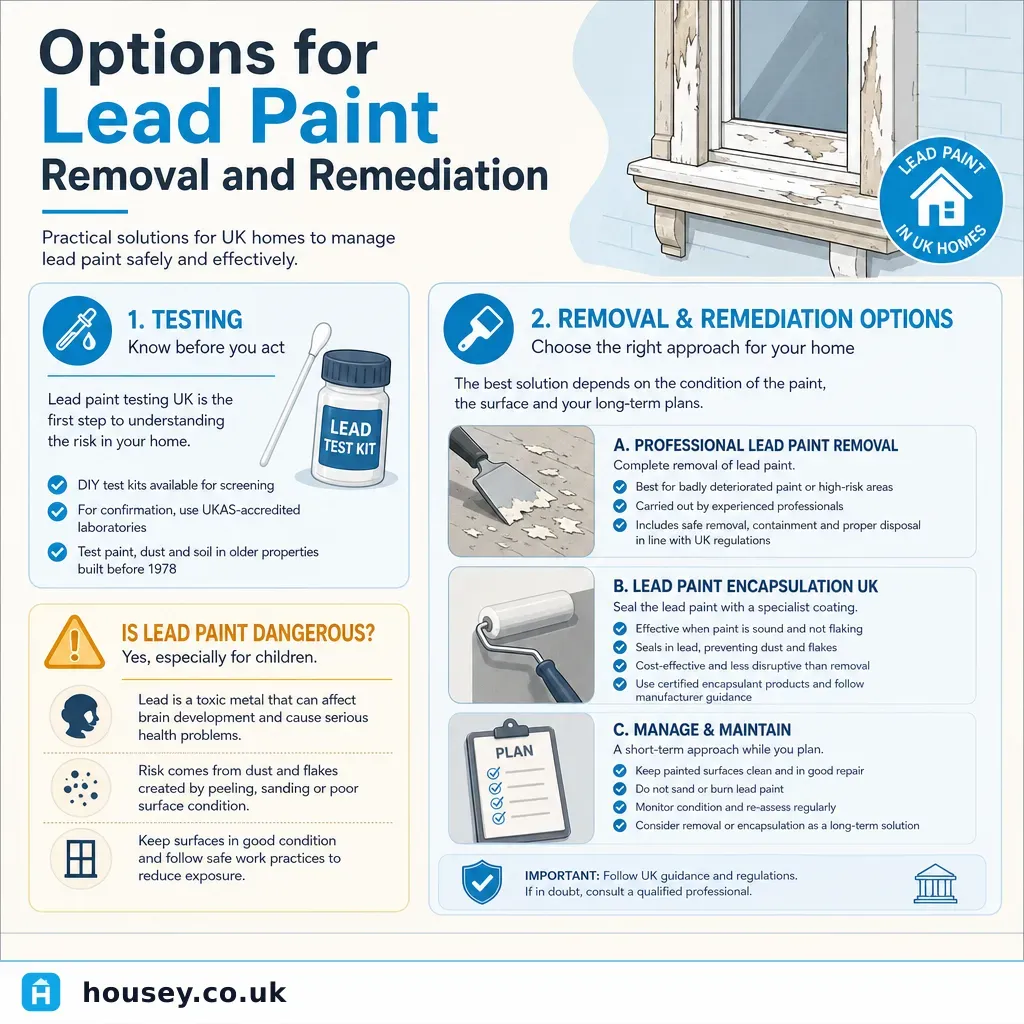
Options for Lead Paint Removal and Remediation
Lead paint in UK homes built before 1960 is common and not automatically hazardous if in good condition.