Identifying Asbestos in Drywall: Appearance and Safety Implications
By Housey · Last reviewed 31st of May 2026
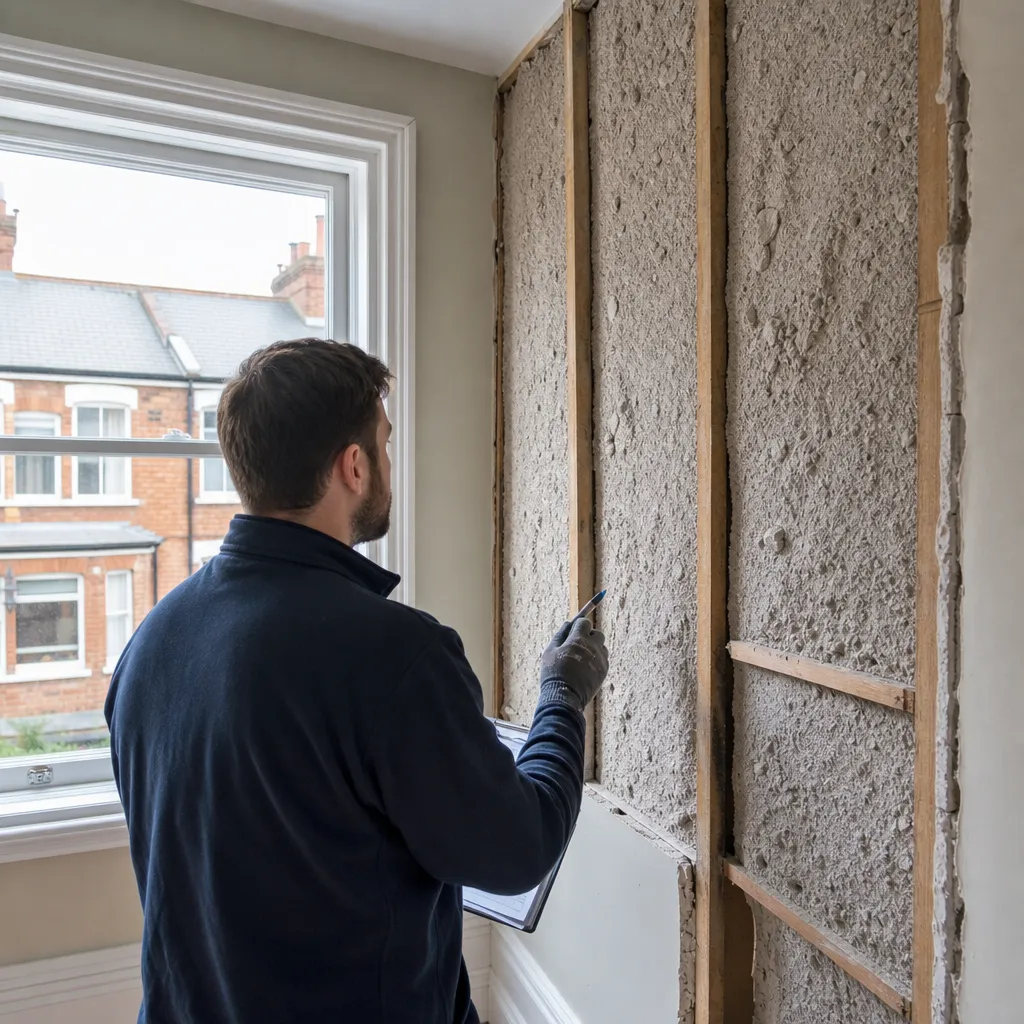
Identifying Asbestos in Drywall: Appearance and Safety Implications
Asbestos-containing materials in plasterboard and drywall systems are a serious but frequently misunderstood risk in older UK properties. For anyone buying, selling, renovating, or carrying out maintenance in a home built or substantially refurbished before 2000, understanding where asbestos can hide in wall and ceiling systems — and why visual identification alone is unreliable — is essential before any intrusive work begins.
Key points
- UK properties built or substantially refurbished before 2000 may contain asbestos in joint compounds, textured coatings including Artex-type products, some ceiling tile backings, and insulating board.
- The Control of Asbestos Regulations 2012 (CAR 2012) requires building owners and managers to identify and manage known or suspected ACMs, and prohibits unlicensed disturbance of notifiable materials.
- Asbestos cannot be reliably identified by visual inspection; only bulk sample analysis by a UKAS-accredited laboratory can confirm its presence and type.
- Chrysotile (white asbestos) was routinely added to joint compound and textured coatings; amosite (brown asbestos) appeared in insulating board and ceiling tiles; both remain hazardous when disturbed.
- The HSE distinguishes between licensed, notifiable non-licensed, and non-licensed work with ACMs — the category determines how removal must be planned, notified, and supervised.
Important limitations
This article provides general information only. Asbestos identification, risk assessment, and removal must be carried out by qualified professionals with appropriate accreditation. Rules and risks vary according to property type, construction method, material condition, and the work planned. A qualified asbestos surveyor should assess your specific property before any drilling, cutting, sanding, or demolition work begins. Nothing in this article should be treated as a risk assessment, legal advice, or a substitute for a site-specific asbestos survey.
Where asbestos may be found in drywall and plasterboard systems
Textured decorative coatings
The most commonly found asbestos-containing material in residential wall and ceiling systems is textured decorative coating — applied under trade names including Artex, Wondertex, and similar products. Applied to ceilings and sometimes walls from roughly 1960 to 1999, these coatings frequently contained chrysotile as a binding agent.
Textured coatings pre-dating 2000 should be presumed to contain asbestos unless laboratory sampling confirms otherwise. The coating may remain present beneath layers of emulsion paint; painting over an ACM does not neutralise it, and drilling or scraping through painted layers will release fibres.
Joint compounds
Joint compound used to tape and fill the joints between plasterboard sheets was a common vehicle for chrysotile asbestos in products manufactured before the 1980s. If boards and joint compound were installed before approximately 1985, the compound should be treated as potentially containing asbestos until sampling confirms otherwise.
Insulating board
Asbestos insulating board (AIB) — sold under brand names including Asbestolux and Marinite — was widely used in the 1960s and 1970s as a fire-protection lining for partitions, ceiling soffits, and service ducts. AIB typically contains amosite (brown asbestos) and is a high-risk material because it releases fibres relatively easily when disturbed.
Ceiling tiles
Suspended ceiling tiles, particularly 300mm × 300mm or 600mm × 600mm types common in commercial-to-residential conversions and older flats, may contain chrysotile, amosite, or a mixture. Standard plasterboard (gypsum core, paper face) does not inherently contain asbestos, but the surrounding installation — joint compound, textured coating, or fire-rated board — may do.
Why asbestos cannot be identified visually
Asbestos fibres are microscopic. Individual chrysotile fibrils are typically 0.03 micrometres in diameter — invisible to the naked eye and indistinguishable within a compound or coating matrix. A textured ceiling coating containing 3–5% chrysotile by weight looks and feels identical to one that contains none.
Common visual misconceptions:
- Grey or granular texture does not indicate asbestos. Modern Artex-type products are manufactured without asbestos; older products may look and feel identical.
- White, fluffy, or fibrous material is not necessarily asbestos. Mineral wool (rock wool or glass fibre insulation) is a common non-asbestos material found in many of the same locations.
- An intact, painted-over coating is not automatically safe to leave unassessed. Under CAR 2012, suspected ACMs in managed or rented premises must be recorded in an asbestos register regardless of their current condition.
Only bulk sampling and polarised light microscopy carried out by a UKAS-accredited analyst can confirm the presence and type of asbestos in a material.
Types of asbestos survey and which you need
Survey type | When it is used | Scope | Who carries it out |
|---|---|---|---|
Management survey | Occupied buildings; routine maintenance; pre-purchase due diligence | Non-intrusive; locates reasonably accessible ACMs; sampling where materials are suspect | BOHS P402-qualified or equivalent surveyor |
Refurbishment survey | Before refurbishment, alteration, or intrusive work in a specific area | Intrusive; accesses voids, ceiling spaces, and floor voids; area must be unoccupied during survey | BOHS P402-qualified surveyor |
Demolition survey | Before full or partial demolition of a structure | Fully intrusive; aims to locate all ACMs in the entire structure | BOHS P402 surveyor, often commissioned alongside demolition contractor |
For most homeowners considering renovation, a refurbishment survey of the affected area is the appropriate starting point before any drilling, cutting, or stripping begins.
Red flags that suggest ACMs may be present
- The property was built or last substantially refurbished between 1950 and 1999.
- Textured ceiling or wall coating — stippled, swirled, or spray-applied — was applied before 2000.
- Partition walls are lined with boards that appear chalky, greyish, or have a coarser surface texture than standard plasterboard.
- Suspended ceiling tiles appear chalky or carry manufacturer names associated with asbestos products.
- The property has undergone a commercial-to-residential conversion.
- Previous maintenance records or the solicitor's legal pack references an asbestos register or confirmed ACMs.
- A building survey or EPC report mentions potential ACMs in the structure.
When this becomes urgent
Stop work immediately and seek professional advice if:
- You have already drilled, cut, sanded, or otherwise disturbed a material you now suspect may contain asbestos.
- Dust from work on a textured coating, ceiling tile, or board has been released into a habitable space.
- A building survey or legal pack mentions confirmed ACMs in the area you are working in.
- You are purchasing a property and the seller's surveyor or solicitor has flagged potential ACMs.
If you have disturbed a suspected ACM, leave the area, close the door, and contact a licensed asbestos removal contractor immediately. Do not re-enter the room until a competent person has confirmed whether safe clearance is needed.
What to ask a qualified professional
Before commissioning a survey or instructing a removal contractor:
- Are you BOHS P402 qualified, and is your laboratory UKAS-accredited for bulk asbestos analysis?
- Will the survey cover the specific areas I plan to work in, including any accessible voids and ceiling spaces?
- How are samples collected, and what is the typical laboratory turnaround time?
- Will you produce a written asbestos register and management risk assessment as part of the report?
- If asbestos is found, will your report specify the type, condition, and recommended management or remediation action?
- Is asbestos removal within your scope, or will you refer to a separately HSE-licensed contractor?
- For any notifiable licensed work, is your removal contractor registered with the HSE?
When to get professional help
Any property built or refurbished before 2000 that is subject to intrusive work should have an asbestos management or refurbishment survey completed before work begins. Do not rely on visual inspection. If you are unsure whether a coating, compound, or board product contains asbestos, treat it as a suspected ACM until sampling proves otherwise. If you have already disturbed a potential ACM, do not wait — contact a licensed contractor for advice.
How Housey can help
Housey connects homeowners and buyers with accredited professionals who carry out asbestos surveys across the UK, providing written asbestos registers and risk assessments before renovation or sale.
Frequently asked questions
How do I know if my Artex ceiling contains asbestos?
You cannot tell by looking. Artex and similar textured coatings applied before 2000 should be presumed to contain chrysotile asbestos until laboratory analysis of a collected sample confirms otherwise. Commission a management or refurbishment survey from a BOHS P402-qualified surveyor before any sanding, scraping, or drilling in the ceiling area.
Is asbestos in plasterboard still being manufactured?
No. The manufacture and new use of all forms of asbestos were banned in the UK under the Asbestos (Prohibitions) Regulations 1992, extended in 1999. New plasterboard and jointing compounds sold after 1999 do not contain asbestos. The risk arises only from materials installed before the ban came into full effect.
Can I remove asbestos-containing joint compound myself?
No. Under the Control of Asbestos Regulations 2012, work on notifiable asbestos-containing materials must be carried out by an HSE-licensed removal contractor. Even for lower-risk non-licensed work, strict notification and control measures apply. The HSE guidance document A Brief Guide to Managing Asbestos sets out which works require licensing.
What is an asbestos register and do I need one?
An asbestos register records the location, type, condition, and risk rating of all known or suspected ACMs in a building. Under CAR 2012, those responsible for maintaining non-domestic premises — including some landlords — have a duty to manage asbestos. Homeowner-occupiers have no identical statutory duty, but a register is advisable before any renovation or sale.
Sources and further reading
- Control of Asbestos Regulations 2012 — legislation.gov.uk
- HSE: Managing and working with asbestos — Health and Safety Executive
- A Brief Guide to Managing Asbestos (INDG223) — Health and Safety Executive
- UKAS accreditation directory — UKAS
- BOHS asbestos qualifications (P402, P403, P404) — British Occupational Hygiene Society
Useful next reads
 Surveys & Inspections
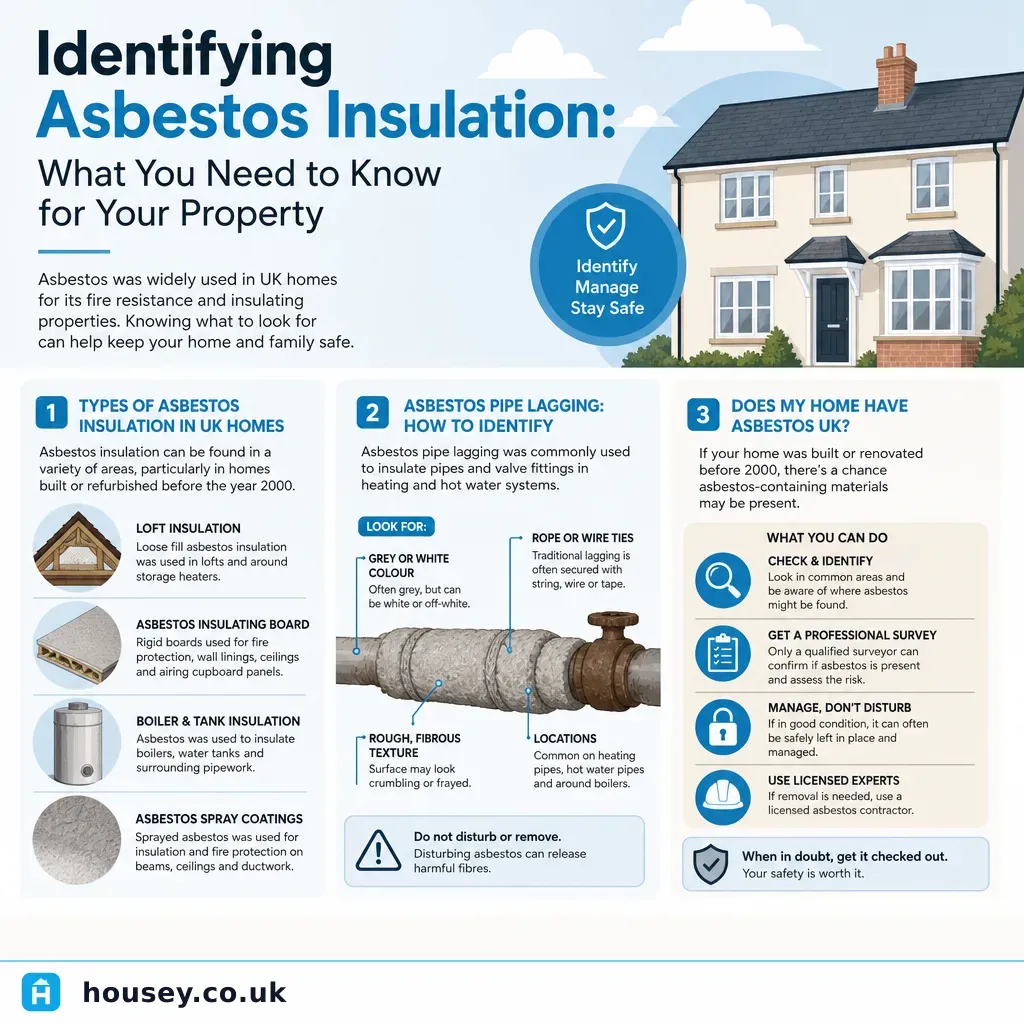
Identifying Asbestos Insulation: What You Need to Know for Your Property
Asbestos insulation was widely used in UK properties built before 2000, commonly found in pipe lagging, ceiling tiles, loose-fill loft insulation, and around boilers.
 Surveys & Inspections
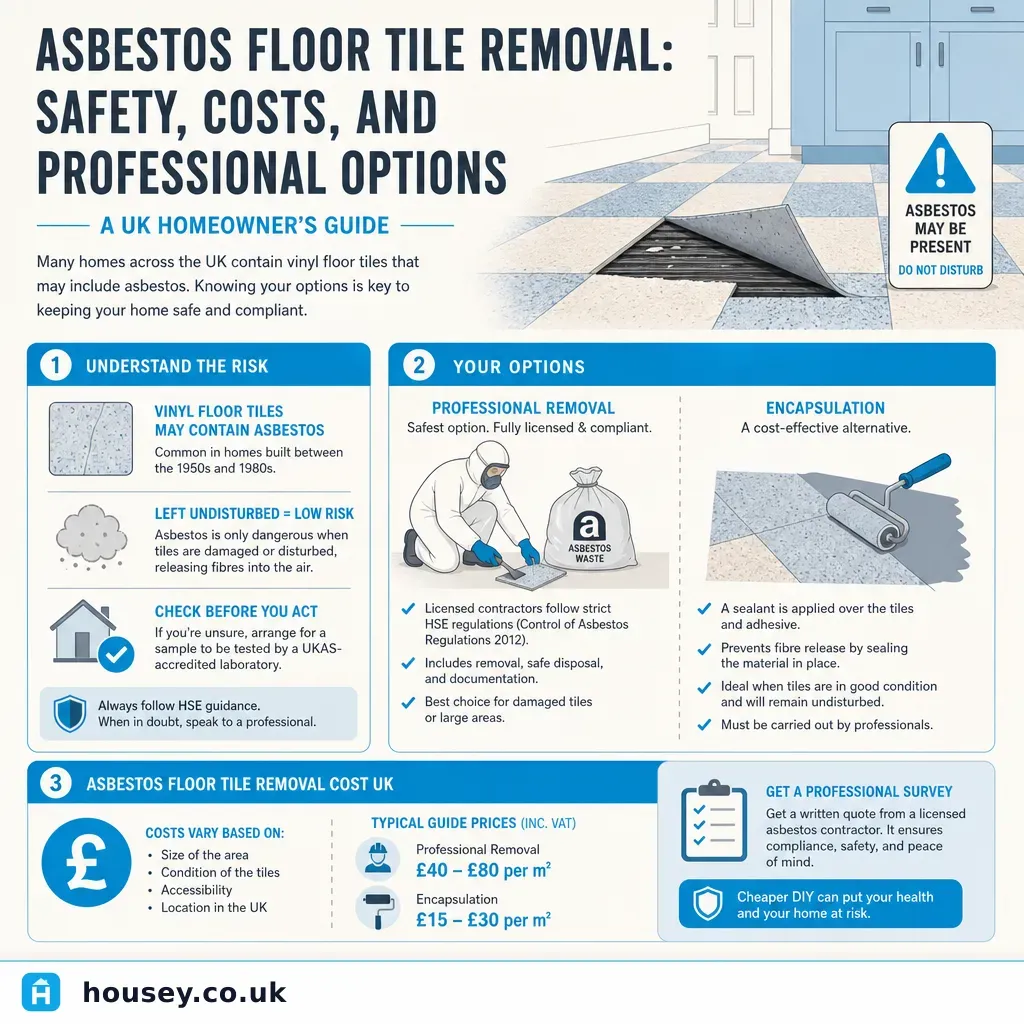
Asbestos Floor Tile Removal: Safety, Costs, and Professional Options
Asbestos floor tiles — common in UK homes built between the 1950s and late 1980s — must not be disturbed without a professional assessment.
 Surveys & Inspections
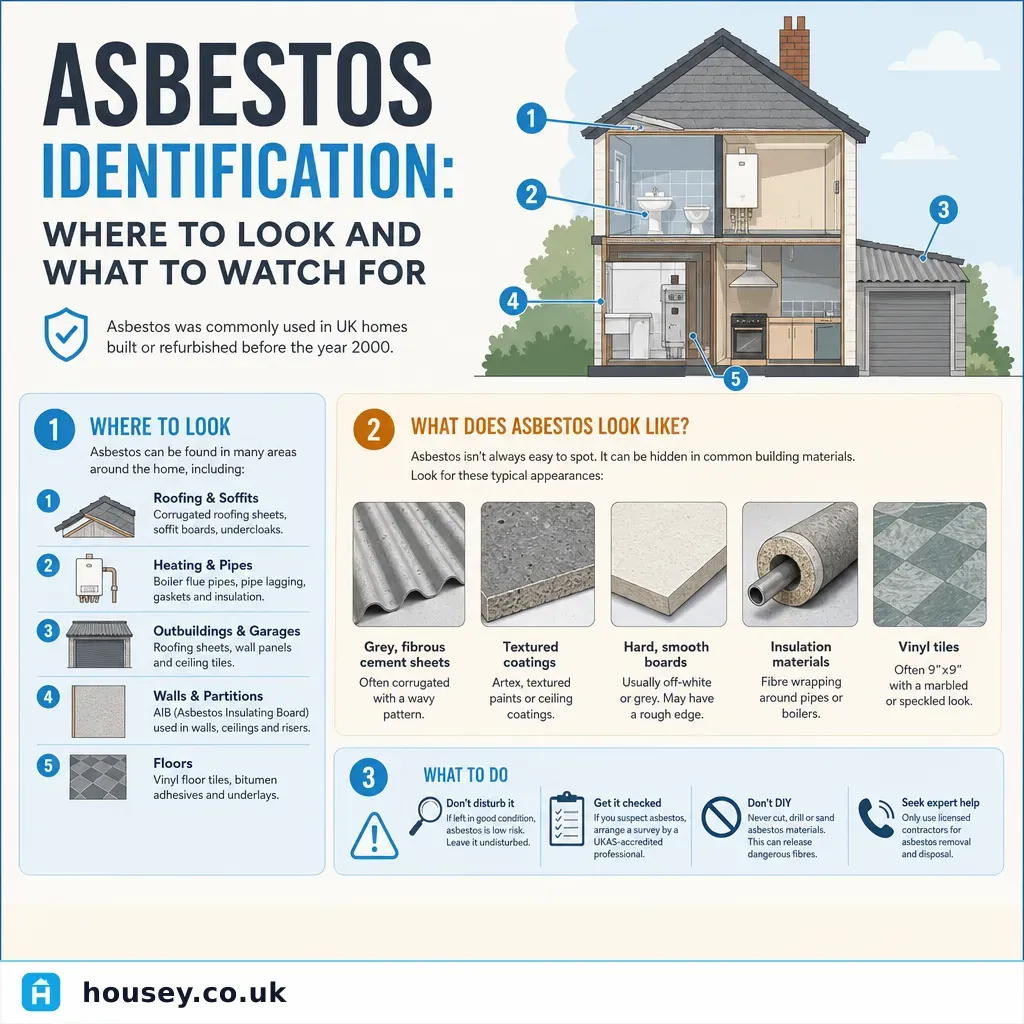
Asbestos Identification: Where to Look and What to Watch For
Asbestos can be present in dozens of locations in UK homes built before 2000, from textured ceiling coatings and floor tiles to pipe lagging and roof panels.
 Surveys & Inspections
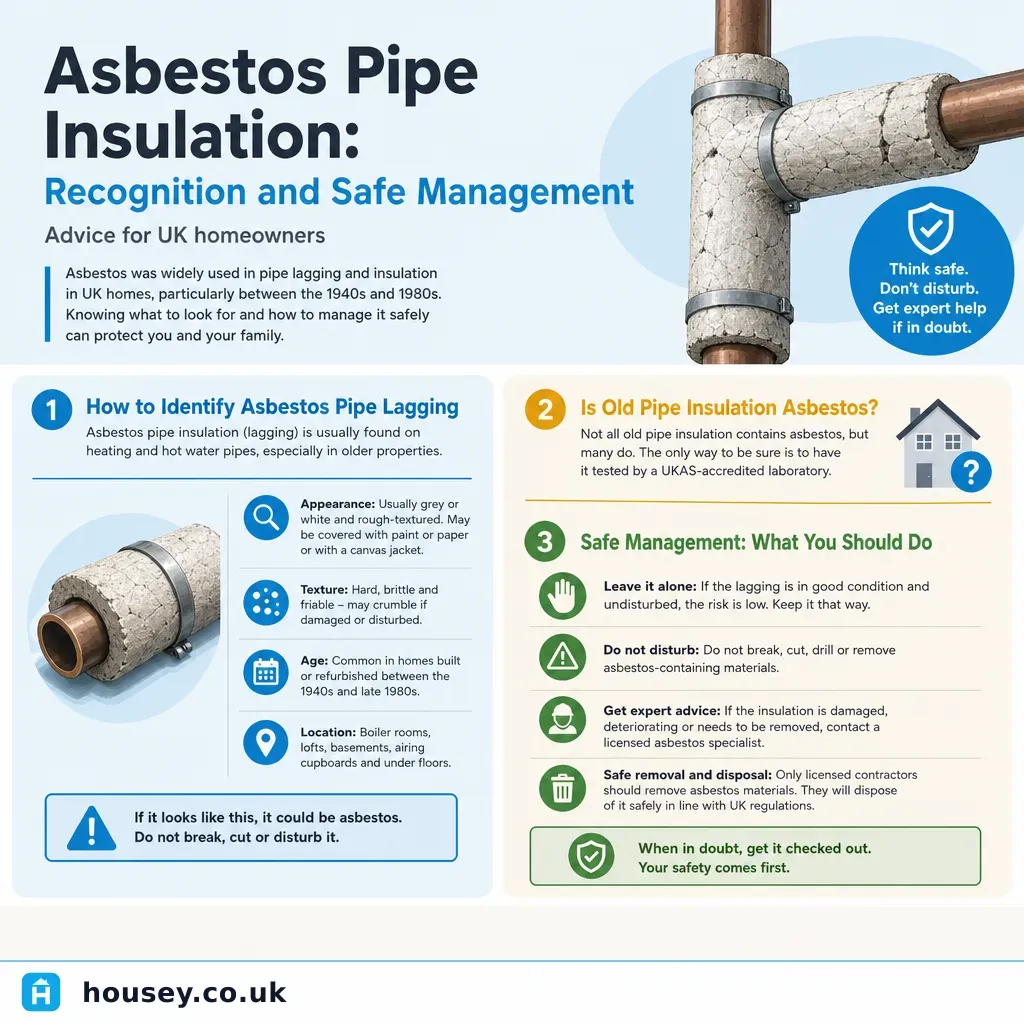
Asbestos Pipe Insulation: Recognition and Safe Management
Asbestos pipe insulation, commonly called pipe lagging, was widely used in UK homes until the late 1990s to wrap boiler flues, heating pipes, and hot-water cylinders.
 Surveys & Inspections
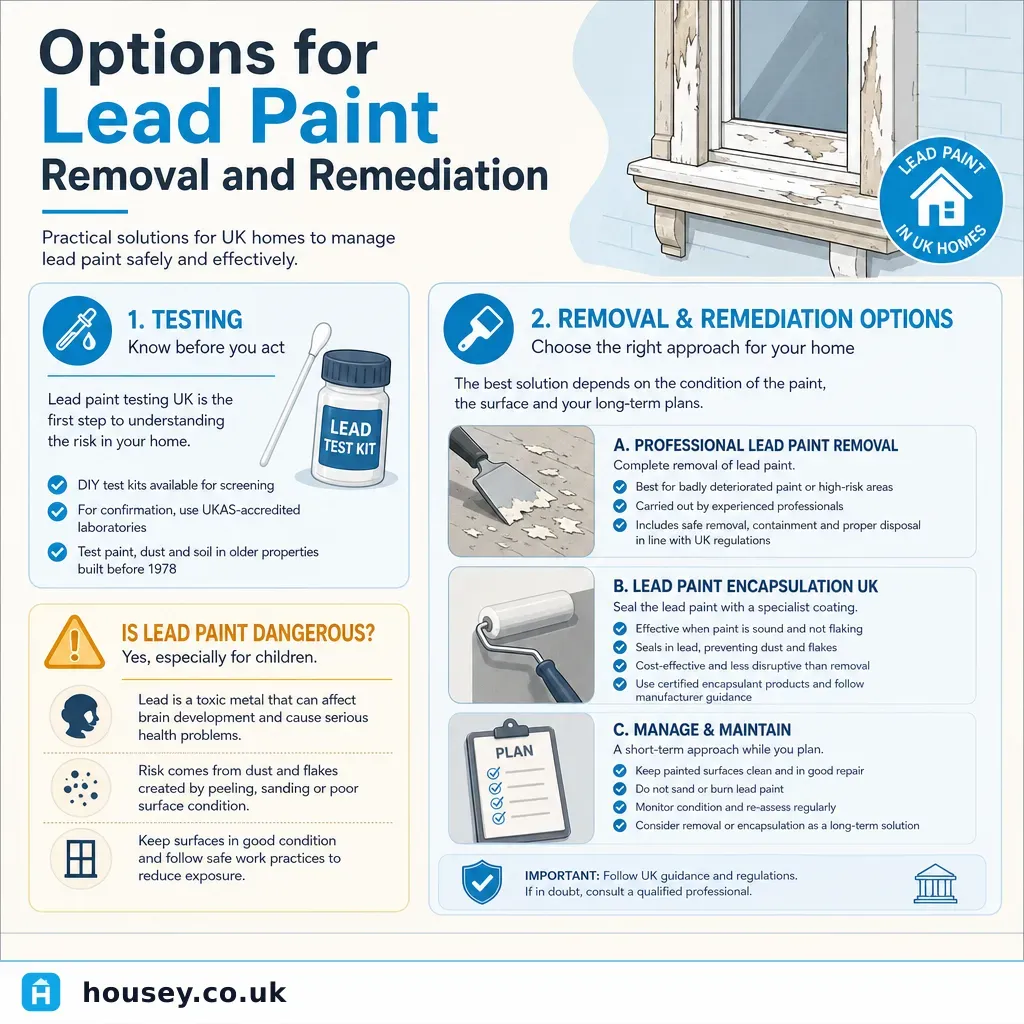
Options for Lead Paint Removal and Remediation
Lead paint in UK homes built before 1960 is common and not automatically hazardous if in good condition.